

News
Exclusive analysis articles with the latest market updates, and real-time news feeds.
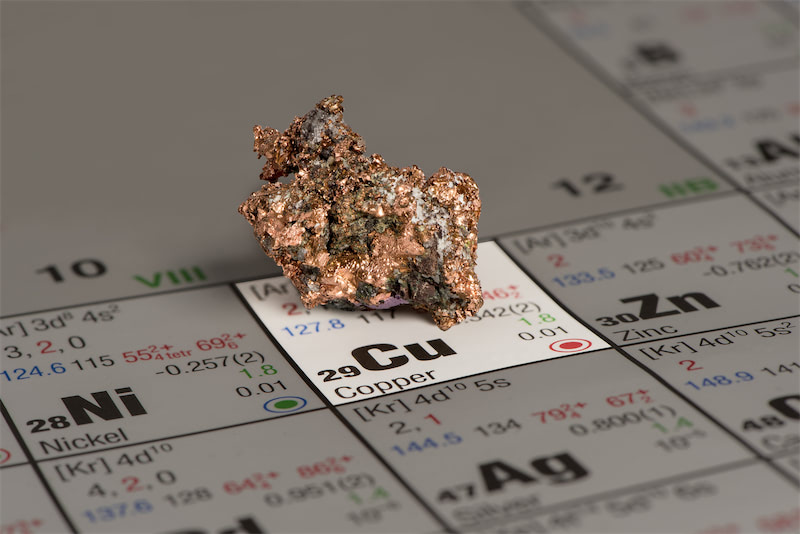
DRC Establishes US-DRC Special Working Group to Accelerate Strategic Minerals Partnership
According to foreign media reports, Kinshasa, September 11 — The DRC Cabinet approved the establishment of a DRC-US working group to accelerate the implementation of the bilateral strategic minerals partnership agreement and attract Western investment into the country's copper and cobalt industries. The DRC is the world's largest cobalt producer and the second-largest copper producer and exporter. The two countries signed a minerals cooperation agreement last December, marking the latest move by the country to broaden financing channels and strengthen cooperation with the US. Under the current cooperation framework, Virtus Minerals has already secured US-backed mining investment and is facilitating expanded copper mine cooperation between Gecamines, Mercuria, and Glencore, helping mineral products reach Western markets. The working group was originally scheduled to launch in February this year but was delayed by administrative obstacles, and its members and key projects have not yet been disclosed. The Cabinet meeting also approved a $24.8 billion fiscal budget for 2027, a 12% increase over this year's revised spending, with infrastructure, security, and economic diversification as priority areas.
Sep 21, 2026 10:00 (GMT+8)
[SMM Analysis] China-US Talks Fuel Bullish Sentiment in Pr-Nd Market, But Fundamentals Prevail
On the evening of September 23 (Beijing time) President Xi Jinping arrived in Washington by special plane for a state visit to the United States at the invitation of President Donald Trump, with the trip scheduled through September 25. Earlier, Chinese economic and trade teams had gone to New York to participate in related talks. Within the China‑US economic agenda, rare earths and critical minerals remain one of the most closely watched themes for global supply chains.
Sep 24, 2026 12:34 (GMT+8)
Why Is SHFE Copper’s “Three Highs” Market Intensifying?
Why Is SHFE Copper Entering a High-Premium, High-Backwardation, High-Price Market?
Sep 22, 2026 18:53 (GMT+8)
Latest News
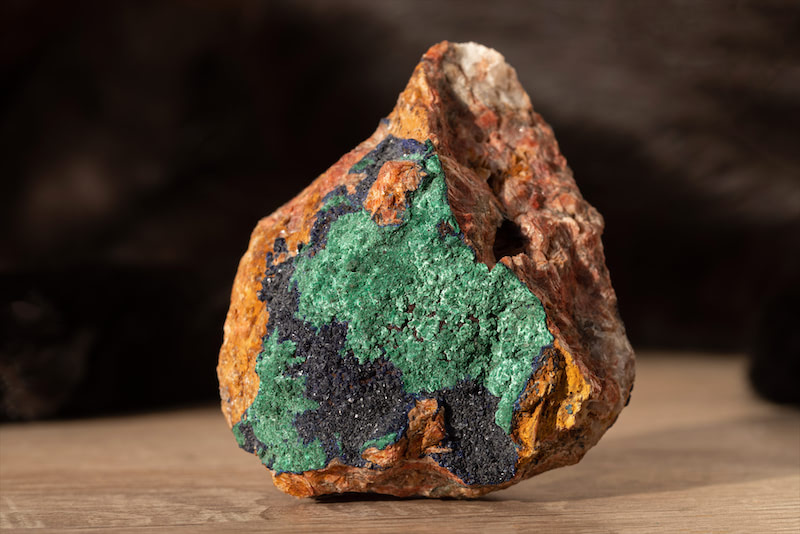
Peru sees 1 million t/y copper output boost within five to six years
1 hour ago

SMM Newsflash
Sep 24, 2026 17:24 (GMT+8)
Data: SHFE, DCE market movement (Sep 24)
Sep 24, 2026 15:54 (GMT+8)
[SMM Analysis] Mid-Autumn Festival and National Day Holiday and Order Analysis of Downstream Tin Solder Enterprises
[SMM Analysis: Holiday and Order Status of Downstream Tin Solder Enterprises During Mid-Autumn Festival and National Day]
Sep 24, 2026 13:48 (GMT+8)
[US Treasury yields break above 5% across the board, coupled with pre-holiday caution; the most-traded SHFE tin contract opens lower then stabilizes with sluggish trading [SMM Tin Midday Review]]
[SMM Tin Midday Review: US Treasury Yields All Break 5% Combined with Pre-Holiday Caution, the Most-Traded SHFE Tin Contract Opens Lower Then Stabilizes with Sluggish Trading]
Sep 24, 2026 12:03 (GMT+8)
[SMM Analysis] Myanmar Ore Shipment Recovery Lifts August Raw Material Supply; Tin Metal Stays in Net-Import Territory
[SMM Analysis: Myanmar Ore Shipment Recovery Lifts August Raw Material Supply; Tin Metal Stays in Net-Import Territory]
Sep 24, 2026 10:16 (GMT+8)
[SMM Analysis] Indonesia Issues New OJK Rules for BMKS, Laying Legal Basis for Domestic Commodity Price Formation
Sep 24, 2026 09:48 (GMT+8)
After the rate hike, macro pressure was released, and the most-traded SHFE tin SN2610 contract consolidated above 410,000 yuan/mt [SMM Tin Morning News]
[SMM tin morning briefing: Macro pressure released after rate hike, the most-traded SHFE tin SN2610 contract consolidates above 410,000 yuan/mt]
Sep 24, 2026 08:57 (GMT+8)
SHFE tin fell 0.49% in the night session, giving back daytime gains as bulls and bears battle again at the 410,000 level [SMM Tin Morning Meeting Summary]
[SMM Tin Morning Meeting Summary: SHFE tin fell 0.49% in the night session, giving back daytime gains, as bulls and bears battle again at the 410,000 mark]
Sep 24, 2026 08:55 (GMT+8)
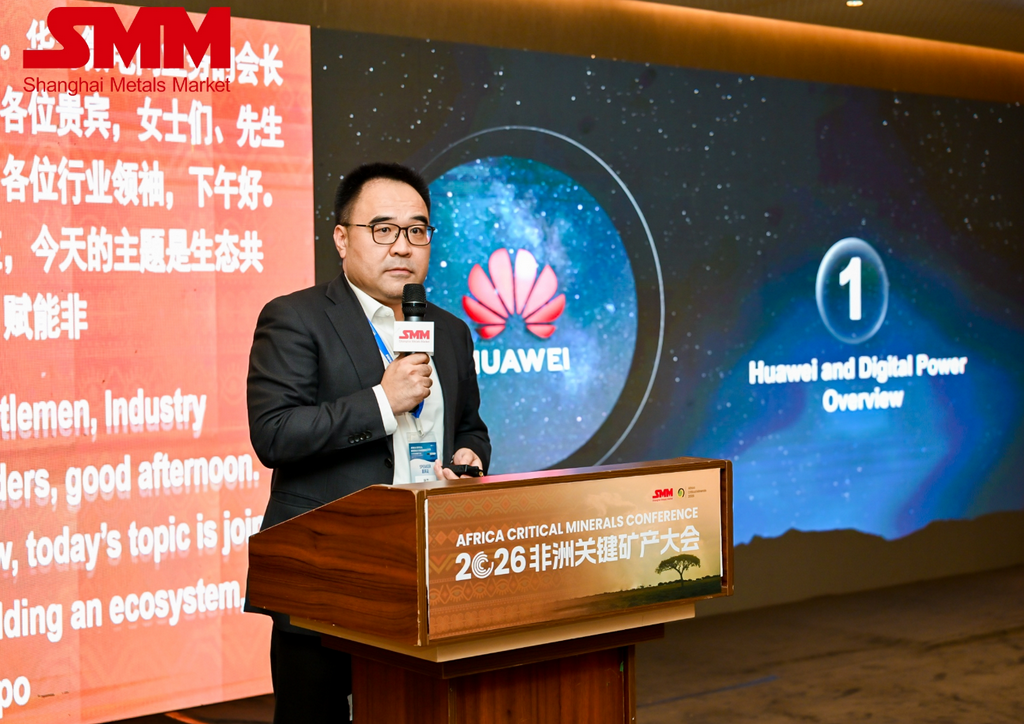
Huawei Pursues Africa Green‑Mining Partnerships and Holds Business Talks with ZESCO at SMM ACM 2026
Sep 23, 2026 16:41 (GMT+8)

Data: SHFE, DCE market movement (Sep 23)
Sep 23, 2026 15:55 (GMT+8)
![SHFE tin holds the 410,000 level, inventory drops on both fronts + semiconductor surge continues to confirm tight balance [SMM Tin Morning News]](https://imgqn.smm.cn/usercenter/BBJUa20251217171751.jpg)
SHFE tin holds the 410,000 level, inventory drops on both fronts + semiconductor surge continues to confirm tight balance [SMM Tin Morning News]
Sep 23, 2026 09:03 (GMT+8)
![The most-traded SHFE tin contract closed at 413,080 in the night session, climbing above 413,000. With the September rate hike finalized, ore-side hard constraints support consolidation at highs. [SMM Tin Morning Meeting Summary]](https://imgqn.smm.cn/usercenter/nyMyJ20251217171751.jpg)
The most-traded SHFE tin contract closed at 413,080 in the night session, climbing above 413,000. With the September rate hike finalized, ore-side hard constraints support consolidation at highs. [SMM Tin Morning Meeting Summary]
Sep 23, 2026 08:59 (GMT+8)
Data: SHFE, DCE market movement (Sep 22)
The following table shows the ferrous and nonferrous metals movement on the SHFE and DCE on 22 Sep , 2026
Sep 22, 2026 15:54 (GMT+8)
After bearish factors digested and macro guidance temporarily absent, the center of the most-traded SHFE tin contract returns to 410,000 [SMM Tin Midday Review]
[SMM Tin Midday Review: After Bearish Factors Were Digested and Macro Guidance Was Temporarily Absent, the Most-Traded SHFE Tin Contract's Center Returned to 410,000]
Sep 22, 2026 11:40 (GMT+8)
[Google targets the high-end laptop market, launching the Googlebook at $899]
Google has launched a new laptop product line called Googlebook, with a starting price of $899, marking the company's entry into the high-end laptop market, targeting users including Android phone users and programmers. The company hopes that through this product, its Gemini AI assistant will become a core part of the laptop user experience. The company is attempting to build a laptop ecosystem aimed at high-end Android phone users, similar to the collaborative experience between Apple's MacBook and iPhone, with the goal of establishing a more tightly integrated device ecosystem. The low-end price of the Googlebook is lower than the MacBook Air, which starts at $1,299, but Google stated that the product is not intended to replace Chromebooks, nor is it a general-purpose laptop for all users.
Sep 22, 2026 10:09 (GMT+8)
[Hubei: Issuing "computing power vouchers," raising subsidy ratios, and including service models such as models and yuan in the subsidy scope]
The General Office of the Hubei Provincial People's Government issued the Several Measures for Promoting Stable Economic Improvement in Hubei Province by Combining Short-Term and Long-Term Approaches in Q3 and Q4, which proposes to step up efforts to advance the construction of the "six networks." A project reserve pool and an annual list of major projects will be established, and preliminary work funds from provincial budget investment will be allocated to support the advancement of major projects. Support will be given to localities in actively exploring the "integrated plant-network and comprehensive water supply and drainage management" model as well as franchise operation models, and various enterprises will be encouraged to participate in the "investment, construction, management, and operation" of urban underground pipeline networks. Reforms to assetize state-owned water resources and water projects will be deepened, and the modern green water economy will be cultivated and expanded. "Computing power vouchers" will be issued, subsidy ratios will be raised, and service models such as models and tokens will be included in the scope of subsidies, so as to effectively lower the threshold for small and medium-sized enterprises and science and innovation teams to access computing power. Support will be given to market entities and industrial parks with green electricity consumption demand, such as newly built load centers and export-oriented enterprises, in utilizing surrounding new energy resources to carry out direct green electricity connections.
Sep 22, 2026 10:09 (GMT+8)
[Samsung HBM4 capacity may double next year]
Industry sources indicate that Samsung plans to increase the outsourced cleaning volume of glass carriers in its HBM process from 20,000 wafers per month this year to 50,000 wafers per month next year, a fivefold increase from 10,000 wafers per month last year. Glass carriers are support structures temporarily attached to the bottom of DRAM wafers during the HBM process, used to prevent the wafers from bending or cracking during etching and drilling. Since glass carriers can be reused, actual usage is affected by loading methods and process yield, but if cleaning demand increases 2.5-fold, it suggests a high likelihood that Samsung's HBM4-series production will at least double next year. Samsung is actively preparing to expand capacity for HBM4 and HBM4E, both of which feature high-stack architectures with more than 12 layers.
Sep 22, 2026 10:08 (GMT+8)
[OpenAI develops AI agent features to compete with Grok Bot and Meta's personal AI assistant]
According to The Information, as competitors like SpaceX and Meta launch personal AI agents capable of handling multi-step tasks, OpenAI is facing pressure to catch up. Sources familiar with the matter revealed that OpenAI is developing new features to compete more directly with the Grok Bot recently launched by SpaceX. The product is designed to help users create an always-online AI "assistant team" that can handle daily tasks in the background, manage software, and collaborate. Another source said OpenAI is also discussing the development of a personal AI assistant to counter a similar product recently launched by Meta. In developing related products, OpenAI may repackage and rebrand its existing "agent" technology, including features already applied in Codex and ChatGPT. Currently, some OpenAI application users have already connected it to their email, calendars, and other applications, enabling tasks such as automatically scheduling meetings and communicating with enterprises via email, with some tasks even taking days to complete.
Sep 22, 2026 10:07 (GMT+8)
[US chip stocks rally collectively, AMD joins the trillion-dollar market cap club]
Driven by sustained growth in AI demand, chip stocks broadly rose during the US session, with AMD (AMD.O) surging more than 9% intraday to a record high of $613.92, pushing the company's market capitalization past $1 trillion. AMD is regarded as one of the foremost competitors to AI leader Nvidia (NVDA.O) in the graphics processing unit (GPU) market. AMD became the fourth US chipmaker to surpass a $1 trillion market value, following Nvidia, Broadcom (AVGO.O), and Micron Technology (MU.O). Nvidia crossed the $1 trillion mark in 2023 and is now the world's most valuable company, with a market capitalization exceeding $5 trillion. On Monday, most chip stocks rose in tandem. Intel (INTC.O) climbed about 11% intraday, Qualcomm (QCOM.O) gained 4.1%, and the Philadelphia Semiconductor Index advanced 2.6% to a one-month high.
Sep 22, 2026 10:07 (GMT+8)
Huawei Pursues Africa Green‑Mining Partnerships and Holds Business Talks with ZESCO at SMM ACM 2026
The SMM Africa Critical Minerals Conference 2026 (ACM2026) , hosted by Shanghai Metals Market (SMM), wrapped up with great success in Lusaka, Zambia on September 15‑16. Focusing on the development of strategic minerals such as copper, cobalt, lithium, and tin in Africa, local deep-processing transformation, green mine construction and energy infrastructure upgrading, this premium event has brought together 400+ industry representatives from Chinese and African government agencies, top miners, commodity traders, investors, and technical service providers to jointly explore high-quality development paths for Africa's critical minerals industry chain. Huawei presented its mine microgrid solution at this conference. Joseph Yao, President of Mining Micro-Grid Business at Huawei Digital Power , delivered a keynote speech titled "Eco‑Partnerships for Green African Mines: Huawei's Mine Microgrid Practices under the IPP‑PPA Model". Huawei's delegation also held business talks with ZESCO, Zambia's national power utility, covering mine energy supply, new‑energy deployment and collaborative power‑infrastructure build‑out. As the global energy transition continues to advance, the new energy industry is steadily boosting demand for critical minerals such as copper and cobalt. Africa is rich in strategic mineral resources and is accelerating its upgrade from exporting mineral raw materials to a high-value-added industry chain encompassing local smelting and deep processing. Mines, as power-intensive sites, require stable and low-cost green power supply, which has become a core factor constraining the implementation of mining projects and the release of capacity in Africa. Leveraging the IPP-PPA (independent power producer investment + long-term power purchase agreement) cooperation model, distributed new energy microgrids can provide reliable power nearby for open-pit mines and smelter sites, helping mines reduce electricity costs and carbon emissions, and supporting the implementation of Zambia's strategy for local copper ore processing. (Joseph Yao, President of Mining Micro-Grid Business at Huawei Digital Power) Joseph Yao shared an overview of Huawei and its Digital Energy business, introducing Huawei as a leading provider of ICT infrastructure and smart terminals, a technology-driven enterprise with operations across many countries worldwide, focusing on core business segments such as smart PV and grid-forming ESS. He noted that Africa's mining sector is generally plagued by power shortages. High diesel costs erode mine profit margins, unstable power supplies risk production disruptions, while ESG requirements also impose constraints on mineral exports. He proposed a three-step path for the sustainable development of African mining: Firstly, supply green electricity to mines through digital energy infrastructure to reduce carbon emissions; Secondly, electrification transition of mining equipment; Thirdly, reshape production processes through AI platforms and intelligent management systems, optimize equipment scheduling, and improve mine capacity and production efficiency. He also highlighted Huawei's mine microgrid system. Rather than a standalone piece of equipment, it is a complete energy solution integrating photovoltaic‑storage systems, intelligent dispatching, diesel backup power supplies, control systems and management software. It breaks the conventional single‑power‑source model to enable energy self‑sufficiency and efficient energy management at mining sites. Citing the large‑scale microgrid project for Saudi Arabia's Red Sea Global as a case study, he explained that this city‑level microgrid achieved major technical breakthroughs underpinned by Huawei's robust in‑house R&D capabilities and power‑simulation laboratories. Huawei possesses independent R&D capacity for core power‑electronic components such as IGBTs, and delivers one‑stop services covering design, simulation and project delivery. Together with ecosystem partners, it also provides full‑lifecycle engineering consultation and on‑site implementation support. The successful delivery of this project has laid a solid foundation for microgrid deployment in mining scenarios. He specifically addressed the widespread funding pain points confronting African mining projects. Under the IPP‑PPA ecosystem model, domestic and international investors can be brought in to finance mine‑energy projects. Mining companies, as power purchasers, sign long‑term power‑purchase agreements to secure stable mine operations, while investors obtain steady returns, forming a sustainable commercial closed‑loop. In his speech, Joseph cited several African mine microgrid implementation cases. Among them, after the completion of the Kamoa-Kakula mining microgrid project in the DRC, green electricity will replace a large amount of diesel power generation, significantly reducing mine electricity costs and carbon emissions, and delivering a good return on investment. For this Chinese-funded miner's copper mine project in the DRC, microgrid upgrades sharply reduced electricity costs and significantly improved the mine's capacity utilization rate, verifying the practical value of green electricity microgrids in African mine scenarios. He summarized Huawei's three core capabilities: a globalized business platform, end-to-end one-stop microgrid solutions, and a diverse ecosystem partner system that includes investors, EPCs, and design consulting agencies. He added that Huawei is looking forward to establishing partnership with more investors to develop energy projects across Zambia and wider Africa, secure power supplies for critical‑mineral industries including copper and lithium, jointly foster green mines in Africa, and build a low‑carbon and sustainable industrial future. During the conference, the Huawei delegation held a business meeting with representatives from Zambia's national power utility ZESCO. Against the backdrop of accelerating green transformation in African mining and continuously growing power demand in mining areas, the two sides exchanged views on topics of common concern such as power infrastructure construction and new energy support, and expressed their intention to jointly explore potential areas for cooperation. Africa's mineral industry is at a critical window for industry chain upgrading. Huawei, drawing on its technological strengths in new energy and smart power, will partner with IPP investors, local power authorities and mining operators to build an open‑cooperation ecosystem. Leveraging its proven mine microgrid solutions, Huawei aims to deliver green, reliable power supplies for African mining and smelting projects, advance the low‑carbon transition of Africa’s critical minerals industry, and deepen practical China‑Africa cooperation across the mining and energy sectors.
Sep 23, 2026 16:41 (GMT+8)
![[SMM Analysis] China’s Shifting Tungsten Trade Landscape: A Strategic View](https://imgqn.smm.cn/usercenter/eThpo20251217171723.jpeg)
[SMM Analysis] China’s Shifting Tungsten Trade Landscape: A Strategic View
Sep 23, 2026 09:13 (GMT+8)
![[SMM Analysis] A Snapshot of Zambia’s Gold Market: From Mine Output to Formal Trade](https://imgqn.smm.cn/usercenter/nQsOk20251217171736.jpg)
[SMM Analysis] A Snapshot of Zambia’s Gold Market: From Mine Output to Formal Trade
Sep 23, 2026 16:23 (GMT+8)
![Canada Lifts Solar Trade Duties: Can Chinese Modules Win a Bigger Share? [SMM Analysis]](https://imgqn.smm.cn/usercenter/VqcvE20251217171739.jpg)
Canada Lifts Solar Trade Duties: Can Chinese Modules Win a Bigger Share? [SMM Analysis]
Sep 21, 2026 18:03 (GMT+8)
DRC Establishes US-DRC Special Working Group to Accelerate Strategic Minerals Partnership
Sep 21, 2026 10:00 (GMT+8)
![[SMM Analysis] China-US Talks Fuel Bullish Sentiment in Pr-Nd Market, But Fundamentals Prevail](https://imgqn.smm.cn/usercenter/PVQnj20251217171744.jpg)
[SMM Analysis] China-US Talks Fuel Bullish Sentiment in Pr-Nd Market, But Fundamentals Prevail
Sep 24, 2026 12:34 (GMT+8)
Why Is SHFE Copper’s “Three Highs” Market Intensifying?
Sep 22, 2026 18:53 (GMT+8)
Latest News
Peru sees 1 million t/y copper output boost within five to six years
1 hour ago
SMM Newsflash
Sep 24, 2026 17:24 (GMT+8)
Data: SHFE, DCE market movement (Sep 24)
Sep 24, 2026 15:54 (GMT+8)
[SMM Analysis] Mid-Autumn Festival and National Day Holiday and Order Analysis of Downstream Tin Solder Enterprises
Sep 24, 2026 13:48 (GMT+8)
[US Treasury yields break above 5% across the board, coupled with pre-holiday caution; the most-traded SHFE tin contract opens lower then stabilizes with sluggish trading [SMM Tin Midday Review]]
Sep 24, 2026 12:03 (GMT+8)
[SMM Analysis] Myanmar Ore Shipment Recovery Lifts August Raw Material Supply; Tin Metal Stays in Net-Import Territory
Sep 24, 2026 10:16 (GMT+8)
[SMM Analysis] Indonesia Issues New OJK Rules for BMKS, Laying Legal Basis for Domestic Commodity Price Formation
Sep 24, 2026 09:48 (GMT+8)
After the rate hike, macro pressure was released, and the most-traded SHFE tin SN2610 contract consolidated above 410,000 yuan/mt [SMM Tin Morning News]
Sep 24, 2026 08:57 (GMT+8)
SHFE tin fell 0.49% in the night session, giving back daytime gains as bulls and bears battle again at the 410,000 level [SMM Tin Morning Meeting Summary]
Sep 24, 2026 08:55 (GMT+8)
Huawei Pursues Africa Green‑Mining Partnerships and Holds Business Talks with ZESCO at SMM ACM 2026
Sep 23, 2026 16:41 (GMT+8)
Data: SHFE, DCE market movement (Sep 23)
Sep 23, 2026 15:55 (GMT+8)
SHFE tin holds the 410,000 level, inventory drops on both fronts + semiconductor surge continues to confirm tight balance [SMM Tin Morning News]
Sep 23, 2026 09:03 (GMT+8)
The most-traded SHFE tin contract closed at 413,080 in the night session, climbing above 413,000. With the September rate hike finalized, ore-side hard constraints support consolidation at highs. [SMM Tin Morning Meeting Summary]
Sep 23, 2026 08:59 (GMT+8)
Data: SHFE, DCE market movement (Sep 22)
Sep 22, 2026 15:54 (GMT+8)
After bearish factors digested and macro guidance temporarily absent, the center of the most-traded SHFE tin contract returns to 410,000 [SMM Tin Midday Review]
Sep 22, 2026 11:40 (GMT+8)
[Google targets the high-end laptop market, launching the Googlebook at $899]
Sep 22, 2026 10:09 (GMT+8)
[Hubei: Issuing "computing power vouchers," raising subsidy ratios, and including service models such as models and yuan in the subsidy scope]
Sep 22, 2026 10:09 (GMT+8)
[Samsung HBM4 capacity may double next year]
Sep 22, 2026 10:08 (GMT+8)
[OpenAI develops AI agent features to compete with Grok Bot and Meta's personal AI assistant]
Sep 22, 2026 10:07 (GMT+8)
[US chip stocks rally collectively, AMD joins the trillion-dollar market cap club]
Sep 22, 2026 10:07 (GMT+8)