

News
Exclusive analysis articles with the latest market updates, and real-time news feeds.
![[SMM Analysis] India’s BESS Manufacturing Push Accelerates, but Cell Dependence Remains a Key Bottleneck](https://imgqn.smm.cn/production/admin/votes/imagesozVHm20260131125121.jpeg)
[SMM Analysis] India’s BESS Manufacturing Push Accelerates, but Cell Dependence Remains a Key Bottleneck
In the first quarter of 2026, global energy storage system shipments reached 100.0 GWh, a 96.5% increase from 50.9 GWh in the same period of 2025, bringing quarterly shipments to an entirely new scale.
Sep 30, 2026 08:50 (GMT+8)
SMM Launches Aluminium CBAM Calculator: What Cost Estimates Mean for EU-Bound Offers【SMM Analysis】
As the EU Carbon Border Adjustment Mechanism (CBAM) enters its definitive phase, aluminium trade with Europe requires carbon costs to be assessed alongside metal prices, processing charges and logistics. SMM has launched its Aluminium CBAM Calculator , bringing together product codes, origin, emissions data and certificate prices to support export quotations, European procurement and internal budgeting. The aluminium module offers 58 CN codes and 68 origin/default-value categories, covering unwrought aluminium, profiles, sheet, strip, foil and other products. Annual parameters are available for 2026–2030. Users enter a tonnage and select default emissions or enter verified actual emissions. The page then displays estimated certificates per tonne, total certificates, cost per tonne and total budget, with primary and secondary aluminium routes matched to the applicable data basis. The practical benefit is that assumptions and results appear together. Exporters can specify the product, origin, import period and emissions basis behind a quotation, while buyers can compare sources under consistent conditions. The page includes Chinese and English interfaces, parameter tables and a printable cost-sheet option. How the associated costs are shared between buyers and sellers remains a contractual matter. Certificate exposure should be distinguished from its monetary value. As of 29 September 2026, the calculator incorporates official prices of €75.36 per certificate for Q1 2026 and €75.28 for Q2. The Q3 price has not yet been published. Where a price is unavailable, the page retains certificate-volume estimates and leaves costs blank, rather than substituting an assumed price. The current version excludes deductions for carbon prices paid abroad and assessment of the annual import threshold. Its actual-emissions calculation for complex aluminium goods also lacks the free-allocation adjustment attributable to precursors. The analysis below therefore uses the checked default-value calculation. Results are commercial estimates, not final statutory surrender obligations. For market comparisons, the same aluminium product can carry materially different estimated costs depending on its origin-specific default value. Consider CN 76012040—unwrought aluminium alloys in billet form—with primary route K, the Q2 2026 certificate price and a quantity of 1,000 tonnes. Estimated costs under the Chinese, Indian and Canadian default-value cases are €143.98, €50.41 and €57.86 per tonne, respectively. These figures include the annual default-value mark-up and the benchmark-based free-allocation adjustment. The Chinese and Indian default-value cases differ by approximately €93.57 per tonne. Comparing only the metal price or processing charge may therefore miss a meaningful difference in the buyer's budget. Where other commercial terms are similar, estimated CBAM costs could affect an offer's attractiveness. However, this is not a ranking of producers' actual carbon intensity. Freight, customs duties, quality and delivery terms are also outside this comparison, so the figures alone cannot determine the preferred supplier. This highlights the commercial value of supplier emissions documentation. For producers whose actual emissions are below the applicable default value, supported by compliant verification, actual data may change a buyer's cost assessment. Buyers can use defaults for an initial budget when documentation is unavailable, then reassess using supplier evidence. Exporters consequently have a reason to prepare emissions information alongside their product offers, rather than negotiate solely around country-default differences. Annual parameter changes also warrant attention. Holding the Chinese product's base default value, route and benchmark constant, and assuming that the import year and applicable reporting year coincide, estimated certificate exposure rises from 1.912575 per tonne in 2026 to 2.248150 in 2027—an increase of approximately 17.5%. This reflects a higher default-value mark-up and a smaller free-allocation deduction; it does not imply a rise in future certificate prices. For supply arrangements spanning different years, companies can first compare certificate exposure, then discuss price-update mechanisms and cost sharing. Even while future certificate prices remain unknown, identifying that exposure and obtaining supplier documentation can improve the comparability of offers and procurement budgets.
Sep 29, 2026 17:32 (GMT+8)
[SMM Analysis] Low-Carbon of Primary Copper Begin Trading Separately—Will Recycled Copper’s Green Value Be Reassessed?
[SMM Analysis: Low-Carbon of Primary Copper Begin Trading Separately—Will Recycled Copper’s Green Value Be Reassessed?] BHP and Amazon’s EAC pilot separates verified emissions reductions from physical copper trade, giving low-emissions primary copper a new source of environmental value. Recycled copper retains a major energy advantage, but future competitiveness may depend more on traceability, recycled content and verified carbon data, potentially adding an environmental dimension to pricing.
Sep 29, 2026 16:03 (GMT+8)
Latest News

【Flash | Coherent’s PhotonLink Sets the Stage for a Commercial Indium Phosphide (InP) Ramp】
Oct 02, 2026 14:34 (GMT+8)
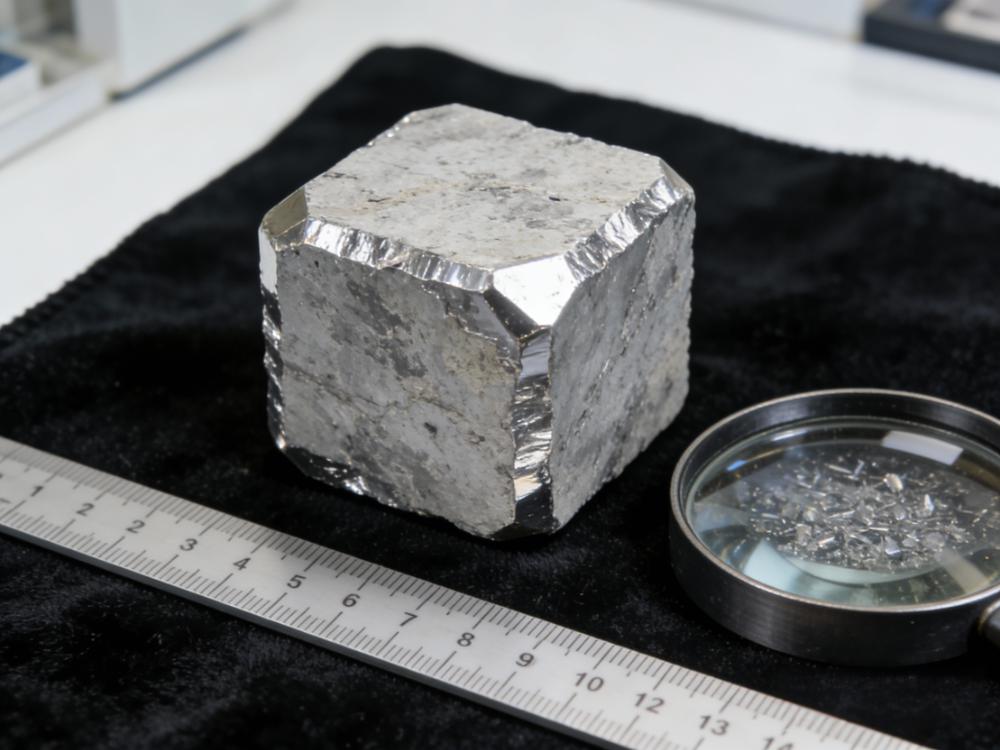
Nine Mile’s Second Rig Arrives at Tribag–West Wedge to Test Seven Electromagnetic Targets
Oct 02, 2026 10:38 (GMT+8)
【SMM Flash News】Masivo Intersects 32.50 Metres of Lead-Zinc-Bearing Polymetallic Mineralization at Cerro Colorado.
Oct 01, 2026 10:06 (GMT+8)
Regional disruptions constrain September production recovery; October secondary lead growth is expected
Oct 01, 2026 09:24 (GMT+8)
[SMM Analysis] National Day Impact: Lead Smelters' Production and Ingot Pre-sales Overview
SMM, September 30: As the National Day holiday approaches, enterprises across the lead industry chain are making holiday arrangements.
Sep 30, 2026 21:35 (GMT+8)
Market sentiment cautious before National Day, scrap battery prices fluctuate narrowly [SMM scrap battery weekly review]
Sep 30, 2026 17:37 (GMT+8)
Post-holiday fundamentals shift, lead prices are expected to consolidate within a wider range [SMM Lead Market Weekly Forecast]
Sep 30, 2026 17:00 (GMT+8)
Downstream Enterprises End Stockpiling, Dealers May Launch Sales Promotions Again [SMM Lead-acid Battery Market Weekly Review]
Sep 30, 2026 16:45 (GMT+8)
Operating rate of lead-acid battery enterprises dropped sharply during the week sandwiched between the two holidays [SMM Lead-Acid Battery Weekly Operating Rate Comment]
Sep 30, 2026 16:36 (GMT+8)
Suppliers offloaded goods to clear inventory at September month-end, primary lead enterprise inventory declined further [SMM Primary Lead Inventory Weekly Review]
Sep 30, 2026 16:30 (GMT+8)
![SMM Primary Lead Smelter Weekly Operating Rate (September 25 – October 1, 2026) [SMM Primary Lead Operating Weekly Review]](https://imgqn.smm.cn/usercenter/qnyHQ20251217171721.jpeg)
SMM Primary Lead Smelter Weekly Operating Rate (September 25 – October 1, 2026) [SMM Primary Lead Operating Weekly Review]
Sep 30, 2026 16:18 (GMT+8)
![Downstream stockpiling ends, lead spot market shifts from premium to discount trading [SMM Refined Lead Spot Market Weekly Review]](https://imgqn.smm.cn/usercenter/xVUpr20251217171722.jpg)
Downstream stockpiling ends, lead spot market shifts from premium to discount trading [SMM Refined Lead Spot Market Weekly Review]
Sep 30, 2026 16:16 (GMT+8)

Holiday Slows Secondary Lead Market, Fewer Sellers and Quiet Transactions
Sep 30, 2026 16:10 (GMT+8)
SMM Crude Lead CIF Price at Discount; New Import Transactions Decline
[Secondary Lead Market Dynamics] As of this Friday, the SMM crude lead CIF price (including 0.1-0.35 Sb, 0.1-0.25 Sn) was at a discount of 300-150 yuan/mt against the SMM #1 lead average price. During the week, new import crude lead transactions shrank, with only a small number of orders for late August and early September arrivals. After the holiday, previously concluded orders will arrive at ports in a concentrated manner.
Sep 30, 2026 16:09 (GMT+8)
Secondary Lead Inventories Drop 330 mt MoM, Transactions Slow Amid Pre-Holiday Subdued Demand
[Secondary Lead Market Dynamics] As of September 30, secondary lead finished product inventories stood at 7,700 mt, down 330 mt MoM. Pre-holiday stockpiling largely concluded this week, downstream purchasing sentiment turned subdued, and transactions pulled back WoW. Meanwhile, secondary lead suppliers faced tight spot order availability, with some merchants taking early leave and suspending quotes and sales, slowing the pace of inventory decline.
Sep 30, 2026 16:08 (GMT+8)
Weekly Operating Rate of Secondary Lead Smelters Remains Stable at 40.3% Across Four Provinces
[Secondary Lead Production Dynamics] During September 25 – October 1, 2026, the weekly operating rate of secondary lead smelters across SMM's four provinces was 40.3%, flat WoW. Production at secondary lead smelters remained stable this week, with operating levels largely in line with the previous week.
Sep 30, 2026 16:07 (GMT+8)
Reduced secondary lead shipments before the holiday, divergent premiums, smelter profits largely stable [SMM secondary refined lead weekly review]
Sep 30, 2026 16:05 (GMT+8)
Data: SHFE, DCE market movement (Sep 30)
The following table shows the ferrous and nonferrous metals movement on the SHFE and DCE on 30 Sep , 2026
Sep 30, 2026 16:03 (GMT+8)
Pre-holiday wait-and-see sentiment prevails; SHFE lead 2611 contract ends weak [Lead Futures Brief Comment]
Sep 30, 2026 15:45 (GMT+8)
King Global Reports Golden Turkey Tailings Sampling Averaging 0.44% Lead and 0.42% Zinc Across 76 Near-Surface Samples
King Global Critical Minerals reported results from systematic sampling of the historic Golden Turkey tailings at its Black Canyon project in Arizona. A total of 76 near-surface tailings samples collected on an approximately 30-foot grid returned arithmetic averages of around 3.85 g/t gold, 76.2 g/t silver, 0.44% lead and 0.42% zinc.
The company explicitly states that these results characterise only the sampled near-surface population and should not be interpreted as the average grade of the entire Golden Turkey tailings deposit or combined with historical tailings-volume estimates to calculate contained metal. King plans additional vertical sampling, representative bulk-density measurements and metallurgical testing while continuing discussions with the U.S. Forest Service and other regulators regarding potential removal, off-site processing and reclamation of the historic tailings.
Sep 30, 2026 15:20 (GMT+8)
![[SMM Announcement] Chinese Market Metal Prices and News Updates Suspended during National Day Holiday (Oct 1-7)](https://imgqn.smm.cn/usercenter/HeIuV20251217171708.jpg)
[SMM Announcement] Chinese Market Metal Prices and News Updates Suspended during National Day Holiday (Oct 1-7)
Dear Valued SMM Users, The National Day holiday is approaching. Please note that SMM Chinese market metal price assessments and news updates will be temporarily suspended during the holiday (October 1-7) and resume normal release after the break. However, SMM overseas price assessment will continue to be updated as usual throughout the holiday. We apologise for any inconvenience caused and wish you a pleasant holiday. Shanghai Metals Market (SMM)
Sep 28, 2026 17:06 (GMT+8)

Huawei Pursues Africa Green‑Mining Partnerships and Holds Business Talks with ZESCO at SMM ACM 2026
Sep 23, 2026 16:41 (GMT+8)
![[SMM Analysis] The U.S. Copper Tariff Trade Is Fading — but It Isn’t Over Yet](https://imgqn.smm.cn/production/admin/votes/imagesMbCUq20260929144044.png)
[SMM Analysis] The U.S. Copper Tariff Trade Is Fading — but It Isn’t Over Yet
Sep 29, 2026 14:37 (GMT+8)

South Africa Poised to Become Key Player in Global Rare Earth Supply Chain by 2034【SMM Analysis】
Sep 29, 2026 18:54 (GMT+8)
[SMM Analysis] India’s BESS Manufacturing Push Accelerates, but Cell Dependence Remains a Key Bottleneck
Sep 30, 2026 08:50 (GMT+8)
SMM Launches Aluminium CBAM Calculator: What Cost Estimates Mean for EU-Bound Offers【SMM Analysis】
Sep 29, 2026 17:32 (GMT+8)
![[SMM Analysis] Low-Carbon of Primary Copper Begin Trading Separately—Will Recycled Copper’s Green Value Be Reassessed?](https://imgqn.smm.cn/usercenter/MXbup20251217171745.jpg)
[SMM Analysis] Low-Carbon of Primary Copper Begin Trading Separately—Will Recycled Copper’s Green Value Be Reassessed?
Sep 29, 2026 16:03 (GMT+8)
Latest News
【Flash | Coherent’s PhotonLink Sets the Stage for a Commercial Indium Phosphide (InP) Ramp】
Oct 02, 2026 14:34 (GMT+8)
Nine Mile’s Second Rig Arrives at Tribag–West Wedge to Test Seven Electromagnetic Targets
Oct 02, 2026 10:38 (GMT+8)
【SMM Flash News】Masivo Intersects 32.50 Metres of Lead-Zinc-Bearing Polymetallic Mineralization at Cerro Colorado.
Oct 01, 2026 10:06 (GMT+8)
Regional disruptions constrain September production recovery; October secondary lead growth is expected
Oct 01, 2026 09:24 (GMT+8)
[SMM Analysis] National Day Impact: Lead Smelters' Production and Ingot Pre-sales Overview
Sep 30, 2026 21:35 (GMT+8)
Market sentiment cautious before National Day, scrap battery prices fluctuate narrowly [SMM scrap battery weekly review]
Sep 30, 2026 17:37 (GMT+8)
Post-holiday fundamentals shift, lead prices are expected to consolidate within a wider range [SMM Lead Market Weekly Forecast]
Sep 30, 2026 17:00 (GMT+8)
Downstream Enterprises End Stockpiling, Dealers May Launch Sales Promotions Again [SMM Lead-acid Battery Market Weekly Review]
Sep 30, 2026 16:45 (GMT+8)
Operating rate of lead-acid battery enterprises dropped sharply during the week sandwiched between the two holidays [SMM Lead-Acid Battery Weekly Operating Rate Comment]
Sep 30, 2026 16:36 (GMT+8)
Suppliers offloaded goods to clear inventory at September month-end, primary lead enterprise inventory declined further [SMM Primary Lead Inventory Weekly Review]
Sep 30, 2026 16:30 (GMT+8)
SMM Primary Lead Smelter Weekly Operating Rate (September 25 – October 1, 2026) [SMM Primary Lead Operating Weekly Review]
Sep 30, 2026 16:18 (GMT+8)
Downstream stockpiling ends, lead spot market shifts from premium to discount trading [SMM Refined Lead Spot Market Weekly Review]
Sep 30, 2026 16:16 (GMT+8)
Holiday Slows Secondary Lead Market, Fewer Sellers and Quiet Transactions
Sep 30, 2026 16:10 (GMT+8)
SMM Crude Lead CIF Price at Discount; New Import Transactions Decline
Sep 30, 2026 16:09 (GMT+8)
Secondary Lead Inventories Drop 330 mt MoM, Transactions Slow Amid Pre-Holiday Subdued Demand
Sep 30, 2026 16:08 (GMT+8)
Weekly Operating Rate of Secondary Lead Smelters Remains Stable at 40.3% Across Four Provinces
Sep 30, 2026 16:07 (GMT+8)
Reduced secondary lead shipments before the holiday, divergent premiums, smelter profits largely stable [SMM secondary refined lead weekly review]
Sep 30, 2026 16:05 (GMT+8)
Data: SHFE, DCE market movement (Sep 30)
Sep 30, 2026 16:03 (GMT+8)
Pre-holiday wait-and-see sentiment prevails; SHFE lead 2611 contract ends weak [Lead Futures Brief Comment]
Sep 30, 2026 15:45 (GMT+8)
King Global Reports Golden Turkey Tailings Sampling Averaging 0.44% Lead and 0.42% Zinc Across 76 Near-Surface Samples
Sep 30, 2026 15:20 (GMT+8)