

News
Exclusive analysis articles with the latest market updates, and real-time news feeds.
![[SMM Analysis] India’s BESS Manufacturing Push Accelerates, but Cell Dependence Remains a Key Bottleneck](https://imgqn.smm.cn/production/admin/votes/imagesozVHm20260131125121.jpeg)
[SMM Analysis] India’s BESS Manufacturing Push Accelerates, but Cell Dependence Remains a Key Bottleneck
In the first quarter of 2026, global energy storage system shipments reached 100.0 GWh, a 96.5% increase from 50.9 GWh in the same period of 2025, bringing quarterly shipments to an entirely new scale.
Sep 30, 2026 08:50 (GMT+8)
SMM Launches Aluminium CBAM Calculator: What Cost Estimates Mean for EU-Bound Offers【SMM Analysis】
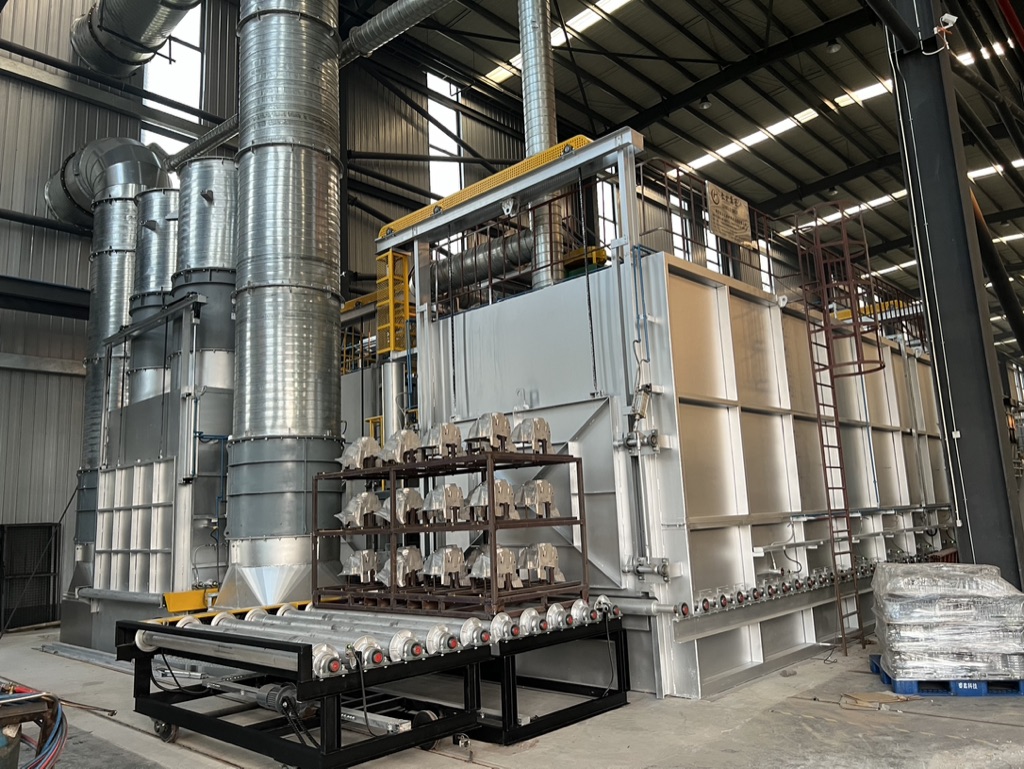
As the EU Carbon Border Adjustment Mechanism (CBAM) enters its definitive phase, aluminium trade with Europe requires carbon costs to be assessed alongside metal prices, processing charges and logistics. SMM has launched its Aluminium CBAM Calculator , bringing together product codes, origin, emissions data and certificate prices to support export quotations, European procurement and internal budgeting. The aluminium module offers 58 CN codes and 68 origin/default-value categories, covering unwrought aluminium, profiles, sheet, strip, foil and other products. Annual parameters are available for 2026–2030. Users enter a tonnage and select default emissions or enter verified actual emissions. The page then displays estimated certificates per tonne, total certificates, cost per tonne and total budget, with primary and secondary aluminium routes matched to the applicable data basis. The practical benefit is that assumptions and results appear together. Exporters can specify the product, origin, import period and emissions basis behind a quotation, while buyers can compare sources under consistent conditions. The page includes Chinese and English interfaces, parameter tables and a printable cost-sheet option. How the associated costs are shared between buyers and sellers remains a contractual matter. Certificate exposure should be distinguished from its monetary value. As of 29 September 2026, the calculator incorporates official prices of €75.36 per certificate for Q1 2026 and €75.28 for Q2. The Q3 price has not yet been published. Where a price is unavailable, the page retains certificate-volume estimates and leaves costs blank, rather than substituting an assumed price. The current version excludes deductions for carbon prices paid abroad and assessment of the annual import threshold. Its actual-emissions calculation for complex aluminium goods also lacks the free-allocation adjustment attributable to precursors. The analysis below therefore uses the checked default-value calculation. Results are commercial estimates, not final statutory surrender obligations. For market comparisons, the same aluminium product can carry materially different estimated costs depending on its origin-specific default value. Consider CN 76012040—unwrought aluminium alloys in billet form—with primary route K, the Q2 2026 certificate price and a quantity of 1,000 tonnes. Estimated costs under the Chinese, Indian and Canadian default-value cases are €143.98, €50.41 and €57.86 per tonne, respectively. These figures include the annual default-value mark-up and the benchmark-based free-allocation adjustment. The Chinese and Indian default-value cases differ by approximately €93.57 per tonne. Comparing only the metal price or processing charge may therefore miss a meaningful difference in the buyer's budget. Where other commercial terms are similar, estimated CBAM costs could affect an offer's attractiveness. However, this is not a ranking of producers' actual carbon intensity. Freight, customs duties, quality and delivery terms are also outside this comparison, so the figures alone cannot determine the preferred supplier. This highlights the commercial value of supplier emissions documentation. For producers whose actual emissions are below the applicable default value, supported by compliant verification, actual data may change a buyer's cost assessment. Buyers can use defaults for an initial budget when documentation is unavailable, then reassess using supplier evidence. Exporters consequently have a reason to prepare emissions information alongside their product offers, rather than negotiate solely around country-default differences. Annual parameter changes also warrant attention. Holding the Chinese product's base default value, route and benchmark constant, and assuming that the import year and applicable reporting year coincide, estimated certificate exposure rises from 1.912575 per tonne in 2026 to 2.248150 in 2027—an increase of approximately 17.5%. This reflects a higher default-value mark-up and a smaller free-allocation deduction; it does not imply a rise in future certificate prices. For supply arrangements spanning different years, companies can first compare certificate exposure, then discuss price-update mechanisms and cost sharing. Even while future certificate prices remain unknown, identifying that exposure and obtaining supplier documentation can improve the comparability of offers and procurement budgets.
Sep 29, 2026 17:32 (GMT+8)
[SMM Analysis] Low-Carbon of Primary Copper Begin Trading Separately—Will Recycled Copper’s Green Value Be Reassessed?
[SMM Analysis: Low-Carbon of Primary Copper Begin Trading Separately—Will Recycled Copper’s Green Value Be Reassessed?] BHP and Amazon’s EAC pilot separates verified emissions reductions from physical copper trade, giving low-emissions primary copper a new source of environmental value. Recycled copper retains a major energy advantage, but future competitiveness may depend more on traceability, recycled content and verified carbon data, potentially adding an environmental dimension to pricing.
Sep 29, 2026 16:03 (GMT+8)
Latest News

SMM Rare Earth Afternoon Trading Comment for September 30
Sep 30, 2026 17:18 (GMT+8)
![Scrap Prices Remain Stable, Holiday Market Trading Thins [SMM Recycled Rare Earth Weekly Review]](https://imgqn.smm.cn/usercenter/tXtym20251217171745.jpeg)
Scrap Prices Remain Stable, Holiday Market Trading Thins [SMM Recycled Rare Earth Weekly Review]
Sep 30, 2026 15:26 (GMT+8)
Pr-Nd prices hold firm with a steady rise, trading tends to thin before the holiday [SMM Rare Earth Weekly Review]
Sep 30, 2026 15:21 (GMT+8)
Rare earth prices stable with an uptrend, Pr-Nd leads the gains, pre-holiday transactions recover [SMM Rare Earth Daily Review]
[SMM Rare Earth Daily Review: Rare earth prices steady with gains; Pr-Nd leads pre-holiday transaction recovery] In the short term, the market is closed during the National Day holiday, and the post-holiday price direction will still depend on the actual implementation of downstream magnetic material enterprise orders. The increase in pre-holiday transaction activity, tightening of low-priced supply, and tender purchases by major factories have provided phased support for Pr-Nd prices. If post-holiday restocking and orders continue, the price center is expected to remain firm; if downstream players do not sufficiently accept the raised quotes, the metal segment's efforts to hold prices firm may still face repeated challenges. For medium-heavy rare earths, terbium, dysprosium, gadolinium, holmium, and erbium each lack independent drivers, and after the holiday they are likely to remain mainly stable, with the overall market most likely maintaining a sideways consolidation trend.
Sep 30, 2026 14:11 (GMT+8)
[SMM Rare Earth Morning Meeting Summary] Pr-Nd remains firm with recovering transactions; dysprosium and terbium stay stable amid holiday wait-and-see sentiment
[SMM Rare Earth Morning Meeting Summary: Pr-Nd Firm with Recovering Transactions, Dy and Tb Stable amid Holiday Wait-and-See] Pr-Nd oxide offers remain inactive, but prices stay firm; dysprosium oxide and terbium oxide show relatively stable trends.
Sep 30, 2026 09:17 (GMT+8)
China's Pr-Nd Alloy Production Declines in September, Ending 5 Months of Growth Amid Cost Squeeze
Sep 30, 2026 09:00 (GMT+8)
Neo Performance Materials Starts Production at Estonian NdFeB Plant, Boosting Global Capacity【SMM Analysis】
Sep 29, 2026 18:57 (GMT+8)
South Africa Poised to Become Key Player in Global Rare Earth Supply Chain by 2034【SMM Analysis】
Sep 29, 2026 18:54 (GMT+8)
Service Robot Production Surges, NdFeB Consumption Rises in Aug-Sep 2026
In August 2026, service robot production reached 1.651 million units, consuming 179.45 mt of NdFeB according to the SMM model. Production in September 2026 is expected to reach 1.93 million units, consuming 209 mt of NdFeB.
Sep 29, 2026 18:22 (GMT+8)
Industrial Robot Production Hits 96,174 in Aug 2026, Forecast to Reach 110,000 in Sept, Boosting NdFeB Demand
In August 2026, industrial robot production reached 96,174 units, consuming 1,731 mt of NdFeB, according to the SMM model. Production in September 2026 is expected to reach 110,000 units, consuming 1,980 mt of NdFeB.
Sep 29, 2026 18:20 (GMT+8)

Smartwatch Production to Reach 6.361M Units in Sept, Consuming 12.72mt of NdFeB
Sep 29, 2026 18:18 (GMT+8)

Microcomputer Production Surges, Driving NdFeB Consumption to 153.4 mt in September 2026
Sep 29, 2026 18:17 (GMT+8)
Smartphone Production Surge in August 2026 Drives NdFeB Consumption to 170 MT, September Aims Higher
Sep 29, 2026 18:16 (GMT+8)
Washing Machine Production in Aug 2026 to Reach 12.15M Units, Consuming 2,582 mt of NdFeB
In August 2026, household washing machine production was 10.536 million units. According to the SMM model, this consumed 2,239 mt of NdFeB. Production in August is expected to reach 12.15 million units, consuming 2,582 mt of NdFeB.
Sep 29, 2026 18:16 (GMT+8)
AC Production Hits 14.952M in Aug, NdFeB Use at 2,239 mt; Sep Forecast at 18.269M Units, 1,663.9 mt NdFeB
In August 2026, air conditioner production reached 14.952 million units, consuming 2,239 mt of NdFeB according to the SMM model. September production is expected to reach 18.269 million units, consuming 1,663.9 mt of NdFeB.
Sep 29, 2026 18:15 (GMT+8)
Elevator Production in Aug 2026: 120,000 Units, 648 mt NdFeB; Sept Forecast: 131,000 Units, 707.1 mt NdFeB
Elevator production in August 2026 was 120,000 units, consuming 648 mt of NdFeB according to the SMM model. September production is expected to reach 131,000 units, consuming 707.1 mt of NdFeB.
Sep 29, 2026 18:14 (GMT+8)
ICE Vehicle Production in Aug 2026 Consumes 326.7 mt NdFeB, Sept Forecast at 430.6 mt
In August 2026, internal combustion engine vehicle production reached 1.031 million units, consuming 326.7 mt of NdFeB according to the SMM model. September production is expected to reach 1.359 million units, consuming 430.6 mt of NdFeB.
Sep 29, 2026 18:13 (GMT+8)
NEV Production Soars to 1.653M in Aug, Expected to Reach 1.95M in Sep with Increased NdFeB Consumption
In August 2026, NEV production reached 1.653 million units, consuming 6,986.1 mt of NdFeB according to the SMM model. September production is expected to reach 1.95 million units, consuming 8,241.4 mt of NdFeB.
Sep 29, 2026 18:12 (GMT+8)
NdFeB Output Growth Accelerates in October After Moderate September Expansion【SMM Analysis】
Sept NdFeB output rose modestly; Oct is set for stronger growth, delaying the peak season. Weak demand, tighter export checks, and high prices kept buyers on lean inventories, shifting stocking to Oct amid early Q4 rushes. Top-tier ran near full, mid-tier ~half, bottom-tier flat—polarization deepened. The peak is merely postponed, with Oct’s rebound driven by catch-up orders and restocking.
Sep 29, 2026 17:37 (GMT+8)
SMM Rare Earth Afternoon Trading Comment on September 29
Sep 29, 2026 17:36 (GMT+8)
![[SMM Announcement] Chinese Market Metal Prices and News Updates Suspended during National Day Holiday (Oct 1-7)](https://imgqn.smm.cn/usercenter/HeIuV20251217171708.jpg)
[SMM Announcement] Chinese Market Metal Prices and News Updates Suspended during National Day Holiday (Oct 1-7)
Dear Valued SMM Users, The National Day holiday is approaching. Please note that SMM Chinese market metal price assessments and news updates will be temporarily suspended during the holiday (October 1-7) and resume normal release after the break. However, SMM overseas price assessment will continue to be updated as usual throughout the holiday. We apologise for any inconvenience caused and wish you a pleasant holiday. Shanghai Metals Market (SMM)
Sep 28, 2026 17:06 (GMT+8)

Huawei Pursues Africa Green‑Mining Partnerships and Holds Business Talks with ZESCO at SMM ACM 2026
Sep 23, 2026 16:41 (GMT+8)
![[SMM Analysis] The U.S. Copper Tariff Trade Is Fading — but It Isn’t Over Yet](https://imgqn.smm.cn/production/admin/votes/imagesMbCUq20260929144044.png)
[SMM Analysis] The U.S. Copper Tariff Trade Is Fading — but It Isn’t Over Yet
Sep 29, 2026 14:37 (GMT+8)

South Africa Poised to Become Key Player in Global Rare Earth Supply Chain by 2034【SMM Analysis】
Sep 29, 2026 18:54 (GMT+8)
[SMM Analysis] India’s BESS Manufacturing Push Accelerates, but Cell Dependence Remains a Key Bottleneck
Sep 30, 2026 08:50 (GMT+8)
SMM Launches Aluminium CBAM Calculator: What Cost Estimates Mean for EU-Bound Offers【SMM Analysis】
Sep 29, 2026 17:32 (GMT+8)
![[SMM Analysis] Low-Carbon of Primary Copper Begin Trading Separately—Will Recycled Copper’s Green Value Be Reassessed?](https://imgqn.smm.cn/usercenter/MXbup20251217171745.jpg)
[SMM Analysis] Low-Carbon of Primary Copper Begin Trading Separately—Will Recycled Copper’s Green Value Be Reassessed?
Sep 29, 2026 16:03 (GMT+8)
Latest News
SMM Rare Earth Afternoon Trading Comment for September 30
Sep 30, 2026 17:18 (GMT+8)
Scrap Prices Remain Stable, Holiday Market Trading Thins [SMM Recycled Rare Earth Weekly Review]
Sep 30, 2026 15:26 (GMT+8)
Pr-Nd prices hold firm with a steady rise, trading tends to thin before the holiday [SMM Rare Earth Weekly Review]
Sep 30, 2026 15:21 (GMT+8)
Rare earth prices stable with an uptrend, Pr-Nd leads the gains, pre-holiday transactions recover [SMM Rare Earth Daily Review]
Sep 30, 2026 14:11 (GMT+8)
[SMM Rare Earth Morning Meeting Summary] Pr-Nd remains firm with recovering transactions; dysprosium and terbium stay stable amid holiday wait-and-see sentiment
Sep 30, 2026 09:17 (GMT+8)
China's Pr-Nd Alloy Production Declines in September, Ending 5 Months of Growth Amid Cost Squeeze
Sep 30, 2026 09:00 (GMT+8)
Neo Performance Materials Starts Production at Estonian NdFeB Plant, Boosting Global Capacity【SMM Analysis】
Sep 29, 2026 18:57 (GMT+8)
South Africa Poised to Become Key Player in Global Rare Earth Supply Chain by 2034【SMM Analysis】
Sep 29, 2026 18:54 (GMT+8)
Service Robot Production Surges, NdFeB Consumption Rises in Aug-Sep 2026
Sep 29, 2026 18:22 (GMT+8)
Industrial Robot Production Hits 96,174 in Aug 2026, Forecast to Reach 110,000 in Sept, Boosting NdFeB Demand
Sep 29, 2026 18:20 (GMT+8)
Smartwatch Production to Reach 6.361M Units in Sept, Consuming 12.72mt of NdFeB
Sep 29, 2026 18:18 (GMT+8)
Microcomputer Production Surges, Driving NdFeB Consumption to 153.4 mt in September 2026
Sep 29, 2026 18:17 (GMT+8)
Smartphone Production Surge in August 2026 Drives NdFeB Consumption to 170 MT, September Aims Higher
Sep 29, 2026 18:16 (GMT+8)
Washing Machine Production in Aug 2026 to Reach 12.15M Units, Consuming 2,582 mt of NdFeB
Sep 29, 2026 18:16 (GMT+8)
AC Production Hits 14.952M in Aug, NdFeB Use at 2,239 mt; Sep Forecast at 18.269M Units, 1,663.9 mt NdFeB
Sep 29, 2026 18:15 (GMT+8)
Elevator Production in Aug 2026: 120,000 Units, 648 mt NdFeB; Sept Forecast: 131,000 Units, 707.1 mt NdFeB
Sep 29, 2026 18:14 (GMT+8)
ICE Vehicle Production in Aug 2026 Consumes 326.7 mt NdFeB, Sept Forecast at 430.6 mt
Sep 29, 2026 18:13 (GMT+8)
NEV Production Soars to 1.653M in Aug, Expected to Reach 1.95M in Sep with Increased NdFeB Consumption
Sep 29, 2026 18:12 (GMT+8)
NdFeB Output Growth Accelerates in October After Moderate September Expansion【SMM Analysis】
Sep 29, 2026 17:37 (GMT+8)
SMM Rare Earth Afternoon Trading Comment on September 29
Sep 29, 2026 17:36 (GMT+8)