

News
Exclusive analysis articles with the latest market updates, and real-time news feeds.
![[SMM Analysis] India’s BESS Manufacturing Push Accelerates, but Cell Dependence Remains a Key Bottleneck](https://imgqn.smm.cn/production/admin/votes/imagesozVHm20260131125121.jpeg)
[SMM Analysis] India’s BESS Manufacturing Push Accelerates, but Cell Dependence Remains a Key Bottleneck
In the first quarter of 2026, global energy storage system shipments reached 100.0 GWh, a 96.5% increase from 50.9 GWh in the same period of 2025, bringing quarterly shipments to an entirely new scale.
Sep 30, 2026 08:50 (GMT+8)
SMM Launches Aluminium CBAM Calculator: What Cost Estimates Mean for EU-Bound Offers【SMM Analysis】
As the EU Carbon Border Adjustment Mechanism (CBAM) enters its definitive phase, aluminium trade with Europe requires carbon costs to be assessed alongside metal prices, processing charges and logistics. SMM has launched its Aluminium CBAM Calculator , bringing together product codes, origin, emissions data and certificate prices to support export quotations, European procurement and internal budgeting. The aluminium module offers 58 CN codes and 68 origin/default-value categories, covering unwrought aluminium, profiles, sheet, strip, foil and other products. Annual parameters are available for 2026–2030. Users enter a tonnage and select default emissions or enter verified actual emissions. The page then displays estimated certificates per tonne, total certificates, cost per tonne and total budget, with primary and secondary aluminium routes matched to the applicable data basis. The practical benefit is that assumptions and results appear together. Exporters can specify the product, origin, import period and emissions basis behind a quotation, while buyers can compare sources under consistent conditions. The page includes Chinese and English interfaces, parameter tables and a printable cost-sheet option. How the associated costs are shared between buyers and sellers remains a contractual matter. Certificate exposure should be distinguished from its monetary value. As of 29 September 2026, the calculator incorporates official prices of €75.36 per certificate for Q1 2026 and €75.28 for Q2. The Q3 price has not yet been published. Where a price is unavailable, the page retains certificate-volume estimates and leaves costs blank, rather than substituting an assumed price. The current version excludes deductions for carbon prices paid abroad and assessment of the annual import threshold. Its actual-emissions calculation for complex aluminium goods also lacks the free-allocation adjustment attributable to precursors. The analysis below therefore uses the checked default-value calculation. Results are commercial estimates, not final statutory surrender obligations. For market comparisons, the same aluminium product can carry materially different estimated costs depending on its origin-specific default value. Consider CN 76012040—unwrought aluminium alloys in billet form—with primary route K, the Q2 2026 certificate price and a quantity of 1,000 tonnes. Estimated costs under the Chinese, Indian and Canadian default-value cases are €143.98, €50.41 and €57.86 per tonne, respectively. These figures include the annual default-value mark-up and the benchmark-based free-allocation adjustment. The Chinese and Indian default-value cases differ by approximately €93.57 per tonne. Comparing only the metal price or processing charge may therefore miss a meaningful difference in the buyer's budget. Where other commercial terms are similar, estimated CBAM costs could affect an offer's attractiveness. However, this is not a ranking of producers' actual carbon intensity. Freight, customs duties, quality and delivery terms are also outside this comparison, so the figures alone cannot determine the preferred supplier. This highlights the commercial value of supplier emissions documentation. For producers whose actual emissions are below the applicable default value, supported by compliant verification, actual data may change a buyer's cost assessment. Buyers can use defaults for an initial budget when documentation is unavailable, then reassess using supplier evidence. Exporters consequently have a reason to prepare emissions information alongside their product offers, rather than negotiate solely around country-default differences. Annual parameter changes also warrant attention. Holding the Chinese product's base default value, route and benchmark constant, and assuming that the import year and applicable reporting year coincide, estimated certificate exposure rises from 1.912575 per tonne in 2026 to 2.248150 in 2027—an increase of approximately 17.5%. This reflects a higher default-value mark-up and a smaller free-allocation deduction; it does not imply a rise in future certificate prices. For supply arrangements spanning different years, companies can first compare certificate exposure, then discuss price-update mechanisms and cost sharing. Even while future certificate prices remain unknown, identifying that exposure and obtaining supplier documentation can improve the comparability of offers and procurement budgets.
Sep 29, 2026 17:32 (GMT+8)
[SMM Analysis] Low-Carbon of Primary Copper Begin Trading Separately—Will Recycled Copper’s Green Value Be Reassessed?
[SMM Analysis: Low-Carbon of Primary Copper Begin Trading Separately—Will Recycled Copper’s Green Value Be Reassessed?] BHP and Amazon’s EAC pilot separates verified emissions reductions from physical copper trade, giving low-emissions primary copper a new source of environmental value. Recycled copper retains a major energy advantage, but future competitiveness may depend more on traceability, recycled content and verified carbon data, potentially adding an environmental dimension to pricing.
Sep 29, 2026 16:03 (GMT+8)
Latest News
![[SMM Analysis] NPI Market Review and Outlook for China's National Day Holiday](https://imgqn.smm.cn/usercenter/biBGl20251217171733.jpg)
[SMM Analysis] NPI Market Review and Outlook for China's National Day Holiday
9 hours ago
![[SMM Analysis] Nickel Sulphate Market Stays Quiet During National Day, Faces Price Pressure Amid Weak Demand](https://imgqn.smm.cn/usercenter/KFwsY20251217171734.jpg)
[SMM Analysis] Nickel Sulphate Market Stays Quiet During National Day, Faces Price Pressure Amid Weak Demand
12 hours ago
![[SMM Analysis] MHP Transactions in China Face Rebound Pressure; Cost and Supply Constraints Limit Downside](https://imgqn.smm.cn/usercenter/Btmsv20251217171733.jpg)
[SMM Analysis] MHP Transactions in China Face Rebound Pressure; Cost and Supply Constraints Limit Downside
12 hours ago
[SMM Analysis] EU Q4 quotas overshot within 5 days, CBAM rules still missing: China holiday Ex-China Stainless Review
Ex-China stainless review of China's National Day holiday (October 1-7): five days after the EU's Q4 steel quotas opened, India had 39,641 mt of stainless bars and light sections waiting at EU ports against a 23,139 mt quota. The EU kept CBAM's 50 mt exemption threshold, but the rules for selling certificates have still not been issued. Ex-China prices held steady while China Mainland was closed, and Taiwan (PoC) raised 304 list prices for a third month.
12 hours ago
[SMM Analysis] LME nickel fell before recovering during the National Day holiday, macro pressure has not yet been lifted, and refined nickel demand after the holiday still needs to be verified
12 hours ago
[SMM Nickel Flash News] Bahlil Proposes Regulating Nickel Smelter Output
Indonesian Coordinating Minister for Hilirisasi and Transisi Energi Bahlil Lahadalia said the government is considering regulating nickel smelter utilisation when the global market is oversupplied.
“Even if installed capacity reaches 10, not all of it may be allowed to operate while we are still in an oversupply situation. That is what we will regulate,” Bahlil said.
Under the proposal, smelters would not necessarily operate at full capacity. The government would adjust smelter output based on global nickel supply and demand conditions to help prevent excessive production from putting further pressure on nickel prices.
Bahlil said the price threshold for triggering production adjustments is still being calculated.
13 hours ago
[SMM Nickel Flash News] Indonesia Update — October 7, 2026
[SMM Nickel Flash News] Indonesia Update — October 7, 2026
Indonesian nickel ore CIF average prices remained broadly stable, with the latest SMM assessment:
1.2% Ni: CIF average price at $25.5/wmt, unchanged
1.3% Ni: CIF average price at $27.5/wmt, unchanged
1.4% Ni: CIF average price at $48.7/wmt, unchanged
1.5% Ni: CIF average price at $54.2/wmt, unchanged
1.6% Ni: CIF average price at $59.0/wmt, unchanged
In the upstream market, Indonesia's Energy and Mineral Resources Ministry (ESDM) said verified nickel smelter ore requirements have reached around 320 million mt in 2026. The government said annual RKAB quotas will continue to be adjusted based on smelter requirements, actual mine production performance and regional supply-demand conditions.
14 hours ago
[SMM Stainless Steel Flash] India stainless bright bar export offers hold steady as EU quota squeeze weighs
Indian stainless bright bar export prices held broadly steady in the week ended 6 October, with 304 flat and 316 slightly higher, though trading stayed thin. European buyers remain cautious over CBAM costs, and with India's EU quotas for stainless bars and seamless tubes already exceeded early in Q4, shipments face delays or the 50% out-of-quota tariff. Domestic prices eased slightly, while tight scrap supply continues to support offers.
19 hours ago
[SMM Stainless Steel Flash] Taiwan (PoC)'s Chien Shing sees September revenue dip despite rising list prices
Chien Shing Stainless Steel, a cold-rolling mill in Taiwan (PoC), reported lower September revenue month-on-month, although nine-month revenue more than doubled year-on-year on higher nickel-driven prices and a low base. With 304 list prices up for three straight months, the monthly decline suggests shipments may be softening as buyers test the new levels. October revenue will show whether the increases are sticking.
19 hours ago
【Flash | ESAB Cuts Q4 Surcharges for Mo-Bearing Welding Consumables】
ESAB published its Q4 2026 US combined alloy-and-tariff surcharges for welding filler metals. The surcharge for 316/316L stainless solid wire fell from $7.08/lb ($15.57/kg) in Q3 to $6.26/lb ($13.77/kg), while 317/317L declined to $6.72/lb. Duplex 2209 and super-duplex 2509/2594/2507 eased to $8.71/lb and $9.02/lb. ERNiCrMo-3 nickel-alloy solid wire fell from $15.53/lb to $13.28/lb. SMM analysis: Mo-bearing welding-consumable surcharges broadly declined QoQ, but the combined charges also reflect nickel, chromium and tariff costs and are not molybdenum spot prices.
Oct 06, 2026 11:58 (GMT+8)

【Flash | NAS Raises Base Price for Type 316 Cold-Rolled Stainless】
Oct 06, 2026 11:35 (GMT+8)
![[SMM Nickel Flash News] Indonesia Nickel Smelter Faces PKPU Petition](https://imgqn.smm.cn/usercenter/sKmGT20251217171733.jpg)
[SMM Nickel Flash News] Indonesia Nickel Smelter Faces PKPU Petition
Oct 06, 2026 10:54 (GMT+8)
![[SMM Stainless Steel Flash] EU keeps CBAM de minimis threshold unchanged as certificate sale rules remain pending](https://imgqn.smm.cn/usercenter/vSdFt20251217171732.jpg)
[SMM Stainless Steel Flash] EU keeps CBAM de minimis threshold unchanged as certificate sale rules remain pending
Oct 06, 2026 10:32 (GMT+8)
[SMM Stainless Steel Flash] EU Q4 steel quotas fill within days as India overshoots stainless bar and tube caps
Just five days into the new EU steel quota period running from 1 October to 31 December, Commission data show several quotas for Türkiye, China, India, Australia, Taiwan (PoC), North Macedonia and "other countries" already exhausted, with a number of others more than 70% used. On the stainless side, India has exceeded both its quota for stainless bars and light sections and its quota for seamless stainless tubes, and in each case the volume waiting for customs clearance at EU ports exceeds the full quarterly allocation. Most of that material will therefore either wait for the next quarter or pay the 50% out-of-quota tariff. Indian bright bar export offers to Europe were already softening, with European buyers cautious over CBAM and quota uncertainty. With quotas filled at the opening, Indian stainless long product exports to the EU will be sharply constrained in Q4, forcing exporters to weigh price against quota access. The other exhausted categories are mostly carbon steel, with Türkiye exceeding multiple quotas including HRC, coated sheet, wire rod and welded pipe.
Oct 06, 2026 10:27 (GMT+8)
[SMM Stainless Steel Flash] Taiwan (PoC) stainless wire rod export prices climb to over-a-year high as volumes lag
Stainless steel wire rod export prices from Taiwan (PoC) have kept rising and now stand at their highest level in more than a year, after a sizeable cumulative gain over the past seven months. Higher costs for nickel and other raw materials have led mills to raise domestic list prices repeatedly, lifting export prices at local wire rod producers Walsin Lihwa and Yieh Hsing. Volumes have not kept pace, however: wire rod exports from Taiwan (PoC) in January–August remained below the same period last year. Market participants say any profit improvement at the two companies will depend on export volumes growing alongside higher prices. This also helps explain why Walsin Lihwa held its October 304 wire rod base price flat and adjusted only copper- and molybdenum-bearing grades: with export volumes soft, a broad price increase could further erode downstream export competitiveness. Points to watch are nickel prices and whether overseas wire rod demand recovers.
Oct 06, 2026 10:25 (GMT+8)
[SMM Stainless Steel Flash] Taiwan (PoC) 304 market tests mill hikes as distributors trim low-priced stock
October 304 list prices in Taiwan (PoC) rose again, marking a third consecutive monthly increase, and market participants see this week as a test of whether distributors will accept the new levels. Mills are holding firm on pricing, and distribution channels still need to restock. Although raw material costs have fluctuated slightly, the finished product market remains resilient: Indonesian 304 2B cold-rolled export offers are firm and Asian quotations remain elevated overall. With inventory costs rising, distributors are gradually pulling back on low-priced sales, narrowing the supply of cheaper material. Prices are expected to edge higher with the low end of the range tightening, though this will depend on how the Chinese market performs after the holiday and on actual transactions. If Chinese prices soften after the holiday, distributors in Taiwan (PoC) will find it much harder to pass costs on.
Oct 06, 2026 10:03 (GMT+8)
[SMM Nickel Flash News] Indonesia Update — October 5, 2026
Indonesian nickel ore CIF average prices remained broadly stable, with the latest SMM assessment:
1.2% Ni: CIF price at $25.5/wmt, unchanged
1.3% Ni: CIF price at $27.5/wmt, unchanged
1.4% Ni: CIF price at $48.7/wmt, unchanged
1.5% Ni: CIF price at $54.2/wmt, unchanged
1.6% Ni: CIF price at $59.0/wmt, unchanged
In the upstream market, nickel ore prices have weakened from late-September levels as additional RKAB quotas gradually enter the market and sellers face increasing pressure to adjust prices. SMM reported that discounts have officially emerged, with some ore prices falling below the HPM benchmark.
Meanwhile, the first-half October nickel HMA was reduced to $16,322.67/mt, down $375.33/mt, or 2.25%, from the second-half September HMA of $16,698/mt.
Oct 05, 2026 14:39 (GMT+8)
【SMM Nickel Flash News】Nickel Weather Risks Remain Manageable on October 5–11
Weather conditions across major nickel-producing and logistics areas in the Philippines, Indonesia and China are expected to remain generally manageable on October 5–11, with localized weather potentially causing short-term operational disruptions.
In the Philippines, Palawan and Surigao may see scattered rain and thunderstorms on October 6–7, while rainfall could increase in Eastern Visayas and Mindanao on October 8–9, posing temporary risks to mine-road transport, ore barging and vessel loading.
In Indonesia, Morowali and Konawe are expected to remain relatively stable, with low rainfall and no significant storm activity. Halmahera and Obi may see occasional rain and stronger winds, which could briefly affect marine logistics.
In China, major nickel ore receiving ports are expected to remain largely operational, although localized rain and stronger winds could cause brief delays to vessel handling and cargo transportation.
Oct 05, 2026 14:26 (GMT+8)
[SMM Nickel Flash News] Unrest at PT Askon in Morowali Raises Concerns
On October 2, protests over mining-related dust and environmental impacts escalated into unrest at PT Astima Konstruksi (PT Askon) in Matarape Village, Morowali Regency, Central Sulawesi, Indonesia. Local media reported that protesters burned several vehicles and excavators, while access to the company's hauling road and jetty was blocked, disrupting material transportation. Police subsequently evacuated Chinese nationals from the site. The incident has raised concerns over potential disruptions to nearby nickel mining and logistics activities. However, as of October 5, no confirmed reports have established the extent of production suspensions or reductions at specific nickel mines. Further attention should be paid to the restoration of transportation access, local security conditions, and any subsequent impact on nickel ore supply.
Oct 05, 2026 10:01 (GMT+8)
[SMM Stainless Steel Flash] Taiwan (PoC)'s Froch targets early 2027 start-up at Morocco pipe plant aimed at Europe
Froch Enterprise, a stainless steel pipe maker in Taiwan (PoC), reported a marked improvement in first-half profitability. The company said higher nickel prices lifted product prices, boosting both pre-tax and after-tax profit in August. Construction of AI and semiconductor facilities is driving demand for cleanroom, pure water and plant infrastructure piping, and industrial piping now makes up 70% of its product mix. Overseas, Froch decided in 2023 to invest in a plant in Morocco to diversify its production base and target European markets. After earlier schedule adjustments, equipment installation is progressing, with marketing planned for the fourth quarter, trial runs by year-end and commercial production in the first quarter of 2027; the plant is expected to contribute to profit once output stabilises. Following YC INOX's cold-rolling expansion in Türkiye, Froch is likewise placing capacity close to Europe, as pipe makers in Taiwan (PoC) increasingly use third-country bases to reach the European market. With EU quotas tightening and origin now determined by melt and pour, where the Morocco plant sources its stainless coil will decide the origin status, and the quota, its products face on entering Europe.
Oct 05, 2026 09:32 (GMT+8)
![[SMM Announcement] Chinese Market Metal Prices and News Updates Suspended during National Day Holiday (Oct 1-7)](https://imgqn.smm.cn/usercenter/HeIuV20251217171708.jpg)
[SMM Announcement] Chinese Market Metal Prices and News Updates Suspended during National Day Holiday (Oct 1-7)
Dear Valued SMM Users, The National Day holiday is approaching. Please note that SMM Chinese market metal price assessments and news updates will be temporarily suspended during the holiday (October 1-7) and resume normal release after the break. However, SMM overseas price assessment will continue to be updated as usual throughout the holiday. We apologise for any inconvenience caused and wish you a pleasant holiday. Shanghai Metals Market (SMM)
Sep 28, 2026 17:06 (GMT+8)

Huawei Pursues Africa Green‑Mining Partnerships and Holds Business Talks with ZESCO at SMM ACM 2026
Sep 23, 2026 16:41 (GMT+8)
![[SMM Analysis] The U.S. Copper Tariff Trade Is Fading — but It Isn’t Over Yet](https://imgqn.smm.cn/production/admin/votes/imagesMbCUq20260929144044.png)
[SMM Analysis] The U.S. Copper Tariff Trade Is Fading — but It Isn’t Over Yet
Sep 29, 2026 14:37 (GMT+8)
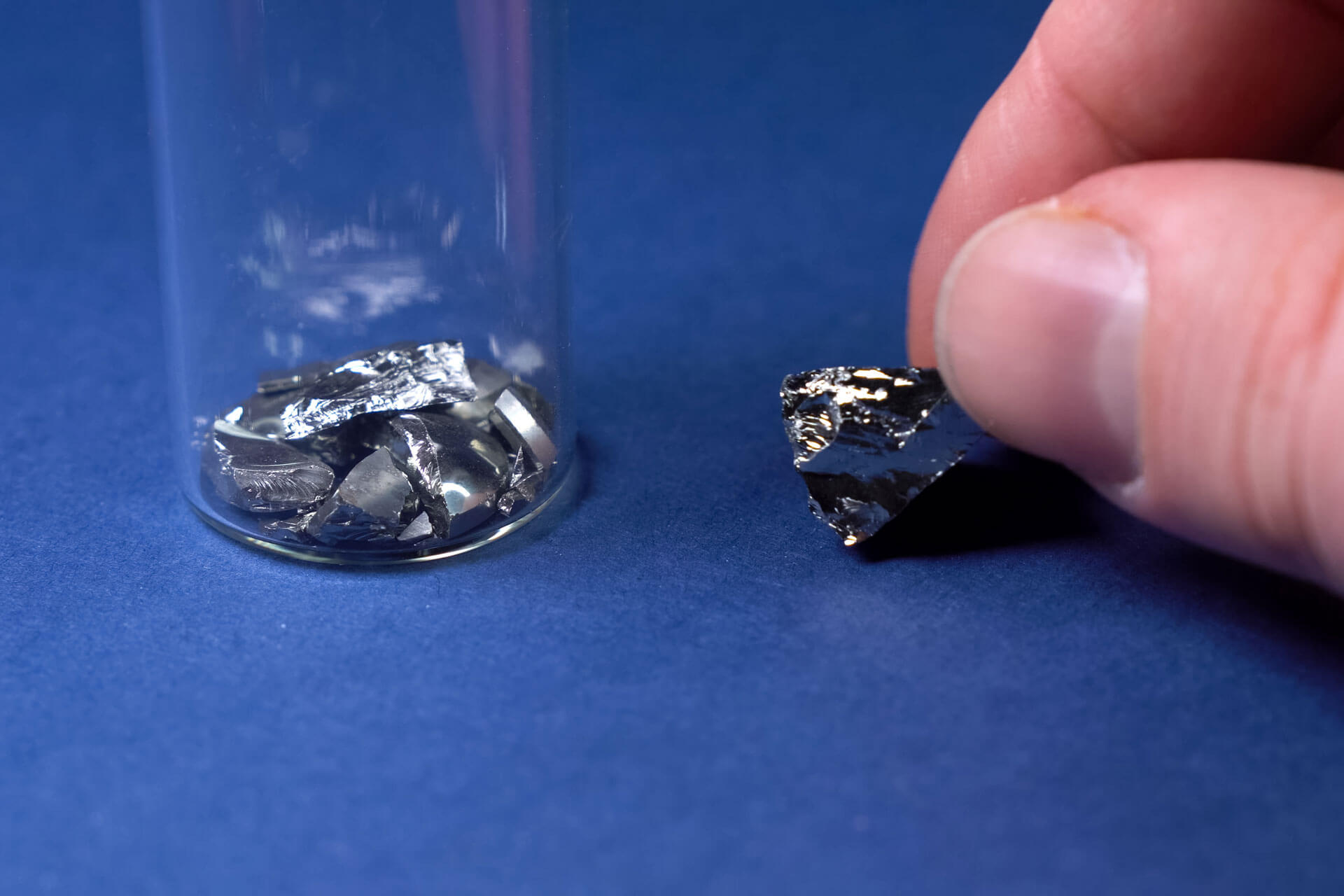
South Africa Poised to Become Key Player in Global Rare Earth Supply Chain by 2034【SMM Analysis】
Sep 29, 2026 18:54 (GMT+8)
[SMM Analysis] India’s BESS Manufacturing Push Accelerates, but Cell Dependence Remains a Key Bottleneck
Sep 30, 2026 08:50 (GMT+8)
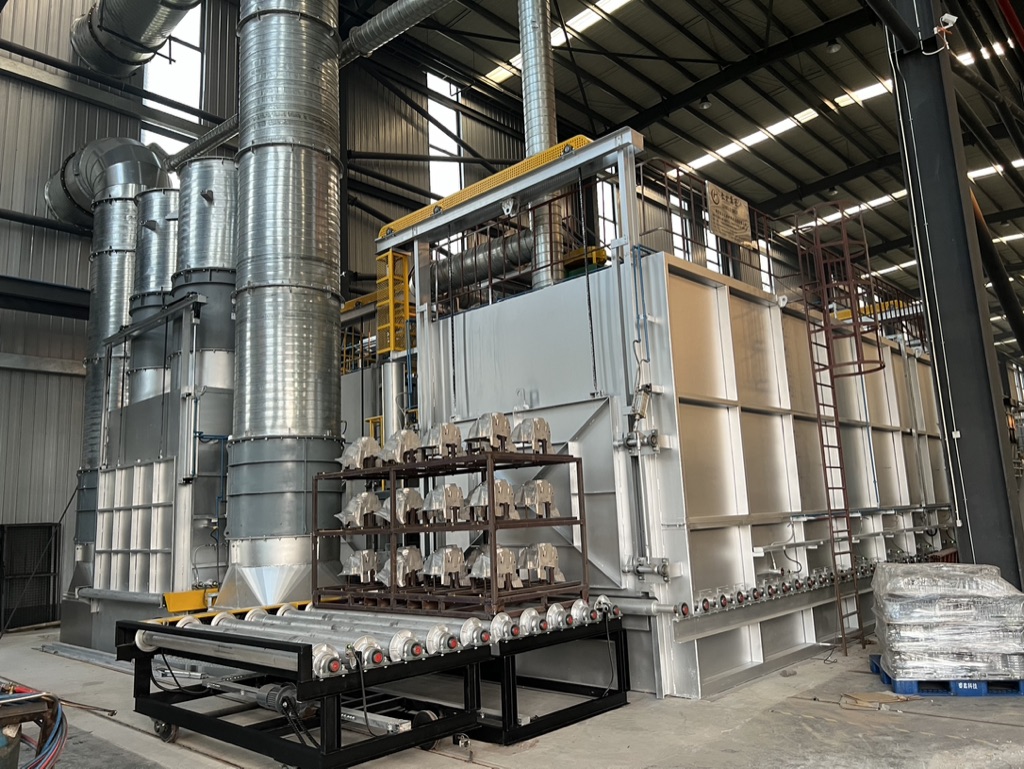
SMM Launches Aluminium CBAM Calculator: What Cost Estimates Mean for EU-Bound Offers【SMM Analysis】
Sep 29, 2026 17:32 (GMT+8)
![[SMM Analysis] Low-Carbon of Primary Copper Begin Trading Separately—Will Recycled Copper’s Green Value Be Reassessed?](https://imgqn.smm.cn/usercenter/MXbup20251217171745.jpg)
[SMM Analysis] Low-Carbon of Primary Copper Begin Trading Separately—Will Recycled Copper’s Green Value Be Reassessed?
Sep 29, 2026 16:03 (GMT+8)
Latest News
[SMM Analysis] NPI Market Review and Outlook for China's National Day Holiday
9 hours ago
[SMM Analysis] Nickel Sulphate Market Stays Quiet During National Day, Faces Price Pressure Amid Weak Demand
12 hours ago
[SMM Analysis] MHP Transactions in China Face Rebound Pressure; Cost and Supply Constraints Limit Downside
12 hours ago
[SMM Analysis] EU Q4 quotas overshot within 5 days, CBAM rules still missing: China holiday Ex-China Stainless Review
12 hours ago
[SMM Analysis] LME nickel fell before recovering during the National Day holiday, macro pressure has not yet been lifted, and refined nickel demand after the holiday still needs to be verified
12 hours ago
[SMM Nickel Flash News] Bahlil Proposes Regulating Nickel Smelter Output
13 hours ago
[SMM Nickel Flash News] Indonesia Update — October 7, 2026
14 hours ago
[SMM Stainless Steel Flash] India stainless bright bar export offers hold steady as EU quota squeeze weighs
19 hours ago
[SMM Stainless Steel Flash] Taiwan (PoC)'s Chien Shing sees September revenue dip despite rising list prices
19 hours ago
【Flash | ESAB Cuts Q4 Surcharges for Mo-Bearing Welding Consumables】
Oct 06, 2026 11:58 (GMT+8)
【Flash | NAS Raises Base Price for Type 316 Cold-Rolled Stainless】
Oct 06, 2026 11:35 (GMT+8)
[SMM Nickel Flash News] Indonesia Nickel Smelter Faces PKPU Petition
Oct 06, 2026 10:54 (GMT+8)
[SMM Stainless Steel Flash] EU keeps CBAM de minimis threshold unchanged as certificate sale rules remain pending
Oct 06, 2026 10:32 (GMT+8)
[SMM Stainless Steel Flash] EU Q4 steel quotas fill within days as India overshoots stainless bar and tube caps
Oct 06, 2026 10:27 (GMT+8)
[SMM Stainless Steel Flash] Taiwan (PoC) stainless wire rod export prices climb to over-a-year high as volumes lag
Oct 06, 2026 10:25 (GMT+8)
[SMM Stainless Steel Flash] Taiwan (PoC) 304 market tests mill hikes as distributors trim low-priced stock
Oct 06, 2026 10:03 (GMT+8)
[SMM Nickel Flash News] Indonesia Update — October 5, 2026
Oct 05, 2026 14:39 (GMT+8)
【SMM Nickel Flash News】Nickel Weather Risks Remain Manageable on October 5–11
Oct 05, 2026 14:26 (GMT+8)
[SMM Nickel Flash News] Unrest at PT Askon in Morowali Raises Concerns
Oct 05, 2026 10:01 (GMT+8)
[SMM Stainless Steel Flash] Taiwan (PoC)'s Froch targets early 2027 start-up at Morocco pipe plant aimed at Europe
Oct 05, 2026 09:32 (GMT+8)