

News
Exclusive analysis articles with the latest market updates, and real-time news feeds.
![[SMM Analysis] India’s BESS Manufacturing Push Accelerates, but Cell Dependence Remains a Key Bottleneck](https://imgqn.smm.cn/production/admin/votes/imagesozVHm20260131125121.jpeg)
[SMM Analysis] India’s BESS Manufacturing Push Accelerates, but Cell Dependence Remains a Key Bottleneck
In the first quarter of 2026, global energy storage system shipments reached 100.0 GWh, a 96.5% increase from 50.9 GWh in the same period of 2025, bringing quarterly shipments to an entirely new scale.
Sep 30, 2026 08:50 (GMT+8)
SMM Launches Aluminium CBAM Calculator: What Cost Estimates Mean for EU-Bound Offers【SMM Analysis】
As the EU Carbon Border Adjustment Mechanism (CBAM) enters its definitive phase, aluminium trade with Europe requires carbon costs to be assessed alongside metal prices, processing charges and logistics. SMM has launched its Aluminium CBAM Calculator , bringing together product codes, origin, emissions data and certificate prices to support export quotations, European procurement and internal budgeting. The aluminium module offers 58 CN codes and 68 origin/default-value categories, covering unwrought aluminium, profiles, sheet, strip, foil and other products. Annual parameters are available for 2026–2030. Users enter a tonnage and select default emissions or enter verified actual emissions. The page then displays estimated certificates per tonne, total certificates, cost per tonne and total budget, with primary and secondary aluminium routes matched to the applicable data basis. The practical benefit is that assumptions and results appear together. Exporters can specify the product, origin, import period and emissions basis behind a quotation, while buyers can compare sources under consistent conditions. The page includes Chinese and English interfaces, parameter tables and a printable cost-sheet option. How the associated costs are shared between buyers and sellers remains a contractual matter. Certificate exposure should be distinguished from its monetary value. As of 29 September 2026, the calculator incorporates official prices of €75.36 per certificate for Q1 2026 and €75.28 for Q2. The Q3 price has not yet been published. Where a price is unavailable, the page retains certificate-volume estimates and leaves costs blank, rather than substituting an assumed price. The current version excludes deductions for carbon prices paid abroad and assessment of the annual import threshold. Its actual-emissions calculation for complex aluminium goods also lacks the free-allocation adjustment attributable to precursors. The analysis below therefore uses the checked default-value calculation. Results are commercial estimates, not final statutory surrender obligations. For market comparisons, the same aluminium product can carry materially different estimated costs depending on its origin-specific default value. Consider CN 76012040—unwrought aluminium alloys in billet form—with primary route K, the Q2 2026 certificate price and a quantity of 1,000 tonnes. Estimated costs under the Chinese, Indian and Canadian default-value cases are €143.98, €50.41 and €57.86 per tonne, respectively. These figures include the annual default-value mark-up and the benchmark-based free-allocation adjustment. The Chinese and Indian default-value cases differ by approximately €93.57 per tonne. Comparing only the metal price or processing charge may therefore miss a meaningful difference in the buyer's budget. Where other commercial terms are similar, estimated CBAM costs could affect an offer's attractiveness. However, this is not a ranking of producers' actual carbon intensity. Freight, customs duties, quality and delivery terms are also outside this comparison, so the figures alone cannot determine the preferred supplier. This highlights the commercial value of supplier emissions documentation. For producers whose actual emissions are below the applicable default value, supported by compliant verification, actual data may change a buyer's cost assessment. Buyers can use defaults for an initial budget when documentation is unavailable, then reassess using supplier evidence. Exporters consequently have a reason to prepare emissions information alongside their product offers, rather than negotiate solely around country-default differences. Annual parameter changes also warrant attention. Holding the Chinese product's base default value, route and benchmark constant, and assuming that the import year and applicable reporting year coincide, estimated certificate exposure rises from 1.912575 per tonne in 2026 to 2.248150 in 2027—an increase of approximately 17.5%. This reflects a higher default-value mark-up and a smaller free-allocation deduction; it does not imply a rise in future certificate prices. For supply arrangements spanning different years, companies can first compare certificate exposure, then discuss price-update mechanisms and cost sharing. Even while future certificate prices remain unknown, identifying that exposure and obtaining supplier documentation can improve the comparability of offers and procurement budgets.
Sep 29, 2026 17:32 (GMT+8)
[SMM Analysis] Low-Carbon of Primary Copper Begin Trading Separately—Will Recycled Copper’s Green Value Be Reassessed?
[SMM Analysis: Low-Carbon of Primary Copper Begin Trading Separately—Will Recycled Copper’s Green Value Be Reassessed?] BHP and Amazon’s EAC pilot separates verified emissions reductions from physical copper trade, giving low-emissions primary copper a new source of environmental value. Recycled copper retains a major energy advantage, but future competitiveness may depend more on traceability, recycled content and verified carbon data, potentially adding an environmental dimension to pricing.
Sep 29, 2026 16:03 (GMT+8)
Latest News
![[SMM Coal Flash] White Energy to Acquire South Galilee Coal Project](https://imgqn.smm.cn/usercenter/tgoYV20251217171715.jpg)
[SMM Coal Flash] White Energy to Acquire South Galilee Coal Project
Oct 02, 2026 22:16 (GMT+8)
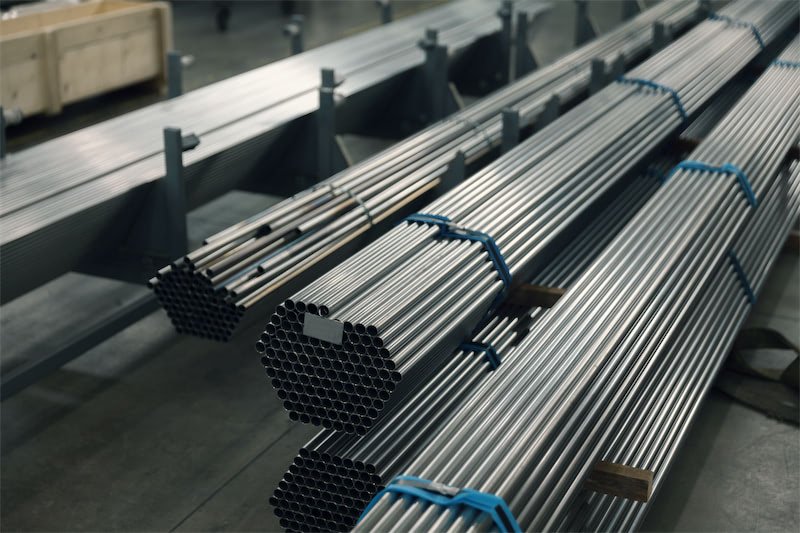
MMi Daily Iron Ore Index Prices for 2nd October 2026
Oct 02, 2026 17:59 (GMT+8)
![[Nucor quarterly guidance points to stronger earnings as firmer steel prices offset higher costs]](https://imgqn.smm.cn/usercenter/GfiYT20251217171720.jpg)
[Nucor quarterly guidance points to stronger earnings as firmer steel prices offset higher costs]
Oct 02, 2026 17:03 (GMT+8)
[Essar Group plans 15 billion USD integrated steel plant in Iowa, targeting 2030 output]
India's Essar Group, via US unit Mesabi Metallics, plans to invest 15 billion USD in an Iowa integrated steel plant, targeting first output in 2030. The project was announced at the White House on 28 September by President Donald Trump together with Essar co-founder Ravi Ruia and Mesabi Metallics chairman Rewant Ruia. Phase one is designed for 7.5 million tonnes a year, rising to about 10 million tonnes at full build-out. Upstream supply comes from Mesabi Metallics' new mine at Nashwauk, Minnesota, on which Essar has spent over 2.5 billion USD; it should yield roughly 7.5 million tonnes of iron ore annually and some 350 jobs, the first new US iron ore mine in 50 years. The US Export-Import Bank announced up to 10 billion USD in financing for the mine expansion in September. The plant should create at least 1,750 permanent jobs, plus 6,000 construction jobs, with the White House estimating 95 billion USD of economic impact from phase one.
Oct 02, 2026 17:03 (GMT+8)
[OECD forecasts global steel overcapacity to reach 721 million tonnes by 2027, hindering decarbonisation]
The OECD forecasts that global steel overcapacity will climb to 721 million tonnes by 2027, making excess capacity a core obstacle to decarbonisation investment across the industry. AISI welcomed US leadership in advancing and adopting the Global Forum framework on steel excess capacity. European competition authorities approved Trasteel's acquisition of Liberty Steel's Magona plant in Piombino, Italy, continuing the consolidation of European steel assets. Pakistan's Pak Steel is evaluating investment in a new steel plant in Uzbekistan. JISF urged tax reforms to support green transformation and related investment. Taiwan's Froch Enterprise saw earnings driven by semiconductor facility construction demand.
Oct 02, 2026 17:03 (GMT+8)
[SMM Steel] European Longs: Cost-Driven Hikes Stumble as Weak Demand Forces Mills into Export Markets
[Europe] Amid weaker-than-expected demand and downstream sectors facing severe cost pressures, European mills saw little success in pushing cost-driven price increases. Italian rebar ex-works prices rose by 5 EUR/tonne to 725 EUR/tonne EXW (~817 USD/tonne). Notably, while one major Italian producer raised its domestic offer to 760–765 EUR/tonne EXW (~856–862 USD/tonne), other mills remained willing to conclude at 710–720 EUR/tonne EXW (~800–811 USD/tonne), though they are expected to announce aggressive October hikes to 760–770 EUR/tonne EXW (~856–867 USD/tonne) in the coming days. Rising project costs across Europe have delayed construction timelines and weakened buyer sentiment; although mills attempted to discount, soft demand and elevated road freight rates have severely undermined their competitiveness. Meanwhile, supported by comparatively resilient Iberian construction activity, Spanish domestic rebar held high and flat at 750 EUR/tonne DDP (~845 USD/tonne); however, domestic intake is insufficient to absorb mill capacity, pushing producers to seek export opportunities. Furthermore, for shipments to the UK, market participants remain unable to accurately price CBAM impacts into contracts ahead of verified baseline data, while fresh concerns over quota exhaustion are resurfacing following temporary government relief measures.
Oct 02, 2026 16:56 (GMT+8)
[SMM Steel] Vietnamese HDG Deal to Europe Reported at Around USD 890/Tonne CFR
[Vietnam] A deal for Vietnamese-origin HDG into Europe was reported at around USD 890/tonne CFR, at the higher end of the market, while lower-priced sources were heard at approximately USD 860/tonne CFR. Some Asian mills continued to prioritize sales to South America, where they could achieve better prices and larger volumes, leaving competition in the European import market relatively strong.
Oct 02, 2026 16:16 (GMT+8)
[Nippon Steel Commissions Record-Breaking 340-Ton EAF for Yawata Decarbonization Push]
Tenova, in partnership with GE Vernova, has been selected by Nippon Steel to supply a record-breaking Consteel electric arc furnace (EAF) for the Yawata Area at Kyushu Works in Japan. Once installed, the furnace will become the world's most powerful EAF with a heat size of 340 metric tons, an unprecedented power level that will allow the use of high percentages of virgin iron units for producing high-quality steel grades. GE Vernova will supply its Direct Feed power system to provide the high-stability power needed for the installation. The project supports Nippon Steel's transition from blast furnace to EAF steelmaking as part of its goal to achieve carbon neutrality by 2050, in line with Japan's Green Transformation (GX) Promotion Act.
Oct 02, 2026 16:05 (GMT+8)
[Primetals' Arvedi ESP Line in China Hits Four Productivity Milestones in Under Four Months]
Primetals Technologies announced that the endless casting and rolling Arvedi ESP line it commissioned for the Zhongshou plant in China has broken multiple productivity and production ramp-up records. Since first coil production on May 13, the plant has hit four milestones: producing 1-mm ultrathin hot-rolled coils just 16 days after the first coil, reaching world-record productivity of 7 metric tons per minute with a 1,250-mm-wide strip within 30 days, rolling its first 0.8-mm-thick coil 11 weeks after start-up, and its first 0.7-mm-thick coil after just 17 weeks. The plant's productivity is estimated to be 20% higher than any other thin-slab casting and rolling facility globally. The line features a 135-mm-thick caster, four roughing stands, and five finishing stands, with zero CO2 emissions when powered by renewable energy.
Oct 02, 2026 16:04 (GMT+8)
[SMM Steel] Indonesian Slab Market Goes Quiet at $490/ton as Buyers and Sellers Await Next Move
[Indonesia] Over the weekend, demand remained at 490 USD/metric ton. There was no movement at all because the Chinese market is still on holiday, compounded by continued sluggish local demand. Currently, since Vietnam’s prices have been released, the market may see movement again next week as this will become a key focus in the future. If there turns out to be no demand at all in the market, there will be no further movement, or mills will attempt to lower prices again—as they tried to do last week—to remain competitive or attract market attention.
Oct 02, 2026 16:02 (GMT+8)
![[EU Approves Trasteel's Acquisition of Italy's Magona Galvanizing Plant]](https://imgqn.smm.cn/usercenter/fvyjO20251217171715.jpg)
[EU Approves Trasteel's Acquisition of Italy's Magona Galvanizing Plant]
Oct 02, 2026 15:49 (GMT+8)
[Italy Approves Additional €100.5 Million Funding for Acciaierie d'Italia Taranto Works]
Oct 02, 2026 15:49 (GMT+8)
[Nippon Steel Raises Flat Steel Prices by $32/Tonne Citing Surging Input Costs]
Oct 02, 2026 15:49 (GMT+8)
[ArcelorMittal Evaluates $960 Million Expansion at Pecém Steel Plant in Brazil]
ArcelorMittal is considering a $960 million capital investment to expand its Pecém steelworks in Ceará, Brazil. The Pecém integrated facility currently operates with a design capacity of 3.0 million tonnes of crude steel slabs per year, supplying international markets via its dedicated deep-water port. The proposed expansion focuses on adding downstream rolling and processing infrastructure to capture higher value-added flat steel segments. If finalized, the project will increase regional iron ore consumption and boost South America's slab export capacity. [SMM Iron Ore]
Oct 02, 2026 15:49 (GMT+8)
[ ArcelorMittal Eisenhüttenstadt Interrupts Strip Mill Production ]
ArcelorMittal halted parts of its production at the Eisenhüttenstadt strip mill in Germany following operational irregularities detected in the facility's blast furnace. The company reported on September 29, 2026, that technicians are working to stabilize operations and expect to resume regular output shortly. The facility, which possesses a crude steel capacity of 2.5 million tonnes per year, is a critical supplier to the Western European flat steel market. [SMM Iron Ore]
Oct 02, 2026 15:07 (GMT+8)
[ Cleveland-Cliffs Indefinitely Suspends Canadian Steel Operations ]
US steelmaker Cleveland-Cliffs announced on September 29, 2026, the indefinite suspension of its cold-rolling and coating operations in Hamilton, Canada, effective October 9. The closure will result in the immediate layoff of up to 500 employees. The company cited severe market imbalances caused by the new 50% US tariffs on Canadian steel and aluminum imports, which forced it to consolidate its 8.13 million short tons of half-year steel output at its primary Nanticoke facility. [SMM Iron Ore]
Oct 02, 2026 15:06 (GMT+8)
[ Stahl-Holding-Saar Advances Power4Steel Decarbonization Project ]
Germany's Stahl-Holding-Saar (SHS) announced the next construction phase of its massive Power4Steel decarbonization project, designed to fundamentally alter the group's raw material and energy mix. The multi-billion-euro transformation will replace traditional blast furnace capacity with low-emission alternatives to maintain regional competitiveness. Concurrently, SHS presented its Y-SIC initiative, backed by state funding, which aims to establish a commercial high-purity silicon carbide production facility at its Dillinger site. [SMM Iron Ore]
Oct 02, 2026 15:06 (GMT+8)
[ SAIL Airfreights Mongolian Coking Coal in Diversification Trial ]
India's Steel Authority of India Limited (SAIL) airlifted a one-metric-ton sample of coking coal from Mongolia in late September 2026, marking a trial to qualify the landlocked nation as a new strategic supplier. India currently imports roughly 95% of its coking coal needs, with at least half sourced from Australia, making the material a dominant factor that accounts for 40% of domestic steel production costs. The trial explicitly aims to diversify SAIL's raw material supply chain, though overcoming logistical bottlenecks through Russia or China remains a massive hurdle.
Oct 02, 2026 15:05 (GMT+8)
[ EU Launches Expiry Review of Stainless Steel Anti-Subsidy Measures ]
The European Commission officially launched an expiry review of the anti-subsidy measures currently imposed on stainless steel cold-rolled flat products imported from India and Indonesia. The investigation will determine whether removing the tariffs would result in the continuation or recurrence of subsidized dumping into the European Union. In parallel, the Commission opened separate interim reviews addressing the antidumping duties on Indian cold-rolled stainless steel sheets and coils.
Oct 02, 2026 15:05 (GMT+8)
[ ArcelorMittal Halts Spanish Steel Plant Operations Amid Weak Demand ]
ArcelorMittal de España announced it will halt steel production at its Gijón plant in Spain for one week in early October 2026. The temporary shutdown of the primary ironmaking facility is a direct response to weak regional demand and mounting raw material costs squeezing European flat steel margins. The targeted production curtailment aligns with a broader trend among Western European integrated producers struggling to maintain capacity utilization amid high [SMM Iron Ore]
Oct 02, 2026 15:05 (GMT+8)
![[SMM Announcement] Chinese Market Metal Prices and News Updates Suspended during National Day Holiday (Oct 1-7)](https://imgqn.smm.cn/usercenter/HeIuV20251217171708.jpg)
[SMM Announcement] Chinese Market Metal Prices and News Updates Suspended during National Day Holiday (Oct 1-7)
Dear Valued SMM Users, The National Day holiday is approaching. Please note that SMM Chinese market metal price assessments and news updates will be temporarily suspended during the holiday (October 1-7) and resume normal release after the break. However, SMM overseas price assessment will continue to be updated as usual throughout the holiday. We apologise for any inconvenience caused and wish you a pleasant holiday. Shanghai Metals Market (SMM)
Sep 28, 2026 17:06 (GMT+8)

Huawei Pursues Africa Green‑Mining Partnerships and Holds Business Talks with ZESCO at SMM ACM 2026
Sep 23, 2026 16:41 (GMT+8)
![[SMM Analysis] The U.S. Copper Tariff Trade Is Fading — but It Isn’t Over Yet](https://imgqn.smm.cn/production/admin/votes/imagesMbCUq20260929144044.png)
[SMM Analysis] The U.S. Copper Tariff Trade Is Fading — but It Isn’t Over Yet
Sep 29, 2026 14:37 (GMT+8)
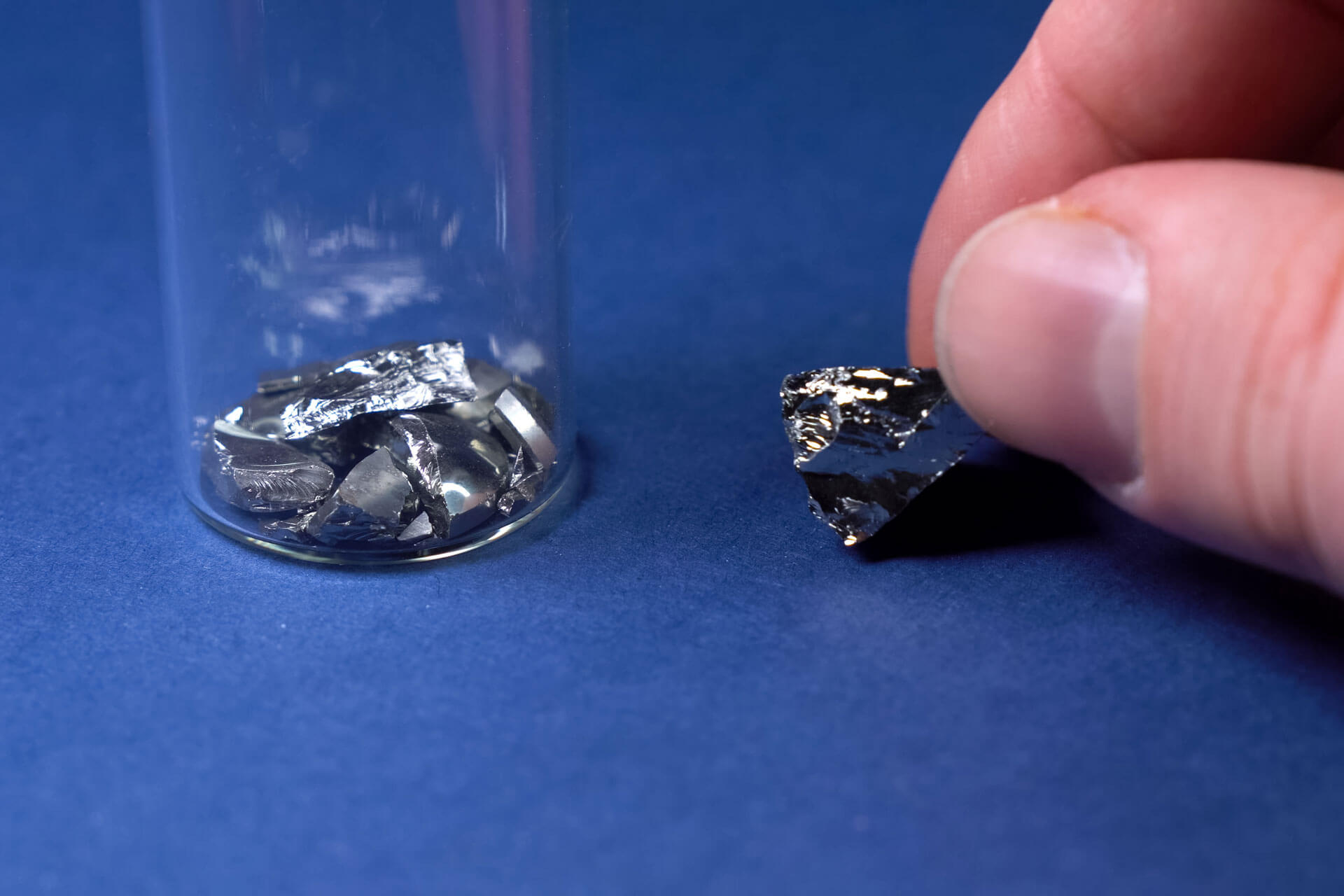
South Africa Poised to Become Key Player in Global Rare Earth Supply Chain by 2034【SMM Analysis】
Sep 29, 2026 18:54 (GMT+8)
[SMM Analysis] India’s BESS Manufacturing Push Accelerates, but Cell Dependence Remains a Key Bottleneck
Sep 30, 2026 08:50 (GMT+8)
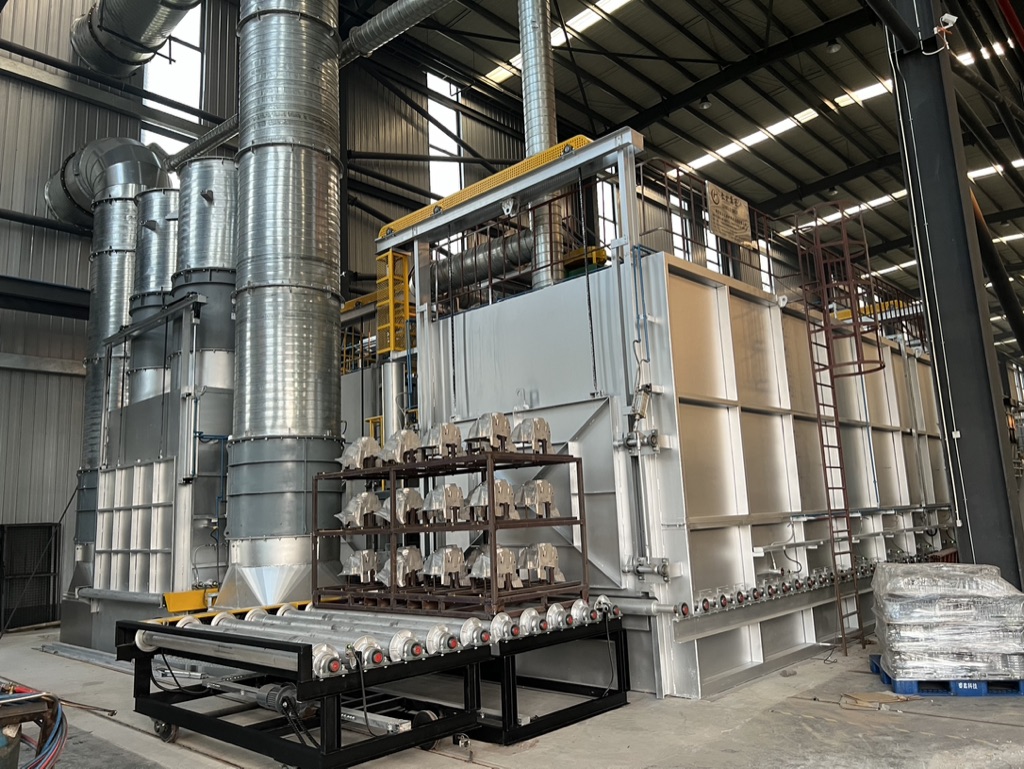
SMM Launches Aluminium CBAM Calculator: What Cost Estimates Mean for EU-Bound Offers【SMM Analysis】
Sep 29, 2026 17:32 (GMT+8)
![[SMM Analysis] Low-Carbon of Primary Copper Begin Trading Separately—Will Recycled Copper’s Green Value Be Reassessed?](https://imgqn.smm.cn/usercenter/MXbup20251217171745.jpg)
[SMM Analysis] Low-Carbon of Primary Copper Begin Trading Separately—Will Recycled Copper’s Green Value Be Reassessed?
Sep 29, 2026 16:03 (GMT+8)
Latest News
[SMM Coal Flash] White Energy to Acquire South Galilee Coal Project
Oct 02, 2026 22:16 (GMT+8)
MMi Daily Iron Ore Index Prices for 2nd October 2026
Oct 02, 2026 17:59 (GMT+8)
[Nucor quarterly guidance points to stronger earnings as firmer steel prices offset higher costs]
Oct 02, 2026 17:03 (GMT+8)
[Essar Group plans 15 billion USD integrated steel plant in Iowa, targeting 2030 output]
Oct 02, 2026 17:03 (GMT+8)
[OECD forecasts global steel overcapacity to reach 721 million tonnes by 2027, hindering decarbonisation]
Oct 02, 2026 17:03 (GMT+8)
[SMM Steel] European Longs: Cost-Driven Hikes Stumble as Weak Demand Forces Mills into Export Markets
Oct 02, 2026 16:56 (GMT+8)
[SMM Steel] Vietnamese HDG Deal to Europe Reported at Around USD 890/Tonne CFR
Oct 02, 2026 16:16 (GMT+8)
[Nippon Steel Commissions Record-Breaking 340-Ton EAF for Yawata Decarbonization Push]
Oct 02, 2026 16:05 (GMT+8)
[Primetals' Arvedi ESP Line in China Hits Four Productivity Milestones in Under Four Months]
Oct 02, 2026 16:04 (GMT+8)
[SMM Steel] Indonesian Slab Market Goes Quiet at $490/ton as Buyers and Sellers Await Next Move
Oct 02, 2026 16:02 (GMT+8)
[EU Approves Trasteel's Acquisition of Italy's Magona Galvanizing Plant]
Oct 02, 2026 15:49 (GMT+8)
[Italy Approves Additional €100.5 Million Funding for Acciaierie d'Italia Taranto Works]
Oct 02, 2026 15:49 (GMT+8)
[Nippon Steel Raises Flat Steel Prices by $32/Tonne Citing Surging Input Costs]
Oct 02, 2026 15:49 (GMT+8)
[ArcelorMittal Evaluates $960 Million Expansion at Pecém Steel Plant in Brazil]
Oct 02, 2026 15:49 (GMT+8)
[ ArcelorMittal Eisenhüttenstadt Interrupts Strip Mill Production ]
Oct 02, 2026 15:07 (GMT+8)
[ Cleveland-Cliffs Indefinitely Suspends Canadian Steel Operations ]
Oct 02, 2026 15:06 (GMT+8)
[ Stahl-Holding-Saar Advances Power4Steel Decarbonization Project ]
Oct 02, 2026 15:06 (GMT+8)
[ SAIL Airfreights Mongolian Coking Coal in Diversification Trial ]
Oct 02, 2026 15:05 (GMT+8)
[ EU Launches Expiry Review of Stainless Steel Anti-Subsidy Measures ]
Oct 02, 2026 15:05 (GMT+8)
[ ArcelorMittal Halts Spanish Steel Plant Operations Amid Weak Demand ]
Oct 02, 2026 15:05 (GMT+8)