

News
Exclusive analysis articles with the latest market updates, and real-time news feeds.
![[SMM Analysis] India’s BESS Manufacturing Push Accelerates, but Cell Dependence Remains a Key Bottleneck](https://imgqn.smm.cn/production/admin/votes/imagesozVHm20260131125121.jpeg)
[SMM Analysis] India’s BESS Manufacturing Push Accelerates, but Cell Dependence Remains a Key Bottleneck
In the first quarter of 2026, global energy storage system shipments reached 100.0 GWh, a 96.5% increase from 50.9 GWh in the same period of 2025, bringing quarterly shipments to an entirely new scale.
Sep 30, 2026 08:50 (GMT+8)
SMM Launches Aluminium CBAM Calculator: What Cost Estimates Mean for EU-Bound Offers【SMM Analysis】
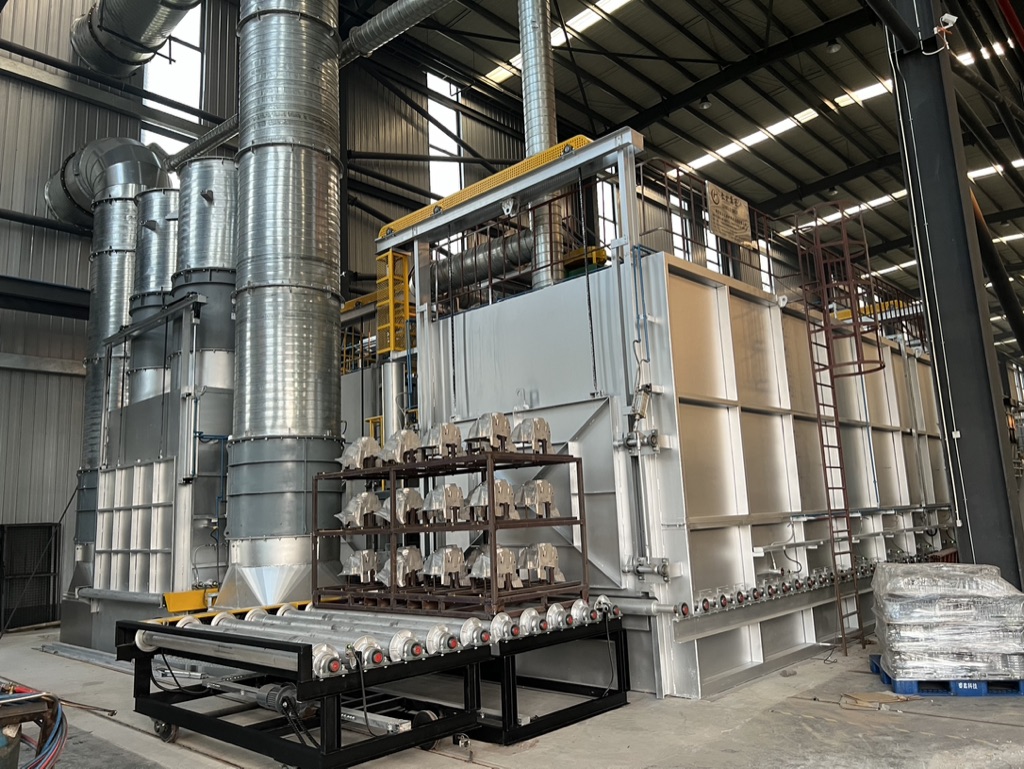
As the EU Carbon Border Adjustment Mechanism (CBAM) enters its definitive phase, aluminium trade with Europe requires carbon costs to be assessed alongside metal prices, processing charges and logistics. SMM has launched its Aluminium CBAM Calculator , bringing together product codes, origin, emissions data and certificate prices to support export quotations, European procurement and internal budgeting. The aluminium module offers 58 CN codes and 68 origin/default-value categories, covering unwrought aluminium, profiles, sheet, strip, foil and other products. Annual parameters are available for 2026–2030. Users enter a tonnage and select default emissions or enter verified actual emissions. The page then displays estimated certificates per tonne, total certificates, cost per tonne and total budget, with primary and secondary aluminium routes matched to the applicable data basis. The practical benefit is that assumptions and results appear together. Exporters can specify the product, origin, import period and emissions basis behind a quotation, while buyers can compare sources under consistent conditions. The page includes Chinese and English interfaces, parameter tables and a printable cost-sheet option. How the associated costs are shared between buyers and sellers remains a contractual matter. Certificate exposure should be distinguished from its monetary value. As of 29 September 2026, the calculator incorporates official prices of €75.36 per certificate for Q1 2026 and €75.28 for Q2. The Q3 price has not yet been published. Where a price is unavailable, the page retains certificate-volume estimates and leaves costs blank, rather than substituting an assumed price. The current version excludes deductions for carbon prices paid abroad and assessment of the annual import threshold. Its actual-emissions calculation for complex aluminium goods also lacks the free-allocation adjustment attributable to precursors. The analysis below therefore uses the checked default-value calculation. Results are commercial estimates, not final statutory surrender obligations. For market comparisons, the same aluminium product can carry materially different estimated costs depending on its origin-specific default value. Consider CN 76012040—unwrought aluminium alloys in billet form—with primary route K, the Q2 2026 certificate price and a quantity of 1,000 tonnes. Estimated costs under the Chinese, Indian and Canadian default-value cases are €143.98, €50.41 and €57.86 per tonne, respectively. These figures include the annual default-value mark-up and the benchmark-based free-allocation adjustment. The Chinese and Indian default-value cases differ by approximately €93.57 per tonne. Comparing only the metal price or processing charge may therefore miss a meaningful difference in the buyer's budget. Where other commercial terms are similar, estimated CBAM costs could affect an offer's attractiveness. However, this is not a ranking of producers' actual carbon intensity. Freight, customs duties, quality and delivery terms are also outside this comparison, so the figures alone cannot determine the preferred supplier. This highlights the commercial value of supplier emissions documentation. For producers whose actual emissions are below the applicable default value, supported by compliant verification, actual data may change a buyer's cost assessment. Buyers can use defaults for an initial budget when documentation is unavailable, then reassess using supplier evidence. Exporters consequently have a reason to prepare emissions information alongside their product offers, rather than negotiate solely around country-default differences. Annual parameter changes also warrant attention. Holding the Chinese product's base default value, route and benchmark constant, and assuming that the import year and applicable reporting year coincide, estimated certificate exposure rises from 1.912575 per tonne in 2026 to 2.248150 in 2027—an increase of approximately 17.5%. This reflects a higher default-value mark-up and a smaller free-allocation deduction; it does not imply a rise in future certificate prices. For supply arrangements spanning different years, companies can first compare certificate exposure, then discuss price-update mechanisms and cost sharing. Even while future certificate prices remain unknown, identifying that exposure and obtaining supplier documentation can improve the comparability of offers and procurement budgets.
Sep 29, 2026 17:32 (GMT+8)
[SMM Analysis] Low-Carbon of Primary Copper Begin Trading Separately—Will Recycled Copper’s Green Value Be Reassessed?
[SMM Analysis: Low-Carbon of Primary Copper Begin Trading Separately—Will Recycled Copper’s Green Value Be Reassessed?] BHP and Amazon’s EAC pilot separates verified emissions reductions from physical copper trade, giving low-emissions primary copper a new source of environmental value. Recycled copper retains a major energy advantage, but future competitiveness may depend more on traceability, recycled content and verified carbon data, potentially adding an environmental dimension to pricing.
Sep 29, 2026 16:03 (GMT+8)
Latest News
![[SMM Coal Flash] White Energy to Acquire South Galilee Coal Project](https://imgqn.smm.cn/usercenter/tgoYV20251217171715.jpg)
[SMM Coal Flash] White Energy to Acquire South Galilee Coal Project
Oct 02, 2026 22:16 (GMT+8)
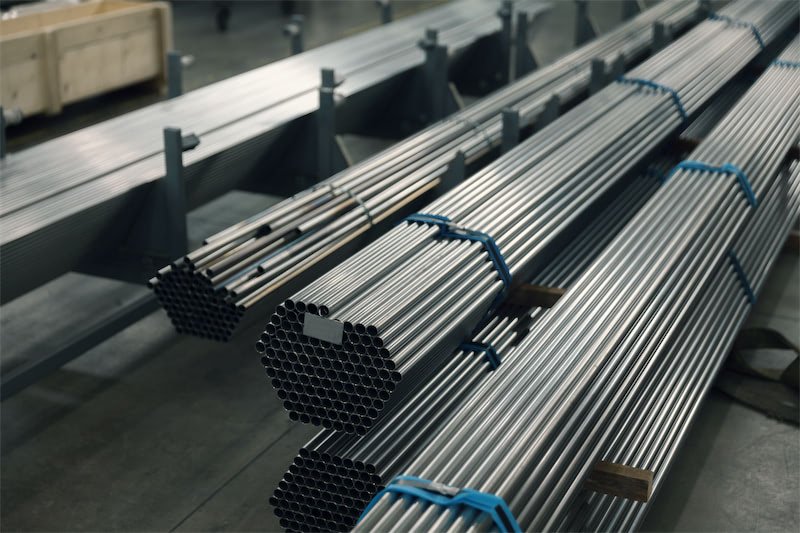
MMi Daily Iron Ore Index Prices for 2nd October 2026
Oct 02, 2026 17:59 (GMT+8)
![[Nucor quarterly guidance points to stronger earnings as firmer steel prices offset higher costs]](https://imgqn.smm.cn/usercenter/GfiYT20251217171720.jpg)
[Nucor quarterly guidance points to stronger earnings as firmer steel prices offset higher costs]
Oct 02, 2026 17:03 (GMT+8)
[Essar Group plans 15 billion USD integrated steel plant in Iowa, targeting 2030 output]
India's Essar Group, via US unit Mesabi Metallics, plans to invest 15 billion USD in an Iowa integrated steel plant, targeting first output in 2030. The project was announced at the White House on 28 September by President Donald Trump together with Essar co-founder Ravi Ruia and Mesabi Metallics chairman Rewant Ruia. Phase one is designed for 7.5 million tonnes a year, rising to about 10 million tonnes at full build-out. Upstream supply comes from Mesabi Metallics' new mine at Nashwauk, Minnesota, on which Essar has spent over 2.5 billion USD; it should yield roughly 7.5 million tonnes of iron ore annually and some 350 jobs, the first new US iron ore mine in 50 years. The US Export-Import Bank announced up to 10 billion USD in financing for the mine expansion in September. The plant should create at least 1,750 permanent jobs, plus 6,000 construction jobs, with the White House estimating 95 billion USD of economic impact from phase one.
Oct 02, 2026 17:03 (GMT+8)
[OECD forecasts global steel overcapacity to reach 721 million tonnes by 2027, hindering decarbonisation]
The OECD forecasts that global steel overcapacity will climb to 721 million tonnes by 2027, making excess capacity a core obstacle to decarbonisation investment across the industry. AISI welcomed US leadership in advancing and adopting the Global Forum framework on steel excess capacity. European competition authorities approved Trasteel's acquisition of Liberty Steel's Magona plant in Piombino, Italy, continuing the consolidation of European steel assets. Pakistan's Pak Steel is evaluating investment in a new steel plant in Uzbekistan. JISF urged tax reforms to support green transformation and related investment. Taiwan's Froch Enterprise saw earnings driven by semiconductor facility construction demand.
Oct 02, 2026 17:03 (GMT+8)
[SMM Steel] European Longs: Cost-Driven Hikes Stumble as Weak Demand Forces Mills into Export Markets
[Europe] Amid weaker-than-expected demand and downstream sectors facing severe cost pressures, European mills saw little success in pushing cost-driven price increases. Italian rebar ex-works prices rose by 5 EUR/tonne to 725 EUR/tonne EXW (~817 USD/tonne). Notably, while one major Italian producer raised its domestic offer to 760–765 EUR/tonne EXW (~856–862 USD/tonne), other mills remained willing to conclude at 710–720 EUR/tonne EXW (~800–811 USD/tonne), though they are expected to announce aggressive October hikes to 760–770 EUR/tonne EXW (~856–867 USD/tonne) in the coming days. Rising project costs across Europe have delayed construction timelines and weakened buyer sentiment; although mills attempted to discount, soft demand and elevated road freight rates have severely undermined their competitiveness. Meanwhile, supported by comparatively resilient Iberian construction activity, Spanish domestic rebar held high and flat at 750 EUR/tonne DDP (~845 USD/tonne); however, domestic intake is insufficient to absorb mill capacity, pushing producers to seek export opportunities. Furthermore, for shipments to the UK, market participants remain unable to accurately price CBAM impacts into contracts ahead of verified baseline data, while fresh concerns over quota exhaustion are resurfacing following temporary government relief measures.
Oct 02, 2026 16:56 (GMT+8)
KGHM and South32 launch US$725m Sierra Gorda expansion, lifting copper capacity 26%
KGHM and South32 have broken ground on a fourth grinding line at the Sierra Gorda copper-molybdenum mine in Chile's Atacama region. The US$725 million expansion runs for three years from January 2027, with completion by late 2029 and full output in H2 2030. Ore processing capacity rises 26%, from 131,000 tonnes per day to 165,000 tpd. Annual copper output is projected to climb from 165,000 tonnes in 2025 to 195,000 tonnes, with 6,000 tonnes of molybdenum, 58,000 ounces of gold and 1.7 million ounces of silver as by-products. The project creates over 900 direct jobs and is funded from operating cash flow and debt. Unit operating costs are expected to fall about 10%.
Oct 02, 2026 16:31 (GMT+8)
Aterian reports higher Rwanda 3T ore sales; trading margins remain estimates
[SMM Tantalum Flash] Aterian’s interim results, released on 30 September, show £1.341 million of Tantalum and other ore-sales revenue for the six months to 30 June 2026, up from £20,000 a year earlier. Gross profit was £522,000, while the group recorded a £568,000 pre-tax loss. Its Rwanda trading business deployed about US$2.18 million in working capital through joint-venture purchases. Management valued potential sales from those purchases at US$2.78 million, but cautioned that the notional valuation is not additional recognised revenue.
The implied US$602,000 gross trading profit is also a management estimate, dependent on completed sales, assays, realised prices, costs and the joint venture’s profit allocation. Aterian said traceability inspections limited suppliers and volumes. It held £131,000 in cash at 30 June; its expectation of expanding trading volumes from the fourth quarter still depends on execution and funding.
Oct 02, 2026 16:26 (GMT+8)
Tusker’s Malawi sampling points to ilmenite dominance
[SMM Titanium Flash] Tusker Minerals reported on 30 September that follow-up sampling at its Mzimba project in northern Malawi had changed its geological interpretation. Magnetic titanium exceeded calculated rutile-equivalent in 112 of 149 regional soil samples, pointing to an ilmenite-dominant system with localised rutile. Thirty-three shallow pit-channel samples did not show high-grade rutile persisting with depth. Tusker said the results do not support an immediate rutile-focused drilling programme on the Phase 1 anomalies.
The result weakens the specific premium-rutile exploration case suggested by earlier selected samples. It does not establish a mineral resource or show that ilmenite could be mined profitably. Tusker will reassess its geological model before deciding on further Mzimba work; its near-term capital and technical focus remains on Cameroon. The mineral mix and grade continuity still need to be established before the project’s feedstock potential can be assessed.
Oct 02, 2026 16:23 (GMT+8)
[SMM Steel] Vietnamese HDG Deal to Europe Reported at Around USD 890/Tonne CFR
[Vietnam] A deal for Vietnamese-origin HDG into Europe was reported at around USD 890/tonne CFR, at the higher end of the market, while lower-priced sources were heard at approximately USD 860/tonne CFR. Some Asian mills continued to prioritize sales to South America, where they could achieve better prices and larger volumes, leaving competition in the European import market relatively strong.
Oct 02, 2026 16:16 (GMT+8)
![[Nippon Steel Commissions Record-Breaking 340-Ton EAF for Yawata Decarbonization Push]](https://imgqn.smm.cn/usercenter/exdqc20251217171717.jpg)
[Nippon Steel Commissions Record-Breaking 340-Ton EAF for Yawata Decarbonization Push]
Oct 02, 2026 16:05 (GMT+8)
![[Primetals' Arvedi ESP Line in China Hits Four Productivity Milestones in Under Four Months]](https://imgqn.smm.cn/usercenter/GGaSo20251217171716.jpg)
[Primetals' Arvedi ESP Line in China Hits Four Productivity Milestones in Under Four Months]
Oct 02, 2026 16:04 (GMT+8)
![[SMM Steel] Indonesian Slab Market Goes Quiet at $490/ton as Buyers and Sellers Await Next Move](https://imgqn.smm.cn/usercenter/rKOND20251217171716.jpg)
[SMM Steel] Indonesian Slab Market Goes Quiet at $490/ton as Buyers and Sellers Await Next Move
Oct 02, 2026 16:02 (GMT+8)
[EU Approves Trasteel's Acquisition of Italy's Magona Galvanizing Plant]
The European Commission granted regulatory approval for Swiss steel trading group Trasteel to acquire the Magona steel plant in Piombino, Italy. Magona operates downstream pickling, cold-rolling, and galvanizing lines with a combined processing capacity of approximately 600,000 tonnes per year, catering to the Southern European construction and appliance industries. The acquisition verticalizes Trasteel's distribution network into manufacturing. The move enhances local regional processing resilience ahead of tightening EU Carbon Border Adjustment Mechanism (CBAM) regulations. [SMM Iron Ore]
Oct 02, 2026 15:49 (GMT+8)
Ghana draft bill proposes state special share and shorter mining leases
[SMM Gold Flash] A draft mining bill reviewed by Reuters on 30 September would let Ghana’s mines minister require companies to issue the state a free special share with consent rights over major transactions. It would retain the existing 10% free-carried state interest and limit mining leases to 15 years or the projected mine life, whichever is shorter. The draft would also allow future rules requiring local processing and restricting exports of unprocessed concentrates. None of these proposals has been enacted; Reuters did not establish when the draft was prepared.
For Ghana’s gold miners, the proposed rights and shorter leases could affect financing, valuations and renewal decisions. Under the draft, existing rights holders seeking renewal would receive priority consideration for equivalent licences. Mining companies expect further consultation before parliamentary debate, Reuters reported. The final wording and timing remain uncertain.
Oct 02, 2026 15:49 (GMT+8)
[Italy Approves Additional €100.5 Million Funding for Acciaierie d'Italia Taranto Works]
The Italian government approved €100.5 million ($112 million) in additional emergency financial support for Acciaierie d'Italia to sustain operations and raw material procurement at its Taranto steelworks. The Taranto integrated facility represents one of Europe's largest steel plants, with a nominal design capacity of 8.0 million tonnes of crude steel per year, though current operating rates remain restricted under 3.0 million tonnes. The state funding is intended to guarantee ongoing blast furnace maintenance and environmental compliance, preventing severe supply disruptions in the Mediterranean flat steel sector. [SMM Iron Ore]
Oct 02, 2026 15:49 (GMT+8)
[Nippon Steel Raises Flat Steel Prices by $32/Tonne Citing Surging Input Costs]
Japanese steelmaker Nippon Steel announced a price increase of $32 per tonne (approx. ¥5,000/tonne) across its flat steel product lineup starting from October 2026 contracts. The company attributed the upward price adjustment to persistent cost pressures from raw materials—notably coking coal—alongside elevated global ocean freight rates and domestic logistics expenses. Nippon Steel, with a total annual crude steel capacity exceeding 40 million tonnes, sets benchmark pricing in East Asia. The price hike is expected to provide support for Asian hot-rolled coil spot markets. [SMM Iron Ore]
Oct 02, 2026 15:49 (GMT+8)
[ArcelorMittal Evaluates $960 Million Expansion at Pecém Steel Plant in Brazil]
ArcelorMittal is considering a $960 million capital investment to expand its Pecém steelworks in Ceará, Brazil. The Pecém integrated facility currently operates with a design capacity of 3.0 million tonnes of crude steel slabs per year, supplying international markets via its dedicated deep-water port. The proposed expansion focuses on adding downstream rolling and processing infrastructure to capture higher value-added flat steel segments. If finalized, the project will increase regional iron ore consumption and boost South America's slab export capacity. [SMM Iron Ore]
Oct 02, 2026 15:49 (GMT+8)
PGMs: Independent tests advance platinum and palladium battery technology
[SMM PGM Flash] Platinum Group Metals said on 1 October that independent testing by the Battery Innovation Center had validated its Lion Battery subsidiary’s platinum- and palladium-based electrodes in prototype lithium-sulphur cells. Compared with cells without the catalysts, the prototypes showed better capacity and rate capability, with palladium-rich formulations performing best overall. Platinum Group and Valterra Platinum, which own Lion 52% and 48% respectively, have approved funding for the next phase.
The result offers a possible new use for PGMs beyond vehicle exhaust catalysts, but remains a prototype milestone. Lion plans to make and test pouch cells, refine the catalysts and assess applications including drones. Commercial performance and demand for significant PGM volumes have yet to be established. The work is relevant to Southern African suppliers: Valterra produces PGMs in South Africa and Zimbabwe, while Platinum Group is developing South Africa’s Waterberg project.
Oct 02, 2026 15:48 (GMT+8)
Emerita Extends Final Review of Iberian Belt West PFS, Release Expected in Coming Weeks
Emerita Resources has provided an update on the Preliminary Feasibility Study (PFS) for its Iberian Belt West polymetallic project in Spain, saying the study is well advanced but remains under final technical review.
The company said the review process has been expanded to include additional technical and quality-assurance oversight before publication. As a result, Emerita now expects the PFS to be released in the coming weeks rather than within the previously indicated timeframe.
Iberian Belt West hosts copper, zinc, lead, gold and silver mineralization and is one of Emerita’s principal development-stage assets in Spain. The PFS is expected to provide updated detail on the proposed mine plan, processing configuration, capital requirements, operating costs and project economics.
Emerita said the additional review work is intended to ensure consistency and completeness across the technical disciplines contributing to the study before it is finalized.
The company did not announce a revised specific publication date, and no new production, capital or economic figures were disclosed in the latest update.
The extended review delays the next major technical milestone for Iberian Belt West, but the company continues to indicate that the PFS is nearing completion. For the copper market, the significance of the study will depend on the production profile and project economics ultimately disclosed, particularly the contribution of copper relative to the project’s other payable metals. Attention will therefore remain on the timing of the PFS release and whether the final study materially changes the project’s development outlook.
Oct 02, 2026 15:31 (GMT+8)
![[SMM Announcement] Chinese Market Metal Prices and News Updates Suspended during National Day Holiday (Oct 1-7)](https://imgqn.smm.cn/usercenter/HeIuV20251217171708.jpg)
[SMM Announcement] Chinese Market Metal Prices and News Updates Suspended during National Day Holiday (Oct 1-7)
Dear Valued SMM Users, The National Day holiday is approaching. Please note that SMM Chinese market metal price assessments and news updates will be temporarily suspended during the holiday (October 1-7) and resume normal release after the break. However, SMM overseas price assessment will continue to be updated as usual throughout the holiday. We apologise for any inconvenience caused and wish you a pleasant holiday. Shanghai Metals Market (SMM)
Sep 28, 2026 17:06 (GMT+8)
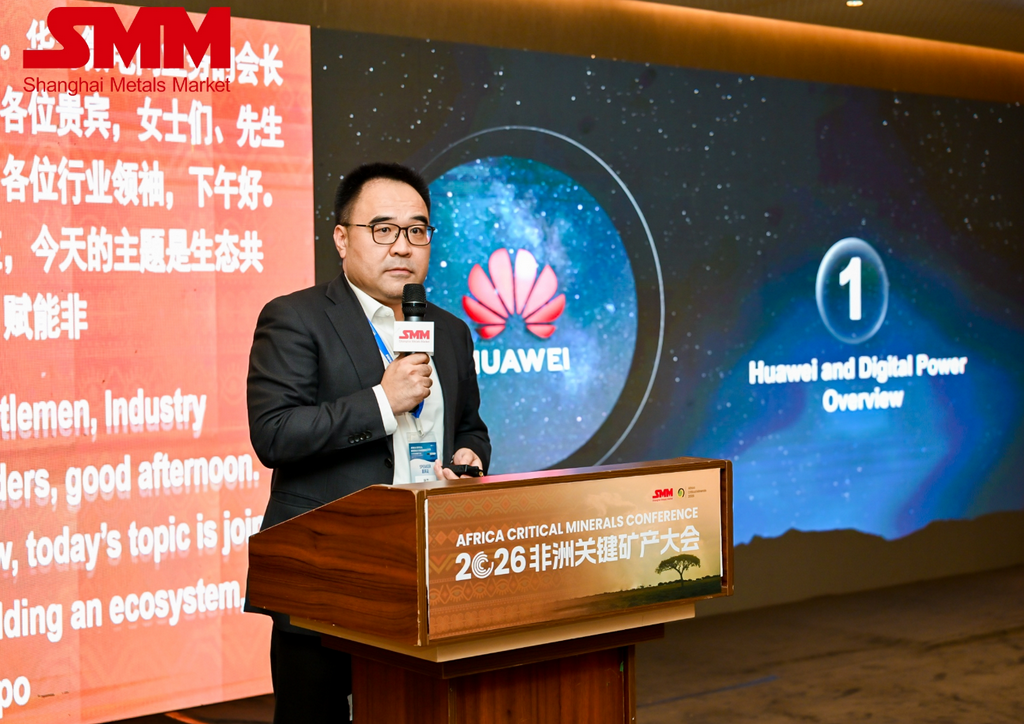
Huawei Pursues Africa Green‑Mining Partnerships and Holds Business Talks with ZESCO at SMM ACM 2026
Sep 23, 2026 16:41 (GMT+8)
![[SMM Analysis] The U.S. Copper Tariff Trade Is Fading — but It Isn’t Over Yet](https://imgqn.smm.cn/production/admin/votes/imagesMbCUq20260929144044.png)
[SMM Analysis] The U.S. Copper Tariff Trade Is Fading — but It Isn’t Over Yet
Sep 29, 2026 14:37 (GMT+8)
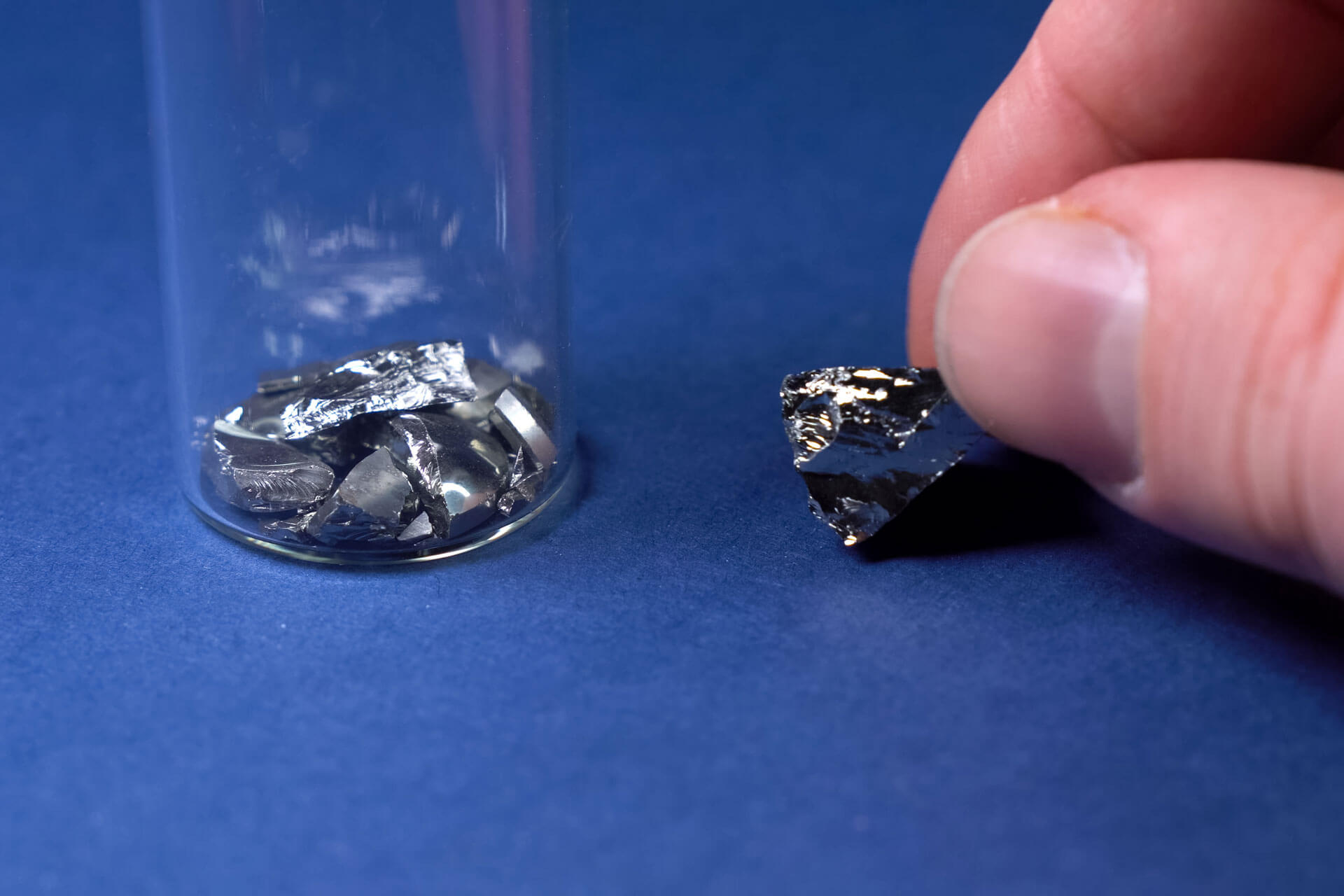
South Africa Poised to Become Key Player in Global Rare Earth Supply Chain by 2034【SMM Analysis】
Sep 29, 2026 18:54 (GMT+8)
[SMM Analysis] India’s BESS Manufacturing Push Accelerates, but Cell Dependence Remains a Key Bottleneck
Sep 30, 2026 08:50 (GMT+8)
SMM Launches Aluminium CBAM Calculator: What Cost Estimates Mean for EU-Bound Offers【SMM Analysis】
Sep 29, 2026 17:32 (GMT+8)
![[SMM Analysis] Low-Carbon of Primary Copper Begin Trading Separately—Will Recycled Copper’s Green Value Be Reassessed?](https://imgqn.smm.cn/usercenter/MXbup20251217171745.jpg)
[SMM Analysis] Low-Carbon of Primary Copper Begin Trading Separately—Will Recycled Copper’s Green Value Be Reassessed?
Sep 29, 2026 16:03 (GMT+8)
Latest News
[SMM Coal Flash] White Energy to Acquire South Galilee Coal Project
Oct 02, 2026 22:16 (GMT+8)
MMi Daily Iron Ore Index Prices for 2nd October 2026
Oct 02, 2026 17:59 (GMT+8)
[Nucor quarterly guidance points to stronger earnings as firmer steel prices offset higher costs]
Oct 02, 2026 17:03 (GMT+8)
[Essar Group plans 15 billion USD integrated steel plant in Iowa, targeting 2030 output]
Oct 02, 2026 17:03 (GMT+8)
[OECD forecasts global steel overcapacity to reach 721 million tonnes by 2027, hindering decarbonisation]
Oct 02, 2026 17:03 (GMT+8)
[SMM Steel] European Longs: Cost-Driven Hikes Stumble as Weak Demand Forces Mills into Export Markets
Oct 02, 2026 16:56 (GMT+8)
KGHM and South32 launch US$725m Sierra Gorda expansion, lifting copper capacity 26%
Oct 02, 2026 16:31 (GMT+8)
Aterian reports higher Rwanda 3T ore sales; trading margins remain estimates
Oct 02, 2026 16:26 (GMT+8)
Tusker’s Malawi sampling points to ilmenite dominance
Oct 02, 2026 16:23 (GMT+8)
[SMM Steel] Vietnamese HDG Deal to Europe Reported at Around USD 890/Tonne CFR
Oct 02, 2026 16:16 (GMT+8)
[Nippon Steel Commissions Record-Breaking 340-Ton EAF for Yawata Decarbonization Push]
Oct 02, 2026 16:05 (GMT+8)
[Primetals' Arvedi ESP Line in China Hits Four Productivity Milestones in Under Four Months]
Oct 02, 2026 16:04 (GMT+8)
[SMM Steel] Indonesian Slab Market Goes Quiet at $490/ton as Buyers and Sellers Await Next Move
Oct 02, 2026 16:02 (GMT+8)
[EU Approves Trasteel's Acquisition of Italy's Magona Galvanizing Plant]
Oct 02, 2026 15:49 (GMT+8)
Ghana draft bill proposes state special share and shorter mining leases
Oct 02, 2026 15:49 (GMT+8)
[Italy Approves Additional €100.5 Million Funding for Acciaierie d'Italia Taranto Works]
Oct 02, 2026 15:49 (GMT+8)
[Nippon Steel Raises Flat Steel Prices by $32/Tonne Citing Surging Input Costs]
Oct 02, 2026 15:49 (GMT+8)
[ArcelorMittal Evaluates $960 Million Expansion at Pecém Steel Plant in Brazil]
Oct 02, 2026 15:49 (GMT+8)
PGMs: Independent tests advance platinum and palladium battery technology
Oct 02, 2026 15:48 (GMT+8)
Emerita Extends Final Review of Iberian Belt West PFS, Release Expected in Coming Weeks
Oct 02, 2026 15:31 (GMT+8)