

News
Exclusive analysis articles with the latest market updates, and real-time news feeds.
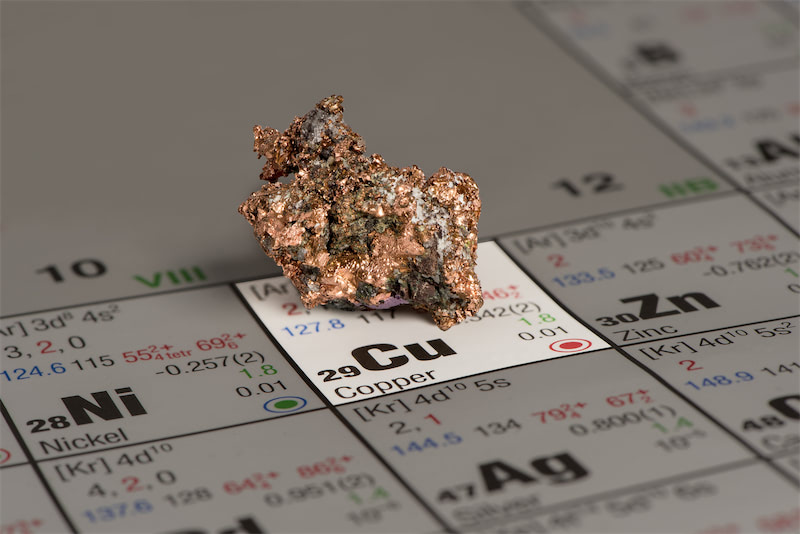
DRC Establishes US-DRC Special Working Group to Accelerate Strategic Minerals Partnership
According to foreign media reports, Kinshasa, September 11 — The DRC Cabinet approved the establishment of a DRC-US working group to accelerate the implementation of the bilateral strategic minerals partnership agreement and attract Western investment into the country's copper and cobalt industries. The DRC is the world's largest cobalt producer and the second-largest copper producer and exporter. The two countries signed a minerals cooperation agreement last December, marking the latest move by the country to broaden financing channels and strengthen cooperation with the US. Under the current cooperation framework, Virtus Minerals has already secured US-backed mining investment and is facilitating expanded copper mine cooperation between Gecamines, Mercuria, and Glencore, helping mineral products reach Western markets. The working group was originally scheduled to launch in February this year but was delayed by administrative obstacles, and its members and key projects have not yet been disclosed. The Cabinet meeting also approved a $24.8 billion fiscal budget for 2027, a 12% increase over this year's revised spending, with infrastructure, security, and economic diversification as priority areas.
Sep 21, 2026 10:00 (GMT+8)
[SMM Analysis] China-US Talks Fuel Bullish Sentiment in Pr-Nd Market, But Fundamentals Prevail
On the evening of September 23 (Beijing time) President Xi Jinping arrived in Washington by special plane for a state visit to the United States at the invitation of President Donald Trump, with the trip scheduled through September 25. Earlier, Chinese economic and trade teams had gone to New York to participate in related talks. Within the China‑US economic agenda, rare earths and critical minerals remain one of the most closely watched themes for global supply chains.
Sep 24, 2026 12:34 (GMT+8)
Why Is SHFE Copper’s “Three Highs” Market Intensifying?
Why Is SHFE Copper Entering a High-Premium, High-Backwardation, High-Price Market?
Sep 22, 2026 18:53 (GMT+8)
Latest News
![[SMM Chromium Week Review] 'Port Stocks Draw Down as Departures Extend Gains, Zimbabwe Tightens Chrome Mining Rules'](https://imgqn.smm.cn/usercenter/qbMSp20251217171722.jpeg)
[SMM Chromium Week Review] 'Port Stocks Draw Down as Departures Extend Gains, Zimbabwe Tightens Chrome Mining Rules'
Sep 25, 2026 20:43 (GMT+8)

Empire produces rutile pigment from Pitfield titanium ore
Sep 25, 2026 16:04 (GMT+8)
![[SMM Chromium Flash] FS Mining Details $500m Zimbabwe Ferrochrome Smelter and Power Plant Plans](https://imgqn.smm.cn/usercenter/TdoSs20251217171724.jpeg)
[SMM Chromium Flash] FS Mining Details $500m Zimbabwe Ferrochrome Smelter and Power Plant Plans
Sep 25, 2026 15:21 (GMT+8)
[SMM Chromium Flash] Outokumpu Unveils EvoMaterials Technology to Boost Ferrochrome's Chromium Content
Outokumpu has unveiled EvoMaterials, a proprietary sulfidation-based technology platform designed to increase the chromium content and chromium-to-iron ratio of ferrochrome, with potential to extend to nickel, molybdenum, and metals recovered from waste streams. The company said its Kemi mine in Finland, the EU's only operating chrome mine, gives EvoMaterials a strategic starting point in enriched ferrochrome and chromium metal aimed at space, aviation and defense applications, and that over the longer term the technology could help establish a fully Western supply chain for critical chromium materials, while also being economically competitive against conventional production routes.
Development began in the US in 2021, supported in part by a non-exclusive MIT patent license. Outokumpu CTO Stefan Erdmann said the process can recover critical materials from resources previously treated as waste. Testing is under way at a Massachusetts lab, with a pilot plant in New Hampshire set to scale the technology from 1 kg to 1 mt by early 2027, ahead of a targeted industrial-scale plant in 2030 at a US or European site still to be decided. CEO Kati ter Horst framed the platform as addressing the need for supply chains that are lower-carbon, geopolitically resilient and economically competitive at once.
Sep 25, 2026 15:15 (GMT+8)
【Flash | InP-Integrated AI Optical Engines Enter Volume Shipments】
NewPhotonics and Tower Semiconductor announced high-volume shipments of laser-integrated optical engines for AI infrastructure. The 800G and 1.6T PICs use Tower’s PH18DA silicon-photonics platform with heterogeneously integrated InP components, enabling lasers, SOAs, modulators and photodetectors on one chip. Volume shipments of 6.4T NPO chipsets are planned for H1 2027. SMM believes this signals that AI optical-interconnect demand is translating into InP device demand, supporting high-purity indium consumption. However, shipment volumes and InP intensity were not disclosed, so the near-term indium uplift cannot yet be quantified.
Sep 25, 2026 14:32 (GMT+8)
[SMM Chromium Flash] India's Chrome Ore Output Rises 12% to 3.53 Mt in FY2025-26, IFAPA Data Shows
India's chrome ore production rose 12% year-on-year to 3.53 million mt in fiscal year 2025-26, while ferrochrome production increased 10% to 1.49 million mt, according to data presented by the Indian Ferro Alloy Producers' Association (IFAPA) at the 6th International Ferro Alloys Conference (IFAC 2026) in Goa. The figures were released alongside data showing India's manganese ore imports rose 27% year-on-year to 4.03 million mt in the first half of 2026, underscoring a raw-material picture IFAPA described as mixed: rising domestic chrome ore and ferrochrome output on one hand, alongside deepening import reliance for manganese on the other.
The data was presented against the backdrop of India's expanding steel sector, which IFAPA said is creating a new growth runway for domestic ferro-alloy producers. India's crude steel production reached approximately 165 million mt in calendar year 2025, up more than 10% year-on-year, with demand expected to continue growing at around 7% annually. India is targeting roughly 300 million mt of steelmaking capacity by fiscal year 2031, a scale IFAPA said would significantly widen the opportunity for chromium, manganese, silicon and other alloying inputs. The association also noted that India's per-capita steel consumption has risen from around 24 kg in 1991 to about 109 kg in 2025, a threshold it said could support a further phase of consumption growth.
IFAPA Chairman Manish Sarda called for faster exploration and development of domestic chrome, manganese and other critical minerals to reduce import dependence, arguing that auction frameworks for mineral resources should be structured to encourage actual mine development rather than simply rewarding the highest bid. He said several manganese ore mines auctioned at high premiums remain non-operational because the underlying economics are unviable, a dynamic he said applies more broadly to securing indigenous raw-material supply for India's ferro-alloy sector under the government's Aatmanirbhar Bharat, or self-reliance, policy. IFAPA separately called for competitive power costs and rationalization of electricity-related charges and levies for energy-intensive ferro-alloy producers, alongside zero import duties on raw materials for which adequate domestic grades are unavailable.
Sep 24, 2026 19:10 (GMT+8)
[SMM Chromium Flash] Valterra Platinum to Unveil 'Full-Blown Chrome Strategy' in February
Valterra Platinum, formerly Anglo American Platinum, will announce a comprehensive chrome strategy in February, executive head of processing operations Agit Singh disclosed during a company value-chain media briefing. "We continue to optimize our chrome strategy and we'll be announcing a full-blown chrome strategy in February," Singh said, without providing further detail on the strategy's scope or contents.
The disclosure came as Singh detailed Valterra's processing operations spanning Platreef, UG2, Merensky and Great Dyke ores. The company operates three dedicated chrome operations, at its Amandelbult, Mototolo and Modikwa mines, all located on the eastern limb of South Africa's Bushveld Complex, where chrome is prevalent alongside platinum-group metals. Chrome recovery circuits at Amandelbult and Mototolo are continuing to be optimised, Singh said, describing "considerable work around chrome" as planned.
Singh also outlined a technical tension between Valterra's chrome and PGM businesses: chrome present in high-UG2 ore can be "poisonous" to smelting operations if not managed. To address this, Valterra blends concentrate from its base-metal-rich Mogalakwena and Unki operations with material from its chrome-bearing UG2 sources specifically to dilute chrome content before it reaches the smelter, an approach Singh and executive head of mining operations Willie Theron described as a key advantage of the company's integrated asset base.
The February chrome strategy announcement will be closely watched in the context of Valterra's broader ambitions in the sector. The company's Vision 2031 strategy has separately targeted chrome concentrate sales exceeding 2 million mt over the next five years, a target that emerged publicly around the same time Valterra was identified by Bloomberg and other outlets as the party behind an unsolicited takeover approach for Northam Platinum, a deal Northam's own CEO said was partly driven by Northam's standing as a major chrome producer. No further detail on the February announcement's scope, timing precision, or relationship to the Northam process has been disclosed.
Sep 24, 2026 19:01 (GMT+8)
Shrinking Volume: Wolframite Concentrates Fall Nearly 5% in Less Than a Month, What's Next After Breaking Below the 400,000 Yuan Mark? [SMM Commentary]
Sep 24, 2026 18:56 (GMT+8)
Pre-holiday stockpiling demand combined with cost support from holders drives silicon metal prices to stabilize and rebound [SMM Silicon Industry Weekly Review]
[Pre-holiday stockpiling demand and supplier cost support stabilize and rebound silicon metal prices]: This week, spot and futures prices of silicon metal stabilized and rebounded. As of September 24, SMM oxygen-blown #553 silicon in east China was at 9,400-9,500 yuan/mt, up 100 yuan/mt WoW, and #441 silicon was at 9,500-9,600 yuan/mt, up 50 yuan/mt WoW. In the futures market, the SI2611 contract stabilized and rebounded during the week, initially pulling back to around 8,410 yuan/mt early in the week before stabilizing. Mid-week, pre-holiday downstream restocking demand and cost support boosted sentiment, driving a consolidating rebound. It closed at 8,530 yuan/mt on Thursday afternoon, up 85 yuan/mt WoW. In terms of market quotes and transactions, with the two holidays approaching, downstream pre-holiday restocking and export demand increased. Coupled with rising freight costs, spot-futures price spread quotes in Tianjin and east China were pushed higher. Some silicon suppliers raised quotes slightly WoW, and silicon enterprises' sentiment to hold prices firm recovered from earlier levels. Low-priced supply in the market tightened WoW, trading activity recovered, and the price center stabilized and rebounded.
Sep 24, 2026 18:06 (GMT+8)
Baiyin Nonferrous Launches Tender for 230 Tonnes of Crude Cadmium, Auction Set for Oct 9, 2026
SMM News, September 24: SMM has learned that the Northwest Lead-Zinc Smelter of Baiyin Nonferrous Group is launching a public tender for the sale of approximately 230 tonnes of crude cadmium. According to official details, the bidding floor price will be set at SMM average price minus a discount of 1,820 yuan per tonne, with the highest bidder to win the auction. The tender will only proceed if a minimum of three bidders register. Bidding will commence at 15:00 on October 9, 2026. Market participants commented that given the recent strong cadmium prices, this tender warrants close attention. To a certain extent, it can reflect the strength of market demand and serve as a reference for the future direction of cadmium prices.
Sep 24, 2026 18:04 (GMT+8)

【SMM Analysis】Steel Tender Price Falls, Market Expectations Weaken
Sep 24, 2026 18:04 (GMT+8)
![Silicone Market Sees Ongoing Tug-of-War Between Sellers and Buyers, Pre-Holiday Actual Transactions Remain Weak [SMM Silicone Weekly Review]](https://imgqn.smm.cn/usercenter/hSSxt20251217171722.jpeg)
Silicone Market Sees Ongoing Tug-of-War Between Sellers and Buyers, Pre-Holiday Actual Transactions Remain Weak [SMM Silicone Weekly Review]
Sep 24, 2026 17:39 (GMT+8)
Tantalum Ore Prices Climb as Supply Tightens and Downstream Demand Grows
Sep 24, 2026 17:37 (GMT+8)
[SMM Chromium Flash] Zimbabwe's New Ban on Single-Mineral Mining Licenses Could Reshape Its Chrome Sector
Zimbabwe will no longer issue mining licenses for isolated, single-mineral operations, Vice President Dr Constantino Chiwenga announced at the Zimbabwe-China Business Forum last week. Future mining investments will be required to demonstrate the capacity to identify, separate and process the full range of minerals embedded in a deposit, not just the primary target mineral, with operations unable to do so barred from operating in the country. Chiwenga framed the move as part of Zimbabwe's broader push to retain more value from its mineral resources rather than exporting them in raw form.
For Zimbabwe's chrome sector, the policy lands directly on the country's geology. Chrome deposits along the Great Dyke frequently occur alongside platinum-group metals, nickel and other minerals in the same host rock, the same setting that has already driven the PGM-chrome co-production model at operations such as Zimplats, Mimosa, Unki and Karo. A chrome-focused mining investment with no capacity to also identify and process any co-located PGMs or other minerals would fall squarely into the category of operation the government says it will no longer license, effectively pushing new chrome projects toward integrated, multi-mineral processing from the outset rather than single-commodity extraction.
The policy adds a further layer to Zimbabwe's chrome beneficiation drive, which has already moved from banning raw ore exports in February 2026 to signaling a possible extension of that ban to chrome concentrate. Where those earlier measures targeted what happens to chrome after it leaves the ground, this policy shapes what a mining operation must be capable of processing before it can be licensed in the first place, raising the entry bar for new chrome investment in the country. It also raises immediate questions for the many small-scale and artisanal chrome miners already navigating a separate regularization deadline: whether the new licensing standard applies only to new applications or could eventually be extended to existing single-mineral operations remains unclear, as does whether "beneficiation capacity" means processing the primary mineral into a refined product or specifically extends to separating out secondary minerals present in the same ore body. Zimbabwe's government has not yet published implementing regulations clarifying how the policy will be applied to chrome projects specifically.
Sep 24, 2026 17:16 (GMT+8)
ADC12 Cost Support Continues, Pre-Holiday Demand Mildly Improves [Aluminum Scrap and Secondary Aluminum Weekly Review]
[Secondary Aluminum Weekly Review: ADC12 Cost Support Persists, Pre-Holiday Demand Improves Mildly] This week, SMM ADC12 prices held steady at 24,500 yuan/mt. On the cost side, aluminum scrap raw material prices fluctuated within a limited range overall this week, but the impact of stricter tax invoice policy enforcement became more evident in the market. Compliance requirements for enterprise procurement increased, the supply of invoiced aluminum scrap remained relatively tight, and comprehensive raw material procurement costs for some enterprises stayed at elevated levels.
Sep 24, 2026 16:48 (GMT+8)
[SMM Analysis] Macro Headwinds Materialize, Futures Recover; Pre-Holiday Essential Demand Release Drives Stainless Steel Inventory Destocking
[SMM Analysis] Macro Headwinds Materialize, Futures Recover, Pre-Holiday Just-in-Time Demand Releases Stainless Steel Inventory Destocking
SMM, September 24: This week, stainless steel social inventory continued its destocking trend, with the inventory midpoint moving steadily lower and pressure from accumulated market supply easing further. Total inventory in the two core markets of Wuxi and Foshan pulled back significantly, and the pace of destocking widened this week.
This week, recovering macro sentiment combined with pre-holiday just-in-time demand release to drive continued stainless steel inventory destocking. With the US Fed's rate hike now landed, the macro headwinds that had weighed on the market were largely priced in, significantly easing bearish market sentiment. SS futures strengthened in a recovery move, lifting spot prices in tandem and visibly reviving market trading activity. Ahead of the Mid-Autumn Festival holiday, downstream end-users concentrated their release of phased just-in-time procurement demand to ensure normal production before the break, boosting inquiry and transaction activity and improving the efficiency of inventory digestion. Under the combined tailwinds of recovering futures sentiment, warming spot prices, and concentrated pre-holiday just-in-time restocking, market supply was effectively absorbed, driving social inventory steadily lower.
Overall, the materialization of macro headwinds restoring market confidence, stronger futures lifting spot prices, and concentrated pre-holiday just-in-time demand release from end-users were the core drivers behind this week's sustained and substantial stainless steel inventory destocking. At the current stage, market pessimism is gradually fading, the low-level recovery in futures continues, and with pre-holiday just-in-time demand providing support, the pace of inventory destocking keeps strengthening. In the short term, as macro headwinds are fully priced in and market sentiment steadily recovers, inventory buildup pressure continues to ease. Supported by the orderly release of end-user just-in-time demand, inventory is likely to extend its mild destocking trend...
Sep 24, 2026 16:48 (GMT+8)
Insufficient demand growth; titanium industry chain to consolidate on a weak note in the short term [SMM Titanium Weekly Review]
[SMM Titanium Weekly Review: Insufficient Demand Growth Keeps Titanium Industry Chain Consolidating on a Weak Note in the Short Term] In the short term, the titanium industry chain lacks sustained demand growth and continues to consolidate on a weak note overall. Upstream titanium concentrates are in ample supply, and ore prices are under pressure. Titanium slag is suffering losses, with sluggish trading. Titanium dioxide is supported by peak-season orders, but downstream buyers have limited willingness to rush to buy amid continuous price rises, capping the upside. Sponge titanium supply keeps being released, and inventory pressure is hard to digest quickly. Titanium materials continue to show structural divergence, with weak civilian demand dragging down the market, while only the high-end aviation segment maintains resilience. Without the positive catalyst of concentrated downstream restocking, prices across all products are unlikely to see a significant rebound. Going forward, close attention should be paid to changes in actual end-user transactions.
Sep 24, 2026 15:58 (GMT+8)
Pre-holiday Stockpiling Falls Short of Expectations, Magnesium Industry Chain Diverges and Runs in the Doldrums [SMM Magnesium Weekly Review]
[SMM Magnesium Weekly Review: Pre-Holiday Stockpiling Falls Short of Expectations, Magnesium Industry Chain Diverges and Runs in the Doldrums] This week, the magnesium industry chain showed a divergent and weak-stable trend. On the supply side, the large dolomite mine in Wutai, Shanxi remained shut down, tightening the supply of high-grade ore in the region. Enterprises expanded procurement channels externally, and after external supplies arrived, the overall supply pressure for dolomite eased, with quotations remaining stable. Primary magnesium producers maintained basically stable output, while inventories continued to accumulate. As the two holidays approached, some producers cut prices to recover funds, and magnesium prices hit bottom before stabilizing with support from costs. Magnesium powder and magnesium alloy followed raw material prices and ran in the doldrums, while downstream processing enterprises saw finished product inventories rise and reduced operating rates to ease shipment pressure.
Sep 24, 2026 15:36 (GMT+8)
Polysilicon sees small-volume high-price deals, centralized module prices decline further [SMM weekly review]
[SMM Weekly Review: Polysilicon Sees Small Volume of High-Price Deals; Centralized Module Price Decline Widens] This week, China's module prices showed structural divergence, with distributed modules stopping falling and stabilizing while centralized modules saw a wider decline. On the distributed side, enterprise guidance prices remained unchanged, and average transaction prices for all specifications stayed basically flat this week, with only HJT modules edging down 0.0005 yuan/W. Supported by costs and industry self-discipline, module prices do not have much room for a sharp decline and are expected to consolidate in the short term. However, it is worth noting that low-efficiency modules have recently begun shipping rapidly, which to some extent affects the ability of conventional modules to hold prices firm. On the centralized demand side, marginal improvement continued: recent deliveries kept increasing, tenders for some large projects moved forward, and installations and orders both grew. Nevertheless, prices still lacked upward momentum, and the decline for the three specifications actually widened to 0.004 yuan/W this week.
Sep 24, 2026 15:32 (GMT+8)
Active warehouse withdrawals at ports, silicon metal social inventory down MoM [SMM Silicon Inventory]
[SMM: Active Port Withdrawals Drive Down Social Inventory of Silicon Metal MoM] SMM data showed that social inventory of silicon metal in major regions fell by 28,000 mt WoW as of September 24.
Sep 24, 2026 15:17 (GMT+8)
Huawei Pursues Africa Green‑Mining Partnerships and Holds Business Talks with ZESCO at SMM ACM 2026
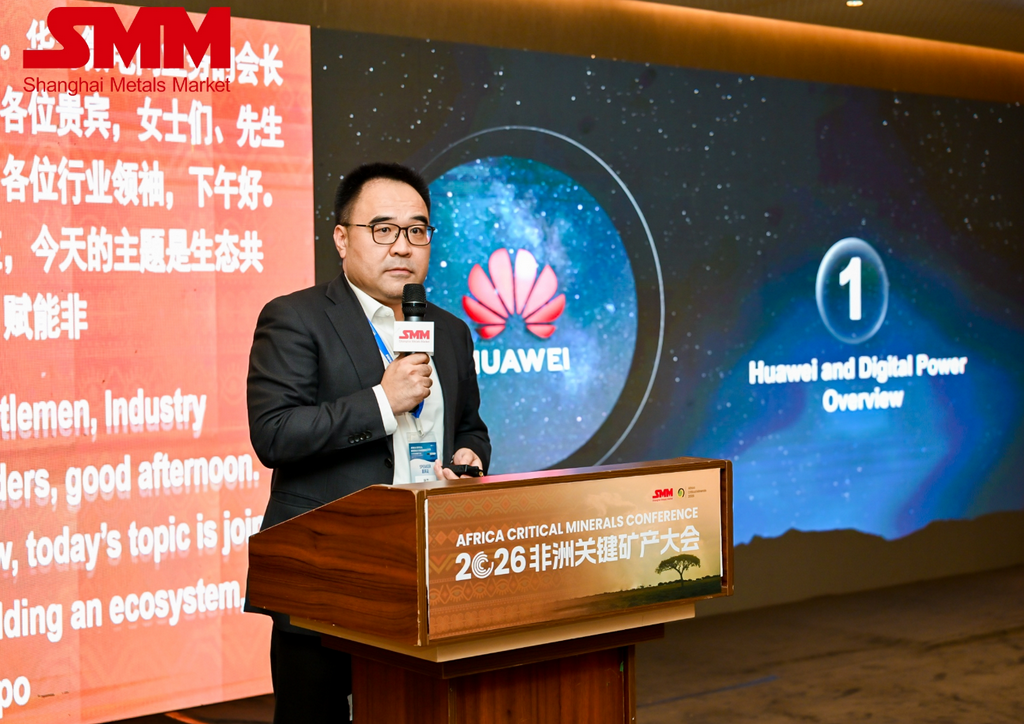
The SMM Africa Critical Minerals Conference 2026 (ACM2026) , hosted by Shanghai Metals Market (SMM), wrapped up with great success in Lusaka, Zambia on September 15‑16. Focusing on the development of strategic minerals such as copper, cobalt, lithium, and tin in Africa, local deep-processing transformation, green mine construction and energy infrastructure upgrading, this premium event has brought together 400+ industry representatives from Chinese and African government agencies, top miners, commodity traders, investors, and technical service providers to jointly explore high-quality development paths for Africa's critical minerals industry chain. Huawei presented its mine microgrid solution at this conference. Joseph Yao, President of Mining Micro-Grid Business at Huawei Digital Power , delivered a keynote speech titled "Eco‑Partnerships for Green African Mines: Huawei's Mine Microgrid Practices under the IPP‑PPA Model". Huawei's delegation also held business talks with ZESCO, Zambia's national power utility, covering mine energy supply, new‑energy deployment and collaborative power‑infrastructure build‑out. As the global energy transition continues to advance, the new energy industry is steadily boosting demand for critical minerals such as copper and cobalt. Africa is rich in strategic mineral resources and is accelerating its upgrade from exporting mineral raw materials to a high-value-added industry chain encompassing local smelting and deep processing. Mines, as power-intensive sites, require stable and low-cost green power supply, which has become a core factor constraining the implementation of mining projects and the release of capacity in Africa. Leveraging the IPP-PPA (independent power producer investment + long-term power purchase agreement) cooperation model, distributed new energy microgrids can provide reliable power nearby for open-pit mines and smelter sites, helping mines reduce electricity costs and carbon emissions, and supporting the implementation of Zambia's strategy for local copper ore processing. (Joseph Yao, President of Mining Micro-Grid Business at Huawei Digital Power) Joseph Yao shared an overview of Huawei and its Digital Energy business, introducing Huawei as a leading provider of ICT infrastructure and smart terminals, a technology-driven enterprise with operations across many countries worldwide, focusing on core business segments such as smart PV and grid-forming ESS. He noted that Africa's mining sector is generally plagued by power shortages. High diesel costs erode mine profit margins, unstable power supplies risk production disruptions, while ESG requirements also impose constraints on mineral exports. He proposed a three-step path for the sustainable development of African mining: Firstly, supply green electricity to mines through digital energy infrastructure to reduce carbon emissions; Secondly, electrification transition of mining equipment; Thirdly, reshape production processes through AI platforms and intelligent management systems, optimize equipment scheduling, and improve mine capacity and production efficiency. He also highlighted Huawei's mine microgrid system. Rather than a standalone piece of equipment, it is a complete energy solution integrating photovoltaic‑storage systems, intelligent dispatching, diesel backup power supplies, control systems and management software. It breaks the conventional single‑power‑source model to enable energy self‑sufficiency and efficient energy management at mining sites. Citing the large‑scale microgrid project for Saudi Arabia's Red Sea Global as a case study, he explained that this city‑level microgrid achieved major technical breakthroughs underpinned by Huawei's robust in‑house R&D capabilities and power‑simulation laboratories. Huawei possesses independent R&D capacity for core power‑electronic components such as IGBTs, and delivers one‑stop services covering design, simulation and project delivery. Together with ecosystem partners, it also provides full‑lifecycle engineering consultation and on‑site implementation support. The successful delivery of this project has laid a solid foundation for microgrid deployment in mining scenarios. He specifically addressed the widespread funding pain points confronting African mining projects. Under the IPP‑PPA ecosystem model, domestic and international investors can be brought in to finance mine‑energy projects. Mining companies, as power purchasers, sign long‑term power‑purchase agreements to secure stable mine operations, while investors obtain steady returns, forming a sustainable commercial closed‑loop. In his speech, Joseph cited several African mine microgrid implementation cases. Among them, after the completion of the Kamoa-Kakula mining microgrid project in the DRC, green electricity will replace a large amount of diesel power generation, significantly reducing mine electricity costs and carbon emissions, and delivering a good return on investment. For this Chinese-funded miner's copper mine project in the DRC, microgrid upgrades sharply reduced electricity costs and significantly improved the mine's capacity utilization rate, verifying the practical value of green electricity microgrids in African mine scenarios. He summarized Huawei's three core capabilities: a globalized business platform, end-to-end one-stop microgrid solutions, and a diverse ecosystem partner system that includes investors, EPCs, and design consulting agencies. He added that Huawei is looking forward to establishing partnership with more investors to develop energy projects across Zambia and wider Africa, secure power supplies for critical‑mineral industries including copper and lithium, jointly foster green mines in Africa, and build a low‑carbon and sustainable industrial future. During the conference, the Huawei delegation held a business meeting with representatives from Zambia's national power utility ZESCO. Against the backdrop of accelerating green transformation in African mining and continuously growing power demand in mining areas, the two sides exchanged views on topics of common concern such as power infrastructure construction and new energy support, and expressed their intention to jointly explore potential areas for cooperation. Africa's mineral industry is at a critical window for industry chain upgrading. Huawei, drawing on its technological strengths in new energy and smart power, will partner with IPP investors, local power authorities and mining operators to build an open‑cooperation ecosystem. Leveraging its proven mine microgrid solutions, Huawei aims to deliver green, reliable power supplies for African mining and smelting projects, advance the low‑carbon transition of Africa’s critical minerals industry, and deepen practical China‑Africa cooperation across the mining and energy sectors.
Sep 23, 2026 16:41 (GMT+8)
![[SMM Analysis] China’s Shifting Tungsten Trade Landscape: A Strategic View](https://imgqn.smm.cn/usercenter/eThpo20251217171723.jpeg)
[SMM Analysis] China’s Shifting Tungsten Trade Landscape: A Strategic View
Sep 23, 2026 09:13 (GMT+8)
![[SMM Analysis] A Snapshot of Zambia’s Gold Market: From Mine Output to Formal Trade](https://imgqn.smm.cn/usercenter/nQsOk20251217171736.jpg)
[SMM Analysis] A Snapshot of Zambia’s Gold Market: From Mine Output to Formal Trade
Sep 23, 2026 16:23 (GMT+8)
![Canada Lifts Solar Trade Duties: Can Chinese Modules Win a Bigger Share? [SMM Analysis]](https://imgqn.smm.cn/usercenter/VqcvE20251217171739.jpg)
Canada Lifts Solar Trade Duties: Can Chinese Modules Win a Bigger Share? [SMM Analysis]
Sep 21, 2026 18:03 (GMT+8)
DRC Establishes US-DRC Special Working Group to Accelerate Strategic Minerals Partnership
Sep 21, 2026 10:00 (GMT+8)
![[SMM Analysis] China-US Talks Fuel Bullish Sentiment in Pr-Nd Market, But Fundamentals Prevail](https://imgqn.smm.cn/usercenter/PVQnj20251217171744.jpg)
[SMM Analysis] China-US Talks Fuel Bullish Sentiment in Pr-Nd Market, But Fundamentals Prevail
Sep 24, 2026 12:34 (GMT+8)

Why Is SHFE Copper’s “Three Highs” Market Intensifying?
Sep 22, 2026 18:53 (GMT+8)
Latest News
[SMM Chromium Week Review] 'Port Stocks Draw Down as Departures Extend Gains, Zimbabwe Tightens Chrome Mining Rules'
Sep 25, 2026 20:43 (GMT+8)
Empire produces rutile pigment from Pitfield titanium ore
Sep 25, 2026 16:04 (GMT+8)
[SMM Chromium Flash] FS Mining Details $500m Zimbabwe Ferrochrome Smelter and Power Plant Plans
Sep 25, 2026 15:21 (GMT+8)
[SMM Chromium Flash] Outokumpu Unveils EvoMaterials Technology to Boost Ferrochrome's Chromium Content
Sep 25, 2026 15:15 (GMT+8)
【Flash | InP-Integrated AI Optical Engines Enter Volume Shipments】
Sep 25, 2026 14:32 (GMT+8)
[SMM Chromium Flash] India's Chrome Ore Output Rises 12% to 3.53 Mt in FY2025-26, IFAPA Data Shows
Sep 24, 2026 19:10 (GMT+8)
[SMM Chromium Flash] Valterra Platinum to Unveil 'Full-Blown Chrome Strategy' in February
Sep 24, 2026 19:01 (GMT+8)
Shrinking Volume: Wolframite Concentrates Fall Nearly 5% in Less Than a Month, What's Next After Breaking Below the 400,000 Yuan Mark? [SMM Commentary]
Sep 24, 2026 18:56 (GMT+8)
Pre-holiday stockpiling demand combined with cost support from holders drives silicon metal prices to stabilize and rebound [SMM Silicon Industry Weekly Review]
Sep 24, 2026 18:06 (GMT+8)
Baiyin Nonferrous Launches Tender for 230 Tonnes of Crude Cadmium, Auction Set for Oct 9, 2026
Sep 24, 2026 18:04 (GMT+8)
【SMM Analysis】Steel Tender Price Falls, Market Expectations Weaken
Sep 24, 2026 18:04 (GMT+8)
Silicone Market Sees Ongoing Tug-of-War Between Sellers and Buyers, Pre-Holiday Actual Transactions Remain Weak [SMM Silicone Weekly Review]
Sep 24, 2026 17:39 (GMT+8)
Tantalum Ore Prices Climb as Supply Tightens and Downstream Demand Grows
Sep 24, 2026 17:37 (GMT+8)
[SMM Chromium Flash] Zimbabwe's New Ban on Single-Mineral Mining Licenses Could Reshape Its Chrome Sector
Sep 24, 2026 17:16 (GMT+8)
ADC12 Cost Support Continues, Pre-Holiday Demand Mildly Improves [Aluminum Scrap and Secondary Aluminum Weekly Review]
Sep 24, 2026 16:48 (GMT+8)
[SMM Analysis] Macro Headwinds Materialize, Futures Recover; Pre-Holiday Essential Demand Release Drives Stainless Steel Inventory Destocking
Sep 24, 2026 16:48 (GMT+8)
Insufficient demand growth; titanium industry chain to consolidate on a weak note in the short term [SMM Titanium Weekly Review]
Sep 24, 2026 15:58 (GMT+8)
Pre-holiday Stockpiling Falls Short of Expectations, Magnesium Industry Chain Diverges and Runs in the Doldrums [SMM Magnesium Weekly Review]
Sep 24, 2026 15:36 (GMT+8)
Polysilicon sees small-volume high-price deals, centralized module prices decline further [SMM weekly review]
Sep 24, 2026 15:32 (GMT+8)
Active warehouse withdrawals at ports, silicon metal social inventory down MoM [SMM Silicon Inventory]
Sep 24, 2026 15:17 (GMT+8)