

News
Exclusive analysis articles with the latest market updates, and real-time news feeds.
China’s Spodumene Imports Rise 7% MoM in September, with Australia, Nigeria and Zimbabwe the Top Three Sources
According to compiled Chinese customs data, China imported 970,100 physical tonnes of spodumene in September 2026, up approximately 7.0% from 906,600 tonnes in August. Based on the classification and assumed grades, moisture content and conversion factors used in this analysis, September imports represented approximately 81,300 tonnes of lithium carbonate equivalent (LCE). By origin, imports from Australia, Nigeria and Zimbabwe increased significantly. Australia remained the largest supplier, with shipments to China reaching 446,200 tonnes, up approximately 36.7% month on month and accounting for around 46.0% of total imports. Nigeria became the second-largest supplier at 189,800 tonnes, up approximately 40.1%, while imports from Zimbabwe rose approximately 83.0% to 136,500 tonnes. Imports from South Africa fell approximately 49.6% to 112,400 tonnes, whereas imports from Brazil increased approximately 30.9% to 81,200 tonnes. Smaller volumes came from Burundi, Rwanda and Mozambique, at approximately 1,800 tonnes, 1,300 tonnes and 1,000 tonnes, respectively, with limited shipments from Zambia and Somalia. No imports from Mali or Canada appeared in the September dataset. Overall, China’s spodumene imports continued to grow in September, with the composition shifting toward concentrate. Under the classification used in this analysis, concentrate imports reached approximately 688,800 tonnes, accounting for 71.0% of total physical imports, compared with 60.7% in August. Raw ore imports stood at approximately 281,300 tonnes. Increased concentrate imports from Australia, Zimbabwe and Nigeria offset lower imports from Mali and Canada, providing the main support for growth in China’s imported lithium resource supply during the month.
Oct 20, 2026 19:03 (GMT+8)
[SMM Analysis] Hoa Phat’s record HRC sales reshape Vietnam’s self-sufficiency and China’s export flows
Hoa Phat sold 5.47 Mt of hot-rolled coil in January to September, up 59% and about a third of Vietnam’s consumption, with 24.6% of third-quarter sales exported. Vietnam’s HRC demand of about 17.3 Mt this year still exceeds local output of about 10.8 Mt by 6.5 Mt, and new capacity arrives mainly after 2027. Anti-dumping duties have pushed mainstream Chinese coil out of Vietnam; Chinese mills now face Vietnamese coil in ASEAN and other third markets.
Oct 20, 2026 14:36 (GMT+8)
China's Rare Earth Magnet Exports Hit Record in September, Driven by Backlog Release and Regulatory Easing【SMM Analysis】
China’s September rare earth magnet exports hit a record 6,165 tonnes (+23% MoM), driven by clearance of July–August port backlogs, not new demand. US-China talks unblocked shipments, while EU “green channel” talks lifted Q4 forecast to ~5,700 tonnes/month. Large producers recovered fastest; small mills remain constrained.
Oct 20, 2026 16:06 (GMT+8)
Latest News
【Flash | Canada’s Davidson Project Targets 6,020 t/y of Molybdenum as Estimated Cost Drops to $4.36/lb Mo】
Oct 23, 2026 14:23 (GMT+8)
TISCO tenders 30 mt of ferromolybdenum with delivery by end-November 2026.
Oct 23, 2026 09:27 (GMT+8)

【Flash | Southern Copper Weighs $680 Million Cuajone Expansion with 1,400-Tonne Annual Molybdenum Target】
Oct 22, 2026 18:18 (GMT+8)
【Flash | MMG Resets 2026 Mine Outlook as Las Bambas Targets the Top End】
MMG expects Las Bambas to produce approximately 400,000 tonnes of copper in 2026, near the upper end of its 380,000–400,000-tonne guidance. Kinsevere is also expected to reach the upper end of its 65,000–75,000-tonne copper range. However, Khoemacau’s guidance was cut to 43,000–48,000 tonnes from 48,000–53,000 tonnes following development delays and equipment availability constraints. Las Bambas produced 2,745 tonnes of contained molybdenum in the first nine months, up 33% year on year, with a molybdenum flotation column scheduled for Q4. MMG did not provide numerical full-year molybdenum guidance.
Oct 22, 2026 18:17 (GMT+8)
【Flash | Peru’s Molybdenum Recovery Fails to Offset Southern Copper’s Mexican Declines】
Southern Copper, a subsidiary of Grupo México, reported mined molybdenum production of 7,702 tonnes in the third quarter of 2026, down 2.2% year on year. Molybdenum output fell 12.5% at La Caridad and 8.3% at Buenavista in Mexico, outweighing increases of 8.9% at Toquepala and 6.1% at Cuajone in Peru. The company’s molybdenum production for the first nine months declined 5.2% year on year to 22,264 tonnes.
Oct 22, 2026 18:16 (GMT+8)
【Flash | Japan’s Molybdenum Imports Diverge: Oxide Category Up 75%, FeMo Down 48%】
Japan imported 2,121.0 tonnes of roasted molybdenum concentrate in August 2026, down 7.7% YoY, according to customs data compiled by SMM. Supplies from Chile fell to 1,077.0 tonnes from 1,534.0 tonnes a year earlier, while shipments recorded from South Korea rose to 180.0 tonnes from 80.0 tonnes. Imports of molybdenum oxides and hydroxides increased 74.5% YoY to 269.4 tonnes, led by Chile at 128.2 tonnes. Ferromolybdenum imports fell 48.3% to 31.0 tonnes. These categories cannot alone establish a change in overall end-use demand. August import figures are provisional.
Oct 22, 2026 16:35 (GMT+8)
【Flash | Peru’s Molybdenum Concentrate Exports Slide 22% as China-Bound Shipments Shrink】
Peru exported 5,555.7 tonnes of unroasted molybdenum concentrate in August 2026, down 21.6% MoM and 16.7% YoY, according to official trade data compiled by SMM. Chile remained the largest destination at 2,440.7 tonnes, followed by the US at 1,356.5 tonnes and China at 1,271.0 tonnes. Shipments to China fell 41.5% YoY, while those to the US rose 88.9%. January–August exports totaled 50,156.7 tonnes, down 2.8% YoY. Lower monthly shipments alone do not establish lower mine output.
Oct 22, 2026 16:34 (GMT+8)
【Flash | Chile Exports Nearly 8,800 Tonnes Across Four Key Molybdenum Products as Trade Mix Diverges】
Chile exported 4,482.1 tonnes of roasted molybdenum concentrate in August 2026, down 29.5% YoY, while unroasted concentrate exports rose 43.1% to 2,646.4 tonnes, customs data compiled by SMM show. Exports of molybdenum oxides and hydroxides surged 150.6% to 1,194.2 tonnes, and ferromolybdenum jumped 143.7% to 462.1 tonnes. The four categories totaled 8,784.7 tonnes of product net weight, down 1.0% YoY despite the gains in two categories. Unroasted concentrate imports rose 35.4% to 4,468.5 tonnes. These physical weights are not contained molybdenum, and the data do not trace imports into specific exports.
Oct 22, 2026 16:33 (GMT+8)
【Flash | South Korea’s Molybdenum Flows Diverge as Concentrate Imports Fall 26%】
South Korea imported 2,707.3 tonnes of roasted and other molybdenum concentrates in September 2026, down 25.9% YoY, SMM calculations based on customs data show. Roasted concentrate imports fell 28.8% to 1,740.0 tonnes, including 500.0 tonnes from Chile versus 1,410.7 tonnes a year earlier. Roasted concentrate exports rose 6.5% to 516.6 tonnes, mainly to Japan, India and Vietnam. Ferromolybdenum exports fell 29.2% to 1,121.1 tonnes, with shipments to China dropping from 580.0 to 70.5 tonnes. Imports of molybdenum oxides and hydroxides rose 311.0% MoM to 97.2 tonnes, although January–September volumes were down 39.2% YoY. National customs flows cannot measure Busan port throughput or warehouse spot stocks.
Oct 22, 2026 16:02 (GMT+8)
【Flash | Hudbay and Mitsubishi Approve Copper World; Molybdenum Plant Planned for First Operating Year】
Hudbay Minerals Inc. and Mitsubishi Corporation approved the final investment decision for Arizona’s Copper World project. The planned concentrator would produce copper and molybdenum concentrates, with a $25 million molybdenum processing plant scheduled for the first year of operations. The project targets first production in the second half of 2029. These are figures for the entire project, owned 70% by Hudbay and 30% by Mitsubishi. The decision advances a potential future United States molybdenum source; it does not add to current supply.
Oct 22, 2026 11:55 (GMT+8)

H.C. Starck Expands Tungsten Recycling in Germany to Boost Supply Chain Resilience
Oct 22, 2026 11:55 (GMT+8)
Taiton Resources Discovers Overlooked Tungsten, Antimony, and Gold at Kingsgate Project
Oct 22, 2026 11:54 (GMT+8)
![Short-Term Support Finally Breached! The International Molybdenum Oxide Market Now in Free Fall?! [SMM Analysis]](https://imgqn.smm.cn/usercenter/eGQFu20251217171723.jpeg)
Short-Term Support Finally Breached! The International Molybdenum Oxide Market Now in Free Fall?! [SMM Analysis]
Oct 21, 2026 19:14 (GMT+8)
Profit risks for ore traders: Sept tungsten imports down, exports structurally split
Oct 21, 2026 18:10 (GMT+8)
【Flash | Busan Molybdenum Oxide’s $33/lb Mo Level Comes Under Pressure as Offers Reach $32.70/lb Mo】
SMM market research found midday inquiries and price feedback for 57% molybdenum oxide in Busan at $32.70–$32.80 per pound of molybdenum. Multiple sources mentioned a possible trade at $32.75/lb Mo, but its volume and delivery terms remain unverified. It cannot be treated as a confirmed transaction. Weakness in China’s raw-material market and reports from market participants that another major mine’s molybdenum concentrate tender failed have reinforced buyer caution. Some sellers appear more willing to sell, widening the gap over a workable price. Whether the reported $32.75/lb Mo trade can be verified will be key to judging if Busan’s trading level is moving lower.
Oct 21, 2026 14:27 (GMT+8)
【Flash | Weather Disrupts Anglo American’s Molybdenum-Producing Mines in Chile】
Anglo American plc reported on October 20 that record snowfall and related maintenance disrupted Los Bronces late in the third quarter, reducing mining and ore throughput by more than 10% from the preceding quarter. At Collahuasi, severe weather continued into the fourth quarter alongside processing of lower-grade stockpiles.
Oct 21, 2026 09:36 (GMT+8)
【Flash | Peru’s Molybdenum Output Falls in August as Major Mines Diverge】
Preliminary figures released by Peru’s Ministry of Energy and Mines show that contained-molybdenum production fell 10.4% from July to 3,233.3 tonnes in August 2026, although it rose 12.5% year on year. Sociedad Minera Cerro Verde produced 698.7 tonnes, about 313.5 tonnes less than in July. Anglo American Quellaveco produced 497.2 tonnes, up 8.5% from July and 38.8% year on year. Peru’s January-August total was 25,617.3 tonnes, down 0.2% year on year. Company figures represent full-mine contained-metal production, not shareholders’ attributable output or molybdenum concentrate product mass.
Oct 21, 2026 09:34 (GMT+8)
Tungsten News Flash
SMM, Oct 20: A tungsten enterprise in Chongyi released its long-term purchasing prices for tungsten raw materials for the second half of October. The price for 55% black tungsten concentrate stands at RMB 344,000 per standard tonne, 55% scheelite concentrate at RMB 343,000 per standard tonne, and Grade 0 standard ammonium paratungstate (APT) at RMB 500,000 per tonne. Prices are inclusive of 13% VAT.
Compared with the first half of October, the quotations for 55% black and scheelite concentrate were cut by RMB 21,000 per standard tonne, while Grade 0 standard APT dropped by RMB 50,000 per tonne.
Oct 20, 2026 13:04 (GMT+8)
【Flash | BHP Payable Molybdenum Production More Than Doubles Quarter on Quarter】
BHP Group Limited reported payable molybdenum production of 599 tonnes for the third quarter of 2026, up 108.0% quarter on quarter and 75.7% year on year. Sales reached 500 tonnes, rising 122.2% quarter on quarter and 44.1% year on year. The wholly owned Spence mine produced 303 tonnes, up 86.0% quarter on quarter, while Antamina produced 296 tonnes on BHP’s 33.75% attributable basis, up 136.8%. A mechanical ownership conversion implies approximately 877 tonnes for Antamina on a 100% mine basis, although the estimate is affected by rounding. BHP did not disclose molybdenum grades, recoveries or mine-sequencing factors. All figures represent payable molybdenum metal, not molybdenum concentrate mass.
Oct 20, 2026 11:39 (GMT+8)
China's Tungsten Concentrate Imports Down 33.5% MoM, Up 73.1% YoY in September 2026
SMM News, Oct 20: Customs data show that China imported approximately 3,663.4 tonnes of tungsten concentrate in September 2026, down 33.5% month-on-month and up 73.1% year-on-year. The total import volume of tungsten concentrate for January–September 2026 stood at around 28,689.8 tonnes, representing a year-on-year increase of 109.4%. The value of tungsten concentrate imports in September 2026 was about USD 92.174 million, rising 26% month-on-month.
Oct 20, 2026 10:00 (GMT+8)

Early Bird Bookings Now Open for 2027 SMM LZE (22nd) Lead & Zinc Conference and Industry Expo in Yunnan next March
——From Conference to Expo · Doubled Scale · Full Upgrade—— [What This Article Brings You] ① Exhibition Introduction ② How to Register ③ First Batch of Exhibitors ④ Conference Agenda I. Doubled Scale, Full Upgrade! In 2026, lead and zinc face sharp volatility—elevated lead prices, scarce high-purity lead, record high LME low-grade lead stocks, lead-acid battery relocation from China to overseas, deeply negative zinc concentrate TCs, tight high-quality imported zinc ore, open export window for zinc ingots, and overseas zinc smelter buildout. The LZE covers market outlook, price forecast, equipment technology, recycling, and downstream applications—driving green transformation and win-win growth. What sets the 2027 (22nd) LZE apart from earlier events is its transformative upgrade: moving from a pure industry conference to a seamlessly combined conference and industry expo — deliver a larger-scale gathering, an expanded industry showcase and far-reaching involvement across the entire lead and zinc value chain. From industry trend analysis to in-depth industry chain exchanges, from upstream and downstream supply-demand matching to concentrated enterprise showcases, from a single industry conference to the further integration of "conference + industry expo"——in 2027, SMM LZE enters the "expo" era! The conference will embrace its 22nd edition with a larger scale, a richer industry lineup, and broader upstream and downstream participation! Scan the QR Code Below to Register as A Visitor for Free 1. Conference Scale Delegation: 6,000+ (up 71.4% from the previous edition) Companies: 2,000+ (up 100% from the previous edition) Exhibitors: 120+ (up 50% from the previous edition) Supply-demand matchmaking: 300+ (up 50% from the previous edition) Dedicated Forums: 7 (1 more than the previous edition) 2. Participant Groups 20% - Miners 23% - Smelters 22% - Processing enterprises 10% - Traders 5% - Lead-zinc end-user procurement 15% - Third-party equipment, technology, auxiliary materials, media, etc. 3% - Government, associations, university research institutions 2% - Financial and futures firms 3. Job Title Breakdown 4. Conference Highlights Price trends, consumption outlook, and policy interpretation Global dialogue on the lead-zinc industry and go-global strategies One-on-One Business Meetings Exploring Breakthrough Paths in Mining & Metallurgy Technology and Resource Recycling Showcase of Cutting-Edge Equipment and Consumables II. Four Identities, One Lead-Zinc Exhibition Whether you are here for market insights, procurement, showcasing or brand exposure, you will find a participation option that suits you. 1. Professional Visitors (Explore the exhibition for business opportunities and connect with the upstream and downstream of the industry) [Visitor Benefits] Exhibition Area Ticket On-site Check-in Gifts SMM Exclusive Lead-Zinc Industry Distribution Map Lead-Zinc Industry Visitor Exchange Group Group Benefits Tickets for Some Forums …… 2. Conference Delegates (Gain insights into new trends and discuss the lead-zinc market) [Delegate Benefits] Exhibition Area Ticket On-site Check-in Gifts SMM Exclusive Lead-Zinc Industry Distribution Map Lead-Zinc Industry Visitor & Conference Exchange Group Ticket for All Forums of the Conference Executive Dinner Voucher Lunch and Dinner Vouchers During the Conference Enterprise Directory Expert Reports 1-on-1 Supply-Demand Matching Post-Conference Field Trip Activities …… 3. Exhibitor (Step onto the industry stage and showcase your strengths) [18㎡ Custom Booth] [Benefits] Design & construction of all materials for the 18㎡ booth, tables, chairs, sofa & reception desk, TV, 5 conference passes, X-banner stand*1, conference booklet color page*1, LOGO display, multi-platform online exposure and promotion, supply-demand 1-on-1 matchmaking, long-term cooperation support from SMM, etc. [9㎡ Premium Booth] [Benefits] Design & construction of all materials for the 9㎡ booth, printed backdrop wall & reception desk & tables and chairs, TV, 3 conference passes, X-banner stand*1 or conference booklet color page*1, LOGO display, multi-platform online exposure and promotion, supply-demand 1-on-1 matchmaking, long-term cooperation support from SMM, etc. [6㎡ Standard Booth] [Benefits] Design & construction of all materials for the 6㎡ booth, one long table & two chairs, 2 X-banner stands with different content, 2 conference passes, multi-platform online exposure and promotion, supply-demand 1-on-1 matchmaking, long-term cooperation support from SMM, etc.
Oct 22, 2026 09:59 (GMT+8)

2027 Global Aluminum Supply-Demand Outlook: High Margins Drive Expansion, Shifting the Market from Tight to Loose
Oct 21, 2026 09:41 (GMT+8)

Chinese $6Billion Battery Investment in Morocco Reshapes EU Lithium Demand Amid Tariff Shifts
Oct 20, 2026 17:02 (GMT+8)

N-Type vs. P-Type Solar PV Modules: What Sets Them Apart, and Why Is N-Type Gaining Ground in the Global Market?
Oct 21, 2026 09:45 (GMT+8)
China’s Spodumene Imports Rise 7% MoM in September, with Australia, Nigeria and Zimbabwe the Top Three Sources
Oct 20, 2026 19:03 (GMT+8)
![[SMM Analysis] Hoa Phat’s record HRC sales reshape Vietnam’s self-sufficiency and China’s export flows](https://imgqn.smm.cn/usercenter/MhPNV20251217171716.jpg)
[SMM Analysis] Hoa Phat’s record HRC sales reshape Vietnam’s self-sufficiency and China’s export flows
Oct 20, 2026 14:36 (GMT+8)
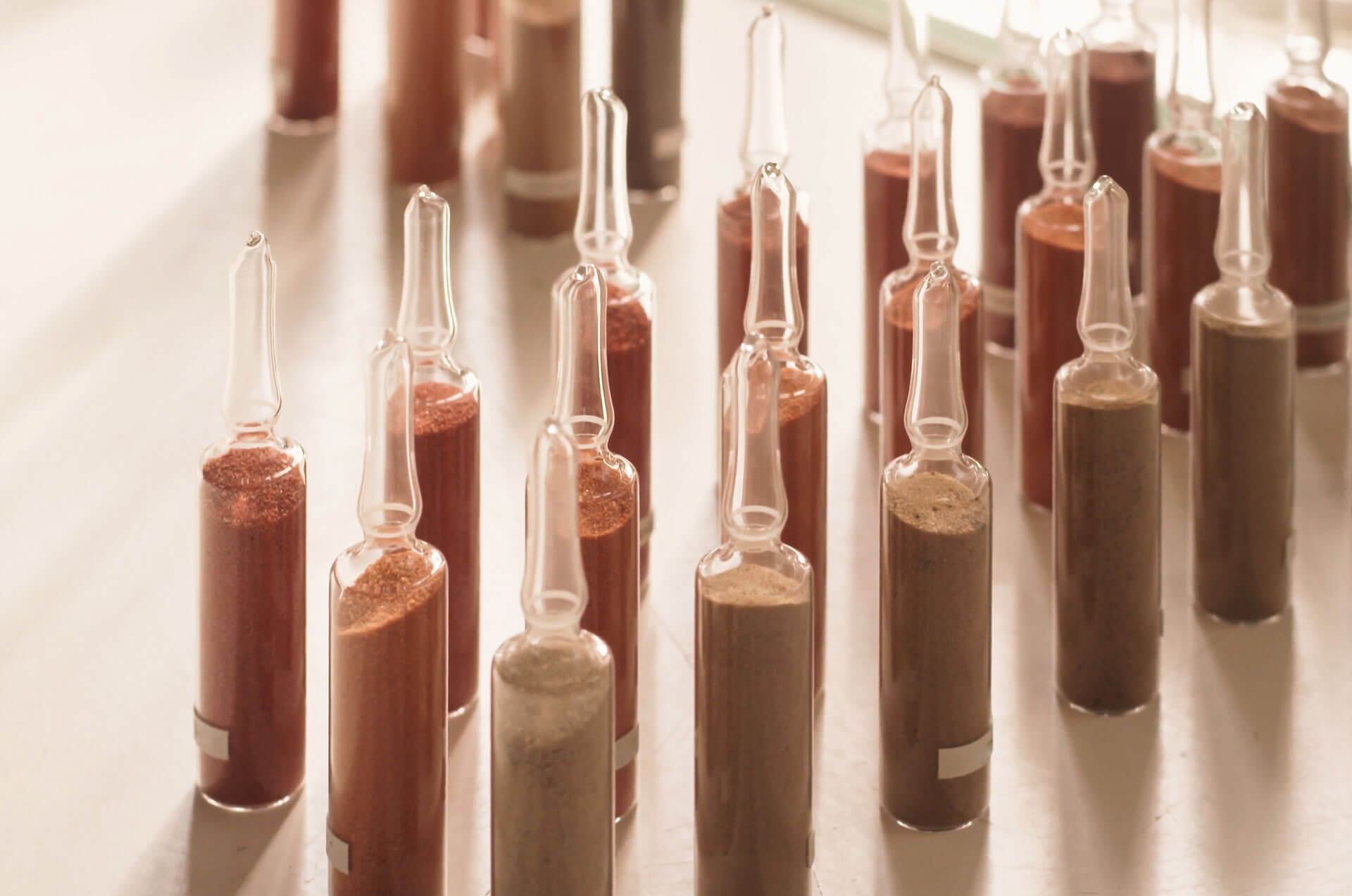
China's Rare Earth Magnet Exports Hit Record in September, Driven by Backlog Release and Regulatory Easing【SMM Analysis】
Oct 20, 2026 16:06 (GMT+8)
Latest News
【Flash | Canada’s Davidson Project Targets 6,020 t/y of Molybdenum as Estimated Cost Drops to $4.36/lb Mo】
Oct 23, 2026 14:23 (GMT+8)
TISCO tenders 30 mt of ferromolybdenum with delivery by end-November 2026.
Oct 23, 2026 09:27 (GMT+8)
【Flash | Southern Copper Weighs $680 Million Cuajone Expansion with 1,400-Tonne Annual Molybdenum Target】
Oct 22, 2026 18:18 (GMT+8)
【Flash | MMG Resets 2026 Mine Outlook as Las Bambas Targets the Top End】
Oct 22, 2026 18:17 (GMT+8)
【Flash | Peru’s Molybdenum Recovery Fails to Offset Southern Copper’s Mexican Declines】
Oct 22, 2026 18:16 (GMT+8)
【Flash | Japan’s Molybdenum Imports Diverge: Oxide Category Up 75%, FeMo Down 48%】
Oct 22, 2026 16:35 (GMT+8)
【Flash | Peru’s Molybdenum Concentrate Exports Slide 22% as China-Bound Shipments Shrink】
Oct 22, 2026 16:34 (GMT+8)
【Flash | Chile Exports Nearly 8,800 Tonnes Across Four Key Molybdenum Products as Trade Mix Diverges】
Oct 22, 2026 16:33 (GMT+8)
【Flash | South Korea’s Molybdenum Flows Diverge as Concentrate Imports Fall 26%】
Oct 22, 2026 16:02 (GMT+8)
【Flash | Hudbay and Mitsubishi Approve Copper World; Molybdenum Plant Planned for First Operating Year】
Oct 22, 2026 11:55 (GMT+8)
H.C. Starck Expands Tungsten Recycling in Germany to Boost Supply Chain Resilience
Oct 22, 2026 11:55 (GMT+8)
Taiton Resources Discovers Overlooked Tungsten, Antimony, and Gold at Kingsgate Project
Oct 22, 2026 11:54 (GMT+8)
Short-Term Support Finally Breached! The International Molybdenum Oxide Market Now in Free Fall?! [SMM Analysis]
Oct 21, 2026 19:14 (GMT+8)
Profit risks for ore traders: Sept tungsten imports down, exports structurally split
Oct 21, 2026 18:10 (GMT+8)
【Flash | Busan Molybdenum Oxide’s $33/lb Mo Level Comes Under Pressure as Offers Reach $32.70/lb Mo】
Oct 21, 2026 14:27 (GMT+8)
【Flash | Weather Disrupts Anglo American’s Molybdenum-Producing Mines in Chile】
Oct 21, 2026 09:36 (GMT+8)
【Flash | Peru’s Molybdenum Output Falls in August as Major Mines Diverge】
Oct 21, 2026 09:34 (GMT+8)
Tungsten News Flash
Oct 20, 2026 13:04 (GMT+8)
【Flash | BHP Payable Molybdenum Production More Than Doubles Quarter on Quarter】
Oct 20, 2026 11:39 (GMT+8)
China's Tungsten Concentrate Imports Down 33.5% MoM, Up 73.1% YoY in September 2026
Oct 20, 2026 10:00 (GMT+8)