

News
Exclusive analysis articles with the latest market updates, and real-time news feeds.
![[SMM Analysis] India’s BESS Manufacturing Push Accelerates, but Cell Dependence Remains a Key Bottleneck](https://imgqn.smm.cn/production/admin/votes/imagesozVHm20260131125121.jpeg)
[SMM Analysis] India’s BESS Manufacturing Push Accelerates, but Cell Dependence Remains a Key Bottleneck
In the first quarter of 2026, global energy storage system shipments reached 100.0 GWh, a 96.5% increase from 50.9 GWh in the same period of 2025, bringing quarterly shipments to an entirely new scale.
21 hours ago
SMM Launches Aluminium CBAM Calculator: What Cost Estimates Mean for EU-Bound Offers【SMM Analysis】
As the EU Carbon Border Adjustment Mechanism (CBAM) enters its definitive phase, aluminium trade with Europe requires carbon costs to be assessed alongside metal prices, processing charges and logistics. SMM has launched its Aluminium CBAM Calculator , bringing together product codes, origin, emissions data and certificate prices to support export quotations, European procurement and internal budgeting. The aluminium module offers 58 CN codes and 68 origin/default-value categories, covering unwrought aluminium, profiles, sheet, strip, foil and other products. Annual parameters are available for 2026–2030. Users enter a tonnage and select default emissions or enter verified actual emissions. The page then displays estimated certificates per tonne, total certificates, cost per tonne and total budget, with primary and secondary aluminium routes matched to the applicable data basis. The practical benefit is that assumptions and results appear together. Exporters can specify the product, origin, import period and emissions basis behind a quotation, while buyers can compare sources under consistent conditions. The page includes Chinese and English interfaces, parameter tables and a printable cost-sheet option. How the associated costs are shared between buyers and sellers remains a contractual matter. Certificate exposure should be distinguished from its monetary value. As of 29 September 2026, the calculator incorporates official prices of €75.36 per certificate for Q1 2026 and €75.28 for Q2. The Q3 price has not yet been published. Where a price is unavailable, the page retains certificate-volume estimates and leaves costs blank, rather than substituting an assumed price. The current version excludes deductions for carbon prices paid abroad and assessment of the annual import threshold. Its actual-emissions calculation for complex aluminium goods also lacks the free-allocation adjustment attributable to precursors. The analysis below therefore uses the checked default-value calculation. Results are commercial estimates, not final statutory surrender obligations. For market comparisons, the same aluminium product can carry materially different estimated costs depending on its origin-specific default value. Consider CN 76012040—unwrought aluminium alloys in billet form—with primary route K, the Q2 2026 certificate price and a quantity of 1,000 tonnes. Estimated costs under the Chinese, Indian and Canadian default-value cases are €143.98, €50.41 and €57.86 per tonne, respectively. These figures include the annual default-value mark-up and the benchmark-based free-allocation adjustment. The Chinese and Indian default-value cases differ by approximately €93.57 per tonne. Comparing only the metal price or processing charge may therefore miss a meaningful difference in the buyer's budget. Where other commercial terms are similar, estimated CBAM costs could affect an offer's attractiveness. However, this is not a ranking of producers' actual carbon intensity. Freight, customs duties, quality and delivery terms are also outside this comparison, so the figures alone cannot determine the preferred supplier. This highlights the commercial value of supplier emissions documentation. For producers whose actual emissions are below the applicable default value, supported by compliant verification, actual data may change a buyer's cost assessment. Buyers can use defaults for an initial budget when documentation is unavailable, then reassess using supplier evidence. Exporters consequently have a reason to prepare emissions information alongside their product offers, rather than negotiate solely around country-default differences. Annual parameter changes also warrant attention. Holding the Chinese product's base default value, route and benchmark constant, and assuming that the import year and applicable reporting year coincide, estimated certificate exposure rises from 1.912575 per tonne in 2026 to 2.248150 in 2027—an increase of approximately 17.5%. This reflects a higher default-value mark-up and a smaller free-allocation deduction; it does not imply a rise in future certificate prices. For supply arrangements spanning different years, companies can first compare certificate exposure, then discuss price-update mechanisms and cost sharing. Even while future certificate prices remain unknown, identifying that exposure and obtaining supplier documentation can improve the comparability of offers and procurement budgets.
Sep 29, 2026 17:32 (GMT+8)
[SMM Analysis] Low-Carbon of Primary Copper Begin Trading Separately—Will Recycled Copper’s Green Value Be Reassessed?
[SMM Analysis: Low-Carbon of Primary Copper Begin Trading Separately—Will Recycled Copper’s Green Value Be Reassessed?] BHP and Amazon’s EAC pilot separates verified emissions reductions from physical copper trade, giving low-emissions primary copper a new source of environmental value. Recycled copper retains a major energy advantage, but future competitiveness may depend more on traceability, recycled content and verified carbon data, potentially adding an environmental dimension to pricing.
Sep 29, 2026 16:03 (GMT+8)
Latest News
![[SMM Analysis] Sodium-Ion Batteries Targeted for "Coordinated Development" as Industrialization Advances](https://imgqn.smm.cn/usercenter/lzgUR20251217171731.jpg)
[SMM Analysis] Sodium-Ion Batteries Targeted for "Coordinated Development" as Industrialization Advances
20 hours ago
![[SMM Cobalt Morning Meeting Summary] Pre-holiday purchase willingness remains subdued; falling raw material costs drag down prices across the industry chain](https://imgqn.smm.cn/usercenter/HGHao20251217171725.jpg)
[SMM Cobalt Morning Meeting Summary] Pre-holiday purchase willingness remains subdued; falling raw material costs drag down prices across the industry chain
Sep 29, 2026 10:08 (GMT+8)
About 3 billion yuan! China BAK New Energy’s 12 GWh sodium-ion battery project lands in Nanjing, Jiangsu
Sep 28, 2026 13:29 (GMT+8)
Hebei's "lithium-sodium hybrid storage" sees batch deployment: sodium-ion battery energy storage enters provincial verification period [SMM Analysis]
[SMM Analysis: Hebei's "Lithium-Sodium Hybrid Storage" Deploys in Batches: Sodium-Ion Battery ESS Enters Provincial Verification Period] SMM, September 23: Recently, sodium-ion battery energy storage projects in Hebei have appeared intensively across filing, tendering, winning bid results, and construction commencement stages, making it one of the fastest provinces in China in terms of sodium-ion battery deployment pace on the electricity ESS side. After reviewing the public lists of the Hebei Provincial Development and Reform Commission (NDRC), as well as EPC and equipment tender winning bid results, SMM believes: Hebei is no longer a "policy statement" player, but has placed sodium-ion batteries into the project library of standalone ESS, grid connection timelines, and bidding sections—sodium-ion batteries are moving from demonstration fences into the provincial electricity market, entering a verification period with real money.
Sep 23, 2026 16:20 (GMT+8)
NFPP vs NFS: Who Will Dominate the Polyanion Sodium-Ion Battery Race?
A profound transformation in technical routes is unfolding in the sodium-ion battery sector.
In the early stages of industry development, layered oxide sodium-ion battery technology, leveraging its theoretical advantage of high energy density and aiming to "replace lithium batteries," became the mainstream direction highly favored across the sodium-ion battery industry chain.
Sep 22, 2026 10:12 (GMT+8)
[SMM Cobalt Morning Meeting Summary] Weak Demand Drags Down Industry Prices, Market Continues to Consolidate on a Weak Note Ahead of the Holiday
At the beginning of this week, the industry chain remained in the doldrums overall. Refined cobalt prices were temporarily stable, with mainstream smelters maintaining Ex-works prices at 285,000 yuan/mt, but downstream procurement remained mostly just-in-time, and sustained restocking had yet to materialise. Quotes and transactions for intermediate products were scarce, and sales pressure on miners gradually built up. Cobalt sulphate demand was weak, with some recycling enterprises lowering quotes to 57,000–58,000 yuan/mt. Raw material prices and production costs moved down in tandem, and the negative feedback loop in the market continued. Transactions for cobalt chloride and Co3O4 were sluggish, and downstream stockpiling interest ahead of the holiday was insufficient, with demand improvement likely having to wait until November. In the cobalt powder market, downstream purchases continued to be postponed due to high-priced inventory and losses. Ternary cathode precursor prices weakened, and operating rates at some enterprises declined. The decline in ternary cathode material prices slowed, but EV market demand had yet to rebound. The traditional peak season for LCO underperformed expectations, with weakening cost support and sluggish end-user stockpiling, leaving short-term prices still exposed to further downside risk. Going forward, the market will focus on post-holiday procurement recovery, inventory destocking, and actual Q4 orders.
Sep 22, 2026 09:45 (GMT+8)
[SMM Cobalt-Lithium Morning Meeting Summary] ### Raw Material Prices Consolidate, Industry Chain Diverges, Pre-Holiday Wait-and-See Sentiment Intensifies
Lithium ore prices remained resilient relative to lithium carbonate this week, with limited selling pressure from the mining side, but salt plant margins continued to be squeezed and acceptance of high-priced raw materials declined. Overseas shipments and domestic supply recovered marginally, though the actual release of incremental volumes still needs time. Lithium carbonate futures rebounded, spot prices edged up, and lithium hydroxide recovered in tandem, but downstream buyers turned cautious after dip-buying, slowing the pace of transactions. Trading in refined cobalt and intermediate products was sluggish, demand for cobalt sulphate, cobalt chloride, and Co3O4 was weak, and destocking pressure persisted. Nickel sulphate remained under pressure, and orders for ternary cathode precursors and ternary cathode materials weakened; LFP production rose and inventory was destocked, while new order prices for iron phosphate edged up. Anode prices were generally stable, separator prices edged up, and the electrolyte market held steady for now. Sodium-ion battery orders concentrated toward leading players, and recycled raw material prices continued to move lower. With the dual holidays approaching, spot order purchases across the industry chain declined, and the market is expected to remain divergent in the short term. In the ESS sector, overseas projects shifted to price negotiations for the coming year, and the cost advantages of large battery cells also pushed some quotes lower.
Sep 22, 2026 09:40 (GMT+8)
South Korea Unveils Battery Technology Roadmap Backed by KRW 8 Trillion in Private Investment
South Korea’s Ministry of Trade, Industry and Energy and the domestic battery industry announced a joint technology roadmap on September 22 to diversify beyond high-nickel NCM batteries into sodium-ion, all-solid-state and LFP technologies.
The government will concentrate R&D support on sodium-ion commercialization and all-solid-state batteries for robots, drones and urban air mobility, while establishing joint research among the three major cell manufacturers and collaboration between material and cell companies.
Private companies agreed to invest approximately KRW 8 trillion in R&D and manufacturing facilities by 2030, while the government plans to introduce production tax credits and develop standards for next-generation batteries.
Sep 22, 2026 08:28 (GMT+8)
Phosphate Ore Imports and Exports Surge in August: Is the Demand Peak Season Arriving?
In August, China’s phosphate ore imports surged month-on-month (MoM), and the price center shifted upward. Total imports for the month were 116,000 mt, up 563.2% MoM, largely recovering from the extremely low base in July caused by the export ban. The average import price rebounded to US$94.6/mt, up 12.0% MoM. Egypt and Jordan together accounted for 98.3%, further intensifying source concentration. Meanwhile, after consecutive zero transactions, exports suddenly rose to 61,000 mt in August.
Sep 21, 2026 14:16 (GMT+8)
[Na-ion: Shenhuo Group Breaks Ground on 50,000t/yr Sodium Battery Foil Project]
Shenhuo Group started construction of a 50,000-tonne-per-year high-performance aluminum foil project for sodium-ion batteries in Shangqiu, Henan on Sep 16. The project includes about 40,000 sqm of workshops and smart warehousing, with 1850mm and 2150mm foil rolling mills, producing 8-20μm foil for Na-ion cathodes and anodes over a 24-month build period. Output will cover power and energy storage batteries, complementing its existing lithium battery foil capacity for a dual-track lithium-sodium strategy.
Sep 20, 2026 18:06 (GMT+8)
!["Sodium-ion Battery" Included in the "Strengthened" List During the 15th Five-Year Plan: One Policy, Three Accounts [SMM Analysis]](https://imgqn.smm.cn/usercenter/QxQbN20251217171727.jpg)
"Sodium-ion Battery" Included in the "Strengthened" List During the 15th Five-Year Plan: One Policy, Three Accounts [SMM Analysis]
Sep 18, 2026 09:57 (GMT+8)
![[SMM Cobalt Morning Meeting Summary] Weak Demand and Falling Costs Jointly Keep Industry Chain Prices in the Doldrums](https://imgqn.smm.cn/usercenter/tjmLW20251217171722.jpeg)
[SMM Cobalt Morning Meeting Summary] Weak Demand and Falling Costs Jointly Keep Industry Chain Prices in the Doldrums
Sep 18, 2026 09:36 (GMT+8)
![NaPF6: The "Key Ingredient" in Sodium-Ion Battery Electrolyte — What Exactly Is It? [SMM Analysis]](https://imgqn.smm.cn/usercenter/ajAmi20251217171726.jpg)
NaPF6: The "Key Ingredient" in Sodium-Ion Battery Electrolyte — What Exactly Is It? [SMM Analysis]
Sep 17, 2026 16:24 (GMT+8)
534 Million Yuan! New Progress in the 30,000 mt/Year Sodium-Ion Battery Materials Project in Changzhi, Shanxi
Recently, Shanxi Xiang'an Energy Technology Co., Ltd. published the environmental impact assessment draft for public comment for its annual production of 30,000 mt of sodium-ion battery materials project.
The project is located in the Fuyang Industrial Park, Xiangyuan Economic and Technological Development Zone, Changzhi City, Shanxi Province. The main part of the project and associated utilities include the construction of two production lines for sodium-ion battery cathode materials and one production line for anode materials, along with supporting pure water preparation, air compression systems, nitrogen generation systems, dehumidification systems, and cooling water circulation systems. The processes adopted include: pretreatment (mixing + sand milling + iron removal + spray drying), sagger loading, vibration leveling, grid insertion + sintering, and final treatment (jet milling + batch mixing + sieving + packaging). Once operational, the project will produce 25,000 mt of sodium-ion battery cathode materials and 5,000 mt of anode materials annually. The total investment of the project is 534 million yuan, with an environmental protection investment of 3.64 million yuan, accounting for 0.68%.
Sep 16, 2026 17:23 (GMT+8)
[Sodium-ion: CSG's First Grid-wide Na-ion Storage Unit Commissioned in Shenzhen Urban Village]
China Southern Grid's first sodium-ion battery energy storage unit was commissioned at a transformer zone in Dunbei New Village, Shenzhen, marking the first use of Na-ion storage in distribution grid end-point management in the city and a new path of storage-based flexible capacity expansion for urban villages. The unit uses a new-generation polyanion Na-ion battery with millisecond-level uninterrupted supply and smart output control. Monitoring shows it cut transformer load rate from 93.6% to a safe 79.5%, fully covering evening peaks with zero overload for days. Requiring no major civil works, installation took only 15 days at much lower cost than traditional capacity upgrades.
Sep 16, 2026 13:52 (GMT+8)
[SMM Cobalt Morning Meeting Summary] Raw material costs weaken, demand is sluggish, and the price center continues to shift downward
The industry chain remained in the doldrums overall this week, with some products stabilizing briefly, but demand-side improvement was limited. Electrolysis product prices stopped falling and rebounded, driven mainly by a phased increase in purchasing, though sustainability remains to be seen. The intermediate product market stayed in a stalemate, with upstream price-holding and low-price transactions intensifying the standoff; if low-priced supply persists, the price center still faces downside risk. Cost support for salt products continued to weaken, as low-cost recycled materials and low-price selling by some enterprises intensified market competition, while downstream purchase willingness remained cautious, leaving prices clearly under pressure. Co3O4 and cobalt chloride were broadly stable, but with both supply and demand weak and inventory digestion slow, there was little upward momentum in the short term. Cobalt powder quotations continued to edge lower, dragged down by weak demand from the cemented carbide sector. Ternary cathode precursors and ternary cathode materials continued to weaken under the impact of falling nickel and lithium raw material prices and reduced end-user orders, with production schedules also trending downward. LCO's traditional peak season performance fell short of expectations, with weak end-user stockpiling; falling costs and insufficient demand created dual pressure, and the market is expected to consolidate on a weak note in the short term.
Sep 15, 2026 09:55 (GMT+8)
[SMM Cobalt-Lithium Morning Meeting Summary] Raw Material Divergence Intensifies; Peak Season Demand Uneven, Prices Consolidate
This week, the industry chain continued to diverge. On the lithium side, lithium carbonate drifted lower, but downstream stockpiling willingness near 140,000 yuan/mt remained strong, providing support for prices. Lithium ore pulled back accordingly, though overseas supply disruptions and mines holding prices firm kept ore prices relatively resilient. Lithium hydroxide was affected by reduced ternary orders, with transactions remaining weak. The materials segment was under pressure overall, with ternary cathode precursors, ternary cathode materials, and LCO continuing to weaken due to raw material pullbacks and insufficient end-use demand. China production schedules declined somewhat, while overseas high-nickel orders remained relatively good. LFP demand stayed robust, with production and sales holding at high levels. Iron phosphate orders increased, and prices edged up. Anode prices were broadly stable, with artificial graphite still having upside room supported by peak-season production schedules and cost support. High-end separator specifications saw tight supply-demand, with expectations of future price increases. Electrolyte cost support strengthened, with short-term stability for now. Sodium-ion batteries remained constrained by insufficient effective anode and cathode capacity, while the recycling market continued to remain under pressure amid raw material price fluctuations.
Sep 11, 2026 09:59 (GMT+8)
[SMM Cobalt Morning Meeting Summary] Weak Demand Combined with Lower Costs, Industry Chain Price Center Continues to Decline
The industry chain remained weak overall this week, with price centers generally moving lower. Upstream, reports of low-price raw material transactions increased, and the market stalemate showed signs of easing. Midstream, cost support for salts continued to weaken, and some enterprises, affected by funding and inventory pressure, proactively cut prices to sell, further dragging down market sentiment. Downstream, demand recovery fell significantly short of expectations, with orders for ternary cathode precursors, ternary cathode materials, and LCO all revised downward to varying degrees. Enterprises generally maintained cautious purchasing and destocking strategies, and September production schedules were broadly under pressure. Meanwhile, overseas orders for high-nickel materials remained at a relatively high level, serving as one of the few supportive factors. On the end-user side, NEV production and sales in August continued to grow YoY, but peak-season stockpiling had yet to clearly transmit to the materials segment. In the short term, under the combined effects of falling costs, elevated inventory, and weak demand, most products still lack clear momentum for stabilization, and prices are expected to remain in the doldrums. Going forward, attention should focus on Q4 order improvements, the pace of end-user stockpiling, and the release of low-priced supply.
Sep 11, 2026 09:55 (GMT+8)
Morocco's Phosphate Chemical Industry: Resource Endowment, Export Landscape, and Capacity Expansion
Morocco accounts for approximately 68% of global phosphate rock reserves, with grades as high as 33% (P₂O₅), and is predominantly surface-mined, giving it significant cost advantages. Exports are carried out through four major ports: Casablanca, Safi, Jorf Lasfar, and Laayoune, with Safi Port emerging as a strategic hub.
Sep 10, 2026 17:50 (GMT+8)
[Na-ion: HiNa Battery signs 5-year 10GWh supply deal with Korea's VOLTA]
HiNa Battery signed a strategic cooperation agreement with South Korea's VOLTA on Sept 2, advancing from a prior 15MWh storage project to a five-year, 10GWh long-term supply deal. HiNa will lead cell technology and manufacturing, VOLTA will handle system integration and Korean market promotion, and Kwangwoon University will provide R&D and testing support, covering utility, C&I and residential storage scenarios. Since Sept 1, sodium-ion batteries have had their own customs commodity code with a consumption tax exemption through end-2028, making this deal a milestone for China's sodium-ion industry entering global mainstream markets.
Sep 10, 2026 12:35 (GMT+8)
![[SMM Announcement] Chinese Market Metal Prices and News Updates Suspended during National Day Holiday (Oct 1-7)](https://imgqn.smm.cn/usercenter/HeIuV20251217171708.jpg)
[SMM Announcement] Chinese Market Metal Prices and News Updates Suspended during National Day Holiday (Oct 1-7)
Dear Valued SMM Users, The National Day holiday is approaching. Please note that SMM Chinese market metal price assessments and news updates will be temporarily suspended during the holiday (October 1-7) and resume normal release after the break. However, SMM overseas price assessment will continue to be updated as usual throughout the holiday. We apologise for any inconvenience caused and wish you a pleasant holiday. Shanghai Metals Market (SMM)
Sep 28, 2026 17:06 (GMT+8)
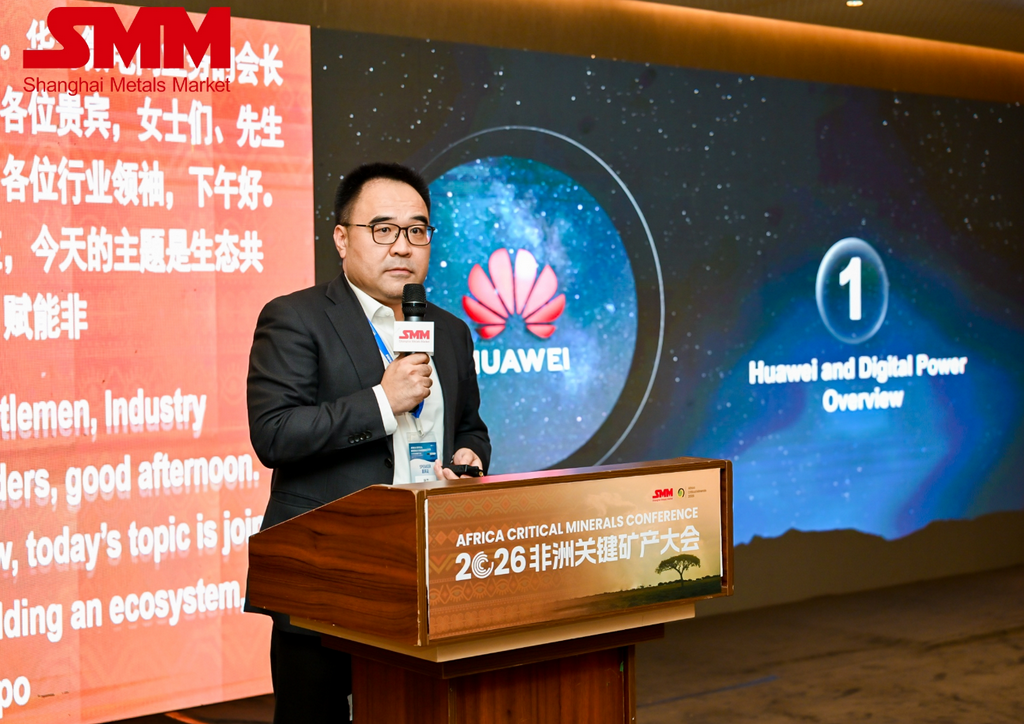
Huawei Pursues Africa Green‑Mining Partnerships and Holds Business Talks with ZESCO at SMM ACM 2026
Sep 23, 2026 16:41 (GMT+8)
![[SMM Analysis] The U.S. Copper Tariff Trade Is Fading — but It Isn’t Over Yet](https://imgqn.smm.cn/production/admin/votes/imagesMbCUq20260929144044.png)
[SMM Analysis] The U.S. Copper Tariff Trade Is Fading — but It Isn’t Over Yet
Sep 29, 2026 14:37 (GMT+8)
South Africa Poised to Become Key Player in Global Rare Earth Supply Chain by 2034【SMM Analysis】
Sep 29, 2026 18:54 (GMT+8)
[SMM Analysis] India’s BESS Manufacturing Push Accelerates, but Cell Dependence Remains a Key Bottleneck
21 hours ago
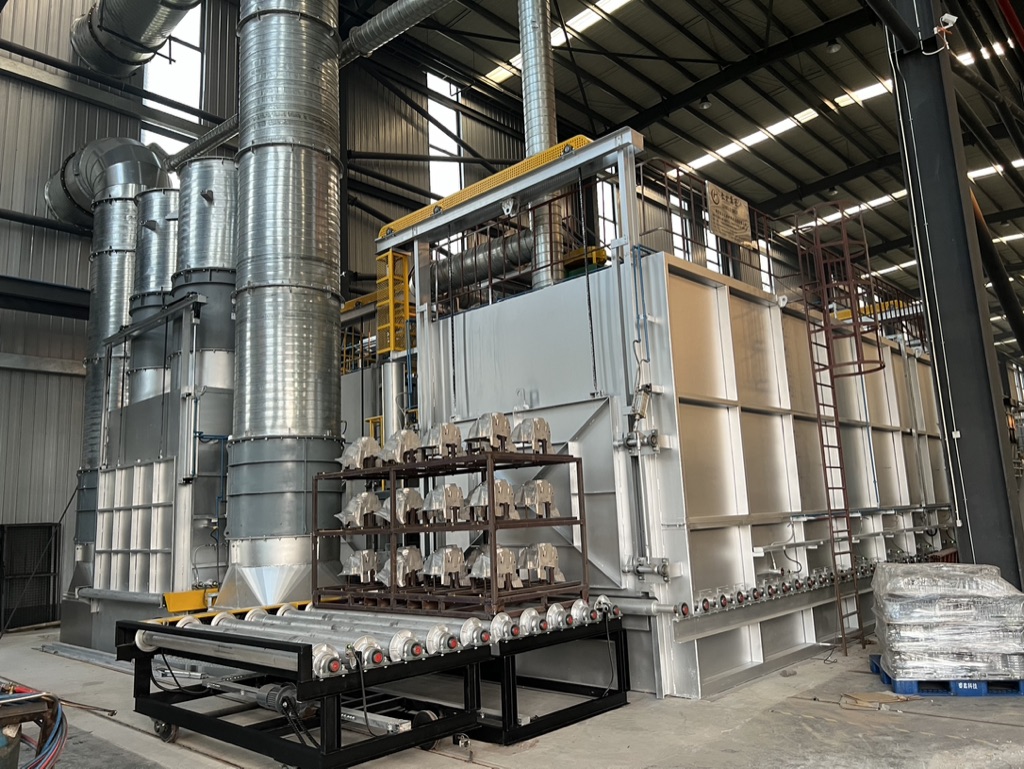
SMM Launches Aluminium CBAM Calculator: What Cost Estimates Mean for EU-Bound Offers【SMM Analysis】
Sep 29, 2026 17:32 (GMT+8)
![[SMM Analysis] Low-Carbon of Primary Copper Begin Trading Separately—Will Recycled Copper’s Green Value Be Reassessed?](https://imgqn.smm.cn/usercenter/MXbup20251217171745.jpg)
[SMM Analysis] Low-Carbon of Primary Copper Begin Trading Separately—Will Recycled Copper’s Green Value Be Reassessed?
Sep 29, 2026 16:03 (GMT+8)
Latest News
[SMM Analysis] Sodium-Ion Batteries Targeted for "Coordinated Development" as Industrialization Advances
20 hours ago
[SMM Cobalt Morning Meeting Summary] Pre-holiday purchase willingness remains subdued; falling raw material costs drag down prices across the industry chain
Sep 29, 2026 10:08 (GMT+8)
About 3 billion yuan! China BAK New Energy’s 12 GWh sodium-ion battery project lands in Nanjing, Jiangsu
Sep 28, 2026 13:29 (GMT+8)
Hebei's "lithium-sodium hybrid storage" sees batch deployment: sodium-ion battery energy storage enters provincial verification period [SMM Analysis]
Sep 23, 2026 16:20 (GMT+8)
NFPP vs NFS: Who Will Dominate the Polyanion Sodium-Ion Battery Race?
Sep 22, 2026 10:12 (GMT+8)
[SMM Cobalt Morning Meeting Summary] Weak Demand Drags Down Industry Prices, Market Continues to Consolidate on a Weak Note Ahead of the Holiday
Sep 22, 2026 09:45 (GMT+8)
[SMM Cobalt-Lithium Morning Meeting Summary] ### Raw Material Prices Consolidate, Industry Chain Diverges, Pre-Holiday Wait-and-See Sentiment Intensifies
Sep 22, 2026 09:40 (GMT+8)
South Korea Unveils Battery Technology Roadmap Backed by KRW 8 Trillion in Private Investment
Sep 22, 2026 08:28 (GMT+8)
Phosphate Ore Imports and Exports Surge in August: Is the Demand Peak Season Arriving?
Sep 21, 2026 14:16 (GMT+8)
[Na-ion: Shenhuo Group Breaks Ground on 50,000t/yr Sodium Battery Foil Project]
Sep 20, 2026 18:06 (GMT+8)
"Sodium-ion Battery" Included in the "Strengthened" List During the 15th Five-Year Plan: One Policy, Three Accounts [SMM Analysis]
Sep 18, 2026 09:57 (GMT+8)
[SMM Cobalt Morning Meeting Summary] Weak Demand and Falling Costs Jointly Keep Industry Chain Prices in the Doldrums
Sep 18, 2026 09:36 (GMT+8)
NaPF6: The "Key Ingredient" in Sodium-Ion Battery Electrolyte — What Exactly Is It? [SMM Analysis]
Sep 17, 2026 16:24 (GMT+8)
534 Million Yuan! New Progress in the 30,000 mt/Year Sodium-Ion Battery Materials Project in Changzhi, Shanxi
Sep 16, 2026 17:23 (GMT+8)
[Sodium-ion: CSG's First Grid-wide Na-ion Storage Unit Commissioned in Shenzhen Urban Village]
Sep 16, 2026 13:52 (GMT+8)
[SMM Cobalt Morning Meeting Summary] Raw material costs weaken, demand is sluggish, and the price center continues to shift downward
Sep 15, 2026 09:55 (GMT+8)
[SMM Cobalt-Lithium Morning Meeting Summary] Raw Material Divergence Intensifies; Peak Season Demand Uneven, Prices Consolidate
Sep 11, 2026 09:59 (GMT+8)
[SMM Cobalt Morning Meeting Summary] Weak Demand Combined with Lower Costs, Industry Chain Price Center Continues to Decline
Sep 11, 2026 09:55 (GMT+8)
Morocco's Phosphate Chemical Industry: Resource Endowment, Export Landscape, and Capacity Expansion
Sep 10, 2026 17:50 (GMT+8)
[Na-ion: HiNa Battery signs 5-year 10GWh supply deal with Korea's VOLTA]
Sep 10, 2026 12:35 (GMT+8)