South Africa does not possess the world’s largest rare earth reserves, yet it is arguably the most undervalued African node in the Western supply chain. Its value does not lie in the sheer size of its deposits, but in the synergistic combination of high‑grade monazite, phosphogypsum tailings recycling, magnetic rare earths, and battery‑grade manganese. This unique mix gives South Africa a distinctive positioning in the global rare earth landscape.
Policy Shift: From Raw Ore Exports to Value‑Chain Participation
In 2025, the South African Cabinet approved the Critical Minerals and Metals Strategy, designating rare earths as a medium‑high critical mineral alongside gold, vanadium, palladium, and rhodium, while platinum, manganese, iron ore, coal, and chromium were classified as high‑criticality minerals. The policy direction is unambiguous: South Africa aims to move beyond simply exporting ores and instead integrate exploration, local processing, R&D, infrastructure, financial support, and regulatory coordination to become an active participant in the critical minerals value chain.
Three Core Projects Driving Market Expectations
What truly excites the market are three projects: Steenkampskraal, Zandkopsdrift, and Phalaborwa.
Steenkampskraal: Pioneer of High‑Grade Monazite
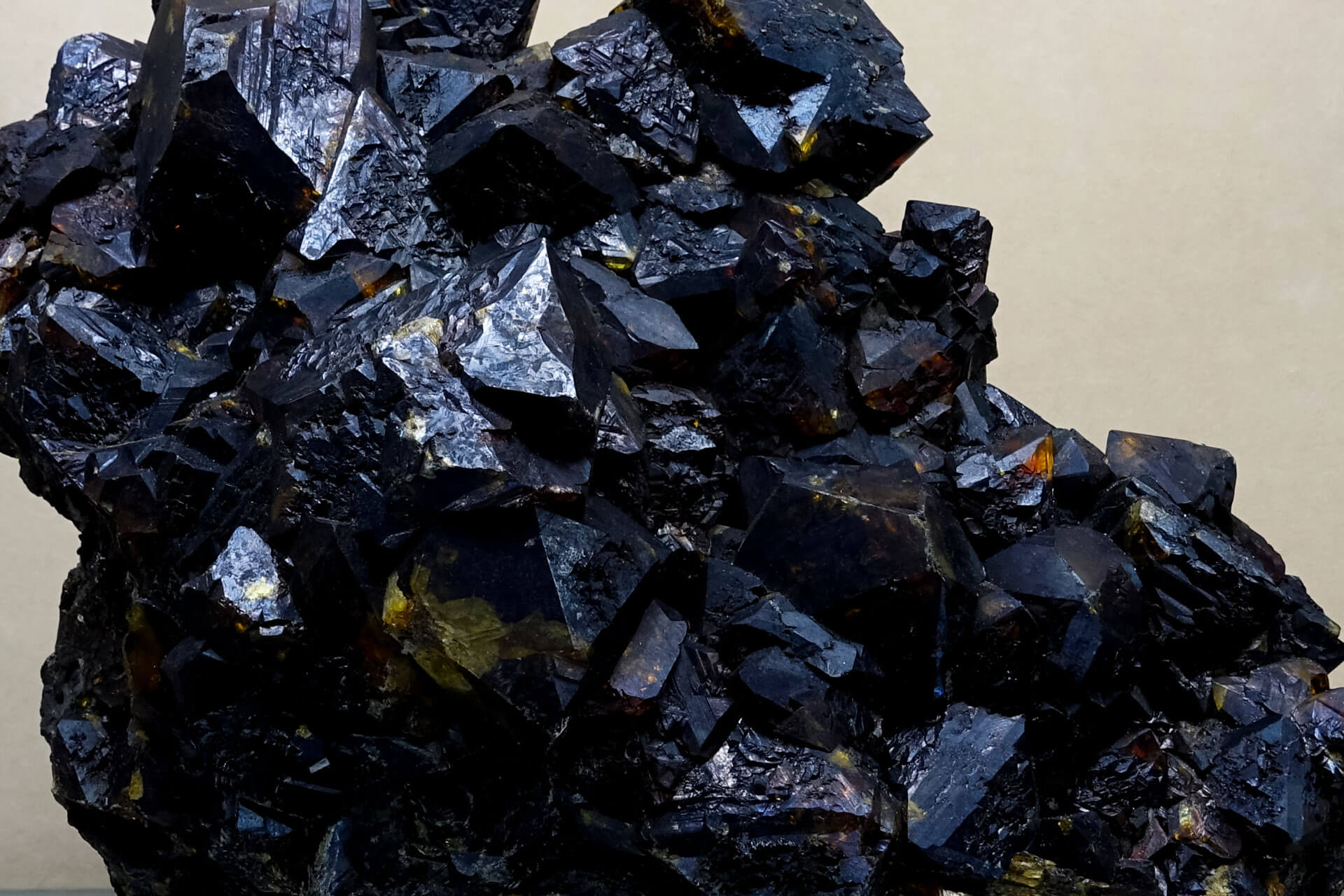
Located in the Western Cape, Steenkampskraal is a typical high‑grade monazite deposit with approximately 665,000 tonnes of resources at 14.5% TREO, and associated thorium. Construction of the monazite processing plant began in 2026, with initial concentrate output of around 6,600 t/a, ramping up to 13,400 t/a at full capacity; concentrate TREO content can exceed 50%. The next steps involve producing mixed rare earth carbonate and separated oxides. Its core selling point is “high grade + South African local separation narrative,” but thorium and radioactive waste management will ultimately determine how fast and how far it can go.
Zandkopsdrift: A Model of Magnetic Rare Earths and Battery Manganese Synergy
Developed by Frontier Rare Earths, Zandkopsdrift is the “magnetic rare earths + battery manganese” project most favored by Western capital. It hosts proved and probable reserves of 789,000 tonnes REO at an average grade of 1.92%, with a mine life exceeding 45 years. Over the first 25 years, it is expected to produce approximately 3,038 t/a of NdPr oxide, plus 114 t/a of Dy and 25 t/a of Tb, alongside 100,000 t/a of battery‑grade manganese sulphate. By‑product manganese revenue can cover about 90% of rare earth production costs. The 2025 Pre‑Feasibility Study delivered an after‑tax NPV10% of ~USD 2 billion and an unleveraged IRR of 28%. Crucially, it has already secured Carester’s solvent extraction technology and a 7‑year offtake for heavy rare earth carbonate from Carester’s Lacq plant in France. Korea’s KOMIR holds an 8.9% stake, South Africa’s Industrial Development Corporation (IDC) has invested USD 20 million in the DFS, and the project has been listed as an extra‑EU strategic project under the EU Critical Raw Materials Act, with first production targeted for 2030. Therefore, it is more of a “South African mining + European refining” template than a project to manufacture magnets locally in South Africa.
Phalaborwa: Green Rare Earths from Phosphogypsum Tailings
Advanced by London‑listed Rainbow Rare Earths, Phalaborwa takes a completely different approach: instead of opening a new mine, it processes phosphogypsum tailings left by a phosphate plant in Limpopo Province. Resources total approximately 35 million tonnes at 0.44% grade, with annual processing capacity of 2.2 million tonnes of phosphogypsum, yielding around 1,900 t/a of magnetic REO and SEG+ heavy rare earth carbonate containing Sm, Eu, Gd, and Y, including about 213 t/a of yttrium oxide. In 2025, solvent extraction was confirmed as the definitive separation route, involving roughly 75 mixer‑settlers. Construction is planned for 2027, with first production in 2028. It has a lower capital intensity, easier social license, and an ESG narrative around “remediating historical pollution,” making it the South African project closest to generating near‑term cash flow.
Supply Outlook: Poised to Become Africa’s Largest by 2034
Aggregating the three projects, Fitch Solutions projects that South Africa could supply approximately 12.4 kt REO/a by 2034, making it the largest producer in Africa and the seventh globally. However, a note of caution is warranted: Africa had no scaled rare earth production between 2021 and 2026, and project “announcement timelines” typically run two to four years ahead of actual cash flow. Electricity, rail, ports, financing, radioactive regulation, and solvent extraction talent could each push schedules back.
Industrial Chain Reality: Making Money on Intermediates in the Short Term
Therefore, the true positioning of South African rare earths is not to “replace China,” but to serve as a portfolio alternative within the non‑Chinese supply chain: Steenkampskraal supplies high‑grade monazite concentrate and MREC; Zandkopsdrift provides NdPr and Dy/Tb exposure; Phalaborwa offers NdPr plus Y/Sm/Eu/Gd. European, South Korean, and Japanese buyers lock in “non‑Chinese oxides” via offtake agreements, while metals, alloys, and magnets remain predominantly in Europe, the US, Japan, and South Korea. South Africa has yet to build a scaled separation‑to‑metal‑to‑magnet chain domestically; in the short term, it profits from concentrates and intermediate products, with the premium accruing to qualified oxides after separation, not to run‑of‑mine ore.
Conclusion
South African rare earths are neither the next China nor just another African junior miner. Rather, they represent the African piece of the puzzle that most resembles a “financeable, separable, and ESG‑packagable” asset in the West’s China‑plus‑one strategy. If Zandkopsdrift secures construction financing, Phalaborwa delivers oxides in 2028, and Steenkampskraal resolves its thorium issues, then beyond 2030 the market will say that non‑Chinese rare earths are not just about MP Materials and Lynas — they are also about South Africa.
![South Africa Rare Earths: An Underrated African Hub in the “Non-China Supply Chain” [SMM Analysis]](https://imgqn.smm.cn/usercenter/rqOXm20251217171744.jpeg)