

News
Exclusive analysis articles with the latest market updates, and real-time news feeds.
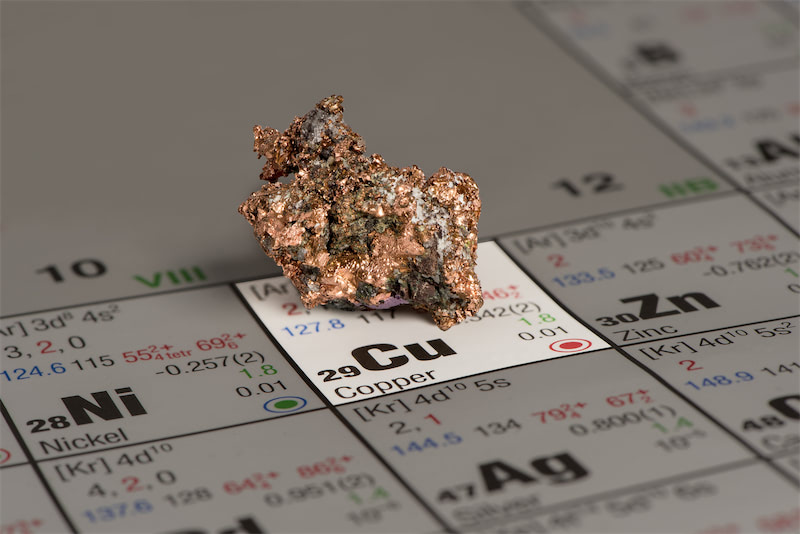
DRC Establishes US-DRC Special Working Group to Accelerate Strategic Minerals Partnership
According to foreign media reports, Kinshasa, September 11 — The DRC Cabinet approved the establishment of a DRC-US working group to accelerate the implementation of the bilateral strategic minerals partnership agreement and attract Western investment into the country's copper and cobalt industries. The DRC is the world's largest cobalt producer and the second-largest copper producer and exporter. The two countries signed a minerals cooperation agreement last December, marking the latest move by the country to broaden financing channels and strengthen cooperation with the US. Under the current cooperation framework, Virtus Minerals has already secured US-backed mining investment and is facilitating expanded copper mine cooperation between Gecamines, Mercuria, and Glencore, helping mineral products reach Western markets. The working group was originally scheduled to launch in February this year but was delayed by administrative obstacles, and its members and key projects have not yet been disclosed. The Cabinet meeting also approved a $24.8 billion fiscal budget for 2027, a 12% increase over this year's revised spending, with infrastructure, security, and economic diversification as priority areas.
Sep 21, 2026 10:00 (GMT+8)
[SMM Analysis] China-US Talks Fuel Bullish Sentiment in Pr-Nd Market, But Fundamentals Prevail
On the evening of September 23 (Beijing time) President Xi Jinping arrived in Washington by special plane for a state visit to the United States at the invitation of President Donald Trump, with the trip scheduled through September 25. Earlier, Chinese economic and trade teams had gone to New York to participate in related talks. Within the China‑US economic agenda, rare earths and critical minerals remain one of the most closely watched themes for global supply chains.
Sep 24, 2026 12:34 (GMT+8)
Why Is SHFE Copper’s “Three Highs” Market Intensifying?
Why Is SHFE Copper Entering a High-Premium, High-Backwardation, High-Price Market?
Sep 22, 2026 18:53 (GMT+8)
Latest News
【Flash | InP-Integrated AI Optical Engines Enter Volume Shipments】
21 hours ago

Blue Moon to acquire Turner copper-gold-zinc VMS deposit with historical zinc resource
Sep 25, 2026 09:58 (GMT+8)
![End-use demand underperforms, zinc oxide operating rates edge down [SMM Zinc Oxide Weekly Review]](https://imgqn.smm.cn/usercenter/tAyyp20251217171754.jpg)
End-use demand underperforms, zinc oxide operating rates edge down [SMM Zinc Oxide Weekly Review]
Sep 24, 2026 17:22 (GMT+8)
Die-casting zinc alloy operating rates trend lower, expected to decline further next week [SMM die-casting zinc alloy weekly review]
[Operating rate of die-casting zinc alloy declines, expected to fall further next week] The operating rate moved lower this week, mainly because some enterprises scheduled maintenance during the week, dragging down the overall operating level. In addition, some small and medium-sized enterprises have recently been affected by high prices, with weaker order performance, and there have been cases of proactive production control, which also weighed on the operating rate.
Sep 24, 2026 17:19 (GMT+8)
Pre-holiday Stockpiling Drives Inventory Decline, Zinc Prices Consolidate at Highs [SMM Zinc Futures Brief]
[Pre-holiday stockpiling drives inventory decline, zinc prices consolidate at highs] The most-traded SHFE zinc 2611 contract opened at 26,740 yuan/mt. After the open, SHFE zinc consolidated around the daily average, touching an intraday high of 26,855 yuan/mt in early trading and a low of 26,690 yuan/mt during the session, before closing up 50 yuan/mt, or 0.19%, at 26,760 yuan/mt. Trading volume increased to 72,614 lots, and open interest rose by 2,140 lots to 148,000 lots.
Sep 24, 2026 17:18 (GMT+8)
Longer Holiday Breaks Across Zinc Downstream Industries: When Will Consumption Recover? [SMM Analysis]
With the Mid-Autumn Festival and National Day holidays approaching, SMM recently conducted a survey on holiday schedules and production arrangements among downstream zinc enterprises. The survey covered 88 companies across four sectors—galvanizing, galvanized sheet, die-cast zinc alloy, and zinc oxide—with a combined annual production capacity of approximately 43.82 million mt.
Sep 24, 2026 16:59 (GMT+8)
Zinc Concentrate Market Sees Fewer Offers, Narrowed Losses as Holidays Approach and Smelters Seek Winter Stockpile
[Imported Zinc Concentrate Market] With the National Day and Mid-Autumn Festival holidays approaching, concentrate traders have made relatively few offers this week. However, losses on imported concentrates have narrowed significantly from early September. Meanwhile, with smelters making inquiries for winter stockpiling, some domestic smelters have shown stronger procurement interest, prompting concentrate traders in the market to continue lowering their treatment charge offers.
Sep 24, 2026 16:47 (GMT+8)
Sulfuric Acid Price Drop Squeezes Zinc Smelter Margins, Supply Recovery Limited
[Domestic Zinc Concentrate Market] Domestic sulfuric acid prices have declined significantly in recent months, with prices in some regions falling below 1,000 yuan/tonne. This has continued to squeeze smelter margins, reducing smelters’ willingness to accept further cuts in treatment charges for October. However, there has been no significant recovery in supply, and the overall supply-demand balance for domestic zinc concentrate is expected to see limited improvement in October.
Sep 24, 2026 16:47 (GMT+8)
Silver Mountain's Reliquias Mine Achieves First Concentrate Production in Peru
Silver Mountain Resources Inc. announced on September 21 that its Reliquias underground silver polymetallic mine in Peru had achieved first concentrate production.
The Caudalosa processing plant has commenced concentrate production, confirming the operational readiness of the processing circuit and supporting infrastructure, in line with the company’s previously announced schedule to commence production in the third quarter of 2026. Initial feed came from approximately 45,000 tonnes of stockpiled material accumulated during underground mining operations. Concentrate shipments are expected to begin in October 2026.
Sep 24, 2026 16:47 (GMT+8)
Guizhou Dingshengxin Zinc-Germanium Project Signs Engineering Design, Aims for Full Production Capacity
On September 23, the engineering design signing ceremony for the Guizhou Dingshengxin Zinc-Germanium New Materials Green Manufacturing Project was held at Hezhang Dingshengxin Mining Development Co., Ltd.
The project has a total investment of 6.25 billion yuan. The signing of the engineering design agreement indicates that the project is set to enter the full implementation stage. Upon reaching full production capacity, the project is expected to produce 220,000 tonnes of high-end zinc alloy materials and 80,000 tonnes of lead ingots annually, while efficiently recovering high-value rare and precious metals such as germanium and silver. It will also include a supporting sulfuric acid production line with an annual capacity of 580,000 tonnes.
Sep 24, 2026 16:44 (GMT+8)
![Spot premiums rise as market quotes stay firm [SMM Guangdong spot weekly review]](https://imgqn.smm.cn/usercenter/ipTIN20251217171755.jpg)
Spot premiums rise as market quotes stay firm [SMM Guangdong spot weekly review]
Sep 24, 2026 16:24 (GMT+8)
![The SHFE/LME price ratio continued to consolidate around 6.8 [SMM Zinc SHFE/LME Price Ratio Weekly Review]](https://imgqn.smm.cn/usercenter/qdibi20251217171755.jpg)
The SHFE/LME price ratio continued to consolidate around 6.8 [SMM Zinc SHFE/LME Price Ratio Weekly Review]
Sep 24, 2026 16:06 (GMT+8)
![Freight rates rise, premiums follow suit [SMM Tianjin Zinc Spot Weekly Review]](https://imgqn.smm.cn/usercenter/VPThK20251217171754.jpg)
Freight rates rise, premiums follow suit [SMM Tianjin Zinc Spot Weekly Review]
Sep 24, 2026 16:04 (GMT+8)
Some Enterprises Take Early Holidays, Operating Rates Decline [SMM Galvanizing Weekly Review]
[Some enterprises started holidays early, operating rates declined]: This week, operating rates of galvanising producers were 53.39%, down 1.1 percentage points WoW. Raw material side, galvanising enterprises purchased limited new zinc ingot this week, mainly taking delivery of previously priced material. As zinc ingot arrivals continued, raw material inventory at enterprises increased somewhat, but new restocking demand remained limited.
Sep 24, 2026 16:02 (GMT+8)
Data: SHFE, DCE market movement (Sep 24)
The following table shows the ferrous and nonferrous metals movement on the SHFE and DCE on 24 Sep , 2026
Sep 24, 2026 15:54 (GMT+8)
Smelters show little willingness to further cut TCs, awaiting post-holiday pricing results [SMM Zinc Concentrates Weekly Review]
[Smelters show little willingness to further cut TCs, awaiting post-holiday pricing results]: On a weekly basis, the SMM Zn50 domestic weekly average TC was flat MoM at -2,100 yuan/mt Zn, while the SMM imported zinc concentrate index fell $1.55/dmt MoM to -$130.4/dmt....
Sep 24, 2026 15:26 (GMT+8)
Higher freight costs drive up quotes; Shanghai spot premiums rise this week [SMM Shanghai Spot Weekly Review]
[Higher freight costs drive offers up, Shanghai premiums rise this week]: This week, average spot premiums in Shanghai rose 25 yuan/mt WoW. As of Thursday this week, mainstream domestic brands were offered at premiums of 70-80 yuan/mt against the 2610 contract, while no offers were available for the high-priced Shuangyan brand against the 2610 contract.
Sep 24, 2026 15:24 (GMT+8)
Downstream purchases on demand, premiums consolidate within the week [SMM Ningbo Spot Weekly Review]
[Downstream Purchases on Demand; Spot Premiums Consolidate During the Week]: This week, spot premiums in Ningbo consolidated, with the overall average price up 25 yuan/mt WoW. As of Thursday this week, spot prices in Ningbo against the 2610 contract were quoted at a premium of 10 yuan/mt, and at a premium of 15 yuan/mt against the Shanghai premium.
Sep 24, 2026 15:23 (GMT+8)
Waiting for Policies and Winter Stockpiling: The "Sub-Thousand Wave" Spreads to Central China [SMM Sulphuric Acid Weekly Review]
Waiting for Policies and Winter Stockpiling: The “Thousand-Yuan Break” Spreads to Central China [SMM Sulphuric Acid Weekly Review]
Sep 24, 2026 15:12 (GMT+8)
National Day and Mid-Autumn Festival approach: What are the holiday arrangements for die-casting zinc alloy and zinc oxide enterprises in 2026? [SMM Analysis]
[As the National Day and Mid-Autumn Festival holidays approach, what are the holiday arrangements for die-casting zinc alloy and zinc oxide enterprises in 2026?] With the Mid-Autumn Festival and National Day holidays approaching, SMM has communicated with die-casting zinc alloy and zinc oxide enterprises in the market to understand their holiday arrangements. The following are the specific details. ......
Sep 24, 2026 14:27 (GMT+8)
Huawei Pursues Africa Green‑Mining Partnerships and Holds Business Talks with ZESCO at SMM ACM 2026
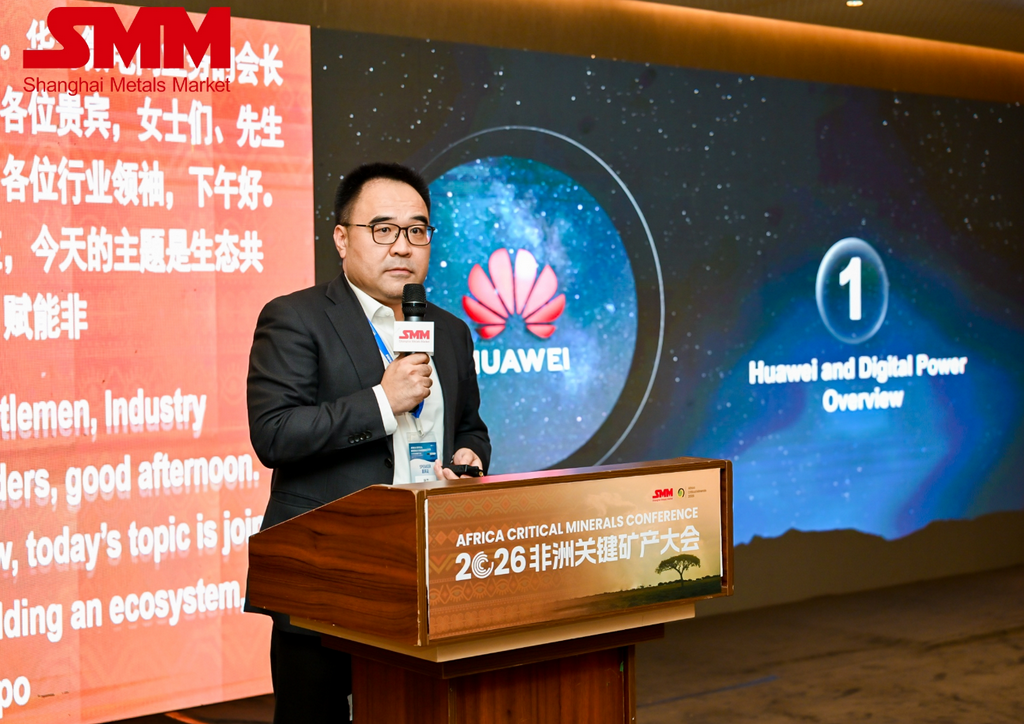
The SMM Africa Critical Minerals Conference 2026 (ACM2026) , hosted by Shanghai Metals Market (SMM), wrapped up with great success in Lusaka, Zambia on September 15‑16. Focusing on the development of strategic minerals such as copper, cobalt, lithium, and tin in Africa, local deep-processing transformation, green mine construction and energy infrastructure upgrading, this premium event has brought together 400+ industry representatives from Chinese and African government agencies, top miners, commodity traders, investors, and technical service providers to jointly explore high-quality development paths for Africa's critical minerals industry chain. Huawei presented its mine microgrid solution at this conference. Joseph Yao, President of Mining Micro-Grid Business at Huawei Digital Power , delivered a keynote speech titled "Eco‑Partnerships for Green African Mines: Huawei's Mine Microgrid Practices under the IPP‑PPA Model". Huawei's delegation also held business talks with ZESCO, Zambia's national power utility, covering mine energy supply, new‑energy deployment and collaborative power‑infrastructure build‑out. As the global energy transition continues to advance, the new energy industry is steadily boosting demand for critical minerals such as copper and cobalt. Africa is rich in strategic mineral resources and is accelerating its upgrade from exporting mineral raw materials to a high-value-added industry chain encompassing local smelting and deep processing. Mines, as power-intensive sites, require stable and low-cost green power supply, which has become a core factor constraining the implementation of mining projects and the release of capacity in Africa. Leveraging the IPP-PPA (independent power producer investment + long-term power purchase agreement) cooperation model, distributed new energy microgrids can provide reliable power nearby for open-pit mines and smelter sites, helping mines reduce electricity costs and carbon emissions, and supporting the implementation of Zambia's strategy for local copper ore processing. (Joseph Yao, President of Mining Micro-Grid Business at Huawei Digital Power) Joseph Yao shared an overview of Huawei and its Digital Energy business, introducing Huawei as a leading provider of ICT infrastructure and smart terminals, a technology-driven enterprise with operations across many countries worldwide, focusing on core business segments such as smart PV and grid-forming ESS. He noted that Africa's mining sector is generally plagued by power shortages. High diesel costs erode mine profit margins, unstable power supplies risk production disruptions, while ESG requirements also impose constraints on mineral exports. He proposed a three-step path for the sustainable development of African mining: Firstly, supply green electricity to mines through digital energy infrastructure to reduce carbon emissions; Secondly, electrification transition of mining equipment; Thirdly, reshape production processes through AI platforms and intelligent management systems, optimize equipment scheduling, and improve mine capacity and production efficiency. He also highlighted Huawei's mine microgrid system. Rather than a standalone piece of equipment, it is a complete energy solution integrating photovoltaic‑storage systems, intelligent dispatching, diesel backup power supplies, control systems and management software. It breaks the conventional single‑power‑source model to enable energy self‑sufficiency and efficient energy management at mining sites. Citing the large‑scale microgrid project for Saudi Arabia's Red Sea Global as a case study, he explained that this city‑level microgrid achieved major technical breakthroughs underpinned by Huawei's robust in‑house R&D capabilities and power‑simulation laboratories. Huawei possesses independent R&D capacity for core power‑electronic components such as IGBTs, and delivers one‑stop services covering design, simulation and project delivery. Together with ecosystem partners, it also provides full‑lifecycle engineering consultation and on‑site implementation support. The successful delivery of this project has laid a solid foundation for microgrid deployment in mining scenarios. He specifically addressed the widespread funding pain points confronting African mining projects. Under the IPP‑PPA ecosystem model, domestic and international investors can be brought in to finance mine‑energy projects. Mining companies, as power purchasers, sign long‑term power‑purchase agreements to secure stable mine operations, while investors obtain steady returns, forming a sustainable commercial closed‑loop. In his speech, Joseph cited several African mine microgrid implementation cases. Among them, after the completion of the Kamoa-Kakula mining microgrid project in the DRC, green electricity will replace a large amount of diesel power generation, significantly reducing mine electricity costs and carbon emissions, and delivering a good return on investment. For this Chinese-funded miner's copper mine project in the DRC, microgrid upgrades sharply reduced electricity costs and significantly improved the mine's capacity utilization rate, verifying the practical value of green electricity microgrids in African mine scenarios. He summarized Huawei's three core capabilities: a globalized business platform, end-to-end one-stop microgrid solutions, and a diverse ecosystem partner system that includes investors, EPCs, and design consulting agencies. He added that Huawei is looking forward to establishing partnership with more investors to develop energy projects across Zambia and wider Africa, secure power supplies for critical‑mineral industries including copper and lithium, jointly foster green mines in Africa, and build a low‑carbon and sustainable industrial future. During the conference, the Huawei delegation held a business meeting with representatives from Zambia's national power utility ZESCO. Against the backdrop of accelerating green transformation in African mining and continuously growing power demand in mining areas, the two sides exchanged views on topics of common concern such as power infrastructure construction and new energy support, and expressed their intention to jointly explore potential areas for cooperation. Africa's mineral industry is at a critical window for industry chain upgrading. Huawei, drawing on its technological strengths in new energy and smart power, will partner with IPP investors, local power authorities and mining operators to build an open‑cooperation ecosystem. Leveraging its proven mine microgrid solutions, Huawei aims to deliver green, reliable power supplies for African mining and smelting projects, advance the low‑carbon transition of Africa’s critical minerals industry, and deepen practical China‑Africa cooperation across the mining and energy sectors.
Sep 23, 2026 16:41 (GMT+8)
![[SMM Analysis] China’s Shifting Tungsten Trade Landscape: A Strategic View](https://imgqn.smm.cn/usercenter/eThpo20251217171723.jpeg)
[SMM Analysis] China’s Shifting Tungsten Trade Landscape: A Strategic View
Sep 23, 2026 09:13 (GMT+8)
![[SMM Analysis] A Snapshot of Zambia’s Gold Market: From Mine Output to Formal Trade](https://imgqn.smm.cn/usercenter/nQsOk20251217171736.jpg)
[SMM Analysis] A Snapshot of Zambia’s Gold Market: From Mine Output to Formal Trade
Sep 23, 2026 16:23 (GMT+8)
![Canada Lifts Solar Trade Duties: Can Chinese Modules Win a Bigger Share? [SMM Analysis]](https://imgqn.smm.cn/usercenter/VqcvE20251217171739.jpg)
Canada Lifts Solar Trade Duties: Can Chinese Modules Win a Bigger Share? [SMM Analysis]
Sep 21, 2026 18:03 (GMT+8)
DRC Establishes US-DRC Special Working Group to Accelerate Strategic Minerals Partnership
Sep 21, 2026 10:00 (GMT+8)
![[SMM Analysis] China-US Talks Fuel Bullish Sentiment in Pr-Nd Market, But Fundamentals Prevail](https://imgqn.smm.cn/usercenter/PVQnj20251217171744.jpg)
[SMM Analysis] China-US Talks Fuel Bullish Sentiment in Pr-Nd Market, But Fundamentals Prevail
Sep 24, 2026 12:34 (GMT+8)

Why Is SHFE Copper’s “Three Highs” Market Intensifying?
Sep 22, 2026 18:53 (GMT+8)
Latest News
【Flash | InP-Integrated AI Optical Engines Enter Volume Shipments】
21 hours ago
Blue Moon to acquire Turner copper-gold-zinc VMS deposit with historical zinc resource
Sep 25, 2026 09:58 (GMT+8)
End-use demand underperforms, zinc oxide operating rates edge down [SMM Zinc Oxide Weekly Review]
Sep 24, 2026 17:22 (GMT+8)
Die-casting zinc alloy operating rates trend lower, expected to decline further next week [SMM die-casting zinc alloy weekly review]
Sep 24, 2026 17:19 (GMT+8)
Pre-holiday Stockpiling Drives Inventory Decline, Zinc Prices Consolidate at Highs [SMM Zinc Futures Brief]
Sep 24, 2026 17:18 (GMT+8)
Longer Holiday Breaks Across Zinc Downstream Industries: When Will Consumption Recover? [SMM Analysis]
Sep 24, 2026 16:59 (GMT+8)
Zinc Concentrate Market Sees Fewer Offers, Narrowed Losses as Holidays Approach and Smelters Seek Winter Stockpile
Sep 24, 2026 16:47 (GMT+8)
Sulfuric Acid Price Drop Squeezes Zinc Smelter Margins, Supply Recovery Limited
Sep 24, 2026 16:47 (GMT+8)
Silver Mountain's Reliquias Mine Achieves First Concentrate Production in Peru
Sep 24, 2026 16:47 (GMT+8)
Guizhou Dingshengxin Zinc-Germanium Project Signs Engineering Design, Aims for Full Production Capacity
Sep 24, 2026 16:44 (GMT+8)
Spot premiums rise as market quotes stay firm [SMM Guangdong spot weekly review]
Sep 24, 2026 16:24 (GMT+8)
The SHFE/LME price ratio continued to consolidate around 6.8 [SMM Zinc SHFE/LME Price Ratio Weekly Review]
Sep 24, 2026 16:06 (GMT+8)
Freight rates rise, premiums follow suit [SMM Tianjin Zinc Spot Weekly Review]
Sep 24, 2026 16:04 (GMT+8)
Some Enterprises Take Early Holidays, Operating Rates Decline [SMM Galvanizing Weekly Review]
Sep 24, 2026 16:02 (GMT+8)
Data: SHFE, DCE market movement (Sep 24)
Sep 24, 2026 15:54 (GMT+8)
Smelters show little willingness to further cut TCs, awaiting post-holiday pricing results [SMM Zinc Concentrates Weekly Review]
Sep 24, 2026 15:26 (GMT+8)
Higher freight costs drive up quotes; Shanghai spot premiums rise this week [SMM Shanghai Spot Weekly Review]
Sep 24, 2026 15:24 (GMT+8)
Downstream purchases on demand, premiums consolidate within the week [SMM Ningbo Spot Weekly Review]
Sep 24, 2026 15:23 (GMT+8)
Waiting for Policies and Winter Stockpiling: The "Sub-Thousand Wave" Spreads to Central China [SMM Sulphuric Acid Weekly Review]
Sep 24, 2026 15:12 (GMT+8)
National Day and Mid-Autumn Festival approach: What are the holiday arrangements for die-casting zinc alloy and zinc oxide enterprises in 2026? [SMM Analysis]
Sep 24, 2026 14:27 (GMT+8)