뉴스

최신 시장 업데이트와 실시간 뉴스 피드를 포함한 독점 분석 기사.

계통 연계 지연, 가격 변동성, 납품 부담 — 6월 SMM 뮌헨 솔라 & 스토리지 포럼에서 과제 해결 방안을 모색하세요
2026년 유럽 재생에너지 시장은 구조적 가속화를 겪고 있습니다. 대규모 저장 프로젝트가 빠르게 착공되고 있으며, 태양광 설비도 계속 확대되고 있지만, 동시에 공급망 압력이 심화되고 있습니다. 탄산리튬 가격 변동은 아직 시스템 레벨 가격에 완전히 전가되지 않았으며, 셀 및 통합 계층의 비용 메커니즘도 재조정되고 있습니다. 한편, 유럽의 계통 연계 대기열은 길어지고, 인허가 일정은 예측 가능성이 낮아지고 있으며, 프로젝트 납기 일정도 상당한 부담을 받고 있습니다. 중국 공급망이 유럽의 변화하는 시장 구조에 어떻게 대응할지, 그리고 유럽 개발자들이 비용 압력과 프로젝트 추진 속도 사이에서 어떻게 균형을 맞출지는 전체 가치사슬에서 결정적인 문제가 되었습니다. 이러한 과제에 정면으로 대응하기 위해 SMM은 2026 SMM 독일 태양광 및 에너지 저장 포럼 을 2026년 6월 23일 에 뮌헨에서 개최하며, Intersolar Europe 및 ESS Europe과 동시에 진행됩니다. 이 포럼에는 GCL, LONGi, Gokin Solar, Farasis Energy, Verkor, Greenvolt Power, AKU-BAT CZ, RES Group, Power Capital Renewable Energy 등의 고위 산업 리더들이 모여 유럽 ESS 프로젝트 현실, 중국 PV 공급망 역학, 그리고 중국-유럽 협력의 미래 방향에 대해 집중 토론합니다. 장소: Hotel Novotel München Messe, 독일 뮌헨 날짜 : 2026년 6월 23일 | 14:00–18:00 포럼 상세: 무료 등록 : 문의: Joanne Xu | +86 150 0197 5312 |
2026년 6월 10일 16:18
계통 연계 지연, 가격 변동성, 납품 부담 — 6월 SMM 뮌헨 솔라 & 스토리지 포럼에서 과제 해결 방안을 모색하세요
SMM Chairman Adam Fan Delivers Opening Remarks at the Indonesia Critical Minerals Conference & Expo 2026
Shanghai Metals Market (SMM) is proud to announce that the Indonesia Critical Minerals Conference & Expo 2026 , co-organized by SMM and the Indonesia Nickel Miners Association (APNI), was grandly held at Pullman Jakarta Central Park on June 3. SMM Chairman Adam Fan delivered opening remarks at the flagship industry event. As highlighted by Mr. Fan, this marks the official staging of the 4th Indonesia Critical Minerals Conference & Expo. For years, SMM has maintained close collaboration with APNI to jointly launch this landmark gathering for Indonesia’s mineral industry. Committed to building a high-connected global platform linking Indonesia to the worldwide industrial landscape, the event empowers resource development through technological innovation, bridges upstream producers and downstream consumers, and drives effective alignment between industrial development and market opportunities. Thanks to years of steady cultivation and upgrading, the 2026 edition has achieved a record-high scale. It gathered 3,500+ on-site attendees and 120+ industry speakers , featuring 5 dedicated forums that fully cover the entire industrial chain of nickel-cobalt new energy, coal, energy transition, aluminum and tin sectors. The extensive participation of global institutions, enterprises, industry experts and industrial chain stakeholders fully reflects the rising international recognition and confidence in Indonesia’s critical minerals industrial ecosystem. A robust global critical minerals supply chain is inseparable from in-depth cross-border cooperation. Moving forward, the conference will continue to boost supply chain transparency and interconnection, gather elite industry insights via its professional platform, and further deepen global industrial collaboration across the critical minerals sector.
2026년 6월 3일 17:08
[SMM Insights] Coking Coal Competitive Landscape Under Energy Crisis
[SMM Insights] Coking Coal Competitive Landscape Under Energy Crisis
Chapter 1: The Energy Crisis Reshapes Coking Coal Value In 2026, with the Russia-Ukraine war still ongoing and the U.S.-Iran war reigniting, crude oil price centers continued to shift upward. Coupled with persistent geopolitical conflicts in other regions worldwide, energy security demand climbed, driving a systematic revaluation of coking coal value. Moreover, against the backdrop of high oil prices, the cost advantages of coal-based chemicals over oil-based chemicals began to emerge, improving the economics of coal-to-oil substitution and expanding coking coal demand. Coking coal possesses the dual attributes of industrial raw material and energy commodity, supported by both rigid demand and high elasticity to energy prices, with premium capacity far exceeding that of ordinary industrial products. Market perception underwent a fundamental shift, as coking coal gradually shed its subordinate positioning within the steel industry chain and was upgraded to a scarce strategic energy asset. The energy crisis restructured its valuation logic. Pricing broke free from the singular steel supply-demand framework and was incorporated into the global energy price comparison system. Energy and security premiums elevated the valuation center, making it an important target for hedging geopolitical risks and allocating strategic resources. Chapter 2: Global Coking Coal Market Landscape (1) Global Coking Coal Resource Distribution Data source: publicly available data Global coking coal resources account for 13% of total global coal resources, approximately 1,140 billion mt. About 49% are distributed in Europe, 29% in Asia, and 19% in North America. The economically recoverable reserves of coking coal are approximately 500 billion mt, of which high-quality coking coal with low ash and low sulfur content amounts to only about 60 billion mt. Economically recoverable coking coal resources are primarily concentrated in three countries: Russia (42%, approximately 210 billion mt), China (23%, approximately 115 billion mt), and the US (18%, approximately 90 billion mt), with other countries accounting for relatively small shares. (II) Global Coking Coal Production Distribution Data source: publicly available data Global coking coal production in 2025 was approximately 1.1 billion mt, with a highly concentrated production landscape. China ranked first at 514 million mt, accounting for 47% of global production and serving as the core supply pillar, though virtually all output was consumed domestically. Australia (172 million mt) and Russia (98 million mt) ranked second and third, followed closely by the US (59 million mt), Mongolia (54 million mt), and Canada (32 million mt), while India produced 25 million mt and Indonesia produced 11 million mt. These eight countries collectively accounted for 88% of global coking coal production. Data source: World Steel Association, IEA Major producing countries: China firmly held the top global position with absolute volumes rising from 480 million mt (2020) to 514 million mt (2025), achieving the highest global increase of 34 million mt, primarily driven by new domestic mine commissioning and supply security policies. Russia and Mongolia became key growth contributors with increases of 12 million mt and 23 million mt respectively — the former benefiting from post-sanction market redirection and new mine development, while the latter achieved substantial production increases through upgraded border customs clearance with China and railway cost reductions. Australia's capacity remained basically flat. EU countries (Germany, Poland) and Ukraine continued to cut production due to factors such as coal phase-out policies, aging mines, and geopolitical conflicts, while the US, India, Mozambique and other countries achieved capacity growth driven by export demand and downstream industry boost. (III) Analysis of Global Coking Coal Export Trade Data source: publicly available data Global coking coal export trade is highly concentrated in five countries—Australia, Russia, Mongolia, the US, and Indonesia—primarily for the following reasons: Monopolistic resource endowment: Russia accounts for 42% of the world's recoverable coking coal reserves, and the US accounts for 18%. Australia possesses globally scarce high-quality coking coal resources with low ash and low sulfur content. Mongolia and Indonesia also have distinctive coal varieties suited to blending needs. These resource barriers create a supply-side monopoly. Locational and logistics cost advantages: Australia's coking coal producing regions are adjacent to east coast ports, enabling low-cost seaborne access to the world's core steel-producing regions. Mongolia's mining areas border China, with overland logistics providing direct access to the Chinese market. Russia, the US, and Indonesia leverage mature seaborne and cross-border railway networks to achieve efficient coverage of global demand markets. Industrial structure and supply-demand mismatch: Although China holds 23% of the world's coking coal reserves, as the world's largest steel producer, China has extremely rigid coking coal consumption demand, making it the world's largest coking coal importer. In contrast, the five countries mentioned above have limited domestic consumption and surplus coking coal supply. Their industrial structures are centered on resource exports, providing a supply foundation for large-scale exports. Coal quality and global demand matching: The coal varieties from these countries form a complementary supply system. Australian coal is suited to high-end coke demand, Mongolian coal serves as a premium blending raw material, Russian coal covers the full range of varieties, and US and Indonesian coal meet the blending needs of different steelmaking processes. This precisely matches the rigid blending needs of global steel enterprises, forming a stable export pattern. Chapter 3: China's Coking Coal Market (1) Current Supply and Demand of Coking Coal in China Data sources: National Bureau of Statistics (NBS), General Administration of Customs of China, publicly available data Supply side, China's coking coal concentrate production grew steadily, rising gradually from 480 million mt in 2020 to 514 million mt in 2025, with overall supply scale remaining stable and no wild swings observed. Import and export side, imports became the core variable supplementing China's domestic supply: imports briefly declined 24% YoY to 54.768 million mt in 2021, then entered a sustained expansion trajectory, with 2025 imports surging 117% from 2021 to 118 million mt; exports remained at low levels over the long term, once plunging 89% YoY to 92,000 mt in 2021, then gradually rebounding, but the 2025 export volume of 1.175 million mt had minimal impact on the overall market. Demand side, coking coal concentrate demand also maintained mild growth, with 2025 demand reaching 628 million mt, a modest increase from 2020. Demand growth was primarily supported by the concurrent expansion of coke production (coke production reached 502 million mt in 2025). Overall, China's domestic coking coal production growth was unable to fully match demand expansion, with imported resources effectively filling the supply-demand gap. (II) China's Coking Coal Supply-Demand Balance Data source: National Bureau of Statistics (NBS), publicly available data From 2020 to 2025, China's coking coal concentrate market completed a transition from tight supply to a tight balance with a slight surplus, with both supply and demand expanding simultaneously and market operational stability improving significantly. The supply side exhibited a sustained and steady growth trend, with the release of domestic capacity combined with supplementary import resources jointly driving continuous enhancement of supply capability. The demand side maintained mild expansion, primarily supported by rigid production demand from the coke and steel industries, with overall growth notably slower than the supply side. By phase, from 2020 to 2022, the market was in a state of persistent undersupply, with supply gaps appearing in all three years, and the industry was highly reliant on imported resources to fill the supply-demand gap. In 2023, the market reached a structural turning point, achieving a supply surplus for the first time; in 2024, the surplus scale expanded significantly; in 2025, the surplus pulled back, but the market had thoroughly shed its prolonged deficit status. With China's coking coal concentrate supply assurance capability continuing to improve, combined with flexible adjustment of import channels, the market entered a healthy tight balance range where supply was slightly greater than demand. Chapter 4: Global Coking Coal Supply-Demand Balance Data source: IEA, publicly available data From 2020 to 2025, the global coking coal market gradually shifted from maintaining a slight surplus to a slight supply-demand deficit. The long-term tightening of global premium coking coal resources, compounded by multiple external factors such as the restructuring of the global energy landscape triggered by the energy crisis and shifts in national energy policies, ultimately drove the global coking coal market from a relatively loose state in the earlier period to a slight deficit. Chapter 5: Summary Affected by geopolitical conflicts and energy transition, the strategic value of coking coal continued to rise, with energy security premiums becoming prominent, and the overall industry landscape gradually evolving toward a tight supply-demand balance. Global coking coal production is limited, with low-ash, low-sulfur premium resources being particularly scarce. Reserves, capacity, and export trade are all highly concentrated, with a few countries such as Russia, China, the U.S., and Australia controlling the supply side, forming a monopolistic landscape through advantages in resources, logistics, and coal grade complementarity, while the energy crisis brings new opportunities and challenges. Overall, coking coal markets both in and outside China have shifted toward a tight balance, with structural shortages of premium coal grades being a prominent issue. The coking coal market may hold up well throughout 2026.
2026년 6월 3일 11:39
[SMM Analysis] Tungsten Prices Rally on Long Contract Prices & Tight Spot Supply
SMM Report, June 5: Benchmark monthly long-term contract prices for China’s tungsten sector were officially released recently. The Ganzhou Tungsten Association unveiled its June 2026 domestic tungsten forecast prices: 55% WO₃ black tungsten concentrate at RMB 505,000 per metric ton, down RMB 195,000/MT month-on-month; ammonium paratungstate (APT) priced at RMB 760,000 per metric ton, a MoM drop of RMB 260,000/MT;
2026년 6월 5일 18:46
Commerzbank is not giving up on metals, sees $4,800/oz gold, $80/oz silver by year-end
Jun 05, 2026 - 12:31 AM Rising inflation pressures due to the ongoing war in Iran mean investors will have to wait a little longer for gold to break out of its current consolidation phase, according to Carsten Fritsch, commodity analyst at Commerzbank. Fritsch noted that gold’s price action since the war started has been counterintuitive to fundamental market beliefs. The precious metal, traditionally seen as an inflation hedge, has fallen even as the global energy crisis pushes consumer prices higher. At the same time, despite the chaos in the Middle East, gold has been unable to attract a safe-haven bid. However, Fritsch explained that the gold market is currently struggling as market expectations around U.S. monetary policy have shifted dramatically since the Iran conflict began. “Before the start of the Iran war, market participants had expected the Fed to cut interest rates by around 50 basis points this year. Since the start of the war and the resulting rise in oil prices, there has been a noticeable shift in interest rate expectations. Fed Funds futures currently imply a US key interest rate of around 3.8% at the end of the year. With an effective Fed rate of just over 3.6%, the market therefore expects the Fed to raise interest rates later this year. A 25-basis-point rate hike is fully priced in by spring 2027,” he said. According to the CME FedWatch Tool, markets see more than a 50% chance of a rate hike in December. The threat of rising interest rates is increasing the opportunity cost of holding gold, a non-yielding asset. In this environment, Commerzbank has adjusted its year-end price target. The German bank sees gold prices ending the year at around $4,800 an ounce, down from its initial target of $5,000. “This implies some upside potential for the coming months, as our new base-case scenario envisages a two-month transition period, followed by the reopening of the Strait of Hormuz and a decline in Brent oil prices, which should reverse the current expectations of interest rate hikes,” Fritsch said. The updated outlook comes as gold prices continue to struggle below $4,500 an ounce. Spot gold was last trading at $4,483.95 an ounce, up 1.11% on the day. However, Commerzbank’s updated target suggests the market could see an 8% rally from current prices by year-end. Fritsch said there is still potential for gold, as Commerzbank does not expect the Federal Reserve to raise rates this year. The bank’s economists forecast that rates will remain unchanged and that the next move is still likely to be a cut. However, Fritsch said the next rate cut is not expected until at least the second quarter of 2027. “We therefore maintain our price forecast of USD 5,200 per troy ounce for the end of 2027,” he said. “The structural factors supporting gold remain entirely intact. These include eroding confidence in the US dollar as a reserve currency, which is likely to lead to further gold purchases by central banks. Investor interest in gold is also likely to remain high. This is supported by the already high and rapidly rising levels of government debt, which are leading to monetary policy that is too loose when measured against inflation.” Along with its revised gold forecast, Fritsch has also downgraded his silver outlook. Commerzbank expects silver prices to end the year at around $80 an ounce. “In addition to the lowered gold price forecast, weaker industrial demand for silver also points to a slightly lower silver price. According to the latest assessment by the Silver Institute, industrial demand is set to decline for the second consecutive year, falling to a four-year low. Nevertheless, the silver market remains tight, which is why we expect the silver price to rise in the coming year,” he said. Commerzbank projects silver prices to end 2027 at around $90 an ounce, down from its previous target of $95 an ounce. Source: https://www.kitco.com/news/article/2026-06-04/commerzbank-not-giving-metals-sees-4800oz-gold-80oz-silver-year-end
2026년 6월 8일 13:40

최신 뉴스

[SMM Iron & Steel] 브라질의 완제 철강 무역 적자 2026년 1~5월 59.2% 감소
브라질 철강 협회(Aço Brasil)에 따르면, 2026년 1~5월 브라질의 완제 철강 무역 적자는 전년 동기 대비 59.2% 급감하여 2025년 동기 123만 톤에서 50만 3,000톤으로 축소되었다. 2026년 1~5월 완제 철강 수입 누계는 전년 동기 대비 21.6% 감소한 141만 톤을 기록했고, 국내 판매는 6.7% 증가한 808만 톤으로 늘어나 국내 겉보기 소비 총량은 907만 톤에 달했다. 동 기간 조강 생산량은 4.7% 증가한 1,415만 톤을 기록한 반면, 총 수출은 1.8% 소폭 감소한 90.6만 톤에 그쳤다. 이러한 시장 영향은 브라질이 새로 도입한 25% 관세율 할당(TRQ) 제도와 반덤핑 조치의 즉각적 보호 효과를 부각한다. 이들 무역 장벽이 저가 수입 물량을 성공적으로 차단함에 따라 대량 조달이 국내 제철소로 되돌려졌고, 현지 철강사들은 글로벌 수요 역풍이라는 어려운 여건 속에서도 자국 시장 점유율을 지키고 지역 가격 기준선을 안정시킬 수 있었다.
5시간 전
[SMM 철강] 5월 중국 철광석 수입 대폭 감소; 6월에는 증가할 듯
2026년 6월 10일 14:04
[SMM Iron & Steel] 2026년 5월 브라질 슬래브 수출 43% 급감, 국내 수요 강세 속
2026년 5월 브라질의 슬래브 수출량은 39만500톤으로 급감하며 4월의 68만7,500톤 대비 43% 감소했습니다. 주요 선적분으로는 테르니움이 미국으로 FOB 톤당 614달러에 23만6,300톤을 수출했고, 아르셀로미탈은 미국으로 9만3,800톤(FOB 646달러/톤)과 프랑스로 6만400톤(FOB 556달러/톤)을 보냈습니다. 수출 가능 물량의 급격한 위축은 우시미나스와 CSN을 비롯한 현지 압연업체들이 2월 반덤핑 관세 부과 이후 중국산 수입을 대체하기 위해 판재류 생산을 확대하면서 내수 소비가 크게 증가한 데 따른 것입니다. 또한 5월 브라질 항만에서 슬래브 수입이 전혀 기록되지 않아 내수 시장이 타이트한 균형 상태임을 뒷받침했습니다.
2026년 6월 9일 17:53
[SMM 철강] 2026년 3월 캐나다 철광석 생산량 전월 대비 9.9% 증가
캐나다 통계청에 따르면, 2026년 3월 캐나다의 철광석 정광 생산량은 508만 톤으로, 전월 대비 9.9% 증가했으나 2025년 3월 대비로는 7.7% 감소했습니다. 철광석 정광 출하량은 전월 대비 21.6%, 전년 동월 대비 2.2% 증가한 345만 톤을 기록했습니다. 이에 따라 캐나다 생산업체의 기말 재고는 702만 톤으로 줄어 전월 대비 4.5%, 전년 동월 대비 38.4% 급감했습니다. 이 데이터는 수출 물류와 국내 인도가 단기적으로 강하게 반등하며 재고를 효과적으로 소진시켰음을 보여주지만, 전반적인 상류 생산량은 예년 수준보다 다소 저조한 상태입니다.
2026년 6월 9일 17:53
[SMM Iron & Steel] 캐나다 철강업계, USMCA 검토 앞두고 미국 철강 관세 철폐 촉구
미국이 캐나다 철강에 50% 232조 관세를 부과한 지 1주년을 맞아, 캐나다철강생산자협회(CSPA)는 2026년 7월 1일 시작되는 미국-멕시코-캐나다 협정(USMCA) 검토 기간을 앞두고 이 조치의 철회를 촉구하고 있다. 무역 갈등 이전 캐나다는 미국 최대 철강 공급국이었으나, 관세로 인해 2025년 출하량이 60% 급감했다. 캐나다는 이미 중국의 글로벌 과잉 생산을 차단하기 위한 엄격한 무역 정책을 채택했으며, CSPA는 이 관세가 부당하며 통합된 북미 공급망을 교란한다고 주장하며, 대신 협력적인 '북미 요새' 접근법을 추진하고 있다.
2026년 6월 9일 17:53
[SMM Iron & Steel] 2026년 1~4월 터키의 빌릿 수입, 러시아 및 중국산 공급에 힘입어 53.9% 급증
터키의 빌릿 및 블룸 수입은 2026년 1~4월 기간 168만 톤(mt)으로, 전년 동기 대비 53.9% 급증했으며, 총 수입액은 47.4% 증가한 8억 2,529만 달러를 기록했다。 러시아가 최대 공급국으로 474,046톤(전년 대비 128.7% 증가)을 기록했고, 중국이 378,552톤(269.7% 증가)으로 말레이시아(190,615톤, 47.7% 감소)를 제치고 2위에 올랐다。 4월 수입은 전월 대비 27.3% 감소한 402,539톤에 그쳤으나, 견조한 누적 물량은 국내 고철 가격 상승으로 터키 구매자들이 수입 반제품 재고를 적극적으로 확충했음을 보여준다。 가격 경쟁력이 높은 러시아·중국 빌릿으로의 구조적 전환은 현지 원가 마진을 지속적으로 재편하며, 이는 터키 철근 수출 경쟁력에 직접적인 영향을 미치고 있다。
2026년 6월 9일 17:53
[SMM 철강] 독일 ROGESA, 저탄소 철강 생산 촉진 위해 고철 재활용 프로젝트 착수
ROGESA는 독일 딜링거 그룹의 자회사로, 딜링겐에 혁신적인 스크랩 처리 시설을 건설하며 2028년 하반기 가동을 목표로 합니다. 연방 환경부의 280만 유로 자금 지원을 받는 이 시설은 AI와 X선 분석을 활용해 절단 스크랩의 구리 오염을 약 30% 줄입니다. 이 프로젝트는 연간 약 6만 3천 톤의 직접환원철(DRI) 및 1차 원자재를 절감하고, 에너지 소비량을 16기가와트시(GWh) 줄이며 탄소 배출을 연간 최대 7만 6천 톤 감축할 것으로 추산됩니다. 이번 투자는 고급 전기로(EAF) 제강에서 재활용 철강 사용을 극대화하려는 전략적 추진을 보여주며, 유럽의 광범위한 탈탄소화 목표에 기여합니다.
2026년 6월 9일 17:53
[SMM Iron & Steel] India’s NMDC Plans $5.22 Billion Investment to Double Iron Ore Output to 100 Million MT
Indian state-run miner NMDC Limited has announced a massive investment plan of $5.22 billion over the next three years to almost double its iron ore production capacity to 100 million metric tons (mt) per year, up from the 52 million mt produced in the 2025-2026 fiscal year. The company will deploy around $626 million in the current fiscal year, with capital expenditures rising to $1.04 billion in each subsequent year. The strategic expansion also includes $208 million earmarked for the acquisition of overseas critical mineral assets, and a separate $313 million investment to construct a blending yard at the port of Vishakhapatnam for branded value-added iron ore products. The market impact highlights NMDC's aggressive vertical integration and capacity expansion to secure domestic raw material supply for India's booming crude steel sector. By venturing into overseas acquisitions and branded blended ores, NMDC is strategically positioning itself to reduce India's vulnerability to global supply chain shocks while fully capitalizing on the nation's rapid industrial consumption growth.
2026년 6월 5일 16:33
[SMM Iron & Steel] US Issues Preliminary Countervailing Duty Results on Large Diameter Welded Pipe from Turkey
The US Department of Commerce (DOC) has issued the preliminary results of its administrative review of the countervailing duty (CVD) order on large diameter welded pipe (LDWP) from Turkey, covering the period from January 1, 2024, to December 31, 2024. The DOC preliminarily determined a net countervailable subsidy rate of 3.37% for the sole mandatory respondent, HDM Çelik Boru Sanayi Ve Ticaret A.S., which also applies to its affiliate HDM Spiral Kaynakli Celik Boru A.S. The all-others rate established in the original investigation remains unchanged at 3.72%, while the review was rescinded for 11 companies that had no reviewable entries during the period. The final results are expected to be issued within 120 days. The market impact suggests that the US continues to tightly enforce its trade defense mechanisms to insulate domestic pipe and tube manufacturers. Although the subsidy rates of 3.37% to 3.72% are relatively moderate, they will continuously squeeze the profit margins of Turkish LDWP exporters, potentially forcing them to recalibrate their North American pricing strategies or redirect export volumes to alternative regional markets.
2026년 6월 5일 16:31
【SMM Iron & Steel】South Australia Commits Over $2 Billion USD to Whyalla Steelworks Amid Low-Carbon Push
South Australia's 2026-27 budget allocates ~$228.5 million USD over two years for the Whyalla steelworks (1.2 million t/yr capacity), which entered administration in Feb 2025. Total state and federal support has reached ~$2.05 billion USD. An additional ~$4.63 million USD supports low-carbon transition. A 10-year gas deal with Santos (~20 PJ/yr from 2030) will enable direct reduced iron technology, cutting emissions ~50% vs. prior coal blast furnace operations. Shortlisted buyers: M Resources (Australia) and Jindal Steel (India). (Conversions estimated at market rates on reporting date; for reference only.)
2026년 6월 5일 15:18
[SMM Iron & Steel] US Raw Steel Production Rises 8.8% YoY in Week Ending May 30, 2026
According to the American Iron and Steel Institute (AISI), US domestic raw steel production reached 1.872 million net tons for the week ending May 30, 2026, representing an 8.8% year-on-year increase and a 0.1% week-on-week rise. The capability utilization rate stood at 81.1%, up from 76.6% in the same period last year and slightly above the 81.0% recorded in the previous week. Adjusted year-to-date production through May 30, 2026, totaled 38.925 million net tons with an average capability utilization rate of 78.6%, marking a 6.8% increase from the 36.461 million net tons produced during the same period in 2025. Geographically, the Southern district led production with 848,000 net tons, followed by the Great Lakes (495,000 net tons) and the Midwest (321,000 net tons). The market impact indicates that the sustained growth in US steel output and robust utilization rates reflect a resilient domestic manufacturing sector; supported by localized demand and protective trade measures, North American mills continue to maintain steady supply levels despite broader global market stagnation.
2026년 6월 5일 10:28
6.4 SMM Global Steel Daily Report
China Steel Market Export : [Sheets & Plates] Today, HRC export prices continued to decline by 2 USD/tonne on a daily basis, with transaction prices at 496-504 USD/tonne. Domestic futures fell, and market inquiry activity weakened somewhat. Domestic traders reported that tax-exclusive offers appeared in multiple northern markets, and congestion at some ports persisted. [Steel Billet] Today, square billet export prices were at 473-475 USD/tonne, easing slightly by 1 USD/tonne DoD. Recently, northern market offers were on the high side, but high-priced resources failed to close deals. Additionally, inquiries from outside China weakened, with buyers adopting a wait-and-see approach, and inquiry prices remained 3-5 USD/tonne below market prices. [Rebar] Today, rebar export offers eased slightly by 1 USD/tonne. According to some market participants, rebar inquiry activity was weak with lackluster transactions, and some steel mills plan to venture into markets outside China to seek new order-taking opportunities.
2026년 6월 4일 18:33
[SMM Iron & Steel] Global Recycled Steel Consumption Rises in 2025 Amid Declining Crude Steel Output
The Bureau of International Recycling (BIR) reported that global recycled steel consumption grew by 4.5% year-on-year to 480 million metric tons (mt) in 2025 across key markets, even as global crude steel output fell by 1.9% to approximately 1.85 billion mt. Global direct reduced iron (DRI) production also climbed 4.9% to 153 million mt, largely driven by India's 7.4% output increase to 58.9 million mt. In terms of trade flows, the EU-27 and the US remained the largest scrap exporters at 16.68 million mt and 11.76 million mt, respectively, while Turkey retained its position as the top importer with 18.76 million mt despite a 6.6% volume decline. Pakistan posted exceptionally strong import growth, surging 39.8% to 3.02 million mt. This decoupling of scrap consumption from total crude steel production underscores the accelerating global shift toward lower-carbon electric arc furnace (EAF) steelmaking. The sustained demand for scrap and DRI signals structurally tighter future raw material supplies, which will continually reshape global trade dynamics as countries secure resources for decarbonization.
2026년 6월 4일 14:46
[SMM Iron & Steel] Japan Launches Anti-Dumping Investigations on CRC and HRC Imports from Three Asian Nations
Japan's Ministry of Economy, Trade and Industry (METI) has officially initiated an anti-dumping investigation into cold-rolled coil (CRC) and hot-rolled coil (HRC) imported from South Korea, China, and Taiwan. The probe, prompted by petitions from domestic producers including Nippon Steel and JFE Steel, targets the growing market penetration of these imports. According to METI, CRC import volumes increased from 830,818 metric tons (mt) in fiscal year 2021 to 874,353 mt in fiscal year 2023, while HRC imports surged from 1.22 million mt in FY2021 to 1.43 million mt between October 2024 and September 2025. Scheduled to conclude within one year, this defensive trade measure highlights the intense pressure on Japanese steelmakers caused by lower-priced imports amid stagnant domestic demand. If duties are imposed, it could significantly restrict regional trade flows, forcing foreign suppliers to divert tonnages elsewhere while simultaneously tightening local supply to support the profit margins and pricing power of Japanese mills.
2026년 6월 4일 14:45
계통 연계 지연, 가격 변동성, 납품 부담 — 6월 SMM 뮌헨 솔라 & 스토리지 포럼에서 과제 해결 방안을 모색하세요
2026년 유럽 재생에너지 시장은 구조적 가속화를 겪고 있습니다. 대규모 저장 프로젝트가 빠르게 착공되고 있으며, 태양광 설비도 계속 확대되고 있지만, 동시에 공급망 압력이 심화되고 있습니다. 탄산리튬 가격 변동은 아직 시스템 레벨 가격에 완전히 전가되지 않았으며, 셀 및 통합 계층의 비용 메커니즘도 재조정되고 있습니다. 한편, 유럽의 계통 연계 대기열은 길어지고, 인허가 일정은 예측 가능성이 낮아지고 있으며, 프로젝트 납기 일정도 상당한 부담을 받고 있습니다. 중국 공급망이 유럽의 변화하는 시장 구조에 어떻게 대응할지, 그리고 유럽 개발자들이 비용 압력과 프로젝트 추진 속도 사이에서 어떻게 균형을 맞출지는 전체 가치사슬에서 결정적인 문제가 되었습니다. 이러한 과제에 정면으로 대응하기 위해 SMM은 2026 SMM 독일 태양광 및 에너지 저장 포럼 을 2026년 6월 23일 에 뮌헨에서 개최하며, Intersolar Europe 및 ESS Europe과 동시에 진행됩니다. 이 포럼에는 GCL, LONGi, Gokin Solar, Farasis Energy, Verkor, Greenvolt Power, AKU-BAT CZ, RES Group, Power Capital Renewable Energy 등의 고위 산업 리더들이 모여 유럽 ESS 프로젝트 현실, 중국 PV 공급망 역학, 그리고 중국-유럽 협력의 미래 방향에 대해 집중 토론합니다. 장소: Hotel Novotel München Messe, 독일 뮌헨 날짜 : 2026년 6월 23일 | 14:00–18:00 포럼 상세: 무료 등록 : 문의: Joanne Xu | +86 150 0197 5312 |
2026년 6월 10일 16:18
[SMM Analysis] The Real Barriers to Upgrading Africa’s Battery Metals Value Chain
[SMM Analysis] The Real Barriers to Upgrading Africa’s Battery Metals Value Chain
2026년 6월 8일 19:08
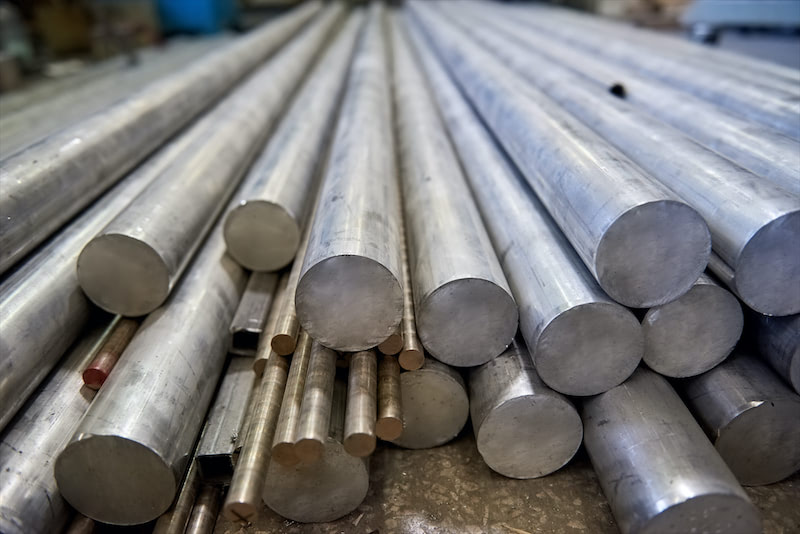
[SMM Analysis] Aluminium Scrap Evolves Into Strategic Resource: Nations Roll Out Policies to Secure Domestic Supply
[SMM Analysis] Aluminium Scrap Evolves Into Strategic Resource: Nations Roll Out Policies to Secure Domestic Supply
2026년 6월 6일 23:27
SMM Chairman Adam Fan Delivers Opening Remarks at the Indonesia Critical Minerals Conference & Expo 2026
2026년 6월 3일 17:08
[SMM Insights] Coking Coal Competitive Landscape Under Energy Crisis
[SMM Insights] Coking Coal Competitive Landscape Under Energy Crisis
2026년 6월 3일 11:39
[SMM Analysis] Tungsten Prices Rally on Long Contract Prices & Tight Spot Supply
[SMM Analysis] Tungsten Prices Rally on Long Contract Prices & Tight Spot Supply
2026년 6월 5일 18:46
Commerzbank is not giving up on metals, sees $4,800/oz gold, $80/oz silver by year-end
2026년 6월 8일 13:40
최신 뉴스
[SMM Iron & Steel] 한국, EU에 한국 철강업체를 위한 공정한 TRQ 할당 유지 촉구
5시간 전
[SMM 철강] 터키의 2026년 1분기 철광석 수입이 33.9% 급증한 가운데, 노르웨이와 러시아의 점유율이 공격적으로 확대되었다.
5시간 전
[SMM 철강] 미국, 6개국산 프리스트레스트 콘크리트 강연선 반덤핑·상계관세 지속 부과
5시간 전
[SMM Iron & Steel] 브라질의 완제 철강 무역 적자 2026년 1~5월 59.2% 감소
5시간 전
[SMM 철강] 5월 중국 철광석 수입 대폭 감소; 6월에는 증가할 듯
2026년 6월 10일 14:04
[SMM Iron & Steel] 2026년 5월 브라질 슬래브 수출 43% 급감, 국내 수요 강세 속
2026년 6월 9일 17:53
[SMM 철강] 2026년 3월 캐나다 철광석 생산량 전월 대비 9.9% 증가
2026년 6월 9일 17:53
[SMM Iron & Steel] 캐나다 철강업계, USMCA 검토 앞두고 미국 철강 관세 철폐 촉구
2026년 6월 9일 17:53
[SMM Iron & Steel] 2026년 1~4월 터키의 빌릿 수입, 러시아 및 중국산 공급에 힘입어 53.9% 급증
2026년 6월 9일 17:53
[SMM 철강] 독일 ROGESA, 저탄소 철강 생산 촉진 위해 고철 재활용 프로젝트 착수
2026년 6월 9일 17:53
[SMM Iron & Steel] EU, 글로벌 과잉 설비로부터 시장 보호 위해 신규 철강 무역 조치 공식 채택
2026년 6월 9일 17:52
[SMM 철강] 2026년 5월 아르헨티나 차량 생산 소폭 증가
2026년 6월 9일 17:51
[SMM Iron & Steel] Turkey’s HRC Imports Rise 8.1% in Jan-Apr 2026 as Supplier Balance Shifts Away from China
2026년 6월 5일 16:33
[SMM Iron & Steel] India’s NMDC Plans $5.22 Billion Investment to Double Iron Ore Output to 100 Million MT
2026년 6월 5일 16:33
[SMM Iron & Steel] US Issues Preliminary Countervailing Duty Results on Large Diameter Welded Pipe from Turkey
2026년 6월 5일 16:31
【SMM Iron & Steel】South Australia Commits Over $2 Billion USD to Whyalla Steelworks Amid Low-Carbon Push
2026년 6월 5일 15:18
[SMM Iron & Steel] US Raw Steel Production Rises 8.8% YoY in Week Ending May 30, 2026
2026년 6월 5일 10:28
6.4 SMM Global Steel Daily Report
2026년 6월 4일 18:33
[SMM Iron & Steel] Global Recycled Steel Consumption Rises in 2025 Amid Declining Crude Steel Output
2026년 6월 4일 14:46
[SMM Iron & Steel] Japan Launches Anti-Dumping Investigations on CRC and HRC Imports from Three Asian Nations
2026년 6월 4일 14:45