

News
Exclusive analysis articles with the latest market updates, and real-time news feeds.
![[SMM Analysis] Q3 Ex-China Stainless Steel Review: Europe's surcharge fell EUR158/mt, yet CIF prices rose 2.8%](https://imgqn.smm.cn/usercenter/VstiG20251217171732.jpeg)
[SMM Analysis] Q3 Ex-China Stainless Steel Review: Europe's surcharge fell EUR158/mt, yet CIF prices rose 2.8%
Q3 2026 review: Ex-China stainless steel costs and prices went separate ways. Indonesian NPI fell 8.2%, but SMM estimates 304 HRC costs fell only 1.7%, with margins swinging between 4.7% and 9.0% on mills' own price moves. Europe's 304 surcharge fell EUR158/mt while CIF prices rose 2.8%. Malaysian scrap rose 10.4%, local CRC 0.3%. Taiwan (PoC) list prices rose twice as spot slid. Only India saw costs and prices move together, as Asia opened three new anti-dumping cases.
Oct 08, 2026 15:36 (GMT+8)
Gold: Morgan Stanley Says Upside Potential Far Outweighs Downside – $4,000 as Support
October 2, 2026 The price of gold is currently consolidating—but for forward-thinking commodity investors, this very environment presents a strategic opportunity. While high bond yields and a strong U.S. dollar are cooling the market somewhat in the short term, Morgan Stanley is already looking at the big picture: The fundamental demand base remains intact. Analysts at the U.S. investment bank therefore maintain a clear target: By the second half of 2027, the price of gold will once again break through the magic mark of $5,000 per ounce. Morgan Stanley Analysis: Why the $5,000 Target Is Coming Into Focus Amy Gower, Head of Metals and Mining Strategy at Morgan Stanley, sees the market as exceptionally well-protected on the downside despite current macro headwinds—such as high oil prices and new 20-year highs in long-term bond yields. A level above $4,000 provides a massive support line. The reason the precious metal is not reacting more strongly to rising interest rates, she explains, lies in an unusually robust base of buyers that is stabilizing the current price level. This structural strength of the market rests on three key pillars: Asian appetite for gold: Physical demand from China is extremely high. The People’s Republic’s gold imports are on track to reach their highest level since 2017—if not a long-term record. Following the brief lull during “Golden Week,” this buying power is likely to return to the market quickly. Central banks as long-distance runners: In addition to China, other central banks—such as Poland’s—are also acting as major buyers to hedge against currency risks and concerns about the long-term sustainability of global debt mountains. Stable ETF inflows: Contrary to the classic pattern seen during periods of tight monetary policy, exchange-traded gold funds continue to expand their holdings—a remarkable sign of institutional strength, according to Morgan Stanley. Short-term selling spikes, such as those observed recently, are currently attributed primarily to portfolio rebalancing by algorithmic trading funds. Silver Follows the Fundamental Gold Trend This strong underlying trend is also spilling over into the silver market. According to experts at Morgan Stanley, silver currently correlates much more strongly with its “big brother” gold than with industrial metals such as copper. Although industrial demand—particularly from the solar industry following last year’s extreme price spikes—has cooled slightly due to material cost-cutting measures, the overarching macroeconomic potential for precious metals remains high. Ultimately, the fiscal sustainability of major economies and long-term protection against inflation remain enduring catalysts for tangible assets. Should there be future interventions in the long-term bond market causing yields to fall again, or should the oil price decline, the current pressure on gold and silver would immediately disappear. For Morgan Stanley, the path forward is therefore clear: Over a 12-month horizon, the upside potential is massive, with a stated interim target of $5,000 next year. Source: https://goldinvest.de/en/gold-morgan-stanley-says-upside-potential-far-outweighs-downside-usd4-000-as-support
Oct 09, 2026 13:46 (GMT+8)
[SMM Analysis] Can India's Steel Demand Growth Offset China's Slowdown?
India can almost match China's forecast demand loss in 2026. Whether that supports international steel prices depends on what India buys, how quickly its mills expand, and whether China's contraction stays contained. India's emergence as a major source of steel demand growth raises a question with consequences well beyond the two countries: can its expanding market compensate for China's shrinking appetite? The answer depends on what “compensate” means. Replacing lost consumption in the global total is one test. Creating an equivalent market for internationally traded steel is another. Reproducing the scale and influence of China's steel-intensive development cycle is a much larger proposition. India's Steel Demand Growth Nearly Offsets China's Decline On the narrowest test, the numbers are strikingly close. Worldsteel's April outlook puts India's finished steel demand at 171.6 million tonnes in 2026, up from 159.8 million tonnes in 2025. China moves from 796.0 million tonnes to 784.1 million tonnes. India therefore adds 11.8 million tonnes against China's 11.9-million-tonne decline: a combined change of approximately minus 0.1 million tonnes, calculated from the published rounded levels. Figure 1. Strong percentage growth in a smaller market can offset a modest decline in a much larger one. This comparison concerns finished steel demand, not crude steel production. That is a meaningful contribution to market stability. It is also a fragile balance. China remains roughly 4.6 times the size of India in the 2026 forecast. A small change in the Chinese trajectory can therefore absorb a substantial part of the Indian increase. The sensible interpretation is that India provides a significant counterweight to a contained Chinese slowdown. It does not yet make the global market insensitive to China. The distinction matters for how the story is presented. Comparing India's 7.4% forecast growth with China's 1.5% decline makes the offset look overwhelming. Comparing the tonnes shows that almost the entire Indian gain is needed simply to neutralise the Chinese loss. A percentage point of growth has very different physical significance in the two markets. The following table keeps the annual comparison on one consistent statistical basis. It also separates the contribution of the rest of the world, calculated as a residual, from the China–India pair. Figure 2. Calendar-year finished steel demand; 2026 and 2027 are April 2026 forecasts. Changes use rounded published levels. Rest of world is calculated rather than a separately quoted regional series. China's Property Sector Remains Under Pressure, Casting Doubt on Demand Stabilisation For 2027, the same forecast becomes more constructive because China stops declining while India continues growing. But that is an assumption to test against incoming evidence, rather than a result already secured. The outlook was published on 14 April and reflected information available by mid-March. Worldsteel explicitly tied its Chinese stabilisation view to the property correction largely running its course; it also highlighted uncertainty in the reported severity of China's 2025 demand decline. Later property indicators justify caution. China's National Bureau of Statistics reported that new building starts fell 24.8% year on year in January–August 2026, while real estate development investment fell 19.9%. These are property measures, not estimates of total steel consumption, and cannot be substituted directly into a steel-demand forecast. They nevertheless show that an important steel-consuming activity remained under pressure well after the April outlook was prepared. China NBS, January–August property data The relevant transmission is through the construction pipeline. New projects create requirements for structural materials; projects already under way can continue consuming steel even when starts weaken. Changes in project timing, building design and materials intensity prevent a fixed conversion from floor space to steel tonnage. Manufacturing and infrastructure also influence the aggregate. Consequently, weak starts are a reason to scrutinise the demand baseline, rather than proof that steel consumption must fall at the same rate. Infrastructure and Manufacturing Drive India's Steel Demand Growth India's growth has a broader set of reported drivers. Worldsteel identifies infrastructure-led construction, automotive activity, capital goods, rail development and consumer durables as supports. Worldsteel's India assessment. For market participants, the next question is how these end uses translate into orders for particular products. Reinforcement steel for a construction project, qualified automotive sheet and electrical steel for equipment are different commercial markets, even when all contribute to the same national demand total. There is encouraging evidence in India's more recent consumption figures. The Ministry of Steel's 6 October release shows finished steel consumption rising from 79.0 million tonnes to 84.9 million tonnes in April–September 2026, a reported increase of 7.5%. These provisional fiscal-half-year observations cover a different period from Worldsteel's calendar-year forecast. They support the picture of continuing growth without establishing the final 2026 outcome. Ministry of Steel / PIB, first-half update Rising Consumption Does Not Guarantee Higher Imports as India's Steel Trade Diverges For foreign mills, however, consumption growth is only the beginning of the assessment. Additional Indian demand can be supplied by domestic production, reduced exports, imports or changes in stocks. It need not become a matching increase in purchases from abroad. A strong domestic market can improve sales opportunities for Indian producers while having a much smaller effect on the net international steel balance. Figure 3. Both trade flows expanded in April–September 2026. Their difference changed much less than consumption. This is a comparison of indicators, not a complete supply-and-use reconciliation. The trade arithmetic illustrates the distinction. April–September imports increased from 3.3448 million tonnes to 4.1418 million tonnes, while exports rose from 2.8102 million tonnes to 3.5478 million tonnes. Net imports consequently widened from 0.5346 million tonnes to 0.5940 million tonnes—an increase of just 59,400 tonnes. This does not mean overseas suppliers found no opportunities: gross imports clearly increased. It means India was simultaneously selling more steel abroad. An exporter assessing possible sales into India should examine gross imports by product and customer. An analyst assessing whether India is absorbing a global surplus should also examine exports. Those two questions cannot be answered with the consumption growth rate alone. Nor should the headline statistics be forced into an inventory calculation. Production, trade and consumption need matching definitions and adjustments before they form a complete material balance. The figures presented here do not establish how much steel was drawn from or added to stocks. Assigning their residual entirely to inventories would create precision the available evidence does not support. Product detail makes the commercial picture clearer. An earlier Ministry release provides comparable import and export figures for selected categories in April–July 2026. Hot-rolled coil and strip recorded net imports of 173,700 tonnes, while bars and rods recorded net exports of 95,100 tonnes. The table below uses that shorter period explicitly; it is not a breakdown of the April–September totals. Figure 4. Selected categories with both flows reported. The table does not cover all products, and broad categories conceal differences in grades, dimensions and customer approvals. These simultaneous flows are commercially plausible. A country can export one specification and import another within the same category. Freight economics, delivery windows, mill availability and qualification requirements can also separate buyers into distinct markets. The national net position is therefore useful context, but it is an incomplete guide to a particular mill's prospects. The relevant opportunity is the grade a buyer needs at an achievable delivered price and delivery date. Domestic Capacity Expansion Could Reshape India's Steel Import Requirements Domestic supply is also responding to the opportunity. In its FY2025–26 annual report, JSW describes a consolidated crude steel capacity base of 33.4 million tonnes a year and a target of 50.3 million tonnes by FY2029–30, with joint-venture capacity discussed separately. The company also describes investment in electrical steel technology and manufacturing. These are company-reported capacities and plans, not guaranteed additional finished steel output. The implication is that Indian demand growth and Indian supply growth must be assessed together. New capacity can serve domestic customers, displace imports or eventually support exports. The outcome depends on commissioning, ramp-up, product capability and cost. Announced crude steel capacity should not be subtracted directly from a finished steel demand forecast: the measures differ, and nameplate capacity is not the same as saleable output. China's Demand Remains the Key Variable: Can India Support Global Steel Prices? This leaves the Chinese trajectory as a critical variable. A simple sensitivity test holds India's forecast increment at 11.8 million tonnes and changes only the assumed decline in Chinese demand from its 2025 base. It is a mechanical scenario, not a replacement for worldsteel's forecast. Figure 5. Combined change = 11.8 − (796.0 × assumed Chinese decline). The percentage input is expressed as a fraction in the calculation. Other markets are excluded. The break-even Chinese decline is approximately 1.48%. At a 3% decline, China would lose about 23.9 million tonnes, leaving the pair approximately 12.1 million tonnes lower despite India's increase. Conversely, a stable Chinese market would allow the Indian gain to contribute fully to combined growth. This asymmetry is the main reason the property and manufacturing indicators in China remain important even as India's role expands. For producers and traders, three practical tests follow. First, monitor whether Indian growth persists in physical deliveries to end users rather than relying only on broad economic narratives. Second, track supply additions by their actual commissioning and product readiness. Third, compare import and export flows for the relevant steel grade, alongside freight, delivery terms and applicable market-access requirements. A favourable national demand trend cannot substitute for that commercial work. The evidence supports a qualified answer to the original question. India can nearly offset the Chinese demand loss embedded in the April 2026 forecast, and subsequent Indian observations confirm continued consumption growth. But the offset is sensitive to a deeper Chinese contraction, and it does not translate automatically into an equally large outlet for foreign steel. India’s expanding market deserves increasing weight in global analysis. Its ability to support international prices will be determined jointly by demand, domestic supply and the products that actually cross its borders.
Oct 09, 2026 10:38 (GMT+8)
Latest News

Xingye Silver&Tin Completes Tender Offer for 6.12% Stake in Weiling Shares, Has Not Yet Gained Control
11 hours ago

Drilling Progress at the Palmer Polymetallic Deposit in Alaska
14 hours ago

Data: SHFE, DCE market movement (Oct 09)
Oct 09, 2026 16:01 (GMT+8)
Tianjin Zinc: Futures Decline, Downstream Price Fixing Increases [SMM Midday Review]
[Tianjin Zinc: Futures Decline, Downstream Price Fixing Increases] In the Tianjin market, mainstream transactions for #0 zinc ingot were at 25,650-26,060 yuan/mt, Zijin transactions were at 25,830-26,170 yuan/mt, and #1 zinc ingot transactions were around 26,020-26,340 yuan/mt. Zijin was quoted at a premium of 130-150 yuan/mt against the 2611 contract, while Huxin was quoted at 27,430 yuan/mt. #0 zinc ingot was quoted at a premium of 70 yuan/mt to a discount of 30 yuan/mt against the 2611 contract. The Tianjin market was quoted at a discount of 20 yuan/mt against the Shanghai market.
Oct 09, 2026 11:57 (GMT+8)
First Majestic Reports Q3 Production Decline at Los Gatos Mine, Plans Expansion for 2026 Growth
Canada's First Majestic Silver released its third-quarter production report on October 8. Its Los Gatos silver-lead-zinc mine in Mexico produced 13,277,264 pounds (approximately 6,022 tonnes) of zinc during the quarter — down 4% year-on-year and 19% quarter-on-quarter — and 7,839,182 pounds (approximately 3,556 tonnes) of lead, up 2% year-on-year but down 13% quarter-on-quarter. Dragged down by a slight decline in zinc and lead recovery rates, output of both metals fell versus the prior quarter. The company is advancing expansions at the Los Gatos and Santa Elena processing plants, aiming to achieve sustained throughput growth to 4,000 t/d in the second half of 2026.
Oct 09, 2026 11:54 (GMT+8)
Guangdong Zinc: Futures Center Pulls Back, Guangdong Premiums Rise [SMM Midday Review]
[Guangdong: Futures Center Pulls Back, Guangdong Premiums Rise] Guangdong 0# zinc was mainly traded at 25,695-25,970 yuan/mt, with mainstream brands quoted at a discount of 20 yuan/mt to a premium of 10 yuan/mt against the 2611 contract, a discount of 20 yuan/mt against Shanghai spot cargo, and the Shanghai-Guangdong price spread widened...
Oct 09, 2026 11:53 (GMT+8)
Shanghai Zinc: Downstream actively purchases at low prices, market premiums rise significantly [SMM Midday Commentary]
[Shanghai Zinc: Active Purchases by Downstream at Low Prices, Market Premiums Rise Notably] Today, mainstream transaction prices for #0 zinc were concentrated at 25,775-26,060 yuan/mt, with no transactions for Shuangyan. Mainstream transaction prices for #1 zinc were at 25,685-25,990 yuan/mt. In early trading, market quotes were at premiums of 80-90 yuan/mt against the SMM average price, with no quotes against the contract yet...
Oct 09, 2026 11:37 (GMT+8)
Ningbo Zinc: Downstream Purchases as Needed, Some Traders Raise Quotes [SMM Midday Commentary]
[Ningbo zinc: Downstream purchases as needed, some traders raise offers] The transaction price of mainstream brand 0# zinc in the Ningbo market was around 25,715-25,990 yuan/mt. Conventional brands in Ningbo were quoted at a premium of 15 yuan/mt against the 2611 contract and a premium of 25 yuan/mt against Shanghai spot cargo. Mainstream quotes in the Ningbo area were mainly against the 2611 contract.
Oct 09, 2026 11:36 (GMT+8)
Foshan Juchuang Automation Co., Ltd. Looks Forward to Meeting You at the 2026 SMM Lead & Zinc Annual Conference
Oct 09, 2026 11:16 (GMT+8)
Barksdale Closes C$13.18 Million Financing Tranche to Advance Planned 16,000-Metre Drilling Program at Sunnyside
Barksdale Resources Corp. announced the closing of the first tranche of its previously announced non-brokered private placement of up to C$14 million. The company issued 73,216,777 units at C$0.18 per unit, raising approximately C$13.18 million in gross proceeds. Net proceeds are intended to support a phased 16,000-metre diamond drilling program at the Sunnyside copper-zinc-lead-silver project in Arizona, United States, including an initial 8,000-metre campaign expected to begin later in fall 2026.
Barksdale holds a 67.5% interest in Sunnyside. The planned drilling will follow up previous reverse-circulation results, with the objective of defining an initial Mineral Resource at the Sunnyside Porphyry Deposit. The program will also test areas near the historical Sunnyside, Volcano and Thunder mines. A ZTEM geophysical survey is planned across Sunnyside and the Four Metals property. The second financing tranche is expected to close in mid-October, while the offering and debt settlement remain subject to final TSX Venture Exchange acceptance.
Oct 09, 2026 10:54 (GMT+8)
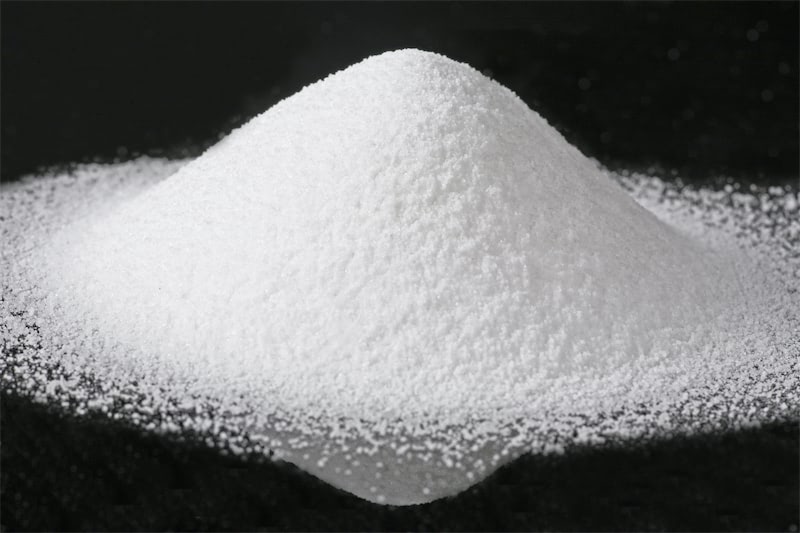
SMM Flash
Oct 09, 2026 10:53 (GMT+8)

Alaska Silver Completes 9,496-Metre Drilling Program at Illinois Creek, with Waterpump Creek Zinc-Lead Assays Pending
Oct 09, 2026 10:53 (GMT+8)
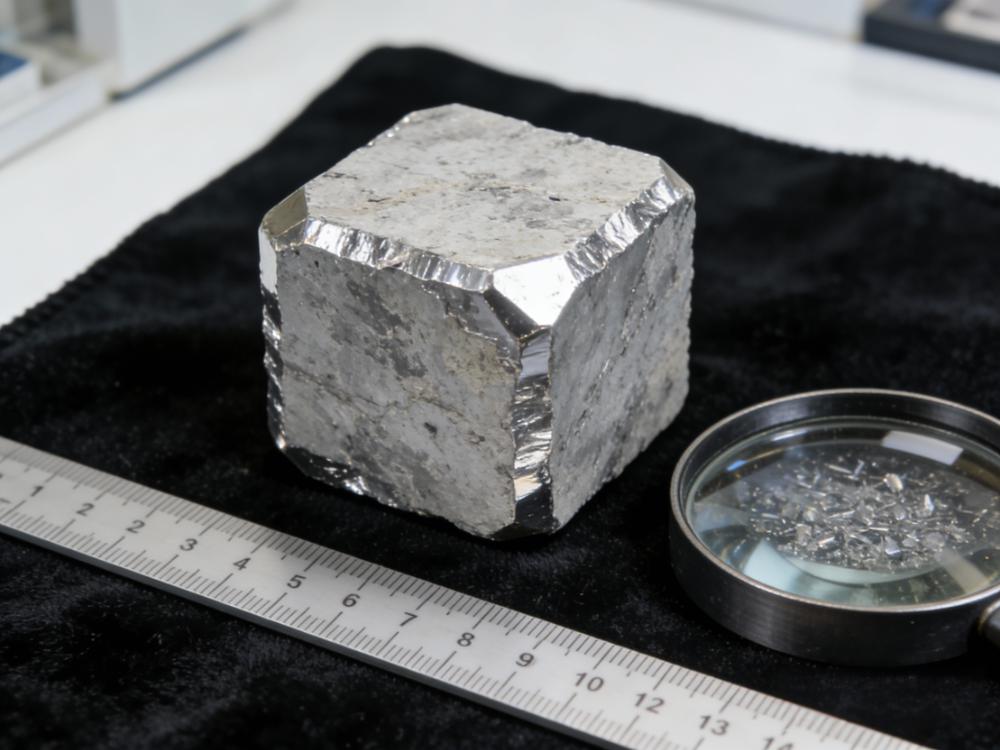
【SMM Flash News】Equity Metals Intersects 6.1 Metres Grading 8.6% Zinc and 1.9% Lead at Silver Queen Project in Canada
Oct 09, 2026 10:50 (GMT+8)
Endeavour Silver Reports Q3 2026 Production Increase at Kolpa Plant in Peru
Endeavour Silver released its third-quarter 2026 production report on October 8. Its Kolpa silver-lead-zinc processing plant in Peru processed 256,052 tonnes of ore during the quarter (versus 233,408 tonnes in Q2), producing 4,558 tonnes of zinc and 6,504 tonnes of lead — up 24% and 15% year-on-year, respectively. Mill feed grades this quarter averaged 2.08% zinc, 2.67% lead, and 92 g/t silver. Base metal output was in line with plan, while silver exceeded plan. The increases were largely driven by capacity release after the plant was expanded to 2,500 t/d at the end of Q1.
Oct 09, 2026 10:48 (GMT+8)
SHFE Zn 2611 Breaks 26,000 Yuan/mt, SMM #0 Guangdong Zinc Drops to 25,910 Yuan/mt
[South China zinc ingot market] During last night's night session, the most-traded SHFE zinc 2611 contract fell below 26,000 yuan/mt, hitting a low of 25,670 yuan/mt. The decline in futures prompted moderate restocking among downstream buyers in Guangdong, though some end-users showed weak purchase willingness and continued to draw down inventory. Most traders' offers remained basically stable from yesterday. Today, SMM #0 zinc ingot (Guangdong) fell 390 yuan/mt to 25,910 yuan/mt.
Oct 09, 2026 10:42 (GMT+8)
【Flash | US DLA Cancels $250 Million 4N Indium Solicitation Without Award】
The US Defense Logistics Agency formally cancelled solicitation SP8000-26-R-0011 for 4N (99.99%) indium metal ingots and confirmed that no award will be made. The cancelled plan sought multiple three-year IDIQ contracts, with a combined ceiling of $250 million and a $10 million guaranteed minimum shared among awardees. Eligibility was restricted to suppliers capable of manufacturing indium in the US or its outlying areas. SMM believes the cancellation removes the near-term government demand signal that the procurement had created for domestically produced 4N indium. However, $250 million was a contract ceiling rather than guaranteed demand, and DLA has not indicated whether the requirement will be resolicited.
Oct 09, 2026 10:33 (GMT+8)
SHFE Zinc Dips to RMB 25,700/t, Boosting Downstream Buying and Spot Premiums
East China Zinc Ingot Market: According to SMM, the SHFE most-active zinc contract pulled back overnight to around RMB 25,700/t, reaching the psychological restocking levels of some downstream buyers. Since last night, downstream consumers have been actively fixing prices on dips, and overall spot trading has been fairly active. Traders have in turn lifted their spot premium offers. Today, SMM 0# zinc ingot is quoted at RMB 25,930/t, down RMB 380/t from the previous trading session.
Oct 09, 2026 10:33 (GMT+8)
【SMM Flash News】Tertiary Plans 1,000-Metre Mushima North Drill Programme, Subject to Placing Approval and Funding.
Tertiary Minerals announced plans for up to 1,000 metres of diamond drilling at Target A1 of Zambia’s Mushima North silver-copper-zinc project, testing deeper extensions beneath the Discovery Zone and potential primary sulphides. Up to four holes of 200–250 metres are planned over approximately four weeks. Drilling is intended to start after the October 28 general meeting, subject to shareholder approval of the £1 million placing and secured funding. A mineral resource estimate is expected before year-end.
Oct 09, 2026 09:53 (GMT+8)
【SMM Flash News】Silver X Advances Nueva Recuperada Expansion, Targeting 1,000 Tonnes per Day in Q4.
Silver X reported on October 8 that Nueva Recuperada in Peru processed 54,681 metric tonnes in Q3, up 63% year on year but down 12% quarter on quarter, averaging 594 tonnes per day. Expansion equipment installation constrained throughput, while increased development ore lowered silver, lead and zinc feed grades. The company expects to reach 1,000 tonnes per day in Q4. Zinc and lead contained in processed ore increased 42% and 20% year on year, respectively.
Oct 09, 2026 09:50 (GMT+8)
【SMM Flash News】Endeavour’s Kolpa Mine Raises Q3 Zinc Output by 24% and Lead Output by 15% YoY.
Endeavour Silver reported on October 8 that Kolpa produced 4,558 tonnes of zinc and 6,504 tonnes of lead in Q3, up 24% and 15% year on year, respectively. Throughput increased to 256,052 tonnes from 233,408 tonnes in Q2, benefiting from the expansion commissioned at the end of Q1. Base-metal output met plan. Company-wide annual production is expected at or slightly below the previous guidance range’s low end, with an update due November 9.
Oct 09, 2026 09:14 (GMT+8)
![[SMM Tungsten Analysis] One Market, Two Prices: How to Break the Structural Deadlock in the Tungsten Market?](https://imgqn.smm.cn/usercenter/FHiZE20251217171722.jpeg)
[SMM Tungsten Analysis] One Market, Two Prices: How to Break the Structural Deadlock in the Tungsten Market?
Overseas tungsten mines are accelerating output, yet the core contradiction in the international tungsten market has quietly shifted—ore is being dug out, but the smelting side cannot keep up. What deserves even more attention is that what is actually falling is not raw material, but scrap and tungsten products. How will this standoff of "prices without a market" ultimately play out?
Oct 09, 2026 13:21 (GMT+8)
![[SMM Analysis] Indonesia's Sulphur and Sulphuric Acid Import and Export Data for August](https://imgqn.smm.cn/usercenter/qcyEh20251217171709.jpg)
[SMM Analysis] Indonesia's Sulphur and Sulphuric Acid Import and Export Data for August
Oct 08, 2026 11:02 (GMT+8)
![Costs Rise, Buyers Resist: Can Solar Module Prices Recover in Ex-China Regions? [SMM Analysis]](https://imgqn.smm.cn/usercenter/Jzkij20251217171737.jpg)
Costs Rise, Buyers Resist: Can Solar Module Prices Recover in Ex-China Regions? [SMM Analysis]
Oct 08, 2026 15:35 (GMT+8)
![[SMM Iron Ore] Freight Up 50%, Mills Won't Pay: Brazil's Small Miners Squeezed From Both Ends, So Why Won't Vale Cut?](https://imgqn.smm.cn/usercenter/ocJKj20251217171717.jpg)
[SMM Iron Ore] Freight Up 50%, Mills Won't Pay: Brazil's Small Miners Squeezed From Both Ends, So Why Won't Vale Cut?
Oct 08, 2026 09:50 (GMT+8)
[SMM Analysis] Q3 Ex-China Stainless Steel Review: Europe's surcharge fell EUR158/mt, yet CIF prices rose 2.8%
Oct 08, 2026 15:36 (GMT+8)

Gold: Morgan Stanley Says Upside Potential Far Outweighs Downside – $4,000 as Support
Oct 09, 2026 13:46 (GMT+8)
![[SMM Analysis] Can India's Steel Demand Growth Offset China's Slowdown?](https://imgqn.smm.cn/usercenter/niwZw20251217171715.jpg)
[SMM Analysis] Can India's Steel Demand Growth Offset China's Slowdown?
Oct 09, 2026 10:38 (GMT+8)
Latest News
Xingye Silver&Tin Completes Tender Offer for 6.12% Stake in Weiling Shares, Has Not Yet Gained Control
11 hours ago
Drilling Progress at the Palmer Polymetallic Deposit in Alaska
14 hours ago
Data: SHFE, DCE market movement (Oct 09)
Oct 09, 2026 16:01 (GMT+8)
Tianjin Zinc: Futures Decline, Downstream Price Fixing Increases [SMM Midday Review]
Oct 09, 2026 11:57 (GMT+8)
First Majestic Reports Q3 Production Decline at Los Gatos Mine, Plans Expansion for 2026 Growth
Oct 09, 2026 11:54 (GMT+8)
Guangdong Zinc: Futures Center Pulls Back, Guangdong Premiums Rise [SMM Midday Review]
Oct 09, 2026 11:53 (GMT+8)
Shanghai Zinc: Downstream actively purchases at low prices, market premiums rise significantly [SMM Midday Commentary]
Oct 09, 2026 11:37 (GMT+8)
Ningbo Zinc: Downstream Purchases as Needed, Some Traders Raise Quotes [SMM Midday Commentary]
Oct 09, 2026 11:36 (GMT+8)
Foshan Juchuang Automation Co., Ltd. Looks Forward to Meeting You at the 2026 SMM Lead & Zinc Annual Conference
Oct 09, 2026 11:16 (GMT+8)
Barksdale Closes C$13.18 Million Financing Tranche to Advance Planned 16,000-Metre Drilling Program at Sunnyside
Oct 09, 2026 10:54 (GMT+8)
SMM Flash
Oct 09, 2026 10:53 (GMT+8)
Alaska Silver Completes 9,496-Metre Drilling Program at Illinois Creek, with Waterpump Creek Zinc-Lead Assays Pending
Oct 09, 2026 10:53 (GMT+8)
【SMM Flash News】Equity Metals Intersects 6.1 Metres Grading 8.6% Zinc and 1.9% Lead at Silver Queen Project in Canada
Oct 09, 2026 10:50 (GMT+8)
Endeavour Silver Reports Q3 2026 Production Increase at Kolpa Plant in Peru
Oct 09, 2026 10:48 (GMT+8)
SHFE Zn 2611 Breaks 26,000 Yuan/mt, SMM #0 Guangdong Zinc Drops to 25,910 Yuan/mt
Oct 09, 2026 10:42 (GMT+8)
【Flash | US DLA Cancels $250 Million 4N Indium Solicitation Without Award】
Oct 09, 2026 10:33 (GMT+8)
SHFE Zinc Dips to RMB 25,700/t, Boosting Downstream Buying and Spot Premiums
Oct 09, 2026 10:33 (GMT+8)
【SMM Flash News】Tertiary Plans 1,000-Metre Mushima North Drill Programme, Subject to Placing Approval and Funding.
Oct 09, 2026 09:53 (GMT+8)
【SMM Flash News】Silver X Advances Nueva Recuperada Expansion, Targeting 1,000 Tonnes per Day in Q4.
Oct 09, 2026 09:50 (GMT+8)
【SMM Flash News】Endeavour’s Kolpa Mine Raises Q3 Zinc Output by 24% and Lead Output by 15% YoY.
Oct 09, 2026 09:14 (GMT+8)