Chinese Lithium Giant Denies Rumours, More Players Extend Industry Chain to Downstream Automakers

Published: May 16, 2023 17:49
In response to the market rumours that "Tianqi Lithium is considering taking a stake in SMART AUTOMOBILE", Tianqi Lithium, one of the top two lithium giants in China, told reporters on May 4 that it has no disclosures and undisclosures in this matter.

In response to the market rumours that "Tianqi Lithium is considering taking a stake in SMART AUTOMOBILE", Tianqi Lithium, one of the top two lithium giants in China, told reporters on May 4 that it has no disclosures and undisclosures in this matter.

Geely Holdings responded that "there is no relevant information".

People familiar with the matter revealed to Bloomberg that “Tianqi Lithium is considering buying a minority stake in SMART AUTOMOBILE for roughly $100-200 million. Negotiations are currently underway, and this will also become a subsidiary of Smart Automobile, part of Auto's latest round of private funding.”

A high-ranking executive of Smart told cls.cn that "We do not comment on the content of the media's speculation."

In January 2020, Geely Holdings and Mercedes-Benz established a smart brand global joint venture, Smart Motors, to jointly operate and promote the transformation and upgrading of the smart brand on a global scale. Sales centers were set up in China and Germany respectively. Previously, there was news in the industry that Smart was considering non-public fundraising, with a financing scale of $500 million to $1 billion. Smart is currently valued at about $5 billion and may attract interest from other automakers and strategic investment funds, sources said.
"Under the intensified competition, power battery companies have begun to enter a period of rapid reshuffle." Some industry analysts believe that with the price reduction of industrial-grade lithium carbonate, coupled with the slowdown in the growth rate of downstream demand for new energy vehicles and the destocking of the industry chain, the profitability of lithium battery companies has declined sharply.

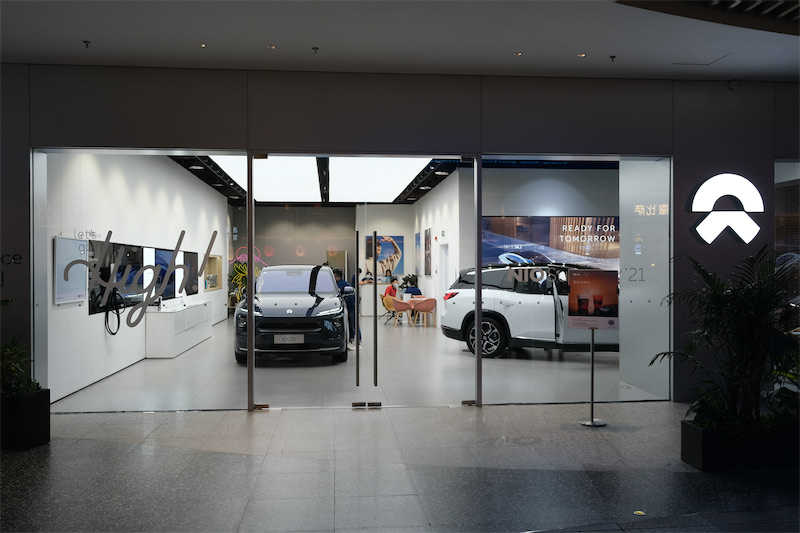
A lot of power battery companies have reached cooperation with car companies in order to grab more market share. It is not only Tianqi Lithium that intends to extend its business to new energy vehicles in the industry chain. For example, CATL has held stake in Zeekr and AVATR. Ganfeng Lithium and Sunwoda Electronic became the shareholders of Dongfeng Motor Group’s FREE last year. Guoxuan Hi-Tech invested 10 million yuan for the B-round financing of Beijing Electric Vehicle in 2017.


Data Source Statement: Except for publicly available information, all other data are processed by SMM based on publicly available information, market communication, and relying on SMM's internal database model. They are for reference only and do not constitute decision-making recommendations.

For any inquiries or for more information, please contact: lemonzhao@smm.cn
For more information on how to access our research reports, please contact:service.en@smm.cn
Related News
[SMM Analysis] Portugal Cancels Construction of Integrated Lithium Mining and Processing Industry
14 hours ago
[SMM Analysis] Portugal Cancels Construction of Integrated Lithium Mining and Processing Industry
Read More
[SMM Analysis] Portugal Cancels Construction of Integrated Lithium Mining and Processing Industry
[SMM Analysis] Portugal Cancels Construction of Integrated Lithium Mining and Processing Industry
14 hours ago
[SMM Flash] SADC Urged to Shift from Raw Mineral Exports to Processing, Zimbabwe's Lithium Ban Cited as Model
19 hours ago
[SMM Flash] SADC Urged to Shift from Raw Mineral Exports to Processing, Zimbabwe's Lithium Ban Cited as Model
Read More
[SMM Flash] SADC Urged to Shift from Raw Mineral Exports to Processing, Zimbabwe's Lithium Ban Cited as Model
[SMM Flash] SADC Urged to Shift from Raw Mineral Exports to Processing, Zimbabwe's Lithium Ban Cited as Model
UN Economic Commission for Africa executive secretary Claver Gatete has called on the Southern African Development Community (SADC) to move from raw mineral exports toward local processing and value addition, calling the region a testing ground for Africa's broader mineral strategy. Demand for critical energy transition minerals including lithium could more than triple by 2030 under net-zero scenarios, with Africa holding about 30% of global reserves but just 1% of lithium output, the smallest share among minerals cited. Zimbabwe was named SADC's primary lithium resource holder, alongside the DRC (cobalt), South Africa (platinum, manganese) and Zambia (copper), with Gatete pointing to Zimbabwe's unprocessed lithium export ban as a policy model for the region. Minerals contribute about 10% of SADC's GDP, 25% of exports and 20% of government revenues, but only 7% of direct employment. SMM View: Gatete's remarks lend regional policy weight to Zimbabwe's ongoing beneficiation push, reinforcing the rationale behind its concentrate export ban as domestic sulfate capacity comes online.
19 hours ago
Sinomine's Bikita Lithium Sulfate Plant Begins Construction, Targets 2027 Completion Amid Zimbabwe's Export Ban Push
20 hours ago
Sinomine's Bikita Lithium Sulfate Plant Begins Construction, Targets 2027 Completion Amid Zimbabwe's Export Ban Push
Read More
Sinomine's Bikita Lithium Sulfate Plant Begins Construction, Targets 2027 Completion Amid Zimbabwe's Export Ban Push
Sinomine Resource Group's Zimbabwe unit, Masingo Lithium Technology, has obtained EIA approval for its 100,000 t/y lithium sulfate plant at Bikita, moving the project into full construction with contractors China Railway No. 9 Group and Shandong Dadi now on site. Completion is targeted for mid-2027. The clearance formalizes a plan first disclosed in September 2024 and reaffirmed via Sinomine's RMB 5.2 billion ($764 million) fundraising in May 2026, rather than signaling new capital commitment. Bikita becomes Zimbabwe's third Chinese-backed lithium sulfate project, joining Huayou's 50,000 t/y Arcadia plant commissioned July 2026, running near 60% of capacity as of late July and Yahua's Kamativi facility construction started February 2026, capacity undisclosed. Combined announced capacity across all three approaches 200,000+ t/y once complete, ahead of Zimbabwe's January 2027 concentrate export ban. SMM View: Arcadia's slower than nameplate ramp is the key benchmark here if Bikita follows a similar curve at double the capacity, full-rate output likely slips into 2028 despite a mid-2027 completion date. With all three plants now past groundbreaking, Zimbabwe's beneficiation push has shifted from policy to physical build out, the next signal to watch is how strictly the export ban is enforced against each plant's actual commissioning timeline, not just its announced one.
20 hours ago