News

Exclusive analysis article with latest market updates, and in-time news feeds.

[SMM Analysis] Freight Rates Surge, Making Deals Difficult for Steel Exporters
[SMM Analysis] Freight Rates Surge, Making Deals Difficult for Steel Exporters
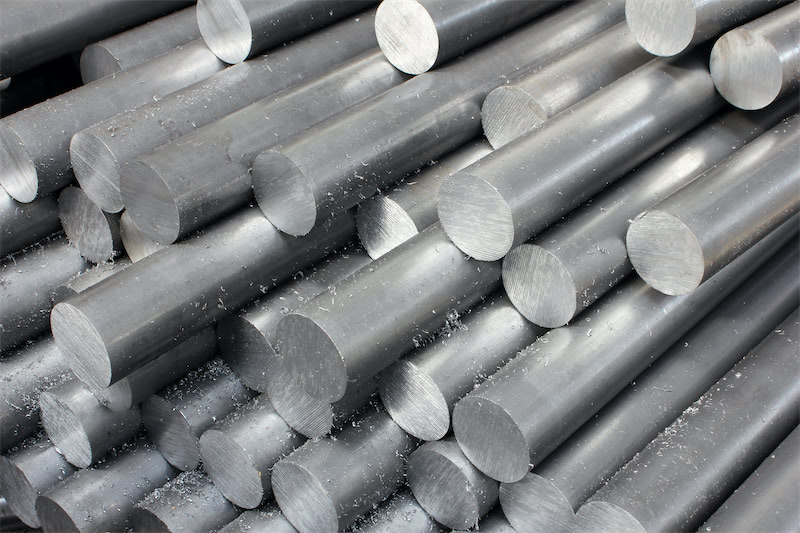
[SMM Analysis] Freight Rates Surge, Making Deals Difficult for Steel Exporters Affected by the US-Iran conflict, tight energy supply and sharply higher fuel costs, compounded by exchange rate fluctuations, have continuously pushed up China's export offers in recent days. Compared with the beginning of the month (March 6), SMM HRC prices have been raised by $9/mt; galvanizing prices rose by $11/mt; CRC rose by $5/mt; billet rose by $6/mt; and rebar rose by $6/mt. However, looking back at market transaction performance, deals weakened again recently. According to the SMM survey, ocean freight rates surged sharply, with current freight to the Middle East as high as $50-60. Most outside China clients remained on the sidelines; shipowners also refused to commit tonnage while waiting for the market to stabilize. For China exporters, there were offers but no market, making shipments difficult. Meanwhile, market sources said Hadeed, the GCC's only flat steel producer, raised its May hot-rolled coil (HRC) prices, still related to shipping restrictions in the Strait of Hormuz. HRC cargoes previously booked from China and other origins were also being redirected to the west coast, mainly heading to Jeddah Port, bringing high inland transportation costs. As for global steel prices, in India, in addition to rising raw material costs and rupee depreciation, a sudden LNG energy shortage further pushed up production costs, forcing steel mills to maintain a strong willingness to hold prices firm despite the traditional domestic off-season and blocked exports. In the Southeast Asian market, price increases were accepted entirely passively, mainly due to the rigid pass-through of high ocean freight rates by overseas suppliers. Although Southeast Asian buyers hesitated to take orders, they had no choice but to passively accept the increases against the backdrop of persistently high geopolitical logistics costs. At the same time, CIS export offers also rose significantly, benefiting from the intensifying geopolitical conflict in the Middle East and the resulting short-term global supply tightens. In the Middle East market, meanwhile, as war tensions continued to escalate, the closure of the Strait of Hormuz completely disrupted transportation, while freight rates and delivery uncertainty pushed the sheets & plates import markets in the UAE and Saudi Arabia into a complete standstill. Copyright and Intellectual Property Statement: This report is independently created or compiled by SMM Information & Technology Co., Ltd. (hereinafter referred to as "SMM"), and SMM legally enjoys complete copyright and related intellectual property rights. The copyright, trademark rights, domain name rights, commercial data information property rights, and other related intellectual property rights of all content contained in this report (including but not limited to information, articles, data, charts, pictures, audio, video, logos, advertisements, trademarks, trade names, domain names, layout designs, etc.) are owned or held by SMM or its related right holders. The above rights are strictly protected by relevant laws and regulations of the People's Republic of China, such as the Copyright Law of the People's Republic of China, the Trademark Law of the People's Republic of China, and the Anti-Unfair Competition Law of the People's Republic of China, as well as applicable international treaties. Without prior written authorization from SMM, no institution or individual may: 1. Use all or part of this report in any form (including but not limited to reprinting, modifying, selling, transferring, displaying, translating, compiling, disseminating); 2. Disclose the content of this report to any third party; 3. License or authorize any third party to use the content of this report; 4. For any unauthorized use, SMM will legally pursue the legal responsibilities of the infringer, demanding that they bear legal responsibilities including but not limited to contractual breach liability, returning unjust enrichment, and compensating for direct and indirect economic losses. Data Source Statement: (Except for publicly available information, other data in this report are derived from publicly available information (including but not limited to industry news, seminars, exhibitions, corporate financial reports, brokerage reports, data from the National Bureau of Statistics, customs import and export data, various data published by major associations and institutions, etc.), market exchanges, and comprehensive analysis and reasonable inferences made by the research team based on SMM's internal database models. This information is for reference only and does not constitute decision-making advice. SMM reserves the final interpretation right of the terms in this statement and the right to adjust and modify the content of the statement according to actual circumstances.
Mar 17, 2026 15:28
[SMM Events] 2026 GRMI: 200+ Executives & Companies Registered! Join us in Tokyo this June for Recycling Industry
[SMM Events] 2026 GRMI: 200+ Executives & Companies Registered! Join us in Tokyo this June for Recycling Industry
The 2026 SMM (3rd) Global Renewable Metal Industry Chain Summit & Battery Recycling Forum will be held in Tokyo, Japan, from May 11–12, 2026. The summit aims to bring together leading global enterprises, research institutions, industry experts, and policymakers in the fields of renewable metals and battery recycling.
Mar 16, 2026 13:49
[SMM Analysis] Why Is India’s Stainless Steel Industry Calling for Both Lower Costs and Stronger Trade Barriers?
The Indian Stainless Steel Development Association (ISSDA) has recently urged the government to permanently remove customs duties on imported scrap and ferroalloys, and to classify chromium as a critical mineral, in order to support the country’s planned expansion of stainless steel capacity from 7 million mt to 11 million mt. At the same time, ISSDA has also called for stronger measures to address the impact of low-priced Chinese products, warning that some Chinese material may be entering India through third countries such as Vietnam, thereby bypassing existing trade protection measures. These statements suggest that the Indian stainless steel industry is no longer simply asking for “growth support.” Instead, it has entered a more complex phase, where it wants to accelerate capacity expansion while also defending itself against external competition. Capacity Expansion Is Clear, and India’s Stainless Steel Industry Has Entered a Critical Phase At first glance, these may look like two conflicting policy demands. On the one hand, the industry wants lower import duties on raw materials to reduce production costs. On the other hand, it is asking the government to tighten import restrictions and strengthen trade protection. But when viewed within the broader industry cycle that India’s stainless steel sector is currently going through, these two demands are not contradictory. They are simply two sides of the same expansion cycle. For domestic stainless steel producers in India, the most important goal over the next few years is to build up local supply capacity while domestic demand is still growing. ISSDA has previously estimated that stainless steel demand in India will continue to grow by 7%–8% annually over the next two to three years. Against this backdrop, the industry wants to keep raw material costs as low as possible during the expansion phase, while also preventing low-priced imported finished products from eroding returns before local capacity expansion is complete. In other words, what worries India’s stainless steel industry most right now is not the absence of market demand, but the possibility that demand exists while the gains from expansion are undermined by imports. That is why ISSDA is simultaneously calling for the permanent removal of duties on scrap and ferroalloy imports, while also highlighting the threat posed by low-priced Chinese products. In the industry’s view, lower tariffs on raw materials would improve the competitiveness of domestic manufacturing, while stronger protection on finished products would buy time for local investment, expansion, and capacity ramp-up. This policy logic of “opening the upstream while defending the downstream” is, in essence, a typical industrial development strategy. Raw Material Security Has Become the Core Condition Behind Expansion This also reflects the industry’s growing concern over raw material supply. Scrap and ferroalloys are key inputs for stainless steel production, while chromium is a critical element in the stainless alloy system. ISSDA’s specific call to classify chromium as a critical mineral shows that its focus is no longer limited to short-term price issues, but has shifted toward medium- to long-term resource security. India has long been the world’s largest importer of stainless steel scrap. Data shows that its stainless scrap imports rose to 1.58 million mt in 2025, up significantly from 2024, further underscoring India’s continued reliance on overseas scrap supply. For a country aiming to expand stainless steel capacity from 7 million mt to 11 million mt, whether the raw material supply system can scale up in parallel will directly determine whether that expansion can actually be delivered. If import costs for scrap and ferroalloys remain high, or if chromium supply security proves insufficient, then even the most ambitious capacity plans could face rising costs, margin pressure, or slower project execution in practice. From the industry’s perspective, therefore, removing duties on imported raw materials and strengthening critical mineral management are not isolated policy demands. They are essential supporting measures for the broader expansion target. India’s stainless steel industry wants to secure the raw material base first before further releasing capacity, reflecting a deeper concern for supply chain completeness and long-term sustainability. Demand Continues to Grow, but Cheap External Supply Creates Real Pressure On the demand side, India is still seen as one of the most important growth markets for stainless steel consumption globally. With the development of manufacturing, continued infrastructure investment, and upgrading in end-use consumption, India’s stainless steel demand is expected to maintain relatively strong growth, providing a solid foundation for capacity expansion. The challenge, however, is that demand growth does not automatically mean domestic producers will benefit. If most of the incremental demand is captured by imported material, India may see consumption expand without domestic industry benefiting to the same extent. In this context, ISSDA’s concerns over Chinese oversupply spilling into India become particularly sensitive. According to media reports, ISSDA believes China has more than 8 million mt of excess stainless steel melting capacity, and that this material is seeking overseas outlets, with India standing out as one of the most attractive target markets. The reason is straightforward. On the one hand, India is itself a growth market. On the other hand, its domestic supply system is still in the process of expanding and has not yet built an unshakable market barrier, making it more exposed to external supply pressure. For Indian mills, this pressure is not only reflected in price competition, but also in investment expectations. When an industry is in the middle of an expansion phase, companies need a relatively predictable margin environment to support new investments, depreciation costs, and capacity ramp-up. If large volumes of low-priced imports continue to flow in during this period, domestic producers may struggle to convert rising demand into actual returns. The Risk of Rerouted Trade Is One of India’s Bigger Concerns Another important point in ISSDA’s latest statement is the issue of rerouted trade. The association warned that some Chinese steel products may be entering India through third countries such as Vietnam, thereby bypassing existing trade protection measures. This concern is easy to understand. In recent years, amid ongoing global trade friction and stricter origin management, practices such as third-country rerouting, supply chain detours, and origin restructuring have come under increasing scrutiny. For India, this means that even if trade protection measures exist on paper, actual import pressure may not disappear in practice. In other words, what truly concerns the industry is not simply whether tariffs or barriers exist, but whether these measures can actually work as intended. If external supply can continue entering India through more complex trade routes, then the competitive pressure facing domestic producers will not ease in any meaningful way, weakening the real impact of policy protection. India’s Core Objective Is to Turn Demand Advantage Into Industrial Advantage At a deeper level, India’s stainless steel industry is moving from a stage of demand-driven growth to one of broader industrial competition. In the past, discussion of India’s stainless steel market often focused on its consumption growth potential, including its large population base, urbanization, and manufacturing upgrade. But as consumption continues to expand, the question is no longer simply whether demand will grow, but who will ultimately capture that growth. If domestic demand keeps rising while most of the incremental market is filled by imports, India may become a major consumption market without necessarily becoming a true manufacturing powerhouse. What ISSDA is now pushing for is, in effect, the key step needed to turn India’s demand advantage into industrial advantage. That is why the industry is asking the government to lower upstream raw material costs while at the same time strengthening trade defense at the finished-product end. The underlying logic is not simply to reject imports, but to create a more supportive environment for domestic manufacturing to grow and attract investment. The Direction of Future Policy Is Worth Watching Viewed within the broader competitive landscape of the Asian stainless steel market, India’s position is actually becoming quite clear. It does not want to remain merely a consumption market. It wants to become a more complete domestic manufacturing center. That means its policy stance is likely to continue along a dual-track approach: more openness toward key raw materials, and greater caution toward finished-product imports. For the market, there are several developments worth watching. First, whether India will further reduce import duties on scrap and ferroalloys on a long-term basis, or even establish a more stable policy framework for raw material support. Second, whether chromium will be formally included in the country’s critical mineral system, thereby strengthening resource security. Third, whether India will step up anti-dumping, anti-circumvention, and origin-related scrutiny, especially against third-country rerouting paths. If these directions gradually materialize, they could reshape competition in India’s stainless steel market, alter its import structure, and even change broader resource flows across Asia. Conclusion Overall, ISSDA’s latest public stance does not simply signal another trade friction issue. It reflects the broader priorities of India’s stainless steel industry as it enters a new stage: securing raw material supply and cost competitiveness for expansion, while also preventing low-priced external supply from undermining domestic industry during a critical window. Whether India’s stainless steel story can evolve from one of consumption growth into one of manufacturing rise may depend not only on the pace of demand growth itself, but also on whether the government can build a policy mix that effectively balances resources, tariffs, and trade protection in a way that genuinely supports domestic industrial upgrading. Written by: Bruce Chew | bruce.chew@metal.com +601167087088
Mar 13, 2026 17:19
A Few Reasons Why Gold ETFs Failed to Surge Amid Iran War
Gold is a widely known safe-haven asset and tends to benefit during geopolitical turmoil, but the metal has remained largely range-bound amid the latest Middle East conflict involving Iran, the United States and Israel.
Mar 17, 2026 13:40

Latest News

SMM: Domestic Port Bauxite Inventory Rises by 0.97M MT in Week
【SMM Port Inventory of Imported Bauxite】According to SMM's statistics on March 20, the total bauxite inventory at ten domestic ports increased by 0.97 million mt from the previous week.
7 hours ago
Regional Aluminum Premiums Surge May Impact China's Primary Aluminum Net Imports
7 hours ago
30,000 mt Alumina Traded at $310/mt FOB Eastern Australia for May 2026 Shipment
Alumina Transaction: On March 19, 2026, 30,000 mt of alumina was transacted at a transaction price of $310/mt FOB Eastern Australia, for May shipment.
7 hours ago
SHFE Cast Aluminum Alloy Warrants Drop to 47,732 MT, Down 1,109 MT from Previous Day
[SMM Flash News] SHFE data showed that as of March 20, the total registered volume of cast aluminum alloy warrants was 47,732 mt, down 1,109 mt from the previous trading day. By region: Shanghai (3,692 mt, down 363 mt), Guangdong (17,920 mt, down 392 mt), Jiangsu (5,475 mt, down 568 mt), Zhejiang (15,234 mt, down 1,145 mt), Chongqing (3,934 mt, down 119 mt), and Sichuan (1,477 mt, increase 0 mt).
9 hours ago
Data: SHFE, DCE market movement (Mar 20)
The following table shows the ferrous and nonferrous metals movement on the SHFE and DCE on 20 Mar , 2026
10 hours ago
Aluminum Alloy Prices Fall 2.08%, Market Trading Sentiment Recovers Amid Dip Buying
[SMM Aluminum Alloy Daily Review] Futures: Today, aluminum alloy 2604 fluctuated upward after opening, hitting an intraday high of 23,160 yuan/mt before noon. Momentum from the bulls then faded, and prices pulled back step by step. In the afternoon, losses widened, with the low dipping to 22,180 yuan/mt. The decline narrowed slightly late in the session, and it finally closed at 22,810 yuan/mt, down 485 yuan/mt from the previous trading day, a drop of 2.08%. Spot: Market quotes generally moved lower today, with the SMM ADC12 price down 300 yuan/mt. Driven by the price pullback and weekend restocking demand, market trading sentiment recovered somewhat from the previous period, and downstream purchase willingness to buy the dip increased, supporting improved transactions at some enterprises.
10 hours ago
[SMM Flash News] Aluminum Ingot Inventory in Major Consumption Regions on March 20
SMM, March 20: Inventory side, aluminum ingot inventory in major consumption regions fell by 3,000 mt from the previous period today, with destocking mainly coming from Wuxi and Gongyi. In the short term, aluminum ingot inventory continued seasonal inventory buildup after the Chinese New Year, and supported by bullish market sentiment, premiums were expected to maintain a narrowing trend.
10 hours ago
[SMM Flash News] SMM East China Aluminum Market on March 20
SMM, March 20: In the morning session, SHFE aluminum 2604 fluctuated downward, with the price center falling sharply from the previous trading day. Affected by the decline in aluminum prices, overall buying sentiment rose today, prompting sellers to hold prices firm. Mainstream transaction prices in the market today were concentrated around the average price of the SHFE aluminum 04 contract to a premium of 20 yuan/mt. Today, the east China market shipment sentiment index was 3.2, up 0.06 MoM; the buying sentiment index was 3.23, up 0.07 MoM.
11 hours ago
Alcoa Sees Surge in Orders as Gulf Smelters Cut Output Amid Regional Disruptions
[SMM Aluminum Express News] Alcoa Corp. (NYSE: AA), the largest U.S. aluminum producer, is seeing a surge in new orders and buyer inquiries as Gulf states (Middle East) smelters curtail output due to ongoing regional disruptions. In a Bloomberg report (March 17, 2026), CFO Molly Beerman told the JPMorgan Chase conference that Alcoa is experiencing an "uptick in orders" from customers who previously sourced from Middle Eastern producers. This includes additional spot purchases and increased inquiries for Q2 and H2 2026, positioning Alcoa to capture redirected demand. The shift is driven by production cuts and export rerouting challenges in the Gulf, boosting Alcoa's supply role in North America and beyond.
15 hours ago
Aluminum Alloy Imports Drop, Exports Rise in Jan-Feb 2026
[SMM Aluminum Bulletin] According to customs data, imports of unwrought aluminum alloy were 90,300 mt in January 2026, down 9.4% YoY and down 3.1% MoM. In February 2026, imports of unwrought aluminum alloy were 65,800 mt, down 28.2% YoY and down 27.1% MoM. Cumulative imports for January-February 2026 totaled 156,100 mt, down 18.5% YoY. Exports of unwrought aluminum alloy were 24,200 mt in January 2026, up 33.6% YoY and down 4.9% MoM. In February 2026, exports of unwrought aluminum alloy were 13,300 mt, down 24.0% YoY and down 45.1% MoM. Cumulative exports for January-February 2026 totaled 37,500 mt, up 5.3% YoY.
15 hours ago
China's Aluminum Processing Sector Sees Modest Growth Amid Peak Season Demand
[Weekly Operating Rates in the Aluminum Processing Industry: China's Aluminum Processing Sector Sees Modest Growth Amid Peak Season Demand] This week, the weekly operating rate of leading downstream aluminum processing enterprises in China edged up 1 percentage point WoW to 62.9%.
16 hours ago
Alba Exports 40-60% Aluminium via Jeddah, Maintains Timely Deliveries Amid Strait of Hormuz Closure
[SMM Aluminum Express News] Alba is exporting 40–60% of its aluminium via Saudi Arabia's Jeddah port (1,400 km overland) since the Strait of Hormuz route is effectively closed. CEO Ali Al Baqali said transportation costs haven't risen significantly, and deliveries remain on time despite force majeure and production cuts. Alba has ~1 month of alumina stock left, hasn't imported via Red Sea yet, but received extra supply from Ma'aden in Saudi Arabia.
16 hours ago
Severe Cyclone Narelle Hits Queensland, Forces Rio Tinto to Halt Bauxite Operations Amid Safety Concerns
[SMM Aluminum Express News] Severe Tropical Cyclone Narelle made landfall near Coen, Far North Queensland, Australia, around 7:30 AM on March 20, 2026, as a Category 4 system (after peaking as Cat 5 offshore). It brought winds >250 km/h, 200–500 mm rain, flash flooding, and storm surge—one of the strongest cyclones to hit the region in decades. Rio Tinto shut down its Weipa bauxite operations (including Amrun and Andoom mines) as a precaution against destructive winds, heavy rain, and risks to infrastructure. The Weipa area supplies key global bauxite for aluminium production. Emergency evacuations occurred in remote communities like Lockhart River.
16 hours ago
Australia Plans $300 - 470 Million Bailout for Tomago Aluminium with Discounted Renewable Power
[SMM Aluminum Express News] Australia's federal and NSW governments are negotiating a bailout for Tomago Aluminium (near Newcastle, majority Rio Tinto-owned), which uses ~10% of NSW power and risks closure by 2028 without affordable renewables. The plan uses Snowy Hydro to supply discounted long-term power (new renewables at market prices, taxpayers cover the gap). Estimated annual subsidy: $300–470 million for 10 years (billions total), based on ~700–900 MW load and ~$55–60/MWh price difference. Risks include taxpayer lock-in and market distortion from artificially low power for one industry.
16 hours ago
Q1 2026: China's Spot Silver Ingot Market Shifts from Frenzy to Rationality Amid Cooling Investment and Imports Surge
In Q1 2026, China’s spot silver ingot market underwent a marked shift from extreme frenzy to a rational return. As investment enthusiasm cooled significantly and large volumes of imported silver ingots flowed in, the structure of spot premiums underwent a fundamental adjustment, while the market’s supply-demand pattern continued to be reshaped.
Mar 17, 2026 07:03
[SMM Analysis] Freight Rates Surge, Making Deals Difficult for Steel Exporters
[SMM Analysis] Freight Rates Surge, Making Deals Difficult for Steel Exporters
Mar 17, 2026 15:28
[SMM Analysis] Global Tungsten Prices Surge Amid Supply Shortages & Seller-Dominated Market
[SMM Analysis] Global Tungsten Prices Surge Amid Supply Shortages & Seller-Dominated Market
Mar 16, 2026 16:32
Rhino All-Solid-State Battery, Sprinting Toward 600 Wh/kg: Chery Battery Night Revealed Its Solid-State Battery Strategy
Mar 19, 2026 14:08
[SMM Events] 2026 GRMI: 200+ Executives & Companies Registered! Join us in Tokyo this June for Recycling Industry
[SMM Events] 2026 GRMI: 200+ Executives & Companies Registered! Join us in Tokyo this June for Recycling Industry
Mar 16, 2026 13:49
[SMM Analysis] Why Is India’s Stainless Steel Industry Calling for Both Lower Costs and Stronger Trade Barriers?
[SMM Analysis] Why Is India’s Stainless Steel Industry Calling for Both Lower Costs and Stronger Trade Barriers?
Mar 13, 2026 17:19
A Few Reasons Why Gold ETFs Failed to Surge Amid Iran War
Mar 17, 2026 13:40
Latest News
Geopolitical Conflicts Reshape Prebaked Anode Exports; SE Asia Demand Supports Full-Year Growth 【SMM Analysis】
5 hours ago
Inventory fluctuated downward as increased warehouse withdrawals accelerated destocking, and recovering consumption drove processing fees back above parity [SMM Aluminum Billet Weekly Review]
6 hours ago
Impact of Hormuz Blockade on China's Aluminum Wire and Cable Exports to the Middle East [SMM Analysis]
6 hours ago
SMM: Domestic Port Bauxite Inventory Rises by 0.97M MT in Week
7 hours ago
Regional Aluminum Premiums Surge May Impact China's Primary Aluminum Net Imports
7 hours ago
30,000 mt Alumina Traded at $310/mt FOB Eastern Australia for May 2026 Shipment
7 hours ago
SHFE Cast Aluminum Alloy Warrants Drop to 47,732 MT, Down 1,109 MT from Previous Day
9 hours ago
Data: SHFE, DCE market movement (Mar 20)
10 hours ago
Aluminum Alloy Prices Fall 2.08%, Market Trading Sentiment Recovers Amid Dip Buying
10 hours ago
[SMM Flash News] Aluminum Ingot Inventory in Major Consumption Regions on March 20
10 hours ago
[SMM Flash News] SMM Central China Aluminum Market on March 20
10 hours ago
Shipments Accelerated, While Support for Holding Prices Firm Was Limited [SMM South China Spot Aluminum Daily Review]
10 hours ago
SHFE Aluminum Futures Fell, and Buying Sentiment in the Market Was Strong [SMM Spot Aluminum Midday Commentary]
11 hours ago
[SMM Flash News] SMM East China Aluminum Market on March 20
11 hours ago
Alcoa Sees Surge in Orders as Gulf Smelters Cut Output Amid Regional Disruptions
15 hours ago
Aluminum Alloy Imports Drop, Exports Rise in Jan-Feb 2026
15 hours ago
China's Aluminum Processing Sector Sees Modest Growth Amid Peak Season Demand
16 hours ago
Alba Exports 40-60% Aluminium via Jeddah, Maintains Timely Deliveries Amid Strait of Hormuz Closure
16 hours ago
Severe Cyclone Narelle Hits Queensland, Forces Rio Tinto to Halt Bauxite Operations Amid Safety Concerns
16 hours ago
Australia Plans $300 - 470 Million Bailout for Tomago Aluminium with Discounted Renewable Power
16 hours ago