

News
Exclusive analysis article with latest market updates, and in-time news feeds.
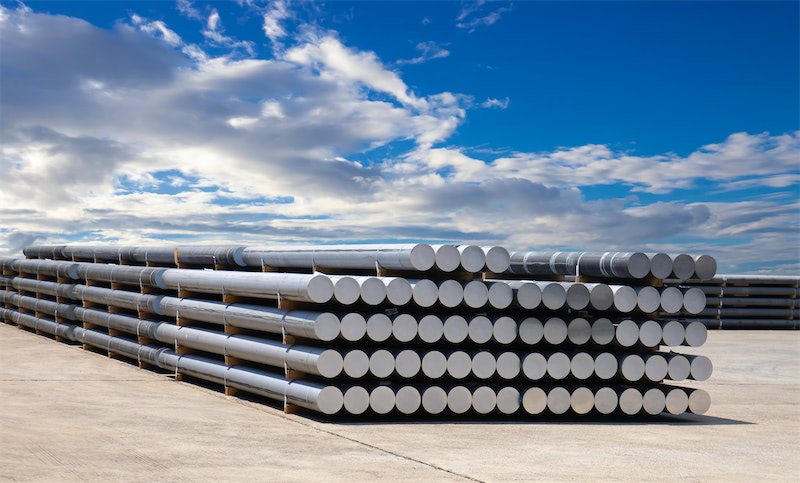
Indonesia Aluminum Market Deep Dive: Dynamics and Policy-Driven Stability
The Indonesian aluminum market remained stable during the 2026 Chinese New Year, with production unaffected and bauxite prices holding at USD 28–32 FOB amid RKAB uncertainty. Alumina prices also stayed steady at USD 308 FOB due to feedstock stability and a seasonal lull in Chinese buying activity.
Feb 23, 2026 13:20
[SMM Analysis] NPI Risk Management: The Art of Asymmetric Hedging
The fundamental challenge in the 304 stainless steel industrial chain is Instrument Asymmetry, a scenario where the dominant cost driver, Nickel Pig Iron (NPI), lacks a direct futures contract and forces participants to manage 75% of their risk using standardized proxies like pure nickel. This creates a lethal threat not from price volatility itself, but from the Basis Risk that occurs when physical assets and hedging tools decouple.
Feb 23, 2026 10:28
[SMM Analysis] Review and Post-Holiday Outlook of the Lead Market During the 2026 Chinese New Year Holiday
[SMM Analysis] Review and Post-Holiday Outlook of the Lead Market During the 2026 Chinese New Year Holiday
SMM, February 23: During the Chinese New Year holiday (February 15–23), the overseas macro environment was complex, with Trump’s global tariff changes being the primary factor influencing market pricing over the break.
Feb 23, 2026 22:26
Latest News

BMW and CATL Sign MoU for Battery Passport Data and Supply Chain Carbon Reduction Collaboration
9 mins ago
![Aluminum Prices Decline, Market Trading Sentiment Rises, Spot Premiums and Discounts in East China Continue to Narrow [SMM Spot Aluminum Midday Review]](https://imgqn.smm.cn/usercenter/jWDCu20251217171653.jpg)
Aluminum Prices Decline, Market Trading Sentiment Rises, Spot Premiums and Discounts in East China Continue to Narrow [SMM Spot Aluminum Midday Review]
16 mins ago
![Cable Resumption Steadily Advances, Demand Recovery Awaits Yuanxiao [SMM Wire and Cable Market Weekly Review]](https://imgqn.smm.cn/usercenter/JnFuh20251217171711.jpg)
Cable Resumption Steadily Advances, Demand Recovery Awaits Yuanxiao [SMM Wire and Cable Market Weekly Review]
18 mins ago
Policy Tailwinds and GWh Mass Production Synergy Drive Solid-State Battery Market Changes Around Chinese New Year
During the two weeks around Chinese New Year (2026.02.13-02.26), the solid-state battery industry achieved breakthroughs in three key areas—policy, standards, and mass production: the National Energy Administration explicitly identified solid-state batteries as a key focus for energy technology competition for the first time, and the national standard for automotive solid-state batteries entered the countdown to release (scheduled for official rollout in July).
20 mins ago
Copper Cathode Rod Industry Sees 6.42% Weekly Rise, Full Resumption Expected Next Week
【SMM Copper Cathode Rod Express】The operating rate of the copper cathode rod industry increased by 6.42 percentage points WoW this week, with the industry's resumption progress remaining relatively slow. Looking ahead to next week, the industry is expected to achieve a full-scale resumption, and SMM forecasts the operating rate will rise by 39.59 percentage points MoM to 57.97%.
20 mins ago
[ SMM Nickel Sulphate Daily Review ] February 27th Cost Disturbances Continue to Impact the Market, Nickel Salt Average Price Slightly Declines
On February 27, the SMM battery-grade nickel sulphate index price was 31,795 yuan/mt, with the quotation range for battery-grade nickel sulphate at 31,570-32,800 yuan/mt, and the average price slightly decreased compared to the previous day.
35 mins ago
Copper Supply to Rise, Spot Discounts Under Pressure Amid Supply-Demand Mismatch
Looking ahead to next week, SHFE copper spot supply is set to increase, with Peruvian and Japanese cargoes visible intraday. The contango spread between adjacent months widened slightly, and persistent willingness to deliver to warehouses further diverts spot liquidity. Although some suppliers hold prices firm, expectations of warrant outflows pressure spot premiums/discounts. Downstream production has not fully resumed; procurement sentiment is cautious but recovering. Amid supply-demand mismatch, social inventory is expected to continue building. Overall, supply pressure will keep spot discounts under pressure next week.
36 mins ago
Supply Increases Continue to Suppress Demand Recovery Shanghai Spot Copper Discounts Under Pressure and Widening Again [SMM Shanghai Spot Copper]
[Shanghai spot copper] Looking ahead to next week, spot copper supply continues to increase, with Peruvian and Japanese cargoes visible intraday. From a market structure perspective, the contango spread between nearby futures contracts has widened slightly, and suppliers' willingness to ship to delivery warehouses persists, further diverting spot liquidity. Although suppliers showed strong intentions to hold prices firm intraday, with some brand quotations remaining stable, expectations of subsequent warrant outflows remain, which will exert further pressure on spot premiums/discounts. On the demand side, downstream sectors have not fully resumed production, and procurement sentiment, while rebounding, remains cautious. Under the supply-demand mismatch, social inventory continues its buildup trend. Overall, with supply pressure dominating, spot discounts are expected to remain under pressure next week.
37 mins ago
Daytime spot supply-demand maintains balance Yangshan copper premiums stabilize [SMM Yangshan spot copper]
1 hour ago
SHFE Tin Contracts Strengthened by Overseas Conflict Events, Downstream Enterprises Mostly Digest Inventories and Wait-and-See [SMM Tin Midday Review]
[ SMM Tin Noon Review: SHFE Tin Contracts Strengthened by Overseas Conflict Events, Downstream Enterprises Mostly Digest Inventories and Operate on a Wait-and-See Basis ]
1 hour ago
![Trading Day of February Spot premiums/discounts operated at low levels [SMM North China spot copper]](https://imgqn.smm.cn/usercenter/gCNEi20251217171715.jpeg)
Trading Day of February Spot premiums/discounts operated at low levels [SMM North China spot copper]
2 hours ago
![Downstream procurement volume continues to increase, inventory growth slows down, stimulating spot premiums to continuously rise [SMM South China Spot Copper]](https://imgqn.smm.cn/usercenter/TlzAr20251217171709.jpg)
Downstream procurement volume continues to increase, inventory growth slows down, stimulating spot premiums to continuously rise [SMM South China Spot Copper]
2 hours ago
![[Nickel Midday Market Review] Nickel prices dropped slightly on February 27, indirect talks between Iran and the U.S. ended with differences remaining between the two sides.](https://imgqn.smm.cn/usercenter/vcoVV20251217171732.jpeg)
[Nickel Midday Market Review] Nickel prices dropped slightly on February 27, indirect talks between Iran and the U.S. ended with differences remaining between the two sides.
2 hours ago
High costs and low demand lead to weak expectations for the brass bar market
[SMM Brass Bar Update] The current brass bar market is in a phase of "high costs, low demand, and weak expectations." In the short term, as small and medium-sized enterprises gradually resume operations after the Lantern Festival, the operating rate is expected to slowly rebound. However, before copper prices show a significant pullback and end-use demand recovers substantially, the overall industry recovery still faces considerable pressure.
2 hours ago
Silver Prices Continue to Consolidate with Narrowed Basis, Spot Market Premiums Decline, and Supplier Quotation Differences Widen [SMM Daily Review]
2 hours ago
[SMM Analysis] Stainless Steel Social Inventory Exceeds One Million Again After Chinese New Year Holiday, Significant Inventory Buildup Does Not Alter Positive Expectations
2 hours ago
Slow Post-Holiday Resumption Pace for Brass Bar
[SMM Brass Bar Express] Currently, enterprises have low stockpiling sentiment, mostly consuming pre-holiday inventory, while downstream production resumptions are also slow, with limited new orders, and the overall market performance is cautious. SMM expects that the operating rate will increase by 24.06 percentage points to 41.18% WoW next week (2.27-3.5), but it has not yet recovered to pre-holiday production levels, and subsequent attention should be paid to the recovery of downstream demand.
2 hours ago
Slow Resumption Pace: Brass Billet Operating Rate Only 17.12% This Week
[SMM Brass Billet Express] As the Chinese New Year holiday ended, brass billet enterprises gradually resumed production, driving the industry's operating rate up 17.12 percentage points WoW to 17.12% during the week (2.20-2.26). However, the overall pace of production resumptions was slower than in previous years. Currently, only some medium and large-sized enterprises have started production, while many small and medium-sized enterprises remain idle or partially idle. Full production resumptions are expected only after the Lantern Festival.
2 hours ago
[SMM Tin Express: Indonesia's Tin Ingot Exports in January 2026 Fell by 47%]
According to data released by the Indonesian Ministry of Trade, tin ingot exports in January 2026 fell 47% to 2,653.7 mt.
1) Imports from China surged to 1,775.0 mt in January, up 162% MoM, accounting for 67% of the total.
2) However, major export destinations from the previous quarter saw significant declines: exports to Singapore dropped sharply to 170.4 mt from 1,399.5 mt in December last year, down 88% MoM; exports to South Korea fell to 384.0 mt from 902.5 mt, a 57% MoM decrease.
2 hours ago
[SMM Analysis] China's Hot-Rolled Coil Capacity Expected to See Final Round of Commissioning Peaks, 2026-2027
From 2021 to 2025, driven by shifts in core demand structure and upgrades in export trade, domestic HRC capacity entered a new peak period of commissioning. According to SMM statistics, by the end of 2025, China's HRC capacity reached approximately 410 million mt, up 4% compared with the same period in 2024 and nearly 39% higher than the "300 million mt" level in 2020.
2 hours ago
![[SMM Analysis] China Accelerates the Construction of a Peripheral Copper Resource Supply Belt](https://imgqn.smm.cn/usercenter/SiNDH20251217171711.jpg)
[SMM Analysis] China Accelerates the Construction of a Peripheral Copper Resource Supply Belt
[SMM Analysis: Key Anchor in Great Power Rivalry: The U.S. "Project Vault" and the Changing Resource Landscape in Latin America] Amid the current accelerated reshaping of the global resource competition landscape, China's copper concentrate import pattern is undergoing a profound structural transformation. The latest trade data from 2025 clearly outlines this trend: China is significantly enhancing its capacity to acquire copper concentrate resources from neighboring countries.
Feb 14, 2026 10:30
![[SMM Analysis] Indonesian Stainless Steel Production Remains Stable, RKAB Quota Concerns Loom](https://imgqn.smm.cn/usercenter/qLeLR20251217171733.jpg)
[SMM Analysis] Indonesian Stainless Steel Production Remains Stable, RKAB Quota Concerns Loom
Feb 24, 2026 11:32
![[SMM Analysis] Global Macro Mildly Positive, Aluminum Market Sees Short-Term Volatility Awaiting Demand Recovery](https://imgqn.smm.cn/usercenter/XLWyP20251217171654.jpg)
[SMM Analysis] Global Macro Mildly Positive, Aluminum Market Sees Short-Term Volatility Awaiting Demand Recovery
Feb 23, 2026 16:49
![[SMM Analysis] From Data Ghosts to Border Gridlock: Who Pays the Price for CBAM’s Hubris?](https://imgqn.smm.cn/production/admin/votes/imageshZkuj20260223163450.jpeg)
[SMM Analysis] From Data Ghosts to Border Gridlock: Who Pays the Price for CBAM’s Hubris?
Feb 23, 2026 16:33
Indonesia Aluminum Market Deep Dive: Dynamics and Policy-Driven Stability
Feb 23, 2026 13:20
![[SMM Analysis] NPI Risk Management: The Art of Asymmetric Hedging](https://imgqn.smm.cn/production/admin/votes/imagesBhqFC20260223104924.png)
[SMM Analysis] NPI Risk Management: The Art of Asymmetric Hedging
Feb 23, 2026 10:28
![[SMM Analysis] Review and Post-Holiday Outlook of the Lead Market During the 2026 Chinese New Year Holiday](https://imgqn.smm.cn/usercenter/riosq20251217171722.jpg)
[SMM Analysis] Review and Post-Holiday Outlook of the Lead Market During the 2026 Chinese New Year Holiday
Feb 23, 2026 22:26
Latest News
BMW and CATL Sign MoU for Battery Passport Data and Supply Chain Carbon Reduction Collaboration
9 mins ago
Aluminum Prices Decline, Market Trading Sentiment Rises, Spot Premiums and Discounts in East China Continue to Narrow [SMM Spot Aluminum Midday Review]
16 mins ago
Cable Resumption Steadily Advances, Demand Recovery Awaits Yuanxiao [SMM Wire and Cable Market Weekly Review]
18 mins ago
Policy Tailwinds and GWh Mass Production Synergy Drive Solid-State Battery Market Changes Around Chinese New Year
20 mins ago
Copper Cathode Rod Industry Sees 6.42% Weekly Rise, Full Resumption Expected Next Week
20 mins ago
[ SMM Nickel Sulphate Daily Review ] February 27th Cost Disturbances Continue to Impact the Market, Nickel Salt Average Price Slightly Declines
35 mins ago
Copper Supply to Rise, Spot Discounts Under Pressure Amid Supply-Demand Mismatch
36 mins ago
Supply Increases Continue to Suppress Demand Recovery Shanghai Spot Copper Discounts Under Pressure and Widening Again [SMM Shanghai Spot Copper]
37 mins ago
Daytime spot supply-demand maintains balance Yangshan copper premiums stabilize [SMM Yangshan spot copper]
1 hour ago
SHFE Tin Contracts Strengthened by Overseas Conflict Events, Downstream Enterprises Mostly Digest Inventories and Wait-and-See [SMM Tin Midday Review]
1 hour ago
Trading Day of February Spot premiums/discounts operated at low levels [SMM North China spot copper]
2 hours ago
Downstream procurement volume continues to increase, inventory growth slows down, stimulating spot premiums to continuously rise [SMM South China Spot Copper]
2 hours ago
[Nickel Midday Market Review] Nickel prices dropped slightly on February 27, indirect talks between Iran and the U.S. ended with differences remaining between the two sides.
2 hours ago
High costs and low demand lead to weak expectations for the brass bar market
2 hours ago
Silver Prices Continue to Consolidate with Narrowed Basis, Spot Market Premiums Decline, and Supplier Quotation Differences Widen [SMM Daily Review]
2 hours ago
[SMM Analysis] Stainless Steel Social Inventory Exceeds One Million Again After Chinese New Year Holiday, Significant Inventory Buildup Does Not Alter Positive Expectations
2 hours ago
Slow Post-Holiday Resumption Pace for Brass Bar
2 hours ago
Slow Resumption Pace: Brass Billet Operating Rate Only 17.12% This Week
2 hours ago
[SMM Tin Express: Indonesia's Tin Ingot Exports in January 2026 Fell by 47%]
2 hours ago
[SMM Analysis] China's Hot-Rolled Coil Capacity Expected to See Final Round of Commissioning Peaks, 2026-2027
2 hours ago