

News
Exclusive analysis articles with the latest market updates, and real-time news feeds.
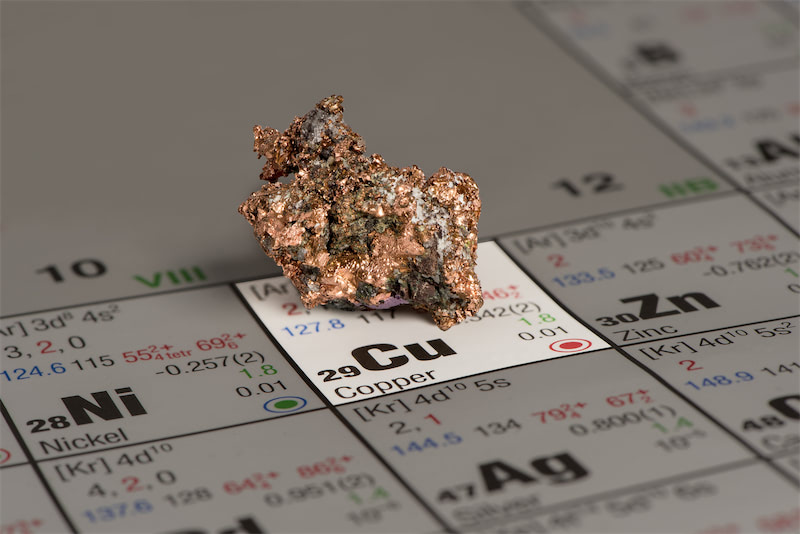
DRC Establishes US-DRC Special Working Group to Accelerate Strategic Minerals Partnership
According to foreign media reports, Kinshasa, September 11 — The DRC Cabinet approved the establishment of a DRC-US working group to accelerate the implementation of the bilateral strategic minerals partnership agreement and attract Western investment into the country's copper and cobalt industries. The DRC is the world's largest cobalt producer and the second-largest copper producer and exporter. The two countries signed a minerals cooperation agreement last December, marking the latest move by the country to broaden financing channels and strengthen cooperation with the US. Under the current cooperation framework, Virtus Minerals has already secured US-backed mining investment and is facilitating expanded copper mine cooperation between Gecamines, Mercuria, and Glencore, helping mineral products reach Western markets. The working group was originally scheduled to launch in February this year but was delayed by administrative obstacles, and its members and key projects have not yet been disclosed. The Cabinet meeting also approved a $24.8 billion fiscal budget for 2027, a 12% increase over this year's revised spending, with infrastructure, security, and economic diversification as priority areas.
Sep 21, 2026 10:00 (GMT+8)
[SMM Analysis] China-US Talks Fuel Bullish Sentiment in Pr-Nd Market, But Fundamentals Prevail
On the evening of September 23 (Beijing time) President Xi Jinping arrived in Washington by special plane for a state visit to the United States at the invitation of President Donald Trump, with the trip scheduled through September 25. Earlier, Chinese economic and trade teams had gone to New York to participate in related talks. Within the China‑US economic agenda, rare earths and critical minerals remain one of the most closely watched themes for global supply chains.
Sep 24, 2026 12:34 (GMT+8)
Why Is SHFE Copper’s “Three Highs” Market Intensifying?
Why Is SHFE Copper Entering a High-Premium, High-Backwardation, High-Price Market?
Sep 22, 2026 18:53 (GMT+8)
Latest News
SMM Rare Earth Afternoon Trading Comment on September 24
Sep 24, 2026 17:40 (GMT+8)
Vulcan Elements Wins U.S. Army Contract to Supply Rare Earth Magnets for SkyFoundry Drone Program
Sep 24, 2026 17:14 (GMT+8)
![Scrap Pr-Nd Moves Sideways, Pre-Holiday Stockpiling Rises Then Falls [SMM Recycled Rare Earth Weekly Review]](https://imgqn.smm.cn/usercenter/rqOXm20251217171744.jpeg)
Scrap Pr-Nd Moves Sideways, Pre-Holiday Stockpiling Rises Then Falls [SMM Recycled Rare Earth Weekly Review]
Sep 24, 2026 15:56 (GMT+8)
Pr-Nd edges up with few firm orders; medium-heavy rare earth generally weak [SMM Rare Earth Weekly Review]
[SMM Rare Earth Weekly Review: Pr-Nd Edges Up on Thin Deals, Medium-Heavy Rare Earths Generally Weak] Pr-Nd oxide prices were reported at 737,000-739,000 yuan/mt, edging up overall this week and higher compared with the start of the week. This was mainly driven by large plants entering the market to purchase, coupled with news-driven factors, which strengthened suppliers' willingness to hold prices firm and led to upward adjustments in offers. However, downstream metal enterprises were cautious about purchasing at high levels, with limited actual transactions, leaving the uptrend lacking support from real deals. Metal enterprises remained subdued in inquiries and purchases, focusing mainly on small rigid-demand orders.
Sep 24, 2026 15:49 (GMT+8)
Rare earth prices show divergence; Pr-Nd stops falling and rebounds while medium-heavy rare earths remain stable [SMM Rare Earth Daily Review]
[SMM Rare Earth Daily Review: Rare Earth Prices Diverge, Pr-Nd Stops Falling and Rebounds While Medium-Heavy Rare Earth Holds Steady] Overall, rare earth market prices showed a divergent pattern today, with Pr-Nd rebounding and medium-heavy rare earth holding steady. Although spot quotes for Pr-Nd products moved higher, driven by gains in Pr-Nd oxide futures prices, downstream magnetic material enterprises remained largely in a wait-and-see mood, and with the Mid-Autumn Festival holiday approaching, market trading sentiment was sluggish. In the short term, trading sentiment around the Mid-Autumn Festival holiday is expected to remain subdued, and Pr-Nd product prices are likely to consolidate in a narrow range.
Sep 24, 2026 14:07 (GMT+8)
[SMM Analysis] China-US Talks Fuel Bullish Sentiment in Pr-Nd Market, But Fundamentals Prevail
On the evening of September 23 (Beijing time) President Xi Jinping arrived in Washington by special plane for a state visit to the United States at the invitation of President Donald Trump, with the trip scheduled through September 25. Earlier, Chinese economic and trade teams had gone to New York to participate in related talks. Within the China‑US economic agenda, rare earths and critical minerals remain one of the most closely watched themes for global supply chains.
Sep 24, 2026 12:34 (GMT+8)
International News Boosts Pr-Nd Prices Amid Subdued Market Sentiment Ahead of Holiday
Influenced by international news, market expectations for future NdFeB exports improved, driving Pr-Nd prices up today. As of 11:30 a.m., spot Pr-Nd oxide was quoted at 737,000-739,000 yuan/mt, up 2,500 yuan/mt from the previous day, while spot Pr-Nd alloy was quoted at 893,000-900,000 yuan/mt, up 9,000 yuan/mt from the previous day. However, with the holiday approaching, downstream NdFeB magnetic material producers remained on the sidelines, with subdued purchasing and selling sentiment.
Sep 24, 2026 11:33 (GMT+8)
[SMM Rare Earth Morning Meeting Summary] Pr-Nd pulls back from highs, dysprosium and terbium weaken in tandem
[SMM Rare Earth Morning Meeting Summary: Pr-Nd Pulls Back from Highs, Dy and Tb Weaken in Tandem] Yesterday, Pr-Nd oxide ended its upward trend. After holding prices firm over the previous two days without confirmed transactions, offers pulled back from highs. Although sellers maintained firm quotes yesterday afternoon, inquiries from metal enterprises turned sluggish, with limited actual transaction volumes. Dysprosium oxide prices remained stable, with sporadic inquiries in the market and few actual deals. Terbium oxide prices held steady for the time being, with little response to higher offers and transactions mostly concluded around lower prices.
Sep 24, 2026 09:19 (GMT+8)
SMM Rare Earth Afternoon Trading Comment on September 23
Sep 23, 2026 17:19 (GMT+8)
U.S. Court Halts Dateline's Gold-Rare Earth Project in Mojave, Orders New Approval
【SMM Rare Earth Flash】 A U.S. District Court judge has issued a preliminary injunction ordering Dateline Resources to halt operations at its Colosseum gold-rare earth project within California's Mojave National Preserve. The court ruled that the National Park Service's 2025 approval decision "violated the law," requiring the company to obtain updated approval to continue operating. Dateline has 10 weeks to secure the site and demobilize equipment and personnel. Managing Director Stephen Baghdadi expressed deep disappointment and said the company is considering appeal or compensation options. The project, adjacent to MP Materials' Mountain Pass mine, holds both gold resources and rare earth exploration potential and was previously deemed important for national security and economic development.
Sep 23, 2026 15:12 (GMT+8)
Neo Commences Production at Estonia Magnet Plant, Targets 20,000 t/y Globally
Sep 23, 2026 15:06 (GMT+8)
Fisher Technology Achieves Breakthrough in Recycling Rare Earth Magnets for High-End Motors
Sep 23, 2026 15:05 (GMT+8)

Chinese Firm Patents Advanced NdFeB Magnet Molding Technology for Improved Quality
Sep 23, 2026 15:00 (GMT+8)
WPI-Led Team Receives $3.3M NSF Grant for Bio-Based Critical Minerals Recovery Research
【SMM Rare Earth Flash】 A research team led by Worcester Polytechnic Institute (WPI) has received US$3.3 million from the U.S. National Science Foundation's (NSF) Growing Convergence Research program for a five-year, two-phase study on bio-based recovery of critical minerals. Partners include George Mason University, UC San Diego, UMass Amherst, and the University at Buffalo. The project is led by WPI Associate Professor Mingjiang Tao. The research aims to use biological mechanisms of diatoms, sponges, and plants to recover rare earth elements and other critical minerals from coal ash, red mud, and mine tailings, reducing energy consumption and the use of harsh chemicals.
Sep 23, 2026 14:53 (GMT+8)
New Patent for High-Efficiency Air-Cooled Motor Grants China Salt's Subsidiaries Innovation Boost
【SMM Rare Earth Flash】 A patent for an "air-cooled high-efficiency permanent magnet motor" filed by Jilantai Chlor-Alkali Chemical and Inner Mongolia Chemical under China Salt has been granted, publication no. CN224774750U, dated September 18, 2026. The rotor core features magnet slots, secondary winding slots, and cooling slots, with permanent magnets embedded in the magnet slots and excitation coils wound in the secondary slots, forming a hybrid motor with both permanent magnets and excitation windings on the rotor. This design provides stable torque over a wide speed range with low reluctance loss and higher efficiency. The motor housing includes heat dissipation ribs and fins, while the front and rear end covers have air inlet and outlet holes, creating an air-cooling airflow path that improves heat dissipation and extends permanent magnet lifespan.
Sep 23, 2026 14:51 (GMT+8)
XEMC to Acquire 60% Stake in Hunan Xiangdian Qiangci Tech via Equity Transfer
【SMM Rare Earth Flash】 Xiangtan Electric Manufacturing Co., Ltd. (XEMC) announced that its board has approved a plan to transfer, without consideration, a 60% equity stake in Hunan Xiangdian Qiangci Technology Co., Ltd. from its wholly-owned subsidiary Changsha Xiangdian Electric to the listed company. Upon completion, XEMC will directly hold the 60% stake. The transfer requires no shareholder meeting approval and constitutes neither a related-party transaction nor a major asset restructuring.
Sep 23, 2026 14:50 (GMT+8)
Rare earth prices in the doldrums; downstream wait-and-see sentiment strong, trading sluggish [SMM Rare Earth Daily Review]
[SMM Rare Earth Daily Review: Rare Earth Prices in the Doldrums; Downstream Wait-and-See Sentiment Strong, Trading Sluggish] Overall, rare earth market prices today showed a weak pattern of "Pr-Nd pulling back, medium-heavy rare earth metals softening, and most oxides holding steady": of the twelve products, eight closed flat, four declined, and none rose. The decline was mainly concentrated in the metal segment, and the drop in metal prices was generally larger than that of corresponding oxides, with pricing pressure shifting from the raw material side to the processing side. In terms of trading, the pullback in quotes did not simultaneously ignite buying interest. Downstream magnetic material enterprises remained largely in a wait-and-see mood, with purchases still dominated by rigid-demand inquiries. In the short term, with limited trading days remaining before the holiday, downstream magnetic material enterprises still have rigid stocking demand, but their ability to absorb current price levels is limited. Pr-Nd products are likely to continue consolidating in a narrow range.
Sep 23, 2026 14:13 (GMT+8)
Northern Rare Earth's NdFeB Alloy Project Enters Trial Production, Aiming Full Operation by 2026
【SMM Rare Earth Flash】 Northern Rare Earth Magnet Materials' high-performance NdFeB rapid-quenching alloy project has achieved full interconnection of all 8 melting furnaces, entering trial production with capacity being gradually released and full operation expected by end-2026. Launched in April 2025 in Baotou's magnet materials cluster, the project adopts advanced domestic melting furnaces and intelligent conveying lines with flexible production capability, covering high-, mid-, and low-end NdFeB rapid-quenching alloy products. Once fully operational, it will become China's largest single-site rare earth magnetic material alloy production base, supporting the high-quality development of the "Two Rare Earth Bases."
Sep 23, 2026 13:46 (GMT+8)
[SMM Rare Earth Morning Meeting Summary] Major factory purchases boost Pr-Nd prices further, dysprosium stable while terbium weakens
[SMM Rare Earth Morning Meeting Summary: Major Producer Purchases Boost Pr-Nd Prices Further, Dysprosium Stable While Terbium Weakens] Yesterday, Pr-Nd oxide was driven by news of major producer purchases, with offers continuing to rise. Some metal enterprises made small-volume restocking purchases, and actual transaction prices shifted upward. Dysprosium oxide entered a wait-and-see phase after the previous round of adjustments, with quotes unchanged, limited inquiries in the market, and actual deals supported only by sporadic rigid demand. Terbium oxide quotes moved further lower, with sellers still making concessions on shipments. Higher offers lacked response, and the transaction center gravitated toward the lower end.
Sep 23, 2026 09:25 (GMT+8)
SMM Rare Earth Afternoon Trading Comment on September 22
Sep 22, 2026 17:32 (GMT+8)
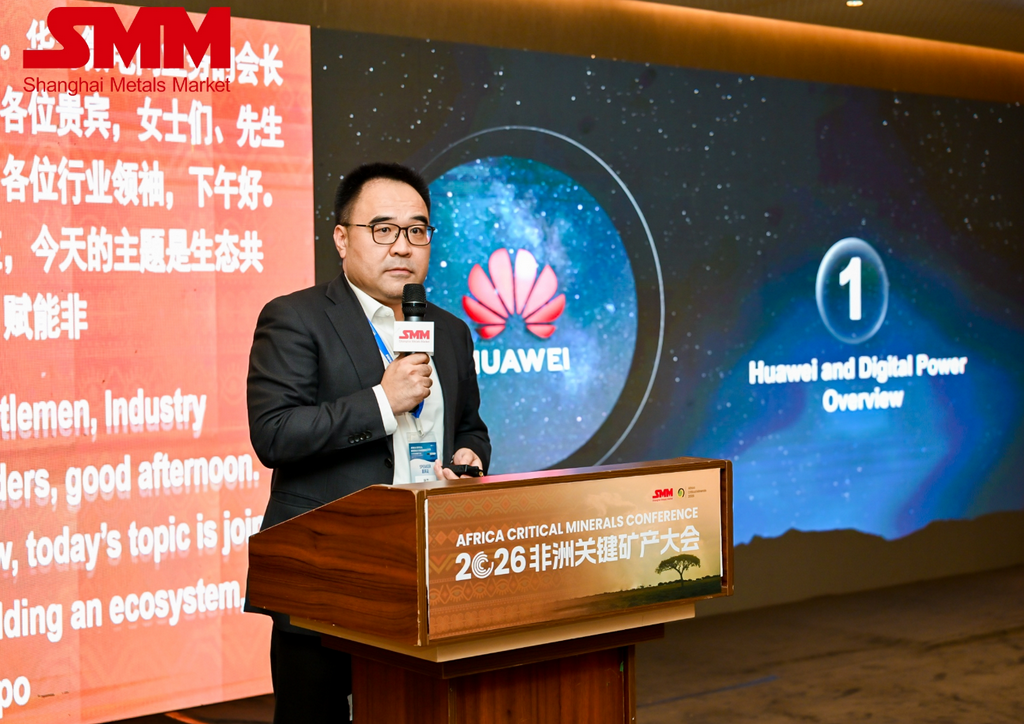
Huawei Pursues Africa Green‑Mining Partnerships and Holds Business Talks with ZESCO at SMM ACM 2026
The SMM Africa Critical Minerals Conference 2026 (ACM2026) , hosted by Shanghai Metals Market (SMM), wrapped up with great success in Lusaka, Zambia on September 15‑16. Focusing on the development of strategic minerals such as copper, cobalt, lithium, and tin in Africa, local deep-processing transformation, green mine construction and energy infrastructure upgrading, this premium event has brought together 400+ industry representatives from Chinese and African government agencies, top miners, commodity traders, investors, and technical service providers to jointly explore high-quality development paths for Africa's critical minerals industry chain. Huawei presented its mine microgrid solution at this conference. Joseph Yao, President of Mining Micro-Grid Business at Huawei Digital Power , delivered a keynote speech titled "Eco‑Partnerships for Green African Mines: Huawei's Mine Microgrid Practices under the IPP‑PPA Model". Huawei's delegation also held business talks with ZESCO, Zambia's national power utility, covering mine energy supply, new‑energy deployment and collaborative power‑infrastructure build‑out. As the global energy transition continues to advance, the new energy industry is steadily boosting demand for critical minerals such as copper and cobalt. Africa is rich in strategic mineral resources and is accelerating its upgrade from exporting mineral raw materials to a high-value-added industry chain encompassing local smelting and deep processing. Mines, as power-intensive sites, require stable and low-cost green power supply, which has become a core factor constraining the implementation of mining projects and the release of capacity in Africa. Leveraging the IPP-PPA (independent power producer investment + long-term power purchase agreement) cooperation model, distributed new energy microgrids can provide reliable power nearby for open-pit mines and smelter sites, helping mines reduce electricity costs and carbon emissions, and supporting the implementation of Zambia's strategy for local copper ore processing. (Joseph Yao, President of Mining Micro-Grid Business at Huawei Digital Power) Joseph Yao shared an overview of Huawei and its Digital Energy business, introducing Huawei as a leading provider of ICT infrastructure and smart terminals, a technology-driven enterprise with operations across many countries worldwide, focusing on core business segments such as smart PV and grid-forming ESS. He noted that Africa's mining sector is generally plagued by power shortages. High diesel costs erode mine profit margins, unstable power supplies risk production disruptions, while ESG requirements also impose constraints on mineral exports. He proposed a three-step path for the sustainable development of African mining: Firstly, supply green electricity to mines through digital energy infrastructure to reduce carbon emissions; Secondly, electrification transition of mining equipment; Thirdly, reshape production processes through AI platforms and intelligent management systems, optimize equipment scheduling, and improve mine capacity and production efficiency. He also highlighted Huawei's mine microgrid system. Rather than a standalone piece of equipment, it is a complete energy solution integrating photovoltaic‑storage systems, intelligent dispatching, diesel backup power supplies, control systems and management software. It breaks the conventional single‑power‑source model to enable energy self‑sufficiency and efficient energy management at mining sites. Citing the large‑scale microgrid project for Saudi Arabia's Red Sea Global as a case study, he explained that this city‑level microgrid achieved major technical breakthroughs underpinned by Huawei's robust in‑house R&D capabilities and power‑simulation laboratories. Huawei possesses independent R&D capacity for core power‑electronic components such as IGBTs, and delivers one‑stop services covering design, simulation and project delivery. Together with ecosystem partners, it also provides full‑lifecycle engineering consultation and on‑site implementation support. The successful delivery of this project has laid a solid foundation for microgrid deployment in mining scenarios. He specifically addressed the widespread funding pain points confronting African mining projects. Under the IPP‑PPA ecosystem model, domestic and international investors can be brought in to finance mine‑energy projects. Mining companies, as power purchasers, sign long‑term power‑purchase agreements to secure stable mine operations, while investors obtain steady returns, forming a sustainable commercial closed‑loop. In his speech, Joseph cited several African mine microgrid implementation cases. Among them, after the completion of the Kamoa-Kakula mining microgrid project in the DRC, green electricity will replace a large amount of diesel power generation, significantly reducing mine electricity costs and carbon emissions, and delivering a good return on investment. For this Chinese-funded miner's copper mine project in the DRC, microgrid upgrades sharply reduced electricity costs and significantly improved the mine's capacity utilization rate, verifying the practical value of green electricity microgrids in African mine scenarios. He summarized Huawei's three core capabilities: a globalized business platform, end-to-end one-stop microgrid solutions, and a diverse ecosystem partner system that includes investors, EPCs, and design consulting agencies. He added that Huawei is looking forward to establishing partnership with more investors to develop energy projects across Zambia and wider Africa, secure power supplies for critical‑mineral industries including copper and lithium, jointly foster green mines in Africa, and build a low‑carbon and sustainable industrial future. During the conference, the Huawei delegation held a business meeting with representatives from Zambia's national power utility ZESCO. Against the backdrop of accelerating green transformation in African mining and continuously growing power demand in mining areas, the two sides exchanged views on topics of common concern such as power infrastructure construction and new energy support, and expressed their intention to jointly explore potential areas for cooperation. Africa's mineral industry is at a critical window for industry chain upgrading. Huawei, drawing on its technological strengths in new energy and smart power, will partner with IPP investors, local power authorities and mining operators to build an open‑cooperation ecosystem. Leveraging its proven mine microgrid solutions, Huawei aims to deliver green, reliable power supplies for African mining and smelting projects, advance the low‑carbon transition of Africa’s critical minerals industry, and deepen practical China‑Africa cooperation across the mining and energy sectors.
Sep 23, 2026 16:41 (GMT+8)
![[SMM Analysis] China’s Shifting Tungsten Trade Landscape: A Strategic View](https://imgqn.smm.cn/usercenter/eThpo20251217171723.jpeg)
[SMM Analysis] China’s Shifting Tungsten Trade Landscape: A Strategic View
Sep 23, 2026 09:13 (GMT+8)
![[SMM Analysis] A Snapshot of Zambia’s Gold Market: From Mine Output to Formal Trade](https://imgqn.smm.cn/usercenter/nQsOk20251217171736.jpg)
[SMM Analysis] A Snapshot of Zambia’s Gold Market: From Mine Output to Formal Trade
Sep 23, 2026 16:23 (GMT+8)
![Canada Lifts Solar Trade Duties: Can Chinese Modules Win a Bigger Share? [SMM Analysis]](https://imgqn.smm.cn/usercenter/VqcvE20251217171739.jpg)
Canada Lifts Solar Trade Duties: Can Chinese Modules Win a Bigger Share? [SMM Analysis]
Sep 21, 2026 18:03 (GMT+8)
DRC Establishes US-DRC Special Working Group to Accelerate Strategic Minerals Partnership
Sep 21, 2026 10:00 (GMT+8)
[SMM Analysis] China-US Talks Fuel Bullish Sentiment in Pr-Nd Market, But Fundamentals Prevail
Sep 24, 2026 12:34 (GMT+8)

Why Is SHFE Copper’s “Three Highs” Market Intensifying?
Sep 22, 2026 18:53 (GMT+8)
Latest News
SMM Rare Earth Afternoon Trading Comment on September 24
Sep 24, 2026 17:40 (GMT+8)
Vulcan Elements Wins U.S. Army Contract to Supply Rare Earth Magnets for SkyFoundry Drone Program
Sep 24, 2026 17:14 (GMT+8)
Scrap Pr-Nd Moves Sideways, Pre-Holiday Stockpiling Rises Then Falls [SMM Recycled Rare Earth Weekly Review]
Sep 24, 2026 15:56 (GMT+8)
Pr-Nd edges up with few firm orders; medium-heavy rare earth generally weak [SMM Rare Earth Weekly Review]
Sep 24, 2026 15:49 (GMT+8)
Rare earth prices show divergence; Pr-Nd stops falling and rebounds while medium-heavy rare earths remain stable [SMM Rare Earth Daily Review]
Sep 24, 2026 14:07 (GMT+8)
[SMM Analysis] China-US Talks Fuel Bullish Sentiment in Pr-Nd Market, But Fundamentals Prevail
Sep 24, 2026 12:34 (GMT+8)
International News Boosts Pr-Nd Prices Amid Subdued Market Sentiment Ahead of Holiday
Sep 24, 2026 11:33 (GMT+8)
[SMM Rare Earth Morning Meeting Summary] Pr-Nd pulls back from highs, dysprosium and terbium weaken in tandem
Sep 24, 2026 09:19 (GMT+8)
SMM Rare Earth Afternoon Trading Comment on September 23
Sep 23, 2026 17:19 (GMT+8)
U.S. Court Halts Dateline's Gold-Rare Earth Project in Mojave, Orders New Approval
Sep 23, 2026 15:12 (GMT+8)
Neo Commences Production at Estonia Magnet Plant, Targets 20,000 t/y Globally
Sep 23, 2026 15:06 (GMT+8)
Fisher Technology Achieves Breakthrough in Recycling Rare Earth Magnets for High-End Motors
Sep 23, 2026 15:05 (GMT+8)
Chinese Firm Patents Advanced NdFeB Magnet Molding Technology for Improved Quality
Sep 23, 2026 15:00 (GMT+8)
WPI-Led Team Receives $3.3M NSF Grant for Bio-Based Critical Minerals Recovery Research
Sep 23, 2026 14:53 (GMT+8)
New Patent for High-Efficiency Air-Cooled Motor Grants China Salt's Subsidiaries Innovation Boost
Sep 23, 2026 14:51 (GMT+8)
XEMC to Acquire 60% Stake in Hunan Xiangdian Qiangci Tech via Equity Transfer
Sep 23, 2026 14:50 (GMT+8)
Rare earth prices in the doldrums; downstream wait-and-see sentiment strong, trading sluggish [SMM Rare Earth Daily Review]
Sep 23, 2026 14:13 (GMT+8)
Northern Rare Earth's NdFeB Alloy Project Enters Trial Production, Aiming Full Operation by 2026
Sep 23, 2026 13:46 (GMT+8)
[SMM Rare Earth Morning Meeting Summary] Major factory purchases boost Pr-Nd prices further, dysprosium stable while terbium weakens
Sep 23, 2026 09:25 (GMT+8)
SMM Rare Earth Afternoon Trading Comment on September 22
Sep 22, 2026 17:32 (GMT+8)