

News
Exclusive analysis articles with the latest market updates, and real-time news feeds.
![[SMM Analysis] India’s BESS Manufacturing Push Accelerates, but Cell Dependence Remains a Key Bottleneck](https://imgqn.smm.cn/production/admin/votes/imagesozVHm20260131125121.jpeg)
[SMM Analysis] India’s BESS Manufacturing Push Accelerates, but Cell Dependence Remains a Key Bottleneck
In the first quarter of 2026, global energy storage system shipments reached 100.0 GWh, a 96.5% increase from 50.9 GWh in the same period of 2025, bringing quarterly shipments to an entirely new scale.
Sep 30, 2026 08:50 (GMT+8)
SMM Launches Aluminium CBAM Calculator: What Cost Estimates Mean for EU-Bound Offers【SMM Analysis】
As the EU Carbon Border Adjustment Mechanism (CBAM) enters its definitive phase, aluminium trade with Europe requires carbon costs to be assessed alongside metal prices, processing charges and logistics. SMM has launched its Aluminium CBAM Calculator , bringing together product codes, origin, emissions data and certificate prices to support export quotations, European procurement and internal budgeting. The aluminium module offers 58 CN codes and 68 origin/default-value categories, covering unwrought aluminium, profiles, sheet, strip, foil and other products. Annual parameters are available for 2026–2030. Users enter a tonnage and select default emissions or enter verified actual emissions. The page then displays estimated certificates per tonne, total certificates, cost per tonne and total budget, with primary and secondary aluminium routes matched to the applicable data basis. The practical benefit is that assumptions and results appear together. Exporters can specify the product, origin, import period and emissions basis behind a quotation, while buyers can compare sources under consistent conditions. The page includes Chinese and English interfaces, parameter tables and a printable cost-sheet option. How the associated costs are shared between buyers and sellers remains a contractual matter. Certificate exposure should be distinguished from its monetary value. As of 29 September 2026, the calculator incorporates official prices of €75.36 per certificate for Q1 2026 and €75.28 for Q2. The Q3 price has not yet been published. Where a price is unavailable, the page retains certificate-volume estimates and leaves costs blank, rather than substituting an assumed price. The current version excludes deductions for carbon prices paid abroad and assessment of the annual import threshold. Its actual-emissions calculation for complex aluminium goods also lacks the free-allocation adjustment attributable to precursors. The analysis below therefore uses the checked default-value calculation. Results are commercial estimates, not final statutory surrender obligations. For market comparisons, the same aluminium product can carry materially different estimated costs depending on its origin-specific default value. Consider CN 76012040—unwrought aluminium alloys in billet form—with primary route K, the Q2 2026 certificate price and a quantity of 1,000 tonnes. Estimated costs under the Chinese, Indian and Canadian default-value cases are €143.98, €50.41 and €57.86 per tonne, respectively. These figures include the annual default-value mark-up and the benchmark-based free-allocation adjustment. The Chinese and Indian default-value cases differ by approximately €93.57 per tonne. Comparing only the metal price or processing charge may therefore miss a meaningful difference in the buyer's budget. Where other commercial terms are similar, estimated CBAM costs could affect an offer's attractiveness. However, this is not a ranking of producers' actual carbon intensity. Freight, customs duties, quality and delivery terms are also outside this comparison, so the figures alone cannot determine the preferred supplier. This highlights the commercial value of supplier emissions documentation. For producers whose actual emissions are below the applicable default value, supported by compliant verification, actual data may change a buyer's cost assessment. Buyers can use defaults for an initial budget when documentation is unavailable, then reassess using supplier evidence. Exporters consequently have a reason to prepare emissions information alongside their product offers, rather than negotiate solely around country-default differences. Annual parameter changes also warrant attention. Holding the Chinese product's base default value, route and benchmark constant, and assuming that the import year and applicable reporting year coincide, estimated certificate exposure rises from 1.912575 per tonne in 2026 to 2.248150 in 2027—an increase of approximately 17.5%. This reflects a higher default-value mark-up and a smaller free-allocation deduction; it does not imply a rise in future certificate prices. For supply arrangements spanning different years, companies can first compare certificate exposure, then discuss price-update mechanisms and cost sharing. Even while future certificate prices remain unknown, identifying that exposure and obtaining supplier documentation can improve the comparability of offers and procurement budgets.
Sep 29, 2026 17:32 (GMT+8)
[SMM Analysis] Low-Carbon of Primary Copper Begin Trading Separately—Will Recycled Copper’s Green Value Be Reassessed?
[SMM Analysis: Low-Carbon of Primary Copper Begin Trading Separately—Will Recycled Copper’s Green Value Be Reassessed?] BHP and Amazon’s EAC pilot separates verified emissions reductions from physical copper trade, giving low-emissions primary copper a new source of environmental value. Recycled copper retains a major energy advantage, but future competitiveness may depend more on traceability, recycled content and verified carbon data, potentially adding an environmental dimension to pricing.
Sep 29, 2026 16:03 (GMT+8)
Latest News
![[SMM PV Flash] Two Next2Sun Subsidiaries Enter Self-Administration Insolvency Proceedings](https://imgqn.smm.cn/usercenter/EaYRd20251217171743.jpg)
[SMM PV Flash] Two Next2Sun Subsidiaries Enter Self-Administration Insolvency Proceedings
14 hours ago
![[SMM PV Flash] Enel Completes Acquisition of Seven Operating Solar Projects in the US](https://imgqn.smm.cn/usercenter/xAoMy20251217171743.jpg)
[SMM PV Flash] Enel Completes Acquisition of Seven Operating Solar Projects in the US
14 hours ago
![[SMM PV Flash] CleanChoice Energy Secures Over US$166 Million in Financing for US Solar Projects](https://imgqn.smm.cn/usercenter/zvkUO20251217171743.jpg)
[SMM PV Flash] CleanChoice Energy Secures Over US$166 Million in Financing for US Solar Projects
14 hours ago
[SMM PV Flash] DTE Energy Completes Construction of 100MW Solar Project in Michigan
US utility DTE Energy has completed construction of the 100MW Cold Creek Solar Park in Michigan. Located near Coldwater, the project is part of DTE Energy’s MIGreenPower renewable energy programme, with electricity generated from the facility set to support Ford Motor Company’s manufacturing operations in the state. DTE Energy has also advanced several other large-scale solar projects into commercial operation in 2026, reflecting continued development of utility-scale solar installations across Michigan.
14 hours ago
[SMM PV Flash] Solar PV Plant in Chiba, Japan Catches Fire After Flooding
A ground-mounted solar PV plant in Narita, Chiba Prefecture, Japan, caught fire after flooding triggered by a typhoon. The flooding submerged electrical equipment at the site, and as water levels receded, several combiner boxes were suspected of short-circuiting and igniting, with multiple fires and explosion-like sounds reported at the scene. No injuries were reported. Japanese authorities have warned that solar modules can continue generating electricity under sunlight, meaning submerged combiner boxes, inverters and other electrical equipment may still pose electric shock and fire risks even after floodwaters recede.
14 hours ago
[SMM Flash] California Opens Expanded Advanced Lithium-Ion Battery Factory
American Lithium Energy has opened its expanded lithium-ion battery factory in Vista, California, increasing the site from 23,000 to 82,000 square feet for aerospace, defense, industrial and high-value storage applications. The expansion received more than USD 13 million in state grants and helped mobilize a further USD 40 million to USD 50 million from private and federal sources to scale 18650-cell production and validate high-capacity silicon-anode prismatic batteries. No annual output figure was disclosed, so the milestone confirms an operating factory and pilot production capability but does not establish a specific GWh-scale nameplate capacity.
15 hours ago
[SMM PV Flash] Redwire Wins Follow-On Solar Array Contract for Axiom Commercial Space Station
Redwire has received a follow-on contract from Axiom Space to develop and deliver two Roll-Out Solar Array wings for the second module of Axiom’s commercial space station, after previously securing the same power-system scope for the first module. The first module is planned for launch in 2028 and the second less than a year later, with the pair designed to form an operational free-flying station supporting four crew members. Contract value, array output and delivery milestones were not disclosed, but the award extends lightweight deployable space-PV technology from established orbital use into new commercial infrastructure.
15 hours ago
[SMM PV Flash] Nala Acquires 100 MW Ready-to-Build Finnish Battery Project
Fu-Gen has completed the sale of the 100 MW Kärppiö standalone battery project in Teuva, Finland, to Nala Renewables, with the asset at the ready-to-build stage and construction expected to begin during 2026. The transaction is the third closing under the parties’ Finnish battery portfolio framework signed in 2025 and expands Nala’s related pipeline in the country to 275 MW/550 MWh. Transaction value was not disclosed, and the milestone confirms ownership transfer and construction readiness rather than operational commissioning.
15 hours ago
[SMM PV Flash] Finland Formally Opens 129 MWp Hallanvahti Solar Farm
The 129 MWp Hallanvahti solar farm in Joroinen, Finland, was formally inaugurated on October 5 after entering commercial operation at the end of June 2026. The plant uses approximately 204,000 bifacial modules on single-axis trackers and is expected to generate around 140 GWh annually, making it one of Finland’s larger utility-scale solar assets. The announcement marks the formal opening of an operating plant rather than a new construction start or permit award, and the project is wholly owned by a Taaleri-managed fund.
15 hours ago
[SMM PV Flash] Australia’s 400 MW/1.6 GWh Teebar BESS Reaches Financial Close
Atmos Renewables has reached financial close on the 400 MW/1,600 MWh Teebar battery project in Queensland and the 470 MW Parron Maam Marang wind farm in Western Australia, both backed by long-term revenue support under Australia’s Capacity Investment Scheme. Located beside a Powerlink substation, Teebar will provide four hours of storage, and Atmos will retain ownership through construction and operate the asset after completion, although debt size, capital cost and commissioning date were not disclosed. Together with the previously financed 100 MW/400 MWh Merredin battery, Atmos has now taken 970 MW of supported capacity through financial close.
15 hours ago
![[SMM PV Flash] Bulgaria Inaugurates 242 MWp Solar and 773 MWh Storage Hybrid Complex](https://imgqn.smm.cn/usercenter/fYlYx20251217171740.jpg)
[SMM PV Flash] Bulgaria Inaugurates 242 MWp Solar and 773 MWh Storage Hybrid Complex
15 hours ago
![[SMM PV Flash] Romania’s 1.3 GWp Dama Solar Project Secures EUR 561 Million Financing](https://imgqn.smm.cn/usercenter/dtQDq20251217171740.jpg)
[SMM PV Flash] Romania’s 1.3 GWp Dama Solar Project Secures EUR 561 Million Financing
15 hours ago
![[SMM PV Flash] Sumitomo Takes 49% Stake in 500 MWp Indian Solar-Wind-Storage Project](https://imgqn.smm.cn/usercenter/hDwid20251217171740.jpg)
[SMM PV Flash] Sumitomo Takes 49% Stake in 500 MWp Indian Solar-Wind-Storage Project
15 hours ago
[SMM PV Flash] EU Grants Priority Status to 180 MW Polish-German Cross-Border Renewables Project
The European Commission has added the DEPLOY project to its cross-border renewable energy list, covering a planned 180 MW combination of solar and wind generation in Gubin, Poland, with electricity converted into heat for industrial users and district heating in Guben, Germany. The status makes the project eligible to apply for study and construction support under the Connecting Europe Facility Energy programme, strengthening its route toward cross-border coordination and financing. It does not represent an awarded grant, financial close or final investment decision, and the technology split, investment value and construction schedule remain to be confirmed.
15 hours ago
[SMM PV Flash] Two Next2Sun Subsidiaries Enter Self-Administered Insolvency
German vertical bifacial PV company Next2Sun has filed for self-administered insolvency proceedings for Next2Sun Technology GmbH and Next2Sun Mounting Systems GmbH, while parent company Next2Sun AG and project developer Next2Sun Projekt GmbH are currently outside the filing. The group had sought EUR 5 million through a share offering, but indicated subscriptions and financing offers did not become sufficiently binding to secure medium-term operations, leading it to cancel the raise. The affected subsidiaries are continuing operations while reviewing project economics, and the development business and project companies holding completed agrivoltaic assets remain unaffected for now as the group seeks investors and restructuring options.
15 hours ago
[SMM PV Flash] ContourGlobal Completes Construction of 324MW Solar PV Complex in Colorado
Independent power producer (IPP) ContourGlobal, in partnership with a local public power utility, has completed the construction of the 324MW Black Hollow Sun solar PV complex in Colorado, US, four months ahead of schedule. The full commissioning of this project will supply substantial clean energy to the local grid. With this completion, ContourGlobal's total operating and under-construction renewable energy portfolio in the US has reached 1.5GW. The smooth progress of such utility-scale projects indicates that the US utility-scale solar market maintains a steady installation momentum.
Oct 05, 2026 17:29 (GMT+8)
[SMM PV Flash] Germany Anticipates Over 600,000 Tonnes of Solar PV Waste by 2030
According to recent research, with the large-scale aging of early solar power plants, Germany is on course to generate over 600,000 tonnes of end-of-life solar PV modules by 2030. By the end of 2023, installed modules contain significant recyclable materials holding billions of euros in recovery potential for metals like aluminum and silver. Advancing large-scale module recycling not only meets environmental mandates and absorption pressures but also supplements the upstream auxiliary supply chain with extracted high-value metals, paving the way for accelerated growth in Europe's local PV recycling industry.
Oct 05, 2026 17:28 (GMT+8)
[SMM PV Flash] First Solar Sues JA Solar and Corning Subsidiary in US Over TOPCon Patent Infringement
On October 1, US solar manufacturer First Solar filed a patent infringement lawsuit in a Delaware federal court against Chinese module manufacturer JA Solar and American Panel Solutions, a subsidiary of Corning. First Solar alleges that these companies engaged in the unauthorized use of its core patents related to the manufacturing of TOPCon crystalline silicon solar cells. As competition within the global PV supply chain intensifies, technical patent scrutiny targeting leading Chinese module makers expanding overseas is becoming stricter, which may bring uncertainties to their capacity expansion and sales in the North American market.
Oct 05, 2026 17:27 (GMT+8)
[SMM PV Flash] Japan Tightens Grid Access Rules as Battery Queue Reaches 172GW
Japanese regulators have recently tightened grid access rules for renewable energy and storage projects. Under the new regulations, power generators, including battery storage developers, must prove their rights to the project sites to maintain their grid connection queue status. This move aims to curb severe capacity hoarding; currently, the battery queue waiting for grid connection in Japan has reached a staggering 172GW, while actual connected utility-scale storage is less than 1GW. This policy is expected to accelerate the clearing of speculative projects and free up grid capacity for viable solar-plus-storage systems.
Oct 05, 2026 17:27 (GMT+8)
[SMM PV Flash] Brazil Grid Unlocks 56GW Connection Headroom for Battery Storage, Supporting Solar-Plus-Storage
According to the latest technical grid assessment released by Brazil's National Electric System Operator (ONS), available grid connection headroom for battery storage projects has reached 56GW. This capacity significantly exceeds local medium-term power demand estimates, paving the way for upcoming capacity reserve auctions while alleviating grid absorption pressures on regional solar PV systems. The official confirmation of available grid capacity is expected to boost investor confidence in utility-scale solar-plus-storage projects across Brazil.
Oct 05, 2026 17:26 (GMT+8)
![[SMM Announcement] Chinese Market Metal Prices and News Updates Suspended during National Day Holiday (Oct 1-7)](https://imgqn.smm.cn/usercenter/HeIuV20251217171708.jpg)
[SMM Announcement] Chinese Market Metal Prices and News Updates Suspended during National Day Holiday (Oct 1-7)
Dear Valued SMM Users, The National Day holiday is approaching. Please note that SMM Chinese market metal price assessments and news updates will be temporarily suspended during the holiday (October 1-7) and resume normal release after the break. However, SMM overseas price assessment will continue to be updated as usual throughout the holiday. We apologise for any inconvenience caused and wish you a pleasant holiday. Shanghai Metals Market (SMM)
Sep 28, 2026 17:06 (GMT+8)

Huawei Pursues Africa Green‑Mining Partnerships and Holds Business Talks with ZESCO at SMM ACM 2026
Sep 23, 2026 16:41 (GMT+8)
![[SMM Analysis] The U.S. Copper Tariff Trade Is Fading — but It Isn’t Over Yet](https://imgqn.smm.cn/production/admin/votes/imagesMbCUq20260929144044.png)
[SMM Analysis] The U.S. Copper Tariff Trade Is Fading — but It Isn’t Over Yet
Sep 29, 2026 14:37 (GMT+8)

South Africa Poised to Become Key Player in Global Rare Earth Supply Chain by 2034【SMM Analysis】
Sep 29, 2026 18:54 (GMT+8)
[SMM Analysis] India’s BESS Manufacturing Push Accelerates, but Cell Dependence Remains a Key Bottleneck
Sep 30, 2026 08:50 (GMT+8)
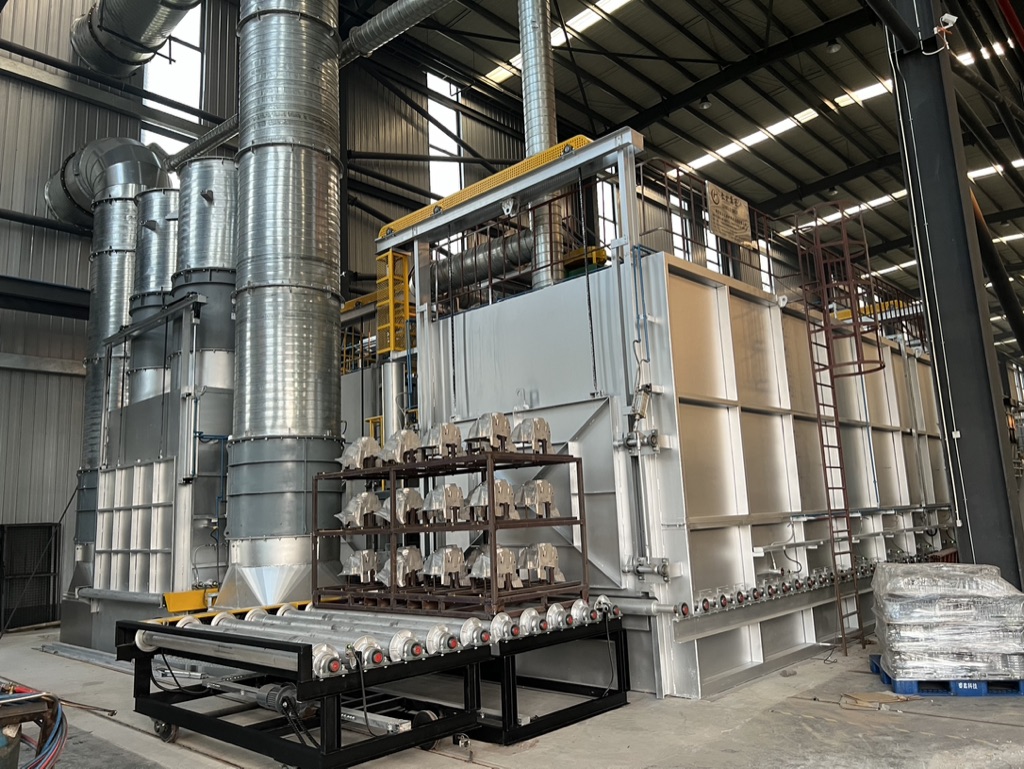
SMM Launches Aluminium CBAM Calculator: What Cost Estimates Mean for EU-Bound Offers【SMM Analysis】
Sep 29, 2026 17:32 (GMT+8)
![[SMM Analysis] Low-Carbon of Primary Copper Begin Trading Separately—Will Recycled Copper’s Green Value Be Reassessed?](https://imgqn.smm.cn/usercenter/MXbup20251217171745.jpg)
[SMM Analysis] Low-Carbon of Primary Copper Begin Trading Separately—Will Recycled Copper’s Green Value Be Reassessed?
Sep 29, 2026 16:03 (GMT+8)
Latest News
[SMM PV Flash] Two Next2Sun Subsidiaries Enter Self-Administration Insolvency Proceedings
14 hours ago
[SMM PV Flash] Enel Completes Acquisition of Seven Operating Solar Projects in the US
14 hours ago
[SMM PV Flash] CleanChoice Energy Secures Over US$166 Million in Financing for US Solar Projects
14 hours ago
[SMM PV Flash] DTE Energy Completes Construction of 100MW Solar Project in Michigan
14 hours ago
[SMM PV Flash] Solar PV Plant in Chiba, Japan Catches Fire After Flooding
14 hours ago
[SMM Flash] California Opens Expanded Advanced Lithium-Ion Battery Factory
15 hours ago
[SMM PV Flash] Redwire Wins Follow-On Solar Array Contract for Axiom Commercial Space Station
15 hours ago
[SMM PV Flash] Nala Acquires 100 MW Ready-to-Build Finnish Battery Project
15 hours ago
[SMM PV Flash] Finland Formally Opens 129 MWp Hallanvahti Solar Farm
15 hours ago
[SMM PV Flash] Australia’s 400 MW/1.6 GWh Teebar BESS Reaches Financial Close
15 hours ago
[SMM PV Flash] Bulgaria Inaugurates 242 MWp Solar and 773 MWh Storage Hybrid Complex
15 hours ago
[SMM PV Flash] Romania’s 1.3 GWp Dama Solar Project Secures EUR 561 Million Financing
15 hours ago
[SMM PV Flash] Sumitomo Takes 49% Stake in 500 MWp Indian Solar-Wind-Storage Project
15 hours ago
[SMM PV Flash] EU Grants Priority Status to 180 MW Polish-German Cross-Border Renewables Project
15 hours ago
[SMM PV Flash] Two Next2Sun Subsidiaries Enter Self-Administered Insolvency
15 hours ago
[SMM PV Flash] ContourGlobal Completes Construction of 324MW Solar PV Complex in Colorado
Oct 05, 2026 17:29 (GMT+8)
[SMM PV Flash] Germany Anticipates Over 600,000 Tonnes of Solar PV Waste by 2030
Oct 05, 2026 17:28 (GMT+8)
[SMM PV Flash] First Solar Sues JA Solar and Corning Subsidiary in US Over TOPCon Patent Infringement
Oct 05, 2026 17:27 (GMT+8)
[SMM PV Flash] Japan Tightens Grid Access Rules as Battery Queue Reaches 172GW
Oct 05, 2026 17:27 (GMT+8)
[SMM PV Flash] Brazil Grid Unlocks 56GW Connection Headroom for Battery Storage, Supporting Solar-Plus-Storage
Oct 05, 2026 17:26 (GMT+8)