

News
Exclusive analysis articles with the latest market updates, and real-time news feeds.

Sodium-ion Battery Competitive Landscape: Cathode Shortage Persists, Hard Carbon Anode Margins under Pressure
The sodium-ion battery industry chain continued to gain momentum, with cathode and anode materials showing a "fire and ice" dynamic: the cathode materials segment faced tight supply-demand conditions and elevated costs, with orders being deferred, while the hard carbon anode segment remained mired in profitability pressure.
Sep 4, 2026 17:47
[SMM Analysis] China Is No Longer Exporting Just Steel to Southeast Asia
For decades, the image of Chinese steel “going global” was straightforward: coils, billets, rebar and wire rod were loaded at Chinese ports, shipped across the sea and delivered to traders, processors and end users in Southeast Asia. Today, the steel is no longer travelling alone. Chinese investment capital, production equipment, technical expertise and management systems have followed it overseas. In Malaysia, this transition can be seen in integrated steelmaking projects such as Alliance Steel and Eastern Steel. The destination of an exported steel cargo is an overseas customer. The destination of exported production capacity is a local mill capable of supplying that customer repeatedly. China’s steel relationship with Southeast Asia is consequently moving from “selling steel there” towards “making steel there.” That shift raises a harder quantitative question: is Chinese-backed capacity moving closer to Southeast Asian demand, or is it creating another market in which capacity may grow faster than consumption? The numbers behind the story 131 million tonnes: China’s steel exports reached a record in 2025 under the OECD’s reporting scope, more than two and a half times the 2020 level. 48.0%: China supplied almost half of Malaysia’s steel imports by volume in 2025, far exceeding every other individual origin. 8.2 million tonnes: Malaysia’s apparent steel consumption in 2025, alongside real consumption of 8.3 million tonnes. Both increased only moderately despite the country’s expanding production base. Together, these figures reveal an increasingly asymmetrical relationship. Malaysia remains heavily dependent on Chinese steel, but its domestic market absorbs only around 8 million tonnes annually and utilisation remains uneven across the production chain. As Chinese-backed capacity expands inside Malaysia, the challenge is shifting from accessing the market to finding enough demand for both imported and locally produced steel. China’s export boom explains why steelmakers are looking overseas China remains the world’s largest steel producer and exporter. According to the OECD’s Steel Outlook 2026 , Chinese steel exports reached a record 131 million tonnes in 2025, representing an increase of 153% from 2020. That rise provided an outlet for Chinese production as domestic steel demand weakened, but it also accelerated the use of anti-dumping measures, safeguards and other trade restrictions across global markets. The larger China’s export presence became, the more politically and commercially difficult it became to depend on exports alone. Overseas investment offers a different route into the same end markets. Instead of producing every tonne in China and carrying the full cost and risk of cross-border finished-steel trade, a steelmaker can participate in local production, move closer to customers and become part of the destination country’s industrial supply chain. This does not mean direct exports will disappear. It means exports and overseas production are increasingly operating side by side. Southeast Asia is becoming a production base, not only an import market Southeast Asia has traditionally been viewed as a growth market for exporters. Infrastructure development, urbanisation and manufacturing investment supported steel demand, while gaps in domestic product availability were filled by imports. The region is now changing from an import destination into a major location for new steelmaking capacity. This changes the commercial question. Chinese exporters are no longer competing only against Japanese, South Korean, Vietnamese or other Chinese cargoes. They increasingly face steel produced inside Southeast Asia, including output from mills backed by Chinese capital. The shift is particularly important because new steel plants have long operating lives. A shipment affects the market when it arrives. A new integrated mill can influence raw-material demand, domestic pricing, import requirements and export flows for decades. Malaysia is reshaping its imports, not eliminating them Malaysia’s steel market is expanding, but demand is growing only moderately. Apparent steel consumption rose from 7.0 million tonnes in 2021 to 8.2 million tonnes in 2025—an increase of around 17% over four years—and is forecast to reach 8.4 million tonnes in 2026. Real consumption reached 8.3 million tonnes in 2025, slightly above apparent consumption, indicating that a limited drawdown in inventories helped meet end-user demand. The capacity data show why rising consumption has not translated into broad-based strength across Malaysian mills. Utilisation remained highly uneven in 2025. HRC utilisation rose from zero to 33%, coinciding with the commissioning of new domestic capacity, while DRI/HBI increased from 19% to 32%. In contrast, utilisation declined from 96% to 83% for hot metal and pig iron, from 54% to 43% for billets, and from 49% to 40% for rolled long products. Plates operated at only 18%, while CRC, coated products and pipes recorded utilisation rates of 22%, 55% and 33%, respectively. This unevenness helps explain why Malaysia continues to import substantial volumes even as domestic capacity expands. China supplied 48% of Malaysia’s steel imports in 2025, far ahead of any other individual origin. Yet the composition of those imports changed materially. HRC’s share fell from 30.81% in 2024 to 23.96% in 2025, a decline of 6.85 percentage points, as new domestic HRC production entered the market. Over the same period, billet’s share jumped from 3.51% to 12.19%, an increase of 8.68 percentage points. The shift suggests that localisation is changing what Malaysia imports rather than eliminating its import requirements. Greater domestic HRC availability can reduce reliance on imported coils, while mills and rerollers may still require imported billets, specialised flat products and grades not produced locally in sufficient quantities. Malaysia is therefore becoming a larger producer while remaining a major importer. Trade measures reinforce this restructuring. Malaysia’s anti-dumping protection is concentrated in CRC, galvanised steel, tinplate and selected wire products, while HRC remains largely outside the main anti-dumping framework. These measures can redirect purchases towards alternative suppliers, exempt producers or different products, but they do not remove the market’s underlying need for imported feedstock and specialised material. The Chinese-backed mills changing Malaysia’s supply structure Two projects illustrate the transition from steel exports to steelmaking investment. Alliance Steel, located in the Malaysia–China Kuantan Industrial Park, is a China-invested integrated steel producer and one of Malaysia’s largest steel facilities. Its existing annual capacity is reported at approximately 3.5 million tonnes, covering products including bars, wire rod and sections. The company previously announced a second-phase expansion intended to raise capacity to 10 million tonnes per year and widen its product range. If completed in full, that would add 6.5 million tonnes of capacity—an increase of approximately 186% from the existing level. Because the project is an expansion plan, however, the 10-million-tonne figure must not be presented as fully operational without updated confirmation from the company. Eastern Steel, located in Kemaman on the east coast of Peninsular Malaysia, is jointly invested by Beijing Jianlong Heavy Industry Group and Malaysia’s Hiap Teck Venture. It commissioned its hot-rolling line at the end of 2024. Eastern Steel currently discloses annual capacity of 2.58 million tonnes of HRC and 2.7 million tonnes of billet and slab, while the hot-strip mill itself has a stated design capacity of 3.5 million tonnes per year. The steel produced by these mills is melted and rolled in Malaysia. Their capital links may be Chinese, but their output enters the market as locally produced Malaysian steel under the applicable origin rules. Malaysia is trying to control the capacity it attracts Malaysia’s capacity challenge has become large enough to shape industrial policy. The biggest question is no longer simply whether the country can attract new steel investment, but whether domestic and regional demand can absorb the capacity already operating or under development. Figures presented with Malaysia’s steel-industry roadmap indicate that potential upstream capacity could reach 40.8 million tonnes by 2030, compared with projected domestic demand of 14.7 million tonnes. The difference is 26.1 million tonnes. Put another way, domestic demand would be equivalent to only around 36% of potential capacity, while capacity would be almost 2.8 times demand. The pressure was visible even before the full investment pipeline materialised. In 2023, Malaysia’s average steel capacity utilisation was estimated at 39.1%, compared with a global average of 75.7%. Utilisation varied considerably by product: hot metal and pig iron reached 70.6%, while DRI/HBI operated at 32.3%, slabs at 13.7%, plates at 24.7% and CRC at 18.1%. HRC utilisation was only 0.4%, reflecting Malaysia’s minimal domestic HRC production before Eastern Steel’s new rolling capacity entered the market. This imbalance helps explain MITI’s intervention. From 15 August 2023, the ministry imposed a two-year moratorium covering new manufacturing-licence applications, licence transfers, regularisation, expansion and diversification across much of the iron and steel industry. The policy was intended to pause indiscriminate capacity growth while the government reviewed the industry’s structure and aligned future investment with the New Industrial Master Plan 2030. The original moratorium was subsequently extended beyond August 2025. For upstream and midstream long steel, the restrictions are to remain until existing domestic producers approach an 80% utilisation rate. Restrictions on major flat-steel capacity expansion also continue, although the policy allows greater flexibility to address product shortages and rebalance unused long-steel licences towards flat products. The moratorium is therefore not a blanket prohibition on all steel investment. Since November 2024, 26 downstream product categories under HS73—including pipes, tubes, structures, containers, wire products and other fabricated goods—have been exempt. The distinction reveals the government’s intended direction: constrain further upstream and midstream duplication while encouraging downstream processing, higher-value products and investment that improves the industry’s product mix. For Chinese-backed steelmakers, this changes the logic of entering Malaysia. Future projects will be judged not only by their scale, but by whether they fill a domestic supply gap, improve utilisation, add downstream value or support lower-emission production. Malaysia still wants steel investment, but it is becoming more selective about which capacity it allows. This does not mean Malaysia will necessarily produce 40.8 million tonnes of steel. Capacity is not output, and announced projects can be postponed, downsized or cancelled. But if most of the proposed capacity is built, producers will still need to displace imports, accept low utilisation or export a larger share of their output. Quantitative takeaway: Malaysia’s 2023 utilisation rate of 39.1% was 36.6 percentage points below the global average. The moratorium turns the projected 2030 capacity gap from a theoretical market risk into an active licensing constraint, favouring product upgrading and downstream investment over further undifferentiated capacity expansion. HRC provides the first test of whether localisation can replace imports Hot-rolled coil offers a product-level example of how this transition works. Malaysia’s HRC demand was estimated at around 2 million tonnes in 2022 and was largely met by imports. Eastern Steel subsequently commissioned the country’s first major domestic HRC line. Its disclosed annual HRC capacity of 2.58 million tonnes is equivalent to approximately 129% of that historical demand estimate, while the hot-strip mill’s 3.5-million-tonne design capacity is equivalent to 175%. Those ratios are theoretical, not production forecasts. Actual HRC output depends on upstream slab availability, utilisation, product mix, qualification by downstream customers and the mill’s decision to sell slabs, billets or coils. Malaysia’s HRC demand has also changed since 2022. Even with those limitations, the comparison shows why Eastern Steel matters. Malaysia has moved from having almost no domestic HRC production to possessing enough nameplate rolling capacity to cover a substantial share and potentially all of its domestic requirements. The next question is whether local HRC can compete commercially with imports. Import replacement could eventually become export competition Localisation initially appears to be an import-substitution story. A Malaysian buyer who previously depended on imported HRC can now approach a domestic mill. A regional customer seeking wire rod or sections can consider Malaysian output alongside China-origin cargoes. But the 2030 capacity-demand gap suggests that import replacement cannot be the entire strategy. If domestic capacity expands faster than Malaysian demand, producers will need to sell more steel into Singapore, Thailand, Indonesia, the Philippines and other regional or international markets. At that point, Chinese investment in Malaysia may compete directly with exports from China—not because the companies have abandoned China, but because two production bases are pursuing the same regional order. A Thai wire rod buyer, for example, may receive one offer from a mill in China and another from a Malaysia-based producer backed by Chinese capital. The buyer will compare delivered cost, lead time, certification, payment terms and security of supply. Shareholder nationality will not automatically determine which supplier wins. What makes steel “Chinese”? When capital comes from China, raw materials are sourced globally, production takes place in Malaysia and the finished product is sold to Thailand or Singapore, labels such as “Chinese steel” and “Malaysian steel” no longer describe the entire supply chain. For customs purposes, origin is established under the applicable rules governing where and how a product was manufactured or processed. For corporate strategy, ownership, technology and management remain important. For the buyer, the decisive variables are usually more practical: price, quality, delivery, certification and reliability. The central issue is therefore not whether the output should still be called “Chinese steel.” It is that Chinese steelmakers are no longer influencing Southeast Asia solely through exports. They are becoming part of Southeast Asia’s domestic supply system. From selling steel overseas to making it overseas Chinese steelmakers exported a record volume in 2025 while trade barriers continued to multiply. Overseas production provides another way to participate in the markets that Chinese mills have historically served through exports. Malaysia shows both the opportunity and the contradiction in that strategy. Chinese-backed mills can move closer to customers, reduce parts of the delivery chain and supply products that Malaysia previously imported. At the same time, projected upstream capacity of 40.8 million tonnes would be almost 2.8 times the country’s expected demand in 2030. China’s overseas mills may therefore solve one market-access problem while creating another capacity problem. Their success will depend not simply on building furnaces and rolling lines, but on finding enough competitively priced orders to keep them operating. In the past, China sent ship after ship of steel to Southeast Asia. Today, what remains at the destination is a mill capable of producing the next shipload.
Sep 3, 2026 17:30
[SMM Analysis] EU Melt-and-Pour Rules Arrive: Carbon-Steel Supply Chain Faces a Once-in-a-Generation Reshuffle
Implementing Regulation (EU) 2026/1963, published 31 August and applying from 1 October, makes melt country and heat number mandatory data for every steel consignment entering the EU; layered onto the new country quotas and CBAM, it sorts exporters into those with a fallback, those holding a one-way ticket, and — for China, with zero country quota in the three largest flat categories — those whose tonnage may have nowhere to go from October 2027.
Sep 3, 2026 14:09
Latest News
!["September peak season" tungsten prices await validation: peak season expectations have yet to materialize! Tungsten enterprises' long-term contract prices slightly lowered [SMM Commentary]](https://imgqn.smm.cn/usercenter/YhgvU20251217171725.jpg)
"September peak season" tungsten prices await validation: peak season expectations have yet to materialize! Tungsten enterprises' long-term contract prices slightly lowered [SMM Commentary]
5 hours ago
![Cost Support Weakens and Inventory Diverges; Magnesium Ingot Deals Sluggish, Consolidation Continues [SMM Magnesium Ingot Spot Report]](https://imgqn.smm.cn/usercenter/eThpo20251217171723.jpeg)
Cost Support Weakens and Inventory Diverges; Magnesium Ingot Deals Sluggish, Consolidation Continues [SMM Magnesium Ingot Spot Report]
7 hours ago
![Limited Price Adjustment Repair; Titanium Dioxide Market Remains in the Doldrums [SMM Titanium Spot Express]](https://imgqn.smm.cn/usercenter/mLwgx20251217171723.jpeg)
Limited Price Adjustment Repair; Titanium Dioxide Market Remains in the Doldrums [SMM Titanium Spot Express]
7 hours ago
Zimbabwe Bans Antimony, Tungsten Exports to Boost Domestic Processing
Market sources state that Zimbabwe has imposed an immediate ban on exports of antimony and tungsten effective September 8, 2026, alongside a halt to outward shipments of ores and concentrates. The measure aims to boost domestic refining and processing of its mining resources and raise resource value‑added benefits.
The ban was announced in a letter from Thomas Ushe, Secretary of Zimbabwe’s Ministry of Mines, to the state‑owned Minerals Marketing Corporation of Zimbabwe. Previously in May 2026, Zimbabwe included antimony in its list of 14 “critical minerals” and banned exports of raw ores. The new order further extends restrictions to all forms of antimony and tungsten exports.
9 hours ago
[SMM Chromium Flash] $108m in Investment Zimbabwe's Midlands Province, With Captive Power Targeting Ferrochrome Smelters
Zimbabwe's Midlands Province attracted US$108 million in investment during the second quarter of 2026, spanning cement, fertiliser and energy projects, according to Minister of State for Midlands Provincial Affairs and Devolution Owen Ncube, speaking at a business conference in Gweru. Ncube said the inflows, drawn from both domestic and foreign investors, reflect the province turning mineral wealth into factories, jobs and power rather than continuing to export raw materials, framing the investment within Zimbabwe's Vision 2030 industrialization agenda.
The energy component of the package is the most directly relevant to the chrome sector: new captive solar and thermal power plants are being built specifically to supply high-energy industrial consumers, with ferrochrome processing plants singled out as a priority beneficiary. Midlands hosts several of Zimbabwe's major ferrochrome producers, and unreliable, costly grid power has been a persistent constraint on smelter operations nationally. Ncube said the new capacity is intended to give manufacturers fewer outages, lower costs and the ability to plan production around a consistent energy supply, addressing what he described as one of industrialization's longstanding bottlenecks.
The energy and ferrochrome angle sat alongside a broader beneficiation narrative in the announcement, with Ncube also citing Dinson Iron and Steel's investment in Manhize and lithium processing commitments from Zheli Lithium and Sandawana Mines in Chirumanzu, Zvishavane and Mberengwa as evidence of the province moving up the value chain. Investors quoted at the conference, including businessman Dr. Tinashe Manzungu, pointed to policy consistency and political stability, including the Presidential assent to Constitutional Amendment Act Number 3 of 2026, as key factors underpinning the inflows, with Manzungu suggesting the current environment could support a further US$500 million in investment. The ministerial announcement did not break out how much of the US$108 million was allocated specifically to ferrochrome-related power capacity versus the province's other cement and fertilizer projects, leaving the scale of the direct benefit to smelters still to be clarified as individual projects come online.
9 hours ago
[SMM Chromium Flash] Zimbabwe's Artisanal Mining Deadline Extension Comes as Chrome Features in Fresh Smuggling Count
Zimbabwe's Ministry of Mines and Mining Development has granted small and medium-scale miners a final extension to December 31, 2026, to regularize their operations, moving the compliance cut-off from an original August 30 deadline after a request from the Zimbabwe Miners Federation. The government has stated explicitly that no further extension will be considered. Regularization requires operators to hold valid title, settle outstanding obligations to the state, and comply with environmental and safety rules attached to a claim, addressing a longstanding gap in which many small-scale operators work ground they do not formally hold.
The extension landed in the same week Parliament was told that 18 suspected cases of mineral smuggling and irregular movement had been recorded between January and August 2026, totaling 2,658.88 tonnes of material, with lithium, chrome and silica dominating the tonnage. MP Bridget Nyandoro described mineral leakage as a matter of national economic security and called for stiffer penalties alongside a fully traceable, AI-supported mine-to-market tracking system. She noted the figures represent only detected cases rather than an estimate of total leakage.
The Zimbabwe Artisanal Miners Association had pushed for a longer runway, requesting an extension to February 28, 2027, and warning that a deadline arriving faster than the paperwork could allow could push operators back into informality rather than draw them into the formal system. The ministry granted four months rather than the six requested, leaving the same shortage of registration capacity that contributed to the original deadline being missed. With small-scale and artisanal operations forming a substantial share of Zimbabwe's mineral output, including chrome, how many operations achieve registration between now and December will serve as the clearest test of whether the extension succeeds where the original deadline did not.
10 hours ago
DRC Expands State Control Over Geological Data as Critical-Minerals Mapping Accelerates
[SMM Flash] The Democratic Republic of Congo is strengthening state control over geological information as it develops a national databank covering critical minerals including tantalum, cobalt, copper, lithium and gold. The country’s geological survey told Reuters that systematic exploration currently covers only about 20% of the DRC, while a US$180 million airborne mapping programme with Spain’s Xcalibur is surveying more than 700,000 km². The national geological databank is expected to become fully operational by the end of 2026.
Basic geological information is expected to remain freely accessible, while more sensitive datasets will be subject to controlled, fee-based access. The initiative does not change current coltan production directly, but improved geological intelligence could influence where future tantalum exploration capital is deployed and strengthen Kinshasa’s negotiating position over new discoveries. The impact on actual supply will depend on whether mapped targets proceed through exploration, financing and mine development.
10 hours ago
ADC12 spot prices consolidate on a strong note; futures prices open lower and rebound [ADC12 Price Daily Review]
[ADC12 Price Daily Review: ADC12 spot consolidates on a strong note, futures rebound after opening lower] Today, ADC12 market quotes consolidated on a strong note overall. The SMM ADC12 price rose by 50 yuan/mt from the previous day to 24,350 yuan/mt.
11 hours ago
Henan Smelter Completes Refined Cadmium Sale at RMB 27,600/ton Amid Market Weakness
SMM News, September 8: According to market rumours obtained by SMM, a major smelter in Henan recently completed a successful public tender sale for several tons of refined cadmium. Market rumours suggest the final transaction price of refined cadmium was around RMB 27,600 per ton. Market participants commented that cadmium prices are showing signs of weakness currently, with subdued buying interest from end‑users. Even so, the successful completion of this tender indicates to a certain degree that market demand is not as sluggish as expected.
15 hours ago
[SMM Cobalt Morning Meeting Summary] Weak Demand in the Metal Materials Chain, Falling Costs Intensify Price Pressure
The industry chain remained in the doldrums overall this week, with the tug-of-war between sellers and buyers and falling costs dominating the market. Electrolytic metal prices moved sideways around 300,000 yuan/mt, as smelters held prices firm while downstream buyers remained cautious in procurement. The bid-ask spread for intermediate products widened further, with miners still quoting $19-20/lb while downstream purchase intentions had dropped to $15-16/lb, keeping transactions persistently blocked. Salt and powder materials continued to see their price centers under pressure due to weaker raw material costs and insufficient end-use demand, and some traders showed a greater willingness to sell at low prices. Order coefficients for ternary cathode precursors remained suppressed, with production schedules at some domestic producers staying weak. Ternary cathode materials saw accelerated price pullbacks due to lower lithium chemical prices and downward revisions in end-use orders, and China's production schedule in September faced downward pressure, though ex-China high-nickel orders continued to perform well. LCO prices were temporarily stable, but peak-season stockpiling fell short of expectations, and overall demand recovery remained slow. On the policy front, regulators continued to strengthen quality improvement for power batteries and management of payment terms for auto suppliers, which is conducive to improving the long-term operating environment of the industry chain.
15 hours ago
![[Flash | Antofagasta H1FY26 Molybdenum Output Slumps 17%-18% as Ore Grades Weaken]](https://imgqn.smm.cn/usercenter/wUnEn20251217171722.jpeg)
[Flash | Antofagasta H1FY26 Molybdenum Output Slumps 17%-18% as Ore Grades Weaken]
16 hours ago

Eontec: Deeply Deploying Magnesium Alloy Material Applications in NEV and Other Fields, H1 Net Loss of 52.9325 Million
Sep 7, 2026 19:42
![Inventory Pressure Weakens Demand; Titanium Dioxide Price Changes Limited [SMM Titanium Spot Report]](https://imgqn.smm.cn/usercenter/uSadJ20251217171723.jpeg)
Inventory Pressure Weakens Demand; Titanium Dioxide Price Changes Limited [SMM Titanium Spot Report]
Sep 7, 2026 18:50
Producers Hold Prices Firm but Deals Cool; Overseas and Domestic Markets Diverge [SMM Magnesium Ingot Spot Express]
[Smelters Hold Prices Firm but Deals Cool, Domestic and Overseas Markets Diverge] Today, magnesium ingot offers in Fugu varied by grade. Domestic smelters held prices firm, but high-price deals met resistance, with downstream buyers making only just-in-time procurement. Pullbacks in coal and ferrosilicon weakened cost support, and bearish sentiment in the market intensified. FOB offers in the overseas market rose in line with domestic ex-works prices. However, clients outside China remained cautious in taking orders, and high inventory levels left elevated offers lacking support from actual transactions. Overall, the market is caught in a tug-of-war between smelters holding prices firm and weak demand both domestically and overseas. In the short term, magnesium ingot prices are expected to move sideways.
Sep 7, 2026 18:48
Premier African Minerals Flags US$19.1 Million Funding Need for Zulu Lithium-Tantalum Project
[SMM Flash] Premier African Minerals has identified an estimated US$19.1 million funding requirement through December 31, 2027, as it seeks additional capital for its Zulu Lithium and Tantalum Project in Zimbabwe and other corporate obligations. The company has called a general meeting for September 23, where shareholders will vote on resolutions providing additional share-issuance authority. Premier said its available funds are limited and warned that failure to secure further financing could materially affect the Zulu project and the wider group.
The proposed authorities include the potential issuance of up to 58.63 billion new shares to provide funding flexibility, alongside separate provisions covering creditor settlements and conversion rights. The announcement highlights continued financing pressure surrounding Zulu as Premier works to optimise operations and progress the project towards sustainable production. For the tantalum market, securing sufficient capital will be important to Zulu’s ability to develop its prospective tantalum-bearing output, although the US$19.1 million represents an estimated funding requirement rather than financing already secured.
Sep 7, 2026 18:24
[SMM Chromium Flash] Global Chrome Ore Departures Surge 83.99% WoW to 691,800 mt, Maputo and Richards Bay Both Rebound
Global chrome ore departures from major export ports totaled 691,800 mt in the week ended September 4, up 83.99% week-on-week, according to SMM's latest data. The sharp rebound follows two consecutive weeks of decline and marks the strongest weekly departure volume recorded in the current data series, with gains registered across nearly every tracked port.
Maputo continued to anchor overall volumes, with departures rising to 512,100 mt from 339,200 mt, a 50.97% increase that kept the port's share of total departures above 70%. Richards Bay returned to active shipping after recording zero departures the prior week, loading 57,800 mt, while Mersin more than doubled to 84,500 mt from 36,800 mt, its strongest weekly total in recent weeks. Beira also resumed shipments after an extended period of inactivity, recording 29,500 mt, its first departures in the current data series.
On balance, the broad-based pickup across Maputo, Richards Bay, Mersin, and Beira marks a shift from the more concentrated, Maputo-led flows seen over the preceding weeks toward a more synchronized recovery across the region's ports. The modest gap between combined major-port volumes and the global total, roughly 7,900 mt, reflects smaller contributions from non-major loading points.
Sep 7, 2026 18:12
[SMM Chromium Flash] China's Chrome Ore Port Inventory Rises to 5.22 Mt as of Sep 4, Led by Tianjin Port Build
As of September 4, 2026, China's total chrome ore inventory at ports stood at 5.219 million mt, up 191,000 mt (+3.80%) from 5.028 million mt on August 28.
Tianjin Port, China's dominant chrome ore hub, held 4.5737 million mt, up 186,900 mt (+4.26%) week-on-week, accounting for 87.6% of the national total, up from 87.3% the prior week. The remaining ports collectively held just 645,300 mt (+42,000 mt, +0.66% WoW), essentially flat. Almost the entirety of this week's national inventory build was therefore concentrated at Tianjin, reaffirming its role as the primary discharge and warehousing hub for seaborne ore serving Inner Mongolia and other northern ferrochrome smelting clusters.
The build reflects a supply side that continues to outrun downstream offtake. South Africa remains the overwhelming source of China's ore, with H1 2026 imports up nearly 30% YoY and exports staying elevated as Transnet rail reforms and growing use of the Maputo corridor via Mozambique ease logistics bottlenecks that had previously capped shipment volumes. Zimbabwean supply has also surged (+44% YoY in H1), adding further to arrivals. On the demand side, ferrochrome producers have kept operating rates high even as high-carbon ferrochrome prices eased roughly 100 yuan/mt in August on oversupply and sluggish retail sales, while China's stainless steel sector, despite entering its traditional September-October peak season, is seeing mills resume post-summer-maintenance output faster than downstream orders are recovering, with July stainless exports down 13.2% MoM. With ore arrivals holding firm and consumption growth lagging, port stocks, concentrated at Tianjin, look set to stay well-supplied into the Mid-Autumn Festival and National Day holiday period.
Sep 7, 2026 17:54
Hunan Smelter Sells Refined Cadmium at RMB 27,500/ton, Indicating Stable Demand Amid Weakening Prices
SMM News, September 7: According to market rumours obtained by SMM, a major smelter in Hunan recently completed a successful public tender sale for several tons of refined cadmium. Market rumours indicate the final transaction price of refined cadmium stood at around RMB 27,500 per ton. Market participants noted that cadmium prices are showing a certain weakening trend at present with subdued buying interest from end‑users. Nevertheless, the successful closing of this tender reflects that market demand is not as sluggish as perceived to some extent.
Sep 7, 2026 17:00
A tender for refined cadmium under a factory in Hunan was successfully concluded [SMM report]
Sep 7, 2026 16:57
Yian Tech's Magnesium Revenue Surges 64.41% in H1 2026, Driving Company Growth
【SMM Magnesium Flash】On September 7th, Yian Technology disclosed its investor relations activity records. In the first half of 2026, the company's magnesium product revenue reached 376.5 million yuan, marking a year-on-year increase of 64.41%. The magnesium-aluminum alloy business has become a new growth point for the company. Through technological transformation, the company's equipment capacity can achieve magnesium-aluminum conversion, and the overall operating rate is good. Meanwhile, the supplementary materials for the registration application of magnesium bone screws have been submitted, and approval is expected to be completed within 3 to 6 months. With the continuous increase in magnesium product volume and the implementation of medical magnesium alloy registration, the magnesium business is expected to become an important support for the company's performance recovery.
Sep 7, 2026 16:08
![[SMM Tungsten Analysis] Global Tungsten Market's Quintuple Dilemma: Smelting Capacity Bottleneck at the Core](https://imgqn.smm.cn/usercenter/gKDYO20251217171723.jpeg)
[SMM Tungsten Analysis] Global Tungsten Market's Quintuple Dilemma: Smelting Capacity Bottleneck at the Core
European APT prices remain stuck near $3,000/mtu, with the domestic-overseas spread widening to about $2,000/mtu. The core bottleneck lies in limited APT smelting capacity and scarce spot liquidity, as rising mine output has yet to translate into available APT supply. In China, APT prices softened to RMB 590,000–600,000/mt amid weak supply and demand.
Sep 4, 2026 16:21
![[SMM Analysis] Europe Seeks Lithium Supply Chain Independence, Yet Its Projects Attract Asian Investors](https://imgqn.smm.cn/usercenter/nVnLo20251217171728.jpg)
[SMM Analysis] Europe Seeks Lithium Supply Chain Independence, Yet Its Projects Attract Asian Investors
Sep 4, 2026 10:54
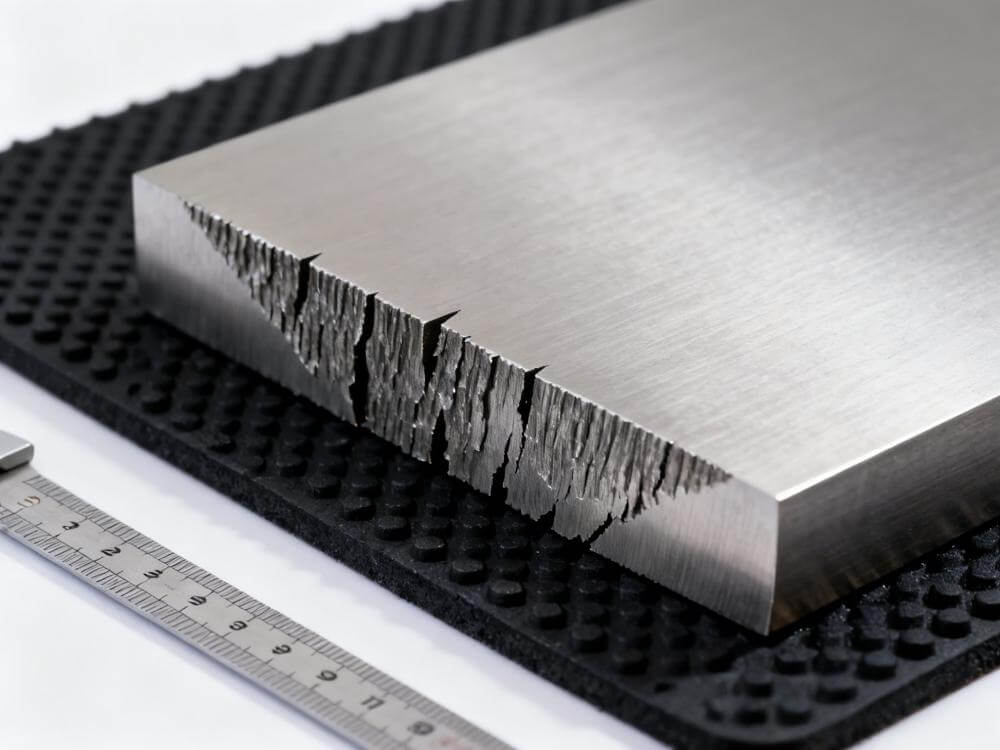
Soaring coal prices halt magnesium market stalemate, but meaningful recovery unlikely until inventories are digested
Sep 3, 2026 20:28

Chinese Hydrogen Energy Industry: Financial Results Reveal Loss‑Driven Transition Toward Pragmatic Deployment
Sep 4, 2026 11:44
Sodium-ion Battery Competitive Landscape: Cathode Shortage Persists, Hard Carbon Anode Margins under Pressure
Sep 4, 2026 17:47
![[SMM Analysis] China Is No Longer Exporting Just Steel to Southeast Asia](https://imgqn.smm.cn/usercenter/FFFrV20251217171719.jpg)
[SMM Analysis] China Is No Longer Exporting Just Steel to Southeast Asia
Sep 3, 2026 17:30
![[SMM Analysis] EU Melt-and-Pour Rules Arrive: Carbon-Steel Supply Chain Faces a Once-in-a-Generation Reshuffle](https://imgqn.smm.cn/usercenter/LSkpO20251217171720.jpg)
[SMM Analysis] EU Melt-and-Pour Rules Arrive: Carbon-Steel Supply Chain Faces a Once-in-a-Generation Reshuffle
Sep 3, 2026 14:09
Latest News
"September peak season" tungsten prices await validation: peak season expectations have yet to materialize! Tungsten enterprises' long-term contract prices slightly lowered [SMM Commentary]
5 hours ago
Cost Support Weakens and Inventory Diverges; Magnesium Ingot Deals Sluggish, Consolidation Continues [SMM Magnesium Ingot Spot Report]
7 hours ago
Limited Price Adjustment Repair; Titanium Dioxide Market Remains in the Doldrums [SMM Titanium Spot Express]
7 hours ago
Zimbabwe Bans Antimony, Tungsten Exports to Boost Domestic Processing
9 hours ago
[SMM Chromium Flash] $108m in Investment Zimbabwe's Midlands Province, With Captive Power Targeting Ferrochrome Smelters
9 hours ago
[SMM Chromium Flash] Zimbabwe's Artisanal Mining Deadline Extension Comes as Chrome Features in Fresh Smuggling Count
10 hours ago
DRC Expands State Control Over Geological Data as Critical-Minerals Mapping Accelerates
10 hours ago
ADC12 spot prices consolidate on a strong note; futures prices open lower and rebound [ADC12 Price Daily Review]
11 hours ago
Henan Smelter Completes Refined Cadmium Sale at RMB 27,600/ton Amid Market Weakness
15 hours ago
[SMM Cobalt Morning Meeting Summary] Weak Demand in the Metal Materials Chain, Falling Costs Intensify Price Pressure
15 hours ago
[Flash | Antofagasta H1FY26 Molybdenum Output Slumps 17%-18% as Ore Grades Weaken]
16 hours ago
Eontec: Deeply Deploying Magnesium Alloy Material Applications in NEV and Other Fields, H1 Net Loss of 52.9325 Million
Sep 7, 2026 19:42
Inventory Pressure Weakens Demand; Titanium Dioxide Price Changes Limited [SMM Titanium Spot Report]
Sep 7, 2026 18:50
Producers Hold Prices Firm but Deals Cool; Overseas and Domestic Markets Diverge [SMM Magnesium Ingot Spot Express]
Sep 7, 2026 18:48
Premier African Minerals Flags US$19.1 Million Funding Need for Zulu Lithium-Tantalum Project
Sep 7, 2026 18:24
[SMM Chromium Flash] Global Chrome Ore Departures Surge 83.99% WoW to 691,800 mt, Maputo and Richards Bay Both Rebound
Sep 7, 2026 18:12
[SMM Chromium Flash] China's Chrome Ore Port Inventory Rises to 5.22 Mt as of Sep 4, Led by Tianjin Port Build
Sep 7, 2026 17:54
Hunan Smelter Sells Refined Cadmium at RMB 27,500/ton, Indicating Stable Demand Amid Weakening Prices
Sep 7, 2026 17:00
A tender for refined cadmium under a factory in Hunan was successfully concluded [SMM report]
Sep 7, 2026 16:57
Yian Tech's Magnesium Revenue Surges 64.41% in H1 2026, Driving Company Growth
Sep 7, 2026 16:08