

News
Exclusive analysis articles with the latest market updates, and real-time news feeds.
![[SMM Analysis] Lithium Battery Copper Foil: No Near-Term Supply Constraint, Structural Shortage Risks to Surface in 2027](https://imgqn.smm.cn/usercenter/BQoXd20251217171731.jpg)
[SMM Analysis] Lithium Battery Copper Foil: No Near-Term Supply Constraint, Structural Shortage Risks to Surface in 2027
Recently, news of tightening lithium battery copper foil supply has drawn attention from the industry and capital markets. Some worry that tight copper foil supply will immediately drag down battery capacity expansion and even affect end-user deliveries. In reality, however, the copper foil constraint will not materialize right away, and the real risk window may emerge next year. What is copper foil? Why is it so critical? Copper foil is the "conductive skeleton" of the lithium battery anode, an extremely thin copper film only a fraction of the thickness of a human hair. It accounts for a modest share of battery costs (about 10%-15%), but even slight quality fluctuations can affect battery yield and safety. More importantly, copper foil supply is not a case of "having capacity means having product"—a plant may plan annual production of 100,000 mt, but the volume that can actually pass battery maker certification and be supplied steadily is often discounted. The supply-demand gap does exist, but pressure is limited this year In 2026, China's lithium battery copper foil demand is about 1.37 million mt, while actual stable supply is about 1.35 million mt, leaving a gap of about 20,000 mt (corresponding to the copper foil raw material needed for about 50 GWh of lithium battery cells). Against an estimated global lithium battery cell production of about 3,400 GWh in 2026, this figure is not large, and in the short term battery makers can still buffer through inventory, adding suppliers, and adjusting production schedules. Therefore, copper foil will not become a hard constraint on lithium battery production increases this year; the impact will be seen more in tight production schedules at leading suppliers, greater difficulty in placing last-minute orders, and longer delivery cycles for certain specifications. Looking further ahead, however, pressure will rise: the gap in 2027 is about 40,000 mt (corresponding to the copper foil raw material needed for about 100 GWh of lithium battery cells), and it may continue to widen in 2028. Copper foil demand growth is outpacing supply growth, and the situation will tighten further over time. AI copper foil is "distracting" attention, but has not yet stolen the race Recently, AI servers and high-speed communications have been booming, and processing fees for high-end electronic copper foil have surged to 200,000-300,000 yuan/mt, nearly 10 times that of ordinary lithium battery copper foil. This will attract leading copper foil makers to shift capital and equipment toward high-end products, but such production lines have high technical barriers and long certification cycles, so they cannot be converted at scale in the short term. In other words, AI copper foil will not immediately crowd out lithium battery copper foil capacity, but it will raise the "opportunity cost" of lithium battery capacity expansion—when copper foil makers make new investments, they will prioritize the more profitable high-end electronic copper foil. Key judgment: this year can hold, next year depends on positioning The impact of copper foil shortages on the battery industry is progressive. Stage one (this year): inventory and flexible procurement can still hold. Battery makers generally have stockpiles and can also adjust through multiple suppliers, so short-term production increases will not be significantly constrained. Stage two (next year and beyond): if new capacity does not keep pace and long-term contracts are not locked in early, production may indeed be affected. New production line certification takes time, and once the gap widens, spot procurement will struggle to find stable supply sources, and certain specifications may see "capacity exists, but no spot cargo" situations. Stage three (long term): upstream and downstream will become deeply bound. CATL and partners such as Huike will jointly build 400,000 mt of copper foil capacity over the next three years, signaling that battery leaders are shifting from "annual tenders" to "direct participation in plant construction." In the future, battery makers wanting to secure supply will likely need to provide funds, orders, and joint R&D in advance. Conclusion The structural shortage of lithium battery copper foil is already established, but in the short term it will not significantly limit battery production increases, as enterprise inventory and procurement flexibility still provide buffer room. The real test will come in 2027 and beyond: if copper foil capacity expansion progress falls short of expectations and battery makers have not locked in long-term orders and capacity in advance, a tight balance of "orders but no materials" may emerge starting in H2 next year, thereby affecting production release. In summary, the copper foil supply constraint has not yet become the core contradiction this year, but it is shifting from an "option" to a "must-answer question." Battery makers that position long-term contracts and capacity binding in advance will gain a clear supply chain flexibility advantage next year.
Sep 16, 2026 15:18
Goldman keeps $5,400 gold forecast intact despite Fed hike
Goldman Sachs kept its end-2027 gold forecast at $5,400 an ounce despite this week's Fed hike, saying tighter policy will slow the rally but not derail it. Gold ticked above $4,355 on Friday on a softer dollar and lower oil prices. Goldman Sachs holding its end-2027 gold forecast at $5,400 an ounce despite this week's rate hike is the more notable signal here, since it suggests the bank sees the Fed's tightening path as a headwind that slows gold's rally rather than one that reverses it. That view sits against a backdrop where higher rates would typically curb demand for a non-yielding asset by increasing the appeal of yield-bearing alternatives, yet gold has still edged higher on Friday, helped by a softer dollar and a 1% pullback in oil prices. With 16 of 18 Fed policymakers now pointing to at least one more hike this year, the near-term path for real yields remains a genuine headwind, but Goldman's unchanged long-term call implies the bank sees that pressure as manageable within its broader bullish thesis, likely underpinned by continued central bank buying and ongoing Middle East risk. --- Goldman says the Fed's hike slows gold's rally, but the bank isn't backing off its $5,400 call. Summary: Goldman Sachs kept its end-2027 gold price forecast unchanged at $5,400 per troy ounce despite this week's Federal Reserve rate hike, saying tighter policy ( Goldman ditches one and done call, now sees a second Fed hike in October ) is likely to slow bullion's rally but not derail it Gold rose slightly on Friday to trade above $4,355 an ounce, supported by a 1% fall in oil prices and a subdued US dollar The Fed raised interest rates on Wednesday and signalled further hikes ahead, with updated projections showing 16 of 18 policymakers expecting at least one more quarter-point increase by year end A weaker dollar makes dollar-priced commodities cheaper for holders of other currencies, while higher rates typically curb gold demand by boosting the appeal of yield-bearing assets Market participants remain focused on developments in the Middle East and the broader path for global monetary policy Goldman Sachs kept its end-2027 gold price forecast unchanged at $5,400 per troy ounce on Friday, even after this week's Federal Reserve rate hike, saying tighter monetary policy is likely to slow bullion's rally rather than derail it. The bank's unchanged call comes despite a backdrop that would typically weigh on gold, since higher interest rates increase the appeal of yield-bearing assets and can curb demand for a non-yielding metal, even one traditionally viewed as an inflation hedge. Gold itself ticked higher on Friday, trading above $4,355 an ounce, as lower oil prices and a subdued US dollar offered support. Oil fell around 1% on the day, while the dollar remained soft after retreating from recent highs, a combination that makes dollar-priced commodities less expensive for holders of other currencies and has provided a modest tailwind for bullion. The move comes just two days after the Fed raised interest rates on Wednesday and flagged further hikes in the months ahead. Updated quarterly economic projections showed 16 of the Fed's 18 policymakers now anticipate at least one more quarter-percentage-point increase by the end of this year, a hawkish signal that has kept real yields and the dollar in focus for gold traders. Despite that backdrop, market participants have kept a close eye on developments in the Middle East alongside the broader path for global monetary policy, with geopolitical risk continuing to provide an offsetting source of support for the metal even as the rate outlook turns less accommodative. Source: https://investinglive.com/commodities/goldman-keeps-5-400-gold-forecast-intact-despite-fed-hike/
Sep 18, 2026 15:37
[SMM Analysis] Sustained Zinc Inventory Drawdown in China: Key Drivers & Outlook
[Zinc inventory falls from 270,000 mt to 213,500 mt: Who is driving this round of destocking?] Since late August, China's visible social inventory of refined zinc has dropped from 270,000 mt all the way to 213,500 mt, showing a sustained pullback overall. Entering September, social inventory declined at an accelerated pace. By region, Shanghai and Tianjin saw the most pronounced inventory pullbacks......
Sep 17, 2026 16:20
Latest News
Hongqiao Holdings to Acquire Yunnan Energy and Tech Firms for RMB 2.05 Billion
21 mins ago
Hongqiao Holdings to Acquire Two Yunnan Companies for RMB 2.05 Billion in Related-Party Transaction
21 mins ago
Jiaozuo Wanfang Terminates Share Issuance for Asset Purchase, Withdraws Application Due to Market Changes
21 mins ago
Mingtai Aluminum Terminates Stake Sale to Jiaozuo Wanfang Due to Withdrawn Application
On September 15, Mingtai Aluminum announced that, as Jiaozuo Wanfang had withdrawn its application for the share-issuance-based asset purchase restructuring, the company's plan to sell its 2.50% stake in Sanmenxia Aluminum to Jiaozuo Wanfang has been terminated accordingly. As of the announcement date, the company still holds the stake, and the termination will not have any material impact on its financial position.
22 mins ago
Yunnan Aluminium Achieves First Batch Production of Large-Diameter Rare-Earth Alloy Billets
Yunnan Aluminium Co., Ltd. announced that its first batch of large-diameter (305mm) aluminum-lanthanum alloy hot-top round billets (oil-and-air sliding casting) was successfully produced at its Zhaotong production base in Yunnan, and has secured bulk customer orders, making the company the first under Chinalco to achieve batch production of large-diameter rare-earth alloy hot-top round billets.
22 mins ago
Alba CEO: Company's Aluminum Output at 80% of Pre-War Levels, Exports via Jeddah and Sohar Ports
Ali Al Baqali, Chief Executive Officer of Aluminium Bahrain (Alba), said the company's current aluminum output is about 80% of pre-war levels, with exports routed through the Red Sea port of Jeddah in Saudi Arabia and the Port of Sohar in Oman.
23 mins ago
Shenhuo Group Launches 50,000-Tonne Sodium-Ion Battery Aluminum Foil Project
On September 16, the groundbreaking ceremony was held for Shenhuo Group's annual 50,000-tonne sodium-ion high-performance battery aluminum foil project. The project plans to build production workshops of approximately 40,000 square meters along with an intelligent warehousing system, equipped with internationally advanced equipment including three 1,850mm and three 2,150mm aluminum foil rolling mills, slitting machines with integrated inspection functions, precision cutting machines, and corona treatment machines. It will mainly produce battery aluminum foil for sodium-ion cathodes and anodes, in alloy grades such as 1070 and 1100, with thicknesses of 8–20μm. The construction period is 24 months. Upon completion, the project will create more than 300 jobs and form an aluminum foil processing capacity of 165,000 tonnes.
23 mins ago
Baise High-Tech Zone Signs $2.6B in Aluminum Projects at ASEAN-Oriented Conference
On September 17, leveraging the Baise Conference on Building an ASEAN-Oriented Pan-Aluminum Components Manufacturing Base and Seizing Maritime Development Opportunities, Baise High-Tech Zone successfully signed 5 aluminum deep-processing projects with a total investment of approximately RMB 2.6 billion. Anchored on advanced manufacturing, the projects focus on high value-added products including precision aluminum profiles for new energy, electronic aluminum foil, high-performance aluminum-based new materials, copper-aluminum composite new materials, and conductor cables.
23 mins ago
Galvanized Sheet Imports Drop 12.32% MoM, 32.93% YoY in August 2026
[Monthly Galvanized Sheet Import Data] According to the latest customs data, the import volume of galvanized sheets in August 2026 was 50,300 tons, representing a month-on-month decrease of 12.32% and a year-on-year decrease of 32.93%. From January to August, the cumulative import volume of galvanized sheets reached 435,200 tons, marking a cumulative year-on-year decrease of 15.52%.
2 hours ago
[SMM Precious Metals Express]
According to China customs data, in August 2026, China imported approximately 8.11 tonnes of unwrought platinum and platinum powder, down 2.87% month-on-month and up 11.55% year-on-year. In August 2026, imports of unwrought palladium and palladium powder stood at about 3.35 tonnes, up 12.04% month-on-month and 73.58% year-on-year.
3 hours ago
Ventec Invests $47.3M in Kunshan Factory Expansion for CCL Production Boost
3 hours ago

SK On to Supply 18GWh LFP Batteries to NeoVolta for US Energy Storage Projects Through 2031
3 hours ago
![[Li-battery: Do-Fluoride to Inject RMB 210mn into Guangxi Ningfu for 20GWh Battery Project]](https://imgqn.smm.cn/usercenter/AYpRQ20251217171727.jpg)
[Li-battery: Do-Fluoride to Inject RMB 210mn into Guangxi Ningfu for 20GWh Battery Project]
4 hours ago
[Na-ion: Shenhuo Group Breaks Ground on 50,000t/yr Sodium Battery Foil Project]
Shenhuo Group started construction of a 50,000-tonne-per-year high-performance aluminum foil project for sodium-ion batteries in Shangqiu, Henan on Sep 16. The project includes about 40,000 sqm of workshops and smart warehousing, with 1850mm and 2150mm foil rolling mills, producing 8-20μm foil for Na-ion cathodes and anodes over a 24-month build period. Output will cover power and energy storage batteries, complementing its existing lithium battery foil capacity for a dual-track lithium-sodium strategy.
4 hours ago
China's Aluminum Fluoride Exports Up 14.86% MoM in Aug 2026, Prices Rise 15.5% YoY
[SMM Aluminum Flash] According to customs data, China's aluminum fluoride exports in August 2026 reached 11,919.432 mt, up 14.86% MoM but down 7.70% YoY. In terms of prices, the average export price of aluminum fluoride in August reached $1,625/mt, up 15.5% YoY but down 4.3% MoM. The industry's overall export performance was strong in January-August 2026, with cumulative aluminum fluoride exports reaching 105,852.4 mt, a significant YoY increase of 21.62%.
4 hours ago
Fuling Launches Pilot for Efficient Aluminum Scrap Inspection, Reducing Costs and Time
On September 8, a shipment of 124.6 mt of imported aluminum scrap arrived at the customs supervision site at Huangqi Port in Fuling, Chongqing, marking the official launch of the pilot program for optimized inspection and supervision of imported secondary aluminum in Fuling. Fuling thus became the second district or county in Chongqing to implement the pilot, after Yongchuan. As the pilot enterprise, Jiantao Aluminum, a core secondary aluminum industry leader in south-west China, has an annual capacity of 600,000 mt. With the pilot in place, the enterprise no longer needs to unpack and store containers at coastal ports; raw materials can be shipped directly to Fuling for inspection, effectively reducing logistics and warehousing costs and shortening customs clearance time. According to the enterprise's comprehensive calculations, each mt of raw material saves 200 yuan.
4 hours ago
Copper Scrap Market Sees Sharp Adjustments as Prices Fall, Supply Constraints Persist
This week (Sep 14-Sep 17), the copper scrap market underwent sharp adjustments after copper prices pulled back significantly from last week's high above 112,000 yuan/mt, bottoming out at 108,370 yuan/mt by the weekend. The most-traded SHFE copper contract continued to slide from 108,240 yuan/mt at the start of the week to an intraweek low of 107,320 yuan/mt.
4 hours ago
[SMM Sheets & Plates Daily Review] Focus on Pre-Holiday Restocking Next Week
With no futures guidance today, spot prices mostly remained stable. In terms of supply, new maintenance for hot rolling was limited, and overall production continued to increase. Rolling line maintenance next week is expected to decline WoW, leaving hot coil supply pressure relatively loose. On the demand side, with no futures trading today, the spot market was relatively stable, with no significant purchasing demand released, and pre-holiday restocking remained sluggish. From the raw material side, pre-holiday restocking is nearing its end, and short-term hot metal rigid demand remains resilient. The probability of raw material prices breaking downward before the holiday is relatively small, but there may be negative feedback risks after the holiday. Looking ahead, after the September 17 thermal coal supply guarantee news was released, the specific implementation still needs to be observed after November. Next week's market focus will be on the release of pre-holiday restocking demand both domestically and internationally. In summary, the most-traded hot coil contract may have some room for a rebound next week.
4 hours ago
[Domestic Iron Ore Concentrates Briefing] China's iron ore concentrates prices are likely to consolidate on a subdued note
Domestic ore prices diverged this week; iron ore concentrate prices in Hebei fell by 10-20 yuan/mt, while prices in Liaoning remained relatively stable. Overall, iron ore concentrate resources were relatively tight, providing some support to local prices. On the demand side, steel mills saw deepening losses and mainly purchased iron ore concentrates as needed, with a relatively strong desire to bargain down prices.
4 hours ago
Guibao Technology Subsidiary Completes 100 Million Yuan Capital Increase to Accelerate Implementation of Silicon Carbon Anode and Other Projects
Recently, Guibao Technology (300019) announced that the company has completed a capital increase of 100 million yuan to its wholly-owned subsidiary, Guibao (Meishan) New Energy Materials Co., Ltd. (hereinafter referred to as "Guibao New Energy"), and has completed the relevant industrial and commercial change registration procedures, obtaining the renewed Business License issued by the Market Supervision Administration of Pengshan District, Meishan City, Sichuan Province.
5 hours ago
![[SMM Analysis] Indonesia Revises Nickel Ore HPM Once Again, Pulling Limonite Prices Toward Market Levels](https://imgqn.smm.cn/usercenter/GmHLU20251217171733.jpg)
[SMM Analysis] Indonesia Revises Nickel Ore HPM Once Again, Pulling Limonite Prices Toward Market Levels
Indonesia’s Ministry of Energy and Mineral Resources (ESDM) recently further revised the benchmark price (HPM) formula for nickel ore, under Kepmen ESDM No.363.K/MB.01/MEM.B/2026 which took effect on September 15, 2026. This revision specifically targets the two parameters that have had the greatest impact on the pricing of low-grade limonite used as feedstock for HPAL — the nickel correction factor (CF) for the 1.2% nickel grade range and the cobalt coefficient
Sep 16, 2026 12:16
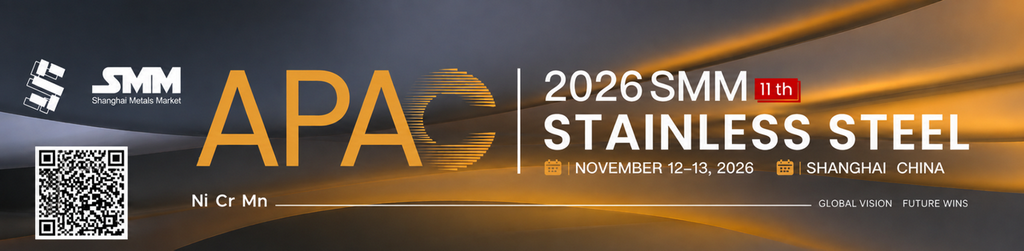
SMM to Host SMM (11th) Annual Nickel Conference 2026 - Ni Cr Mn Stainless Steel Event , Shanghai, Nov. 12–13
11 hours ago
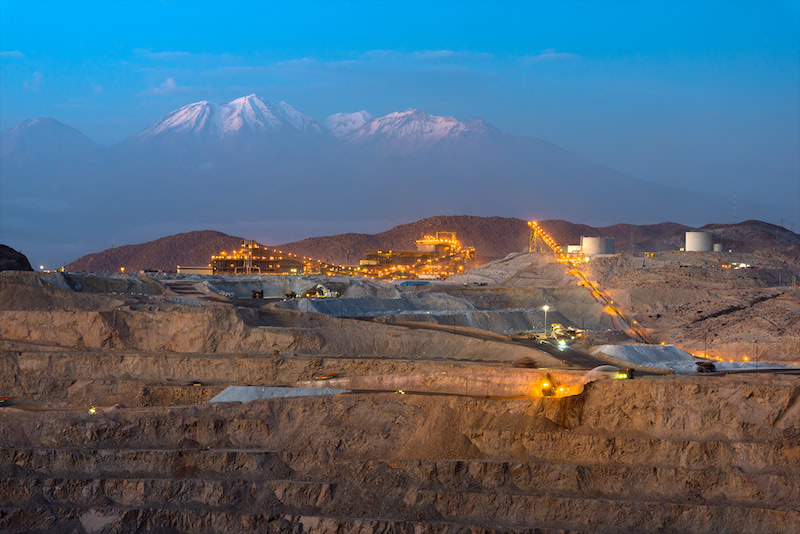
Copper Prices Rebound Sharply: Bad News Fully Priced In, or Fundamentals Reasserting Themselves?
Sep 18, 2026 17:56
![[SMM Analysis] Chinese tungsten market sees broad-based decline amid weak supply and demand, with no upside in sight](https://imgqn.smm.cn/usercenter/bFzkj20251217171724.jpg)
[SMM Analysis] Chinese tungsten market sees broad-based decline amid weak supply and demand, with no upside in sight
Sep 18, 2026 17:13
[SMM Analysis] Lithium Battery Copper Foil: No Near-Term Supply Constraint, Structural Shortage Risks to Surface in 2027
Sep 16, 2026 15:18

Goldman keeps $5,400 gold forecast intact despite Fed hike
Sep 18, 2026 15:37
![[SMM Analysis] Sustained Zinc Inventory Drawdown in China: Key Drivers & Outlook](https://imgqn.smm.cn/usercenter/nGzXc20251217171754.jpg)
[SMM Analysis] Sustained Zinc Inventory Drawdown in China: Key Drivers & Outlook
Sep 17, 2026 16:20
Latest News
Hongqiao Holdings to Acquire Yunnan Energy and Tech Firms for RMB 2.05 Billion
21 mins ago
Hongqiao Holdings to Acquire Two Yunnan Companies for RMB 2.05 Billion in Related-Party Transaction
21 mins ago
Jiaozuo Wanfang Terminates Share Issuance for Asset Purchase, Withdraws Application Due to Market Changes
21 mins ago
Mingtai Aluminum Terminates Stake Sale to Jiaozuo Wanfang Due to Withdrawn Application
22 mins ago
Yunnan Aluminium Achieves First Batch Production of Large-Diameter Rare-Earth Alloy Billets
22 mins ago
Alba CEO: Company's Aluminum Output at 80% of Pre-War Levels, Exports via Jeddah and Sohar Ports
23 mins ago
Shenhuo Group Launches 50,000-Tonne Sodium-Ion Battery Aluminum Foil Project
23 mins ago
Baise High-Tech Zone Signs $2.6B in Aluminum Projects at ASEAN-Oriented Conference
23 mins ago
Galvanized Sheet Imports Drop 12.32% MoM, 32.93% YoY in August 2026
2 hours ago
[SMM Precious Metals Express]
3 hours ago
Ventec Invests $47.3M in Kunshan Factory Expansion for CCL Production Boost
3 hours ago
SK On to Supply 18GWh LFP Batteries to NeoVolta for US Energy Storage Projects Through 2031
3 hours ago
[Li-battery: Do-Fluoride to Inject RMB 210mn into Guangxi Ningfu for 20GWh Battery Project]
4 hours ago
[Na-ion: Shenhuo Group Breaks Ground on 50,000t/yr Sodium Battery Foil Project]
4 hours ago
China's Aluminum Fluoride Exports Up 14.86% MoM in Aug 2026, Prices Rise 15.5% YoY
4 hours ago
Fuling Launches Pilot for Efficient Aluminum Scrap Inspection, Reducing Costs and Time
4 hours ago
Copper Scrap Market Sees Sharp Adjustments as Prices Fall, Supply Constraints Persist
4 hours ago
[SMM Sheets & Plates Daily Review] Focus on Pre-Holiday Restocking Next Week
4 hours ago
[Domestic Iron Ore Concentrates Briefing] China's iron ore concentrates prices are likely to consolidate on a subdued note
4 hours ago
Guibao Technology Subsidiary Completes 100 Million Yuan Capital Increase to Accelerate Implementation of Silicon Carbon Anode and Other Projects
5 hours ago