

Berita
Artikel analisis eksklusif dengan pembaruan pasar terkini dan umpan berita tepat waktu.
Impor Spodumene Tiongkok Naik 7% MoM pada September, dengan Australia, Nigeria, dan Zimbabwe sebagai Tiga Sumber Teratas
Berdasarkan data bea cukai Tiongkok yang telah dihimpun, Tiongkok mengimpor 970.100 ton fisik spodumene pada September 2026, naik sekitar 7,0% dari 906.600 ton pada Agustus. Berdasarkan klasifikasi serta asumsi kadar, kadar air, dan faktor konversi yang digunakan dalam analisis ini, impor September setara dengan sekitar 81.300 ton litium karbonat ekuivalen (LCE). Berdasarkan asal, impor dari Australia, Nigeria, dan Zimbabwe meningkat signifikan. Australia tetap menjadi pemasok terbesar, dengan pengiriman ke Tiongkok mencapai 446.200 ton, naik sekitar 36,7% dari bulan sebelumnya dan mencakup sekitar 46,0% dari total impor. Nigeria menjadi pemasok terbesar kedua dengan 189.800 ton, naik sekitar 40,1%, sementara impor dari Zimbabwe naik sekitar 83,0% menjadi 136.500 ton. Impor dari Afrika Selatan turun sekitar 49,6% menjadi 112.400 ton, sedangkan impor dari Brasil meningkat sekitar 30,9% menjadi 81.200 ton. Volume lebih kecil berasal dari Burundi, Rwanda, dan Mozambik, masing-masing sekitar 1.800 ton, 1.300 ton, dan 1.000 ton, dengan pengiriman terbatas dari Zambia dan Somalia. Tidak ada impor dari Mali atau Kanada yang tercatat dalam data September. Secara keseluruhan, impor spodumene Tiongkok terus tumbuh pada September, dengan komposisi bergeser ke konsentrat. Berdasarkan klasifikasi yang digunakan dalam analisis ini, impor konsentrat mencapai sekitar 688.800 ton, mencakup 71,0% dari total impor fisik, dibandingkan 60,7% pada Agustus. Impor bijih mentah tercatat sekitar 281.300 ton. Peningkatan impor konsentrat dari Australia, Zimbabwe, dan Nigeria mengimbangi penurunan impor dari Mali dan Kanada, menjadi pendorong utama pertumbuhan pasokan sumber daya litium impor Tiongkok selama bulan tersebut.
20 Oct 2026 19:03 (GMT+8)
[SMM Analysis] Penjualan HRC rekor Hoa Phat membentuk kembali swasembada Vietnam dan aliran ekspor Tiongkok
Hoa Phat menjual 5,47 juta ton baja canai panas dari Januari hingga September, naik 59% dan sekitar sepertiga dari konsumsi Vietnam, dengan 24,6% penjualan kuartal ketiga diekspor. Permintaan HRC Vietnam sekitar 17,3 juta ton tahun ini masih melampaui produksi lokal sekitar 10,8 juta ton sebesar 6,5 juta ton, dan kapasitas baru terutama hadir setelah 2027. Bea antidumping telah mendorong baja canai asal Tiongkok keluar dari Vietnam; pabrik-pabrik Tiongkok kini menghadapi baja canai Vietnam di ASEAN dan pasar ketiga lainnya.
20 Oct 2026 14:36 (GMT+8)
Ekspor Magnet Tanah Jarang China Cetak Rekor pada September, Didorong oleh Pelepasan Tunggakan dan Pelonggaran Regulasi【Analisis SMM】
Ekspor magnet tanah jarang Tiongkok pada September mencapai rekor 6.165 ton (+23% MoM), didorong oleh penyelesaian tunggakan pelabuhan Juli–Agustus, bukan permintaan baru. Pembicaraan AS-Tiongkok membuka kembali pengiriman, sementara pembicaraan "jalur hijau" UE menaikkan perkiraan kuartal IV menjadi sekitar 5.700 ton/bulan. Produsen besar pulih paling cepat; pabrik kecil tetap terkendala.
20 Oct 2026 16:06 (GMT+8)
Berita Terbaru
Liuzhou Iron & Steel dan Huawei menerapkan model AI baja Xuantie dengan target cakupan 80%
2 jam yang lalu
![[Fortescue pertahankan panduan setahun penuh; pengiriman kuartal September sebesar 46,8 Mt]](https://imgqn.smm.cn/usercenter/QMaot20251217171719.jpg)
[Fortescue pertahankan panduan setahun penuh; pengiriman kuartal September sebesar 46,8 Mt]
5 jam yang lalu
![[JSW Steel Cetak Produksi dan Penjualan Baja Kasar Rekor; Laba Bersih Naik 225,5%]](https://imgqn.smm.cn/usercenter/VgxkU20251217171719.jpg)
[JSW Steel Cetak Produksi dan Penjualan Baja Kasar Rekor; Laba Bersih Naik 225,5%]
5 jam yang lalu
[Produksi baja kasar global mencapai 142,4 Mt pada September, turun 0,2% y/y]
Produksi baja mentah global pada September 2026 mencapai 142,4 juta ton, turun 0,2% year-on-year dan turun 1,2% month-on-month, menurut peringkat World Steel Association (worldsteel) terhadap 70 negara dan wilayah penghasil baja. Sepanjang Januari–September, output global mencapai 1,37 miliar ton, turun 0,7% year-on-year.
Berdasarkan wilayah, output baja mentah di negara-negara CIS plus Ukraina pada September sebesar 6,1 juta ton, turun 1,9% year-on-year dan turun 3,2% month-on-month. Ukraina hanya memproduksi 131.000 ton pada September, turun 52,7% month-on-month dan turun 78,5% year-on-year. Output CIS plus Ukraina sepanjang Januari–September sebesar 58,2 juta ton, turun 5% year-on-year.
Sepuluh negara penghasil baja terbesar pada September adalah: Tiongkok 73,6 juta ton (+0,1% y/y), India 13,9 juta ton (+1,9%), AS 7,2 juta ton (+4,3%), Jepang 6,3 juta ton (-0,6%), Rusia 5,5 juta ton (+6,2%), Korea Selatan 5,2 juta ton (+3,6%), Turki 3,2 juta ton (+0,8%), Brasil 2,8 juta ton (-0,8%), Vietnam 2,6 juta ton (+29,1%), dan Jerman 2,6 juta ton (-13%).
Latar belakang: produksi baja mentah global turun 2% year-on-year menjadi 1,8 miliar ton pada 2025, sementara output CIS plus Ukraina turun 4,4% year-on-year menjadi 81,3 juta ton, seperti yang telah dilaporkan sebelumnya. [SMM Iron Ore]
5 jam yang lalu
[Produksi baja mentah global dari 70 negara turun 0,2% YoY menjadi 142,4 Mt pada September 2026]
Produksi baja mentah di 70 negara yang melapor ke Asosiasi Baja Dunia (worldsteel) mencapai 142,4 juta ton (Mt) pada September 2026, turun 0,2% dibandingkan September 2025. Berdasarkan wilayah, Afrika memproduksi 2,2 Mt, naik 10,6% YoY; Asia dan Oseania 104,0 Mt, naik 0,7%; UE (27) 10,1 Mt, turun 5,0%; Eropa Lainnya 3,6 Mt, turun 1,4%; Timur Tengah 3,6 Mt, turun 20,4%; Amerika Utara 9,3 Mt, naik 3,4%; Rusia & CIS lainnya + Ukraina 6,1 Mt, turun 1,9%; Amerika Selatan 3,5 Mt, naik 0,2%. Selama Januari–September 2026, 70 negara tersebut memproduksi 1.367,5 Mt, turun 0,7% YoY. Ke-70 negara tersebut menyumbang sekitar 98% dari total produksi baja mentah dunia pada 2025.
Di antara 10 negara produsen baja terbesar, Tiongkok memproduksi 73,6 Mt pada September, naik 0,1% YoY; India 13,9 Mt, naik 1,9%; Amerika Serikat diperkirakan memproduksi 7,2 Mt, naik 4,3%; Jepang 6,3 Mt, turun 0,6%; Rusia diperkirakan memproduksi 5,5 Mt, naik 6,2%; Korea Selatan 5,2 Mt, naik 3,6%; Türkiye 3,2 Mt, naik 0,8%; Jerman 2,6 Mt, turun 13,0%; Brasil 2,8 Mt, turun 0,8%; Vietnam 2,6 Mt, naik 29,1%. [SMM Iron Ore]
5 jam yang lalu
Minyak mentah melonjak, logam dasar naik luas, seng LME memimpin kenaikan, tembaga LME, aluminium SHFE, dan timah SHFE mencatat kenaikan tertinggi, emas dan perak anjlok pada grafik mingguan [Pasar Semalam]
10 jam yang lalu
[SMM Analysis] Permintaan baja lembaran India mendukung penjualan rekor JSW di tengah tekanan margin akibat biaya batu bara
Rekor pengiriman mengangkat laba JSW Steel pada kuartal II FY27, tetapi biaya dan realisasi yang lebih lemah menyerap 71% dari kenaikan volume. Impor meningkat meskipun India memberlakukan bea pengamanan, dan biaya batu bara kokas diperkirakan akan naik lebih lanjut.
20 jam yang lalu
【Analisis SMM】Pasar Kromium Semakin Melemah seiring Tender Baja Turun Sesuai Ekspektasi
21 jam yang lalu
Stok Bauksit di Pelabuhan Domestik Turun 30.000 MT Pekan Lalu
【SMM Inventaris Pelabuhan Bauksit Impor】Menurut statistik SMM pada 23 Oktober, total inventaris bauksit di sepuluh pelabuhan domestik turun 30.000 mt dari minggu sebelumnya.
22 jam yang lalu
30.000 mt Alumina Diperdagangkan pada $361/mt FOB India untuk Pengiriman November
Transaksi alumina: Pada 23 Oktober 2026, 30.000 mt alumina diperdagangkan pada harga $361/mt FOB India untuk pengiriman November.
22 jam yang lalu
![Harga Magnesium Turun Hampir 14% dalam Lebih dari Setengah Tahun, Mencapai Titik Terendah Tahunan; Pasokan Harga Rendah Sulit Menemukan Dukungan untuk Pulih [Komentar SMM]](https://imgqn.smm.cn/usercenter/UhBXJ20251217171724.jpeg)
Harga Magnesium Turun Hampir 14% dalam Lebih dari Setengah Tahun, Mencapai Titik Terendah Tahunan; Pasokan Harga Rendah Sulit Menemukan Dukungan untuk Pulih [Komentar SMM]
23 jam yang lalu
![Robot Humanoid Melonjak, China Northern Rare Earth dan Lainnya Laporkan Hasil Positif Tiga Kuartal Pertama, Sektor Konsep Magnet Permanen Tanah Jarang Naik [Berita SMM]](https://imgqn.smm.cn/usercenter/AJTtH20251217171744.jpg)
Robot Humanoid Melonjak, China Northern Rare Earth dan Lainnya Laporkan Hasil Positif Tiga Kuartal Pertama, Sektor Konsep Magnet Permanen Tanah Jarang Naik [Berita SMM]
23 jam yang lalu
![[Analisis SMM] Data Perdagangan Material Baterai September Dirilis: Impor Litium Karbonat Terus Naik YoY, Bagaimana dengan Segmen Lainnya?](https://imgqn.smm.cn/usercenter/BmqWy20251217171726.jpg)
[Analisis SMM] Data Perdagangan Material Baterai September Dirilis: Impor Litium Karbonat Terus Naik YoY, Bagaimana dengan Segmen Lainnya?
23 Oct 2026 19:22 (GMT+8)
Harga produk kobalt masih berada di bawah tekanan, dengan beberapa perusahaan di pasar garam kobalt mengalami kerugian. Kapan harga akan berhenti turun? [Observasi Mingguan]
23 Oct 2026 19:22 (GMT+8)
37 rapor perusahaan baterai dan energi baru: pertumbuhan tertinggi 19.540,5%! 6 berbalik untung! Apakah rantai material kembali jadi pemenang besar?
Baru-baru ini, perusahaan publik telah mengumumkan hasil kuartal ketiga mereka. Berdasarkan laporan dan perkiraan laba, rantai industri baterai dan energi baru Tiongkok menunjukkan kinerja keseluruhan yang kuat dalam tiga kuartal pertama, terutama didorong oleh permintaan penyimpanan energi dan baterai daya, pemulihan harga litium, serta tingkat utilisasi kapasitas yang lebih tinggi.
Berdasarkan segmen, perusahaan baterai terkemuka CATL mencatat laba bersih 64,53 miliar yuan dalam tiga kuartal pertama, naik 31,60% YoY, sementara EVE memperkirakan laba bersih tiga kuartal pertamanya akan naik 80%–90% YoY.
23 Oct 2026 19:13 (GMT+8)
TC Domestik Tetap Rendah, Menunggu Penetapan Harga November [Tinjauan Mingguan Konsentrat Seng SMM]
[TC domestik tetap rendah karena pasar menunggu penetapan harga November]: Secara mingguan, rata-rata TC domestik mingguan SMM Zn50 tidak berubah dibanding bulan sebelumnya di -2.350 yuan/mt (kandungan Zn), sementara Indeks Konsentrat Seng Impor SMM turun $6,3/dmt dibanding bulan sebelumnya menjadi -$156,5/dmt...
23 Oct 2026 18:54 (GMT+8)
Balfour Beatty Memenangkan Kontrak untuk Gardu Induk Birkhill Wood, Menghubungkan Ladang Angin Laut Utara
National Grid memberikan kontrak fase pertama kepada Balfour Beatty untuk gardu induk 400 kV Birkhill Wood di East Yorkshire pada 22 Oktober, titik koneksi bagi tiga ladang angin lepas pantai Laut Utara dan paket yang mencakup switchgear GIS 400 kV yang intensif tembaga, busbar, belitan transformator, dan kabel kontrol. Penghargaan ini diberikan di bawah kerangka Kemitraan Transmisi Listrik National Grid senilai GBP 8 miliar, di mana Balfour Beatty menjadi mitra pengiriman Inggris Timur Laut pada 2025. Fase satu mencakup keterlibatan awal kontraktor, desain rinci, dan pekerjaan pendukung lokasi, dengan konstruksi utama dijadwalkan dimulai pada 2027. Lokasi ini berada sekitar 700 meter di utara gardu induk Creyke Beck yang ada dan menggunakan switchgear berisolasi gas untuk mengurangi jejak lahan. Setelah selesai, gardu ini akan menghubungkan 4,22 GW dari tiga fase Dogger Bank berikutnya, cukup untuk lebih dari empat juta rumah. Konstruksi puncak akan mempekerjakan sekitar 200 orang.
23 Oct 2026 18:42 (GMT+8)
【SMM Berita Kilat Aluminium】Permintaan FRP Aluminium Seri 5 di Amerika Meluas, Konsumsi Amerika Utara Capai 2,23 Juta Ton
Permintaan produk canai datar aluminium (FRP) seri 5xxx di seluruh Amerika diproyeksikan tumbuh, didukung oleh pengurangan bobot kendaraan, pembuatan kapal, dan investasi infrastruktur. Konsumsi Amerika Utara diperkirakan meningkat dari 1,79 juta ton metrik pada 2025 menjadi 2,23 juta ton metrik pada 2032, mewakili pertumbuhan sekitar 24,6%, dengan permintaan mencapai sekitar 2,10 juta ton metrik pada 2030. Pertumbuhan akan didorong oleh aplikasi otomotif dan kelautan AS, bersama dengan industri aluminium rendah karbon Kanada dan basis manufaktur otomotif Meksiko yang berkembang.
Sementara itu, konsumsi Amerika Selatan diperkirakan naik dari 502.710 ton metrik pada 2025 menjadi 602.020 ton metrik pada 2032, meningkat sekitar 19,8%, dengan Brasil tetap menjadi pasar terbesar di kawasan ini. Manufaktur otomotif, transportasi, dan investasi infrastruktur diperkirakan akan mendukung permintaan, meskipun kebijakan perdagangan, biaya bahan baku, dan kapasitas pemrosesan hilir dapat memengaruhi laju pertumbuhan.
23 Oct 2026 18:39 (GMT+8)
Impor dan Ekspor CCL Tiongkok Melonjak pada September 2026, Menunjukkan Pertumbuhan Tahunan
Pada September 2026, impor lapisan tembaga berlapis (CCL) Tiongkok (kode HS: 74102110) mencapai 3.786,04 ton, turun 2,81% YoY dan naik 9,79% MoM. Dari Januari hingga September 2026, impor CCL kumulatif Tiongkok mencapai 31.842,04 ton, naik 4,97% YoY. Pada September 2026, ekspor CCL Tiongkok mencapai 9.930,57 ton, naik 31,02% YoY dan naik 7,89% MoM. Dari Januari hingga September 2026, ekspor CCL kumulatif Tiongkok mencapai 77.126 ton, naik 14,31% YoY.
23 Oct 2026 18:39 (GMT+8)
Perdagangan Foil Tembaga China: Impor dari Taiwan, Indonesia; Ekspor ke Thailand, Korea Selatan pada September 2026
[Impor dan Ekspor Copper Foil berdasarkan Negara/Kawasan, 2026] Pada September 2026, asal impor copper foil utama Tiongkok adalah Taiwan, Tiongkok, Indonesia, dan Malaysia, dengan impor masing-masing sebesar 4.440,57 mt, 2.389,52 mt, dan 948,11 mt. Pada September 2026, tujuan ekspor copper foil utama Tiongkok adalah Thailand, Korea Selatan, dan Malaysia, dengan ekspor masing-masing sebesar 1.777,59 mt, 1.111,47 mt, dan 856,1 mt.
23 Oct 2026 18:38 (GMT+8)
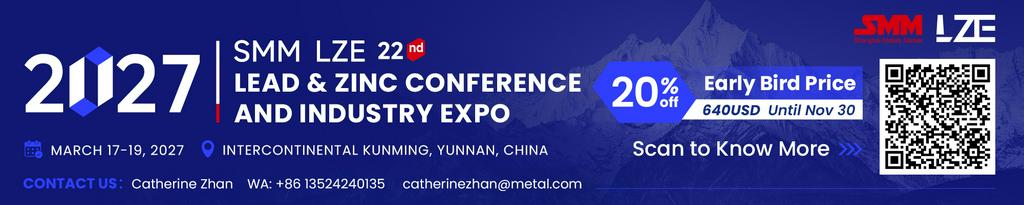
Pemesanan Early Bird Kini Dibuka untuk Konferensi & Pameran Industri Timbal dan Seng SMM LZE (ke-22) 2027 di Yunnan pada Maret mendatang
——Dari Konferensi ke Expo · Skala Berlipat Ganda · Peningkatan Penuh—— [Yang Akan Anda Dapatkan dari Artikel Ini] ① Pengenalan Pameran ② Cara Mendaftar ③ Gelombang Pertama Peserta Pameran ④ Agenda Konferensi I. Skala Berlipat Ganda, Peningkatan Penuh! Pada tahun 2026, timbal dan seng menghadapi volatilitas tajam—harga timbal yang tinggi, timbal kemurnian tinggi yang langka, stok timbal kadar rendah LME yang mencapai rekor tertinggi, relokasi baterai timbal-asam dari Tiongkok ke luar negeri, TC konsentrat seng yang sangat negatif, bijih seng impor berkualitas tinggi yang ketat, jendela ekspor untuk ingot seng yang terbuka, dan pembangunan smelter seng di luar negeri. LZE mencakup prospek pasar, perkiraan harga, teknologi peralatan, daur ulang, dan aplikasi hilir—mendorong transformasi hijau dan pertumbuhan yang saling menguntungkan. Yang membedakan LZE 2027 (edisi ke-22) dari acara-acara sebelumnya adalah peningkatan transformatifnya: beralih dari konferensi industri murni menjadi kombinasi mulus antara konferensi dan pameran industri—menghadirkan pertemuan berskala lebih besar, pameran industri yang diperluas, dan keterlibatan yang menjangkau jauh di seluruh rantai nilai timbal dan seng. Dari analisis tren industri hingga pertukaran rantai industri yang mendalam, dari pencocokan pasokan-permintaan hulu-hilir hingga pameran perusahaan yang terpusat, dari konferensi industri tunggal hingga integrasi lebih lanjut "konferensi + pameran industri"——pada tahun 2027, SMM LZE memasuki era "expo"! Konferensi ini akan memasuki edisi ke-22 dengan skala yang lebih besar, jajaran industri yang lebih kaya, dan partisipasi hulu-hilir yang lebih luas! Pindai Kode QR di Bawah untuk Mendaftar sebagai Pengunjung Secara Gratis 1. Skala Konferensi Delegasi: 6.000+ (naik 71,4% dari edisi sebelumnya) Perusahaan: 2.000+ (naik 100% dari edisi sebelumnya) Peserta Pameran: 120+ (naik 50% dari edisi sebelumnya) Pencocokan pasokan-permintaan: 300+ (naik 50% dari edisi sebelumnya) Forum Khusus: 7 (1 lebih banyak dari edisi sebelumnya) 2. Kelompok Peserta 20% - Penambang 23% - Smelter 22% - Perusahaan pengolahan 10% - Pedagang 5% - Pengadaan pengguna akhir timbal-seng 15% - Peralatan pihak ketiga, teknologi, bahan bantu, media, dll. 3% - Pemerintah, asosiasi, lembaga penelitian universitas 2% - Perusahaan keuangan dan berjangka 3. Rincian Jabatan 4. Sorotan Konferensi Tren harga, prospek konsumsi, dan interpretasi kebijakan Dialog global tentang industri timbal-seng dan strategi go-global Pertemuan Bisnis Satu-lawan-Satu Menjelajahi Jalur Terobosan dalam Teknologi Pertambangan & Metalurgi dan Daur Ulang Sumber Daya Pameran Peralatan dan Bahan Habis Pakai Terdepan II. Empat Identitas, Satu Pameran Timbal-Seng Baik Anda hadir untuk wawasan pasar, pengadaan, pameran, atau eksposur merek, Anda akan menemukan opsi partisipasi yang sesuai. 1. Pengunjung Profesional (Jelajahi pameran untuk peluang bisnis dan terhubung dengan hulu dan hilir industri) [Manfaat Pengunjung] Tiket Area Pameran Hadiah Check-in di Tempat Peta Distribusi Industri Timbal-Seng Eksklusif SMM Grup Pertukaran Pengunjung Industri Timbal-Seng Manfaat Grup Tiket untuk Beberapa Forum …… 2. Delegasi Konferensi (Dapatkan wawasan tentang tren baru dan diskusikan pasar timbal-seng) [Manfaat Delegasi] Tiket Area Pameran Hadiah Check-in di Tempat Peta Distribusi Industri Timbal-Seng Eksklusif SMM Grup Pertukaran Pengunjung & Konferensi Industri Timbal-Seng Tiket untuk Semua Forum Konferensi Voucher Makan Malam Eksekutif Voucher Makan Siang dan Makan Malam Selama Konferensi Direktori Perusahaan Laporan Ahli Pencocokan Pasokan-Permintaan 1-lawan-1 Kegiatan Kunjungan Lapangan Pasca-Konferensi …… 3. Peserta Pameran (Naik ke panggung industri dan tunjukkan kekuatan Anda) [Stan Kustom 18㎡] [Manfaat] Desain & konstruksi semua material untuk stan 18㎡, meja, kursi, sofa & meja resepsionis, TV, 5 tiket konferensi, spanduk X*1, halaman berwarna buklet konferensi*1, tampilan LOGO, eksposur dan promosi online multi-platform, pencocokan pasokan-permintaan 1-lawan-1, dukungan kerja sama jangka panjang dari SMM, dll. [Stan Premium 9㎡] [Keuntungan] Desain & konstruksi semua material untuk stan 9㎡, dinding latar cetak & meja resepsionis & meja dan kursi, TV, 3 tiket konferensi, 1 penyangga X-banner* atau 1 halaman berwarna buku konferensi*, tampilan LOGO, eksposur dan promosi online multi-platform, pencocokan pasokan-permintaan 1-on-1, dukungan kerja sama jangka panjang dari SMM, dll. [Stan Standar 6㎡] [Keuntungan] Desain & konstruksi semua material untuk stan 6㎡, satu meja panjang & dua kursi, 2 penyangga X-banner dengan konten berbeda, 2 tiket konferensi, eksposur dan promosi online multi-platform, pencocokan pasokan-permintaan 1-on-1, dukungan kerja sama jangka panjang dari SMM, dll.
22 Oct 2026 09:59 (GMT+8)
Prospek Pasokan-Permintaan Aluminium Global 2027: Margin Tinggi Mendorong Ekspansi, Mengubah Pasar dari Ketat Menjadi Longgar
21 Oct 2026 09:41 (GMT+8)
Investasi Baterai Tiongkok senilai $6 Miliar di Maroko Mengubah Permintaan Litium UE di Tengah Pergeseran Tarif
20 Oct 2026 17:02 (GMT+8)
N-Type vs. P-Type Modul PV Surya: Apa yang Membedakannya, dan Mengapa N-Type Semakin Mendominasi Pasar Global?
21 Oct 2026 09:45 (GMT+8)
Impor Spodumene Tiongkok Naik 7% MoM pada September, dengan Australia, Nigeria, dan Zimbabwe sebagai Tiga Sumber Teratas
20 Oct 2026 19:03 (GMT+8)
![[SMM Analysis] Penjualan HRC rekor Hoa Phat membentuk kembali swasembada Vietnam dan aliran ekspor Tiongkok](https://imgqn.smm.cn/usercenter/MhPNV20251217171716.jpg)
[SMM Analysis] Penjualan HRC rekor Hoa Phat membentuk kembali swasembada Vietnam dan aliran ekspor Tiongkok
20 Oct 2026 14:36 (GMT+8)
Ekspor Magnet Tanah Jarang China Cetak Rekor pada September, Didorong oleh Pelepasan Tunggakan dan Pelonggaran Regulasi【Analisis SMM】
20 Oct 2026 16:06 (GMT+8)
Berita Terbaru
Liuzhou Iron & Steel dan Huawei menerapkan model AI baja Xuantie dengan target cakupan 80%
2 jam yang lalu
[Fortescue pertahankan panduan setahun penuh; pengiriman kuartal September sebesar 46,8 Mt]
5 jam yang lalu
[JSW Steel Cetak Produksi dan Penjualan Baja Kasar Rekor; Laba Bersih Naik 225,5%]
5 jam yang lalu
[Produksi baja kasar global mencapai 142,4 Mt pada September, turun 0,2% y/y]
5 jam yang lalu
[Produksi baja mentah global dari 70 negara turun 0,2% YoY menjadi 142,4 Mt pada September 2026]
5 jam yang lalu
Minyak mentah melonjak, logam dasar naik luas, seng LME memimpin kenaikan, tembaga LME, aluminium SHFE, dan timah SHFE mencatat kenaikan tertinggi, emas dan perak anjlok pada grafik mingguan [Pasar Semalam]
10 jam yang lalu
[SMM Analysis] Permintaan baja lembaran India mendukung penjualan rekor JSW di tengah tekanan margin akibat biaya batu bara
20 jam yang lalu
【Analisis SMM】Pasar Kromium Semakin Melemah seiring Tender Baja Turun Sesuai Ekspektasi
21 jam yang lalu
Stok Bauksit di Pelabuhan Domestik Turun 30.000 MT Pekan Lalu
22 jam yang lalu
30.000 mt Alumina Diperdagangkan pada $361/mt FOB India untuk Pengiriman November
22 jam yang lalu
Harga Magnesium Turun Hampir 14% dalam Lebih dari Setengah Tahun, Mencapai Titik Terendah Tahunan; Pasokan Harga Rendah Sulit Menemukan Dukungan untuk Pulih [Komentar SMM]
23 jam yang lalu
Robot Humanoid Melonjak, China Northern Rare Earth dan Lainnya Laporkan Hasil Positif Tiga Kuartal Pertama, Sektor Konsep Magnet Permanen Tanah Jarang Naik [Berita SMM]
23 jam yang lalu
[Analisis SMM] Data Perdagangan Material Baterai September Dirilis: Impor Litium Karbonat Terus Naik YoY, Bagaimana dengan Segmen Lainnya?
23 Oct 2026 19:22 (GMT+8)
Harga produk kobalt masih berada di bawah tekanan, dengan beberapa perusahaan di pasar garam kobalt mengalami kerugian. Kapan harga akan berhenti turun? [Observasi Mingguan]
23 Oct 2026 19:22 (GMT+8)
37 rapor perusahaan baterai dan energi baru: pertumbuhan tertinggi 19.540,5%! 6 berbalik untung! Apakah rantai material kembali jadi pemenang besar?
23 Oct 2026 19:13 (GMT+8)
TC Domestik Tetap Rendah, Menunggu Penetapan Harga November [Tinjauan Mingguan Konsentrat Seng SMM]
23 Oct 2026 18:54 (GMT+8)
Balfour Beatty Memenangkan Kontrak untuk Gardu Induk Birkhill Wood, Menghubungkan Ladang Angin Laut Utara
23 Oct 2026 18:42 (GMT+8)
【SMM Berita Kilat Aluminium】Permintaan FRP Aluminium Seri 5 di Amerika Meluas, Konsumsi Amerika Utara Capai 2,23 Juta Ton
23 Oct 2026 18:39 (GMT+8)
Impor dan Ekspor CCL Tiongkok Melonjak pada September 2026, Menunjukkan Pertumbuhan Tahunan
23 Oct 2026 18:39 (GMT+8)
Perdagangan Foil Tembaga China: Impor dari Taiwan, Indonesia; Ekspor ke Thailand, Korea Selatan pada September 2026
23 Oct 2026 18:38 (GMT+8)