

News
Exclusive analysis article with latest market updates, and in-time news feeds.
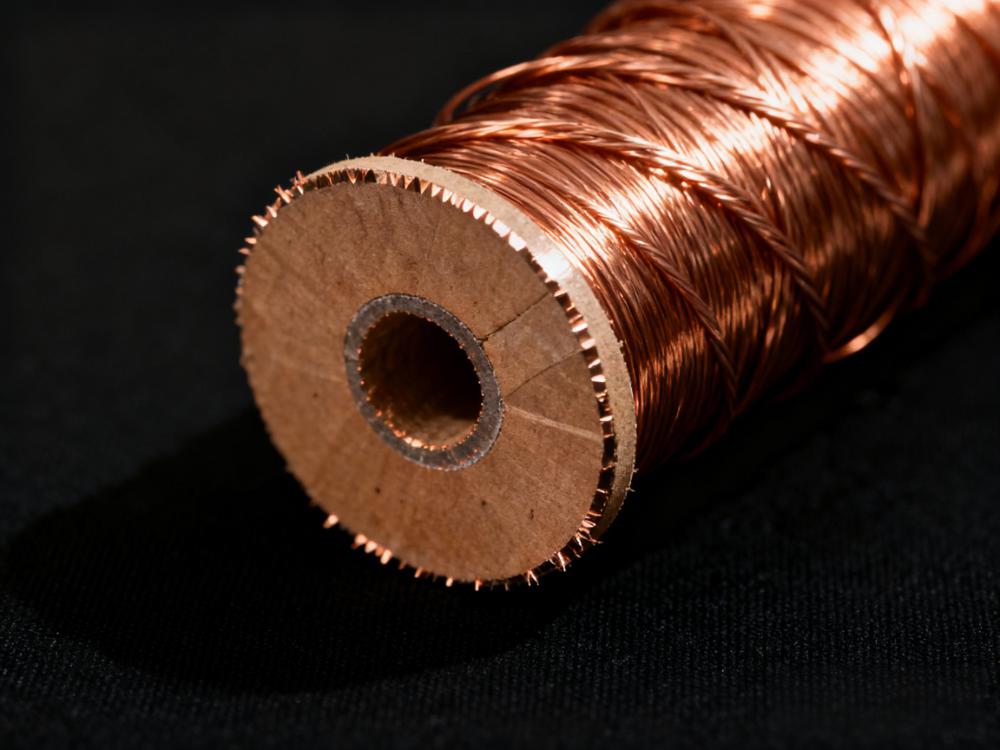
Middle East Escalation: Copper Prices Under Pressure Amid Rising Supply Risks in Africa
Tensions in the Middle East have escalated again recently, as the conflict between Israel and Iran continues to intensify, drawing renewed global attention to energy transportation security in the Gulf region.Given the high level of uncertainty surrounding the development of the situation, market risks are clearly skewed to the upside. This article provides a brief analysis of how the current conflict may affect the copper market going forward.
Mar 10, 2026 10:00
Gold set for second weekly loss on reduced rate cut bets, higher dollar, yields
March 13 (Reuters) - Gold was on track for a second straight weekly loss, even as it edged higher on Friday, as surging oil prices dampened rate cut bets and caused investors to cover margin calls, while a rising dollar and U.S. yields also pressured prices.
Common.Time.hoursAgo
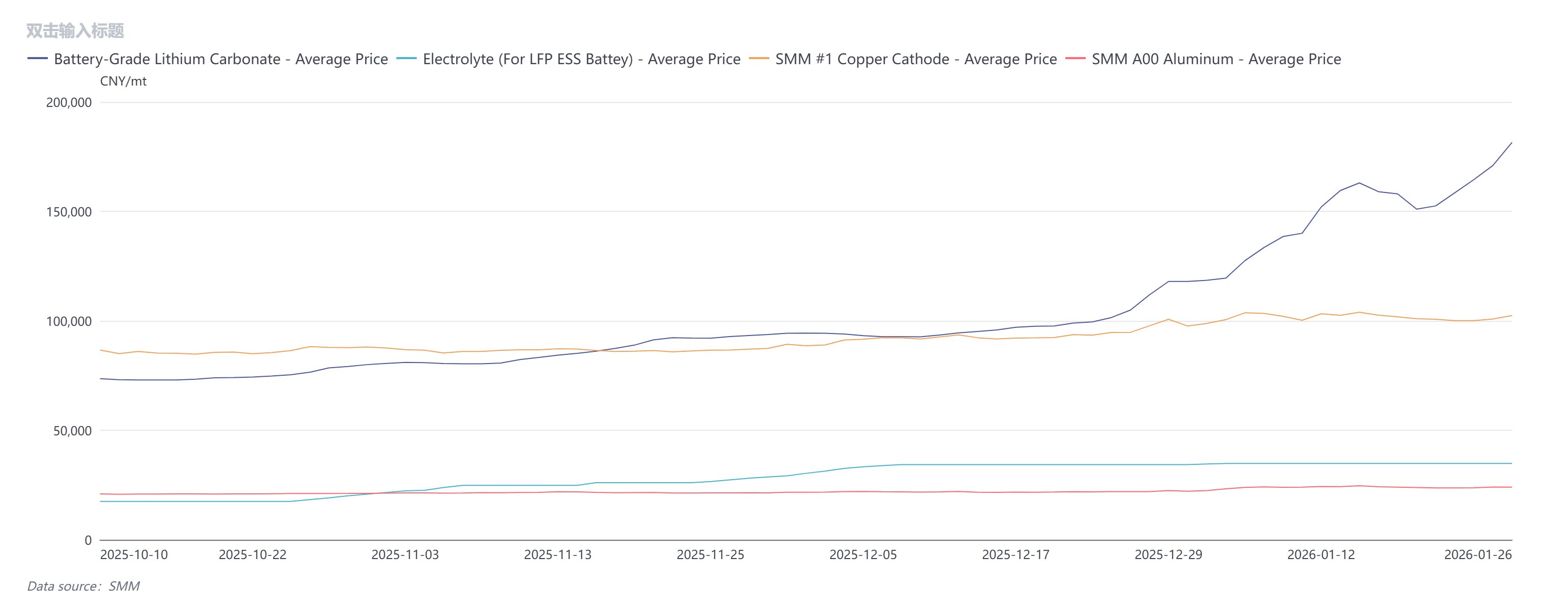
Amidst Middle East Conflicts: What is the Path Forward for China's Energy Storage Exports?
Recent Middle East conflicts have disrupted the region's booming energy storage market, a major destination for Chinese exports. To assess the real impact on Chinese supply chains and project deliveries, we must analyze baseline demand amidst these geopolitical uncertainties.
Mar 9, 2026 17:58
Latest News
![[SMM Tin Flash: Samsung’s Largest Union Threatens to Strike, Potentially Disrupting Global Chip Supply]](https://imgqn.smm.cn/usercenter/gbiCe20251217171750.jpg)
[SMM Tin Flash: Samsung’s Largest Union Threatens to Strike, Potentially Disrupting Global Chip Supply]
1 hour ago
![[SMM Tin Bulletin: SK Group Chairman Said the Wafer Shortage Would Continue Until 2030 and Efforts Would Be Made to Stabilize Memory Prices]](https://imgqn.smm.cn/usercenter/CwQfz20251217171750.jpeg)
[SMM Tin Bulletin: SK Group Chairman Said the Wafer Shortage Would Continue Until 2030 and Efforts Would Be Made to Stabilize Memory Prices]
1 hour ago
![The Most-Traded SHFE Tin Contract Hovered at Highs After Opening Slightly Higher in the Night Session, with Relatively Strong Purchase Willingness Among Downstream Enterprises [SMM Tin Morning Brief]](https://imgqn.smm.cn/usercenter/SkvFp20251217171752.jpg)
The Most-Traded SHFE Tin Contract Hovered at Highs After Opening Slightly Higher in the Night Session, with Relatively Strong Purchase Willingness Among Downstream Enterprises [SMM Tin Morning Brief]
Common.Time.hoursAgo
Data: SHFE, DCE market movement (Mar 16)
The following table shows the ferrous and nonferrous metals movement on the SHFE and DCE on 16 Mar , 2026
Common.Time.hoursAgo
Macro and Fundamentals Resonated Negatively, the Most-Traded SHFE Tin Contract Once Fell Below the 370,000-yuan Mark [SMM Tin Midday Commentary]
[SMM Tin Midday Review: Macro and Fundamental Bearish Factors Resonated, and the Most-Traded SHFE Tin Contract Once Fell Below the 370,000 yuan Mark]
Common.Time.hoursAgo
[SMM Tin Flash News: The Semiconductor Industry Chain Ushered In a New Wave of Price Increases, with UMC, VIS, and PSMC Raising Wafer Toll Processing Prices]
Following memory and packaging, a new wave of price hikes swept through the semiconductor industry chain. Mature-process wafer foundries in Taiwan, including UMC, Vanguard, and PSMC, were reported to raise quotations as early as April, by as much as 10 or even more. Major users of mature processes—IC design houses led by driver IC makers—were also expected to raise prices in response to rising costs. UMC did not comment on market rumors of price hikes, but the company had previously said that the current pricing environment was "indeed more favorable than before." In a notice, Vanguard said it planned to adjust toll processing prices starting in April 2026, but did not disclose the size of the increase. PSMC confirmed that it had gradually raised prices since the current quarter, mainly for product lines with lower gross margins.
Mar 16, 2026 09:52
The Most-Traded SHFE Tin Contract Opened Slightly Higher in the Night Session and Then Fluctuated Downward, as Downstream Enterprises Concentrated on Restocking at Lower Prices [SMM Tin Morning Brief]
[SMM Tin Morning Briefing: The Most-Traded SHFE Tin Contract Opened Slightly Higher in the Night Session and Then Fluctuated Downward, While Downstream Enterprises Concentrated Their Restocking on Dips]
Mar 16, 2026 08:32
Tin Market Weakened After Fluctuating at Highs, Under Short-Term Pressure Amid Intertwined Bullish and Bearish Factors [SMM Tin Morning Meeting Summary]
[SMM Morning Meeting Summary: The Tin Market Weakened After Fluctuating at Highs, Under Short-Term Pressure Amid Intertwined Bullish and Bearish Factors]
Mar 16, 2026 08:30
Data: SHFE, DCE market movement (Mar 13)
The following table shows the ferrous and nonferrous metals movement on the SHFE and DCE on 13 Mar , 2026
Mar 13, 2026 15:57
Center of the Most-Traded SHFE Tin Contract Moves Lower, Transactions Slightly Softened Amid Structural Divergence in End-Use Demand [SMM Tin Midday Review]
[SMM Tin Midday Review: Center of the Most-Traded SHFE Tin Contract Moved Lower, Trading Was Slightly Sluggish Amid Structural Divergence in End-Use Demand]
Mar 13, 2026 11:53
![[SMM Tin Flash News: Samsung Reportedly Collaborates with NVIDIA to Accelerate R&D of Next-Generation NAND Flash Memory]](https://imgqn.smm.cn/usercenter/WPbpj20251217171753.jpg)
[SMM Tin Flash News: Samsung Reportedly Collaborates with NVIDIA to Accelerate R&D of Next-Generation NAND Flash Memory]
Mar 13, 2026 10:08
![The Most-Traded SHFE Tin Contract Opened Sharply Lower in the Night Session and Remained Rangebound at Low Levels, While Trading in the Spot Market Was Relatively Mediocre [SMM Tin Morning Brief]](https://imgqn.smm.cn/usercenter/IyXhW20251217171751.jpg)
The Most-Traded SHFE Tin Contract Opened Sharply Lower in the Night Session and Remained Rangebound at Low Levels, While Trading in the Spot Market Was Relatively Mediocre [SMM Tin Morning Brief]
Mar 13, 2026 08:55
Data: SHFE, DCE market movement (Mar 12)
Mar 12, 2026 16:01
Bullish and Bearish Factors Intertwined, Leaving the Tin Market Stuck in Dilemma [SMM Tin Midday Commentary]
[SMM Tin Midday Commentary: Bullish and Bearish Factors Intertwine, and the Dilemma of Fluctuating Between Gains and Losses in Shanghai Tin Continues]
Mar 12, 2026 12:07
Fotile Unveils World's First Robotic Kitchen with AI System at Eco Conference
On March 11, Fotile officially launched the world’s first robotic kitchen at its Eco Conference. It is equipped with the industry’s first “growth-oriented” embodied AI system for kitchens, consisting of a heterogeneous robot matrix: a high-precision robotic arm handles cup positioning, water dispensing, and even the precise placement of tableware in the dishwasher; a humanoid robot carries out complex cooking operations such as pouring oil, stir-frying, and plating dishes. At this conference, Fotile also released the first Global White Paper on the Innovative Development of Smart Kitchens and established a classification system for smart kitchen capability levels (L1-L5).
Mar 12, 2026 09:52
[SMM Tin Flash News: Meta Unveiled Four In-House Chips Custom-Designed for Artificial Intelligence on Wednesday]
Meta on Wednesday unveiled four in-house chips customized specifically for artificial intelligence-related tasks, as part of the company's large-scale data center expansion plan. The first new chip, MTIA 300, was deployed several weeks ago and is intended to help train relatively small artificial intelligence models that support Meta's core ranking and recommendation tasks. The upcoming MTIA 400, MTIA 450, and MTIA 500 chips are intended to handle more advanced inference tasks related to generative artificial intelligence, such as generating images and videos based on users' text prompts.
Mar 12, 2026 09:51
Apple's Foldable iPhone to Debut This Fall with iPad-like Interface, Unique Display Design
Technology reporter Gurman wrote that Apple’s (AAPL.O) foldable iPhone, which is expected to launch this fall, will update the iOS operating system to enable an iPad-like interface layout for the first time. According to people familiar with the matter, the product will be equipped with a built-in foldable display roughly the size of an iPad mini. It will also be equipped with an external screen comparable in size to the display of a smaller iPhone. Its internal display will adopt a widescreen aspect ratio, differing from the narrow-screen format of foldable phones currently on the market. People familiar with the matter said this will be a key selling point. Apple’s design is intended to make the device more appealing for watching videos. At the same time, developers will also be able to redesign iPhone applications more easily, bringing them closer to the operating experience of iPad software.
Mar 12, 2026 09:50
The Most-Traded SHFE Tin Contract Rebounded Volatilely After Opening Sharply Lower in the Night Session, While Downstream Enterprises Remained Relatively Cautious in Their Purchases [SMM Tin Morning Brief]
[SMM Tin Morning Brief: The Most-Traded SHFE Tin Contract Rebounded with Volatility After Opening Sharply Lower in the Night Session, While Downstream Enterprises Remained Cautious in Their Purchases]
Mar 12, 2026 08:52
Data: SHFE, DCE market movement (Mar 11)
The following table shows the ferrous and nonferrous metals movement on the SHFE and DCE on 11 Mar , 2026
Mar 11, 2026 16:07
[SHFE Tin Contract Hovered Around 390,000 Amid Tug-of-War Trading, Traditional Consumption Season Performed Slightly Below Expectations] SMM Tin Midday Commentary
[SMM Tin Midday Commentary: SHFE Tin Contract Fluctuated Near 390,000, Traditional Consumption Season Performed Slightly Below Expectations]
Mar 11, 2026 11:56
![[SMM Events] 2026 GRMI: 200+ Executives & Companies Registered! Join us in Tokyo this June for Recycling Industry](https://imgqn.smm.cn/production/admin/votes/imagesECPmG20260316150318.jpeg)
[SMM Events] 2026 GRMI: 200+ Executives & Companies Registered! Join us in Tokyo this June for Recycling Industry
The 2026 SMM (3rd) Global Renewable Metal Industry Chain Summit & Battery Recycling Forum will be held in Tokyo, Japan, from May 11–12, 2026. The summit aims to bring together leading global enterprises, research institutions, industry experts, and policymakers in the fields of renewable metals and battery recycling.
Common.Time.hoursAgo
![[SMM Analysis] ITC Rejects Tariffs on Chinese Graphite Anodes, Final Duties Not Imposed](https://imgqn.smm.cn/usercenter/lzgUR20251217171731.jpg)
[SMM Analysis] ITC Rejects Tariffs on Chinese Graphite Anodes, Final Duties Not Imposed
Mar 13, 2026 19:55
![[SMM Analysis] Why Is India’s Stainless Steel Industry Calling for Both Lower Costs and Stronger Trade Barriers?](https://imgqn.smm.cn/production/admin/votes/imageskXuFi20260313172318.jpeg)
[SMM Analysis] Why Is India’s Stainless Steel Industry Calling for Both Lower Costs and Stronger Trade Barriers?
Mar 13, 2026 17:19
Key Implications for Vietnam's New clauses in Mining and Smelting Laws effective since January 1, 2026
Mar 12, 2026 16:32
Middle East Escalation: Copper Prices Under Pressure Amid Rising Supply Risks in Africa
Mar 10, 2026 10:00

Gold set for second weekly loss on reduced rate cut bets, higher dollar, yields
Common.Time.hoursAgo
Amidst Middle East Conflicts: What is the Path Forward for China's Energy Storage Exports?
Mar 9, 2026 17:58
Latest News
[SMM Tin Flash: Samsung’s Largest Union Threatens to Strike, Potentially Disrupting Global Chip Supply]
1 hour ago
[SMM Tin Bulletin: SK Group Chairman Said the Wafer Shortage Would Continue Until 2030 and Efforts Would Be Made to Stabilize Memory Prices]
1 hour ago
The Most-Traded SHFE Tin Contract Hovered at Highs After Opening Slightly Higher in the Night Session, with Relatively Strong Purchase Willingness Among Downstream Enterprises [SMM Tin Morning Brief]
Common.Time.hoursAgo
Data: SHFE, DCE market movement (Mar 16)
Common.Time.hoursAgo
Macro and Fundamentals Resonated Negatively, the Most-Traded SHFE Tin Contract Once Fell Below the 370,000-yuan Mark [SMM Tin Midday Commentary]
Common.Time.hoursAgo
[SMM Tin Flash News: The Semiconductor Industry Chain Ushered In a New Wave of Price Increases, with UMC, VIS, and PSMC Raising Wafer Toll Processing Prices]
Mar 16, 2026 09:52
The Most-Traded SHFE Tin Contract Opened Slightly Higher in the Night Session and Then Fluctuated Downward, as Downstream Enterprises Concentrated on Restocking at Lower Prices [SMM Tin Morning Brief]
Mar 16, 2026 08:32
Tin Market Weakened After Fluctuating at Highs, Under Short-Term Pressure Amid Intertwined Bullish and Bearish Factors [SMM Tin Morning Meeting Summary]
Mar 16, 2026 08:30
Data: SHFE, DCE market movement (Mar 13)
Mar 13, 2026 15:57
Center of the Most-Traded SHFE Tin Contract Moves Lower, Transactions Slightly Softened Amid Structural Divergence in End-Use Demand [SMM Tin Midday Review]
Mar 13, 2026 11:53
[SMM Tin Flash News: Samsung Reportedly Collaborates with NVIDIA to Accelerate R&D of Next-Generation NAND Flash Memory]
Mar 13, 2026 10:08
The Most-Traded SHFE Tin Contract Opened Sharply Lower in the Night Session and Remained Rangebound at Low Levels, While Trading in the Spot Market Was Relatively Mediocre [SMM Tin Morning Brief]
Mar 13, 2026 08:55
Data: SHFE, DCE market movement (Mar 12)
Mar 12, 2026 16:01
Bullish and Bearish Factors Intertwined, Leaving the Tin Market Stuck in Dilemma [SMM Tin Midday Commentary]
Mar 12, 2026 12:07
Fotile Unveils World's First Robotic Kitchen with AI System at Eco Conference
Mar 12, 2026 09:52
[SMM Tin Flash News: Meta Unveiled Four In-House Chips Custom-Designed for Artificial Intelligence on Wednesday]
Mar 12, 2026 09:51
Apple's Foldable iPhone to Debut This Fall with iPad-like Interface, Unique Display Design
Mar 12, 2026 09:50
The Most-Traded SHFE Tin Contract Rebounded Volatilely After Opening Sharply Lower in the Night Session, While Downstream Enterprises Remained Relatively Cautious in Their Purchases [SMM Tin Morning Brief]
Mar 12, 2026 08:52
Data: SHFE, DCE market movement (Mar 11)
Mar 11, 2026 16:07
[SHFE Tin Contract Hovered Around 390,000 Amid Tug-of-War Trading, Traditional Consumption Season Performed Slightly Below Expectations] SMM Tin Midday Commentary
Mar 11, 2026 11:56