

News
Exclusive analysis article with latest market updates, and in-time news feeds.
Middle East Escalation: Copper Prices Under Pressure Amid Rising Supply Risks in Africa
Tensions in the Middle East have escalated again recently, as the conflict between Israel and Iran continues to intensify, drawing renewed global attention to energy transportation security in the Gulf region.Given the high level of uncertainty surrounding the development of the situation, market risks are clearly skewed to the upside. This article provides a brief analysis of how the current conflict may affect the copper market going forward.
Mar 10, 2026 10:00
Gold set for second weekly loss on reduced rate cut bets, higher dollar, yields
March 13 (Reuters) - Gold was on track for a second straight weekly loss, even as it edged higher on Friday, as surging oil prices dampened rate cut bets and caused investors to cover margin calls, while a rising dollar and U.S. yields also pressured prices.
Common.Time.hoursAgo
Amidst Middle East Conflicts: What is the Path Forward for China's Energy Storage Exports?
Recent Middle East conflicts have disrupted the region's booming energy storage market, a major destination for Chinese exports. To assess the real impact on Chinese supply chains and project deliveries, we must analyze baseline demand amidst these geopolitical uncertainties.
Mar 9, 2026 17:58
Latest News
Korea Zinc Explores Metal Recovery from Data-Center Waste
Common.Time.hoursAgo
Greenway Metal Expands Electronics Scrap Recycling
Common.Time.hoursAgo

Nth Cycle Signs $1B Recycling Metals Deal with Trafigura
Common.Time.hoursAgo
![[SMM Events] 2026 GRMI: 200+ Executives & Companies Registered! Join us in Tokyo this June for Recycling Industry](https://imgqn.smm.cn/production/admin/votes/imagesECPmG20260316150318.jpeg)
[SMM Events] 2026 GRMI: 200+ Executives & Companies Registered! Join us in Tokyo this June for Recycling Industry
The 2026 SMM (3rd) Global Renewable Metal Industry Chain Summit & Battery Recycling Forum will be held in Tokyo, Japan, from May 11–12, 2026. The summit aims to bring together leading global enterprises, research institutions, industry experts, and policymakers in the fields of renewable metals and battery recycling.
Common.Time.hoursAgo
Secondary Aluminum Alloy Prices Drop by 100 Yuan/mt, Market Trading Stable Amid High Scrap Costs
[SMM Secondary Aluminum Alloy Daily Review] Secondary aluminum alloy market quotations were generally lowered by 100 yuan/mt today. Affected by the pullback in futures, most enterprises lowered their quotations accordingly. However, as aluminum scrap raw material prices remained at a relatively high level, the cost side provided some support for ADC12 prices, and enterprises were generally restrained in the extent of their price adjustments. Demand side, downstream procurement still mainly met immediate needs, and no concentrated restocking driven by the price pullback had yet emerged. Wait-and-see sentiment in the market increased somewhat, and overall trading remained relatively stable.
Common.Time.hoursAgo
Macro and Fundamentals Resonated Negatively, the Most-Traded SHFE Tin Contract Once Fell Below the 370,000-yuan Mark [SMM Tin Midday Commentary]
[SMM Tin Midday Review: Macro and Fundamental Bearish Factors Resonated, and the Most-Traded SHFE Tin Contract Once Fell Below the 370,000 yuan Mark]
Common.Time.hoursAgo
Divergent Trends in Asian Scrap Copper Markets: China and Japan Discount Rate Rise While South Korea Holds Steady
Recent trends in Asian scrap copper markets are diverging: China’s Bare Bright copper import discount rate have climbed to 98%-98.5% due to tight tax-inclusive copper scrap supply, pushing Japanese quotes up by 1 percentage point to similar levels via strong market linkage. Conversely, South Korea remains stable at 97.5%-98% due to high domestic inventories level. According to feedback from local downstream enterprises, high domestic inventory levels mean current procurement discount rate are expected to remain unchanged through the second quarter,
Mar 16, 2026 11:06
China's Secondary Aluminum Alloy Ingot Inventory Rises 677 mt WoW, Foshan and Ningbo See Most Growth
[SMM Flash] Today, inventory of secondary aluminum alloy ingots in China’s major consumption hubs increased by 677 mt WoW from last Monday, with the inventory buildup mainly concentrated in Foshan and Ningbo.
Mar 16, 2026 09:24
Gravita India Acquires Metal Firm to Expand Copper Recycling
Indian recycling company Gravita India has agreed to acquire Rashtriya Metal Industries to expand its copper and copper-alloy recycling operations. The deal, valued at around ₹559 crore, will allow the company to move further into copper alloy production using scrap materials. Analysts say the acquisition reflects the rapid expansion of India’s secondary copper industry.
Mar 16, 2026 09:19
Startup Develops New Technology to Recover Copper from E-Waste
A U.S. startup called Valor is developing electrochemical liquid extraction technology to recover copper and other metals from ores and electronic waste. The process aims to reduce energy use and pollution compared with conventional smelting. The company plans to build its first commercial facility in Houston.
Mar 16, 2026 09:18
![Strong Cost Support Remained; Ferrous Metals May Hold Up Well in the Short Term [SMM Steel Industry Chain Weekly Report]](https://imgqn.smm.cn/usercenter/gaBsW20251217171749.jpg)
Strong Cost Support Remained; Ferrous Metals May Hold Up Well in the Short Term [SMM Steel Industry Chain Weekly Report]
Mar 13, 2026 18:30
Japanese Researchers Set World Record with 12.28% Efficient Indium-Free Solar Cell
Mar 13, 2026 17:28

Secondary Aluminum Alloy Market Sees Stable Quotes, Some Producers Lower Prices Amid Futures Fluctuations
Mar 13, 2026 17:27
Center of the Most-Traded SHFE Tin Contract Moves Lower, Transactions Slightly Softened Amid Structural Divergence in End-Use Demand [SMM Tin Midday Review]
[SMM Tin Midday Review: Center of the Most-Traded SHFE Tin Contract Moved Lower, Trading Was Slightly Sluggish Amid Structural Divergence in End-Use Demand]
Mar 13, 2026 11:53
Aluminum Alloy Spot Market Prices Rise Amid Cautious Buying
[SMM Aluminum Alloy Flash News] Futures: the aluminum alloy 2604 contract surged to 24,285 yuan/mt in early trading today, then quickly pulled back, with the intraday low falling to 23,915 yuan/mt, and fluctuated at lows in consolidation in the afternoon. Spot market: quotes in the secondary aluminum alloy ADC12 market continued to rise today, with gains mainly concentrated in the 100–200 yuan/mt range. Driven by rising costs and bullish sentiment, secondary aluminum alloy enterprises generally maintained a willingness to lift prices, but market transactions showed slight divergence. Facing rapid price fluctuations, downstream enterprises became noticeably more cautious in their procurement strategies, mostly relying on just-in-time procurement and showing low willingness to build inventor
Mar 12, 2026 14:29
Bullish and Bearish Factors Intertwined, Leaving the Tin Market Stuck in Dilemma [SMM Tin Midday Commentary]
[SMM Tin Midday Commentary: Bullish and Bearish Factors Intertwine, and the Dilemma of Fluctuating Between Gains and Losses in Shanghai Tin Continues]
Mar 12, 2026 12:07
ADC12 Prices Rise Amid Cautious Downstream Demand
[SMM Aluminum Alloy Daily Review] After opening higher today, aluminum alloy 2604 fluctuated upward and briefly surged to 24,125 yuan before pulling back somewhat, then maintained a narrow consolidation in the afternoon. It finally closed at 23,885 yuan, up 205 yuan/mt from the previous close, an increase of 0.87%. Boosted by the rebound in futures prices, ADC12 quotations rose across the board today, with the SMM average price of ADC12 raised by 300 yuan/mt. Driven by the cost side, producers actively recouped earlier losses. However, affected by wild swings in prices during the week, downstream purchasing sentiment remained cautious, with most buyers continuing to wait and see or restock only for immediate needs, while the overall pace of market transactions stayed steady. In the short t
Mar 11, 2026 17:26
Chinese Auto Sales Drop in February, NEV Sales Account for 41.2% Amid Holiday Impact
[SMM Flash] According to CAAM data, auto production and sales in February totaled 1.672 million units and 1.805 million units, down 31.7% and 23.1% MoM, and down 20.5% and 15.2% YoY, respectively. In January-February, auto production and sales totaled 4.122 million units and 4.152 million units, down 9.5% and 8.8% YoY, respectively. In February, NEV production and sales totaled 694,000 units and 765,200 units, down 21.8% and 14.2% YoY, respectively. In January-February, NEV production and sales totaled 1.735 million units and 1.71 million units, down 8.8% and 6.9% YoY, respectively, with NEV sales accounting for 41.2% of total new vehicle sales.
Mar 11, 2026 14:53
[SHFE Tin Contract Hovered Around 390,000 Amid Tug-of-War Trading, Traditional Consumption Season Performed Slightly Below Expectations] SMM Tin Midday Commentary
[SMM Tin Midday Commentary: SHFE Tin Contract Fluctuated Near 390,000, Traditional Consumption Season Performed Slightly Below Expectations]
Mar 11, 2026 11:56
China's Secondary Aluminum Alloy Ingot Inventory Down 81 mt, Continues Mild Destocking Trend
[SMM Flash] Inventory of secondary aluminum alloy ingots in China’s major consumption hubs fell by 81 mt from the previous day today, maintaining a mild destocking trend.
Mar 11, 2026 09:19
[SMM Events] 2026 GRMI: 200+ Executives & Companies Registered! Join us in Tokyo this June for Recycling Industry
The 2026 SMM (3rd) Global Renewable Metal Industry Chain Summit & Battery Recycling Forum will be held in Tokyo, Japan, from May 11–12, 2026. The summit aims to bring together leading global enterprises, research institutions, industry experts, and policymakers in the fields of renewable metals and battery recycling.
Common.Time.hoursAgo
![[SMM Analysis] ITC Rejects Tariffs on Chinese Graphite Anodes, Final Duties Not Imposed](https://imgqn.smm.cn/usercenter/lzgUR20251217171731.jpg)
[SMM Analysis] ITC Rejects Tariffs on Chinese Graphite Anodes, Final Duties Not Imposed
Mar 13, 2026 19:55
![[SMM Analysis] Why Is India’s Stainless Steel Industry Calling for Both Lower Costs and Stronger Trade Barriers?](https://imgqn.smm.cn/production/admin/votes/imageskXuFi20260313172318.jpeg)
[SMM Analysis] Why Is India’s Stainless Steel Industry Calling for Both Lower Costs and Stronger Trade Barriers?
Mar 13, 2026 17:19
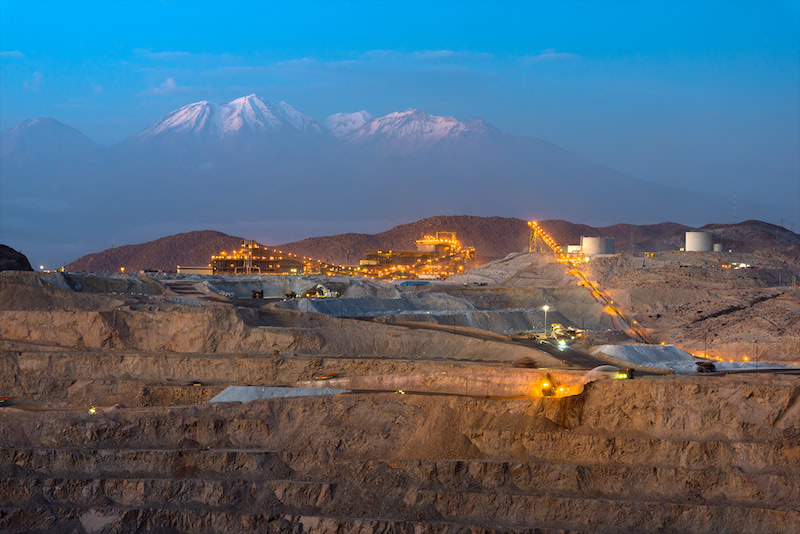
Key Implications for Vietnam's New clauses in Mining and Smelting Laws effective since January 1, 2026
Mar 12, 2026 16:32
Middle East Escalation: Copper Prices Under Pressure Amid Rising Supply Risks in Africa
Mar 10, 2026 10:00

Gold set for second weekly loss on reduced rate cut bets, higher dollar, yields
Common.Time.hoursAgo
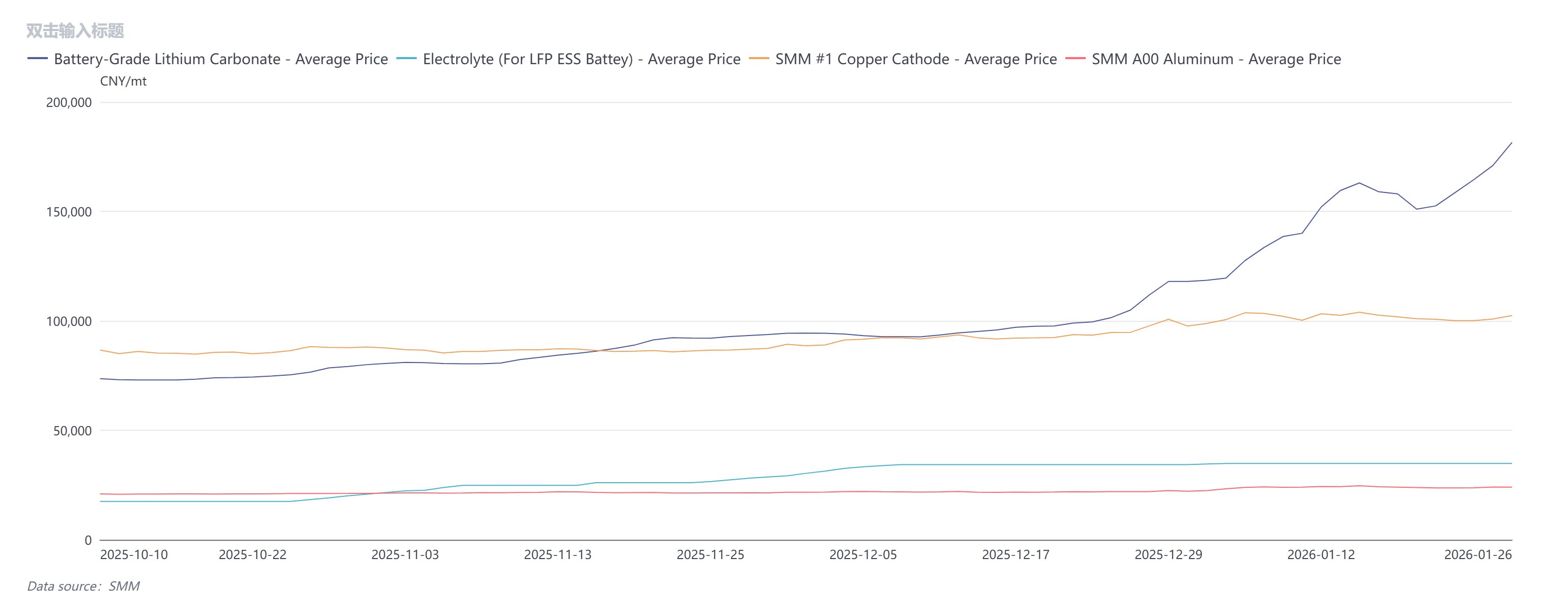
Amidst Middle East Conflicts: What is the Path Forward for China's Energy Storage Exports?
Mar 9, 2026 17:58
Latest News
Korea Zinc Explores Metal Recovery from Data-Center Waste
Common.Time.hoursAgo
Greenway Metal Expands Electronics Scrap Recycling
Common.Time.hoursAgo
Nth Cycle Signs $1B Recycling Metals Deal with Trafigura
Common.Time.hoursAgo
[SMM Events] 2026 GRMI: 200+ Executives & Companies Registered! Join us in Tokyo this June for Recycling Industry
Common.Time.hoursAgo
Secondary Aluminum Alloy Prices Drop by 100 Yuan/mt, Market Trading Stable Amid High Scrap Costs
Common.Time.hoursAgo
Macro and Fundamentals Resonated Negatively, the Most-Traded SHFE Tin Contract Once Fell Below the 370,000-yuan Mark [SMM Tin Midday Commentary]
Common.Time.hoursAgo
Divergent Trends in Asian Scrap Copper Markets: China and Japan Discount Rate Rise While South Korea Holds Steady
Mar 16, 2026 11:06
China's Secondary Aluminum Alloy Ingot Inventory Rises 677 mt WoW, Foshan and Ningbo See Most Growth
Mar 16, 2026 09:24
Gravita India Acquires Metal Firm to Expand Copper Recycling
Mar 16, 2026 09:19
Startup Develops New Technology to Recover Copper from E-Waste
Mar 16, 2026 09:18
Strong Cost Support Remained; Ferrous Metals May Hold Up Well in the Short Term [SMM Steel Industry Chain Weekly Report]
Mar 13, 2026 18:30
Japanese Researchers Set World Record with 12.28% Efficient Indium-Free Solar Cell
Mar 13, 2026 17:28
Secondary Aluminum Alloy Market Sees Stable Quotes, Some Producers Lower Prices Amid Futures Fluctuations
Mar 13, 2026 17:27
Center of the Most-Traded SHFE Tin Contract Moves Lower, Transactions Slightly Softened Amid Structural Divergence in End-Use Demand [SMM Tin Midday Review]
Mar 13, 2026 11:53
Aluminum Alloy Spot Market Prices Rise Amid Cautious Buying
Mar 12, 2026 14:29
Bullish and Bearish Factors Intertwined, Leaving the Tin Market Stuck in Dilemma [SMM Tin Midday Commentary]
Mar 12, 2026 12:07
ADC12 Prices Rise Amid Cautious Downstream Demand
Mar 11, 2026 17:26
Chinese Auto Sales Drop in February, NEV Sales Account for 41.2% Amid Holiday Impact
Mar 11, 2026 14:53
[SHFE Tin Contract Hovered Around 390,000 Amid Tug-of-War Trading, Traditional Consumption Season Performed Slightly Below Expectations] SMM Tin Midday Commentary
Mar 11, 2026 11:56
China's Secondary Aluminum Alloy Ingot Inventory Down 81 mt, Continues Mild Destocking Trend
Mar 11, 2026 09:19