

News
Exclusive analysis article with latest market updates, and in-time news feeds.

Middle East Escalation: Copper Prices Under Pressure Amid Rising Supply Risks in Africa
Tensions in the Middle East have escalated again recently, as the conflict between Israel and Iran continues to intensify, drawing renewed global attention to energy transportation security in the Gulf region.Given the high level of uncertainty surrounding the development of the situation, market risks are clearly skewed to the upside. This article provides a brief analysis of how the current conflict may affect the copper market going forward.
Mar 10, 2026 10:00
Gold set for second weekly loss on reduced rate cut bets, higher dollar, yields
March 13 (Reuters) - Gold was on track for a second straight weekly loss, even as it edged higher on Friday, as surging oil prices dampened rate cut bets and caused investors to cover margin calls, while a rising dollar and U.S. yields also pressured prices.
Common.Time.hoursAgo
Amidst Middle East Conflicts: What is the Path Forward for China's Energy Storage Exports?
Recent Middle East conflicts have disrupted the region's booming energy storage market, a major destination for Chinese exports. To assess the real impact on Chinese supply chains and project deliveries, we must analyze baseline demand amidst these geopolitical uncertainties.
Mar 9, 2026 17:58
Latest News
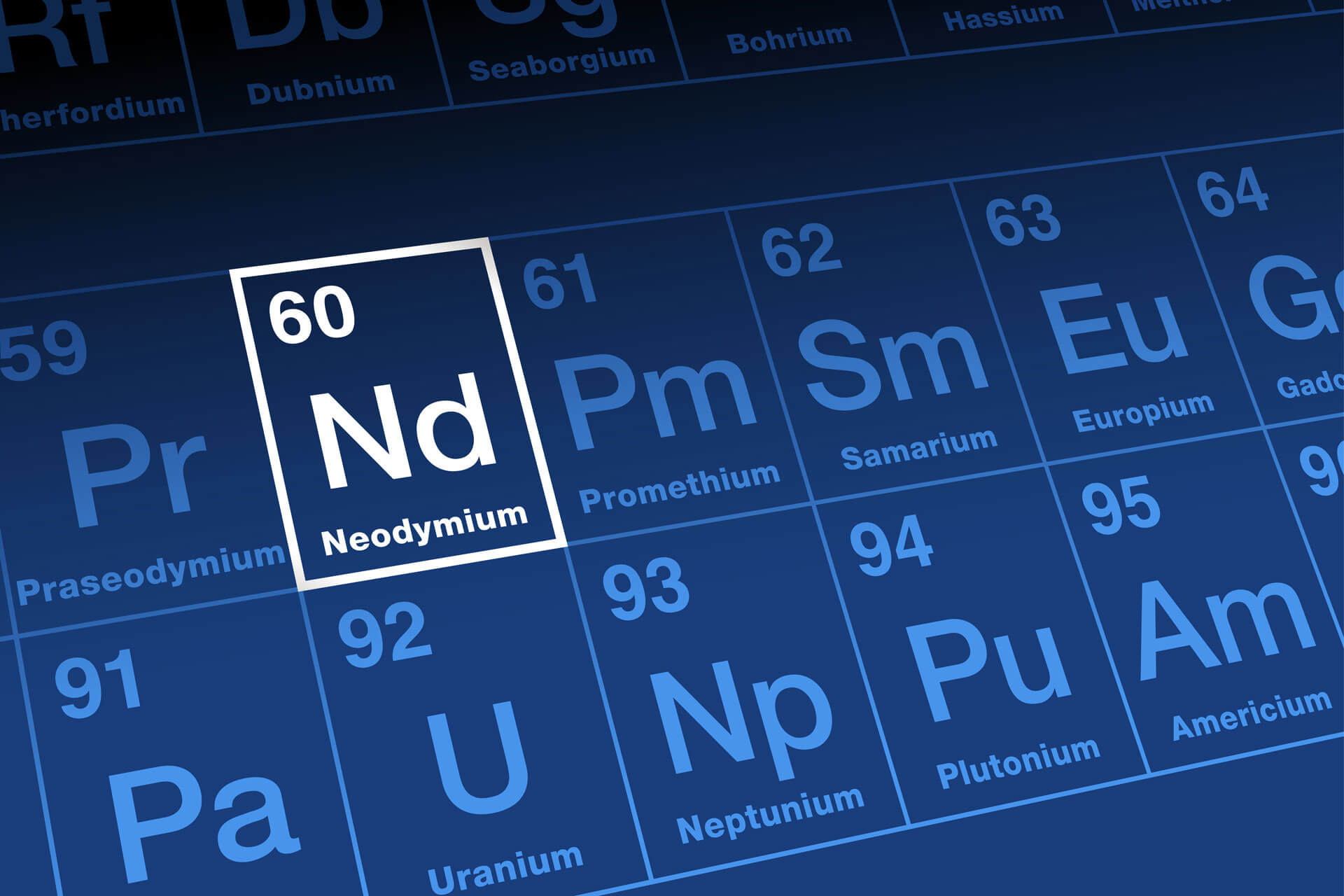
Lynas and JARE Sign Long-Term Rare Earth Supply Deal with Floor Price and Profit-Sharing Mechanisms【SMM Analysis】
Common.Time.hoursAgo
US DOE to Invest $500M in Domestic Critical Minerals and Battery Materials Production
Mar 16, 2026 09:13
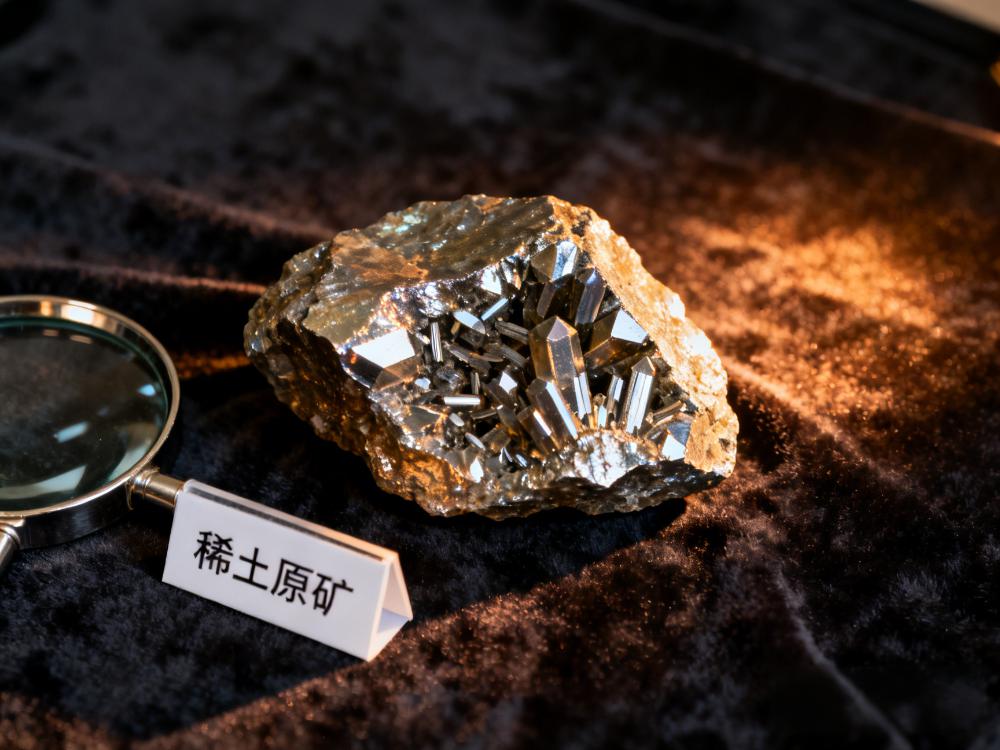
【SMM Analysis】Pr-Nd Alloy Prices Set to Rise on Tight Supply & Strong Demand
Mar 13, 2026 17:44
Chile and US Sign Joint Statement to Consult on Rare Earths and Critical Minerals
Santiago — Chile’s Ministry of Foreign Affairs said on the 12th that Chile had signed a joint statement with the US to begin consultations on rare earths and critical minerals.
Mar 13, 2026 17:08
Critical Metals Secures $30M for Greenland Rare Earth Project Amid Global Supply Chain Shift
Rare earth developer Critical Metals Corp. (Critical Metals) approved $30 million in funding to accelerate development of its Tanbreez rare earth project in Greenland. Tanbreez is one of the world’s largest known rare earth deposits.
The company said the funding would be used to advance drilling, infrastructure, engineering design, and mineral processing and metallurgical testing required for production. The move came as the US and its allies were building supply chains for critical minerals essential to electronics, national defense, and clean energy technologies.
Mar 13, 2026 09:40
US Rare Earth Company Partners with Canadian SRC to Build $40M Heavy Rare Earth Metal Facility
US rare earth company REalloys announced that it is partnering with the Saskatchewan Research Council (SRC) of Canada to build a heavy rare earth metal facility. The equipment will be built at SRC’s Saskatoon plant and, after commissioning, relocated to Ohio to supply dysprosium and terbium to clients in the US defense industrial base and to the Defense Logistics Agency’s strategic reserves.
The facility will cost $40 million and is expected to produce 30 mt of dysprosium metal and 15 mt of terbium metal annually. Initial operations are targeted for early to mid-2027, with full commercial operations expected from mid-2027 to year-end.
Mar 12, 2026 18:05
Pr-Nd Oxide Prices Recover, Transactions at 802,000-803,000 Yuan/mt; Alloy Prices Stable
This afternoon, quotations for Pr-Nd oxide further recovered, with current mainstream offers from suppliers concentrated in the range of 800,000-805,000 yuan/mt. Some plants disclosed that there had already been a small number of transactions for Pr-Nd oxide in the market at 802,000-803,000 yuan/mt, while the actual transaction price of Pr-Nd alloy was within the range of 990,000-1 million yuan/mt. In contrast, quotations in the medium-heavy rare earth market remained stable, with no significant fluctuations.
Mar 12, 2026 17:38
Rare Earth Prices Fell First and Then Rose, with Wide Swings in Pr-Nd, Dysprosium, and Terbium [SMM Rare Earth Weekly Review]
[SMM Rare Earth Weekly Review: Rare Earth Prices Fell First, Then Rose; Pr-Nd, Dysprosium, and Terbium Saw Wide Swings] Due to the combined impact of market news and falling futures prices, suppliers in the Pr-Nd oxide market lacked confidence in the future market and proactively cut prices for shipments. However, upstream separation plants believed that the tight supply pattern of Pr-Nd oxide had not changed. Therefore, Pr-Nd oxide prices pulled back to 760,000-780,000 yuan/mt before rebounding to 790,000-800,000 yuan/mt.
Mar 12, 2026 15:42
Pr-Nd Prices Rebounded, Dysprosium and Terbium Prices Stabilized
Driven by raised quotations from major metal enterprises, as of now, Pr-Nd alloy prices rebounded to 980,000-1 million yuan/mt, up 45,000 yuan/mt from Wednesday. Dysprosium-iron alloy prices closed at 1.42-1.44 million yuan/mt, while terbium metal closed at 7,800-7,840 yuan/kg, unchanged from Wednesday.
Mar 12, 2026 11:33
China's Rare Earth Prices Decline: Neodymium-Praseodymium Down by 95,000 Yuan/Tonne
Amid multiple factors, China's mainstream rare earth prices fell across the board. Currently, neodymium-praseodymium oxide is quoted at 760,000-780,000 yuan/tonne, and neodymium-praseodymium metal at 940,000-950,000 yuan/tonne, down 95,000 yuan/tonne from Monday.
Mar 11, 2026 11:36
Lynas Amends Supply Deal with JARE, Securing 5,000 Tons of NdPr and Heavy Rare Earths Annually
Mar 11, 2026 10:13
Lindian Resources Acquires 51% Stake in Kazakhstan Rare Earth Processing Plant
Mar 5, 2026 15:35
![Rare Earth Prices Pulled Back, with Strong Wait-and-See Sentiment Downstream [SMM Rare Earth Weekly Review]](https://imgqn.smm.cn/usercenter/UXEpx20251217171743.jpeg)
Rare Earth Prices Pulled Back, with Strong Wait-and-See Sentiment Downstream [SMM Rare Earth Weekly Review]
Mar 5, 2026 14:58
Japan and India in Talks to Explore Rare Earth Minerals in Rajasthan, Tech Support Expected
Japan is currently in talks with India on jointly exploring rare earth mineral deposits in Rajasthan. The Japanese government intends to dispatch experts to the site and is expected to provide mining technology support to Rajasthan.
Mar 5, 2026 09:16
Norway's Fen Rare Earth Project Sees 81% Resource Increase, Boosting European Supply Independence
Rare Earths Norway announced a significant increase in the mineral resource valuation of its Fen rare earth project, which now contains a total of 15.9 million mt of rare earth oxides, up 81% from the 8.8 million mt assessed in 2024. Located in southern Norway, the project is the largest rare earth ore under development in Europe, and the resource increase is mainly based on the results of last year’s supplementary exploration drilling. The company said this will help the European continent reduce its reliance on China’s rare earth supplies.
Mar 5, 2026 09:15
Rising Energy Prices Push Up Lanthanum-Cerium Oxide Prices Abroad
【SMM News on March 4】Driven by rising domestic prices and international energy prices, overseas lanthanum-cerium oxide prices increased across the board. Lanthanum oxide FOB was assessed at $960-1,020/mt, up $30/mt; cerium oxide FOB was assessed at $1,883-1,967/mt, up $125/mt; and cerium oxide CIF (Port of Rotterdam) was assessed at $2,550-2,560/mt, up $135/mt.
According to the SMM survey, this round of price increases was a normal market fluctuation and has not yet caused significant cost pressure on overseas buyers.
Mar 4, 2026 19:35
St George Mining Reports 75% Resource Increase at Araxa Rare Earths Project in Brazil
Australia’s St George Mining announced on Monday a resource update for its Araxa rare earths project in Brazil, representing an increase of up to 75%.
St George, which owned 100% of the project, said this was the result of work conducted since July 2025.
The company said the Araxa project’s ore resource had increased from 40 million mt to 70.91 million mt.
The total rare earth oxides (TREO) grade was 4.06%, and the niobium (Nb2O5) grade was 0.62%.
Mar 4, 2026 17:55
US DLA Contracts REalloys for Rare Earth Metals Plant to Boost Domestic Production and Supply Chain Security
The US Defense Logistics Agency signed a contract with rare earth producer REalloys to support the development of next-generation thermal reduction technology for samarium and gadolinium metals. The core of the effort is to build a plant with an annual capacity of 300 mt to reduce mixed samarium–europium–gadolinium concentrates into high-purity metals. At present, the US has no commercial production of either metal and is heavily reliant on overseas supply. REalloys said its process can cut costs by 50% and has been patented. The move aims to establish domestic capacity and strengthen national defense supply chain security.
Mar 4, 2026 15:00
Canadian Neo and Cyclic Materials Partner on Rare Earth Recycling to Boost EU Processing Capacity
Neo Performance Materials of Canada and Cyclic Materials announced that they have reached a rare earth recycling agreement. Neo will supply Cyclic with magnet production scrap from its European plants, which Cyclic will recycle into mixed rare earth oxides for Neo to manufacture alloys and magnets. This move aligns with the objectives of the EU Critical Raw Materials Act and enhances rare earth processing and recycling capacity.
Neo operates a 2,000 mt/year magnet facility in Estonia and is expected to expand it to 5,000 mt/year. Cyclic is building a recycling campus in South Carolina, with initial capacity of 2,000 mt/year for magnet processing and 600 mt/year for mixed rare earth oxides, which will increase to 6,000 mt/year and 1,800 mt/year, respectively, after expansion.
Mar 4, 2026 14:59
Energy Fuels' Australian Project to Supply 50% of US Heavy Rare Earth Demand by 2028
US critical minerals producer Energy Fuels said that once its Donald project in Australia comes on stream, it was expected to meet up to 50% of US demand for heavy rare earth elements. The project was expected to supply rare earths to the White Mesa facility in Utah from the end of 2027 to early 2028.
In Phase 1, the Donald project could meet about 25% of US heavy rare earth demand, and Phase 2 could increase this to 50%. The project will produce 1,531 mt of Pr-Nd oxide, 168 mt of dysprosium, and 29 mt of terbium per year. After the Phase 2 expansion of the White Mesa facility, dysprosium capacity will reach 288 mt/year and terbium 80 mt/year.
Mar 4, 2026 14:56
![[SMM Events] 2026 GRMI: 200+ Executives & Companies Registered! Join us in Tokyo this June for Recycling Industry](https://imgqn.smm.cn/production/admin/votes/imagesECPmG20260316150318.jpeg)
[SMM Events] 2026 GRMI: 200+ Executives & Companies Registered! Join us in Tokyo this June for Recycling Industry
The 2026 SMM (3rd) Global Renewable Metal Industry Chain Summit & Battery Recycling Forum will be held in Tokyo, Japan, from May 11–12, 2026. The summit aims to bring together leading global enterprises, research institutions, industry experts, and policymakers in the fields of renewable metals and battery recycling.
Common.Time.hoursAgo
![[SMM Analysis] ITC Rejects Tariffs on Chinese Graphite Anodes, Final Duties Not Imposed](https://imgqn.smm.cn/usercenter/lzgUR20251217171731.jpg)
[SMM Analysis] ITC Rejects Tariffs on Chinese Graphite Anodes, Final Duties Not Imposed
Mar 13, 2026 19:55
![[SMM Analysis] Why Is India’s Stainless Steel Industry Calling for Both Lower Costs and Stronger Trade Barriers?](https://imgqn.smm.cn/production/admin/votes/imageskXuFi20260313172318.jpeg)
[SMM Analysis] Why Is India’s Stainless Steel Industry Calling for Both Lower Costs and Stronger Trade Barriers?
Mar 13, 2026 17:19
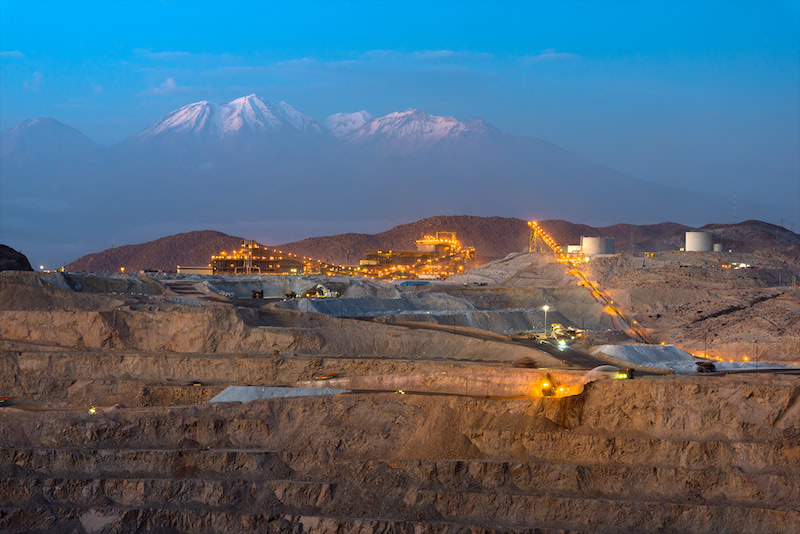
Key Implications for Vietnam's New clauses in Mining and Smelting Laws effective since January 1, 2026
Mar 12, 2026 16:32
Middle East Escalation: Copper Prices Under Pressure Amid Rising Supply Risks in Africa
Mar 10, 2026 10:00

Gold set for second weekly loss on reduced rate cut bets, higher dollar, yields
Common.Time.hoursAgo
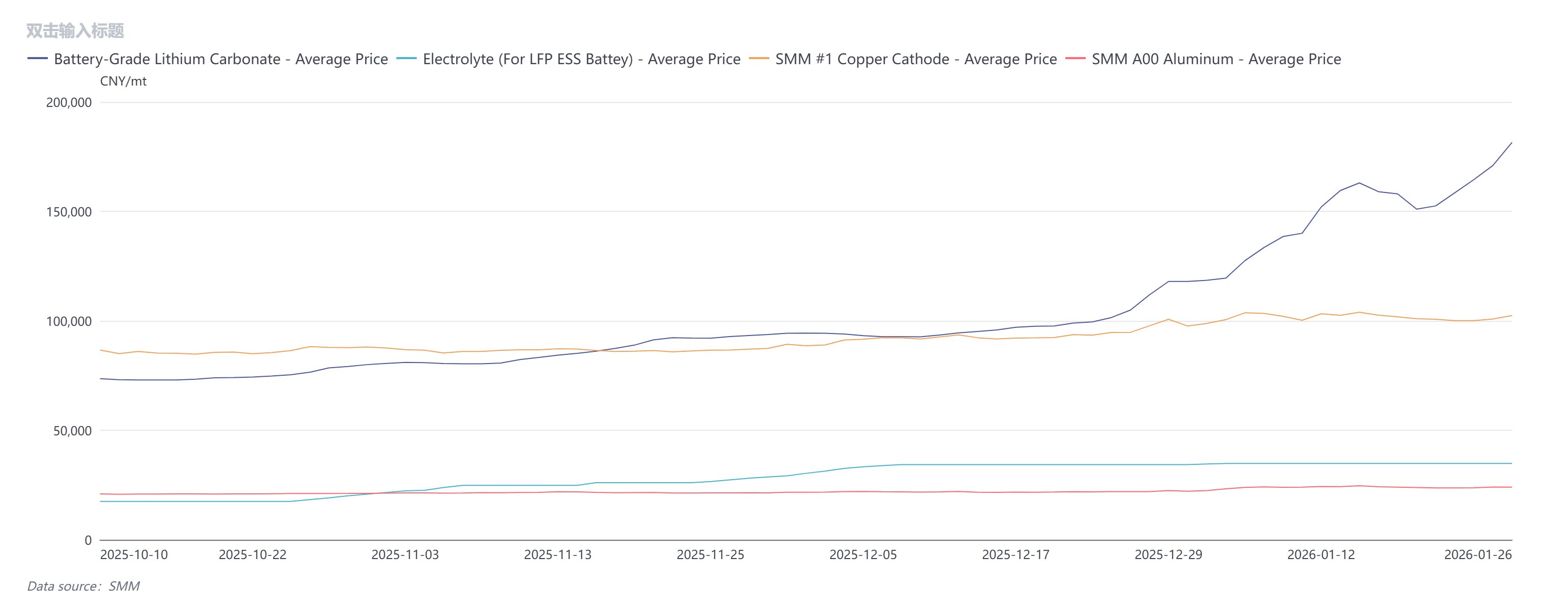
Amidst Middle East Conflicts: What is the Path Forward for China's Energy Storage Exports?
Mar 9, 2026 17:58
Latest News
Lynas and JARE Sign Long-Term Rare Earth Supply Deal with Floor Price and Profit-Sharing Mechanisms【SMM Analysis】
Common.Time.hoursAgo
US DOE to Invest $500M in Domestic Critical Minerals and Battery Materials Production
Mar 16, 2026 09:13
【SMM Analysis】Pr-Nd Alloy Prices Set to Rise on Tight Supply & Strong Demand
Mar 13, 2026 17:44
Chile and US Sign Joint Statement to Consult on Rare Earths and Critical Minerals
Mar 13, 2026 17:08
Critical Metals Secures $30M for Greenland Rare Earth Project Amid Global Supply Chain Shift
Mar 13, 2026 09:40
US Rare Earth Company Partners with Canadian SRC to Build $40M Heavy Rare Earth Metal Facility
Mar 12, 2026 18:05
Pr-Nd Oxide Prices Recover, Transactions at 802,000-803,000 Yuan/mt; Alloy Prices Stable
Mar 12, 2026 17:38
Rare Earth Prices Fell First and Then Rose, with Wide Swings in Pr-Nd, Dysprosium, and Terbium [SMM Rare Earth Weekly Review]
Mar 12, 2026 15:42
Pr-Nd Prices Rebounded, Dysprosium and Terbium Prices Stabilized
Mar 12, 2026 11:33
China's Rare Earth Prices Decline: Neodymium-Praseodymium Down by 95,000 Yuan/Tonne
Mar 11, 2026 11:36
Lynas Amends Supply Deal with JARE, Securing 5,000 Tons of NdPr and Heavy Rare Earths Annually
Mar 11, 2026 10:13
Lindian Resources Acquires 51% Stake in Kazakhstan Rare Earth Processing Plant
Mar 5, 2026 15:35
Rare Earth Prices Pulled Back, with Strong Wait-and-See Sentiment Downstream [SMM Rare Earth Weekly Review]
Mar 5, 2026 14:58
Japan and India in Talks to Explore Rare Earth Minerals in Rajasthan, Tech Support Expected
Mar 5, 2026 09:16
Norway's Fen Rare Earth Project Sees 81% Resource Increase, Boosting European Supply Independence
Mar 5, 2026 09:15
Rising Energy Prices Push Up Lanthanum-Cerium Oxide Prices Abroad
Mar 4, 2026 19:35
St George Mining Reports 75% Resource Increase at Araxa Rare Earths Project in Brazil
Mar 4, 2026 17:55
US DLA Contracts REalloys for Rare Earth Metals Plant to Boost Domestic Production and Supply Chain Security
Mar 4, 2026 15:00
Canadian Neo and Cyclic Materials Partner on Rare Earth Recycling to Boost EU Processing Capacity
Mar 4, 2026 14:59
Energy Fuels' Australian Project to Supply 50% of US Heavy Rare Earth Demand by 2028
Mar 4, 2026 14:56