

News
Exclusive analysis articles with the latest market updates, and real-time news feeds.
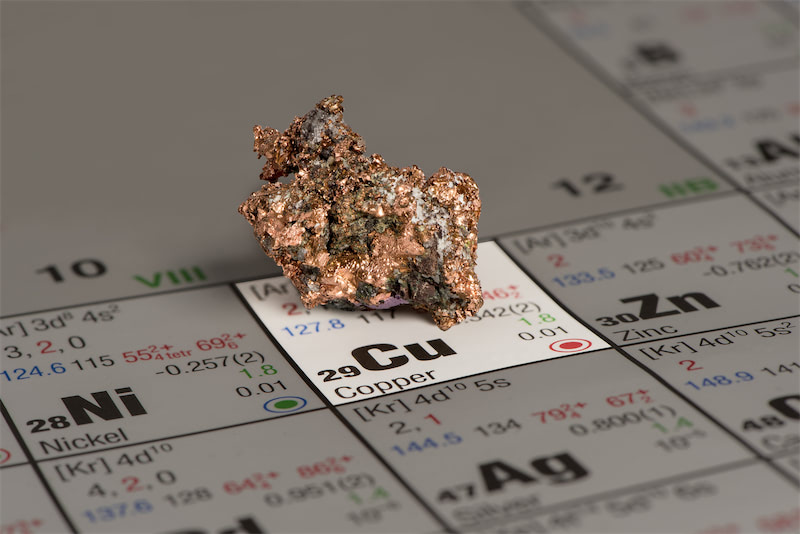
DRC Establishes US-DRC Special Working Group to Accelerate Strategic Minerals Partnership
According to foreign media reports, Kinshasa, September 11 — The DRC Cabinet approved the establishment of a DRC-US working group to accelerate the implementation of the bilateral strategic minerals partnership agreement and attract Western investment into the country's copper and cobalt industries. The DRC is the world's largest cobalt producer and the second-largest copper producer and exporter. The two countries signed a minerals cooperation agreement last December, marking the latest move by the country to broaden financing channels and strengthen cooperation with the US. Under the current cooperation framework, Virtus Minerals has already secured US-backed mining investment and is facilitating expanded copper mine cooperation between Gecamines, Mercuria, and Glencore, helping mineral products reach Western markets. The working group was originally scheduled to launch in February this year but was delayed by administrative obstacles, and its members and key projects have not yet been disclosed. The Cabinet meeting also approved a $24.8 billion fiscal budget for 2027, a 12% increase over this year's revised spending, with infrastructure, security, and economic diversification as priority areas.
Sep 21, 2026 10:00 (GMT+8)
[SMM Analysis] China-US Talks Fuel Bullish Sentiment in Pr-Nd Market, But Fundamentals Prevail
On the evening of September 23 (Beijing time) President Xi Jinping arrived in Washington by special plane for a state visit to the United States at the invitation of President Donald Trump, with the trip scheduled through September 25. Earlier, Chinese economic and trade teams had gone to New York to participate in related talks. Within the China‑US economic agenda, rare earths and critical minerals remain one of the most closely watched themes for global supply chains.
21 hours ago
Why Is SHFE Copper’s “Three Highs” Market Intensifying?
Why Is SHFE Copper Entering a High-Premium, High-Backwardation, High-Price Market?
Sep 22, 2026 18:53 (GMT+8)
Latest News

Revised Q4 ‘26 CIF MJP Premium Offer by RTA at US$280/mt
6 mins ago

Henan Yirui's Advanced Aluminum Rolling Mill Begins Production, Aiming for High-End Market Growth
12 hours ago
Guinea Expands Mining Cooperation with Glencore, Aims to Boost Revenue and Industrialization
12 hours ago
Dingfeng Aluminum Breaks Ground on Phase II, Aiming for 200,000 Tonnes Annual Capacity in Cambodia
On September 21, the groundbreaking ceremony for Phase II (Project A3) of Dingfeng Aluminum Manufacturing (Cambodia) Co., Ltd., a subsidiary of Dihang Group, was held. Located in the Road No. 6 Special Economic Zone in Kampong Cham Province, Cambodia, Dingfeng Aluminum is mainly engaged in the R&D and production of high-end alloy aluminum rods, high-end aluminum profiles, and NEV-supporting products, equipped with a full set of production processes and equipment covering melting and casting, extrusion, anodizing, deep processing, precision machining, and surface treatment. Upon full commissioning of Phase II, annual production capacity will reach 200,000 tonnes, with an annual output value of up to USD 700 million. Phase II (Project A3) is planned to include a 24,340 m² NEV processing workshop (single-story steel-structure building), a 15,291 m² extrusion workshop, and supporting facilities such as an office building, guardhouse, and power distribution room.
12 hours ago
Qingzhen City Signs $1.3B Deal for 60,000-Ton Carbon-Coated Aluminum Foil Project
Recently, Qingzhen City of Guiyang signed an investment agreement with Hefei Biaobing New Materials Technology Co., Ltd., officially landing the Guiyang 60,000-tonne-per-year carbon-coated aluminum foil new materials project, with a total investment of RMB 1.3 billion, in the aluminum processing park of Qingzhen Economic Development Zone.
12 hours ago
Shanxi Taihang Successfully Trials Advanced Waste Aluminum Recycling Line Boosting Purity and Value
On September 21, the waste aluminum crushing and sorting line of Shanxi Taihang Renewable Resources Co., Ltd. was successfully put into trial production. Integrating advanced processes such as dual-shaft shredding, hammer crushing, magnetic separation, air classification, X-ray sorting, eddy current sorting, drum screen sorting, and electrostatic separation, the line enables automated and continuous processing of waste aluminum materials, efficiently separating impurities such as iron, plastics, and rubber, thereby improving the purity and added value of recycled aluminum feedstock and supporting the green recycling of waste aluminum resources. The line can process 10 tonnes of contaminated waste aluminum per hour, with an expected annual output value of RMB 400 million.
12 hours ago
60,000-Tonne Lightweight Material Project for NEVs Launches in Jinhu
A 60,000-tonne-per-year lightweight material project for new energy vehicles (NEVs) has settled in Jinhu. Introduced by Yintu Town and invested and built by a merchant from Wuxi, the project plans to renovate and expand 11,000 m² of plant buildings and construct a production zone, testing and inspection facilities, and an R&D center. It will purchase production equipment including metal melting furnaces, ingot casting lines, and fully automated robots, and equip standardized testing and inspection devices such as spectrometers, tensile testing machines, and Brinell hardness testers. Focusing on the R&D and industrial application of lightweight materials for NEVs, the project is mainly engaged in metal material manufacturing, nonferrous metal casting and rolling, and aluminum alloy processing, with products supplied to a number of well-known enterprises including Chalco, NIO, Li Auto, and SAIC Motor.
12 hours ago
Dak Nong Aluminum Project in Vietnam Achieves Full Operation with 110 Electrolysis Cells Tapping Aluminum
On September 15, 2026, all 110 electrolysis cells of Phase I of the Dak Nong (Dac Nong) aluminum electrolysis project in Vietnam, with China Nonferrous Metal Industry's Foreign Engineering and Construction Co., Ltd. (NFC) as the general contractor, achieved aluminum tapping, marking the full completion and commissioning of Phase I and the project's transition from start-up to stable operation.
12 hours ago
Nannan Aluminum and Huanyu Qiankun Sign Agreement for Aerospace New Materials Development
During the 2nd Fangchenggang Commercial Aerospace Science, Technology and Trade Promotion Event, Cheng Haifeng, Deputy Secretary of the Party Committee and General Manager of Guangxi Nannan Aluminum Processing Co., Ltd., and Zhang Qian, Vice President of Jiangsu Huanyu Qiankun Aerospace Technology Group Co., Ltd., jointly signed the "Nannan Aluminum Processing – Aluminum-Based Aerospace New Materials Development and Application Cooperation Agreement," marking a solid step forward for both parties in the development and application of aluminum-based aerospace new materials and ushering in a new chapter of in-depth cooperation.
12 hours ago
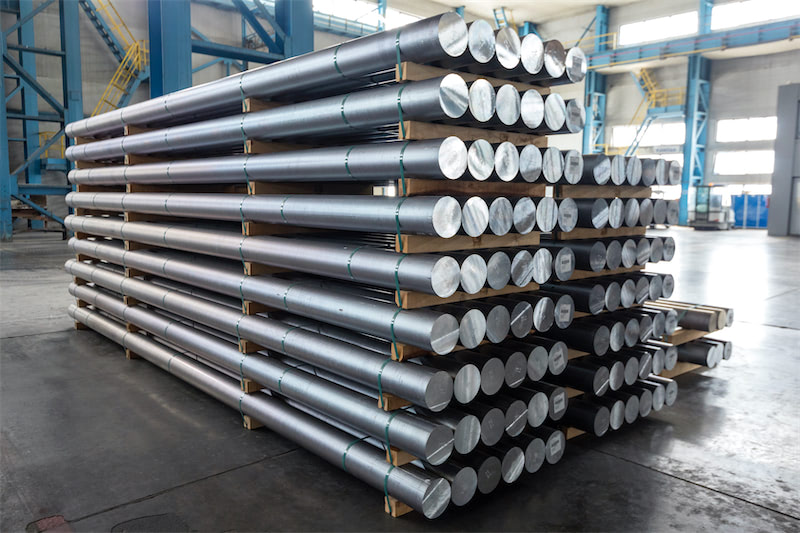
Aluminium Billet Supply Disruptions Intensify; Processing Fees Rebound in V-Shape before Slipping Back into Tug-of-War
As September draws to a close, "recovery" and "tug-of-war" stand out as the two defining keywords of China's aluminium billet market this month. On one side, supply-side disruptions intensified in stages and inventories shifted from consecutive builds to destocking—a marginal improvement, with outbound volumes rising for two consecutive weeks...
13 hours ago
!["Double Festival" approaching: Aluminum billet supply disruptions intensify in phases; processing fees return to a tug-of-war after a V-shaped recovery [SMM analysis]](https://imgqn.smm.cn/usercenter/IOKIL20251217171652.jpg)
"Double Festival" approaching: Aluminum billet supply disruptions intensify in phases; processing fees return to a tug-of-war after a V-shaped recovery [SMM analysis]
13 hours ago
![Aluminum Processors Maintain Stable Operations Amid Pre-Holiday Stockpiling [SMM Weekly Survey]](https://imgqn.smm.cn/usercenter/nkdst20251217171652.jpg)
Aluminum Processors Maintain Stable Operations Amid Pre-Holiday Stockpiling [SMM Weekly Survey]
14 hours ago

China's Aluminum Industry Maintains High Production During 2026 National Day and Mid-Autumn Holidays
15 hours ago
Aluminum prices consolidate ahead of National Day holiday; watch for post-holiday inventory buildup and concentrated arrivals risks [SMM Aluminum Price Weekly Review]
[SMM Aluminum Price Weekly Review: Aluminum Prices Consolidate Before National Day Holiday, Watch Out for Post-Holiday Inventory Buildup and Concentrated Arrival Risks]
15 hours ago
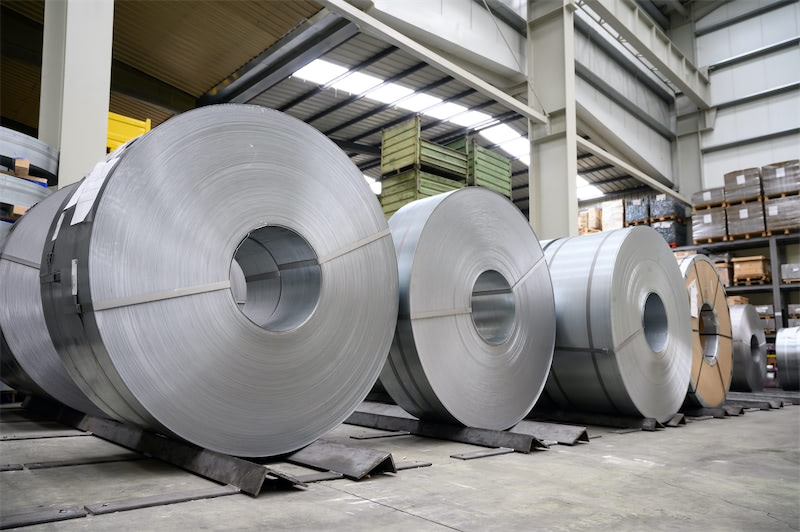
2026 National Day Holiday Survey on Aluminum Processing Enterprises' Shutdowns—Aluminum Extrusion
As the 2026 National Day holiday approaches, downstream aluminum extrusion enterprises have begun to make holiday arrangements. SMM conducted a survey and statistics on enterprises of various regions and scales, as shown in the table below:
15 hours ago
China primary aluminum alloy industry leaders' operating rate recorded at 60%, production pace expected to remain stable during the holiday [SMM Analysis]
15 hours ago
Summary of 2026 National Day Holiday Arrangements in the Aluminum Plate/Sheet, Strip and Foil Industry
An SMM survey found that during the 2026 National Day holiday, overall production resilience in China's aluminum plate/sheet, strip and foil industry remains intact. However, affected by a weaker-than-expected "September peak season" and subdued raw material-side disruptions, expectations of divergence in production performance before and after the holiday have intensified.
15 hours ago
ADC12 Cost Support Continues, Pre-Holiday Demand Mildly Improves [Aluminum Scrap and Secondary Aluminum Weekly Review]
[Secondary Aluminum Weekly Review: ADC12 Cost Support Persists, Pre-Holiday Demand Improves Mildly] This week, SMM ADC12 prices held steady at 24,500 yuan/mt. On the cost side, aluminum scrap raw material prices fluctuated within a limited range overall this week, but the impact of stricter tax invoice policy enforcement became more evident in the market. Compliance requirements for enterprise procurement increased, the supply of invoiced aluminum scrap remained relatively tight, and comprehensive raw material procurement costs for some enterprises stayed at elevated levels.
16 hours ago
Operating rates continue to rise, production remains high, and the alumina inventory buildup pattern is unlikely to change in the short term [SMM Alumina Weekly Review]
16 hours ago
2026 National Day Holiday Survey on Aluminum Processing Enterprises' Shutdowns – Aluminum Extrusion [SMM Analysis]
[2026 National Day Holiday Survey on Aluminum Processing Enterprises' Shutdowns – Aluminum Extrusion] As the 2026 National Day holiday approaches, downstream aluminum extrusion enterprises have begun making holiday arrangements. SMM conducted a survey and statistical analysis of enterprises across various regions and scales, as shown in the table below: ......
17 hours ago
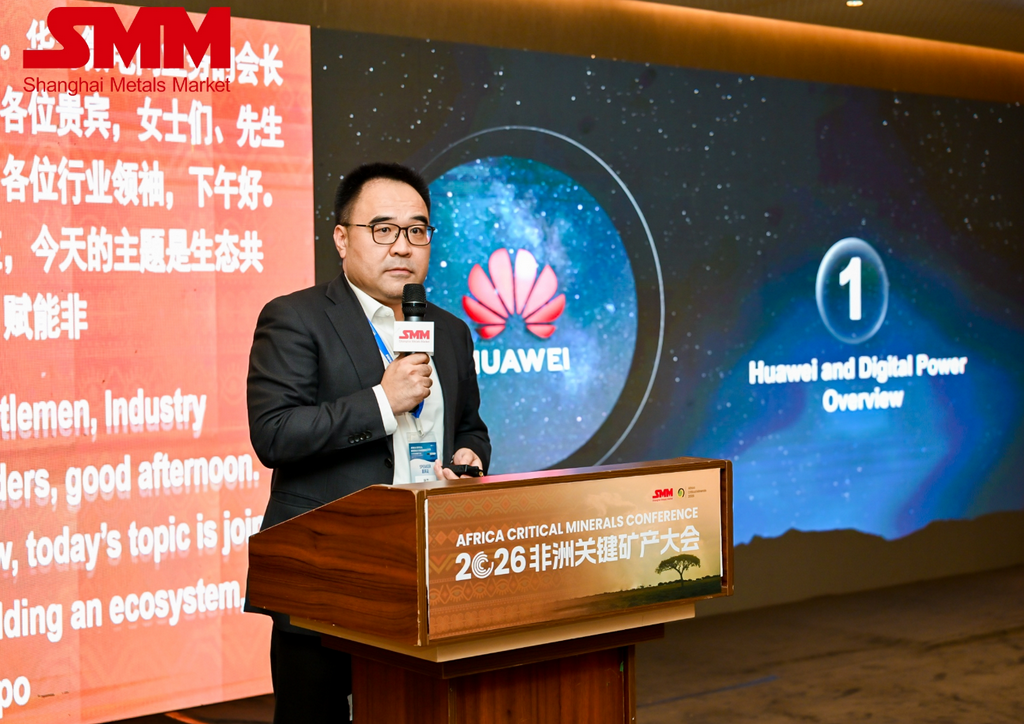
Huawei Pursues Africa Green‑Mining Partnerships and Holds Business Talks with ZESCO at SMM ACM 2026
The SMM Africa Critical Minerals Conference 2026 (ACM2026) , hosted by Shanghai Metals Market (SMM), wrapped up with great success in Lusaka, Zambia on September 15‑16. Focusing on the development of strategic minerals such as copper, cobalt, lithium, and tin in Africa, local deep-processing transformation, green mine construction and energy infrastructure upgrading, this premium event has brought together 400+ industry representatives from Chinese and African government agencies, top miners, commodity traders, investors, and technical service providers to jointly explore high-quality development paths for Africa's critical minerals industry chain. Huawei presented its mine microgrid solution at this conference. Joseph Yao, President of Mining Micro-Grid Business at Huawei Digital Power , delivered a keynote speech titled "Eco‑Partnerships for Green African Mines: Huawei's Mine Microgrid Practices under the IPP‑PPA Model". Huawei's delegation also held business talks with ZESCO, Zambia's national power utility, covering mine energy supply, new‑energy deployment and collaborative power‑infrastructure build‑out. As the global energy transition continues to advance, the new energy industry is steadily boosting demand for critical minerals such as copper and cobalt. Africa is rich in strategic mineral resources and is accelerating its upgrade from exporting mineral raw materials to a high-value-added industry chain encompassing local smelting and deep processing. Mines, as power-intensive sites, require stable and low-cost green power supply, which has become a core factor constraining the implementation of mining projects and the release of capacity in Africa. Leveraging the IPP-PPA (independent power producer investment + long-term power purchase agreement) cooperation model, distributed new energy microgrids can provide reliable power nearby for open-pit mines and smelter sites, helping mines reduce electricity costs and carbon emissions, and supporting the implementation of Zambia's strategy for local copper ore processing. (Joseph Yao, President of Mining Micro-Grid Business at Huawei Digital Power) Joseph Yao shared an overview of Huawei and its Digital Energy business, introducing Huawei as a leading provider of ICT infrastructure and smart terminals, a technology-driven enterprise with operations across many countries worldwide, focusing on core business segments such as smart PV and grid-forming ESS. He noted that Africa's mining sector is generally plagued by power shortages. High diesel costs erode mine profit margins, unstable power supplies risk production disruptions, while ESG requirements also impose constraints on mineral exports. He proposed a three-step path for the sustainable development of African mining: Firstly, supply green electricity to mines through digital energy infrastructure to reduce carbon emissions; Secondly, electrification transition of mining equipment; Thirdly, reshape production processes through AI platforms and intelligent management systems, optimize equipment scheduling, and improve mine capacity and production efficiency. He also highlighted Huawei's mine microgrid system. Rather than a standalone piece of equipment, it is a complete energy solution integrating photovoltaic‑storage systems, intelligent dispatching, diesel backup power supplies, control systems and management software. It breaks the conventional single‑power‑source model to enable energy self‑sufficiency and efficient energy management at mining sites. Citing the large‑scale microgrid project for Saudi Arabia's Red Sea Global as a case study, he explained that this city‑level microgrid achieved major technical breakthroughs underpinned by Huawei's robust in‑house R&D capabilities and power‑simulation laboratories. Huawei possesses independent R&D capacity for core power‑electronic components such as IGBTs, and delivers one‑stop services covering design, simulation and project delivery. Together with ecosystem partners, it also provides full‑lifecycle engineering consultation and on‑site implementation support. The successful delivery of this project has laid a solid foundation for microgrid deployment in mining scenarios. He specifically addressed the widespread funding pain points confronting African mining projects. Under the IPP‑PPA ecosystem model, domestic and international investors can be brought in to finance mine‑energy projects. Mining companies, as power purchasers, sign long‑term power‑purchase agreements to secure stable mine operations, while investors obtain steady returns, forming a sustainable commercial closed‑loop. In his speech, Joseph cited several African mine microgrid implementation cases. Among them, after the completion of the Kamoa-Kakula mining microgrid project in the DRC, green electricity will replace a large amount of diesel power generation, significantly reducing mine electricity costs and carbon emissions, and delivering a good return on investment. For this Chinese-funded miner's copper mine project in the DRC, microgrid upgrades sharply reduced electricity costs and significantly improved the mine's capacity utilization rate, verifying the practical value of green electricity microgrids in African mine scenarios. He summarized Huawei's three core capabilities: a globalized business platform, end-to-end one-stop microgrid solutions, and a diverse ecosystem partner system that includes investors, EPCs, and design consulting agencies. He added that Huawei is looking forward to establishing partnership with more investors to develop energy projects across Zambia and wider Africa, secure power supplies for critical‑mineral industries including copper and lithium, jointly foster green mines in Africa, and build a low‑carbon and sustainable industrial future. During the conference, the Huawei delegation held a business meeting with representatives from Zambia's national power utility ZESCO. Against the backdrop of accelerating green transformation in African mining and continuously growing power demand in mining areas, the two sides exchanged views on topics of common concern such as power infrastructure construction and new energy support, and expressed their intention to jointly explore potential areas for cooperation. Africa's mineral industry is at a critical window for industry chain upgrading. Huawei, drawing on its technological strengths in new energy and smart power, will partner with IPP investors, local power authorities and mining operators to build an open‑cooperation ecosystem. Leveraging its proven mine microgrid solutions, Huawei aims to deliver green, reliable power supplies for African mining and smelting projects, advance the low‑carbon transition of Africa’s critical minerals industry, and deepen practical China‑Africa cooperation across the mining and energy sectors.
Sep 23, 2026 16:41 (GMT+8)
![[SMM Analysis] China’s Shifting Tungsten Trade Landscape: A Strategic View](https://imgqn.smm.cn/usercenter/eThpo20251217171723.jpeg)
[SMM Analysis] China’s Shifting Tungsten Trade Landscape: A Strategic View
Sep 23, 2026 09:13 (GMT+8)
![[SMM Analysis] A Snapshot of Zambia’s Gold Market: From Mine Output to Formal Trade](https://imgqn.smm.cn/usercenter/nQsOk20251217171736.jpg)
[SMM Analysis] A Snapshot of Zambia’s Gold Market: From Mine Output to Formal Trade
Sep 23, 2026 16:23 (GMT+8)
![Canada Lifts Solar Trade Duties: Can Chinese Modules Win a Bigger Share? [SMM Analysis]](https://imgqn.smm.cn/usercenter/VqcvE20251217171739.jpg)
Canada Lifts Solar Trade Duties: Can Chinese Modules Win a Bigger Share? [SMM Analysis]
Sep 21, 2026 18:03 (GMT+8)
DRC Establishes US-DRC Special Working Group to Accelerate Strategic Minerals Partnership
Sep 21, 2026 10:00 (GMT+8)
![[SMM Analysis] China-US Talks Fuel Bullish Sentiment in Pr-Nd Market, But Fundamentals Prevail](https://imgqn.smm.cn/usercenter/PVQnj20251217171744.jpg)
[SMM Analysis] China-US Talks Fuel Bullish Sentiment in Pr-Nd Market, But Fundamentals Prevail
21 hours ago

Why Is SHFE Copper’s “Three Highs” Market Intensifying?
Sep 22, 2026 18:53 (GMT+8)
Latest News
Revised Q4 ‘26 CIF MJP Premium Offer by RTA at US$280/mt
6 mins ago
Henan Yirui's Advanced Aluminum Rolling Mill Begins Production, Aiming for High-End Market Growth
12 hours ago
Guinea Expands Mining Cooperation with Glencore, Aims to Boost Revenue and Industrialization
12 hours ago
Dingfeng Aluminum Breaks Ground on Phase II, Aiming for 200,000 Tonnes Annual Capacity in Cambodia
12 hours ago
Qingzhen City Signs $1.3B Deal for 60,000-Ton Carbon-Coated Aluminum Foil Project
12 hours ago
Shanxi Taihang Successfully Trials Advanced Waste Aluminum Recycling Line Boosting Purity and Value
12 hours ago
60,000-Tonne Lightweight Material Project for NEVs Launches in Jinhu
12 hours ago
Dak Nong Aluminum Project in Vietnam Achieves Full Operation with 110 Electrolysis Cells Tapping Aluminum
12 hours ago
Nannan Aluminum and Huanyu Qiankun Sign Agreement for Aerospace New Materials Development
12 hours ago
Aluminium Billet Supply Disruptions Intensify; Processing Fees Rebound in V-Shape before Slipping Back into Tug-of-War
13 hours ago
"Double Festival" approaching: Aluminum billet supply disruptions intensify in phases; processing fees return to a tug-of-war after a V-shaped recovery [SMM analysis]
13 hours ago
Aluminum Processors Maintain Stable Operations Amid Pre-Holiday Stockpiling [SMM Weekly Survey]
14 hours ago
China's Aluminum Industry Maintains High Production During 2026 National Day and Mid-Autumn Holidays
15 hours ago
Aluminum prices consolidate ahead of National Day holiday; watch for post-holiday inventory buildup and concentrated arrivals risks [SMM Aluminum Price Weekly Review]
15 hours ago
2026 National Day Holiday Survey on Aluminum Processing Enterprises' Shutdowns—Aluminum Extrusion
15 hours ago
China primary aluminum alloy industry leaders' operating rate recorded at 60%, production pace expected to remain stable during the holiday [SMM Analysis]
15 hours ago
Summary of 2026 National Day Holiday Arrangements in the Aluminum Plate/Sheet, Strip and Foil Industry
15 hours ago
ADC12 Cost Support Continues, Pre-Holiday Demand Mildly Improves [Aluminum Scrap and Secondary Aluminum Weekly Review]
16 hours ago
Operating rates continue to rise, production remains high, and the alumina inventory buildup pattern is unlikely to change in the short term [SMM Alumina Weekly Review]
16 hours ago
2026 National Day Holiday Survey on Aluminum Processing Enterprises' Shutdowns – Aluminum Extrusion [SMM Analysis]
17 hours ago