

News
Exclusive analysis article with latest market updates, and in-time news feeds.
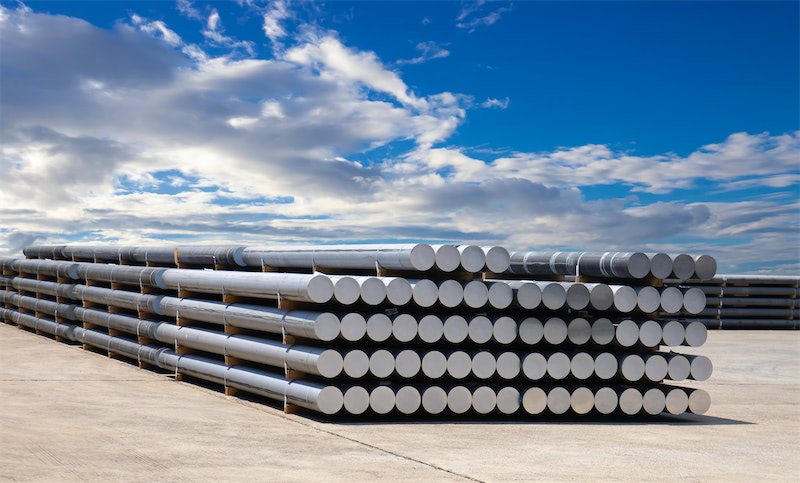
Indonesia Aluminum Market Deep Dive: Dynamics and Policy-Driven Stability
The Indonesian aluminum market remained stable during the 2026 Chinese New Year, with production unaffected and bauxite prices holding at USD 28–32 FOB amid RKAB uncertainty. Alumina prices also stayed steady at USD 308 FOB due to feedstock stability and a seasonal lull in Chinese buying activity.
Feb 23, 2026 13:20
[SMM Analysis] NPI Risk Management: The Art of Asymmetric Hedging
The fundamental challenge in the 304 stainless steel industrial chain is Instrument Asymmetry, a scenario where the dominant cost driver, Nickel Pig Iron (NPI), lacks a direct futures contract and forces participants to manage 75% of their risk using standardized proxies like pure nickel. This creates a lethal threat not from price volatility itself, but from the Basis Risk that occurs when physical assets and hedging tools decouple.
Feb 23, 2026 10:28
[SMM Analysis] Review and Post-Holiday Outlook of the Lead Market During the 2026 Chinese New Year Holiday
[SMM Analysis] Review and Post-Holiday Outlook of the Lead Market During the 2026 Chinese New Year Holiday
SMM, February 23: During the Chinese New Year holiday (February 15–23), the overseas macro environment was complex, with Trump’s global tariff changes being the primary factor influencing market pricing over the break.
Feb 23, 2026 22:26
Latest News
High-Grade NPI Prices Rise Amid Just-in-Time Procurement and Supply Firmness
10 hours ago
Titanium Industry and National Titanium Graphite Electrode (RP φ700) Procurement Tender
11 hours ago
PanGang Vanadium Graphite Electrode (UHP φ400) Procurement Tender
11 hours ago
[SMM Analysis]Engie Acquires UK Power Network Company for $10 Billion
French energy giant Engie recently announced it will fully acquire the UK's largest distribution network operator, UK Power Networks (UKPN), for an equity consideration of approximately £10.5 billion (around $14.2 billion). This transaction marks the strategic exit of the original controlling shareholder, the consortium led by Li Ka-shing's Cheung Kong Group, after holding the asset for 16 years.
11 hours ago
Bao Gang United Steel's Rare Earth Automotive Steel Passes Major Automaker's Painting Certification
Recently, the rare earth automotive steel independently developed by Bao Gang United Steel successfully passed the painting certification of a major automaker. This achievement is of great significance, as it marks the first time that Bao Gang United Steel's rare earth automotive steel has smoothly passed the specialized painting certification of an automaker, formally qualifying it for mass supply. This lays a critical foundation for Bao Gang United Steel to further expand its market in the automotive industry.
It is reported that in the supply chain of major automotive steel manufacturers, corrosion resistance in painting is a core entry threshold and also a common technical challenge faced by the entire industry. The automaker involved in this certification has extremely stringent detection standards for corrosion resistance, with the specified corrosion resistance cycle being twice as long as conventional standard requirements.
11 hours ago
DoD Awards $2M to ReElement for Rare Earth Expansion in Indiana Facility
The US Department of Defense recently awarded a $2 million contract to ReElement Technologies to support the expansion of its rare earth element separation capacity at its facility in Marion, Indiana. The two-year grant was actually awarded on September 3, 2025, but its announcement was delayed until this week due to a government shutdown. The funding will be specifically used to purify rare earths from ore, recycled magnets, and scrap, as part of the US Department of Energy’s "Mine-to-Magnet" program, which aims to build a domestic rare earth supply chain to reduce reliance on China. ReElement employs a unique chromatography refining technology to produce high-purity rare earth oxides for use in defense and commercial permanent magnets.
11 hours ago
US Defense Dept. Awards $2M to ReElement for Rare Earth Capacity Boost
The US Department of Defense recently announced a $2 million contract collaboration with ReElement Technologies, with the funds specifically designated to support the company in expanding its rare earth element separation capacity at its facility in Marion, Indiana. Although the two-year grant was actually awarded on September 3, 2025, its announcement was delayed until this week due to a government shutdown. The funding will be used exclusively for purifying rare earth elements from ore, recycled magnets, and scrap, as part of the US Department of Energy’s "Mine-to-Magnet" initiative, which aims to build a domestic rare earth supply chain and reduce reliance on China. ReElement employs a unique chromatographic refining technology capable of producing high-purity rare earth oxides, which can be used in both national defense and commercial permanent magnet applications.
11 hours ago
MP Materials to Invest $1.25B in Northlake, Texas, for Largest US Rare Earth Magnet Manufacturing Campus
MP Materials has selected Northlake, Texas, as the site for its new "10X" campus, a U.S. rare earth magnet manufacturing park. MP Materials will invest over $1.25 billion to develop what is historically the largest and most strategically significant U.S. rare earth magnet manufacturing asset. MP Materials, the largest rare earth mining company in the U.S., recently announced that it will build a large-scale rare earth magnet manufacturing campus in Northlake, Texas, with a total investment exceeding $1.25 billion.
11 hours ago
Key Macro Factors to Watch Next Week [SMM Steel Industry Chain Weekly Report]
This week, ferrous metals were in the doldrums. On the first day after the holiday resumption, due to the impact of overseas risk events during the long holiday—primarily the US's plan to impose new tariffs on approximately six industries (including large batteries, cast iron and iron fittings, plastic pipes, industrial chemicals, as well as power grid and telecommunications equipment) and the escalation of US-Iran tensions—overall sentiment fluctuated significantly, and ferrous futures also touched recent lows. Mid-week, with some steel mills in the Tangshan area receiving notifications for voluntary emission reductions during the Two Sessions, coupled with Shanghai's adjustment of housing purchase restrictions and rumors of favorable real estate policies during the Two Sessions, futures rebounded from lows, showing significant sector resonance effects. However, as the weekend approached, no new favorable policies emerged, and futures retreated once again.
11 hours ago
BC Copper 2604 Contract Fluctuated and Closed Higher, Boosted by Warm Macro Sentiment and Precious Metals [SMM BC Copper Review]
11 hours ago
![Titanium Market Diverged After the Holiday, Titanium Dioxide Leads the Gains While Titanium Products Steadily Recover [SMM Titanium Weekly Review]](https://imgqn.smm.cn/usercenter/wUnEn20251217171722.jpeg)
Titanium Market Diverged After the Holiday, Titanium Dioxide Leads the Gains While Titanium Products Steadily Recover [SMM Titanium Weekly Review]
11 hours ago
Trafigura Secures $2.1B Loan for Critical Minerals Supply to Germany
11 hours ago
Trafigura Secures $2.1B German Gov't Loan for Critical Minerals Supply
11 hours ago
Aclara Partners with Argonne to Develop AI-Driven Digital Twin for US Rare Earth Separation Facility
According to foreign media reports, Aclara Resources plans to build the first industrial-scale heavy rare earth (HREE) separation facility in the US to produce magnetic alloys, and has now partnered with Argonne National Laboratory to develop an AI-enabled digital twin model for its separation process. Under the agreement, Aclara and Argonne will utilize Argonne's SolventX modeling platform, leveraging Argonne's leadership in advanced computing, process modeling, and artificial intelligence, while integrating Aclara's pilot-scale data to develop a high-fidelity digital representation of the process. The resulting digital twin model will enable advanced simulation, optimization, and predictive control of heavy rare earth solvent extraction operations.
11 hours ago
China Approves National Quality Center for Rare Earth Permanent Magnet Motors
The State Administration for Market Regulation has officially approved the university's establishment of the National Quality Inspection and Testing Center for Rare Earth Permanent Magnet Motors. This national-level quality inspection platform will fill the industry gap in China's rare earth permanent magnet motor sector for a national-level inspection and testing platform.
11 hours ago
Rare Earth Shortage Forces US Aerospace and Semiconductor Suppliers to Reject Orders
Industry insiders stated that suppliers for US aerospace and semiconductor companies are facing an increasingly severe shortage of rare earths, with two suppliers even having to turn down some client orders as a result. The shortage is primarily concentrated in rare earth elements such as yttrium and scandium, which are niche members of the family of 17 elements and play a small yet critical role in national defense technology, aerospace, and semiconductors.
11 hours ago
US Aerospace, Semiconductor Suppliers Grapple with Severe Rare Earth Shortage
According to industry insiders, suppliers in the US aerospace and semiconductor sectors are facing an increasingly severe shortage of rare earth elements, with two suppliers already forced to decline orders from some clients due to the situation. The shortage is primarily concentrated on rare earth elements such as yttrium and scandium, which, although niche members of the family of 17 rare earth elements, play an indispensable role in defense technology, aerospace, and the semiconductor industry.
11 hours ago
Traxys Partners with Phoenix Tailings to Boost Rare Earth Metals Supply and Distribution
U.S. commodity trader Traxys North America stated that the company has partnered with U.S. rare earth metal producer Phoenix Tailings to provide raw materials, offtake agreements, and strategic assistance.
Traxys will offer Phoenix global raw material procurement and downstream metal sales, expanding supply and strengthening the commercial distribution of samarium, yttrium, dysprosium, terbium, and other rare earth elements produced by Phoenix.
11 hours ago
New Tech Spec Issued for Waste E-Product Pollution Control (HJ 527—2026)
To standardize the recycling and treatment of waste electrical and electronic products and effectively prevent and reduce environmental pollution, the Ministry of Ecology and Environment recently issued the "Technical Specification for Pollution Control in the Treatment of Waste Electrical and Electronic Products" (HJ 527—2026). The specification is expected to take effect on March 1 this year.
11 hours ago
Weekly Brief Review of the Lead Concentrate Market (February 23, 2026–February 27, 2026) [SMM Lead Concentrate Weekly Review]
11 hours ago
![[SMM Analysis] China Accelerates the Construction of a Peripheral Copper Resource Supply Belt](https://imgqn.smm.cn/usercenter/SiNDH20251217171711.jpg)
[SMM Analysis] China Accelerates the Construction of a Peripheral Copper Resource Supply Belt
[SMM Analysis: Key Anchor in Great Power Rivalry: The U.S. "Project Vault" and the Changing Resource Landscape in Latin America] Amid the current accelerated reshaping of the global resource competition landscape, China's copper concentrate import pattern is undergoing a profound structural transformation. The latest trade data from 2025 clearly outlines this trend: China is significantly enhancing its capacity to acquire copper concentrate resources from neighboring countries.
Feb 14, 2026 10:30
![[SMM Analysis] Indonesian Stainless Steel Production Remains Stable, RKAB Quota Concerns Loom](https://imgqn.smm.cn/usercenter/qLeLR20251217171733.jpg)
[SMM Analysis] Indonesian Stainless Steel Production Remains Stable, RKAB Quota Concerns Loom
Feb 24, 2026 11:32
![[SMM Analysis] Global Macro Mildly Positive, Aluminum Market Sees Short-Term Volatility Awaiting Demand Recovery](https://imgqn.smm.cn/usercenter/XLWyP20251217171654.jpg)
[SMM Analysis] Global Macro Mildly Positive, Aluminum Market Sees Short-Term Volatility Awaiting Demand Recovery
Feb 23, 2026 16:49
![[SMM Analysis] From Data Ghosts to Border Gridlock: Who Pays the Price for CBAM’s Hubris?](https://imgqn.smm.cn/production/admin/votes/imageshZkuj20260223163450.jpeg)
[SMM Analysis] From Data Ghosts to Border Gridlock: Who Pays the Price for CBAM’s Hubris?
Feb 23, 2026 16:33
Indonesia Aluminum Market Deep Dive: Dynamics and Policy-Driven Stability
Feb 23, 2026 13:20
![[SMM Analysis] NPI Risk Management: The Art of Asymmetric Hedging](https://imgqn.smm.cn/production/admin/votes/imagesBhqFC20260223104924.png)
[SMM Analysis] NPI Risk Management: The Art of Asymmetric Hedging
Feb 23, 2026 10:28
![[SMM Analysis] Review and Post-Holiday Outlook of the Lead Market During the 2026 Chinese New Year Holiday](https://imgqn.smm.cn/usercenter/riosq20251217171722.jpg)
[SMM Analysis] Review and Post-Holiday Outlook of the Lead Market During the 2026 Chinese New Year Holiday
Feb 23, 2026 22:26
Latest News
High-Grade NPI Prices Rise Amid Just-in-Time Procurement and Supply Firmness
10 hours ago
Titanium Industry and National Titanium Graphite Electrode (RP φ700) Procurement Tender
11 hours ago
PanGang Vanadium Graphite Electrode (UHP φ400) Procurement Tender
11 hours ago
[SMM Analysis]Engie Acquires UK Power Network Company for $10 Billion
11 hours ago
Bao Gang United Steel's Rare Earth Automotive Steel Passes Major Automaker's Painting Certification
11 hours ago
DoD Awards $2M to ReElement for Rare Earth Expansion in Indiana Facility
11 hours ago
US Defense Dept. Awards $2M to ReElement for Rare Earth Capacity Boost
11 hours ago
MP Materials to Invest $1.25B in Northlake, Texas, for Largest US Rare Earth Magnet Manufacturing Campus
11 hours ago
Key Macro Factors to Watch Next Week [SMM Steel Industry Chain Weekly Report]
11 hours ago
BC Copper 2604 Contract Fluctuated and Closed Higher, Boosted by Warm Macro Sentiment and Precious Metals [SMM BC Copper Review]
11 hours ago
Titanium Market Diverged After the Holiday, Titanium Dioxide Leads the Gains While Titanium Products Steadily Recover [SMM Titanium Weekly Review]
11 hours ago
Trafigura Secures $2.1B Loan for Critical Minerals Supply to Germany
11 hours ago
Trafigura Secures $2.1B German Gov't Loan for Critical Minerals Supply
11 hours ago
Aclara Partners with Argonne to Develop AI-Driven Digital Twin for US Rare Earth Separation Facility
11 hours ago
China Approves National Quality Center for Rare Earth Permanent Magnet Motors
11 hours ago
Rare Earth Shortage Forces US Aerospace and Semiconductor Suppliers to Reject Orders
11 hours ago
US Aerospace, Semiconductor Suppliers Grapple with Severe Rare Earth Shortage
11 hours ago
Traxys Partners with Phoenix Tailings to Boost Rare Earth Metals Supply and Distribution
11 hours ago
New Tech Spec Issued for Waste E-Product Pollution Control (HJ 527—2026)
11 hours ago
Weekly Brief Review of the Lead Concentrate Market (February 23, 2026–February 27, 2026) [SMM Lead Concentrate Weekly Review]
11 hours ago