

News
Exclusive analysis articles with the latest market updates, and real-time news feeds.
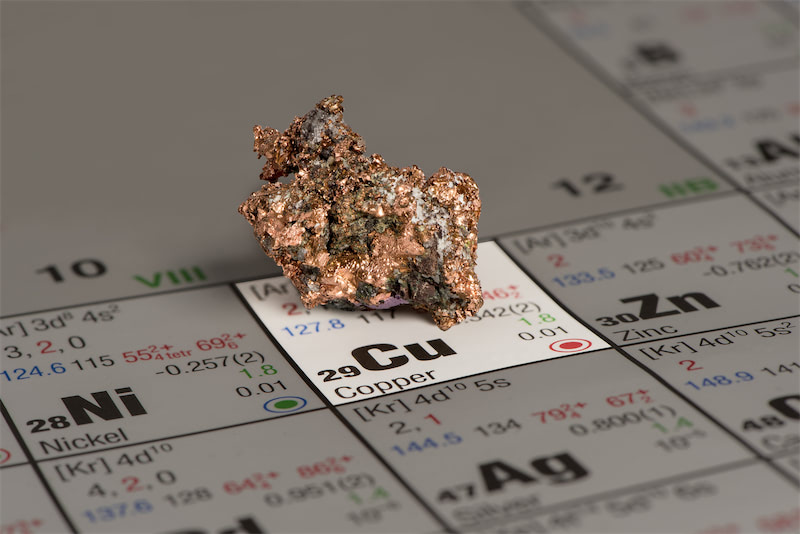
DRC Establishes US-DRC Special Working Group to Accelerate Strategic Minerals Partnership
According to foreign media reports, Kinshasa, September 11 — The DRC Cabinet approved the establishment of a DRC-US working group to accelerate the implementation of the bilateral strategic minerals partnership agreement and attract Western investment into the country's copper and cobalt industries. The DRC is the world's largest cobalt producer and the second-largest copper producer and exporter. The two countries signed a minerals cooperation agreement last December, marking the latest move by the country to broaden financing channels and strengthen cooperation with the US. Under the current cooperation framework, Virtus Minerals has already secured US-backed mining investment and is facilitating expanded copper mine cooperation between Gecamines, Mercuria, and Glencore, helping mineral products reach Western markets. The working group was originally scheduled to launch in February this year but was delayed by administrative obstacles, and its members and key projects have not yet been disclosed. The Cabinet meeting also approved a $24.8 billion fiscal budget for 2027, a 12% increase over this year's revised spending, with infrastructure, security, and economic diversification as priority areas.
Sep 21, 2026 10:00 (GMT+8)
[SMM Analysis] China-US Talks Fuel Bullish Sentiment in Pr-Nd Market, But Fundamentals Prevail
On the evening of September 23 (Beijing time) President Xi Jinping arrived in Washington by special plane for a state visit to the United States at the invitation of President Donald Trump, with the trip scheduled through September 25. Earlier, Chinese economic and trade teams had gone to New York to participate in related talks. Within the China‑US economic agenda, rare earths and critical minerals remain one of the most closely watched themes for global supply chains.
Sep 24, 2026 12:34 (GMT+8)
Why Is SHFE Copper’s “Three Highs” Market Intensifying?
Why Is SHFE Copper Entering a High-Premium, High-Backwardation, High-Price Market?
Sep 22, 2026 18:53 (GMT+8)
Latest News
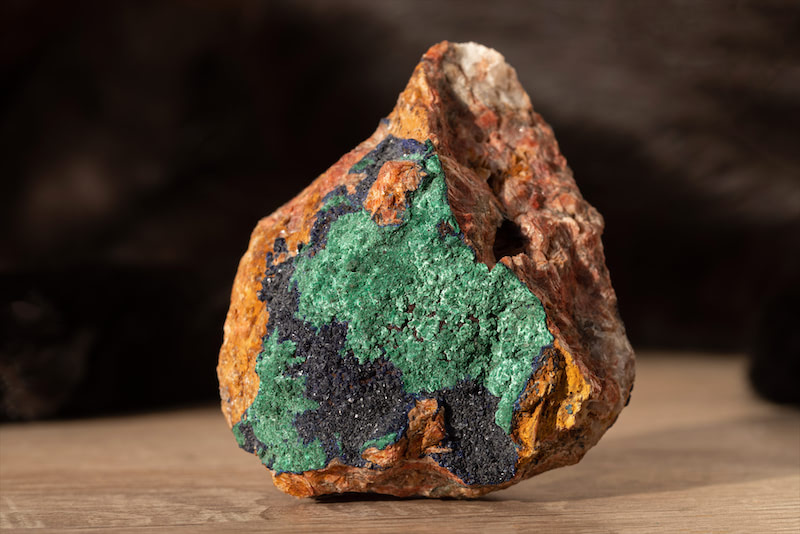
Peru sees 1 million t/y copper output boost within five to six years
Sep 26, 2026 01:38 (GMT+8)
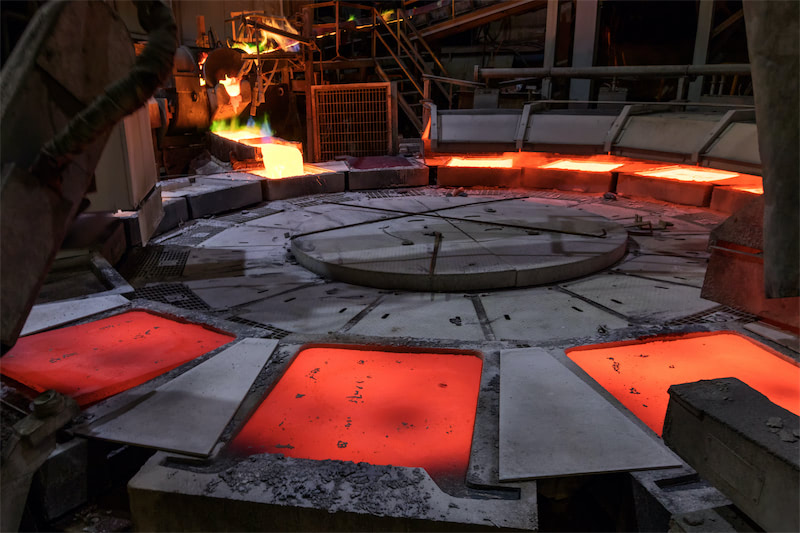
India copper producers seek GST cut as record prices raise working-capital burden
Sep 25, 2026 20:26 (GMT+8)

Sulphuric Acid Shortage Emerges as a Constraint on Zambia’s Copper Growth
Sep 25, 2026 16:43 (GMT+8)
Selkirk Copper Targets H2 2028 Restart of Minto Mine Following Positive PEA
Selkirk Copper Mines has outlined a potential restart of the past-producing Minto copper-gold-silver mine in Yukon, Canada, following the completion of a Preliminary Economic Assessment (PEA) that supports first concentrate production in the second half of 2028.
The PEA outlines a 13-year mine life based on combined open-pit and underground mining, with operations designed around an average mining and milling rate of 4,100 mt/day. At peak production, the project is expected to produce approximately 27,200 mt/year of copper-equivalent contained in concentrate, equivalent to around 48,700 mt/year of high-grade copper-gold-silver concentrate.
Initial capital required to re-establish production is estimated at C$186 million. Using the study's planning prices of US$5.00/lb copper, US$3,600/oz gold and US$50/oz silver, the PEA estimates an after-tax NPV at a 7% discount rate of C$494 million, an after-tax IRR of 47.8% and a payback period of approximately 1.9 years from first production.
Minto benefits from substantial existing infrastructure from its previous operations, including a 4,100 mt/day processing plant as well as existing open-pit and underground infrastructure. Selkirk Copper said assessments of the site's existing infrastructure and equipment found that the majority remains in good working order and requires only minor attention and refurbishment.
The company is targeting first concentrate production in H2 2028, followed by full ramp-up of mining, milling and concentrate production by H1 2029. A feasibility study is scheduled to begin in Q4 2026, while amended permit applications are also expected to be submitted during the fourth quarter. Selkirk Copper said a restart decision is targeted following completion of the feasibility study and receipt of permit amendments in H2 2027.
The Minto PEA outlines a potential pathway for a previously producing copper operation to return to the market by 2028, supported by existing processing and mining infrastructure that could reduce the capital and construction requirements compared with a greenfield project. However, the 27,200 mt/year peak production figure represents copper-equivalent contained in concentrate rather than contained copper alone. The restart also remains subject to further feasibility work, permitting and project execution, making progress toward a restart decision in H2 2027 an important milestone to watch.
Sep 25, 2026 15:19 (GMT+8)
Tschudi Copper Mine Targets Early-2027 Mining Restart in Namibia
Consolidated Copper Corp (CCC) is targeting an early-2027 restart of open-pit mining at the Tschudi copper mine in northern Namibia, with an estimated US$30–40 million of development capital required to bring mining operations back online.
Under the planned heap-leach restart, Tschudi is expected to reach run-rate copper cathode production of more than 14,000 mt/year over an initial 10-year mine life. CCC expects to complete a definitive feasibility study for the heap-leach mining restart in September 2026, with open-pit mining targeted to recommence in early 2027.
The planned restart relates specifically to open-pit mining at Tschudi. Copper processing operations were restarted in 2024 using existing stockpiles, with CCC reporting production of more than 7,600 mt of copper cathode conforming to LME Grade A specifications as of June 2026. Tschudi previously produced approximately 75,000 mt of copper cathode between 2015 and 2020 before being placed on care and maintenance.
The operation already has significant processing infrastructure in place, including a 2.88 million mt/year SX/EW plant. According to CCC, the US$30–40 million restart capital would primarily cover dewatering, mining mobilisation and demobilisation, a mobile crushing plant and development of a leach pad.
CCC is also studying a larger expansion targeting Tschudi's sulphide resources. The concept includes construction of a 3 million mt/year flotation plant alongside the existing SX/EW operation, potentially increasing average annual production to approximately 30,000 mt of copper-equivalent over more than 10 years. The expansion remains under study and is separate from the planned heap-leach mining restart.
The planned restart of open-pit mining at Tschudi could strengthen Namibia's copper supply by supporting run-rate cathode production of more than 14,000 mt/year if the project proceeds according to schedule. Existing SX/EW infrastructure and the relatively modest US$30–40 million restart capital requirement could support a faster return to mining compared with a greenfield development. However, the early-2027 restart remains a company target, with completion of the definitive feasibility study and subsequent mine mobilisation among the key milestones to watch.
Sep 25, 2026 15:16 (GMT+8)
KCM Restarts Nchanga Smelter Following US$40 Million Rehabilitation
Konkola Copper Mines (KCM) has restarted operations at its Nchanga Smelter in Zambia following the completion of a US$40 million rehabilitation programme, marking the facility's first major refurbishment in more than eight years.
The smelter, which has an annual production capacity of 311,000 mt, was shut down for 106 days to allow comprehensive rehabilitation works to be carried out. The shutdown was initially planned to last 60 days but was extended after inspections identified additional critical works that needed to be completed.
KCM Deputy Chief Executive Officer Satish Kumar said the rehabilitation forms part of efforts to rebuild the company and secure the long-term future of its operations following Vedanta Resources' return to KCM.
According to KCM Smelter and Refinery Director Yoram Kapai, more than 1,500 people from KCM and its business partners participated in the rehabilitation programme. The company said the works were completed without any major injuries.
The restart restores operations at a key processing facility within KCM's integrated copper operations in Zambia. Attention will now turn to the smelter's operational performance following the extended maintenance period and KCM's broader efforts to rebuild production across its mining and processing assets.
The restart of the Nchanga Smelter removes a temporary processing constraint at KCM following the 106-day shutdown. With annual capacity of 311,000 mt, the facility is an important part of KCM's copper processing chain. The US$40 million rehabilitation could support improved operational reliability following years of limited major refurbishment, while the pace at which KCM increases mine supply and utilisation of its processing assets will remain important in determining the impact on Zambia's overall copper production.
Sep 25, 2026 15:13 (GMT+8)
Mopani Copper posts 5,140 tonnes of cathode in June
Zambia's Mopani Copper Mines, now majority-owned by ZCCM-IH with IRH as partner, is rebuilding output: in June 2026 it processed 289,000 tonnes of ore and produced 5,140 tonnes of cathode against a 5,104-tonne target, running on own feed. The company secured a US$20 million Epiroc equipment order in April 2026. Zambia aims to lift national copper production to 3 million tonnes by 2031, and Mopani plans to scale from about 65,000 tonnes currently toward 110,000 and then 180,000 tonnes. Its ramp-up is a key gauge of supply growth across the African Copperbelt.
Sep 25, 2026 13:29 (GMT+8)
BHP-Amazon copper EAC pilot draws mining-sector interest in lower-carbon labelling
Spanish-language mining media report that BHP and Amazon have rolled out the first lower-emissions copper pilot at Escondida using Environmental Attribute Certificates, certifying emissions reductions within the mining setting rather than offsetting them elsewhere. Unveiled on 22 September 2026, the pilot leverages Escondida's renewable electricity and desalinated water, with Amazon retiring the certificates to match lower-carbon attributes to its AI infrastructure. Escondida produces about 1.2 million tonnes of copper annually as the world's largest mine, and the label is expected to serve growing demand for low-carbon metal procurement.
Sep 25, 2026 13:25 (GMT+8)
Hindustan Copper Advances $776M Capex Funding via QIP, Bonds for Vision 2030 Expansion
HCL's shareholders approved two fundraising mechanisms as the company implements its Vision 2030 expansion programme. The five-year plan targets higher mining capacity through existing mine expansion, new reserves and revival of legacy assets.
Sep 24, 2026 19:39 (GMT+8)
2026 National Day Holiday Survey of Copper Processing Enterprises — Copper Tube [SMM Analysis]
With air-conditioner production schedules improving, SMM’s survey of 13 copper tube producers shows shorter National Day breaks, averaging 3.3 days—0.6 days fewer than last year. Four East China producers will operate throughout the holiday. October operating rates are expected to stabilize MoM, with a much narrower YoY decline. However, orders remain weak, leaving the strength of “Silver October” uncertain.
Sep 24, 2026 18:28 (GMT+8)

HBIS Resources: Main part of the Phase II copper project essentially completed, currently in capacity ramp-up stage
Sep 24, 2026 17:49 (GMT+8)
![Geopolitical Risks Fluctuate and Rate Hike Expectations Heat Up, Copper Prices Retreat After Rapid Rise [SMM Macro Weekly Review]](https://imgqn.smm.cn/usercenter/TlzAr20251217171709.jpg)
Geopolitical Risks Fluctuate and Rate Hike Expectations Heat Up, Copper Prices Retreat After Rapid Rise [SMM Macro Weekly Review]
Sep 24, 2026 17:41 (GMT+8)
![Invoice restrictions limit tax-exclusive supply circulation, price increase limited [SMM Secondary Copper Raw Material Weekly Review]](https://imgqn.smm.cn/usercenter/IHqPw20251217171709.jpg)
Invoice restrictions limit tax-exclusive supply circulation, price increase limited [SMM Secondary Copper Raw Material Weekly Review]
Sep 24, 2026 17:40 (GMT+8)
High Prices and Invoices Pose Dual Constraints, Pre-Holiday Stockpiling Stalls [SMM Secondary Copper Rod Weekly Review]
[SMM Analysis: High Prices and Invoices Hinder Pre-Holiday Stockpiling] According to SMM data, the operating rate of secondary copper rod producers stood at 11.99% this week, up 1.72 percentage points WoW but down 6.57 percentage points YoY. The average price difference between copper cathode rod and secondary copper rod was yuan 2,114/mt, up yuan 1,348/mt WoW. In addition, the average discount of secondary copper rod in Jiangxi against copper futures was yuan 600/mt, down yuan 753/mt WoW. Copper prices broke above yuan 110,000/mt again, mainly driven by spot shortages and premiums exceeding yuan 1,000/mt, while the discount of secondary copper rod against futures at yuan 400-600/mt was mainly caused by elevated spot premiums. According to SMM's secondary copper rod sales gross profit model, the average weekly gross profit was yuan 911/mt, up yuan 418/mt WoW......
Sep 24, 2026 17:39 (GMT+8)
Daqi Technology Helps Create the "2027 SMM Global Copper Mines and Smelters Distribution Map"
Sep 24, 2026 17:21 (GMT+8)
SMM weekly operating rate of secondary copper anode plate enterprises in China at 50.78%
[SMM copper anode market] From September 18 to September 24, the SMM weekly operating rate of secondary copper anode plate enterprises in China fell 1.65 percentage points WoW to 50.78%. It is expected to fall 1.87 percentage points WoW next week to 48.91%.
Sep 24, 2026 17:15 (GMT+8)
Enameled Wire Makers Maintain High Output Ahead of National Day Despite Weakening Demand
On one hand, supported by the delivery of orders booked in the prior week, enameled wire manufacturers maintained high operating rates to meet downstream pre-holiday shipment requirements. On the other hand, manufacturers have planned shutdowns and production cuts for the National Day holiday and thus accelerated production schedules ahead of the break. As a result, enameled wire plants continued to operate at high utilization rates this week.Nevertheless, most downstream clients have largely completed their stocking activities following last week’s bulk order placements. Coupled with high copper prices weighing on market sentiment, purchasing willingness weakened notably this week, and new orders saw a sharp decline.
Sep 24, 2026 16:01 (GMT+8)
Pre-holiday production schedule supports high operating rates, yet new orders pull back significantly [SMM Enamelled Wire Market Weekly Review]
Enamelled wire industry machine operating rate fell WoW this week (9.18-9.24) ....
Sep 24, 2026 15:54 (GMT+8)
Data: SHFE, DCE market movement (Sep 24)
The following table shows the ferrous and nonferrous metals movement on the SHFE and DCE on 24 Sep , 2026
Sep 24, 2026 15:54 (GMT+8)
Insufficient Invoices Hinder Scrap Utilization Enterprises' Procurement, Pre-Holiday Stockpiling Volumes Severely Inadequate [SMM Secondary Copper Daily Review]
Sep 24, 2026 15:52 (GMT+8)
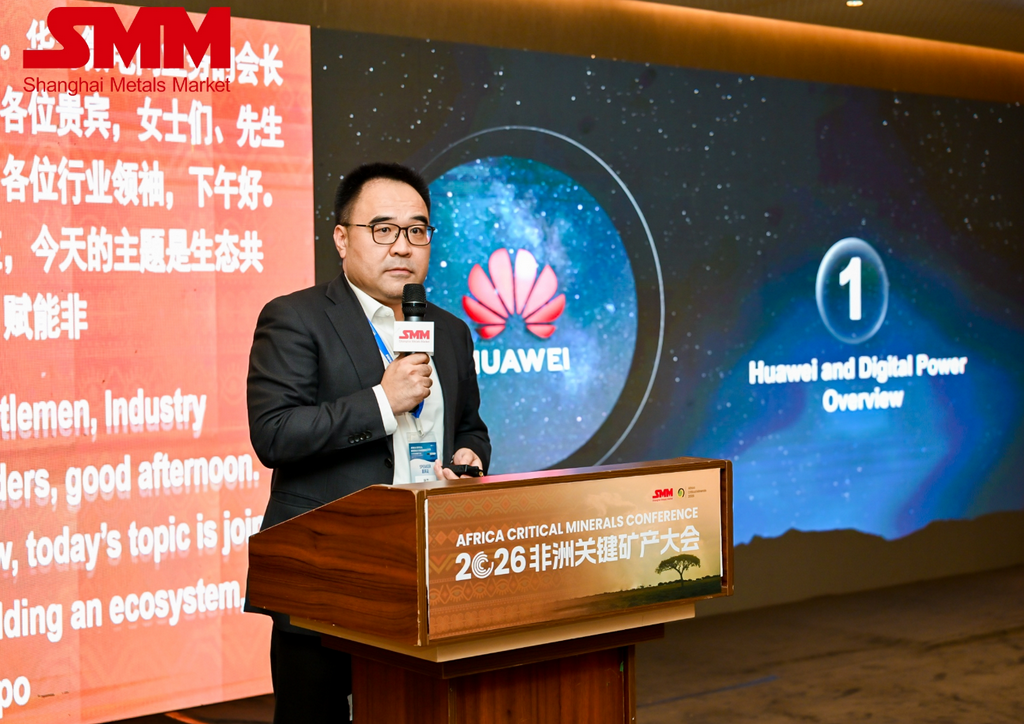
Huawei Pursues Africa Green‑Mining Partnerships and Holds Business Talks with ZESCO at SMM ACM 2026
The SMM Africa Critical Minerals Conference 2026 (ACM2026) , hosted by Shanghai Metals Market (SMM), wrapped up with great success in Lusaka, Zambia on September 15‑16. Focusing on the development of strategic minerals such as copper, cobalt, lithium, and tin in Africa, local deep-processing transformation, green mine construction and energy infrastructure upgrading, this premium event has brought together 400+ industry representatives from Chinese and African government agencies, top miners, commodity traders, investors, and technical service providers to jointly explore high-quality development paths for Africa's critical minerals industry chain. Huawei presented its mine microgrid solution at this conference. Joseph Yao, President of Mining Micro-Grid Business at Huawei Digital Power , delivered a keynote speech titled "Eco‑Partnerships for Green African Mines: Huawei's Mine Microgrid Practices under the IPP‑PPA Model". Huawei's delegation also held business talks with ZESCO, Zambia's national power utility, covering mine energy supply, new‑energy deployment and collaborative power‑infrastructure build‑out. As the global energy transition continues to advance, the new energy industry is steadily boosting demand for critical minerals such as copper and cobalt. Africa is rich in strategic mineral resources and is accelerating its upgrade from exporting mineral raw materials to a high-value-added industry chain encompassing local smelting and deep processing. Mines, as power-intensive sites, require stable and low-cost green power supply, which has become a core factor constraining the implementation of mining projects and the release of capacity in Africa. Leveraging the IPP-PPA (independent power producer investment + long-term power purchase agreement) cooperation model, distributed new energy microgrids can provide reliable power nearby for open-pit mines and smelter sites, helping mines reduce electricity costs and carbon emissions, and supporting the implementation of Zambia's strategy for local copper ore processing. (Joseph Yao, President of Mining Micro-Grid Business at Huawei Digital Power) Joseph Yao shared an overview of Huawei and its Digital Energy business, introducing Huawei as a leading provider of ICT infrastructure and smart terminals, a technology-driven enterprise with operations across many countries worldwide, focusing on core business segments such as smart PV and grid-forming ESS. He noted that Africa's mining sector is generally plagued by power shortages. High diesel costs erode mine profit margins, unstable power supplies risk production disruptions, while ESG requirements also impose constraints on mineral exports. He proposed a three-step path for the sustainable development of African mining: Firstly, supply green electricity to mines through digital energy infrastructure to reduce carbon emissions; Secondly, electrification transition of mining equipment; Thirdly, reshape production processes through AI platforms and intelligent management systems, optimize equipment scheduling, and improve mine capacity and production efficiency. He also highlighted Huawei's mine microgrid system. Rather than a standalone piece of equipment, it is a complete energy solution integrating photovoltaic‑storage systems, intelligent dispatching, diesel backup power supplies, control systems and management software. It breaks the conventional single‑power‑source model to enable energy self‑sufficiency and efficient energy management at mining sites. Citing the large‑scale microgrid project for Saudi Arabia's Red Sea Global as a case study, he explained that this city‑level microgrid achieved major technical breakthroughs underpinned by Huawei's robust in‑house R&D capabilities and power‑simulation laboratories. Huawei possesses independent R&D capacity for core power‑electronic components such as IGBTs, and delivers one‑stop services covering design, simulation and project delivery. Together with ecosystem partners, it also provides full‑lifecycle engineering consultation and on‑site implementation support. The successful delivery of this project has laid a solid foundation for microgrid deployment in mining scenarios. He specifically addressed the widespread funding pain points confronting African mining projects. Under the IPP‑PPA ecosystem model, domestic and international investors can be brought in to finance mine‑energy projects. Mining companies, as power purchasers, sign long‑term power‑purchase agreements to secure stable mine operations, while investors obtain steady returns, forming a sustainable commercial closed‑loop. In his speech, Joseph cited several African mine microgrid implementation cases. Among them, after the completion of the Kamoa-Kakula mining microgrid project in the DRC, green electricity will replace a large amount of diesel power generation, significantly reducing mine electricity costs and carbon emissions, and delivering a good return on investment. For this Chinese-funded miner's copper mine project in the DRC, microgrid upgrades sharply reduced electricity costs and significantly improved the mine's capacity utilization rate, verifying the practical value of green electricity microgrids in African mine scenarios. He summarized Huawei's three core capabilities: a globalized business platform, end-to-end one-stop microgrid solutions, and a diverse ecosystem partner system that includes investors, EPCs, and design consulting agencies. He added that Huawei is looking forward to establishing partnership with more investors to develop energy projects across Zambia and wider Africa, secure power supplies for critical‑mineral industries including copper and lithium, jointly foster green mines in Africa, and build a low‑carbon and sustainable industrial future. During the conference, the Huawei delegation held a business meeting with representatives from Zambia's national power utility ZESCO. Against the backdrop of accelerating green transformation in African mining and continuously growing power demand in mining areas, the two sides exchanged views on topics of common concern such as power infrastructure construction and new energy support, and expressed their intention to jointly explore potential areas for cooperation. Africa's mineral industry is at a critical window for industry chain upgrading. Huawei, drawing on its technological strengths in new energy and smart power, will partner with IPP investors, local power authorities and mining operators to build an open‑cooperation ecosystem. Leveraging its proven mine microgrid solutions, Huawei aims to deliver green, reliable power supplies for African mining and smelting projects, advance the low‑carbon transition of Africa’s critical minerals industry, and deepen practical China‑Africa cooperation across the mining and energy sectors.
Sep 23, 2026 16:41 (GMT+8)
![[SMM Analysis] China’s Shifting Tungsten Trade Landscape: A Strategic View](https://imgqn.smm.cn/usercenter/eThpo20251217171723.jpeg)
[SMM Analysis] China’s Shifting Tungsten Trade Landscape: A Strategic View
Sep 23, 2026 09:13 (GMT+8)
![[SMM Analysis] A Snapshot of Zambia’s Gold Market: From Mine Output to Formal Trade](https://imgqn.smm.cn/usercenter/nQsOk20251217171736.jpg)
[SMM Analysis] A Snapshot of Zambia’s Gold Market: From Mine Output to Formal Trade
Sep 23, 2026 16:23 (GMT+8)
![Canada Lifts Solar Trade Duties: Can Chinese Modules Win a Bigger Share? [SMM Analysis]](https://imgqn.smm.cn/usercenter/VqcvE20251217171739.jpg)
Canada Lifts Solar Trade Duties: Can Chinese Modules Win a Bigger Share? [SMM Analysis]
Sep 21, 2026 18:03 (GMT+8)
DRC Establishes US-DRC Special Working Group to Accelerate Strategic Minerals Partnership
Sep 21, 2026 10:00 (GMT+8)
![[SMM Analysis] China-US Talks Fuel Bullish Sentiment in Pr-Nd Market, But Fundamentals Prevail](https://imgqn.smm.cn/usercenter/PVQnj20251217171744.jpg)
[SMM Analysis] China-US Talks Fuel Bullish Sentiment in Pr-Nd Market, But Fundamentals Prevail
Sep 24, 2026 12:34 (GMT+8)

Why Is SHFE Copper’s “Three Highs” Market Intensifying?
Sep 22, 2026 18:53 (GMT+8)
Latest News
Peru sees 1 million t/y copper output boost within five to six years
Sep 26, 2026 01:38 (GMT+8)
India copper producers seek GST cut as record prices raise working-capital burden
Sep 25, 2026 20:26 (GMT+8)
Sulphuric Acid Shortage Emerges as a Constraint on Zambia’s Copper Growth
Sep 25, 2026 16:43 (GMT+8)
Selkirk Copper Targets H2 2028 Restart of Minto Mine Following Positive PEA
Sep 25, 2026 15:19 (GMT+8)
Tschudi Copper Mine Targets Early-2027 Mining Restart in Namibia
Sep 25, 2026 15:16 (GMT+8)
KCM Restarts Nchanga Smelter Following US$40 Million Rehabilitation
Sep 25, 2026 15:13 (GMT+8)
Mopani Copper posts 5,140 tonnes of cathode in June
Sep 25, 2026 13:29 (GMT+8)
BHP-Amazon copper EAC pilot draws mining-sector interest in lower-carbon labelling
Sep 25, 2026 13:25 (GMT+8)
Hindustan Copper Advances $776M Capex Funding via QIP, Bonds for Vision 2030 Expansion
Sep 24, 2026 19:39 (GMT+8)
2026 National Day Holiday Survey of Copper Processing Enterprises — Copper Tube [SMM Analysis]
Sep 24, 2026 18:28 (GMT+8)
HBIS Resources: Main part of the Phase II copper project essentially completed, currently in capacity ramp-up stage
Sep 24, 2026 17:49 (GMT+8)
Geopolitical Risks Fluctuate and Rate Hike Expectations Heat Up, Copper Prices Retreat After Rapid Rise [SMM Macro Weekly Review]
Sep 24, 2026 17:41 (GMT+8)
Invoice restrictions limit tax-exclusive supply circulation, price increase limited [SMM Secondary Copper Raw Material Weekly Review]
Sep 24, 2026 17:40 (GMT+8)
High Prices and Invoices Pose Dual Constraints, Pre-Holiday Stockpiling Stalls [SMM Secondary Copper Rod Weekly Review]
Sep 24, 2026 17:39 (GMT+8)
Daqi Technology Helps Create the "2027 SMM Global Copper Mines and Smelters Distribution Map"
Sep 24, 2026 17:21 (GMT+8)
SMM weekly operating rate of secondary copper anode plate enterprises in China at 50.78%
Sep 24, 2026 17:15 (GMT+8)
Enameled Wire Makers Maintain High Output Ahead of National Day Despite Weakening Demand
Sep 24, 2026 16:01 (GMT+8)
Pre-holiday production schedule supports high operating rates, yet new orders pull back significantly [SMM Enamelled Wire Market Weekly Review]
Sep 24, 2026 15:54 (GMT+8)
Data: SHFE, DCE market movement (Sep 24)
Sep 24, 2026 15:54 (GMT+8)
Insufficient Invoices Hinder Scrap Utilization Enterprises' Procurement, Pre-Holiday Stockpiling Volumes Severely Inadequate [SMM Secondary Copper Daily Review]
Sep 24, 2026 15:52 (GMT+8)