

News
Exclusive analysis articles with the latest market updates, and real-time news feeds.

Morocco's Phosphate Chemical Industry: Resource Endowment, Export Landscape, and Capacity Expansion
Morocco accounts for approximately 68% of global phosphate rock reserves, with grades as high as 33% (P₂O₅), and is predominantly surface-mined, giving it significant cost advantages. Exports are carried out through four major ports: Casablanca, Safi, Jorf Lasfar, and Laayoune, with Safi Port emerging as a strategic hub.
Sep 10, 2026 17:50
[SMM Analysis] El Niño-Water Scarcity in Indonesia: Coking Coal Disruption & The Effect to Indonesian Steel Prices
Indonesia is currently navigating a confluence of climate-driven supply disruptions, the most consequential of which is the El Niño-induced water shortage affecting the Indonesia Morowali Industrial Park (IMIP) and the broader Kalimantan coal corridor. While IMIP's steel producers have absorbed some of the impact, coking coal and coke producers have been hit disproportionately harder, given the water-intensive nature of the coking process.
Sep 9, 2026 17:59
[SMM Analysis] Global PV Module Market Diverges: Cost Support Vs Weak Demand
High production costs support offers, but weak project economics and uneven demand keep transaction prices under pressure in the week to September 10.
Sep 10, 2026 15:35
Latest News

China's Secondary Aluminum Ingot Inventory Down 246 mt to 12,701 mt in Key Consumption Areas
53 mins ago
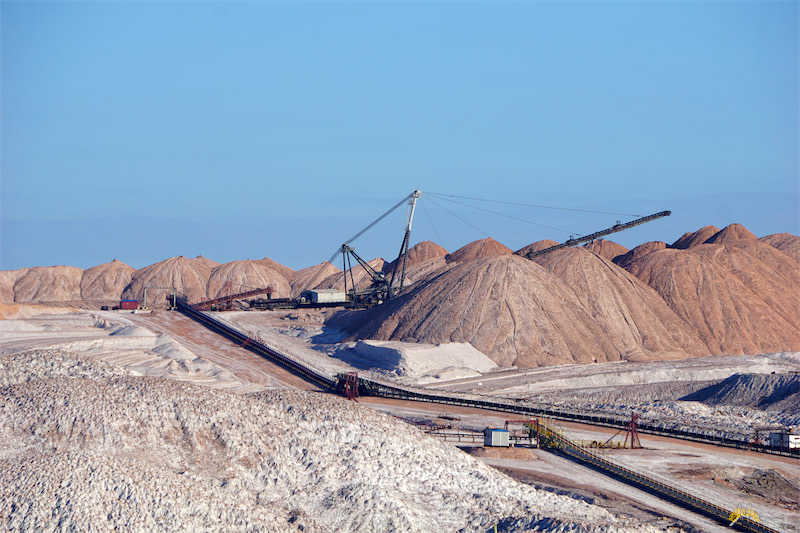
East China Smelter to Launch Crude Cadmium Tender Amid Firming Prices, Intense Competition Expected
57 mins ago
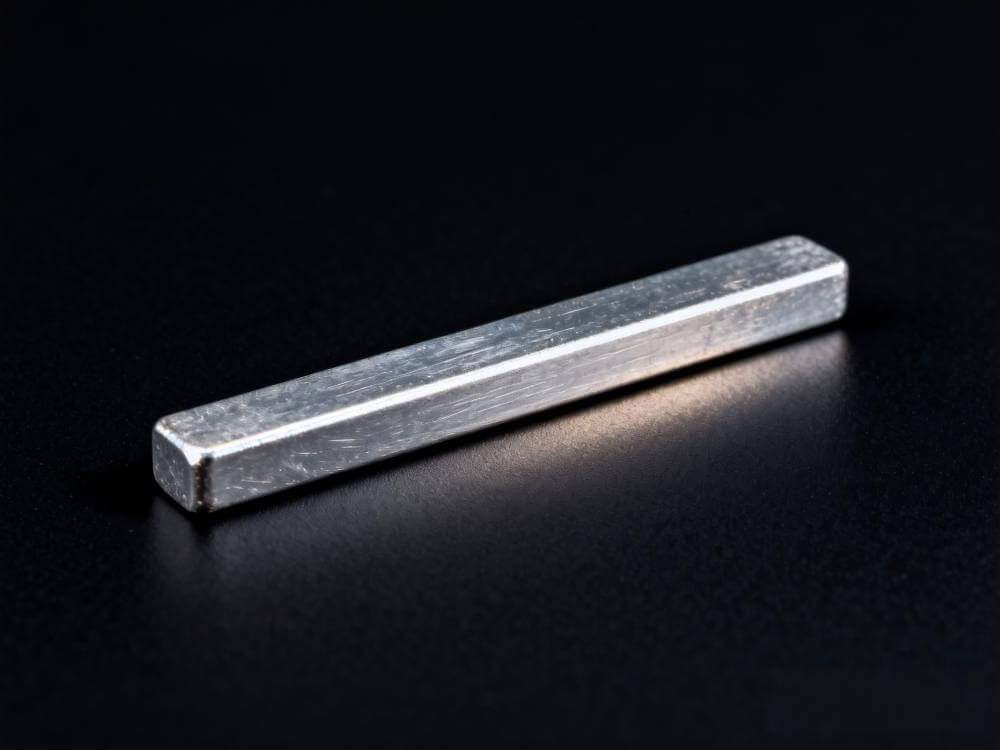
Hunan Smelter Completes Refined Cadmium Tender Sale at RMB 27,800/tonne Amid Firming Prices
1 hour ago
[SMM Rare Earth Morning Meeting Summary] Pr-Nd oxide consolidated on a subdued note in the afternoon with more seller concessions, dysprosium remained stable while terbium held steady at low levels, and magnetic material activity was moderate.
[Pr-Nd oxide consolidates on a subdued note in the afternoon with more seller concessions, dysprosium stable while terbium holds at lows, magnetic material activity moderate] Yesterday, Pr-Nd oxide was affected by fluctuations in futures prices. In the afternoon, seller concessions increased somewhat, while magnetic material enterprises showed weak willingness to enter the market. Low-priced sources remained the mainstay of transactions, with actual shipments limited. Dysprosium oxide quotes held steady, with limited inquiries and sporadic deals. Terbium oxide high-level offers still struggled to find takers, and suppliers made slight price concessions to facilitate shipments, with actual negotiated prices on the lower side.
1 hour ago
Hunan Major Plant's Refined Cadmium Tender Concluded Successfully [SMM Report]
1 hour ago
US industrial supercycle expectations heat up, copper prices consolidate and rebound [SMM Copper Morning Meeting Summary]
SMM Morning Meeting Summary: Overnight, LME copper opened at $14,015/mt, drifted higher after the open to touch a high of $14,128/mt, then pulled back to touch a low of $13,926/mt, and rallied again in late trading to close at $14,114.5/mt, up 0.64%. Trading volume reached 21,000 lots, and open interest stood at 267,000 lots, down 6,845 lots from the previous trading day, reflecting a reduction in bear positions. Overnight, the most-traded SHFE copper 2610 contract opened at 107,430 yuan/mt, touched a high of 107,630 yuan/mt during the session, then declined to touch a low of 106,890 yuan/mt, and finally closed at 107,200 yuan/mt, up 0.15%. Trading volume reached 27,000 lots, and open interest stood at 175,000 lots, down 4,878 lots from the previous trading day, reflecting a reduction in bear positions.
1 hour ago
Talon Metals’ Tamarack Nickel-Copper-Cobalt Project Completes Public Comment Period for Environmental Review
According to Talon Metals on September 15, the company’s Tamarack nickel-copper-cobalt project in Minnesota, U.S., has completed the 60-day public comment period as part of the state environmental review process.
The project is currently under environmental review by the Minnesota Department of Natural Resources. The regulator will next assess the submitted comments and continue advancing the permitting process.
Tamarack is one of the more notable U.S. nickel-copper-cobalt sulphide projects under development by Talon Metals. The company said completion of the public comment period marks an important milestone in the environmental approval process and moves the project closer to subsequent permitting and development stages.
Although the update did not include new cobalt resource figures, production capacity or a commissioning timeline, the permitting progress remains relevant as the U.S. continues to strengthen domestic critical mineral supply chains and could improve the prospects for future domestic nickel and cobalt production.
1 hour ago
DRC Establishes “DRC-USA Task Force” to Accelerate Strategic Minerals Cooperation with the U.S.
According to Reuters on September 15, the Democratic Republic of Congo has established a “DRC-USA Task Force” to accelerate implementation of its strategic minerals cooperation agreement with the United States and move the partnership from a policy framework toward concrete investments and project execution.
As a major global supplier of copper and cobalt, the DRC will use the task force to coordinate progress in critical mineral investment, project development and supply-chain cooperation. DRC Economy Minister Daniel Mukoko Samba said the mechanism is expected to improve the efficiency of implementation between the two sides.
In recent years, the U.S. has strengthened cooperation with the DRC in copper, cobalt and other critical minerals through support for mining investment, expanded access to Western markets and regional logistics infrastructure. The creation of a dedicated implementation mechanism could further deepen U.S.-DRC minerals cooperation and potentially influence cobalt trade flows, the international buyer mix and Western capital participation in the DRC.
1 hour ago
US Treasury yields continue to hit new highs, hawkish US Fed expectations drag aluminum prices down [SMM Aluminum Morning Meeting Summary]
[US Treasury yields continue to hit new highs as hawkish Fed expectations weigh on aluminum price rise] Overall, with China's continued destocking in fundamentals combined with recovering demand in the peak season, there is still strong support below, and aluminum prices are expected to continue to consolidate at highs.
1 hour ago
[New Real Estate Policies Reshape Developers' Cash Flow Pace]
On August 28, the Ministry of Housing and Urban-Rural Development and two other departments jointly introduced new policies, requiring the orderly advancement of raising the presale threshold to the completion of the main building structure, full supervision of presale funds, and a "new-old boundary" for existing home sales, marking a historic transformation in the commercial housing sales system.
Industry experts interviewed by Securities Times reporters believe that this reform precisely echoes the central government's positioning for real estate work of "controlling growth, destocking, and optimizing supply." It will reshape the cash flow timing of real estate development. The past high-turnover model of "land acquisition—construction start—presale—land reacquisition" is no longer sustainable. The chain reactions in supply, inventory, and the competitive landscape are unfolding from this point, and the operating logic of real estate is being systematically reshaped.
1 hour ago
![[649 graders sold in August]](https://imgqn.smm.cn/usercenter/VgxkU20251217171719.jpg)
[649 graders sold in August]
1 hour ago
![Ex-China prices decline, import losses persist [SMM cast aluminum alloy morning comment]](https://imgqn.smm.cn/usercenter/XLWyP20251217171654.jpg)
Ex-China prices decline, import losses persist [SMM cast aluminum alloy morning comment]
1 hour ago
![Silicon metal prices remain weak due to expectations for polysilicon production cuts, while high-purity quartz sand prices hold steady [SMM Silicon-based PV Morning Meeting Summary]](https://imgqn.smm.cn/usercenter/XNRWp20251217171738.jpg)
Silicon metal prices remain weak due to expectations for polysilicon production cuts, while high-purity quartz sand prices hold steady [SMM Silicon-based PV Morning Meeting Summary]
1 hour ago
High-Grade NPI in North China Reaches 1,045 Yuan/Nickel Unit, 6,000 mt Traded for September Delivery
[SMM Nickel Flash] September 16 news: According to SMM understanding, the transaction price of high-grade NPI in the North China market today was 1,045 yuan/nickel unit, Ex-warehouse price at the port, nickel content above 11%, trading volume of 6,000 mt, delivery at month-end September.
1 hour ago
Alumina futures hover low with moving averages pressuring from bears; spot alumina edges down [SMM Alumina Morning Comment]
1 hour ago
LME tin inventory 4,890 mt, down 230 mt; September FOMC rate hike almost certain, watch for decision [SMM Tin Morning News]
[SMM Tin Morning Update: LME tin inventory at 4,890 mt, down 230 mt; September FOMC rate hike almost certain, watch for decision]
1 hour ago
SHFE tin stabilized at 394,010, down slightly by 0.13%, LME tin inventory decreased by 230 mt to 4,890 [SMM Tin Morning Meeting Summary]
[SMM Tin Morning Meeting Summary: SHFE tin stabilized at 394,010, down slightly by 0.13%, LME tin inventory decreased by 230 mt to 4,890]
1 hour ago
LME lead narrows losses & SHFE lead holds lower bound in night session, lead prices consolidate on a weak note [SMM Lead Morning Update]
1 hour ago
Downstream stockpiling on dips begins; lead prices consolidate at low levels on a weak note [SMM Lead Morning Meeting Summary]
1 hour ago
US Dollar Index Remains High, Continuing to Pressure LME Zinc as Price Center Shifts Lower [SMM Zinc Morning Meeting Summary]
[SMM Zinc Morning Meeting Summary: US Dollar Index Remains High, Pressuring LME Zinc Center Lower]: Overnight, LME zinc opened at $3,798.5/mt. After the open, LME zinc consolidated around the daily average. In the afternoon session, LME zinc drifted lower, hitting a low of $3,734/mt, then rebounded in a choppy fashion, reaching a high of $3,835/mt near the close, and finally settled up at $3,831.5/mt, up $27/mt, or 0.71%...
2 hours ago
![[SMM Analysis] DRC Cobalt Exports Surge, Shifting Near-Term Bargaining Power to Buyers](https://imgqn.smm.cn/usercenter/akEdZ20251217171728.jpg)
[SMM Analysis] DRC Cobalt Exports Surge, Shifting Near-Term Bargaining Power to Buyers
The Democratic Republic of the Congo's cobalt exports are gradually recovering, according to the country's mining report for the first half of 2026. The concentrated release of material should ease China's cobalt feedstock shortage and shift bargaining power toward buyers. With cobalt salt demand weak and smelter margins under pressure, additional arrivals will make it harder for sellers to hold firm, and price concessions will be needed to unlock transactions.
Sep 11, 2026 19:02
![[SMM Analysis] US Refined Copper Tariff Uncertainty Returns—What Does It Mean for Global Copper Scrap?](https://imgqn.smm.cn/usercenter/MXbup20251217171745.jpg)
[SMM Analysis] US Refined Copper Tariff Uncertainty Returns—What Does It Mean for Global Copper Scrap?
Sep 11, 2026 16:56

Solid-State Battery Weekly | Steady Progress — Cooling Hype, Stronger Efforts
Sep 11, 2026 16:00
![[SMM Analysis]Downstream Demand Improves Marginally, Non-Oriented Silicon Steel Prices to See Modest Gains in September](https://imgqn.smm.cn/usercenter/Zznfn20251217171716.jpg)
[SMM Analysis]Downstream Demand Improves Marginally, Non-Oriented Silicon Steel Prices to See Modest Gains in September
Sep 11, 2026 14:05
Morocco's Phosphate Chemical Industry: Resource Endowment, Export Landscape, and Capacity Expansion
Sep 10, 2026 17:50
![[SMM Analysis] El Niño-Water Scarcity in Indonesia: Coking Coal Disruption & The Effect to Indonesian Steel Prices](https://imgqn.smm.cn/usercenter/rBCZR20251217171716.jpg)
[SMM Analysis] El Niño-Water Scarcity in Indonesia: Coking Coal Disruption & The Effect to Indonesian Steel Prices
Sep 9, 2026 17:59
![[SMM Analysis] Global PV Module Market Diverges: Cost Support Vs Weak Demand](https://imgqn.smm.cn/usercenter/xAoMy20251217171743.jpg)
[SMM Analysis] Global PV Module Market Diverges: Cost Support Vs Weak Demand
Sep 10, 2026 15:35
Latest News
China's Secondary Aluminum Ingot Inventory Down 246 mt to 12,701 mt in Key Consumption Areas
53 mins ago
East China Smelter to Launch Crude Cadmium Tender Amid Firming Prices, Intense Competition Expected
57 mins ago
Hunan Smelter Completes Refined Cadmium Tender Sale at RMB 27,800/tonne Amid Firming Prices
1 hour ago
[SMM Rare Earth Morning Meeting Summary] Pr-Nd oxide consolidated on a subdued note in the afternoon with more seller concessions, dysprosium remained stable while terbium held steady at low levels, and magnetic material activity was moderate.
1 hour ago
Hunan Major Plant's Refined Cadmium Tender Concluded Successfully [SMM Report]
1 hour ago
US industrial supercycle expectations heat up, copper prices consolidate and rebound [SMM Copper Morning Meeting Summary]
1 hour ago
Talon Metals’ Tamarack Nickel-Copper-Cobalt Project Completes Public Comment Period for Environmental Review
1 hour ago
DRC Establishes “DRC-USA Task Force” to Accelerate Strategic Minerals Cooperation with the U.S.
1 hour ago
US Treasury yields continue to hit new highs, hawkish US Fed expectations drag aluminum prices down [SMM Aluminum Morning Meeting Summary]
1 hour ago
[New Real Estate Policies Reshape Developers' Cash Flow Pace]
1 hour ago
[649 graders sold in August]
1 hour ago
Ex-China prices decline, import losses persist [SMM cast aluminum alloy morning comment]
1 hour ago
Silicon metal prices remain weak due to expectations for polysilicon production cuts, while high-purity quartz sand prices hold steady [SMM Silicon-based PV Morning Meeting Summary]
1 hour ago
High-Grade NPI in North China Reaches 1,045 Yuan/Nickel Unit, 6,000 mt Traded for September Delivery
1 hour ago
Alumina futures hover low with moving averages pressuring from bears; spot alumina edges down [SMM Alumina Morning Comment]
1 hour ago
LME tin inventory 4,890 mt, down 230 mt; September FOMC rate hike almost certain, watch for decision [SMM Tin Morning News]
1 hour ago
SHFE tin stabilized at 394,010, down slightly by 0.13%, LME tin inventory decreased by 230 mt to 4,890 [SMM Tin Morning Meeting Summary]
1 hour ago
LME lead narrows losses & SHFE lead holds lower bound in night session, lead prices consolidate on a weak note [SMM Lead Morning Update]
1 hour ago
Downstream stockpiling on dips begins; lead prices consolidate at low levels on a weak note [SMM Lead Morning Meeting Summary]
1 hour ago
US Dollar Index Remains High, Continuing to Pressure LME Zinc as Price Center Shifts Lower [SMM Zinc Morning Meeting Summary]
2 hours ago