

News
Exclusive analysis articles with the latest market updates, and real-time news feeds.
DRC Establishes US-DRC Special Working Group to Accelerate Strategic Minerals Partnership
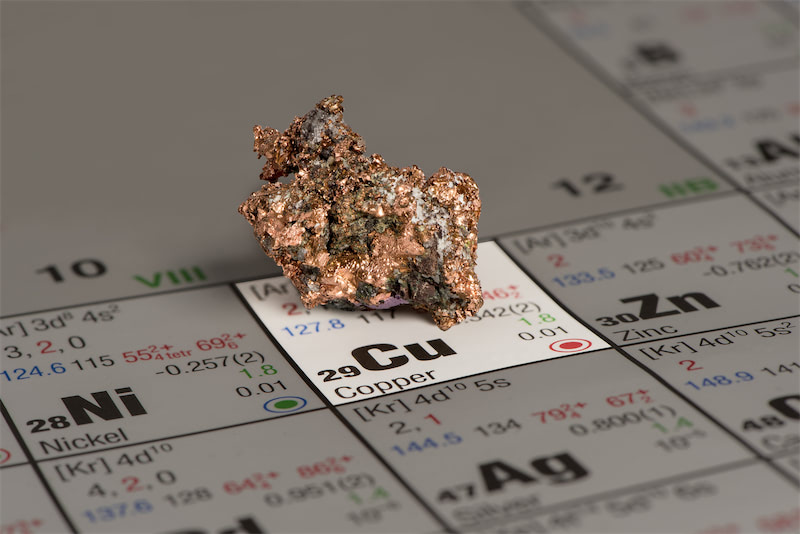
According to foreign media reports, Kinshasa, September 11 — The DRC Cabinet approved the establishment of a DRC-US working group to accelerate the implementation of the bilateral strategic minerals partnership agreement and attract Western investment into the country's copper and cobalt industries. The DRC is the world's largest cobalt producer and the second-largest copper producer and exporter. The two countries signed a minerals cooperation agreement last December, marking the latest move by the country to broaden financing channels and strengthen cooperation with the US. Under the current cooperation framework, Virtus Minerals has already secured US-backed mining investment and is facilitating expanded copper mine cooperation between Gecamines, Mercuria, and Glencore, helping mineral products reach Western markets. The working group was originally scheduled to launch in February this year but was delayed by administrative obstacles, and its members and key projects have not yet been disclosed. The Cabinet meeting also approved a $24.8 billion fiscal budget for 2027, a 12% increase over this year's revised spending, with infrastructure, security, and economic diversification as priority areas.
Sep 21, 2026 10:00 (GMT+8)
[SMM Analysis] China-US Talks Fuel Bullish Sentiment in Pr-Nd Market, But Fundamentals Prevail
On the evening of September 23 (Beijing time) President Xi Jinping arrived in Washington by special plane for a state visit to the United States at the invitation of President Donald Trump, with the trip scheduled through September 25. Earlier, Chinese economic and trade teams had gone to New York to participate in related talks. Within the China‑US economic agenda, rare earths and critical minerals remain one of the most closely watched themes for global supply chains.
6 hours ago
Why Is SHFE Copper’s “Three Highs” Market Intensifying?
Why Is SHFE Copper Entering a High-Premium, High-Backwardation, High-Price Market?
Sep 22, 2026 18:53 (GMT+8)
Latest News
![Silver prices rose first then fell, closing the week with a bearish candle as bulls and bears intertwined, awaiting new variables to break the deadlock [SMM Silver Weekly Review]](https://imgqn.smm.cn/usercenter/kLgYV20251217171736.jpg)
Silver prices rose first then fell, closing the week with a bearish candle as bulls and bears intertwined, awaiting new variables to break the deadlock [SMM Silver Weekly Review]
1 hour ago
![Polysilicon sees small-volume high-price deals, centralized module prices decline further [SMM weekly review]](https://imgqn.smm.cn/usercenter/EutUV20251217171724.jpeg)
Polysilicon sees small-volume high-price deals, centralized module prices decline further [SMM weekly review]
3 hours ago
![[SMM PV News] Trinasolar Joins Hands with Intel to Explore New Paths for Computing-Power Synergy, Accelerating Green Intelligent Computing Industry Layout for AIDC](https://imgqn.smm.cn/usercenter/EcOMz20251217171741.jpg)
[SMM PV News] Trinasolar Joins Hands with Intel to Explore New Paths for Computing-Power Synergy, Accelerating Green Intelligent Computing Industry Layout for AIDC
4 hours ago
[SMM PV Flash] PowerChina Secures 300 MW PV Sand Control Project Quota in Gansu
On September 21, the People's Government of Liangzhou District, Wuwei City, Gansu Province, announced the results of the competitive allocation for the 300,000 kW special PV sand control project in Jiuduntan, Liangzhou District. The Gansu Branch of PowerChina New Energy Group Co., Ltd. was selected.
4 hours ago
[SMM PV Flash] BYD Secures Patent for Silver-Carbon Paste for Heterojunction Cells and Its Application
On September 22, the China National Intellectual Property Administration announced that BYD Company Limited has been granted a patent titled "A Silver-Carbon Paste for Heterojunction Cells and Its Application," with authorization publication number CN122800344A and an application date of March 2025.
The patent abstract indicates that the present invention relates to the field of cell technology, specifically to a silver-carbon paste for heterojunction cells and its application. The silver-carbon paste for heterojunction cells comprises at least a silver-based conductive material and carbon nanotubes, wherein the carbon nanotubes have defects. By employing carbon nanotubes with defects, the present invention increases the attachment sites for the silver-based conductive material on the carbon nanotubes, enhances the adhesion between the silver-based conductive material and the carbon nanotubes, and improves the filling of the silver-based conductive material within the carbon nanotubes. This results in better electrical conductivity at the same carbon nanotube dosage, thereby addressing the issue where the addition of carbon materials significantly increases the contact resistance and series resistance of cells, leading to a substantial reduction in cell efficiency.
4 hours ago
Precious metals closed lower for the week as the market worried about an official restart of the rate hike cycle [SMM precious metals macro analysis]
Precious metals closed lower this week, with spot gold falling below $4,300/oz and dropping about 2% for the week. The main pressures came from PMI data far exceeding expectations, hawkish comments from US Fed officials, the 10-year Treasury yield breaking above 5%, and the US dollar index breaking above 101, raising market concerns about a resumption of the rate hike cycle. The repeated twists in US-Iran tensions added further uncertainty. Meanwhile, signs of gold prices decoupling from interest rates and ETF open interest hitting a seven-month high provided bottom support. Going forward, attention will focus on the progress of US-Iran talks and the US Fed's next moves.
4 hours ago
[SMM Silicon-based PV Morning Meeting Summary] Pre-holiday demand support, PV prices stabilize
[SMM Silicon-based PV Morning Meeting Summary: Pre-holiday demand support, PV prices stabilize] This week, China's distributed module prices remained stable. Supported by costs, mainstream power quotes from enterprises were basically unchanged. Moreover, distributed demand has been declining month by month, and the shipment center of enterprises has shifted to the centralized market. On the centralized side, multiple projects have recently opened bids, with prices showing divergence. Some enterprises targeting shipment volumes submitted lower bid prices, while those aiming to secure costs and profits mostly kept prices high. Currently, distributed Topcon 183, 210R, and 210N high-efficiency modules are quoted at 0.7085 yuan/W, 0.718 yuan/W, and 0.723 yuan/W, respectively. Centralized Topcon 182/183, 210N, and 210R modules are quoted at 0.696 yuan/W, 0.707 yuan/W, and 0.702 yuan/W, respectively.
9 hours ago
[SMM PV News] Large PV Project Invested and Built by Chinese Enterprise in Azerbaijan Officially Connected to Grid
The grid connection ceremony for the 100 MW Gobustan PV power station project, invested and constructed by Universal Energy Co., Ltd., was held in Baku, Azerbaijan on the 16th.
Sep 23, 2026 16:53 (GMT+8)
[SMM PV Flash] 12 GW capacity fully phased out! Jinko Solar's Zhejiang PV cell and module factory undergoes technological transformation!
On September 21, the Jiaxing Municipal Ecology and Environment Bureau of Zhejiang Province issued a public notice regarding its intention to approve the environmental impact assessment documents for the high-efficiency new-structure cell and module technological transformation project of Zhejiang Jinko Solar Co., Ltd.
According to the notice, Zhejiang Jinko Solar Co., Ltd. (hereinafter referred to as "Zhejiang Jinko") plans to invest 179.2 million yuan to implement the high-efficiency new-structure cell and module technological transformation project within its existing factory buildings. The project will phase out outdated equipment such as texturing machines and tabbing and stringing machines, introduce advanced equipment for wet processing and patterning, and deploy digital and intelligent systems including MES, SAP, and AI, thereby achieving a comprehensive technological upgrade.
The factory undergoing this technological transformation by Zhejiang Jinko is located in Haining City, with existing capacity of 6 GW of crystalline silicon cells and 6 GW of cell modules.
After the implementation of the above technological transformation project, the existing capacity of 6 GW/a of cells and 6 GW/a of modules will be fully phased out, while the R&D activities for solar cells will be retained. The entire plant will then achieve an annual production capacity of 2.7 GW/a of high-efficiency new-structure cells and 4 GW/a of modules.
Sep 23, 2026 16:52 (GMT+8)
[SMM PV Flash] China Huaneng 30MW PV Project Announced!
On September 21, the Xishuangbanna Prefecture Ecology and Environment Bureau of Yunnan issued a public notice on the proposed review of the ecological and environmental impact assessment documents for the Bada PV power generation project.
The content shows that the Bada PV power generation project is located in Manyan Village, Manyanglong Village, and Manmengyang Village, Mengzhe Town, Menghai County, Xishuangbanna Dai Autonomous Prefecture. The total investment is estimated at 122.98 million yuan, the total land area is 36.95 hectares, the rated capacity is 30 MW, and the installed capacity is 35.9268 MWp. It is a tea-PV complementary project.
The construction period of the project is 6 months, and monocrystalline silicon cell modules with a peak power of 650 Wp are selected.
The construction unit of the project is Huaneng New Energy (Menghai) Co., Ltd., which is a holding subsidiary of Huaneng New Energy.
Sep 23, 2026 16:51 (GMT+8)
![[SMM PV News] GCL SI shared its BC differentiated technology path at the Asia PV+ESS Innovation Forum and won the Asia PV Innovation Enterprise Award.](https://imgqn.smm.cn/usercenter/hDwid20251217171740.jpg)
[SMM PV News] GCL SI shared its BC differentiated technology path at the Asia PV+ESS Innovation Forum and won the Asia PV Innovation Enterprise Award.
Sep 23, 2026 16:50 (GMT+8)
Huawei Pursues Africa Green‑Mining Partnerships and Holds Business Talks with ZESCO at SMM ACM 2026
Sep 23, 2026 16:41 (GMT+8)
![[SMM Statistics] PV Module Tender Capacity in August 2026 Reached 11.64 GW, with an Average Winning Bid Price of 0.687 yuan/W](https://imgqn.smm.cn/usercenter/mfLxa20251217171736.jpg)
[SMM Statistics] PV Module Tender Capacity in August 2026 Reached 11.64 GW, with an Average Winning Bid Price of 0.687 yuan/W
Sep 23, 2026 15:26 (GMT+8)
[SMM PV Flash] Comstock Moves US Solar-Panel Recycling Line to Continuous 24/7 Operations
Comstock Metals announced on 22 September that its solar-panel recycling system in Silver Springs, Nevada, had moved to continuous 24-hour, seven-day operations, advancing from equipment integration and commissioning into continuous production. One line is designed to process up to approximately 100,000 tonnes, or around 3.3 million end-of-life modules, annually while separating aluminium, glass and silicon- and metal-bearing materials under a zero-landfill model. The 100,000-tonne figure is rated design capacity rather than current output, and the company remains in the process of ramping production in line with customer volumes.
Sep 23, 2026 13:42 (GMT+8)
[SMM PV Flash] NorthStar Completes 120 MW Hart Solar Project in Michigan
NorthStar Clean Energy announced on 21 September that construction of its 120 MW Hart solar project in Oceana County, Michigan, had been completed, with the project entering commercial operation in 2026. The facility is expected to generate more than 200 GWh annually and supplies public-sector, school and municipal-related customers under long-term power purchase arrangements. A ribbon-cutting ceremony is scheduled for 8 October, but this is a subsequent event and does not change the project’s current completed and operating status.
Sep 23, 2026 13:42 (GMT+8)
[SMM PV Flash] Renalfa Expands Bulgarian Solar Plant to 65 MWp and Adds 165 MWh of Storage
Renalfa IPP has completed the repowering and hybridisation of the Devnya solar plant in northeastern Bulgaria, expanding the facility from 5 MWp to 65 MWp and adding a co-located 60 MW/165 MWh battery system. The original plant has operated since 2011, while Solarpro Bulgaria managed the project and delivered the EPC scope for the upgrade. The work therefore represents approximately 60 MWp of incremental solar capacity rather than a new standalone 65 MWp plant; the upgraded hybrid asset is complete, with future returns dependent on market participation, storage dispatch and utilisation.
Sep 23, 2026 13:42 (GMT+8)
[SMM PV Flash] Nadara Completes Construction of 227 MW Big Fish Agrivoltaic Project in Italy
Nadara confirmed on 22 September that construction had been completed on the 227 MW Big Fish agrivoltaic project in Sicily, spread across 15 plots in Catania, Lentini and Motta Sant’Anastasia and covering around 400 hectares. About half of the site remains in agricultural use, with modules elevated by up to approximately three metres; construction took around 12 months and involved more than 900 workers. Amazon has contracted 156 MW under a long-term power purchase agreement, but the current disclosure confirms construction completion and should not be treated as commercial operation until grid acceptance and operating status are separately confirmed.
Sep 23, 2026 13:42 (GMT+8)
[SMM PV Flash] Nigeria Launches USD 300 Million Distributed Renewable Energy Fund for Capital Deployment
Nigeria announced on 22 September that its USD 300 million Distributed Renewable Energy Fund had reached commercial launch, moving from fund structuring into active capital deployment. Co-managed by the Nigeria Sovereign Investment Authority and Africa50, the vehicle will support mini-grids, standalone solar systems and other distributed power projects serving areas with limited grid access, using blended public and private capital to expand financing capacity. The milestone makes the investment platform operational but does not mean the full capital has been deployed or that all underlying projects have started construction; the first investments and resulting capacity additions remain the next key steps.
Sep 23, 2026 13:42 (GMT+8)
[SMM PV Flash] Poland Sets 2026 Renewables Auctions, Allocating 64.5 TWh to Solar and Onshore Wind
Poland’s energy regulator formally published notices on 22 September for seven regular renewable energy auctions to be held from 2 to 10 November, covering more than 76 TWh of electricity with a total value of nearly PLN 25 billion. Solar PV and onshore wind account for 64.5 TWh worth just over PLN 17.9 billion, including a 53.25 TWh joint basket for projects above 1 MW scheduled for 10 November. The auctions will remain price-based and open only to new installations; the announcement sets the auction framework and timetable and does not represent award results.
Sep 23, 2026 13:41 (GMT+8)
【Flash | Lumentum’s AI Optical Growth Supports the Indium Phosphide (InP) Demand Outlook】
Lumentum reported fiscal Q4 2026 revenue of $1.006 billion, up 24.5% QoQ and 109.3% YoY. Components revenue reached $649.4 million, rising 102.7% YoY. The company said increasing AI compute speed and bandwidth requirements are driving greater use of optical connectivity in datacenters, alongside accelerating 1.6T cloud-module adoption and growing demand for ultra-high-power CPO lasers. Its fiscal Q1 2027 revenue guidance midpoint reached $1.25 billion. SMM views the expansion of high-speed optical modules and lasers as providing downstream demand support for InP and high-purity indium. However, Lumentum did not disclose InP-specific revenue, shipments or indium consumption, preventing a quantitative estimate of demand growth.
Sep 23, 2026 09:39 (GMT+8)
Huawei Pursues Africa Green‑Mining Partnerships and Holds Business Talks with ZESCO at SMM ACM 2026
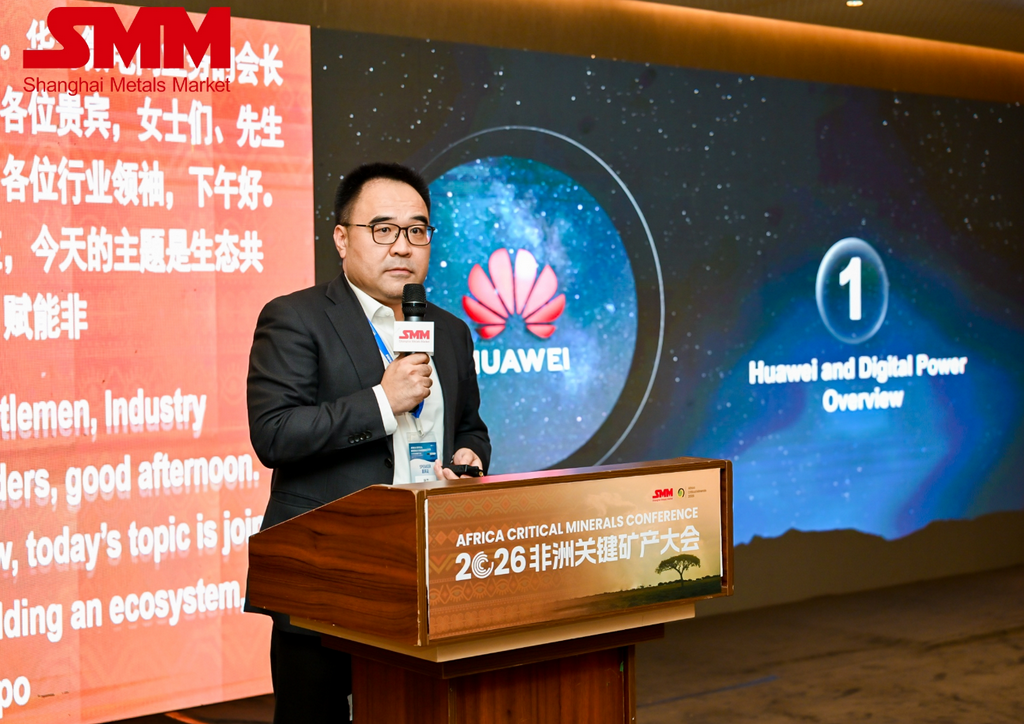
The SMM Africa Critical Minerals Conference 2026 (ACM2026) , hosted by Shanghai Metals Market (SMM), wrapped up with great success in Lusaka, Zambia on September 15‑16. Focusing on the development of strategic minerals such as copper, cobalt, lithium, and tin in Africa, local deep-processing transformation, green mine construction and energy infrastructure upgrading, this premium event has brought together 400+ industry representatives from Chinese and African government agencies, top miners, commodity traders, investors, and technical service providers to jointly explore high-quality development paths for Africa's critical minerals industry chain. Huawei presented its mine microgrid solution at this conference. Joseph Yao, President of Mining Micro-Grid Business at Huawei Digital Power , delivered a keynote speech titled "Eco‑Partnerships for Green African Mines: Huawei's Mine Microgrid Practices under the IPP‑PPA Model". Huawei's delegation also held business talks with ZESCO, Zambia's national power utility, covering mine energy supply, new‑energy deployment and collaborative power‑infrastructure build‑out. As the global energy transition continues to advance, the new energy industry is steadily boosting demand for critical minerals such as copper and cobalt. Africa is rich in strategic mineral resources and is accelerating its upgrade from exporting mineral raw materials to a high-value-added industry chain encompassing local smelting and deep processing. Mines, as power-intensive sites, require stable and low-cost green power supply, which has become a core factor constraining the implementation of mining projects and the release of capacity in Africa. Leveraging the IPP-PPA (independent power producer investment + long-term power purchase agreement) cooperation model, distributed new energy microgrids can provide reliable power nearby for open-pit mines and smelter sites, helping mines reduce electricity costs and carbon emissions, and supporting the implementation of Zambia's strategy for local copper ore processing. (Joseph Yao, President of Mining Micro-Grid Business at Huawei Digital Power) Joseph Yao shared an overview of Huawei and its Digital Energy business, introducing Huawei as a leading provider of ICT infrastructure and smart terminals, a technology-driven enterprise with operations across many countries worldwide, focusing on core business segments such as smart PV and grid-forming ESS. He noted that Africa's mining sector is generally plagued by power shortages. High diesel costs erode mine profit margins, unstable power supplies risk production disruptions, while ESG requirements also impose constraints on mineral exports. He proposed a three-step path for the sustainable development of African mining: Firstly, supply green electricity to mines through digital energy infrastructure to reduce carbon emissions; Secondly, electrification transition of mining equipment; Thirdly, reshape production processes through AI platforms and intelligent management systems, optimize equipment scheduling, and improve mine capacity and production efficiency. He also highlighted Huawei's mine microgrid system. Rather than a standalone piece of equipment, it is a complete energy solution integrating photovoltaic‑storage systems, intelligent dispatching, diesel backup power supplies, control systems and management software. It breaks the conventional single‑power‑source model to enable energy self‑sufficiency and efficient energy management at mining sites. Citing the large‑scale microgrid project for Saudi Arabia's Red Sea Global as a case study, he explained that this city‑level microgrid achieved major technical breakthroughs underpinned by Huawei's robust in‑house R&D capabilities and power‑simulation laboratories. Huawei possesses independent R&D capacity for core power‑electronic components such as IGBTs, and delivers one‑stop services covering design, simulation and project delivery. Together with ecosystem partners, it also provides full‑lifecycle engineering consultation and on‑site implementation support. The successful delivery of this project has laid a solid foundation for microgrid deployment in mining scenarios. He specifically addressed the widespread funding pain points confronting African mining projects. Under the IPP‑PPA ecosystem model, domestic and international investors can be brought in to finance mine‑energy projects. Mining companies, as power purchasers, sign long‑term power‑purchase agreements to secure stable mine operations, while investors obtain steady returns, forming a sustainable commercial closed‑loop. In his speech, Joseph cited several African mine microgrid implementation cases. Among them, after the completion of the Kamoa-Kakula mining microgrid project in the DRC, green electricity will replace a large amount of diesel power generation, significantly reducing mine electricity costs and carbon emissions, and delivering a good return on investment. For this Chinese-funded miner's copper mine project in the DRC, microgrid upgrades sharply reduced electricity costs and significantly improved the mine's capacity utilization rate, verifying the practical value of green electricity microgrids in African mine scenarios. He summarized Huawei's three core capabilities: a globalized business platform, end-to-end one-stop microgrid solutions, and a diverse ecosystem partner system that includes investors, EPCs, and design consulting agencies. He added that Huawei is looking forward to establishing partnership with more investors to develop energy projects across Zambia and wider Africa, secure power supplies for critical‑mineral industries including copper and lithium, jointly foster green mines in Africa, and build a low‑carbon and sustainable industrial future. During the conference, the Huawei delegation held a business meeting with representatives from Zambia's national power utility ZESCO. Against the backdrop of accelerating green transformation in African mining and continuously growing power demand in mining areas, the two sides exchanged views on topics of common concern such as power infrastructure construction and new energy support, and expressed their intention to jointly explore potential areas for cooperation. Africa's mineral industry is at a critical window for industry chain upgrading. Huawei, drawing on its technological strengths in new energy and smart power, will partner with IPP investors, local power authorities and mining operators to build an open‑cooperation ecosystem. Leveraging its proven mine microgrid solutions, Huawei aims to deliver green, reliable power supplies for African mining and smelting projects, advance the low‑carbon transition of Africa’s critical minerals industry, and deepen practical China‑Africa cooperation across the mining and energy sectors.
Sep 23, 2026 16:41 (GMT+8)
![[SMM Analysis] China’s Shifting Tungsten Trade Landscape: A Strategic View](https://imgqn.smm.cn/usercenter/eThpo20251217171723.jpeg)
[SMM Analysis] China’s Shifting Tungsten Trade Landscape: A Strategic View
Sep 23, 2026 09:13 (GMT+8)
![[SMM Analysis] A Snapshot of Zambia’s Gold Market: From Mine Output to Formal Trade](https://imgqn.smm.cn/usercenter/nQsOk20251217171736.jpg)
[SMM Analysis] A Snapshot of Zambia’s Gold Market: From Mine Output to Formal Trade
Sep 23, 2026 16:23 (GMT+8)
![Canada Lifts Solar Trade Duties: Can Chinese Modules Win a Bigger Share? [SMM Analysis]](https://imgqn.smm.cn/usercenter/VqcvE20251217171739.jpg)
Canada Lifts Solar Trade Duties: Can Chinese Modules Win a Bigger Share? [SMM Analysis]
Sep 21, 2026 18:03 (GMT+8)
DRC Establishes US-DRC Special Working Group to Accelerate Strategic Minerals Partnership
Sep 21, 2026 10:00 (GMT+8)
![[SMM Analysis] China-US Talks Fuel Bullish Sentiment in Pr-Nd Market, But Fundamentals Prevail](https://imgqn.smm.cn/usercenter/PVQnj20251217171744.jpg)
[SMM Analysis] China-US Talks Fuel Bullish Sentiment in Pr-Nd Market, But Fundamentals Prevail
6 hours ago

Why Is SHFE Copper’s “Three Highs” Market Intensifying?
Sep 22, 2026 18:53 (GMT+8)
Latest News
Silver prices rose first then fell, closing the week with a bearish candle as bulls and bears intertwined, awaiting new variables to break the deadlock [SMM Silver Weekly Review]
1 hour ago
Polysilicon sees small-volume high-price deals, centralized module prices decline further [SMM weekly review]
3 hours ago
[SMM PV News] Trinasolar Joins Hands with Intel to Explore New Paths for Computing-Power Synergy, Accelerating Green Intelligent Computing Industry Layout for AIDC
4 hours ago
[SMM PV Flash] PowerChina Secures 300 MW PV Sand Control Project Quota in Gansu
4 hours ago
[SMM PV Flash] BYD Secures Patent for Silver-Carbon Paste for Heterojunction Cells and Its Application
4 hours ago
Precious metals closed lower for the week as the market worried about an official restart of the rate hike cycle [SMM precious metals macro analysis]
4 hours ago
[SMM Silicon-based PV Morning Meeting Summary] Pre-holiday demand support, PV prices stabilize
9 hours ago
[SMM PV News] Large PV Project Invested and Built by Chinese Enterprise in Azerbaijan Officially Connected to Grid
Sep 23, 2026 16:53 (GMT+8)
[SMM PV Flash] 12 GW capacity fully phased out! Jinko Solar's Zhejiang PV cell and module factory undergoes technological transformation!
Sep 23, 2026 16:52 (GMT+8)
[SMM PV Flash] China Huaneng 30MW PV Project Announced!
Sep 23, 2026 16:51 (GMT+8)
[SMM PV News] GCL SI shared its BC differentiated technology path at the Asia PV+ESS Innovation Forum and won the Asia PV Innovation Enterprise Award.
Sep 23, 2026 16:50 (GMT+8)
Huawei Pursues Africa Green‑Mining Partnerships and Holds Business Talks with ZESCO at SMM ACM 2026
Sep 23, 2026 16:41 (GMT+8)
[SMM Statistics] PV Module Tender Capacity in August 2026 Reached 11.64 GW, with an Average Winning Bid Price of 0.687 yuan/W
Sep 23, 2026 15:26 (GMT+8)
[SMM PV Flash] Comstock Moves US Solar-Panel Recycling Line to Continuous 24/7 Operations
Sep 23, 2026 13:42 (GMT+8)
[SMM PV Flash] NorthStar Completes 120 MW Hart Solar Project in Michigan
Sep 23, 2026 13:42 (GMT+8)
[SMM PV Flash] Renalfa Expands Bulgarian Solar Plant to 65 MWp and Adds 165 MWh of Storage
Sep 23, 2026 13:42 (GMT+8)
[SMM PV Flash] Nadara Completes Construction of 227 MW Big Fish Agrivoltaic Project in Italy
Sep 23, 2026 13:42 (GMT+8)
[SMM PV Flash] Nigeria Launches USD 300 Million Distributed Renewable Energy Fund for Capital Deployment
Sep 23, 2026 13:42 (GMT+8)
[SMM PV Flash] Poland Sets 2026 Renewables Auctions, Allocating 64.5 TWh to Solar and Onshore Wind
Sep 23, 2026 13:41 (GMT+8)
【Flash | Lumentum’s AI Optical Growth Supports the Indium Phosphide (InP) Demand Outlook】
Sep 23, 2026 09:39 (GMT+8)