

News
Exclusive analysis articles with the latest market updates, and real-time news feeds.
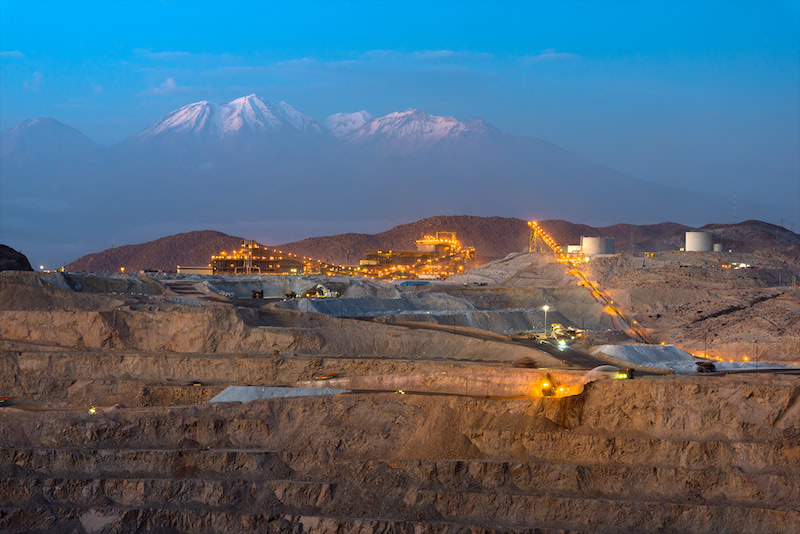
Copper Prices Rebound Sharply: Bad News Fully Priced In, or Fundamentals Reasserting Themselves?
As September got underway, copper prices did not extend their decline after the US Federal Reserve delivered its rate hike. Instead, they rebounded quickly following a brief period of pressure. SHFE copper returned to elevated levels, while LME copper again approached its previous highs. The swift rebound cannot be explained by macro expectations alone. More precisely, the full pricing-in of the rate hike and subsequent short covering served as the immediate catalysts, while deeply negative treatment charges (TCs) for imported copper concentrates, more extensive smelter maintenance and a sharp decline in China’s social inventories of refined copper provided the fundamental underpinning. Persistent Raw-Material Tightness and Frequent Smelter Maintenance Keep Supply Constrained On September 18, the SMM Imported Copper Concentrate Index stood at -$221.89 per dry metric tonne, down another $12.19 per dry metric tonne from the previous reading and marking a fresh record low. Processing charges for copper anode are also at historically low levels, reflecting continued tightness in copper anode supply. Meanwhile, sulphuric acid prices have declined for around two and a half consecutive months, steadily eroding smelters’ by-product earnings and adding to operating pressure across the smelting sector. Several Chinese copper smelters are scheduled to undergo maintenance in October and November. With the availability of supplementary cold-feed materials constrained, raw-material bottlenecks are creating downside risks to refined copper output. Market sources indicate that some smelters have already signalled an intention to cut production and have notified customers that deliveries under long-term contracts will be reduced, although the scale of the reductions has yet to be specified. SMM will continue to monitor the execution of planned maintenance, the scope of actual production cuts and the marginal impact of sulphuric acid prices on smelter operating rates. Based on the maintenance schedule, the intensity of copper smelter maintenance in the second quarter of 2026 was notably higher than in 2025. Metric 2025 2026 Change Maintenance events 30 38 Up 8, or 26.7% Average maintenance duration 33.8 days 35.2 days Up 1.4 days Maintenance lasting 40 days or more 7 14 Doubled Maintenance lasting 60 days or more 2 5 Up 3 The number of maintenance events scheduled for the full year increased from 30 to 38, while long-duration maintenance lasting 40 days or more rose from seven events to 14. In terms of timing, the maintenance peak shifted from April–May in 2025 to March–June in 2026, with a second wave of concentrated maintenance still scheduled for October–November. Based on currently available data, the combined realised and anticipated output losses in 2026 already slightly exceed the actual impact recorded in 2025. As estimates have yet to be disclosed for some upcoming maintenance events, the overall disruption to refined copper supply from smelter maintenance is expected to be greater in 2026 than in 2025. Rapid Inventory Draws Shift the Market from Contango to Backwardation Inventory movements have been the clearest fundamental signal behind the latest rebound in copper prices. Around the 2026 Chinese New Year holiday, China’s social inventories of refined copper accumulated rapidly, at one point reaching approximately 570,000–580,000 mt. Inventories declined steadily after the holiday, falling to around 200,000 mt by Week 25. The drawdown accelerated further in the third quarter, with stocks dropping to roughly 90,000 mt in Weeks 36–37. Compared with the same period in previous years, current inventories are not only significantly below their 2024 and 2025 levels but are also approaching the seasonal lows seen in recent years. From the year’s peak, domestic social inventories have declined by nearly 500,000 mt, a drop of more than 80%. This means that the market’s inventory buffer has thinned considerably. When inventories are high, fluctuations of several tens of thousands of tonnes in arrivals or consumption may not be enough to alter the physical market structure. Once inventories fall to low levels, however, delayed imports, reduced smelter deliveries or periodic restocking by downstream producers can quickly amplify tightness in the physical market. The shift in the market structure from contango to backwardation is precisely how these low inventories have been reflected in the futures market. As immediately available physical supply declines, nearby contracts command a higher premium over forward contracts, sellers become more inclined to hold firm on offers and nearby spreads widen accordingly. In other words, backwardation is not an independent driver of the current copper rally. Rather, it is the result of low inventories and tight physical supply, while also reinforcing expectations of near-term supply tightness. It is important to note that falling inventories should not simply be equated with a sharp increase in end-user demand. The rapid drawdown in Chinese inventories reflects not only support from consumption but also the pull of copper units into the US market, import losses, the timing of cargo arrivals and smelter maintenance. A more accurate characterisation of the current physical tightness would therefore be that demand has not weakened materially, while supply replenishment has not arrived quickly enough, resulting in a rapid decline in readily available inventories. Outlook: Copper Prices Remain Supported, but Market Tensions May Shift at Elevated Levels In the short term, China’s social inventories remain low. With the National Day and Mid-Autumn Festival holidays approaching, downstream producers are also likely to restock in advance, lending continued support to spot premiums and nearby backwardation. At the same time, however, the COMEX-LME ( C/L) spread has turned slightly negative, and the cross-market arbitrage window for shipping copper to the US has largely closed. Global copper flows may therefore begin to shift, creating potential supply pressure in China’s physical market. First, changes in the C/L spread and the potential return of overseas cargoes. The C/L spread has continued to narrow from its earlier highs and has now moved slightly into negative territory, indicating that the US market’s price incentive for overseas copper units has weakened significantly. If this negative spread persists, incremental cargoes that had previously flowed to the US may be redirected to China and other Asian markets. Chinese import arrivals could consequently increase, placing pressure on spot premiums and backwardation. However, trade negotiations, contract signing, loading, vessel diversions and shipping all involve time lags. Any redirection of cargoes will therefore not be reflected immediately in domestic inventories; its impact is more likely to become visible later through import arrivals and changes in bonded-zone inventories. Conversely, if expectations of US tariffs on refined copper intensify again and the C/L spread widens, the pressure from returning cargoes may ease. Second, pre-holiday restocking and the performance of spot premiums. As the holidays approach, downstream producers will need to secure material in advance to cover production requirements and logistics schedules during the holiday period. Against a backdrop of low social inventories and limited immediately available supply, sellers are likely to hold firm on offers. Spot premiums may rise further, while nearby backwardation could deepen accordingly. However, pre-holiday restocking partly represents demand being brought forward. Once restocking is largely complete, high copper prices may curb downstream procurement and physical trading activity could cool rapidly. The sustainability of stronger pre-holiday premiums should therefore be assessed against actual transactions and post-holiday inventory movements. Third, imported copper concentrate TCs and the actual pace of smelter production cuts. TCs for imported copper concentrates are already deeply negative, and the economics of processing spot imported concentrates continue to deteriorate. Some smelters have consequently shown a stronger willingness to reduce production. The key question is whether these intentions will translate into actual output losses. If maintenance and operating-rate cuts broaden further, a contraction in Chinese refined copper supply would help offset the pressure from returning import cargoes. Conversely, if output recovers quickly once maintenance ends while overseas cargoes are simultaneously redirected to China, domestic supply pressure could rise markedly. Fourth, whether Chinese smelter output can recover. As maintenance at some smelters concludes, a rebound in refined copper production during the fourth quarter, combined with a concentrated increase in import arrivals, could cause domestic inventories to shift from destocking to stabilisation or even accumulation. Overall, pre-holiday restocking and low inventories should continue to support spot premiums in the near term. However, the negative C/L spread indicates that the US pull on global copper units has reached a potential inflection point. The market’s next key test is whether supply reductions at smelters can offset the return of import cargoes, and whether underlying consumption can continue to absorb high copper prices once concentrated pre-holiday restocking comes to an end.
Sep 18, 2026 17:56 (GMT+8)
[SMM Analysis] Chinese tungsten market sees broad-based decline amid weak supply and demand, with no upside in sight
[SMM Tungsten Analysis: Pre-Holiday Stockpiling Not Yet Realized, Chinese Market Continues to See Weak Supply and Demand] In the short term, the decline in domestic APT operating rates and the strong rigid constraints on mine-side supply still provide some support for tungsten upstream prices. However, downstream powder and cemented carbide enterprises are slow to digest previously high-priced inventory, and order recovery will take time, leaving prices lacking upward momentum.
Sep 18, 2026 17:13 (GMT+8)
Goldman keeps $5,400 gold forecast intact despite Fed hike
Goldman Sachs kept its end-2027 gold forecast at $5,400 an ounce despite this week's Fed hike, saying tighter policy will slow the rally but not derail it. Gold ticked above $4,355 on Friday on a softer dollar and lower oil prices. Goldman Sachs holding its end-2027 gold forecast at $5,400 an ounce despite this week's rate hike is the more notable signal here, since it suggests the bank sees the Fed's tightening path as a headwind that slows gold's rally rather than one that reverses it. That view sits against a backdrop where higher rates would typically curb demand for a non-yielding asset by increasing the appeal of yield-bearing alternatives, yet gold has still edged higher on Friday, helped by a softer dollar and a 1% pullback in oil prices. With 16 of 18 Fed policymakers now pointing to at least one more hike this year, the near-term path for real yields remains a genuine headwind, but Goldman's unchanged long-term call implies the bank sees that pressure as manageable within its broader bullish thesis, likely underpinned by continued central bank buying and ongoing Middle East risk. --- Goldman says the Fed's hike slows gold's rally, but the bank isn't backing off its $5,400 call. Summary: Goldman Sachs kept its end-2027 gold price forecast unchanged at $5,400 per troy ounce despite this week's Federal Reserve rate hike, saying tighter policy ( Goldman ditches one and done call, now sees a second Fed hike in October ) is likely to slow bullion's rally but not derail it Gold rose slightly on Friday to trade above $4,355 an ounce, supported by a 1% fall in oil prices and a subdued US dollar The Fed raised interest rates on Wednesday and signalled further hikes ahead, with updated projections showing 16 of 18 policymakers expecting at least one more quarter-point increase by year end A weaker dollar makes dollar-priced commodities cheaper for holders of other currencies, while higher rates typically curb gold demand by boosting the appeal of yield-bearing assets Market participants remain focused on developments in the Middle East and the broader path for global monetary policy Goldman Sachs kept its end-2027 gold price forecast unchanged at $5,400 per troy ounce on Friday, even after this week's Federal Reserve rate hike, saying tighter monetary policy is likely to slow bullion's rally rather than derail it. The bank's unchanged call comes despite a backdrop that would typically weigh on gold, since higher interest rates increase the appeal of yield-bearing assets and can curb demand for a non-yielding metal, even one traditionally viewed as an inflation hedge. Gold itself ticked higher on Friday, trading above $4,355 an ounce, as lower oil prices and a subdued US dollar offered support. Oil fell around 1% on the day, while the dollar remained soft after retreating from recent highs, a combination that makes dollar-priced commodities less expensive for holders of other currencies and has provided a modest tailwind for bullion. The move comes just two days after the Fed raised interest rates on Wednesday and flagged further hikes in the months ahead. Updated quarterly economic projections showed 16 of the Fed's 18 policymakers now anticipate at least one more quarter-percentage-point increase by the end of this year, a hawkish signal that has kept real yields and the dollar in focus for gold traders. Despite that backdrop, market participants have kept a close eye on developments in the Middle East alongside the broader path for global monetary policy, with geopolitical risk continuing to provide an offsetting source of support for the metal even as the rate outlook turns less accommodative. Source: https://investinglive.com/commodities/goldman-keeps-5-400-gold-forecast-intact-despite-fed-hike/
Sep 18, 2026 15:37 (GMT+8)
Latest News
![[SMM PV Flash] JA Solar Technology Smart Energy helps the PV project of the China-Europe Cross-Border Procurement Industrial Park achieve grid connection, empowering the zero-carbon transition!](https://imgqn.smm.cn/usercenter/PkttC20251217171742.jpg)
[SMM PV Flash] JA Solar Technology Smart Energy helps the PV project of the China-Europe Cross-Border Procurement Industrial Park achieve grid connection, empowering the zero-carbon transition!
2 hours ago
![[SMM PV News] Huawei Smart PV 506KTL string inverter obtains the world's first 500kW-class VDE 4110/4120/4130 certificate.](https://imgqn.smm.cn/usercenter/Lttjf20251217171742.jpg)
[SMM PV News] Huawei Smart PV 506KTL string inverter obtains the world's first 500kW-class VDE 4110/4120/4130 certificate.
2 hours ago
![[SMM PV News] The only one in the province! Project led by UtmoLight selected for Jiangsu Province's proposed innovation consortium list](https://imgqn.smm.cn/usercenter/qQwIB20251217171741.jpg)
[SMM PV News] The only one in the province! Project led by UtmoLight selected for Jiangsu Province's proposed innovation consortium list
2 hours ago
Module inventory continues to decline, yet prices struggle to recover [SMM Analysis]
[SMM Analysis: PV Module Inventory Continues to Decline, Yet Prices Struggle to Recover] SMM data shows that China's PV module finished product inventories have entered a destocking phase, declining for four consecutive weeks by late September. However, module prices did not strengthen alongside the inventory decline during the same period; instead, after two rounds of price increases in August, they returned to grinding slightly lower.
3 hours ago
[SMM PV Flash] Skyline Completes Acquisition of 76 MWdc Ontario Distributed Solar Portfolio
Skyline Clean Energy Fund announced on 21 September that it had completed the acquisition of 3,291 solar assets across Ontario on 10 September, adding 76 MWdc and increasing the fund’s installed solar capacity by 83%. The operating portfolio spans commercial, industrial and residential rooftop and ground-mounted systems backed by long-term fixed-price FIT and microFIT contracts. The purchase price was not disclosed; following the transaction, the fund’s renewable portfolio comprises 3,375 solar assets and two biogas facilities with approximately 171.68 MWdc of installed capacity.
6 hours ago
[SMM PV Flash] Sale Agreed for Colombia’s 360 MWp Puerta de Oro Solar Plant
Patria Investments and Ashmore Colombia have agreed to sell a 100% interest in the Puerta de Oro solar plant to Isagen in an all-cash transaction. The price was not disclosed, and the deal remains subject to relevant regulatory approvals. Located in Colombia’s Cundinamarca department, the 360 MWp operating plant comprises more than 511,000 modules across about 530 hectares, is expected to generate roughly 728 GWh annually and entered commercial operation in July 2026. The transaction transfers ownership of an operating asset rather than adding new commissioned capacity, while Isagen said the acquisition supports its goal of adding another 1,000 MW of solar capacity in the coming years.
6 hours ago
[SMM PV Flash] ACEN Relinquishes Rights to Around 456 MW of Philippine Solar Projects
ACEN disclosed on 21 September that subsidiaries Abagat Energy and SolarAce2 Energy had voluntarily relinquished solar energy operating contracts for projects in Pagbilao and Botolan on 11 and 17 September, respectively, representing planned capacities of approximately 336 MW and 120 MW. The Pagbilao project faced significant land-acquisition challenges, while the Botolan project was constrained by site-access issues. Both projects remained at an early development stage, had not reached final investment decision and had not begun commercial operation; the move therefore removes pipeline capacity rather than operating assets, and ACEN said it would have no material effect on its operations.
6 hours ago
[SMM PV Flash] Dilip Buildcon Signs Deal for 1.36 GW Solar Portfolio at INR 68.29 Billion EV
Dilip Buildcon disclosed on 21 September that it had executed definitive agreements on 18 September for an approximately 1,363 MWac solar portfolio held through ten project companies and under construction across 163 sites in Madhya Pradesh. The portfolio carries an estimated project cost of INR 62.63 billion and an enterprise value of about INR 68.29 billion; during construction, Dilip Buildcon and the buyer will fund equity in a 51:49 ratio, with the buyer expected to acquire Dilip Buildcon’s remaining 51% interest after completion. Commercial operation is targeted for September 2027, with offtake arrangements secured under the PM-KUSUM-C feeder solarisation programme, while closing remains subject to conditions precedent and applicable regulatory approvals.
6 hours ago
[SMM PV Flash] Premier Energies Starts Trial Runs at 7 GW TOPCon Cell Plant in India
Premier Energies announced on 21 September that its 7 GW n-type TOPCon G12R solar cell facility in Naidupeta, Andhra Pradesh, has been completed and entered trial production, lifting the company’s total cell capacity from 3.6 GW to 10.6 GW. The 101-acre plant involved approximately INR 32.93 billion in capital expenditure, is designed to produce around 88,000 cells per hour and targets an average conversion efficiency of about 25.8%. The line remains in the stabilisation and ramp-up phase rather than full commercial operation, so the effective supply increase will depend on yield improvement and the pace of capacity release.
6 hours ago
[SMM Silicon-based PV Morning Meeting Summary] Stockpiling Boosts Solar Cell Prices Slightly, Polysilicon and EVA Support Prices While Wafer Inventory Builds Up
[SMM Silicon-based PV Morning Meeting Summary: Stockpiling Boosts Solar Cell Prices Slightly, Polysilicon and EVA Support Prices While Wafer Inventory Builds Up] Market prices for 18X wafers are 0.994-1.002 yuan/piece, 210RN wafers are 1.026-1.044 yuan/piece, and 210N wafers are 1.119-1.145 yuan/piece. Current PV wafer prices remain generally stable, with mainstream enterprises yet to make notable price adjustments. As the National Day holiday approaches, some enterprises may have pre-holiday stockpiling demand, providing phased support to wafer prices. On the cost side, the market continues to watch the trend of actual polysilicon transaction prices, and the strength of cost support remains to be verified.
7 hours ago

【Flash | Coherent’s Optical Growth Supports the Indium Phosphide (InP) Demand Outlook】
22 hours ago
![[SMM Brief] PV module bidding capacity from 9.14-9.20 was 5,444.44 MW, with an average winning bid price of 0.73 yuan/W](https://imgqn.smm.cn/usercenter/LlMgj20251217171739.jpg)
[SMM Brief] PV module bidding capacity from 9.14-9.20 was 5,444.44 MW, with an average winning bid price of 0.73 yuan/W
22 hours ago
![Canada Lifts Solar Trade Duties: Can Chinese Modules Win a Bigger Share? [SMM Analysis]](https://imgqn.smm.cn/usercenter/VqcvE20251217171739.jpg)
Canada Lifts Solar Trade Duties: Can Chinese Modules Win a Bigger Share? [SMM Analysis]
22 hours ago
[PV module shows strong willingness to stop falling]
Most module producers have not yet started their price guidance meetings today, and prices remain at previous levels for the time being. As pressure on the cost side gradually increases, module enterprises have a strong willingness to stop falling.
Sep 21, 2026 16:20 (GMT+8)
[SMM Analysis] China's PV Module Exports in August 2026: A Modest Monthly Recovery
China exported approximately 16.59 GW of photovoltaic (PV) modules in August 2026, according to SMM data. Shipments rose 0.85%, or 0.14 GW, from July but fell 39.16%, or 10.68 GW, from August 2025.
Sep 21, 2026 14:53 (GMT+8)
[SMM PV News] First National Standard for Perovskite PV Sector Released
Recently, the State Administration for Market Regulation (Standardization Administration of China) released the first national standard in the perovskite PV field, "Photovoltaic devices—Part 12: Measurement methods for current-voltage (I-V) characteristics of perovskite PV cells and modules" (GB/T 6495.12—2026), which will be officially implemented in 2027. The standard was proposed by the Ministry of Industry and Information Technology and is under the jurisdiction of the National Technical Committee on Solar Photovoltaic Energy Systems of Standardization Administration of China (SAC/TC90).
Sep 21, 2026 13:32 (GMT+8)
[SMM PV Newsletter] Includes 150 MW of PV! Public announcement of a 450 MW generation-grid-load-storage integrated project in Inner Mongolia
On September 15, the Ulanqab Municipal Ecology and Environment Bureau of Inner Mongolia issued a public notice regarding the acceptance of the ecological environment impact assessment documents for the 450,000 kW generation-grid-load-storage integrated project in Huade County by Inner Mongolia Shanhe Huatai New Energy Co., Ltd.
According to the notice, the project is a new construction, located within Qihao Town and Baiyintela Township in Huade County, Ulanqab City, Inner Mongolia. It will be developed in two phases by Inner Mongolia Shanhe Huatai New Energy Co., Ltd., with a total installed capacity of 450,000 kW.
Sep 21, 2026 13:32 (GMT+8)
[SMM PV Flash] Electricity consumption in August exceeded 1 trillion kWh again, with load hitting a record high
In August 2026, total electricity consumption nationwide once again surpassed the 1 trillion kWh mark, reaching 1,033.2 billion kWh, up 1.7% YoY. Electricity load hit a record high of 1.56 billion kW, exceeding the previous year's peak load by 49.69 million kW, with a total of 7 days surpassing the previous year's maximum load.
Sep 21, 2026 13:31 (GMT+8)
[SMM PV Flash] Termination! Canada Ends Anti-Dumping and Countervailing Duties on Certain Chinese PV Modules
On September 17, the Canadian International Trade Tribunal (CITT) issued a notice terminating the expiry review of the order dated March 25, 2021, and rescinding that order. The order stemmed from expiry review RR-2020-001 concerning the dumping and subsidizing of certain PV modules and laminates from China. Accordingly, the Canada Border Services Agency will no longer continue to impose anti-dumping and countervailing duties on the aforementioned goods.
Sep 21, 2026 13:30 (GMT+8)
[SMM Flash] Kenya Power announces power grid maintenance arrangements for three counties, with some areas plan to experience power outages lasting up to 8.5 hours
On September 20, Kenya Power issued a maintenance notice, planning to carry out power grid maintenance on September 21 in parts of Nairobi, Kericho, and Nyeri counties, with affected users experiencing temporary power outages during the work. In parts of Ridgeways, Nairobi County, the planned outage is from 9:00 to 17:00 local time, affecting Glee Hotel, Astrol petrol station, and nearby users.
In parts of Kericho County, the planned outage is from 8:30 to 17:00, affecting hospitals, schools, markets, and factories, among other users; in parts of Nyeri County around Kagwathi and Tetu Technical Vocational College, the planned outage is from 9:00 to 17:00. This arrangement is part of routine local grid maintenance, with the longest planned outage lasting 8.5 hours.
Sep 21, 2026 09:57 (GMT+8)

SMM to Host SMM (11th) Annual Nickel Conference 2026 - Ni Cr Mn Stainless Steel Event , Shanghai, Nov. 12–13
Introduction [Shanghai, China] - Building on the success of its previous 10 sessions, the SMM (11th) Annual Nickel Conference 2026 - Ni Cr Mn Stainless Steel Event will be held in Shanghai this November 12-13. [Scale] - Over 300+ delegates and 40+ speakers from 20+ countries will attend. [Agenda] - https://ni-cr-stainlesssteelapac.metal.com/home?fromId=265accf08c&from=58 Background: In 2026, the stainless steel market emerged from a trough. Driven by China’s anti-involution policies and expectations of nickel raw material shortages under Indonesian policies, the industry broke free from a three-year downturn, with prices rising rapidly. Stainless steel enterprises adjusted their nickel raw material ratios, leveraging the economic advantages of stainless steel scrap to expand its substitution share and gradually escape losses. However, the industry remained constrained by factors such as compliance restrictions on stainless steel scrap tax invoices and declining NPI grades, while demand for nickel replenishment further boosted the use of high-grade nickel, making structural issues increasingly prominent. On the raw material side, the nickel industry chain underwent a fundamental pattern shift in 2026, with industry logic moving from oversupply to a long-term tight balance constrained by resources and power. Market divergence intensified, and fluctuations across the industry chain became pronounced. The tightening of Indonesia’s RKAB quotas, the HPM policy driving up ore prices, and the crowding out of power supply by aluminum reversed the growth trajectory of smelting costs and supply in both China and Indonesia. Nickel prices rose in a stepwise manner in H1, with supply-demand and cost factors providing strong price support. The global ferrochrome market continued its trend of shifting eastward. China’s ferrochrome production grew steadily, maintaining the top position globally, while South Africa resumed production comprehensively with policy support. Multiple growth drivers pushed ferrochrome supply toward a surplus. The chrome ore market, supported by Middle East conflicts, saw short-term sharp price spikes; high imports pushed port ore inventory above 5 million mt, leaving spot cargo in clear surplus and prices on a downward trajectory. Increased policy uncertainty around South African mining pushed the ferrochrome market into a new cycle of supply-demand pattern adjustment. The manganese industry chain experienced significant divergence in 2026, with industry dynamics shifting from a single supply-demand game to a split pattern driven by dual demand from stainless steel and lithium batteries. Manganese ore capacity remained ample throughout the year, while production cuts in smelting and high raw material prices formed strong cost support, limiting the room for deep price declines. On the demand side, differentiation was evident: SiMn continued to replace EMM; trends in lithium-battery manganese materials diverged, with manganese sulphate receiving periodic market support while Mn3O4 terminal demand weakened under pressure. Multiple factors drove structural fluctuations, making Q4 a critical planning window for enterprise purchasing and production schedules. Currently, global nickel, ferrochrome, manganese, and stainless steel markets are intertwined with multiple variables including mining policies, energy, and downstream demand, resulting in notably wider price fluctuations. Q4 coincides with a critical period for enterprises formulating their production, procurement, and hedging plans for the following year. SMM will hold the SMM (11th) Annual Nickel Conference 2026 - Ni Cr Mn Stainless Steel Event in Shanghai from November 12-13, 2026, inviting global stakeholders in the nickel, chromium, manganese and stainless steel industry to deeply explore hot topics such as the latest market policies, global market development, and hedging strategies with derivatives. This industry conference will bring together practitioners from the entire industry chain including miners, smelters, stainless steel mills and traders to conduct in-depth discussions on core topics such as Indonesian policies, nickel, chromium and manganese market price trends, raw material substitution, and medium and long-term supply-demand, breaking down upstream and downstream information barriers and providing reference for industry business decisions. Highlights: Co-located with Commodity Week, Comprehensive Coverage of Non-Ferrous Metals, Energy, Chemicals and Other Diverse Sectors 10+ International Associations Engaging in In-Depth Discussions on Policies, Methods and Market Global experts from 20+ countries/regions are brought together to adopt an international perspective and explore global opportunities. The latest strategies combine physical and futures markets to unlock new approaches to hedging. Exclusive 1-on-1 meeting platform: chat online and meet offline directly. Government & Policy Authorities & Industry Association: National Economic Council Republic of Indonesia | Asosiasi Penambang Nikel Indonesia (APNI) | Forum Industri Nikel Indonesia (FINI) | Indian Stainless Steel Development Association (ISSDA) | International Nickel Study Group | Nickel Institute | Shanghai OTC Commodity Derivatives Association | Internation Manangese Institute (IMnI) Agenda: Time Agenda 08:30-9:30 Sign in 9:30 - 9:40 Opening Ceremony 9:40 - 10:00 [Keynote Speech] Understanding Indonesia's Nickel Policy Shifts: Ensuring Orderly Market Development 10:00 - 10:30 [Keynote Speech] The New Global Nickel Landscape: Indonesia’s HPM Policy Revisions and the Reshaping of Price Benchmarks 10:30 - 10:50 [Keynote Speech] Indonesia's NPI New Export Policy and Protection of Smelter Interests 10:50- 11:00 Coffee Break 11:00 - 11:30 [Keynote Speech] The Global Landscape of Nickel 11:30- 12:00 [Keynote Speech] How NPI Calendar Spread Contracts Are Driving the Derivatives Trading Space 12:00 - 13:30 Lunch 13:30 - 14:20 [Panel Discussion] Who will Control the Pricing Power in the Global Nickel Market Amid Policy Shifts? 14:20 - 14:40 [Keynote Speech] Global Nickel Market Outlook 14:40 - 15:00 [Keynote Speech] Give Full Play to the Functions of the Futures Market and Promote the High-quality Development and Internationalization of the Nickel Industry 15:00 - 15:20 [Keynote Speech] Sustainability Requirements and Standards for the Nickel Industry 15:20- 15:40 Coffee Break 15:40 - 16:40 [Panel Discussion] Exchange-Traded Derivatives Trading Pathways-How to Rebuild Risk Management Systems amid Geopolitical Disturbances and Enhance Contract Pricing Value 16:40 - 17:00 Logistics and Supply Chain Collaboration Help the Industry Develop Efficiently 18.00-20.00 Banquet Dinner 09:00 -09:15 [Keynote Speech] The Nickel Ore Equation: Indonesia's Policy Stack, the HPM Gap, and the Making of a Structural Tight Balance 09:15 - 09:30 [Keynote Speech] Competitiveness and Pricing Logic of NPI Under the Adjustment of Stainless Steel Raw Material Structure 09:30-09:45 [Keynote Speech] Short-term Cost Support and Long-term Supply Release: Outlook for the Nickel Intermediate and Nickel Sulfate Market 09:45 - 10:00 [Keynote Speech] Cost Support and the Shifting Center of Gravity for Nickel Prices Amid Oversupply 10:00-10:15 [Keynote Speech] Analysis of Supply and Demand Game of Global Molybdenum Market and Mid- to Long-term Market Forecast 10:15-10:30 [Keynote Speech] Africa's Chromium Industry: Policy and Development Insights 10:30- 10:50 Coffee Break 10:50 - 11:20 [Keynote Speech] China Ferrochrome Supply-Demand Balance and Outlook 11:20-11:40 [Keynote Speech] Development Status of China's Stainless Steel Industry 11:40 - 12:00 [Keynote Speech] Global Stainless Trade Under Policy: From CBAM to Quotas, a Two-Front View of Europe and Southeast Asia 12:00 - 13:30 Lunch 13:30 - 13:50 [Keynote Speech] Trends, Challenges, and Future Outlook of Demand and Supply in the Japanese Stainless Steel Industry 13:50 - 14:10 Driving the Next Stainless Steel Growth Cycle: India’s Infrastructure Boom, Decarbonization, and Global Supply Chain Synergies 14:10 - 14:30 [Keynote Speech] European Stainless Steel Market Development and Trade Flow Analysis 14:30 - 14:50 [Keynote Speech] New Energy Batteries – Emerging Opportunities for Stainless Steel 14:50 - 15:10 [Keynote Speech] New Applications and Developments in the Stainless Steel Market 15:10-15:30 [Keynote Speech] Current Development and Industrial Distribution of the High-End Stainless Steel Fastener Industry Conference Ends
Sep 20, 2026 10:33 (GMT+8)
![[SMM Analysis] Indonesia Revises Nickel Ore HPM Once Again, Pulling Limonite Prices Toward Market Levels](https://imgqn.smm.cn/usercenter/GmHLU20251217171733.jpg)
[SMM Analysis] Indonesia Revises Nickel Ore HPM Once Again, Pulling Limonite Prices Toward Market Levels
Sep 16, 2026 12:16 (GMT+8)
![[SMM Analysis] Detailed Data on China's Sulphuric Acid Production in August](https://imgqn.smm.cn/usercenter/Fxolk20251217171712.jpg)
[SMM Analysis] Detailed Data on China's Sulphuric Acid Production in August
Sep 20, 2026 16:38 (GMT+8)
![[SMM Analysis] China Sulphur and Sulphuric Acid Import and Export Data for August](https://imgqn.smm.cn/usercenter/OsOmo20251217171709.jpg)
[SMM Analysis] China Sulphur and Sulphuric Acid Import and Export Data for August
Sep 20, 2026 11:07 (GMT+8)
Copper Prices Rebound Sharply: Bad News Fully Priced In, or Fundamentals Reasserting Themselves?
Sep 18, 2026 17:56 (GMT+8)
![[SMM Analysis] Chinese tungsten market sees broad-based decline amid weak supply and demand, with no upside in sight](https://imgqn.smm.cn/usercenter/bFzkj20251217171724.jpg)
[SMM Analysis] Chinese tungsten market sees broad-based decline amid weak supply and demand, with no upside in sight
Sep 18, 2026 17:13 (GMT+8)

Goldman keeps $5,400 gold forecast intact despite Fed hike
Sep 18, 2026 15:37 (GMT+8)
Latest News
[SMM PV Flash] JA Solar Technology Smart Energy helps the PV project of the China-Europe Cross-Border Procurement Industrial Park achieve grid connection, empowering the zero-carbon transition!
2 hours ago
[SMM PV News] Huawei Smart PV 506KTL string inverter obtains the world's first 500kW-class VDE 4110/4120/4130 certificate.
2 hours ago
[SMM PV News] The only one in the province! Project led by UtmoLight selected for Jiangsu Province's proposed innovation consortium list
2 hours ago
Module inventory continues to decline, yet prices struggle to recover [SMM Analysis]
3 hours ago
[SMM PV Flash] Skyline Completes Acquisition of 76 MWdc Ontario Distributed Solar Portfolio
6 hours ago
[SMM PV Flash] Sale Agreed for Colombia’s 360 MWp Puerta de Oro Solar Plant
6 hours ago
[SMM PV Flash] ACEN Relinquishes Rights to Around 456 MW of Philippine Solar Projects
6 hours ago
[SMM PV Flash] Dilip Buildcon Signs Deal for 1.36 GW Solar Portfolio at INR 68.29 Billion EV
6 hours ago
[SMM PV Flash] Premier Energies Starts Trial Runs at 7 GW TOPCon Cell Plant in India
6 hours ago
[SMM Silicon-based PV Morning Meeting Summary] Stockpiling Boosts Solar Cell Prices Slightly, Polysilicon and EVA Support Prices While Wafer Inventory Builds Up
7 hours ago
【Flash | Coherent’s Optical Growth Supports the Indium Phosphide (InP) Demand Outlook】
22 hours ago
[SMM Brief] PV module bidding capacity from 9.14-9.20 was 5,444.44 MW, with an average winning bid price of 0.73 yuan/W
22 hours ago
Canada Lifts Solar Trade Duties: Can Chinese Modules Win a Bigger Share? [SMM Analysis]
22 hours ago
[PV module shows strong willingness to stop falling]
Sep 21, 2026 16:20 (GMT+8)
[SMM Analysis] China's PV Module Exports in August 2026: A Modest Monthly Recovery
Sep 21, 2026 14:53 (GMT+8)
[SMM PV News] First National Standard for Perovskite PV Sector Released
Sep 21, 2026 13:32 (GMT+8)
[SMM PV Newsletter] Includes 150 MW of PV! Public announcement of a 450 MW generation-grid-load-storage integrated project in Inner Mongolia
Sep 21, 2026 13:32 (GMT+8)
[SMM PV Flash] Electricity consumption in August exceeded 1 trillion kWh again, with load hitting a record high
Sep 21, 2026 13:31 (GMT+8)
[SMM PV Flash] Termination! Canada Ends Anti-Dumping and Countervailing Duties on Certain Chinese PV Modules
Sep 21, 2026 13:30 (GMT+8)
[SMM Flash] Kenya Power announces power grid maintenance arrangements for three counties, with some areas plan to experience power outages lasting up to 8.5 hours
Sep 21, 2026 09:57 (GMT+8)