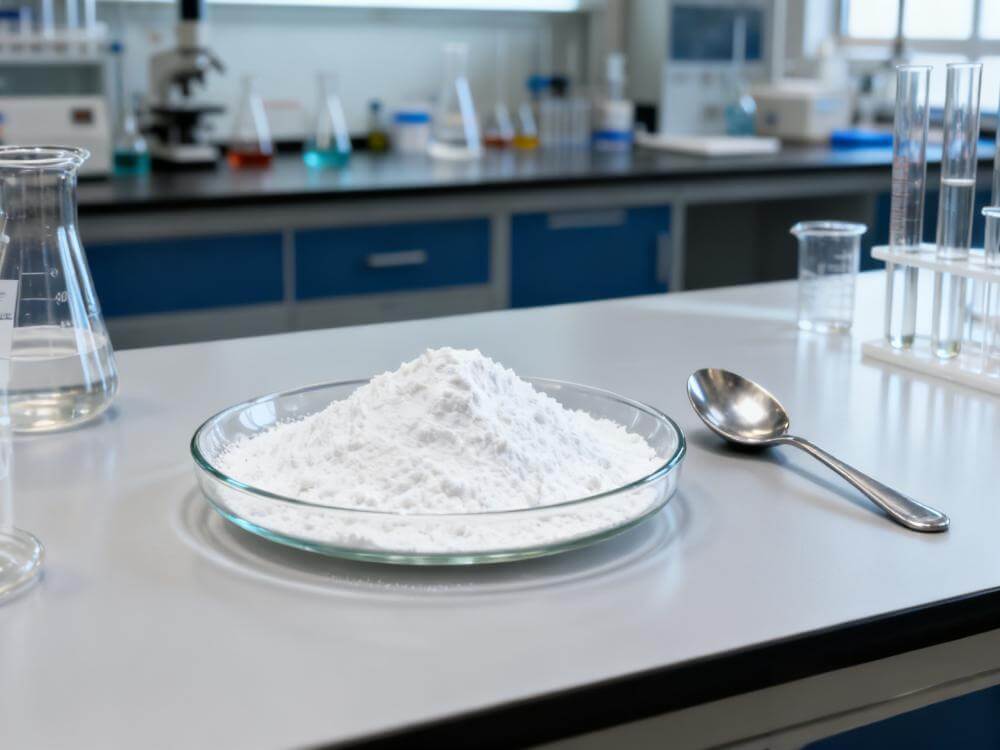
Driven by the rapid growth of photovoltaic demand, trichlorosilicon shows a tight balance between supply and demand, and the price has risen sharply. Longzhong information market shows that at present, most of the domestic trichlorosilicon market quotes are 35000-37000 yuan / ton, and some local quotations have reached about 40000 yuan, and some manufacturers have no offers for the time being.
The market shows that the price of trichlorosilicon has risen sharply since May this year, and the highest increase is now more than 300%. A reporter from the Financial Associated Press learned from Sanfu Co., Ltd. that the price of trichlorosilicon products is in line with the market, and it is now close to the state of full production and full sales.
Industry analysts believe that downstream photovoltaic demand is growing rapidly, photovoltaic grade trichlorosilicon shortage pattern is expected to further aggravate, the price of trichlorosilicon will remain strong in the short term.
The quotation of trichlorosilane remains firm.
Trichlorosilane is one of the most important products in halosilane series, which is mainly used in the production of polysilicon and silane coupling agent in industrial production. According to industry statistics, about 70% is used in polysilicon and 30% is used in silane coupling agent. Under the guidance of the strong demand of the terminal photovoltaic market, polysilicon production enterprises have plans to increase production and expand production, which leads to the shortage of trichlorosilicon.
In fact, trichlorosilicon is a highly market-oriented and competitive industry, and the product price is mainly affected by the price of upstream raw materials and downstream demand. Due to the multiple effects of downstream demand superimposed upstream supply shortage, trichlorosilicon prices continued to rise sharply in October on the basis of previous increases.
It is understood that trichlorosilicon is mainly formed by the reaction of silicon powder with hydrogen chloride gas. Longzhong Information trichlorosilicon industry analyst Fang Wenzheng told the Financial Associated Press that this month, due to the influence of tight silicon powder resources and high prices superimposed by local energy consumption double control policies, trichlorosilicon enterprises' overall start-up level is not high, and the cost pressure is relatively high. Raw material surface supports trichlorosilicon market prices higher as a whole.
On the raw material side, with the decline of some brands of silicon powder prices, some early parking enterprises in Shandong started with low load, but the market price is still high to maintain stability. At the same time, liquid chlorine, one of the raw materials for the production of trichlorosilicon, is affected by the negative operation of chlor-alkali enterprises in East China and North China and the power outage of aluminum enterprises, resulting in a reduction in production and a shortage of goods in the market.
Generally speaking, the price of liquid chlorine has risen in a short period of time, and the double control policy of energy consumption has been upgraded, resulting in the limited start-up level of trichlorosilicon manufacturers and fixed production by sales in some manufacturers.
Fang Wenzheng told the Financial Associated Press that recently, from the perspective of raw materials, the price support of metal silicon and liquid chlorine has weakened; however, from the perspective of supply and demand, due to the good performance of downstream demand, the price of trichlorosilicon will remain strong in the short term and wait and see the follow-up market trend.
New production capacity is limited
According to the forecast of the Energy Research Institute of the National Development and Reform Commission, the total installed capacity of photovoltaic will reach 730 million kilowatts in 2025. By 2050, photovoltaic will become the largest power source in China, and the total installed capacity of photovoltaic power generation will reach 5 billion kilowatts.
Driven by photovoltaic demand, trichlorosilicon has entered the upstream cycle. Guoxin Securities Research report statistics, from 2020 to 2022, according to the 125GW, 170GW, 230GW installed capacity, 1RU 1.2 capacity ratio calculation, the corresponding polysilicon demand is 450000 tons, 650000 tons, 890000 tons, corresponding to photovoltaic grade trichlorosilicon demand is 230000 tons, 330000 tons, 440000 tons, compound annual growth rate of 40%.
However, compared with the rapidly growing demand, photovoltaic grade trichlorosilicon has lower short-term supply expansion pressure due to higher production difficulties and other reasons. At present, among polysilicon enterprises, only Oriental hopes to add 75000 tons of trichlorosilicon production capacity in June 2022. In addition, Xin'an Co., Ltd. (600596.SH) is expected to complete the technical transformation of 25000 tons of photovoltaic grade trichlorosilicon by the end of the year, all of which will be used for external sales.
In terms of new production capacity, Sanfu is planning to expand and invest in the construction of a 50,000-ton / year trichlorosilicon project. A person from the company told the Financial Associated Press that at present, the company already has a production capacity of 65000 tons of trichlorosilicon, and it will take a year and a half to expand the capacity construction cycle. According to the China News, in the first half of the year, the company produced 33800 tons of trichlorosilicon products, sold 32900 tons, with a production and marketing rate of 97%. The revenue of the products was 214 million yuan, an increase of 105.18% over the same period in 2020.
Industry analysts believe that the high prosperity of the trichlorosilicon industry is expected to continue. SMM predicts that the high price of trichlorosilicon will continue to Q1 next year, and the contradiction between supply and demand will be alleviated after the new polysilicon is put into production and the production capacity of trichlorosilicon is released.

![[SMM Chromium Flash] South Africa’s August HC FeCr Exports Rise 20% MoM to 117,180 mt, Led by Canada and US Shipments](https://imgqn.smm.cn/usercenter/TdoSs20251217171724.jpeg)