

News
Exclusive analysis articles with the latest market updates, and real-time news feeds.

$40 Trillion in U.S. Debt: The Driver Behind the Next Gold Boom!
August 21, 2026 After the fourth part of this series examined the monetary policy dilemma facing the Federal Reserve , Part 5 today focuses on a factor that makes the Fed’s dilemma so pressing in the first place: the steadily rising public debt in Western countries, particularly in the United States. The $40 Trillion Mark Is Drawing Near According to current data, U.S. national debt stands at around $39.6 to $39.7 trillion, representing approximately 123 percent of annual economic output. By comparison, at the end of 2024, the debt level was still “only” around $35.25 trillion. Within just a few years, U.S. national debt has thus risen significantly once again from an already exorbitantly high level, and given the ongoing accumulation of new debt, reaching the 40-trillion-dollar milestone is only a matter of time. It will be reached and surpassed in just a few weeks. For the current fiscal year 2025/2026, the Congressional Budget Office estimates the budget deficit at around 5.8 percent of economic output. This is an unusually high figure for a period without an acute recession. Western nations should actually be striving to reduce debt during good or at least stable times in order to create a buffer should higher new borrowing become necessary during an economic downturn to stimulate the economy. Rising Debt Exacerbates the Interest Burden The fundamental problem can be illustrated with a simple rough calculation: If both the debt burden and the general interest rate level rise, the annual interest burden grows disproportionately. Whereas a government previously had to pay a certain amount in interest when debt levels and interest rates were lower, the same level of debt at higher interest rates now requires many times that amount in annual interest payments. This growing interest burden increasingly competes with other budget items such as defense, social benefits, or infrastructure and noticeably restricts the fiscal maneuvering room of current and future governments. Or to put it another way: Today, we are paying the price for the high levels of debt that were recklessly incurred during the era of cheap money with low—and in some cases negative—interest rates. This dynamic is not limited to the United States. In Europe and Asia as well, debt levels are rising steadily in many countries, albeit from different starting points. However, the fundamental policy challenge of managing growing debt amid a structurally higher interest rate environment affects a large portion of developed economies and is not a purely American phenomenon. The Connection to Gold: The Question of Sustainability In light of these figures, investors are increasingly asking themselves about the long-term sustainability of high government debt. If a debt level is no longer perceived as sustainable, a government essentially has only a few options: higher taxes, spending cuts, a debt haircut, or a creeping devaluation of the debt through higher inflation over the long term. Historically, the last option in particular—so-called financial repression via negative real interest rates and higher inflation—has been the least politically unpopular way out of a situation of excessive debt. It therefore stands to reason that governments and central banks will once again pursue this “political silver bullet” for debt reduction. Gold has survived every debt haircut and sovereign default Gold is traditionally regarded in this context as a hedge against precisely this scenario: It is not subject to any counterparty obligation, cannot be devalued by any government through money printing, and has historically proven itself as a store of value over very long periods. The more market participants assess the likelihood of an inflationary solution to the debt problem as rising, the more attractive it becomes for them to hedge their assets with gold. This motivation to buy gold and hold it over the long term is entirely independent of short-term interest rates or economic conditions. Institutional investors and central banks are also likely to incorporate this consideration into their long-term portfolio strategy, as described in Part 3 of this series . Added to this is a psychological effect that is particularly significant for retail investors: The more frequently round and symbolically charged debt milestones—such as the $40 trillion threshold—are discussed in the media, the more the issue of long-term debt sustainability comes to the forefront for private investors as well. When the Masses Turn Their Attention to Gold If they, too, become active, the gold market could quickly become tight, because even if each individual buys only a very small amount of gold, massive demand can still develop very easily and quickly due to sheer volume. As very few investors realize, this demand meets a relatively tight market. This, too, is a structural and often underestimated factor that points to significantly higher gold prices in the future, because compared to the bond and stock markets, the global gold market is small and of limited size. If investors shift their capital en masse—even just slightly—it can very easily create enormous leverage effects. We will examine this aspect of gold demand—one that many overlook—in the sixth part of this series. Source: https://goldinvest.de/en/usd40-trillion-in-u-s-debt-the-driver-behind-the-next-gold-boom
Aug 25, 2026 16:14
[SMM Analysis] The Decline in China’s July Solar Module Exports Reveal Three Key Signals
A sharp pullback in Pakistan and several Asia-Pacific markets dragged monthly shipments lower, while Europe retained a 45.5% share of China’s module export value.
Aug 24, 2026 08:30
Indonesia’s Planned Commodity Exchange: Potential Shift Toward Domestic Nickel Price Discovery
Background: Indonesia Plans New Mineral and Strategic Commodities Exchange Indonesia is preparing to establish a new exchange for minerals and strategic commodities, targeted to begin operations on January 1, 2027 . The initiative aims to strengthen Indonesia’s role in commodity price formation, improve transaction transparency and establish domestic reference prices. In his August 14 speech to the DPR RI , President Prabowo Subianto said Indonesia should have greater control over the prices of its natural resources, specifically citing nickel, tin, gold, coal, gas, oil and coffee . He emphasized Indonesia’s ambition to move beyond being a commodity producer and exporter toward becoming a price setter. The exchange is expected to operate under OJK supervision , with detailed regulations targeted for September 17, 2026 . Nickel, tin and gold have been identified as potential commodities, although the final product coverage and trading framework have yet to be confirmed. Why It Matters for Nickel The planned exchange forms part of Indonesia’s broader effort to strengthen control over strategic commodities through downstreaming, export governance and production management. It could potentially provide: A centralized platform for price discovery; Greater transaction transparency; Standardized domestic reference prices; Better government access to transaction data; and Greater influence over regional commodity pricing. For nickel, the key issue is whether the exchange can eventually establish a credible Indonesian benchmark for physical transactions , potentially complementing rather than immediately replacing international benchmarks such as the LME. Nickel Product Scope Remains Unclear Although nickel has been identified as a potential strategic commodity, the government has not confirmed which nickel products will be traded. Potential products include: Nickel metal; Ferronickel; NPI; Nickel intermediates; and Nickel ore. For the Indonesian ore market, the most important question is whether saprolite and limonite will eventually receive standardized exchange-based pricing. There is currently no confirmed requirement for nickel ore transactions to be conducted through the exchange. Contract specifications, delivery locations, quality parameters and settlement mechanisms also remain undisclosed. Key Issues to Monitor Nickel coverage: Whether nickel is formally included and which products qualify. Ore inclusion: Whether saprolite and limonite will receive exchange-based pricing. Trading mechanism: Whether the exchange uses spot, futures or other standardized contracts. Benchmark methodology: Whether prices are derived from sufficient physical transactions to be representative. Liquidity and participation: Whether miners, smelters, traders and buyers actively use the platform. Relationship with LME: Whether the Indonesian benchmark develops as a complementary regional physical reference. Government influence: Whether the exchange primarily serves independent price discovery or broader commodity-management objectives. Launch readiness: Whether regulations, infrastructure and liquidity can be established before January 1, 2027 . Potential Impact on Nickel Ore Pricing If nickel ore is eventually included, the exchange could gradually shift Indonesian ore pricing from predominantly negotiated transactions toward a benchmark-based pricing system. Such a benchmark could incorporate factors already influencing Indonesian ore prices, including nickel grade, HMA, smelter demand, ore availability, mining costs, freight and RKAB availability. For saprolite , standardized pricing could improve transparency for RKEF/NPI feedstock. For limonite , an exchange reference could become increasingly relevant as HPAL capacity expands. However, the exchange’s influence will ultimately depend on liquidity, price transparency and broad adoption. In the near term, negotiated prices and existing benchmarks are therefore likely to remain dominant. SMM View SMM views the planned exchange as a structural development rather than an immediate change to nickel supply-demand fundamentals. Its short-term impact on Indonesian nickel ore prices should remain limited, as the trading rules, product specifications and participation requirements have yet to be confirmed. In the longer term, successful inclusion of nickel ore or nickel products could strengthen Indonesia’s influence over regional price discovery: Domestic Exchange → Indonesian Benchmark → Regional Physical Reference → Greater Pricing Influence The key developments to monitor are the September 17 regulations, final nickel coverage, physical ore inclusion, contract specifications, participation requirements, benchmark methodology and liquidity ahead of the planned January 1, 2027 launch.
Aug 20, 2026 16:22
Latest News
![[SMM Nickel Market Flash] Glencore Hits First Ore at Onaping Depth in Sudbury; Full Production Targeted for 2027](https://imgqn.smm.cn/usercenter/biBGl20251217171733.jpg)
[SMM Nickel Market Flash] Glencore Hits First Ore at Onaping Depth in Sudbury; Full Production Targeted for 2027
Aug 30, 2026 01:01
![[SMM Nickel Market Flash] Canada Nickel Upsizes Private Placement to C$21m to Fund Crawford Engineering](https://imgqn.smm.cn/usercenter/fzwTi20251217171733.jpg)
[SMM Nickel Market Flash] Canada Nickel Upsizes Private Placement to C$21m to Fund Crawford Engineering
Aug 30, 2026 00:59
![[SMM Nickel Market Flash] Antam H1 2026 Net Profit Up 34%; Nickel Revenue Up 32% but Gold Still Drives 80% of Sales](https://imgqn.smm.cn/usercenter/NHXhQ20251217171733.jpg)
[SMM Nickel Market Flash] Antam H1 2026 Net Profit Up 34%; Nickel Revenue Up 32% but Gold Still Drives 80% of Sales
Aug 30, 2026 00:58
Narrowing Price Gaps in NPI Grades Amid Sluggish Spot Transactions
【SMM Nickel Flash】August 28 — Price gaps across nickel‑point grades of NPI keep narrowing, and the premium spread between high‑ and low‑nickel‑point materials has been squeezed. Spot transactions remain sluggish. Some suppliers offer cargoes at lower levels yet face slow sales, with limited volumes of physical deals closed. Certain sellers still hold relatively high asking prices, creating a notable mismatch against price levels acceptable to downstream buyers.
Aug 28, 2026 19:06
SMM: High-Grade NPI Market Sentiment Dips Amid Rising Port Inventory and Softer Stainless Steel Demand
[SMM Nickel Flash] On August 28, the SMM high-grade NPI market sentiment factor was 1.82, down 0.04 MoM; the upstream sentiment factor for high-grade NPI was 1.98, down 0.04 MoM; and the downstream sentiment factor for high-grade NPI was 1.67, down 0.02 MoM. Weakness in the high-grade NPI market persisted as port inventory rose again, and coupled with the softer stainless steel market, bearish market sentiment deepened further.
Aug 28, 2026 18:40
【SMM Nickel Flash】Indonesian Hydrometallurgy Project to Cut MHP Output by 30% in September Amid Low Nickel Prices
According to SMM, due to recent low nickel prices and significant cost pressure, a hydrometallurgy project in Indonesia may cut production of mixed hydroxide precipitate (MHP) in September, with plans to reduce output by about 30%.
Aug 28, 2026 18:32
Nickel Prices Retreat as Rate Hike Fears Offset Dollar Weakness and Supply Surplus Persists
Aug 28, 2026 17:15
[SMM Analysis] Downstream Cost Pressure Persisted and Acceptance Was Weak; Nickel Intermediate Product Payables Remained in the Doldrums This Week
Downstream cost pressure persisted and acceptance was weak, while nickel intermediate product payables were in the doldrums this week
Aug 28, 2026 17:08
[SMM Analysis] Chinese stainless futures break below RMB 14,000/mt as peak-season restocking fails to start
SMM Weekly Stainless Steel Futures Review — week of August 24–28, 2026. Absent pre-season demand, softer mill price defence, and a second week of inventory build drag the benchmark contract down RMB 220/mt in the week.
Aug 28, 2026 15:56
Data: SHFE, DCE market movement (Aug 28)
The following table shows the ferrous and nonferrous metals movement on the SHFE and DCE on 28 Aug , 2026
Aug 28, 2026 15:53
SMM Data: Battery-Grade Nickel Sulphate Price Drops by 200 Yuan/mt on August 27
Aug 28, 2026 15:38
![[SMM Daily Review of Nickel Intermediate Products] August 28: MHP and High-Grade Nickel Matte Nickel Prices Rise](https://imgqn.smm.cn/usercenter/OjGlE20251217171734.jpg)
[SMM Daily Review of Nickel Intermediate Products] August 28: MHP and High-Grade Nickel Matte Nickel Prices Rise
Aug 28, 2026 15:31
[SMM Nickel Sulphate Daily Review] August 28: Sluggish Spot-Order Market Transactions; Nickel Sulphate Prices Declined
Aug 28, 2026 15:30
[SMM Nickel Market Flash] Tanzania's Kabanga Nickel Draws Reported $500m US-Backed Interest; FID Slips to Q1 2027
US-backed investment firm Orion CMC is reportedly weighing an investment of about $500m in Tanzania's Kabanga nickel project, according to Bloomberg as cited by Ecofin Agency and carried by other outlets on August 25. Talks between Tanzania and operator Lifezone Metals over the project's financial and ownership framework have moved more slowly than expected, pushing the final investment decision to Q1 2027. Lifezone holds 84% and the government 16% under a 2021 agreement, with amendments to the development structure and benefit-sharing under discussion. Kabanga needs about $942m of construction capital and, per its feasibility study, would produce roughly 902 kt of nickel, 134 kt of copper and 69 kt of cobalt over an 18-year life. The US DFC has previously signalled financing interest.
Aug 28, 2026 14:09
[SMM Stainless Steel Market Flash] Japan's Nippon Kinzoku Starts Mass Output of Ultra-Thin Stainless for Insulin Needles
Tokyo-based stainless steel maker Nippon Kinzoku has begun mass production of ultra-thin, narrow-width stainless steel optimised for laser welding in ultra-fine insulin needles, the company said in a statement carried by Bernama on August 27. It said a stable supply system is now in place after trials with leading needle makers. The needle industry is shifting from TIG or plasma welding to laser welding, which allows faster welding and base material more than 50% thinner at the initial stage — 0.08 mm versus 0.2 mm previously — supporting wider use of 30G to 32G needles in pen injectors. Its NK-304NKM grade, used in thin-walled welded tube for medical and cosmetic uses, holds about 57% share in Japan and 55% in key overseas regions, per company research in March 2026.
Aug 28, 2026 14:01
[SMM Nickel Market Flash] South Korea Asks Indonesia for Nickel-Battery Incentives and Policy Predictability
South Korea has set out what it wants from Indonesia on nickel, citing incentives for nickel-based batteries and consistent policy, Jakarta Globe reported on August 27. Uhm Taeho, political section chief at the Korean Embassy, told a Jakarta media workshop that Seoul is looking for incentives and easier rules for nickel-based batteries, which he said are recyclable and cleaner but cost slightly more, with incentives meant to close that gap. Asked about Indonesia's one-gate export policy channelling strategic commodity exports through Danantara unit DSI, which covers the ferroalloys Korea buys for steelmaking, he said Korea respects the policy but that consistency and predictability matter for investment. Indonesia is expected to detail EV incentives soon after repeated delays.
Aug 28, 2026 14:00
[SMM Nickel Market Flash] Nickel Industries: Indonesia HPM Reform Lifts Ore Prices 28% but Squeezes Mining Margin
Nickel Industries (ASX: NIC) said in its H1 2026 results that Indonesia's HPM benchmark reform sharply raised realised ore prices at its 80%-held Hengjaya Mine, with the average sale price up 28% YoY to US$31.3/wmt — saprolite up 55% to US$40.4/wmt while limonite eased 8% to US$21.2/wmt. Unit operating costs rose 50% to US$18.7/wmt on higher royalties under the new HPM, cutting the EBITDA margin from 49% to 40%; adjusted EBITDA rose just 4% to US$73.4m on flat sales of 5.9m wmt, achieved despite a 14-day suspension. NIC also flagged a 2026 RKAB quota of 14.3m wmt, up 60%, which it said compares favourably with peers.
Aug 28, 2026 13:58
[SMM Nickel Market Flash] Nickel Industries H1 2026: RKEF EBITDA Doubles on NPI Price Even as Output Slips 7%
Nickel Industries (ASX: NIC) reported H1 2026 revenue of US$938.4m, up 13% YoY, adjusted EBITDA of US$247.6m, up 46%, and profit attributable to shareholders of US$52.5m, up from US$11.3m. The RKEF division drove the result: adjusted EBITDA jumped 87% to US$146.7m as the weighted average NPI contract price rose 21% to US$13,784/t Ni, lifting EBITDA per tonne of nickel from US$1,251 to US$2,523. Volumes fell, however, with nickel output down 7% to 58,128 t on scheduled maintenance at the ANI and ONI RKEF lines and NPI grade easing from 11.9% to 11.2%. Cash costs rose 13% to US$11,480/t Ni after Indonesia raised the HPM nickel ore benchmark. SMM said margin, not volume, carried the half.
Aug 28, 2026 13:58
[SMM Nickel Market Flash] IGO Cuts Nickel Price Assumption but Lifts Cobalt 72% in FY26 Reserve Valuation
In its FY26 Mineral Resources and Ore Reserves report released August 27, Australia's IGO disclosed the metal price assumptions set in March 2026 for valuing its Nova nickel operation: nickel at US$16,420/t, down 3% YoY in USD and down 11% in AUD terms; cobalt raised sharply to US$49,770/t, up 72%; and copper at US$12,070/t, up 26%. The AUD:USD rate assumption rose from 0.63 to 0.70. The figures are p50 forecasts from Consensus Economics, applied to both resource and reserve economics.
Aug 28, 2026 13:57
[SMM Nickel Market Flash] IGO Exits Nickel: Zero Residual Resources to Be Reported After Nova Is Mined Out
In its FY26 Mineral Resources and Ore Reserves report released August 27, Australia's IGO said its Nova operation in Western Australia — its only remaining magmatic nickel sulphide mine — will complete extraction of its ore reserve in Q2 FY27, with closure scheduled for around October 2026. Nova ore reserves at June 30 fell 72% YoY to 0.5 Mt at 1.44% Ni, or 7.4 kt of contained nickel; resources fell 83% to 0.5 Mt at 1.62% Ni. IGO said the deposit is fully defined with no untested ground able to extend mine life, and that it will report zero residual nickel resources once mining ends, after which Nova transfers to Global Lithium Resources. SMM said this removes one of the few Western high-grade sulphide sources of nickel and cobalt concentrate outside Indonesian laterite supply.
Aug 28, 2026 13:56
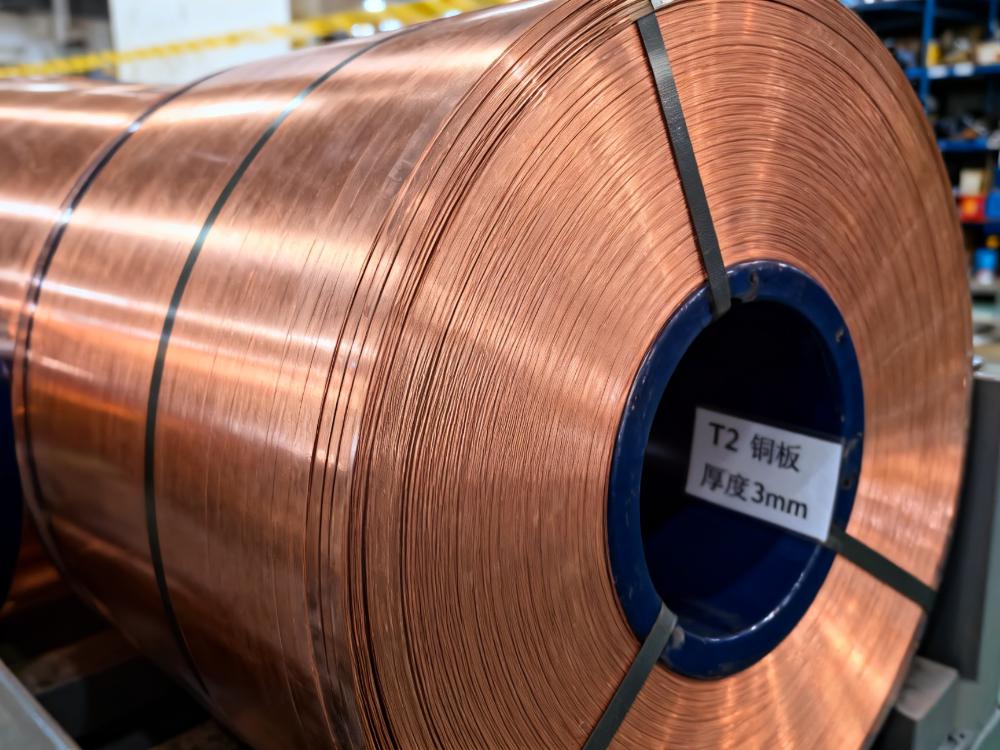
Zambia's Copper Growth Push: What Will It Take to Reach 3 Million Tonnes by 2031?
Zambia's copper production reached 447,181.93 tonnes in H1 2026, up just 0.45% year on year. While major mine expansions are strengthening the country's supply pipeline, achieving the 3 million tonne annual production target by 2031 will depend on project execution, existing mine performance and, critically, the availability of reliable and diversified electricity supply.
Aug 25, 2026 22:09

World’s First Solid-State Battery International Standard Initiated – China Leads in Both Technology and Rule‑Making
Aug 24, 2026 15:14

Short Squeeze → Massive Delivery to LME → Market Normalizes — Inventory Structure & Tariff Policy Still Pose Risks
Aug 21, 2026 19:59

Triple Pressures Keep Spot Copper Market Players on Edge: Elevated Prices, High Premiums & Deep Backwardation
Aug 26, 2026 10:27
$40 Trillion in U.S. Debt: The Driver Behind the Next Gold Boom!
Aug 25, 2026 16:14
![[SMM Analysis] The Decline in China’s July Solar Module Exports Reveal Three Key Signals](https://imgqn.smm.cn/usercenter/TtmPF20251217171741.jpg)
[SMM Analysis] The Decline in China’s July Solar Module Exports Reveal Three Key Signals
Aug 24, 2026 08:30
Indonesia’s Planned Commodity Exchange: Potential Shift Toward Domestic Nickel Price Discovery
Aug 20, 2026 16:22
Latest News
[SMM Nickel Market Flash] Glencore Hits First Ore at Onaping Depth in Sudbury; Full Production Targeted for 2027
Aug 30, 2026 01:01
[SMM Nickel Market Flash] Canada Nickel Upsizes Private Placement to C$21m to Fund Crawford Engineering
Aug 30, 2026 00:59
[SMM Nickel Market Flash] Antam H1 2026 Net Profit Up 34%; Nickel Revenue Up 32% but Gold Still Drives 80% of Sales
Aug 30, 2026 00:58
Narrowing Price Gaps in NPI Grades Amid Sluggish Spot Transactions
Aug 28, 2026 19:06
SMM: High-Grade NPI Market Sentiment Dips Amid Rising Port Inventory and Softer Stainless Steel Demand
Aug 28, 2026 18:40
【SMM Nickel Flash】Indonesian Hydrometallurgy Project to Cut MHP Output by 30% in September Amid Low Nickel Prices
Aug 28, 2026 18:32
Nickel Prices Retreat as Rate Hike Fears Offset Dollar Weakness and Supply Surplus Persists
Aug 28, 2026 17:15
[SMM Analysis] Downstream Cost Pressure Persisted and Acceptance Was Weak; Nickel Intermediate Product Payables Remained in the Doldrums This Week
Aug 28, 2026 17:08
[SMM Analysis] Chinese stainless futures break below RMB 14,000/mt as peak-season restocking fails to start
Aug 28, 2026 15:56
Data: SHFE, DCE market movement (Aug 28)
Aug 28, 2026 15:53
SMM Data: Battery-Grade Nickel Sulphate Price Drops by 200 Yuan/mt on August 27
Aug 28, 2026 15:38
[SMM Daily Review of Nickel Intermediate Products] August 28: MHP and High-Grade Nickel Matte Nickel Prices Rise
Aug 28, 2026 15:31
[SMM Nickel Sulphate Daily Review] August 28: Sluggish Spot-Order Market Transactions; Nickel Sulphate Prices Declined
Aug 28, 2026 15:30
[SMM Nickel Market Flash] Tanzania's Kabanga Nickel Draws Reported $500m US-Backed Interest; FID Slips to Q1 2027
Aug 28, 2026 14:09
[SMM Stainless Steel Market Flash] Japan's Nippon Kinzoku Starts Mass Output of Ultra-Thin Stainless for Insulin Needles
Aug 28, 2026 14:01
[SMM Nickel Market Flash] South Korea Asks Indonesia for Nickel-Battery Incentives and Policy Predictability
Aug 28, 2026 14:00
[SMM Nickel Market Flash] Nickel Industries: Indonesia HPM Reform Lifts Ore Prices 28% but Squeezes Mining Margin
Aug 28, 2026 13:58
[SMM Nickel Market Flash] Nickel Industries H1 2026: RKEF EBITDA Doubles on NPI Price Even as Output Slips 7%
Aug 28, 2026 13:58
[SMM Nickel Market Flash] IGO Cuts Nickel Price Assumption but Lifts Cobalt 72% in FY26 Reserve Valuation
Aug 28, 2026 13:57
[SMM Nickel Market Flash] IGO Exits Nickel: Zero Residual Resources to Be Reported After Nova Is Mined Out
Aug 28, 2026 13:56