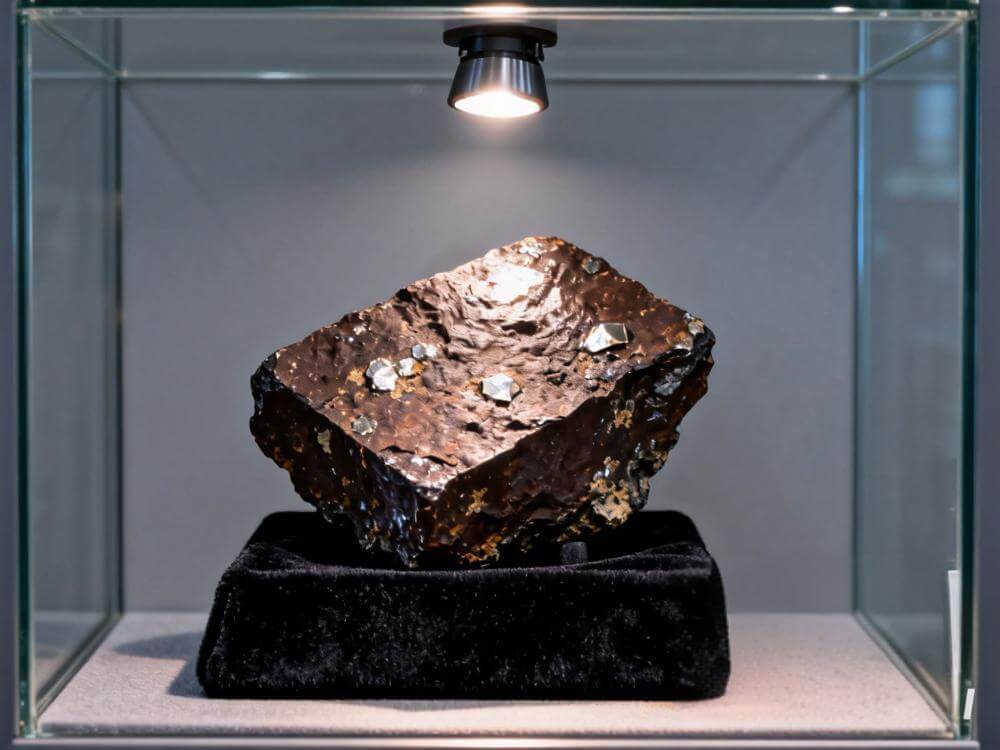
Russia plans to mine cobalt deposits at the bottom of the Pacific Ocean

Published: Jun 22, 2020 13:48
Source: SMM compilation
Despite the fall in global metal prices, Russia plans to significantly increase its domestic cobalt production in the coming years.

SMM6: despite the drop in global metal prices, Russia plans to significantly increase its domestic cobalt production in the next few years.

Analysts in the RussianExpert business magazine estimate that although Russia's official cobalt reserves are divided, the current range is 630000 to 650000 tons, of which 200000 tons have been proven.

By 2022, Russia's cobalt production will increase to 8,000 million tons, compared with the current production of 5,000 million tons. This will increase Russia's share of global cobalt production from the current 5 per cent to 8 per cent.

The only cobalt producer in Russia is Norilsk Nickel.

In 2010, the International seabed Authority awarded 3000 square kilometers of seabed to Russia for geological exploration and cobalt mining.

Potential resources are estimated at 2.7 billion tons of ore. Among them, nickel is 900000 tons, manganese is 39 million tons, cobalt is 1 million tons. Russian geologists have recovered the drill cores of cobalt-rich manganese crusts at the site for analytical exploration.

Tatyana Khulapova, chief geologist of Yuzhmorgeologiya, a subsidiary of Rosgeology, the Russian state-owned geological company that is directly in charge of the cobalt project, said Russia's seabed reserves could be equivalent to 50000 tons of cobalt and 250 million tons of nickel.

Click to register: "2020 (Fifth) China International Nickel, Cobalt and Lithium Summit Forum"

Scan the code to sign up for the Ni-Co-Li Summit or apply to join the SMM industry exchange group:

Data Source Statement: Except for publicly available information, all other data are processed by SMM based on publicly available information, market communication, and relying on SMM's internal database model. They are for reference only and do not constitute decision-making recommendations.

For any inquiries or for more information, please contact: lemonzhao@smm.cn
For more information on how to access our research reports, please contact:service.en@smm.cn
Related News
[SMM Chromium Flash] EU's Toughening Trade Stance Raises Fresh Risks for Ferrochrome and Stainless Steel Supply Chains
3 hours ago
[SMM Chromium Flash] EU's Toughening Trade Stance Raises Fresh Risks for Ferrochrome and Stainless Steel Supply Chains
Read More
[SMM Chromium Flash] EU's Toughening Trade Stance Raises Fresh Risks for Ferrochrome and Stainless Steel Supply Chains
[SMM Chromium Flash] EU's Toughening Trade Stance Raises Fresh Risks for Ferrochrome and Stainless Steel Supply Chains
European governments are preparing to seek broader safeguard measures against surging imports, primarily from China, marking a further shift toward tighter trade protection as European industrial sectors face high energy costs and weak demand. The European Union currently has a safeguard regime covering ferro-alloys, while governments including France, Italy and Germany are now pushing for additional investigations covering chemicals and plastics. For the chromium market, the development could have implications beyond the products directly targeted by the new proposals. A more protectionist EU trade environment could alter stainless-steel import flows and procurement strategies, potentially affecting demand for ferrochrome and the competitiveness of overseas suppliers. With the EU already using trade safeguards for ferro-alloys, further expansion of trade-defense measures could increase uncertainty for global ferrochrome flows and premiums, particularly if protection increasingly extends across both upstream alloy inputs and downstream steel products.
3 hours ago
Cost Support Meets Supply-Demand Tug-of-War; Silicon Metal Prices Stay Stagnant and Stable [SMM Silicon Industry Weekly Review]
6 hours ago
Cost Support Meets Supply-Demand Tug-of-War; Silicon Metal Prices Stay Stagnant and Stable [SMM Silicon Industry Weekly Review]
Read More
Cost Support Meets Supply-Demand Tug-of-War; Silicon Metal Prices Stay Stagnant and Stable [SMM Silicon Industry Weekly Review]
[Cost Support Combined with Supply-Demand Tug-of-War Keeps Silicon Metal Prices in Stalemate]: Silicon metal trading saw a tug-of-war between sellers and buyers, with prices consolidating in a stalemate. As of September 10, SMM oxygen-blown #553 silicon in east China stood at 9,400-9,600 yuan/mt, up 50 yuan/mt WoW, while #441 silicon was at 9,500-9,700 yuan/mt, flat WoW. In the futures market, the SI2611 contract moved sideways around 8,700-8,900 yuan/mt during the week. Affected by the tug-of-war between longs and shorts, prices repeatedly pulled back and forth around the 8,800 yuan/mt level, with Friday's close at 8,745 yuan/mt, up 10 yuan/mt WoW. In terms of market quotes and transactions, silicon producers maintained firm offers, with quotes largely stable during the week. Spot-futures traders also held prices relatively firm amid high-level consolidation in futures. Recently, trucking freight rates have stayed high, and downstream acceptance of high-priced spot cargo was moderate. Some users showed weaker purchasing enthusiasm compared with the previous week, with the market dominated by buying on dips or just-in-time procurement. Wait-and-see sentiment persisted, and transactions overall maintained a just-in-time pace, leaving the price center in a stagnant stalemate.
6 hours ago
Magnesium Ingot Inventory Down 3.2% MoM, Prices Rise Amid Weak Demand and Trader Stock Clearing
6 hours ago
Magnesium Ingot Inventory Down 3.2% MoM, Prices Rise Amid Weak Demand and Trader Stock Clearing
Read More
Magnesium Ingot Inventory Down 3.2% MoM, Prices Rise Amid Weak Demand and Trader Stock Clearing
【SMM Magnesium Flash】This week, the social inventory of magnesium ingots decreased by 3.2% month-on-month, showing a trend of destocking. At the beginning of the week, domestic magnesium ingot prices continued to rise. Downstream customers and traders exhibited a strong aversion to high prices, and there were no large-scale proactive stock-up operations. Only rigid demand transactions were maintained, and market trading was relatively weak. Against the backdrop of rising ex-factory prices for magnesium ingots and no substantial recovery in demand, traders took the initiative to clear early low-priced stockpiles. As a result, the inventory transitioned from the previous pattern of accumulation to destocking. The continuous release of low-priced supply suppressed magnesium prices, coupled with the market mentality of "buying when prices rise and not buying when prices fall," the market continued to operate under pressure.
6 hours ago
Russia plans to mine cobalt deposits at the bottom of the Pacific Ocean - Shanghai Metals Market (SMM)