SMM, 5 августа:
Рынок металлов:
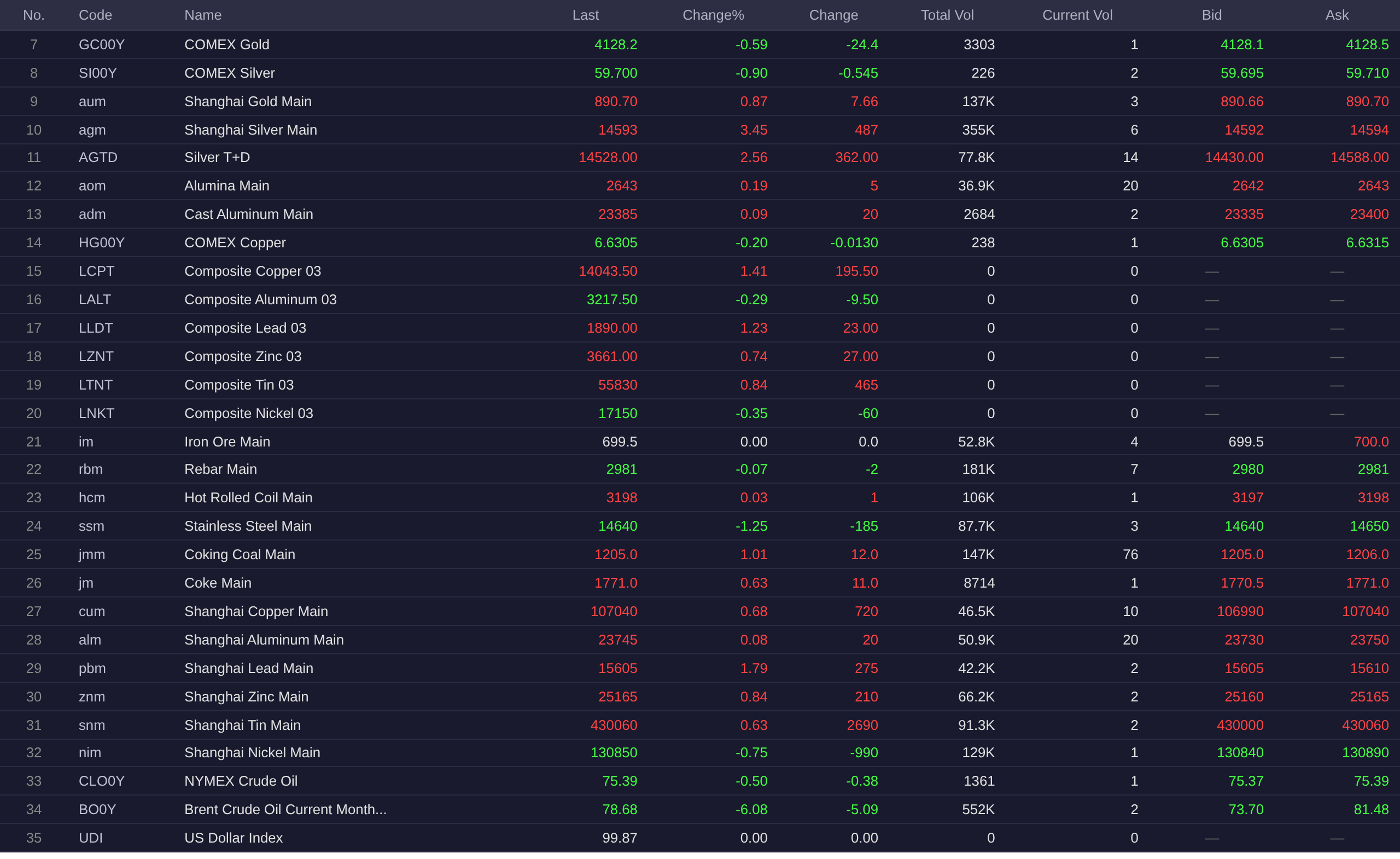
За ночь на внутреннем рынке цветные металлы в основном выросли. Медь на SHFE подорожала на 0,68%, алюминий — на 0,08%, свинец — на 1,79%, цинк — на 0,84%, олово — на 0,63%. Никель подешевел на 0,75%. Кроме того, наиболее торгуемый фьючерс на глинозем прибавил 0,19%, а контракт на литейный алюминий — 0,09%.
Черные металлы демонстрировали разнонаправленную динамику: нержавеющая сталь подешевела на 1,25%, железная руда осталась без изменений на отметке 699,5 юаня/т, арматура снизилась на 0,07%, горячекатаный рулон слегка повысился. Коксующийся уголь и кокс: наиболее торгуемый контракт на коксующийся уголь вырос на 1,01%, а на кокс — на 0,63%.
За ночь на зарубежном рынке цветные металлы на LME в основном выросли: медь — на 1,41%, алюминий снизился на 0,29%, свинец — на 1,23%, цинк — на 0,74%, олово — на 0,84%, никель — на 0,35%.
Драгоценные металлы : Золото на COMEX подорожало на 1,07%, серебро — на 3,27%. Наиболее торгуемый контракт на золото на SHFE прибавил 0,87%, а на серебро — 3,45%.
CITIC Securities в аналитической записке отмечает, что в этом году цены на золото резко взлетели, а затем быстро упали, однако, по мнению компании, золото всё ещё находится в фазе крупного бычьего рынка, ссылаясь на ускоряющееся расширение дефицита бюджета США, трудноизлечимые геополитические разрывы в условиях деглобализации и продолжающуюся поддержку со стороны закупок золота центральными банками мира. В связи с этим текущую просадку рассматривают лишь как временную коррекцию в рамках бычьего рынка. Нынешнее падение приблизилось к историческим экстремумам, и район $4000 за унцию, вероятно, является дном текущего цикла. В перспективе ситуация в Ормузском проливе, как ожидается, превратится из фактора давления в поддержку для цен на золото; денежно-кредитная политика ФРС может оказаться более оптимистичной, чем ожидает рынок, а резкий рост военных расходов США подталкивает дефицит бюджета; цены на золото, вероятно, вернутся к восходящему тренду в течение года. (Приложение Jin10 Data)
По состоянию на 7:11 5 августа цены закрытия ночных торгов составили:
Макроэкономический фронт
Китай:
[МИИТ: Усилить проверку и тестирование/верификацию рисков и скрытых угроз в "агрессивных" инновационных конструкциях дорожных механических транспортных средств, а также усилить оценку безопасности комбинированных систем помощи водителю и функций автономного вождения] 4 августа Первый департамент промышленности оборудования Министерства промышленности и информационных технологий (МИИТ) провёл совещание с организациями по инспекции и испытаниям дорожных механических транспортных средств, на котором проанализировал текущую ситуацию с безопасностью продукции и инспекционной работой и поручил принять меры по упорядочению конкурентного порядка и повышению качества инспекционных и испытательных работ в секторе дорожных транспортных средств. Совещание призвало инспекционные и испытательные учреждения неукоснительно выполнять решения и планы Центрального комитета партии и Государственного совета, решительно противостоять недобросовестной конкуренции и строго контролировать испытания продукции. Во-первых, провести углубленную самопроверку для системного выявления проблем в инспекции и испытаниях продукции дорожных автотранспортных средств и добросовестно осуществить исправления. Во-вторых, усилить отраслевое саморегулирование, сосредоточиться на основных обязанностях, укрепить ответственность, повысить честность и самодисциплину, совместно поддерживая доверие ко всей отрасли. В-третьих, удерживать нижнюю границу безопасности продукции, внедряя меры контроля качества при управлении образцами транспортных средств, персоналом и процессами, усилить выявление и тестирование/проверку рисков и скрытых угроз в «агрессивных» инновационных конструкциях, а также повысить оценку безопасности комбинированных функций помощи водителю и автономного вождения. В-четвертых, повышать компетенции, активно участвуя в разработке и пересмотре стандартов и нормативных актов, ускорить создание системы тестирования и оценки интеллектуальных подключенных транспортных средств, укрепить потенциал инспекции и испытаний дорожных автотранспортных средств, предоставляя отрасли объективную, достоверную информацию и профессиональные заключения. В дальнейшем Министерство промышленности и информационных технологий совместно с соответствующими ведомствами будет углубленно проводить мероприятия по обеспечению производственного соответствия и повышению качества продукции дорожных автотранспортных средств, усилит рабочие проверки, будет настаивать и направлять инспекционные и испытательные учреждения на выполнение роли «привратников» безопасности продукции, повысит качество инспекционной и испытательной работы, применит совместные санкции к учреждениям с проблемами и решительно сохранит нижнюю границу безопасности продукции. (Из приложения Wallstreetcn)
[НБК: Чистое вливание 50 млрд юаней через операции с государственными облигациями на открытом рынке в июле] НБК опубликовал данные о вливании ликвидности через различные инструменты в июле 2026 года. По кредитованию центрального банка: постоянная кредитная линия (SLF) зафиксировала чистый отток 1 млрд юаней; среднесрочная кредитная линия (MLF) — чистое вливание 100 млрд юаней; залоговое дополнительное кредитование (PSL) — чистый отток 116,1 млрд юаней. По операциям на открытом рынке: 7-дневные обратные репо зафиксировали чистое вливание 249,5 млрд юаней, операции с государственными облигациями на открытом рынке — чистое вливание 50 млрд юаней, а управление денежными средствами центрального казначейства — чистое вливание 30 млрд юаней.
Доллар:
За ночь индекс доллара США снизился на 0,11%, до 99,86. Согласно CME «Fed Watch», вероятность сохранения ставок ФРС без изменений в сентябре составляла 41,6%, а вероятность совокупного повышения на 25 базисных пунктов — 58,4%. Вероятность того, что ФРС оставит ставки без изменений в октябре, составляла 30,5%, вероятность совокупного повышения на 25 б.п. — 53,9%, а на 50 б.п. — 15,5%.
Министр финансов США Бессент в интервью CNBC заявил, что председатель ФРС Уорш хочет сохранить гибкость для достижения наилучшего результата. Обсуждая стратегию ФРС и Уорша, он назвал это «детоксом» для ФРС. Он сказал, что каждое заседание должно быть открытым (полным возможностей), а участники должны использовать собственные суждения. Он считает, что ФРС сбалансирует цели по росту и инфляции, и доверяет, что Уорш поможет ФРС найти баланс между ними. Говоря об экономике и инфляции, он отметил, что после исключения секторов, подверженных влиянию цен на энергоносители, базовая инфляция остаётся очень стабильной, а базовые инфляционные данные очень мягкие, и эта тенденция, по его ожиданиям, сохранится. Он также отметил, что базовая инфляция замедляется.
«Шептун ФРС» Ник Тимираос написал, что функция реакции политики министра финансов США Бессента сместилась, став менее голубиной. Его комментарии в этом году указывали на то, что ФРС следует продолжать удерживать ставки на текущем уровне. Ранее в этом году Бессент ссылался на модели, согласно которым ставка ФРС могла превышать нейтральный уровень на величину от чуть более 25 б.п. до более 100 б.п. Сегодня (4 августа) он отметил два момента. Во-первых, он встал на защиту решения Уорша на прошлой неделе не формулировать какую-либо функцию реакции монетарной политики: «Я считаю, что каждое заседание должно быть открытым, а участники рынка должны принимать собственные решения... Думаю, Уорш хочет сохранить открытые возможности для достижения наилучших результатов». Во-вторых, он изложил то, что можно рассматривать как голубиную функцию реакции, призвав игнорировать краткосрочные потрясения: «Что именно принесёт рост краткосрочных процентных ставок? Подождём и увидим». Он задал этот вопрос, но затем ответил, указав, что базовая инфляция «очень мягкая... очень стабильная». «В базовой инфляции, после исключения волатильных компонентов, значительно подверженных влиянию энергоносителей, оставшаяся часть оставалась очень стабильной. Полагаю, что так будет и впредь.» (приложение Jin10 Data)
Макроэкономический обзор:
Сегодня ожидается публикация следующих данных: индекс PMI в сфере услуг Китая от RatingDog за июль, объём промышленного производства во Франции за июнь (м/м), окончательный индекс PMI в сфере услуг Франции за июль, окончательный индекс PMI в сфере услуг Германии за июль, окончательный индекс PMI в сфере услуг еврозоны за июль, окончательный индекс PMI в сфере услуг Великобритании за июль, индекс цен производителей (PPI) еврозоны за июнь (м/м), изменение занятости в США от ADP за июль, окончательный индекс PMI в сфере услуг США от S&P Global за июль, а также индекс ISM в непроизводственной сфере США за июль. Также в центре внимания: выступление президента ФРБ Канзас-Сити Шмида, обладающего правом голоса в FOMC в 2028 году, на тему ФРС, денежно-кредитной политики и экономических перспектив сельского хозяйства.
Нефтяной рынок:
Накануне фьючерсы на нефть продолжили снижение: WTI упал на 6,47%, Brent — на 6,08%.
Wallstreetcn отметил, что во вторник, 4 августа (по восточному времени США), агентство Reuters со ссылкой на информированные источники сообщило, что Иран отказался от своего прежнего требования полного контроля над двусторонним судоходством в Ормузском проливе и вместо этого предложил, чтобы Иран управлял всем судоходством, входящим в пролив, сохраняя при этом право надзора и право вмешиваться при необходимости в отношении судов, покидающих пролив. Агентство Синьхуа со ссылкой на американские СМИ сообщило, что министр финансов США Бессент во вторник заявил, что соглашение по Ормузскому проливу может быть достигнуто 4 или 5 августа. Также Синьхуа сообщает, что госсекретарь США Рубио в тот же день заявил, что переговоры с Ираном о возобновлении судоходства в проливе «достигли прогресса», но сделка ещё не согласована. Резкое падение цен на нефть означало снижение инфляционных ожиданий для рынка. Тони Миано из инвестиционного института Wells Fargo отметил: «Рынок реагирует на перспективу того, что открытие Ормузского пролива может помочь нормализовать мировые поставки нефти и ослабить недавнее ценовое давление на энергоносители, а снижение цен на нефть может уменьшить опасения по поводу инфляции». Однако он предупредил, что инфляция вряд ли нормализуется в одночасье, и даже после ослабления энергетического давления общий уровень цен может оставаться устойчиво высоким в ближайшее время. (Wallstreetcn)
![Шанхайская фьючерсная биржа: олово закрылось на отметке 412 910 в ночную сессию, снизившись на 0,70%, поскольку медведи наращивали позиции. Уровень 410 000 оспаривается быками и медведями [SMM Tin Morning News]](https://imgqn.smm.cn/usercenter/reOma20251217171751.jpg)
![Ночью олово на SHFE выросло на 0,76%, превысив 418 000; вероятность повышения ставки в сентябре снизилась до 50,4% [SMM: утренний обзор рынка олова]](https://imgqn.smm.cn/usercenter/JnZMp20251217171752.jpg)
![Социальные запасы переходят к росту; цены на свинец остаются на высоком уровне без изменений, рост замедляется [SMM: утренний обзор рынка свинца]](https://imgqn.smm.cn/usercenter/lIHfM20251217171721.jpeg)