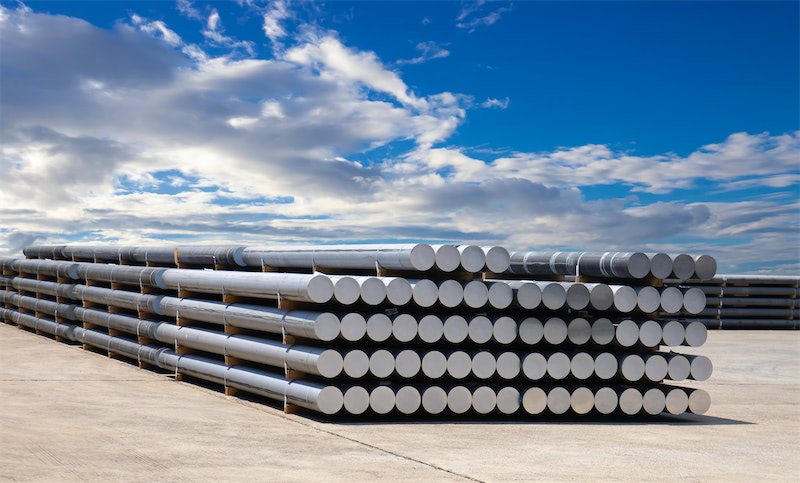
On 9th September, China’s Ministry of Ecology and Environment has issued a draft proposal for public consultation to expand the national carbon emissions trading system (ETS) to cover the cement, steel, and primary aluminium industries. This initiative, outlined in the “Work Plan for Expanding the National Carbon Emissions Trading Market”, aims to broaden the carbon market’s scope while supporting global climate goals. The plan remains in the consultation phase, and feedback is being solicited before final approval and implementation.
Key Goals and Implementation Phases
The work plan is structured into two phases:
-
Phase 1: Initial Implementation (2024–2026) During this stage, the focus is on building a foundation for carbon emissions management while helping enterprises familiarize themselves with market operations. Starting in 2024, companies in the cement, steel, and primary aluminium sectors will be incorporated into the ETS, with the first compliance cycle concluding by the end of 2025. Carbon allowances will be allocated based on companies' annual production, and the government will carefully manage the surplus and deficit of allowances for individual companies, ensuring that both excesses and shortfalls remain within narrow limits.
-
Phase 2: Deepening and Refinement (2027 and beyond) From 2027 onward, the system will be further refined, with stricter controls over allowance distribution. A focus on reducing overall carbon intensity will push industries to adopt cleaner technologies, while the allowance allocation methods will evolve to become more precise, ensuring that the system becomes both more effective and equitable over time.
Elements of control
The cement, steel, and aluminium industries manage direct emissions resulting from fossil fuel combustion and industrial processes. In the cement and steel industries, the primary greenhouse gas controlled is carbon dioxide (CO₂), while in the aluminium industry, emissions of carbon dioxide, carbon tetrafluoride (CF₄), and carbon hexafluoride (C₂F₆) are regulated.
Industry Scope and Inclusion Criteria
Enterprises with annual direct greenhouse gas emissions exceeding 26,000 tons of CO₂ equivalent are required to participate in the ETS. This will involve around 1,500 new companies and cover an additional 3 billion tons of CO₂ emissions. These enterprises must adhere to strict emissions monitoring and reporting regulations.
Carbon Allowance Allocation, Trading, and Compliance
-
Free Allocation of Allowances: In the initial phase, carbon allowances will be distributed free of charge based on production levels, allowing companies to familiarize themselves with market rules while improving their emissions management practices.
-
Trading and Clearing: Companies exceeding their allotted emissions must purchase additional allowances from the centralized market or face penalties. Annual compliance reports will be verified by provincial environmental authorities.
Data Monitoring and Reporting
The plan emphasizes accurate data collection. Companies will submit monthly reports on fuel consumption and emissions levels, subject to a three-tier audit system at the national, provincial, and municipal levels. The government is also exploring real-time carbon emissions monitoring technologies to improve data transparency and accuracy.
Future Impacts and Outlook
The inclusion of cement, steel, and primary aluminium sectors in the ETS is regarded as a further development of China's ETS. With gradually reducing free carbon emission allowance allocation, this system will push carbon emission prices upwards in China's ETS market and encourange companies to adopt cleaner technologies, playing a central role in meeting China’s climate goals, including peaking emissions by 2030 and achieving carbon neutrality by 2060.
![August Secondary Aluminum Operating Rates Edge Up, Recovery Remains Constrained [SMM Analysis]](https://imgqn.smm.cn/usercenter/bXuQG20251217171651.jpg)
![August operating rate of secondary aluminum producers recovers slightly, supply-demand repair still faces multiple constraints [SMM analysis]](https://imgqn.smm.cn/usercenter/zlIyw20251217171654.jpg)