Blast furnace operating rates in China slipped again as floods deterred shipments

Published: Jul 23, 2020 15:35
Some steel mills carried out maintenance on their blast furnaces amid the impact of rainfall-induced floods. The floods had led to the closure of some ports along the Yangtze River, deterring shipments of raw materials and finished products. SMM expects the operating rates to stay steady at high levels next week.

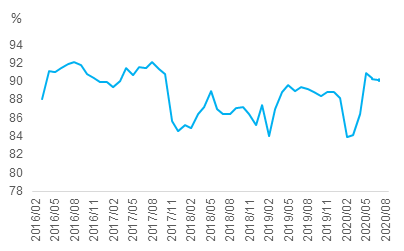
SHANGHAI, Jul 23 (SMM) – Operating rates of blast furnaces at Chinese steelmakers failed to extend a rebound from the prior week, falling 0.23 percentage point from a week ago to an average 90.07% during the fourth week of July, showed an SMM survey.


Some steel mills carried out maintenance on their blast furnaces amid the impact of rainfall-induced floods. The floods had led to the closure of some ports along the Yangtze River, deterring shipments of raw materials and finished products. SMM expects the operating rates to stay steady at high levels next week. 


Steel plants in China’s top steelmaking city of Tangshan are required to implement production control of various degrees between 16:00 CST July 19 and 16:00 CST July 24, according to a release by the local government. The output curbs are on top of the current environmental production measures for July, a move aimed at fighting bad air quality expected during July 19-24. 


Demand for steel is expected to increase as China will intensify the renovation of old urban residential areas in 2020. A total of 39,000 communities are planned to be renovated, twice the number as compared with the previous year, according to a statement by the State Council. Reconstruction need after floods also boosts hopes of a quick recovery in steel demand.


SMM expects futures prices of steel to trade robustly in the near term, driven by macro optimism and an improvement in fundamentals. But investors should remain cautious about prices pulling back after a rally and on negative macroeconomic news. 


Blast furnace operating rates in China retreated (Source: SMM)

Details of the SMM survey:


A steel maker in east China said it has halted production as shipments of raw materials and finished products were disrupted amid floods. Similar situation was seen at another producer in east China, who suspended output by damping down its furnaces. 


A steelmaker in central China maintained stable operations of its blast furnaces and took a cautiously positive sentiment about near-term prices. 


A steel plant in north-east China have kept normal operation of its blast furnaces but put its rolling lines into maintenance. Meanwhile, a steelmaker in south China is running at full capacity without maintenance schedule.




Data Source Statement: Except for publicly available information, all other data are processed by SMM based on publicly available information, market communication, and relying on SMM's internal database model. They are for reference only and do not constitute decision-making recommendations.

For any inquiries or for more information, please contact: lemonzhao@smm.cn
For more information on how to access our research reports, please contact:service.en@smm.cn
Related News
Australia Reviews Anti-Dumping Duties on Galvanized Steel from India, Malaysia, Vietnam Amid Zinc Concerns
Sep 11, 2026 18:30
Australia Reviews Anti-Dumping Duties on Galvanized Steel from India, Malaysia, Vietnam Amid Zinc Concerns
Read More
Australia Reviews Anti-Dumping Duties on Galvanized Steel from India, Malaysia, Vietnam Amid Zinc Concerns
On September 9, 2026, Australia initiated its second sunset review of anti-dumping measures on galvanized steel sheet from India, Malaysia and Vietnam, and separately launched a sunset review of countervailing measures on imports from India. The review covers July 2025-June 2026, with the final report expected by February 11, 2027. As galvanized steel is the largest end-use sector for zinc, the measures directly affect export costs and competitiveness, potentially impacting Australia’s domestic zinc demand and supply chain. Maintaining the duties would provide some protection for domestic steel and coating capacity, while termination could increase low-priced imports and affect regional zinc consumption. The final outcome remains subject to the authorities’ determination.
Sep 11, 2026 18:30
JCC Hongyuan Copper's $200M Expansion Project Aims to Boost Capacity to 550,000 mt by 2027
Sep 7, 2026 15:43
JCC Hongyuan Copper's $200M Expansion Project Aims to Boost Capacity to 550,000 mt by 2027
Read More
JCC Hongyuan Copper's $200M Expansion Project Aims to Boost Capacity to 550,000 mt by 2027
The 300,000 mt/year copper cathode expansion project of JCC Hongyuan Copper, a subsidiary of Jiangxi Copper Corporation, entered the pre-approval public notice stage of its environmental impact assessment on September 4, with a total investment of approximately 1.416 billion yuan. The project is planned to start construction in September 2026 and be completed in December 2027. Upon completion, JCC Hongyuan's total capacity will jump from 250,000 mt to 550,000 mt.
Sep 7, 2026 15:43
Japanese Yen Increases USD/JPY Drops Below 159 Amid Intervention Speculation
Sep 3, 2026 19:00
Japanese Yen Increases USD/JPY Drops Below 159 Amid Intervention Speculation
Read More
Japanese Yen Increases USD/JPY Drops Below 159 Amid Intervention Speculation
[SMM Precious Metal Express] The Japanese yen spiked sharply during Wednesday's trading, with USD/JPY falling below 159 and closing down 0.92% at 158.69, sparking speculation of Japanese currency intervention. The dollar index also dropped sharply, with a weaker dollar environment providing support for precious metals.
Sep 3, 2026 19:00