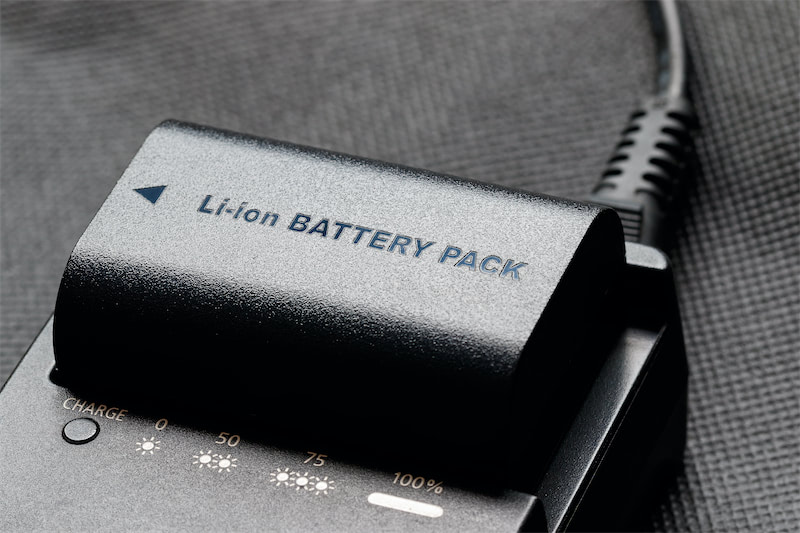
BAIC New Energy partnered with Ningde Times to launch the World's first CTP Battery package

Published: Sep 30, 2019 08:25
Recently, the world's first CTP battery pack (Cell to Pack, moduleless power battery pack, jointly created by BAIC New Energy and Ningde Times, was officially launched at BAIC New Energy headquarters in Blue Valley, China.

SMM, Sept. 30 / PRNewswire-FirstCall-Asianet /-the world's first CTP battery bag, (Cell to Pack, Moduless Power Battery bag, was recently launched by BAIC New Energy and Ningde Times in China Blue Valley, BAIC New Energy headquarters.

As a head enterprise of new energy vehicles in China, BAIC New Energy has always attached great importance to the application and popularization of innovative technology in power batteries, and is committed to the research and development and promotion of new energy vehicles together with its industrial chain partners. In 2010, BAIC New Energy and Ningde Times jointly developed the first batch of pure electric E150EV sample vehicles, and the first batch of SAAB93 sample vehicles equipped with CATL batteries were demonstrated and operated in Beijing. In 2012, the two sides cooperated to carry out the 12th five-year Plan Innovation Project of the Ministry of Science and Technology, won the first prize of the China Automotive Industry Science and Technology Progress Award, and established the VDA ternary square battery product line system in accordance with international standards. In 2016, BAIC appointed Zeng Yuqun chairman as chief scientist of power batteries, and the two sides worked more closely together.

Today, Ningde era batteries have been widely used in BAIC new energy models, and in 2018, BAIC and Ningde Times signed a strategic cooperation agreement dedicated to the development of new power batteries. In February 2019, BAIC New Energy and Ningde Times signed a medium-and long-term strategic cooperation agreement, at the same time, the two sides set up a joint R & D team to carry out in-depth cooperation in the new power battery package. Compared with the traditional battery package in the current market, the volume utilization rate of CTP battery package is increased by 15%-20%, the number of parts is reduced by 40%, and the production efficiency is increased by 50%. After putting into use, the manufacturing cost of power battery will be greatly reduced. In terms of energy density, the average energy density of traditional battery package is 140-150WhH g, while that of CTP battery package is more than 200Wh/kg.

This time, BAIC New Energy and Ningde Times jointly launched the world's first CTP battery bag, and put it into production for the first time, which undoubtedly brought a new breakthrough for the development of the industry.
"Click to sign up for the Annual meeting of China's Nonferrous Metals Industry

Scan QR code and apply to join SMM metal exchange group, please indicate company + name + main business


Data Source Statement: Except for publicly available information, all other data are processed by SMM based on publicly available information, market communication, and relying on SMM's internal database model. They are for reference only and do not constitute decision-making recommendations.

For any inquiries or for more information, please contact: lemonzhao@smm.cn
For more information on how to access our research reports, please contact:service.en@smm.cn
Related News
[SMM Analysis] Stronger Profits, Yet Limited Supply Elasticity: H1 2026 Americas Moly Mine Review
Sep 12, 2026 00:05
[SMM Analysis] Stronger Profits, Yet Limited Supply Elasticity: H1 2026 Americas Moly Mine Review
Read More
[SMM Analysis] Stronger Profits, Yet Limited Supply Elasticity: H1 2026 Americas Moly Mine Review
[SMM Analysis] Stronger Profits, Yet Limited Supply Elasticity: H1 2026 Americas Moly Mine Review
In H1 2026, Americas moly supply divergence deepened. Despite stronger mining profits, overall output failed to rebound. While H2 may see recoveries at select large mines, supply elasticity remains constrained. Which operations are dragging on supply, and where will incremental growth emerge? SMM data reveals a market entering a new phase of "stronger margins, diverging production, and concentrated incremental gains."...
Sep 12, 2026 00:05
[SMM Chromium Week Review] Chrome Ore Flows Rebound as China Port Stocks Build, Zimbabwe Eyes Ferrochrome Capacity
Sep 11, 2026 20:21
[SMM Chromium Week Review] Chrome Ore Flows Rebound as China Port Stocks Build, Zimbabwe Eyes Ferrochrome Capacity
Read More
[SMM Chromium Week Review] Chrome Ore Flows Rebound as China Port Stocks Build, Zimbabwe Eyes Ferrochrome Capacity
[SMM Chromium Week Review] Chrome Ore Flows Rebound as China Port Stocks Build, Zimbabwe Eyes Ferrochrome Capacity
September 11, 2026.
Sep 11, 2026 20:21
[SMM Chromium Flash] Tharisa's Underground Transition at Its Chrome-PGM Flagship Mine Remains on Track
Sep 11, 2026 20:12
[SMM Chromium Flash] Tharisa's Underground Transition at Its Chrome-PGM Flagship Mine Remains on Track
Read More
[SMM Chromium Flash] Tharisa's Underground Transition at Its Chrome-PGM Flagship Mine Remains on Track
[SMM Chromium Flash] Tharisa's Underground Transition at Its Chrome-PGM Flagship Mine Remains on Track
Tharisa confirmed its transition to underground mining at its flagship Tharisa Mine, on the southwestern limb of South Africa's Bushveld Complex, remains on time and within budget, running in parallel with the Karo Platinum Project's construction financing in Zimbabwe. Development of the Apollo underground complex, which commenced in March 2026, is progressing toward first run-of-mine ore in the current quarter, with steady-state production of 255,000 mt per month targeted by the third quarter of calendar year 2029. The Orion complex is expected to follow, targeting first ore in financial year 2031 and steady-state production by the third quarter of calendar year 2033. Together, Tharisa said the two underground complexes are expected to extend mining at the Tharisa Mine, which co-produces chrome concentrate alongside PGMs from the same orebody, for more than 60 years beyond depletion of the current open pit. The underground project is fully funded through development loans from Absa and Standard Bank and an asset-based revolving facility from Nedbank, funding that sits separately from the US$300 million Nordic bond raised this week for Karo. The company did not break out what share of Apollo or Orion's future run-of-mine ore output will be chrome-bearing material versus PGM-bearing material, leaving the underground transition's specific impact on Tharisa's chrome concentrate volumes still to be clarified as the two complexes ramp up toward steady state.
Sep 11, 2026 20:12