Lithium-ion battery deployment increases by 800% from 2017 to 2022

Published: Aug 24, 2018 08:19

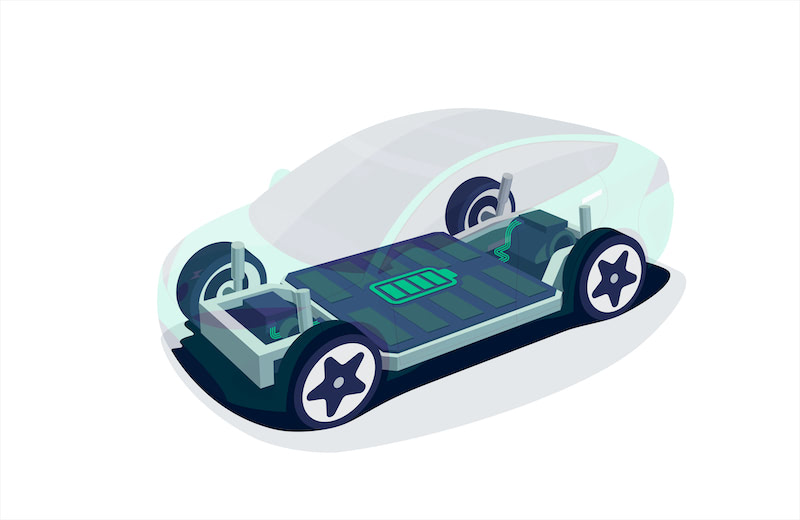
SMM8, April 24: according to the latest report from GTM Research, the deployment of lithium-ion batteries will grow by 55 per cent a year over the next five years.

Most lithium ion deployments will take place in the United States, followed by China, Japan and Australia, the authors say.

GTM analysts say the growth of lithium-ion batteries is the result of several related trends. In order to meet the demand for electric vehicle batteries, lithium ion manufacturing capacity has been expanded on a large scale. The increase in so-called gigabit plants contributes to economies of scale and reduces battery production costs.

At the same time, manufacturers are adopting new technological advances that will help increase the energy density of batteries. Third, second-hand EV batteries will provide another cheap battery supply to the market, according to the report's authors, Mitalee Gupta, an energy storage analyst at GTM, and Ravi Manghani, director of energy storage at GTM.

Some energy experts expect energy storage to continue to build on its recent momentum. According to GTM Research-Energy Storage Association, the U. S. energy storage market recently reached a milestone, reaching 100 megawatt hours of grid-connected energy storage deployment in the fourth quarter of 2017.

One of the factors driving energy storage growth is that more utilities incorporate technology into their planning processes.

In the new GTM report, Gupta and Manghani argue that the price of lithium-ion battery packs has fallen by 82%, from $219 per kilowatt hour in 2017 to $39 per kilowatt hour in 2040. This will drive the further growth of energy storage devices.

The authors point out that the cost of energy storage has so far limited its use in professional applications on the grid, but as costs fall, they want to see a wider range of use cases become attractive.

(article compiled from external network)

Data Source Statement: Except for publicly available information, all other data are processed by SMM based on publicly available information, market communication, and relying on SMM's internal database model. They are for reference only and do not constitute decision-making recommendations.

For any inquiries or for more information, please contact: lemonzhao@smm.cn
For more information on how to access our research reports, please contact:service.en@smm.cn
Related News
[SMM Analysis] Cutting 6-series, moving away from CATL: Behind the buzz in August's auto market, ternary is being repriced
11 hours ago
[SMM Analysis] Cutting 6-series, moving away from CATL: Behind the buzz in August's auto market, ternary is being repriced
Read More
[SMM Analysis] Cutting 6-series, moving away from CATL: Behind the buzz in August's auto market, ternary is being repriced
[SMM Analysis] Cutting 6-series, moving away from CATL: Behind the buzz in August's auto market, ternary is being repriced
11 hours ago
Approximately $1.4 billion! India plans 130 billion rupee battery component incentive program
13 hours ago
Approximately $1.4 billion! India plans 130 billion rupee battery component incentive program
Read More
Approximately $1.4 billion! India plans 130 billion rupee battery component incentive program
Recently, according to India's Business Standard, the Indian government is formulating an advanced battery component incentive program totaling approximately 130 billion rupees (about $1.4 billion). The program's incentive scope covers key battery cell components, including cathode and anode active materials, electrolyte, separators, and copper foil. According to sources familiar with the matter, the program has completed inter-ministerial consultations and is about to be submitted to the Ministry of Finance's Expenditure Finance Committee for approval.
13 hours ago
[Solid-State Battery: ProLogium Technology Mass-Produces High-Energy-Density All-Solid-State Battery Gen3.5 Reaching 381 Wh/kg and 903 Wh/L]
14 hours ago
[Solid-State Battery: ProLogium Technology Mass-Produces High-Energy-Density All-Solid-State Battery Gen3.5 Reaching 381 Wh/kg and 903 Wh/L]
Read More
[Solid-State Battery: ProLogium Technology Mass-Produces High-Energy-Density All-Solid-State Battery Gen3.5 Reaching 381 Wh/kg and 903 Wh/L]
[Solid-State Battery: ProLogium Technology Mass-Produces High-Energy-Density All-Solid-State Battery Gen3.5 Reaching 381 Wh/kg and 903 Wh/L]
[Solid-State Battery: ProLogium Technology Mass-Produces High-Energy-Density All-Solid-State Battery Gen3.5 Reaching 381 Wh/kg and 903 Wh/L] On September 2, 2026, ProLogium Technology announced that its latest Gen3.5 lithium ceramic battery (LCB) has entered mass production at its Giga-level industrial platform in Taiwan. According to a third-party TÜV test report, the 185.4 Ah large-format cell achieves a volumetric energy density of 903 Wh/L and a gravimetric energy density of 381 Wh/kg, and is classified as an all-solid-state battery under the GB/T43568-2026 standard. Building on more than a decade of commercial mass-production experience and a scalable Giga-level manufacturing platform constructed across three generations of production lines, it meets the demands of EVs and other high-performance applications for lightweight design, driving range, and fast recharging, and will be extended to the Gen4 all-inorganic electrolyte system. On January 23, 2024, the Taoyuan base in Taiwan invested TWD 4.2 billion, approximately CNY 960 million, to build its first production line and begin solid-state battery production. Initial capacity is 0.5 GWh per year, sufficient for 14,000 EVs, with a final scale of 2 GWh.
14 hours ago
Lithium-ion battery deployment increases by 800% from 2017 to 2022 - Shanghai Metals Market (SMM)