NEA: Tight Energy Supply and Demand in 1H, Renewable Energy Installation Capacity Steadily Expanding

Published: Jul 30, 2021 11:58
At the routine press conference of National Energy Administration (NEA), officer LI Fulong summarized the domestic overall energy supply and demand as tightened in 1H, 2021. Coal experienced short supply, and prices fluctuated at high.

SHANGHAI, Jul 30 (SMM) - At the routine press conference of National Energy Administration (NEA), officer LI Fulong summarized the domestic overall energy supply and demand as tightened in 1H, 2021. Coal experienced short supply, and prices fluctuated at high.

In the first half of the year, the cumulative power generation capacity of hydropower, nuclear power, wind power and solar power increased by 10.2% year on year. Specifically, the first units of Baihetan Hydropower Station commenced operation, which was among the world's largest single-power megawatt hydroelectric generating unit, achieving a major breakthrough in China's high-end equipment manufacturing.

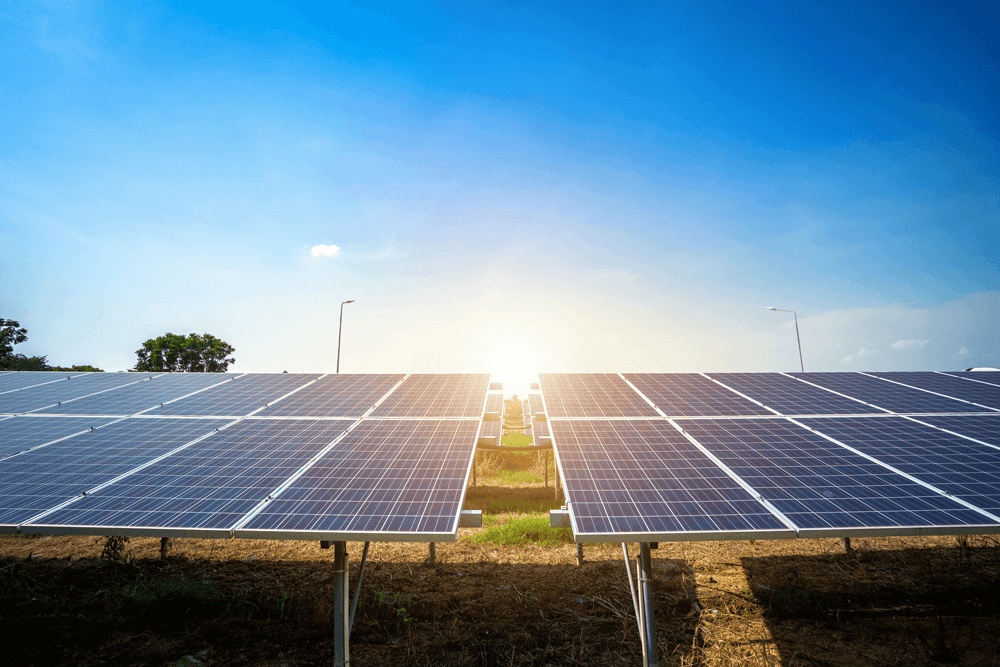
By the end of June 2021, the country's installed renewable energy power generation capacity reached 971 million kilowatts, including 378 million kilowatts of hydropower (including 32.14 million kilowatts of pumped storage), 292 million kilowatts of wind power, 268 million kilowatts of photovoltaic power and 33.19 million kilowatts of biomass power had been installed. Renewable energy generation continued to grow. From January to June 2021, the national renewable energy generation reached 1.06 trillion kilowatt hours, including 482.67 billion kWh of hydropower above the scale, up 1.4% year on year; 344.18 billion kWh of wind power, up about 44.6% year on year; 157.64 billion kWh of photovoltaic power generation, up about 23.4% year on year; and 77.95 billion kWh of biomass power generation, up about 26.6% year on year. From January to June 2021, wasted hydroelectricity from major river basins was about 5.364 billion kilowatt-hours, with a utilization rate of about 98.43%, up 0.07 percentage points from the same period last year; the wasted wind power was about 12.64 billion kilowatt-hours, with an average utilization rate of 96.4%, up 0.3 percentage points from the same period last year; wasted photovoltaic power reached 3.32, with average utilization rate of 97.9%, an increase of 0.07 percentage points over the same period last year.

According to a government document, it is proposed that new energy storage is an important initiative to enhance the regulation ability, comprehensive efficiency and safety guarantee ability of energy and power system and to support the construction of new power system. The main objective is to strictly follow phased development with a focus on high-quality large-scale development during the 14th Five-Year Plan period, taking 30 million kilowatts as the basic target to finally realize carbon peak and carbon neutrality.
Data Source Statement: Except for publicly available information, all other data are processed by SMM based on publicly available information, market communication, and relying on SMM‘s internal database model. They are for reference only and do not constitute decision-making recommendations.

For any inquiries or to learn more information, please contact: lemonzhao@smm.cn
For more information on how to access our research reports, please contact:service.en@smm.cn
Related News
Guozong Zhongsheng's 200 MW ESS Project Kicks Off in Jinchang with 780 Mln Yuan Investment
8 hours ago
Guozong Zhongsheng's 200 MW ESS Project Kicks Off in Jinchang with 780 Mln Yuan Investment
Read More
Guozong Zhongsheng's 200 MW ESS Project Kicks Off in Jinchang with 780 Mln Yuan Investment
On March 8, the Guozong Zhongsheng 200 MW/800 MWh grid-side standalone ESS project officially broke ground at the Xipo PV Industrial Park in Jinchang City’s Jinchuan District. With a total investment of approximately 780 million yuan, the project will adopt the currently mature LFP electrochemical energy storage technology, and will mainly build 40 sets of 5 MW/20 MWh energy storage units, along with supporting auxiliary works such as one 330 kV step-up substation and eight 35 kV collector lines.
8 hours ago
First Grid-Forming ESS Project in Northern Hebei Goes Online
8 hours ago
First Grid-Forming ESS Project in Northern Hebei Goes Online
Read More
First Grid-Forming ESS Project in Northern Hebei Goes Online
Recently, the first grid-forming ESS project in the northern Hebei power grid—the Beijing Hengyuan Zhangbei County 300 MW/600 MWh standalone ESS power station—was officially connected to the grid and began generating electricity. The grid-forming ESS capacity is 50 MW/100 MWh, using Sungrow’s grid-forming technology, adding an adjustable “dam” to conventional new energy plants to make the “green electricity river” more controllable and stable. This strongly enhances the reliability of power supply in the Beijing-Tianjin-Hebei region and sets a new milestone for high-quality transmission of new energy.
8 hours ago
Amidst Middle East Conflicts: What is the Path Forward for China's Energy Storage Exports?
8 hours ago
Amidst Middle East Conflicts: What is the Path Forward for China's Energy Storage Exports?
Read More
Amidst Middle East Conflicts: What is the Path Forward for China's Energy Storage Exports?
Recent Middle East conflicts have disrupted the region's booming energy storage market, a major destination for Chinese exports. To assess the real impact on Chinese supply chains and project deliveries, we must analyze baseline demand amidst these geopolitical uncertainties.
8 hours ago