

News
Exclusive analysis article with latest market updates, and in-time news feeds.
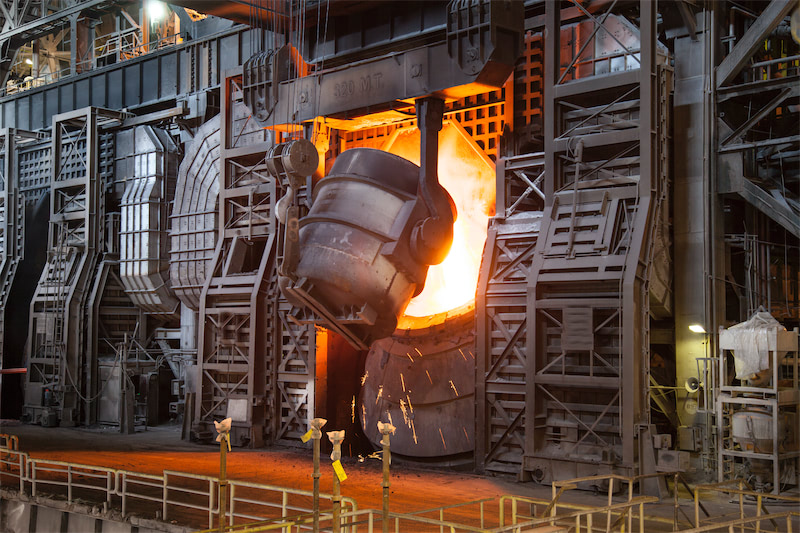
【SMM Analysis】India Steel Market 2026: Demand-Led Growth Reshapes Trade Flows and Market Balance
India’s steel market in 2026 is expected to remain balanced, with demand slightly outpacing supply. Domestic consumption will absorb most output, while imports decline overall and exports increase modestly as a balancing mechanism. Supported by strong growth and infrastructure investment, India is transitioning toward a demand-led steel market with solid long-term potential.
Mar 30, 2026 15:19
[SMM Analysis] Overseas Stainless Steel Market Overview: Overseas Policy Resonance and Cost Drivers
Indonesia's new nickel tariffs and Europe's CBAM have sharply raised overseas stainless steel costs, driving Asian mills to hike prices. Downstream demand remains mixed: Japan and South Korea are resilient, while the Taiwan, China region faces pressure. Wary of rapid price spikes, buyers are limiting purchases to rigid demand. The market will remain cautious until tariff details and actual demand are validated.
Mar 30, 2026 15:04
Pullback as an Opportunity: Analysts Raise Gold Forecast to $6,300!
Gold has lost significant ground in recent weeks, but for Wells Fargo, this apparently changes little in the long-term picture. The US bank has reaffirmed its positive outlook for the precious metal and significantly raised its price target for the current year.
Apr 1, 2026 11:10
Latest News
Vietnam Imposes 27.83% Temporary Tariff on Certain Chinese Hot-Rolled Steel Products
Common.Time.hoursAgo
![Risks in the Ferrous Metals Sector Began to Accumulate [SMM Steel Industry Chain Weekly Report]](https://imgqn.smm.cn/usercenter/yBlDX20251217171747.jpg)
Risks in the Ferrous Metals Sector Began to Accumulate [SMM Steel Industry Chain Weekly Report]
Common.Time.hoursAgo
MMi Daily Iron Ore Report (April 3)
Common.Time.hoursAgo
[SMM Daily Hot-Rolled Coil Trading] Spot Trading Moved Sideways
[SMM Daily Hot-Rolled Coil Trading] On April 3, the total daily trading volume of hot-rolled coil at sample enterprises in four SMM cities (Shanghai, Lecong, Tianjin, and Ningbo) was 14,410 mt, down 70 mt day on day, or 0.5%, up 30.71% YoY on a calendar basis and up 12.31% YoY on a lunar calendar basis.
Common.Time.hoursAgo
【SMM Analysis】U.S. Section 232 Steel Tariff Adjustments: Strategic Recalibration of Import Structures & Domestic Supply
On April 2, 2026, the White House ushered US steel trade policy into "Version 2.0." This strategic shift goes beyond simple tariff hikes. It uses full-value taxation and melt-and-pour traceability to block low-end imported raw materials, while applying structural tariff reductions to finished products to ease manufacturing inflation. Ultimately, this two-pronged approach aims to forcibly bring the global supply chain back to domestic US steel production.
Common.Time.hoursAgo
Port Pick-Up Volume Rebounded to 3 Million mt, but Iron Ore Closed Slightly Lower [SMM Imported Ore Daily Review]
Common.Time.hoursAgo
[Brief Review of China’s Iron Ore Market] Iron Ore Concentrate Prices in West Liaoning May Fluctuate Next Week
[China Iron Ore Brief Review] In west Liaoning, local iron ore concentrates prices fell slightly by 5 yuan/mt, with the ex-factory prices of 66-grade iron ore concentrates, wet basis and excluding tax, at 735-740 yuan/mt; recently, production at some local mines and beneficiation plants was hindered by environmental protection inspections, leaving overall iron ore concentrates resources relatively tight. Demand side, steel mills were mainly purchasing as needed, and the whole
Common.Time.hoursAgo
[SMM Chromium Weekly Review] Weak Demand Performance, Market Remained in the Doldrums
[SMM Chrome Weekly Review: Weak Demand Performance, Market Remained in the Doldrums] News on April 3, 2026: The ferrochrome and chrome ore markets saw limited fluctuations...
Common.Time.hoursAgo
Stainless Steel Underperformed in Peak Season, with Prices and Costs Pulling Back in Tandem as Losses at Stainless Steel Mills Persisted [SMM Analysis]
Common.Time.hoursAgo
[SMM Daily Brief Review of Coking Coal and Coke] 20260403
[SMM Daily Brief Review of Coking Coal and Coke]
In terms of supply, coking coal costs for coke producers declined somewhat, and with the first round of coke price increases now fully implemented, losses at coke producers narrowed significantly, boosting production enthusiasm. Coke supply increased steadily, while downstream demand remained moderate, shipments were smooth, and producers' own inventory continued to decline. Demand side, steel mill blast furnaces gradually resumed production, and daily average hot metal production continued to increase, driving up rigid demand for coke. However, steel mills have recently seen good coke arrivals, with most mills' coke inventory at mid-range levels and overall procurement sentiment remaining average. In summary, coke market fundamentals have shifted toward looser supply and demand, and coupled with weaker recent cost support for coke, the coke market may remain temporarily stable in the short term, with further price increases facing greater difficulty.
Common.Time.hoursAgo
![[SMM Analysis] Stainless Steel Social Inventory Saw a Slight Buildup, While High Supply Coupled with Cautious Downstream Demand Constrained Destocking](https://imgqn.smm.cn/usercenter/bFzkj20251217171724.jpg)
[SMM Analysis] Stainless Steel Social Inventory Saw a Slight Buildup, While High Supply Coupled with Cautious Downstream Demand Constrained Destocking
Common.Time.hoursAgo
![Cost Advantages Supported Demand, and Stainless Steel Scrap Prices Remained Stable in the Short Term [SMM Stainless Steel Scrap Market Weekly Review]](https://imgqn.smm.cn/usercenter/GfiYT20251217171720.jpg)
Cost Advantages Supported Demand, and Stainless Steel Scrap Prices Remained Stable in the Short Term [SMM Stainless Steel Scrap Market Weekly Review]
Common.Time.hoursAgo
![[SMM Steel] Vietnam steel prices are expected to rise in Q2 2026](https://imgqn.smm.cn/usercenter/FFFrV20251217171719.jpg)
[SMM Steel] Vietnam steel prices are expected to rise in Q2 2026
Common.Time.hoursAgo
[SMM Steel] European steelmakers call for stronger protection for special steel
[SMM Steel] Thyssenkrupp Steel Europe urged the European Commission to strengthen safeguards for grain-oriented electrical steel as low-cost Asian imports disrupt the market. Producers warn that current measures are insufficient, with cheaper imports already forcing production cuts in parts of Europe, particularly in France. The industry cautions that without stronger protections, domestic capacity and technical expertise may further decline.
Common.Time.hoursAgo
[SMM Steel] Nucor expects slight profit growth in early 2026
[SMM Steel] Nucor expects Q1 2026 earnings to increase modestly versus Q4 2025, with the Steel Mills division seeing the largest improvement. The company also anticipates better performance in its raw materials segment, while steel products earnings are expected to remain broadly stable. Pricing pressure continues to challenge North American producers, indicating profitability is increasingly driven by pricing discipline and value-added product mix.
Common.Time.hoursAgo
[SMM Steel] US adjusts tariffs on steel, aluminum and copper derivative products
[SMM Steel] The US announced adjustments to Section 232 tariffs, lowering duty rates on derivative products made from steel, aluminum and copper while maintaining the 50% tariff on base metal imports. The revised measure will apply tariffs based on prices paid by US customers, aiming to simplify compliance and reduce under-reporting of import values.
Common.Time.hoursAgo
Data: SHFE, DCE market movement (Apr 03)
The following table shows the ferrous and nonferrous metals movement on the SHFE and DCE on 03 Apr , 2026
Common.Time.hoursAgo
Angang Steel's April ferromolybdenum tender price was 282,800/mt
[Molybdenum-Iron Steel Tender Information] SMM, April 3: Angang Steel's latest ferromolybdenum tender price was 282,800 yuan/mt (acceptance bill), with a quantity of 210 mt and a delivery date of April 30.
Common.Time.hoursAgo
[SMM Stainless Steel Daily Review] SS Futures Fluctuated Upward, While Spot Stainless Steel Trading Was Sluggish as the Qingming Festival Approached
[SMM Stainless Steel Daily Review] SS Futures Fluctuated Upward, Spot Stainless Steel Trading Sluggish Ahead of Qingming Festival
SMM News on April 3: SS futures showed an upward fluctuation trend. SHFE nickel drove SS futures to stop falling and strengthen, closing at 14,235 yuan/mt as of the midday close. Spot market, although SS futures stopped falling and rebounded, the overall gains were limited, providing no obvious boost to the spot market; coupled with the approaching Qingming Festival holiday, overall market trading sentiment was sluggish, and traders' quotes were largely stable.
The most-traded SS futures contract stopped falling and strengthened. At 10:15 a.m., SS2605 was quoted at 14,150 yuan/mt, up 40 yuan/mt from the previous trading day. Spot premiums for 304/2B in Wuxi were in the range of 270-470 yuan/mt. In the spot market, the average price of cold-rolled 201/2B coils in Wuxi was unchanged; for cold-rolled burr-edge 304/2B coils, the average price in Wuxi was unchanged, and the average price in Foshan was largely stable; cold-rolled 316L/2B coils in Wuxi were unchanged; for hot-rolled 316L/NO.1 coils, Wuxi quotes were unchanged; cold-rolled 430/2B coils in both Wuxi and Foshan were largely stable.
The stainless steel market is currently in the traditional peak consumption season of "Golden March and Silver April," and the fundamental downstream demand improved compared with the previous period. End-user procurement continued at a pace based on rigid demand, and overall trading volume was sufficient to support the market's basic vitality. However, affected by macro news disruptions and fluctuations in futures, downstream end-user clients still maintained a wait-and-see sentiment, showing no willingness to stockpile, and transactions fluctuated with changes in the news flow. Futures, the Iran geopolitical conflict is difficult to resolve in the short term, and uncertainty in macro news continues to cause disruptions...
Common.Time.hoursAgo
【SMM Hot Topic】Vietnam Blocks HRC Exports from China: New Anti-Circumvention Measures Impact Trade
Common.Time.hoursAgo
![[SMM Analysis] What Drove Global Tungsten Markets in March? Offshore Prices Up 30%, China Enters Consolidation](https://imgqn.smm.cn/usercenter/eGQFu20251217171723.jpeg)
[SMM Analysis] What Drove Global Tungsten Markets in March? Offshore Prices Up 30%, China Enters Consolidation
In March, European APT prices surged 30%, driven by persistent supply shortages, widening the price gap with China to over $400/mtu. Tungsten scrap markets saw panic selling mid-month but stabilized toward month-end. China entered a consolidation phase as mining quota were released, yet strong fundamentals point to renewed upside ahead.
Mar 30, 2026 15:23

Korea’s Battery Industry Shifts from Product Competition to Supply Chain Competition
Mar 31, 2026 19:58

【SMM Analysis】 EV Sales Are No Longer the Sole Anchor of Power Battery Demand
Mar 30, 2026 18:05
Historically Low TCs Threaten Chinese Copper Smelters’ Survival – Sulfuric Acid & Geopolitics Emerge as Key Variables
Mar 30, 2026 12:20
【SMM Analysis】India Steel Market 2026: Demand-Led Growth Reshapes Trade Flows and Market Balance
Mar 30, 2026 15:19
![[SMM Analysis] Overseas Stainless Steel Market Overview: Overseas Policy Resonance and Cost Drivers](https://imgqn.smm.cn/usercenter/VstiG20251217171732.jpeg)
[SMM Analysis] Overseas Stainless Steel Market Overview: Overseas Policy Resonance and Cost Drivers
Mar 30, 2026 15:04

Pullback as an Opportunity: Analysts Raise Gold Forecast to $6,300!
Apr 1, 2026 11:10
Latest News
Vietnam Imposes 27.83% Temporary Tariff on Certain Chinese Hot-Rolled Steel Products
Common.Time.hoursAgo
Risks in the Ferrous Metals Sector Began to Accumulate [SMM Steel Industry Chain Weekly Report]
Common.Time.hoursAgo
MMi Daily Iron Ore Report (April 3)
Common.Time.hoursAgo
[SMM Daily Hot-Rolled Coil Trading] Spot Trading Moved Sideways
Common.Time.hoursAgo
【SMM Analysis】U.S. Section 232 Steel Tariff Adjustments: Strategic Recalibration of Import Structures & Domestic Supply
Common.Time.hoursAgo
Port Pick-Up Volume Rebounded to 3 Million mt, but Iron Ore Closed Slightly Lower [SMM Imported Ore Daily Review]
Common.Time.hoursAgo
[Brief Review of China’s Iron Ore Market] Iron Ore Concentrate Prices in West Liaoning May Fluctuate Next Week
Common.Time.hoursAgo
[SMM Chromium Weekly Review] Weak Demand Performance, Market Remained in the Doldrums
Common.Time.hoursAgo
Stainless Steel Underperformed in Peak Season, with Prices and Costs Pulling Back in Tandem as Losses at Stainless Steel Mills Persisted [SMM Analysis]
Common.Time.hoursAgo
[SMM Daily Brief Review of Coking Coal and Coke] 20260403
Common.Time.hoursAgo
[SMM Analysis] Stainless Steel Social Inventory Saw a Slight Buildup, While High Supply Coupled with Cautious Downstream Demand Constrained Destocking
Common.Time.hoursAgo
Cost Advantages Supported Demand, and Stainless Steel Scrap Prices Remained Stable in the Short Term [SMM Stainless Steel Scrap Market Weekly Review]
Common.Time.hoursAgo
[SMM Steel] Vietnam steel prices are expected to rise in Q2 2026
Common.Time.hoursAgo
[SMM Steel] European steelmakers call for stronger protection for special steel
Common.Time.hoursAgo
[SMM Steel] Nucor expects slight profit growth in early 2026
Common.Time.hoursAgo
[SMM Steel] US adjusts tariffs on steel, aluminum and copper derivative products
Common.Time.hoursAgo
Data: SHFE, DCE market movement (Apr 03)
Common.Time.hoursAgo
Angang Steel's April ferromolybdenum tender price was 282,800/mt
Common.Time.hoursAgo
[SMM Stainless Steel Daily Review] SS Futures Fluctuated Upward, While Spot Stainless Steel Trading Was Sluggish as the Qingming Festival Approached
Common.Time.hoursAgo
【SMM Hot Topic】Vietnam Blocks HRC Exports from China: New Anti-Circumvention Measures Impact Trade
Common.Time.hoursAgo