News

Exclusive analysis article with latest market updates, and in-time news feeds.
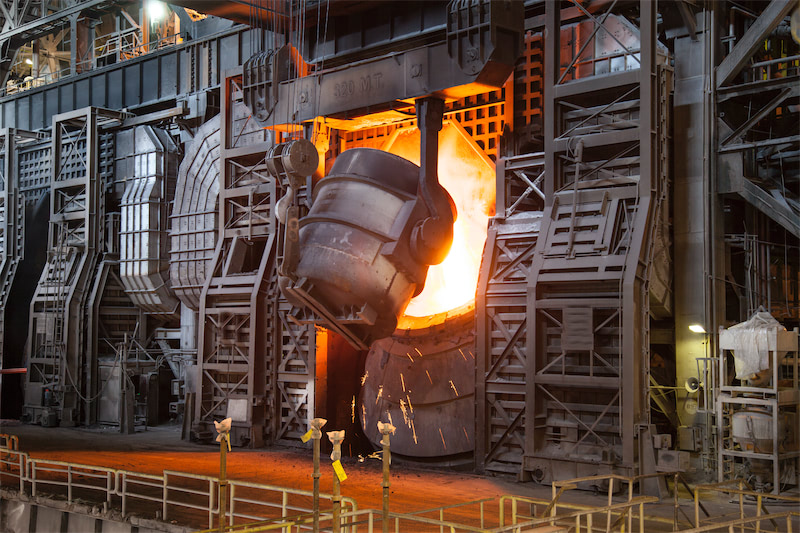
【SMM Analysis】 EV Sales Are No Longer the Sole Anchor of Power Battery Demand
In recent years, the most common and straightforward framework for assessing demand across the lithium battery value chain has been to anchor it to EV sales. The logic was simple: the more vehicles sold, the stronger the battery demand; conversely, a slowdown in vehicle sales would imply weaker battery demand. This relationship held true in the early stages of the industry, when EV penetration was rapidly increasing, product structures were relatively simple, and battery demand exhibited a strong linear correlation with vehicle sales. However, this linear relationship is now clearly weakening. Increasing evidence suggests that battery demand is no longer solely determined by vehicle sales , but is increasingly driven by multiple factors, including average battery capacity per vehicle, product mix, commercial vehicle electrification, and export dynamics. 1. The “Vehicle Sales = Battery Demand” Formula Is Breaking Down At its core, vehicle sales represent the number of units sold, while battery demand reflects total energy consumption, i.e., total installed battery capacity. These two metrics only move in tandem when the average battery capacity per vehicle remains stable. Once average battery size increases, or when the sales mix shifts across BEV vs. PHEV, passenger vs. commercial vehicles, the direct linkage between vehicle sales and battery demand begins to decouple. As a result, assessing battery demand today requires answering several additional questions beyond headline vehicle sales: What is the average battery capacity per vehicle? Which vehicle segments are driving incremental growth? Are export flows and regional differences amplifying demand volatility? In other words, the industry is transitioning from a “unit-driven” model to an “energy-driven” model . 2. Rising Battery Capacity per Vehicle: The Primary Driver The most direct reason for the decoupling is the continuous increase in battery capacity per vehicle. This trend is driven by three key factors. First, vehicle upsizing. Both in China and overseas, EV consumption is shifting from basic electrification to enhanced user experience. The rising share of SUVs, pickup trucks, larger sedans, and premium vehicles naturally drives higher battery capacity per vehicle. Larger vehicle size, longer range requirements, and higher performance expectations all translate into higher kWh configurations. Second, the range competition is not over. While the industry has moved beyond the most aggressive phase of “range-at-all-costs,” consumers still place strong emphasis on real-world range, low-temperature performance, highway efficiency, and charging convenience. Even amid intense price competition, automakers are reluctant to reduce battery capacity, as it remains a core determinant of product competitiveness. Third, the growth of premium BEVs and heavy-duty applications. Although EV sales growth is expected to moderate going forward, battery demand is still projected to grow at a faster pace, with increasing battery capacity per vehicle being a key contributor. This reflects a critical shift: vehicles may not be selling faster, but each vehicle is consuming more battery capacity. Therefore, relying solely on slowing vehicle sales growth to infer weaker battery demand may significantly underestimate the offsetting effect from rising battery capacity per vehicle. 3. Product Mix Matters More Than Total Sales Volume Beyond battery capacity, changes in product mix are also reshaping battery demand. For instance, selling one million EVs with a higher BEV share will result in stronger battery demand than the same volume with a higher PHEV share, due to differences in battery size. In other words, shifts between different powertrain technologies directly impact overall battery intensity. Globally, this structural divergence is becoming more pronounced. In Europe, policy adjustments have led to a temporary rebound in PHEVs, which dilutes average battery capacity per vehicle. In contrast, China continues to maintain a high share of BEVs and higher-capacity vehicles, supporting stronger battery demand intensity. Thus, evaluating battery demand today requires understanding not just how many vehicles are sold, but what types of vehicles are driving the growth . 4. Commercial Vehicle Electrification: The Most Undervalued Growth Driver If rising battery capacity per vehicle represents the first layer of demand restructuring, then the electrification of commercial vehicles represents the second—and arguably the most underestimated—layer. Passenger EVs typically carry battery packs in the range of tens of kWh, whereas electric heavy-duty trucks, construction vehicles, and specialty vehicles often require 300–600 kWh or more. This means that a single electric truck can generate battery demand equivalent to multiple passenger EVs . Even with a smaller sales base, incremental penetration in commercial vehicles can significantly amplify overall battery demand. Rising oil prices further accelerate this trend by improving the total cost of ownership (TCO) of electric commercial vehicles, particularly in high-utilization, heavy-load, and fixed-route applications. In such scenarios, electrification becomes economically compelling much faster. As a result, while commercial vehicles are not the largest segment by volume, they are likely to become one of the most powerful “energy leverage” drivers of battery demand in the near term. 5. Exports, Inventory Cycles, and Production Scheduling Are Increasing the Mismatch In addition to end-market dynamics, midstream factors such as exports, inventory cycles, and production scheduling are further widening the gap between vehicle sales and battery demand. On one hand, changes in export policies, overseas customer stocking behavior, and shifts in trade flows can either front-load or delay battery and materials production. On the other hand, inventory cycles are once again becoming a central analytical framework. Automakers and distributors are no longer maintaining stable inventory levels; instead, they dynamically adjust stocking based on sales trends and pricing competition. This means that battery production is increasingly influenced by inventory drawdowns, restocking cycles, and order visibility—rather than simply mirroring real-time vehicle sales. Analyst SMM Lithium Battery Analyst Lesley Yang yangle@smm.cn
Mar 30, 2026 18:05
Historically Low TCs Threaten Chinese Copper Smelters’ Survival – Sulfuric Acid & Geopolitics Emerge as Key Variables
Since the beginning of this year, the spot treatment charge market for copper concentrates has shown an unprecedented and severe downward trend. The SMM Copper Concentrate Spot Index has fallen from -45 USD/dmt at the start of the year to near -70 USD/dmt, with the speed and magnitude of the decline being historically rare. A negative treatment charge means that when smelters purchase copper concentrates, they not only fail to receive traditional processing income from miners but instead must pay the sellers. Based on the current TC of -70 USD/dmt, the actual cost smelters pay sellers in the copper smelting process is equivalent to a TC of 70 USD, or further converted to a TC+RC of approximately 112 USD. This extreme price signal has quickly drawn high market attention to smelter profitability and even sparked concerns about the sustainability of domestic copper smelting production. Despite treatment charges falling to historic lows, copper cathode production by Chinese smelters remains at high levels, currently around 1.2 million tons per month. This phenomenon of "producing more while losing more" appears, on the surface, to contradict market logic, but actually reflects smelters' passive choices and structural supporting factors in the current complex environment. Historically, extreme treatment charge scenarios are not unprecedented. In past industry downturns, smelters often relied on one or several factors—exchange rate fluctuations, rising sulfuric acid prices, or treatment charges themselves—to barely maintain cash flow balance. In the current cycle, the sharp rise in sulfuric acid prices has become a key variable supporting smelter survival. Currently, the ex-factory prices of smelter acid sold by domestic copper smelters generally range from 800 to 1,600 yuan per ton. The latest SMM Copper Smelting Acid Index stands at 1,235.5 yuan/ton. As a crucial byproduct of copper smelting, sulfuric acid price fluctuations significantly impact smelters' comprehensive earnings. Typically, smelters produce approximately one ton of sulfuric acid for every dry metric ton of copper concentrate processed. Based on the current sulfuric acid price of 1,235.5 yuan/ton, after deducting value-added tax (at a 13% rate) and converting to US dollars (using an exchange rate of 6.9), each ton of sulfuric acid can contribute about 158 USD in revenue for the smelter, equivalent to an additional 158 USD per dry metric ton of copper concentrate. If further converted to the TC+RC metric, this amounts to about 99 USD. Thus, the rise in sulfuric acid prices has significantly offset the loss pressure from negative copper concentrate treatment charges, with some more efficient smelters even achieving marginal profitability. It is precisely this "stabilizer" role of sulfuric acid that allows smelters to maintain high operating rates under extreme treatment charge conditions. However, the support of sulfuric acid for smelting profits is not unlimited, as its price trend is itself influenced by more complex international geopolitical factors. The recent sharp escalation of the Middle East situation has brought significant uncertainty to the global sulfuric acid and sulfur supply chain. Since the joint US-Israeli military strike against Iran on February 28, 2026, the Strait of Hormuz, the world's most critical energy transport route, has rapidly fallen into a severe transit crisis. After taking office, Iran's new Supreme Leader, Mojtaba Khamenei, immediately declared that the strait would remain closed as a strategic lever against the US-Israeli alliance and suggested that neighboring countries close US military bases. The Islamic Revolutionary Guard Corps subsequently explicitly announced a ban on any vessels associated with the US or Israel from passing through the Strait of Hormuz, warning of severe consequences for unauthorized passage. The Strait of Hormuz is a critical chokepoint for global sulfur transport. Statistics show that before the conflict, over 100 ships passed through the strait daily. However, after the conflict erupted, transit traffic plummeted by over 90%, with extreme cases of no ships passing for an entire day, leaving over 3,000 vessels stranded in nearby waters. This effective blockade has not only directly impacted the crude oil market—with Brent crude futures rising over 50% within a month to exceed 114 USD per barrel—but has also severely disrupted the global supply chain for sulfur and sulfuric acid. War risks have caused shipping insurance costs to soar to over 20% of the cargo value, further increasing logistics costs and plunging global sulfur supply into a logistical crisis. Although Iran claims to allow passage for vessels from "non-hostile" countries, requiring them to obtain prior permission, actual transit volumes remain extremely low, far below global trade demand. Simultaneously, the Houthi armed group in Yemen has announced its involvement, posing new security threats to the Red Sea-Suez route. The compounding pressure on the two major shipping chokepoints of the Strait of Hormuz and the Red Sea is posing a systemic challenge to the global supply chains for energy and chemical raw materials. As the primary raw material for sulfuric acid production, the disruption in sulfur supply directly drives international and domestic sulfuric acid prices progressively higher. Given the current situation, geopolitical conflicts show no signs of easing in the short term, implying further room for sulfuric acid price increases. The continued rise in sulfuric acid prices will have a dual impact on the domestic copper smelting industry. On the one hand, increased sulfuric acid revenue will continue to provide crucial profit supplementation for smelters, enabling them to maintain production even at lower TC levels and potentially further depressing spot copper concentrate treatment charges. On the other hand, this surge in sulfuric acid prices, driven by geopolitical conflict, also makes smelter profitability highly dependent on external unstable factors, rendering the industry's overall risk resilience increasingly fragile. Notably, the extreme treatment charge environment has begun to have a tangible impact on the global layout of copper smelting capacity. Mitsubishi Materials of Japan recently announced its plan to cease operations at its Onahama copper smelter by the end of March 2027. The smelter has a crude and refined capacity of 230,000 tons, and the main reason for the closure is precisely the intensified competition in the global copper smelting industry, leading to a sharp deterioration in copper concentrate TC/RC and persistent pressure on business prospects. This decision sends a clear signal: against the backdrop of continuously bottoming treatment charges and industry profits highly dependent on byproducts and external environments, some high-cost smelting capacity or those lacking comprehensive recovery capabilities are facing pressure to exit the market. In summary, China's copper smelting industry is currently at a highly unusual cyclical juncture. On one hand, smelters, benefiting from high sulfuric acid prices, have temporarily weathered the impact of negative treatment charges, maintaining high output. On the other hand, sulfuric acid prices themselves are heavily dependent on geopolitical situations, and external variables like the Strait of Hormuz blockade introduce significant uncertainty into the sustainability of smelting profits. If tensions in the Middle East persist, sulfuric acid prices may continue to rise, leaving room for TC to fall further, potentially enhancing smelters' tolerance for extreme treatment charges in phases. However, if geopolitical tensions ease, sulfur supply chains recover, and sulfuric acid prices retreat from their highs, smelters would face the risk of a "double blow" from both low treatment charges and reduced byproduct revenue, potentially heralding a genuine phase of capacity reduction and deep adjustment for the industry. Therefore, the current apparent "resilience" of the copper smelting industry is essentially built upon a fragile balance between geopolitical factors and the byproduct market. For market participants, besides monitoring TC trends, it is crucial to closely track changes in sulfuric acid prices and the underlying geopolitical factors to make more accurate judgments regarding the production sustainability and profitability prospects of the smelting industry.
Mar 30, 2026 12:20

Latest News

Changan Automobile Receives L4 Robotaxi Testing License in Chongqing Pilot Zone
Following unanimous approval in a joint review by six departments of the Yongchuan District Intelligent Connected Vehicle Policy Pilot Zone in Chongqing, Changan Automobile was officially granted an L4 Robotaxi testing license, becoming the automaker qualified to conduct fully compliant, full-scenario real-world testing of L4 autonomous driving.
Mar 31, 2026 18:22
China's Auto Dealer Inventory Alert Index Rises to 57.5% in March 2026, Up YoY and MoM
The latest issue of the China Automobile Dealers Association’s “China Automobile Dealer Inventory Alert Index Survey” VIA (Vehicle Inventory Alert Index) showed that China’s automobile dealer inventory alert index stood at 57.5% in March 2026, up 2.9 percentage points YoY and up 1.3 percentage points MoM, with the inventory alert index remaining above the 50 mark.
Mar 31, 2026 13:09
【SMM Analysis】 EV Sales Are No Longer the Sole Anchor of Power Battery Demand
Mar 30, 2026 18:05
CAAM, EU Automobile Body Sign MOU on Cross-Border Automotive Data Flows
On March 27, at the “Forum on Innovative Development of Cross-Border Data Flows” of the 2026 Zhongguancun Forum Annual Conference, CAAM and the Beijing Representative Office of the European Automobile Manufacturers’ Association signed the Memorandum of Understanding on Promoting Cross-Border Automotive Data Flows and Advancing High-Quality Industry Development. Upholding the principles of complementary advantages, resource sharing, mutually reinforcing development, and win-win cooperation, the two sides will strengthen policy exchanges in the field of cross-border automotive data flows, promote innovative applications of digital technologies to empower cross-border automotive data flows, facilitate positive interaction between regulatory authorities and industry stakeholders, and provide automakers with more opportunities for cooperation and development.
Mar 27, 2026 18:31
CAAM and European Auto Makers Sign MoU on Cross-Border Data Flows at 2026 Zhongguancun Forum
At the "Forum on Innovative Development of Cross-Border Data Flows" of the 2026 Zhongguancun Forum Annual Conference, CAAM and the Beijing Representative Office of the European Automobile Manufacturers' Association signed the Memorandum of Understanding on Promoting Cross-Border Automotive Data Flows and Advancing High-Quality Industry Development
Mar 27, 2026 16:57
IM LS8 Large SUV Opens Pre-Sales in China, Priced from 259,800 to 309,800 Yuan
On March 27, the IM LS8 officially opened for pre-sales. The new vehicle is positioned as a large SUV and is available in five-seat and six-seat versions. The pre-sale price ranges from 259,800 yuan to 309,800 yuan. Li Weimeng, Chief Marketing Officer of IM Motors, compared the brand to Sam's Club and Costco, emphasizing its focus on quality-oriented families.
Mar 27, 2026 15:47
Ninebot and POP MART's Xiaotiandou Announce Partnership for Co-Branded EV Product Launch in April
On March 27, Ninebot announced a brand partnership with Xiaotiandou, a popular IP under POP MART. The two parties will engage in in-depth co-creation centered on young consumer groups and the expression of sentiment value, and are expected to launch their first co-branded IP EV product in April.
Mar 27, 2026 15:45
Hyundai Recalls Over 61,000 Vehicles in US Due to Safety Concerns
According to an announcement by the US National Highway Traffic Safety Administration, Hyundai Motor America announced a recall of 61,093 vehicles.
Mar 20, 2026 17:45
US Initiates Anti-Dumping, Countervailing Probes on Chinese Truck Bed Covers Worth $1.1B
According to China Trade Remedies Information, on March 18, 2026, in response to applications filed by US enterprises including RealTruck, Inc., the US Department of Commerce announced the initiation of anti-dumping and countervailing investigations into truck bed covers imported from China. The US International Trade Commission (ITC) was expected to make a preliminary determination on industrial injury no later than April 13, 2026. According to US statistics, in 2025 the value of US imports of truck bed covers from China was approximately $1.1 billion.
Mar 20, 2026 17:44
XPeng Motors Reports Q4 2025 Revenue Growth, Forecasts Q1 Delivery Decline
XPeng Motors' Q4 2025 revenue was 22.25 billion yuan, up 38.2% YoY; Q4 non-GAAP net profit was approximately 510 million yuan. XPeng Motors expected Q1 vehicle deliveries to decline 29.8%-35.1% YoY, to between 61,000 and 66,000 units.
Mar 20, 2026 17:41
Geely Auto Reports Record 2025 Revenue, Core Profit Up 36% Year-on-Year
Geely Automobile (0175.HK) announced its full-year 2025 results. In 2025, Geely Automobile's total revenue reached 345.2 billion yuan, up 25% YoY, a record high. Excluding non-core items such as foreign exchange gains and losses, core profit attributable to shareholders reached 14.41 billion yuan, up 36% YoY. The growth in core profit outpaced revenue growth, delivering high-quality growth. Benefiting from the continued release of economies of scale and the optimization of its high-value product mix, gross profit increased to 57.3 billion yuan, up 25% YoY. As of the end of 2025, total cash rose 46% to 68.2 billion yuan, with ample and solid cash reserves.
Mar 18, 2026 13:26
February Auto Production and Sales Data Released, NEV Exports Continued Strong Growth. Will the Auto Market Gradually Strengthen in March? [SMM Special Report]
Mar 17, 2026 18:25
Zhongli Invests 350M Yuan in Anji for Intelligent Robots and Forklift Parts Project
Zhongli Co., Ltd. (603194.SH) announced that, to meet its business development needs, the company plans to invest 350 million yuan in the Zhejiang Anji Economic Development Zone to build a project with annual production capacity of 50,000 intelligent robots and 100,000 sets of forklift components and parts. The funding will come from self-raised funds, including its own funds and bank loans. The project will primarily engage in the R&D and manufacturing of intelligent robots and forklift components and parts equipment.
Mar 17, 2026 18:04
NVIDIA Launches L4 Autonomous Driving Platform, Multiple Automakers Announce Partnerships
[Nvidia Unveiled an L4 Autonomous Driving Platform, and Multiple Automakers and Mobility Platforms Announced Partnerships] On March 17 local time, at the 2026 GTC conference, Nvidia announced multiple advances in L4 autonomous driving technology and partnership updates. It will work with leading automakers including BYD, Geely, and Nissan to jointly develop next-generation L4 autonomous driving programs based on the NVIDIA DRIVE Hyperion platform. Isuzu, meanwhile, partnered with TIER IV to use the platform’s core component, the DRIVE AGX Thor chip, to build an L4 autonomous driving bus.
Mar 17, 2026 17:28
[SMM Analysis] What Drove Global Tungsten Markets in March? Offshore Prices Up 30%, China Enters Consolidation
[SMM Analysis] What Drove Global Tungsten Markets in March? Offshore Prices Up 30%, China Enters Consolidation
In March, European APT prices surged 30%, driven by persistent supply shortages, widening the price gap with China to over $400/mtu. Tungsten scrap markets saw panic selling mid-month but stabilized toward month-end. China entered a consolidation phase as mining quota were released, yet strong fundamentals point to renewed upside ahead.
Mar 30, 2026 15:23
Korea’s Battery Industry Shifts from Product Competition to Supply Chain Competition
Mar 31, 2026 19:58
【SMM Analysis】 EV Sales Are No Longer the Sole Anchor of Power Battery Demand
Mar 30, 2026 18:05
Historically Low TCs Threaten Chinese Copper Smelters’ Survival – Sulfuric Acid & Geopolitics Emerge as Key Variables
Mar 30, 2026 12:20
【SMM Analysis】India Steel Market 2026: Demand-Led Growth Reshapes Trade Flows and Market Balance
Mar 30, 2026 15:19
[SMM Analysis] Overseas Stainless Steel Market Overview: Overseas Policy Resonance and Cost Drivers
[SMM Analysis] Overseas Stainless Steel Market Overview: Overseas Policy Resonance and Cost Drivers
Mar 30, 2026 15:04
Pullback as an Opportunity: Analysts Raise Gold Forecast to $6,300!
Apr 1, 2026 11:10
Latest News
Volvo Became Lynk & Co's Exclusive EV Dealer in Europe
Apr 1, 2026 09:28
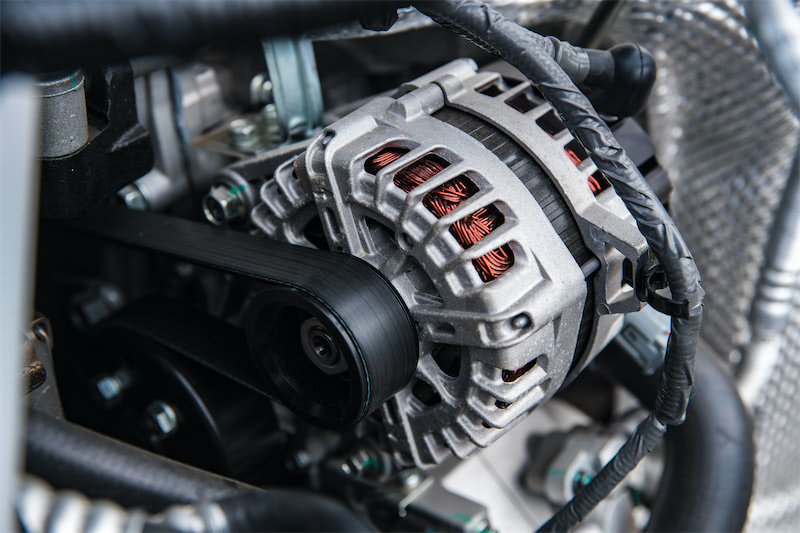
Hyundai Accelerated Its Electric Vehicle Expansion in China Under U.S. Tariff Pressure
Apr 1, 2026 09:28

Toyota Motor’s Global Sales Fell 2.3% YoY in February
Apr 1, 2026 09:27
Changan Automobile Receives L4 Robotaxi Testing License in Chongqing Pilot Zone
Mar 31, 2026 18:22
China's Auto Dealer Inventory Alert Index Rises to 57.5% in March 2026, Up YoY and MoM
Mar 31, 2026 13:09
【SMM Analysis】 EV Sales Are No Longer the Sole Anchor of Power Battery Demand
Mar 30, 2026 18:05
CAAM, EU Automobile Body Sign MOU on Cross-Border Automotive Data Flows
Mar 27, 2026 18:31
CAAM and European Auto Makers Sign MoU on Cross-Border Data Flows at 2026 Zhongguancun Forum
Mar 27, 2026 16:57
IM LS8 Large SUV Opens Pre-Sales in China, Priced from 259,800 to 309,800 Yuan
Mar 27, 2026 15:47
Ninebot and POP MART's Xiaotiandou Announce Partnership for Co-Branded EV Product Launch in April
Mar 27, 2026 15:45
Toyota's China JVs to Recall 560,200 Vehicles Starting April 1
Mar 27, 2026 15:44
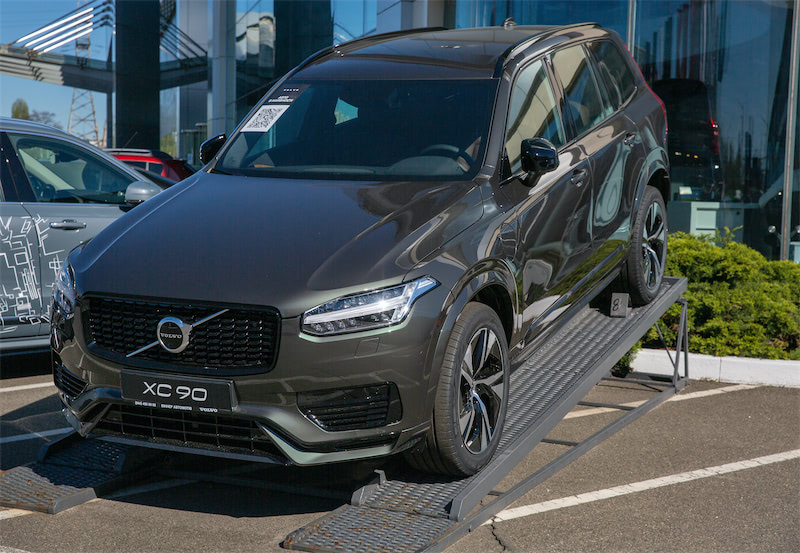
Toyota to Invest $1 Billion in Kentucky and Indiana, Advance Battery Production Plans
Mar 24, 2026 16:55

South Korea to Strengthen EV Battery Safety Oversight, Expand Disclosure of Manufacturing Details
Mar 24, 2026 16:53
Hyundai Recalls Over 61,000 Vehicles in US Due to Safety Concerns
Mar 20, 2026 17:45
US Initiates Anti-Dumping, Countervailing Probes on Chinese Truck Bed Covers Worth $1.1B
Mar 20, 2026 17:44
XPeng Motors Reports Q4 2025 Revenue Growth, Forecasts Q1 Delivery Decline
Mar 20, 2026 17:41
Geely Auto Reports Record 2025 Revenue, Core Profit Up 36% Year-on-Year
Mar 18, 2026 13:26
February Auto Production and Sales Data Released, NEV Exports Continued Strong Growth. Will the Auto Market Gradually Strengthen in March? [SMM Special Report]
Mar 17, 2026 18:25
Zhongli Invests 350M Yuan in Anji for Intelligent Robots and Forklift Parts Project
Mar 17, 2026 18:04
NVIDIA Launches L4 Autonomous Driving Platform, Multiple Automakers Announce Partnerships
Mar 17, 2026 17:28