Coronavirus provides an opportunity for Chinese EV makers

Đã xuất bản: Apr 3, 2020 15:31
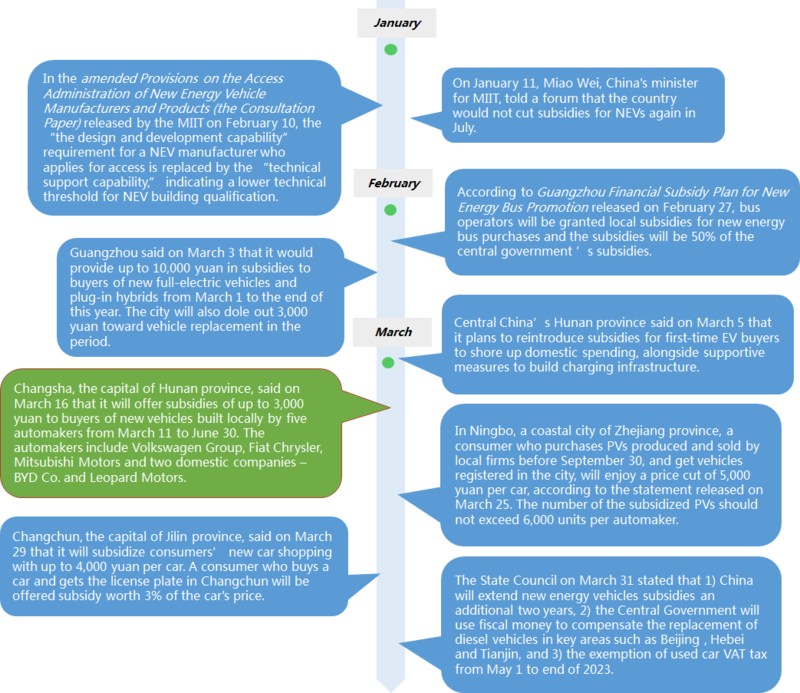
The coronavirus crisis is providing Chinese manufacturers of electric vehicles and EV batteries with more time to brace for competition from foreign rivals, as factories outside China are shuttered and Beijing would extend subsidies for new energy vehicles to 2022. The State Council, China’s cabinet, on Tuesday announced the two-year extension, among other measures, aimed at reviving its car market which has been hit hard by the pandemic outbreak and slumping demand. Originally, the subsidies were to be terminated at the end of this year.

SHANGHAI, Apr 2 (SMM) – The coronavirus crisis is providing Chinese manufacturers of electric vehicles and EV batteries with more time to brace for competition from foreign rivals, as factories outside China are shuttered and Beijing would extend subsidies for new energy vehicles to 2022.


The State Council, China’s cabinet, on Tuesday announced the two-year extension, among other measures, aimed at reviving its car market which has been hit hard by the pandemic outbreak and slumping demand. Originally, the subsidies were to be terminated at the end of this year.


In February, retail sales of passenger vehicles in China plummeted 78.5% year on year in February, while wholesale sales of new energy passenger vehicles tumbled 77.7%, according to data from the China Passenger Car Association (CPCA).


The government will also compensate for the replacement of diesel vehicles in major population centers like Beijing, Hebei and Tianjin and impose a 0.5% value-added-tax (VAT) waiver for used cars between May 1 to end of 2023.


Aside from efforts by the central government, local governments, including Foshan, Xiangtan, Guangzhou, Zhejiang, Nanchang and Chongqing, have already introduced a raft of measures to support the car market.


For the NEV sector, Tuesday’s announcement came after the Minister of Industry and Information Technology said January that China will not make significant cuts in subsidies for NEVs this year.


Those support measures can no doubt provide some relief to Chinese EV and battery makers, especially those on the verge of collapse following a significant cut to government subsidies and grants last year.


Meanwhile, foreign rivals, with advanced technology, may have to delay new EV model launch and slow their business expansion in the vast Chinese market, as their factories in Europe and the US have been shuttered with the pandemic raging on.


Chinese EV giant BYD is expected to launch its Han flagship sedan model, which will be equipped with the closely-watched Blade Battery, in June. The new model will lead the brand's Dynasty Family, boasting a cruising range of 605 kilometers and an acceleration of 0 to 100km/h in just 3.9 seconds, while the blade-shaped battery is said to solve the safety hazards associated with electric cars.


Other Chinese EV makers including NIO, Xiaopeng Motors and Weltmeister (WM Motor) will also launch new models in the second half of this year.


China’s EV sales look set to pick up in H2, on policy support, performance advances and launch of new models, and as the economy will recover from the pandemic and deployment of charging infrastructure accelerates.


Despite a temporary shutdown because of the pandemic, Tesla’s Shanghai Gigafactory reportedly did not miss its original plan for the first quarter. The factory currently has a production capacity of 3,000 units per week, and foundation buildout for the Phase 2 area has been completed.


The US EV maker cut the starting price of its Shanghai-built Model 3 sedans by 9% at the beginning of the year, and a further cut is expected in H2 as adoption of cobalt-free lithium-iron-phosphate (LFP) batteries and improved supply chain operations will bring costs down. That is expected to attract more buyers and help boost EV sales in China.


With the pandemic raging on and hitting global economy, Chinese consumers’ outlay on big-ticket items like cars is expected to remain subdued into at least the second quarter, trumping policy support and deterring EV sales from substantially picking up before H2.


Compared to individual buyers, taxi and ride-hailing are expected to remain the stronger driver of EV sales in China this year. In the first three quarters of 2019, EV sales in taxi and ride-hailing sector jumped 213% year on year, much stronger than a 35% increase in sales in individual buyers.


China wants all taxis on its roads to be electrified by 2023, with large cities such as Beijing, Shanghai and Guangdong aiming for a 2020 deadline.


Timeline—China’s stimulus policies for the auto sector in 2020
Tuyên bố về Nguồn Dữ liệu: Ngoại trừ thông tin công khai, tất cả dữ liệu khác được SMM xử lý dựa trên thông tin công khai, giao tiếp thị trường và dựa trên mô hình cơ sở dữ liệu nội bộ của SMM. Chúng chỉ mang tính chất tham khảo và không cấu thành khuyến nghị ra quyết định.

Để biết thêm thông tin hoặc có thắc mắc gì, vui lòng liên hệ: lemonzhao@smm.cn
Để biết thêm thông tin về cách truy cập báo cáo nghiên cứu, vui lòng liên hệ:service.en@smm.cn
Tin Liên Quan
【Tin tức nhanh Niken SMM】Hàm lượng quặng suy giảm thắt chặt nguồn cung niken Indonesia, trong khi tồn kho dư thừa kìm hãm giá
7 giờ trước
【Tin tức nhanh Niken SMM】Hàm lượng quặng suy giảm thắt chặt nguồn cung niken Indonesia, trong khi tồn kho dư thừa kìm hãm giá
Đọc thêm
【Tin tức nhanh Niken SMM】Hàm lượng quặng suy giảm thắt chặt nguồn cung niken Indonesia, trong khi tồn kho dư thừa kìm hãm giá
Ngành công nghiệp niken của Indonesia đang đối mặt với tình trạng cạn kiệt tài nguyên laterit hàm lượng cao, khiến chất lượng quặng trung bình tiếp tục suy giảm. Dự kiến hàm lượng quặng niken trung bình của nước này sẽ giảm thêm 4–5% vào năm 2026. Ví dụ, mặc dù giao dịch có thể được định giá là quặng Ni 1,50%, nhưng hàm lượng quặng thực tế khi giao hàng có thể chỉ trung bình khoảng 1,43–1,44% Ni. Mặc dù mức giảm này có vẻ nhỏ, nhưng hàm lượng quặng thấp hơn buộc các công ty khai thác phải xử lý khối lượng vật liệu lớn hơn đáng kể để sản xuất cùng một lượng niken kim loại, làm tăng tỷ lệ bóc đất đá, đẩy chi phí khai thác lên cao và thắt chặt nguồn cung quặng chất lượng cao cho cả các lò luyện RKEF và HPAL.
7 giờ trước
[TIN NHANH THỊ TRƯỜNG NIKEN SMM] Dự án niken Ardea Kalgoorlie: Nghiên cứu khả thi (DFS) tiến triển với ngân sách 98,5 triệu đô la Úc do Nhật Bản tài trợ hoàn toàn
7 giờ trước
[TIN NHANH THỊ TRƯỜNG NIKEN SMM] Dự án niken Ardea Kalgoorlie: Nghiên cứu khả thi (DFS) tiến triển với ngân sách 98,5 triệu đô la Úc do Nhật Bản tài trợ hoàn toàn
Đọc thêm
[TIN NHANH THỊ TRƯỜNG NIKEN SMM] Dự án niken Ardea Kalgoorlie: Nghiên cứu khả thi (DFS) tiến triển với ngân sách 98,5 triệu đô la Úc do Nhật Bản tài trợ hoàn toàn
[TIN NHANH THỊ TRƯỜNG NIKEN SMM] Dự án niken Ardea Kalgoorlie: Nghiên cứu khả thi (DFS) tiến triển với ngân sách 98,5 triệu đô la Úc do Nhật Bản tài trợ hoàn toàn
Ardea Resources (ASX: ARL) đã trình bày Dự án Niken Kalgoorlie (KNP) tại diễn đàn Diggers & Dealers vào ngày 3 tháng 8, với nguồn tài nguyên 854 triệu tấn, hàm lượng 0,71% Ni và 0,045% Co, tương đương 6,1 triệu tấn niken chứa và 386 nghìn tấn coban chứa, được coi là mỏ niken-coban lớn nhất nước Úc. Nghiên cứu khả thi cuối cùng của Trung tâm Goongarrie được tài trợ toàn bộ bởi các đối tác Nhật Bản Sumitomo Metal Mining và Mitsubishi Corp, với ngân sách 98,5 triệu đô la Úc; Ardea sở hữu 65% liên doanh Goongarrie, tập đoàn Nhật Bản nắm 35%. Export Finance Australia và EXIM Hoa Kỳ đã phát hành thư bày tỏ khả năng hỗ trợ khoảng 1 tỷ đô la Úc.
7 giờ trước
[SMM Tin nhanh thị trường niken] Harita Nickel: Tăng trưởng doanh thu nửa đầu năm nhờ sản lượng khi mỏ mới và các dây chuyền RKEF gia tăng công suất
8 giờ trước
[SMM Tin nhanh thị trường niken] Harita Nickel: Tăng trưởng doanh thu nửa đầu năm nhờ sản lượng khi mỏ mới và các dây chuyền RKEF gia tăng công suất
Đọc thêm
[SMM Tin nhanh thị trường niken] Harita Nickel: Tăng trưởng doanh thu nửa đầu năm nhờ sản lượng khi mỏ mới và các dây chuyền RKEF gia tăng công suất
[SMM Tin nhanh thị trường niken] Harita Nickel: Tăng trưởng doanh thu nửa đầu năm nhờ sản lượng khi mỏ mới và các dây chuyền RKEF gia tăng công suất
Trong báo cáo chính thức nửa đầu năm 2026, PT Trimegah Bangun Persada (Harita Nickel, IDX: NCKL) cho biết doanh thu 17,1 nghìn tỷ Rp được hỗ trợ bởi kỷ luật vận hành và tối ưu hóa công suất trong bối cảnh thị trường niken toàn cầu vẫn đầy thách thức. Giám đốc tài chính Suparsin Darmo Liwan cho biết khối lượng bán quặng niken tăng so với cùng kỳ năm trước, nhờ mỏ mới PT Gane Tambang Sentosa (GTS) đi vào hoạt động từ quý 3/2025 và các dây chuyền bổ sung tại nhà máy luyện kim KPS. Doanh số ferronickel tăng mạnh nhờ sản lượng RKEF tại KPS cao hơn, trong khi doanh số HPAL (MHP) ổn định, phụ thuộc vào lịch giao hàng. Harita cũng đang xây dựng một nhà máy điện tận dụng nhiệt thải từ HPAL công suất 50 MW (dự kiến hoàn thành quý 4/2026) và một nhà máy điện mặt trời 40 MW (đã xây dựng 99%).
8 giờ trước
Coronavirus provides an opportunity for Chinese EV makers - Shanghai Metals Market (SMM)