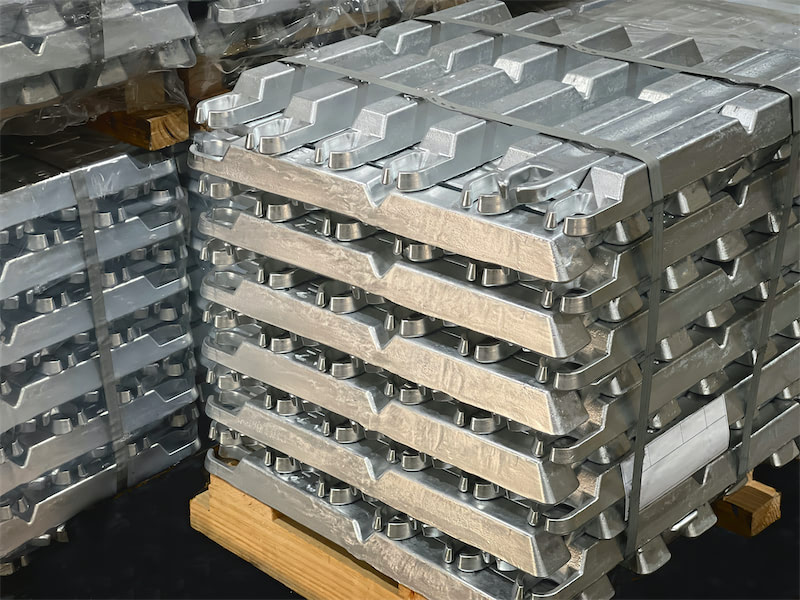
SHANGHAI, Jul 25 (SMM) - At the SMM 17th International Aluminum Industry Summit held on July 21, Liu Yue from the Technical Quality Control Department of Nanshan Aluminium shared the outlook for the tank material market and UBC recycling on the backdrop of carbon reduction. Liu briefly outlined the global aluminium life cycle and the current status of global aluminium recycling, and analysed the carbon footprint and the main path of carbon reduction based on the goals to be achieved during the 14th Five-Year Plan period concerning aluminium recycling. It is believed that all participants in the value chain need to take joint actions to achieve carbon reduction in the aluminium industry by analysing current problems and difficulties in the recycling of waste cans in China.
Status quo of global aluminium recycling and analysis of China's 14th Five-Year goals for aluminium recycling
According to calculations, 75% of the 1.5 billion mt of aluminium produced in the past are still being reused. Under the background of carbon emission reduction, the global aluminium recycling rate in 2018 was 32%, and the number was the highest in North America where 57% of new aluminium products were produced through recycling.
China is the world's largest producer and consumer of recycled aluminium, taking up about one third of the global market. The current global aluminium recycling efficiency is 76%, engaging aluminium recovery, reprocessing and melting. Europe carries the highest recycling efficiency, with 81% of potentially usable aluminium scrap being successfully reused. At the same time, nearly 70% of cans in the world are recycled, making cans the most recycled beverage container in the world.
China has begun to highlight the massive production of secondary aluminium since the 11th Five-Year Plan period. When it comes to the 14th Five-Year Plan, with the introduction of the carbon peaking and neutrality policy, the low-carbon transition accelerates. The country encourages and promotes the carbon peaking of the non-ferrous metal industry, accelerates the development of secondary aluminium sector, and expands the production capacity of secondary aluminium. During the 14th Five-Year Plan period, the annual output of secondary aluminium will reach 11.5 million mt by 2025, and the carbon emissions of aluminium will be reduced. In addition, the proportion of renewable energy and clean energy shall grow to 5%, and the non-ferrous metals will achieve carbon peaking. It is also of key importance to improve the recycling, sorting and processing network of non-ferrous metal scraps, and increase the production of secondary aluminium.
Seeking carbon reduction path from the carbon footprint of the aluminium industry
The carbon footprint of the aluminium industry begins with bauxite mining, alumina smelting, anode production, to aluminium production and aluminium ingot casting, which covers aluminium recycling, and ends with semi-finished product production and in-house scrap remelting. Among them, aluminium production has the highest carbon emissions. According to data in 2018, the industry emits 1.1 billion mt of greenhouse gases annually, accounting for about 2% of global anthropogenic emissions. More than 90% of the carbon footprint comes from the primary aluminium process, which currently accounts for around 70% of annual aluminium demand.
The main path to effectively achieve carbon emission reduction in the aluminium industry is the recycling of aluminium scrap. Currently, recycling of post-consumer aluminium scrap has reduced nearly 20 million mt of primary aluminium demand, thereby reducing emissions by around 300 million mt of carbon dioxide equivalent. Up to 95% of the raw material can be recovered through process improving, sorting and recycling, reducing the demand for primary aluminium by about 15%. 250 million mt of absolute carbon dioxide equivalent emissions will be reduced annually, second only to electricity decarbonisation by smelters.
It can be seen from the data that the use of secondary aluminium in the can industry will effectively reduce carbon emissions compared to primary aluminium ingots.
Domestic aluminium recycling has a long way to go
Across all sub-sectors, around 7 million mt of aluminium are not recycled annually due to collection and processing losses of end-of-life products according to 2018 figures. Based on the current recycling rates, this figure will increase to 17 million mt per year by 2050.
At present, the recycling rate of cans in foreign countries is significantly higher than that in China, and the recycling rate in EU countries such as Germany is obviously at a high level. Germany, Sweden, Finland and other countries have introduced corresponding laws and regulations to provide policy support, and have independent and professional recycling organisations to promote the process together with the government and the market.
At present, the recycling system in China still needs further improvement, with flaws like no scientific recycling system, inconsistent recycling channels, and low resource enrichment, which in turn affects the utilisation of waste cans. In addition, the recycling of waste cans is complicated from packaging and crushing, sorting of aluminium cans, surface paint removal, vibration decarburization, double-chamber furnace smelting, degassing outside the furnace, and final conventional casting.
China's aluminium recycling not only has certain deviations in social concepts, but also has problems such as low concentration, lack of systematic operation and industry standards, etc. Meanwhile, in terms of the recycling industry chain and technology, aluminium recycling can only rely on downstream customers to generate new waste, and there are few supply channels for post-consumer aluminium scrap. Technically, there are also problems in terms of gold-containing identification and impurity removal.
Therefore, the aluminium recycling in China has a long way to go. At the same time, the carbon emission reduction requires all participants in the value chain to take action, including technology providers, governments and investors.
![Ужесточение требований к соблюдению нормативов увеличивает издержки, цены на ADC12 растут [Еженедельный обзор рынка алюминиевого лома и вторичного алюминия]](https://imgqn.smm.cn/usercenter/wUnEn20251217171722.jpeg)
![[Анализ SMM] Запасы алюминиевой катанки в Китае остаются высокими, плата за переработку немного выросла на фоне падения цен](https://imgqn.smm.cn/usercenter/jWDCu20251217171653.jpg)