The impact of the manganese ore supply crisis on the downstream market

Published: Aug 1, 2024 09:54
Source: SMM
The Q1 production report released in late April this year revealed that the repair time for the manganese ore terminal will be delayed until Q1 next year, causing a significant increase in manganese ore prices......

The Q1 production report released in late April this year revealed that the repair time for the manganese ore terminal will be delayed until Q1 next year, causing a significant increase in manganese ore prices. Although various mineral resources have recently faced supply disruptions, this manganese ore supply crisis is larger in scale and has a profound impact on the downstream industrial chain.

First, the shortage of manganese ore supply will have a profound impact on the steel industry. Since the steel industry accounts for a large proportion of downstream applications and is insensitive to cost changes, supply shortages may drive up manganese ore prices, especially in cases of high supply chain concentration. Although domestic inventory can partially alleviate short-term tightness, related companies may benefit as the price of imported manganese ore continues to rise.

Second, for manganese compound production companies, the increase in raw material prices may not directly translate into profit growth, especially when downstream product prices do not rise synchronously and downstream acceptance is limited.

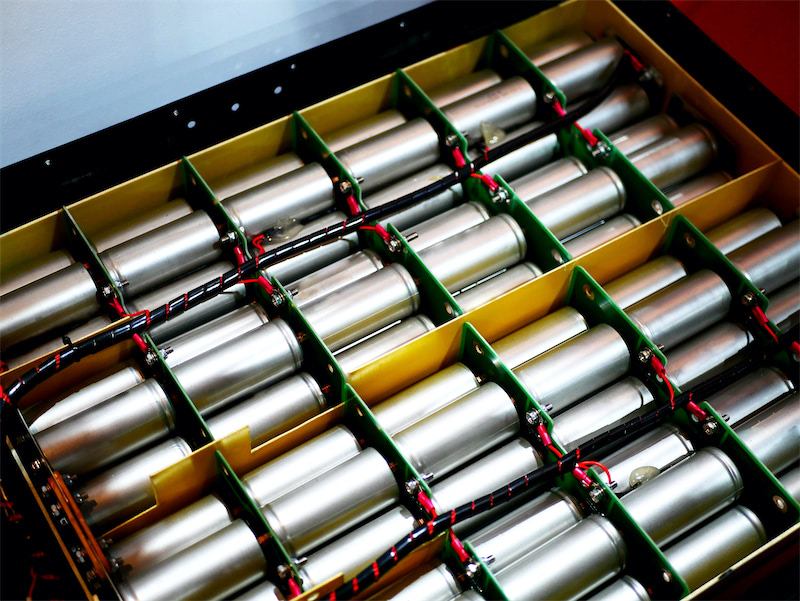
In recent years, the manganese chemical and battery materials markets have undergone significant changes and developments. In particular, battery-grade manganese sulfate has become a market hotspot due to its potential applications in the new energy field, although its final actual application is not as widespread as expected.

On the other hand, the electrolytic manganese metal (EMM) market has experienced significant volatility, reflecting changes in supply and demand relationships and the impact of technological developments. Additionally, manganese materials appear in various forms in different application scenarios, such as trimanganese tetroxide (Mn3O4) being widely used in soft magnetic materials, while electrolytic manganese dioxide (EMD) is mainly used for alkaline cells and lithium manganese oxide (LMO) cathode materials manufacturing.

Overall, the consumption of the traditional steel industry remains the main market driver at present. In the future, with the advancement of technology and the promotion of environmental protection policies, the battery materials field is expected to become one of the important growth points for the manganese chemical industry.

Data Source Statement: Except for publicly available information, all other data are processed by SMM based on publicly available information, market communication, and relying on SMM's internal database model. They are for reference only and do not constitute decision-making recommendations.

For any inquiries or for more information, please contact: lemonzhao@smm.cn
For more information on how to access our research reports, please contact:service.en@smm.cn
Related News
【Flash | QB Q2FY2026 Molybdenum Output Nearly Doubles on Stronger Operations】
5 hours ago
【Flash | QB Q2FY2026 Molybdenum Output Nearly Doubles on Stronger Operations】
Read More
【Flash | QB Q2FY2026 Molybdenum Output Nearly Doubles on Stronger Operations】
Teck Resources reported Q2FY2026 molybdenum production of 840 tonnes at Quebrada Blanca, up about 95% from 430 tonnes a year earlier and 31% from 640 tonnes in Q1FY2026. The company attributed the increase to another quarter of strong operational performance and process stability, indicating a marked rise in by-product molybdenum supply from the mine.
5 hours ago
[SMM Chromium Flash] EU's Toughening Trade Stance Raises Fresh Risks for Ferrochrome and Stainless Steel Supply Chains
17 hours ago
[SMM Chromium Flash] EU's Toughening Trade Stance Raises Fresh Risks for Ferrochrome and Stainless Steel Supply Chains
Read More
[SMM Chromium Flash] EU's Toughening Trade Stance Raises Fresh Risks for Ferrochrome and Stainless Steel Supply Chains
[SMM Chromium Flash] EU's Toughening Trade Stance Raises Fresh Risks for Ferrochrome and Stainless Steel Supply Chains
European governments are preparing to seek broader safeguard measures against surging imports, primarily from China, marking a further shift toward tighter trade protection as European industrial sectors face high energy costs and weak demand. The European Union currently has a safeguard regime covering ferro-alloys, while governments including France, Italy and Germany are now pushing for additional investigations covering chemicals and plastics. For the chromium market, the development could have implications beyond the products directly targeted by the new proposals. A more protectionist EU trade environment could alter stainless-steel import flows and procurement strategies, potentially affecting demand for ferrochrome and the competitiveness of overseas suppliers. With the EU already using trade safeguards for ferro-alloys, further expansion of trade-defense measures could increase uncertainty for global ferrochrome flows and premiums, particularly if protection increasingly extends across both upstream alloy inputs and downstream steel products.
17 hours ago
Cost Support Meets Supply-Demand Tug-of-War; Silicon Metal Prices Stay Stagnant and Stable [SMM Silicon Industry Weekly Review]
20 hours ago
Cost Support Meets Supply-Demand Tug-of-War; Silicon Metal Prices Stay Stagnant and Stable [SMM Silicon Industry Weekly Review]
Read More
Cost Support Meets Supply-Demand Tug-of-War; Silicon Metal Prices Stay Stagnant and Stable [SMM Silicon Industry Weekly Review]
[Cost Support Combined with Supply-Demand Tug-of-War Keeps Silicon Metal Prices in Stalemate]: Silicon metal trading saw a tug-of-war between sellers and buyers, with prices consolidating in a stalemate. As of September 10, SMM oxygen-blown #553 silicon in east China stood at 9,400-9,600 yuan/mt, up 50 yuan/mt WoW, while #441 silicon was at 9,500-9,700 yuan/mt, flat WoW. In the futures market, the SI2611 contract moved sideways around 8,700-8,900 yuan/mt during the week. Affected by the tug-of-war between longs and shorts, prices repeatedly pulled back and forth around the 8,800 yuan/mt level, with Friday's close at 8,745 yuan/mt, up 10 yuan/mt WoW. In terms of market quotes and transactions, silicon producers maintained firm offers, with quotes largely stable during the week. Spot-futures traders also held prices relatively firm amid high-level consolidation in futures. Recently, trucking freight rates have stayed high, and downstream acceptance of high-priced spot cargo was moderate. Some users showed weaker purchasing enthusiasm compared with the previous week, with the market dominated by buying on dips or just-in-time procurement. Wait-and-see sentiment persisted, and transactions overall maintained a just-in-time pace, leaving the price center in a stagnant stalemate.
20 hours ago