LME WEEK: China’s energy transformation, manufacturing upgrade and Belt & Road becoming new driving forces for China’s metal consumption

Published: Oct 11, 2023 14:44
At the SMM LME LONDON EVENT held during LME WEEK, Wu Ming, head of metals and commodities at PRC Macro, expressed her views on the impact of Chinese real estate on global metal demand.
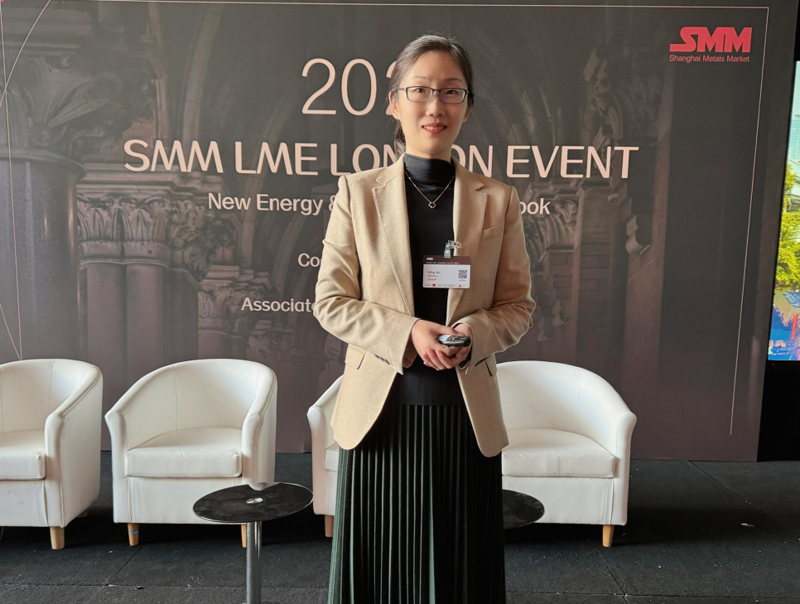
At the SMM LME LONDON EVENT held during LME WEEK, Wu Ming, head of metals and commodities at PRC Macro, expressed her views on the impact of Chinese real estate on global metal demand.

https://imgqn.smm.cn/production/admin/news/cn/pic/QOMHf20231010193001.png?imageView2/2/w/800

China’s real estate slowdown: knowns and unknowns

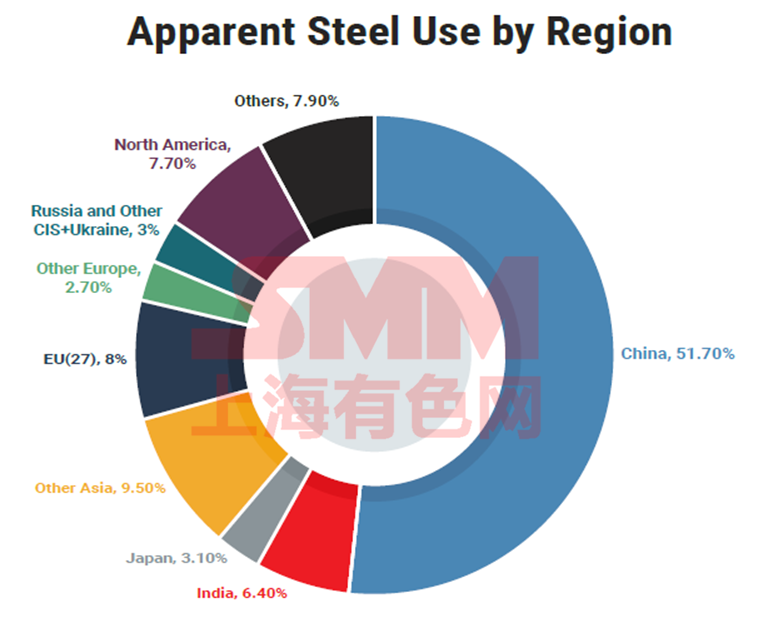
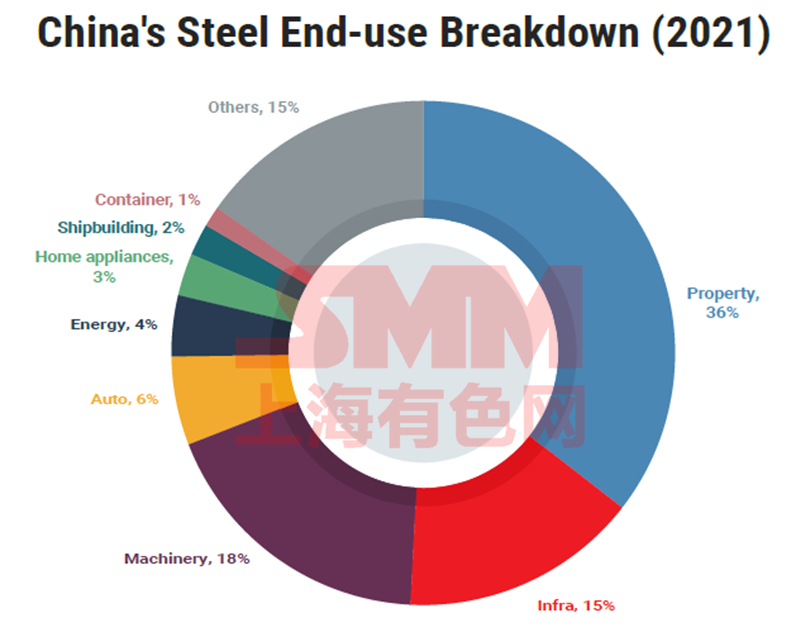
A slowdown in China's property market has weakened global metals demand as the industry accounts for about 20% of global steel demand, about 18% of aluminium demand and about 6% of copper demand. This is expected to lead to overcapacity and oversupply.
https://imgqn.smm.cn/production/admin/news/cn/pic/OUmEg20231010132836.png?imageView2/2/w/800

https://imgqn.smm.cn/production/admin/news/cn/pic/ZntDL20231010132854.png?imageView2/2/w/800

The Mystery of Steel

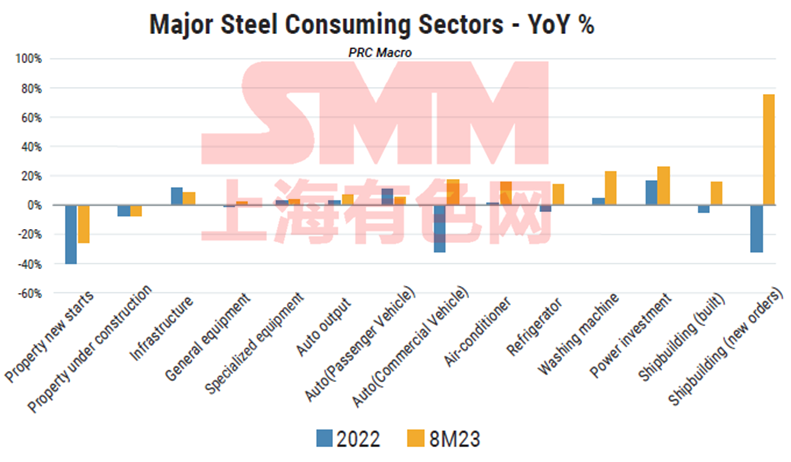
In theory, steel and iron ore demand should collapse as housing starts and construction weaken, but actual demand for steel this year has exceeded market expectations.

New driving forces: energy transformation, manufacturing upgrade

Chinese manufacturers hold a leading position in the global value chain and are capable of providing more high value-added products. China's energy transition not only boosts infrastructure and domestic consumption, but also enhances the competitiveness of Chinese manufacturers.
https://imgqn.smm.cn/production/admin/news/cn/pic/ViZVy20231010134101.png?imageView2/2/w/800

ODI boosts steel demand thanks to Belt and Road initiative

Strong exports consumed about 8% of steel production , largely counteracting the impact of the real estate slowdown.

The surge in exports to the Middle East was driven by a strong rebound in policy-supported RMB overseas direct investment (ODI).

Structural changes in China’s steel market

Manufacturing upgrades, energy transformation and overseas demand have led to changes in the structure of China's steel market, with flat steel gaining more share.

Chinese steel mills are working to reduce risks posed by the property market, and industry policy guidance will reinforce this trend.

Chinese steel mills

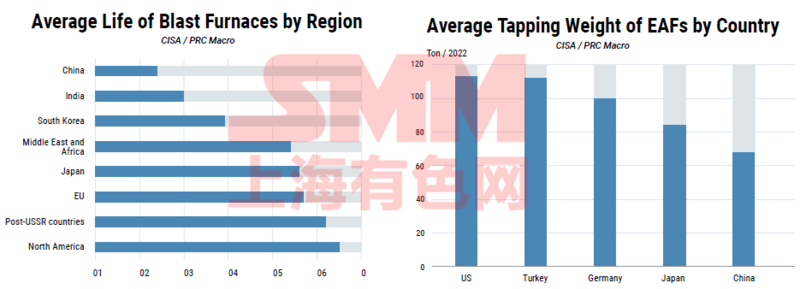
The average service life of BF-BOF assets in China is only about 14 years, compared with more than 40 years elsewhere, making it difficult for Chinese steel mills to scrap them in a short period of time. At the same time, the current capacity of electric arc furnaces is too small to produce flat steel.
https://imgqn.smm.cn/production/admin/news/cn/pic/qVwGf20231010141953.png?imageView2/2/w/800

Copper and aluminium: Still have support in the near term

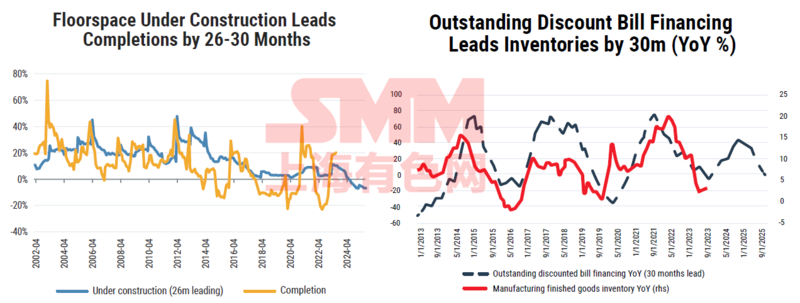
Completion of real estate will maintain growth until at least the second quarter of 2024.

Manufacturing stockpiling may begin in the fourth quarter of 2023, driven by energy investment, manufacturing upgrades and real estate completions.
https://imgqn.smm.cn/production/admin/news/cn/pic/OiJmP20231010142619.png?imageView2/2/w/800

Conclusion

•Global metal producers and metal demand are reducing the risk of China's real estate crisis. China's energy transformation, manufacturing upgrades, and strong exports driven by ODI in the Belt and Road initiative countries are becoming new driving forces for metal consumption.

•These new drivers have led to structural changes in China's steel market, with the share of flat steel rising steadily.

•This structural change on the demand side, coupled with China's supply structure, makes iron ore demand more resilient.

•China's property completion and restocking cycle will continue to support aluminium and copper demand in the short term.


Data Source Statement: Except for publicly available information, all other data are processed by SMM based on publicly available information, market communication, and relying on SMM's internal database model. They are for reference only and do not constitute decision-making recommendations.

For any inquiries or for more information, please contact: lemonzhao@smm.cn
For more information on how to access our research reports, please contact:service.en@smm.cn
Related News
Copper Scrap Market Sees Supply Tightness and High Premiums Amid Regulatory Challenges
10 hours ago
Copper Scrap Market Sees Supply Tightness and High Premiums Amid Regulatory Challenges
Read More
Copper Scrap Market Sees Supply Tightness and High Premiums Amid Regulatory Challenges
During the week of July 20-23, the copper scrap market operated under a threefold backdrop: low copper cathode inventory and high premiums, continued compliance restrictions from reverse invoicing, and a deepening high-temperature off-season. The SHFE copper closing price at 11:30 surged from 104,180 yuan/mt to 106,340 yuan/mt, then pulled back slightly to 106,170 yuan/mt by the end of the week
10 hours ago
Copper Price Surge Widens Price Difference Between Copper Cathode and Copper Scrap; Supply-Side Point-Price Shipments Increase, Arbitrage Purchases Dominate Transactions [SMM Analysis]
11 hours ago
Copper Price Surge Widens Price Difference Between Copper Cathode and Copper Scrap; Supply-Side Point-Price Shipments Increase, Arbitrage Purchases Dominate Transactions [SMM Analysis]
Read More
Copper Price Surge Widens Price Difference Between Copper Cathode and Copper Scrap; Supply-Side Point-Price Shipments Increase, Arbitrage Purchases Dominate Transactions [SMM Analysis]
[SMM Analysis: Soaring Copper Prices Widen Price Difference Between Copper Cathode and Copper Scrap; Increased Spot Shipments from Suppliers, Arbitrage Purchases Dominate Transactions] This week (7/20-7/23), the copper scrap market operated under a triple framework of low copper cathode inventory and high premiums, ongoing compliance constraints from reverse invoicing, and a deepening high-temperature off-season. The SHFE copper closing price at 11:30 surged from 104,180 yuan/mt to 106,340 yuan/mt, before pulling back slightly to 106,170 yuan/mt at the end of the week, with a weekly gain of over 2,000 yuan/mt. Driven by the unilateral rise in copper cathode prices and the resilience of copper scrap in holding prices firm, the price difference between copper cathode and copper scrap expanded from 3,218 yuan/mt to 4,545 yuan/mt, briefly reaching a high of 4,800 yuan/mt during the week. The inherent price resilience of copper scrap was the core feature of the supply side this week.....
11 hours ago
Midea Air Conditioning Abandons Traditional Cold Year Opening for Retail-Focused Strategy in 2027
Jul 25, 2026 21:39
Midea Air Conditioning Abandons Traditional Cold Year Opening for Retail-Focused Strategy in 2027
Read More
Midea Air Conditioning Abandons Traditional Cold Year Opening for Retail-Focused Strategy in 2027
According to Yingketong, Midea Air Conditioning officially announced in July 2026 that it will no longer initiate the traditional Cold Year Opening for the 2027 new cooling year, instead fully committing to a new strategy of “battling for retail and competing for end-users.” This decision marks a temporary halt to the near three-decade-old model of “collecting payments in the off-season and chasing volume in the peak season” within the air conditioning industry. The “Cold Year Opening” is a unique business rhythm in the air conditioning sector. Typically, starting from H2 (from July/August to October/November), producers hold openings in batches through policy incentives to attract channel merchants to make advance payments and stockpile goods. Then, in H1 of the following year, they concentrate shipments through various large-scale sales promotions, creating a cycle of “pushing inventory in the off-season and chasing volume in the peak season.” The specific measures for Midea Air Conditioning’s cancellation of the new Cold Year Opening include: no longer holding opening meetings that involve centralized channel payments, policy lock-in, and large-scale stockpiling; abolishing the practice of “mandatory advance payments to lock in annual policies”; and shifting to terminal replenishment based on actual demand, with full-cycle normalized policies implemented.
Jul 25, 2026 21:39
LME WEEK: China’s energy transformation, manufacturing upgrade and Belt & Road becoming new driving forces for China’s metal consumption - Shanghai Metals Market (SMM)