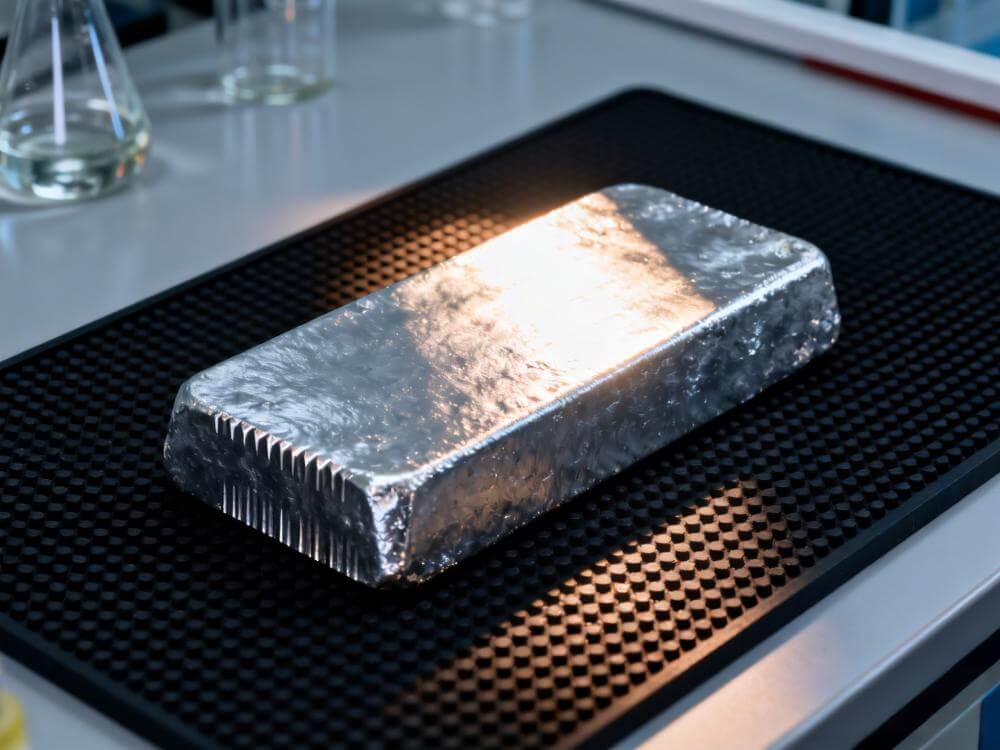
China silicon makers operating rates rose to 37.5% in June

Published: Jul 13, 2020 15:40
The average operating rate across silicon metal producers in China rose in June, showed an SMM survey, as plants in southwest China’s Sichuan and Yunnan resumed in the first month of the wet season.

SHANGHAI, Jul 13 (SMM) – The average operating rate across silicon metal producers in China rose in June, showed an SMM survey, as plants in southwest China’s Sichuan and Yunnan resumed in the first month of the wet season.


The gain in operating rates, however, was limited by shutdowns in some regions due to losses, an accident or the removal of preferential electricity tariff policy.


Operating rates across Chinese silicon metal producers averaged 37.5% in June, up 1.5 percentage points from the previous month, according to data compiled and calculated by SMM. China’s production of silicon metal expanded 9.3% on the month to 167,000 mt, bringing the tally for the first half of the year to 904,000 mt, down 27,000 mt or 2.9% from the same period last year, which was 1.1 percentage points larger than the decline seen in January-to-May.


On a yearly basis, June’s production fell 7.7%, while the operating rate was 3.1 percentage points higher as drought delayed the resumption of plants in Sichuan and Yunnan last year and as industry concentration improved on the back of the permanent closure of outdated capacity.


Furnace re-openings across Sichuan and Yunnan have almost reached the highest level for the wet season. In the beginning of July, power supply restrictions in Yunnan’s Nujiang shuttered about 60% of furnaces across the region for more than 10 days, which is estimated to wipe out about 6,500 mt of output for the month of July, and supply from the region will recover to normal in August.


In northwest China’s Xinjiang, the suspension of a large plant due to an accident in early June took more than 8,000 mt of output offline in June, while a medium-sized plant in Ili trimmed output due to losses. That lowered the average operating rate across the region to 24.27%. The large plant planned to resume production by July 12, and expects output of 7,000-8,000 mt for the month of July.


The number of plants in operation in south China’s Fujian has reduced to just one, as electricity tariffs in the region rose to 0.56 yuan/KWH after the removal of the preferential policy. Silicon producers in Fujian will struggle to weather the current market situation without preferential electricity tariffs.


There were also loss-induced shutdowns in Guangxi, Chongqing, Hunan and other regions in June, while potential losses in the current market situation kept some plants in Inner Mongolia and other regions from restarting production after the end of maintenance. SMM does not expect a substantial recovery across those plants in Q3.


The nationwide average operating rate across Chinese silicon producers is expected to hold stable in July compared with June, as the ramp-up of plants in the southwest and the reopening of the large plant in Xinjiang will be offset by curtailments in some other regions.

Data Source Statement: Except for publicly available information, all other data are processed by SMM based on publicly available information, market communication, and relying on SMM's internal database model. They are for reference only and do not constitute decision-making recommendations.

For any inquiries or for more information, please contact: lemonzhao@smm.cn
For more information on how to access our research reports, please contact:service.en@smm.cn
Related News
[SMM Analysis] Stronger Profits, Yet Limited Supply Elasticity: H1 2026 Americas Moly Mine Review
23 hours ago
[SMM Analysis] Stronger Profits, Yet Limited Supply Elasticity: H1 2026 Americas Moly Mine Review
Read More
[SMM Analysis] Stronger Profits, Yet Limited Supply Elasticity: H1 2026 Americas Moly Mine Review
[SMM Analysis] Stronger Profits, Yet Limited Supply Elasticity: H1 2026 Americas Moly Mine Review
In H1 2026, Americas moly supply divergence deepened. Despite stronger mining profits, overall output failed to rebound. While H2 may see recoveries at select large mines, supply elasticity remains constrained. Which operations are dragging on supply, and where will incremental growth emerge? SMM data reveals a market entering a new phase of "stronger margins, diverging production, and concentrated incremental gains."...
23 hours ago
[SMM Chromium Week Review] Chrome Ore Flows Rebound as China Port Stocks Build, Zimbabwe Eyes Ferrochrome Capacity
Sep 11, 2026 20:21
[SMM Chromium Week Review] Chrome Ore Flows Rebound as China Port Stocks Build, Zimbabwe Eyes Ferrochrome Capacity
Read More
[SMM Chromium Week Review] Chrome Ore Flows Rebound as China Port Stocks Build, Zimbabwe Eyes Ferrochrome Capacity
[SMM Chromium Week Review] Chrome Ore Flows Rebound as China Port Stocks Build, Zimbabwe Eyes Ferrochrome Capacity
September 11, 2026.
Sep 11, 2026 20:21
[SMM Chromium Flash] Tharisa's Underground Transition at Its Chrome-PGM Flagship Mine Remains on Track
Sep 11, 2026 20:12
[SMM Chromium Flash] Tharisa's Underground Transition at Its Chrome-PGM Flagship Mine Remains on Track
Read More
[SMM Chromium Flash] Tharisa's Underground Transition at Its Chrome-PGM Flagship Mine Remains on Track
[SMM Chromium Flash] Tharisa's Underground Transition at Its Chrome-PGM Flagship Mine Remains on Track
Tharisa confirmed its transition to underground mining at its flagship Tharisa Mine, on the southwestern limb of South Africa's Bushveld Complex, remains on time and within budget, running in parallel with the Karo Platinum Project's construction financing in Zimbabwe. Development of the Apollo underground complex, which commenced in March 2026, is progressing toward first run-of-mine ore in the current quarter, with steady-state production of 255,000 mt per month targeted by the third quarter of calendar year 2029. The Orion complex is expected to follow, targeting first ore in financial year 2031 and steady-state production by the third quarter of calendar year 2033. Together, Tharisa said the two underground complexes are expected to extend mining at the Tharisa Mine, which co-produces chrome concentrate alongside PGMs from the same orebody, for more than 60 years beyond depletion of the current open pit. The underground project is fully funded through development loans from Absa and Standard Bank and an asset-based revolving facility from Nedbank, funding that sits separately from the US$300 million Nordic bond raised this week for Karo. The company did not break out what share of Apollo or Orion's future run-of-mine ore output will be chrome-bearing material versus PGM-bearing material, leaving the underground transition's specific impact on Tharisa's chrome concentrate volumes still to be clarified as the two complexes ramp up toward steady state.
Sep 11, 2026 20:12