SHANGHAI, May 9 (SMM) – This is a roundup of China's base metals output in April 2019. SMM surveyed major producers to obtain information for calculation.
Copper
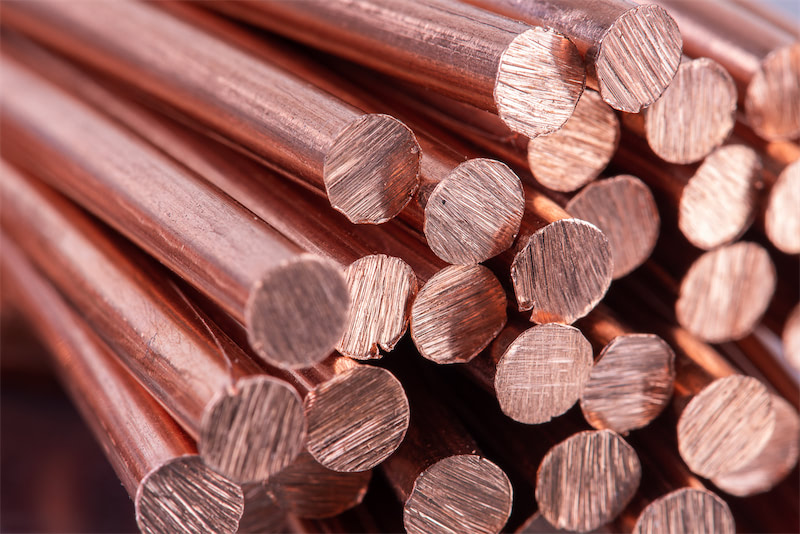
China's copper cathode production in April decreased by 5.94% on the month and by 4.24% on the year, to stand at 706,500 mt. The declines were smaller than SMM expectations as Yanggu Xiangguang, Guangxi Jinchuan, and Dongying Fangyuan generated higher output than planned.
Production in Jan-Apr climbed 2% from January-April in 2018, to 2.91 million mt.
Maintenance lowered output last month. Newly-commissioned capacity at Guangxi Nanguo yielded limited output, and Chalco Ningde delayed its schedule for full operation. Most small and medium-sized smelters, with limited trades under long-term contracts, expressed pressure from declining treatment charges for spot copper concentrate.
SMM learned that secondary copper smelters produced normally in April, but most expressed concern about tight supplies of raw materials when imports of Category Six materials are restricted from July. Uncertainties around obtaining approvals for the imports grew their worries.
The impact of maintenance will intensify from April, and continue to lower production across smelters in May. Those smelters include Qinghai Western Mining, Zhongyuan Gold Smelter, Dongying Fangyuan, Shandong Jinsheng, Yanggu Xiangguang, and Yuguang Gold & Lead. A large smelter in Shandong province even planned to generate no output for this month.
SMM expects maintenance in May to have the greatest impact on the monthly production of copper this year.
SMM expects China’s output of copper cathode in May to fall nearly 70,000 mt on the month to 638,000 mt, standing 14.63% lower on the year. This will lower January-May production by 1.45%, to 3.55 million mt.
Alumina
China's production of metallurgical-grade alumina in April expanded 0.1% on the year to 5.81 million mt, but failed to meet SMM expectations as environmental upgrading, maintenance, and losses affected the release of capacity.
Daily alumina output averaged 194,000 mt in April, flat from March. This kept output in January-April 5.71% higher on the year, to stand at 23.59 million mt. About 70.64 million mt of capacity on an annualised basis were in operation last month.
In April, equipment upgrading for environmental standards affected production at Shandong Weiqiao. The product quality at Bosai Group’s Nanchuan Shuijiang refinery remained unstable, and this dragged on output. East Hope (Sanmenxia) Aluminium lowered its operating capacity to 2.1 million mt, and losses drove Chinalco Mining to cut output by 1 million mt. SMM also learned that Shanxi Fusheng and Inner Mongolia Xinwang suspended part of their capacity for maintenance.
Resumption from environmental upgrading and a potential rebound in capacity at Shanxi Huaxing is expected to bolster the average daily alumina output by 5,000 mt from April, to 199,000 mt in May. This is estimated to yield output of 6.17 million mt for the month, up 1.86% from May 2018.
Guangxi Xinfa closed another production line, with a capacity of 600,000 mt, in May, and this will keep its operating capacity between 1.8-1.9 million mt.
Aluminium
Production of primary aluminium in the first four months of 2019 in China continued to stand lower than a year ago as capacity in operation remained low after losses triggered capacity cuts between June 2018 to February 2019.
Output in January-April declined 1.42% year on year to stand at 11.52 million mt, while output in April came in at 2.89 million mt and was down 2.08% from a year earlier.
Some capacity resumed since last month, but had limited impact on production.
By the end of April, domestic primary aluminium capacity in operation stood at an annualised 36.23 million mt, with operating rates averaging 88.8%, up 0.3 percentage point from the end of March.
As restarted capacity ramps up, production in May is likely to see a smaller year-over-year decline of 1.56% and stand at 3.03 million mt.
With stable consumption, social inventories of primary aluminium in China are likely to fall to 1.3 million mt by the end of this month.
Nickel
China produced 12,600 mt of refined nickel in April, up 5.55% from a year earlier, but down 2% from March. Fewer working days in April accounted for the loss.
Smelters are expected to maintain regular operation in May. A longer month may raise their output of refined nickel by 2.6% from April, to 12,900 mt in May.
Nickel pig iron (NPI)
In April, NPI output climbed 4.64% from a month earlier to stand at 48,000 mt in Ni content. This was 17.91% higher than April 2018.
On a month-on-month basis, output of high-grade NPI rose 3.2% to 41,700 mt in Ni content last month. Capacity additions at a large NPI mill in Shandong province raised output.
For low-grade materials, output advanced 15.17% from March, to 6,300 mt in Ni content last month. Capacity ramped up at steel plants in the south, and this contributed to the growth.
NPI producers in the east, north, and south will conduct maintenance in May, and this may drag on domestic high-grade NPI output by 1.36% from April, to 41,100 mt in Ni content this month. Resumption from maintenance across steelmakers in the north will expand output of low-grade NPI by 2.29% from April, to 6,400 mt in Ni content in May. Overall NPI output is estimated to fall 0.88% on the month, to 47,500 mt in Ni content in May.
Nickel sulphate
In April, China produced 10,813 mt in metal content of nickel sulphate, which translated to 49,200 mt in physical content, up 14.97% on the year.
Compared with March, the production was down 1.4% as operation at a northern producer was affected last month. Tight supply, higher prices of hydrometallurgy intermediate products as raw materials eroded profits at some small plants, and this also accounted for the lower output. Expanding capacity at integrated plants of precursor offset part of the decline in output.
For May, the steady release of new capacity and resumption of the northern plant is expected to grow production of nickel sulphate by 4.17% from April.
Zinc
Production of refined zinc in China continued to grow in April as record-high treatment charges for zinc concentrate fuelled production enthusiasm among smelters.
China produced 461,100 mt of refined zinc in the month of April, up 1.99% from March and 3.71% from April 2018. Surveyed capacity remained unchanged at 6.085 million mt/year.
The growth in output was largely driven by smelters in Hunan. The first production line at Zhuzhou’s new smelter saw output significantly rise to 10,000 mt, while operations at Sanli fully recovered. Xuanhua recently began to prepare for operation recovery.
Some smelters in Gansu and Liaoning began routine maintenance last month, which limited gains in overall production.
While some smelters in Qinghai and Yunnan will undertake maintenance in May, overall zinc production is likely to extend its gains this month as Hanzhong Zinc steps up production and Baiyin Nonferrous recovers from maintenance, and as some smelters slightly raise production to chase high profits.
Zinc output is expected to grow 5.3%, or 24,500 mt month on month to stand at 485,600 mt in May, up 14.75% from the corresponding month of 2018. This will narrow the year-over-year decline in output in January-May to 0.41%.
Lead
China's production of primary lead lost 0.2%, or around 500 mt from March, to stand at 257,200 mt in April, as maintenance at Anhui Tongguan, Yunnan Chihong, and Jiangxi Copper lowered output while Henan Xinling recovered from overhaul.
Other primary smelters maintained regular operation last month. In the first four months of the year, output amounted to 1.01 million mt, up 7.11% from the same period in 2018.
On a yearly basis, production grew 6.44% in April due to a low base last year as a slew of smelters undertook large-scale maintenance in March-April of 2018. Maintenance across smelters last month was mostly on a smaller scale and only started around April 20.
Output of primary lead is expected to further shrink by more than 10,000 mt from April, to 246,000 mt in May as Anhui Tongguan and Jiangxi Copper are unlikely to ramp up to full capacity after April’s maintenance. Smelters of Henan Yuguang, Hunan Jingui, and Hechi Nanfang planned to commence maintenance in May. Resumption of Yunnan Chihong will offset part of the losses in output.
Tin
Production of refined tin in China expanded in April as smelters recovered from maintenance.
Tin output stood at 13,911 mt in April, up 13.4% from upwardly revised 12,300 mt in March.
Major smelters held stable production last month, with Guangxi-based China Tin Group's smelter in Laibin city recovering to normal.
Overall production was also bolstered by the recovery across a handful of smelters in Jiangxi, who had suspended for equipment repair.
With adequate supplies of tin ore, some smelters stepped up production last month.
China’s output of refined tin is expected to fall to 13,600 mt in May as some smelters saw inventories of raw materials decline faster after traffic control in the Wa State in April suspended tin ore imports for about a week.
Output in May is also likely to be affected by weaker production enthusiasm among smelters, as treatment charges for tin concentrate edged down.