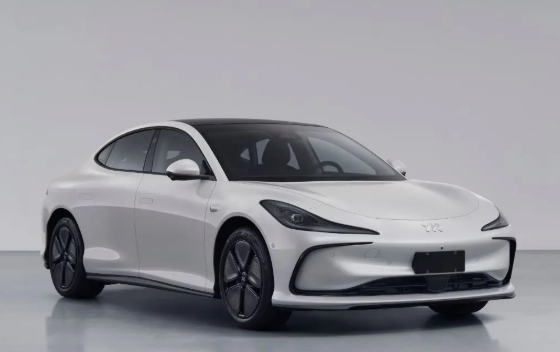
On April 6th, SAIC IM Motors CEO Liu Tao announced on Weibo that the first-generation solid-state battery for IM Motors L6 has been officially named: Lightyear Solid-State Battery. Liu Tao stated that although "Lightyear" is the first generation of solid-state batteries, it achieves over 30% more power with almost the same weight, enabling an ultra-long range of 1000 kilometers.
IM L6, in collaboration with Qingtao Energy, has developed proprietary technologies such as nanoscale solid-state electrolytes, making it the industry's first quasi-900V ultra-fast charging solid-state battery. This allows for nearly a thousand kilometers of recharging in a shorter time. In terms of safety, it will provide a safer solid-state electrolyte, ensuring ultra-high safety levels for the battery from the cell level, achieving whole package L0 level safety with no thermal runaway or fire.
Solid-state batteries are undoubtedly an emerging technology, offering higher energy density, faster charging speeds, and higher safety. This collaboration between IM Motors and Qingtao Energy has successfully developed the first generation of solid-state batteries, injecting new vitality into the new energy vehicle industry and marking the beginning of a revolutionary reform in battery technology. Qingtao Energy, a leader in the solid-state battery field, boasts a founding team from Tsinghua University and leading R&D capabilities. It has successfully built a scaled production line for solid-state batteries, providing IM Motors with a stable and reliable battery supply.
In recent years, the safety and range of batteries in new energy vehicles have been significant considerations for consumers. Solid-state batteries offer solutions to these issues, leading to their development.
SMM has compiled the latest domestic news on solid-state and semi-solid-state batteries as follows:
In January 2024, Guoji Jidian began construction on a semi-solid-state battery project in Nantong, Jiangsu, with a total investment of 5 billion yuan; Zhonggu Shidai signed a contract for a solid-state lithium battery system project in Urumqi, with a potential future capacity of 10GWh.
In February, Hui Neng Science and Technology announced the official production of the world's first solid-state battery production line, sending samples to various new energy vehicle companies for testing and module development; He Yuan Lithium Chuang began construction on a 10GWh solid-state battery smart factory in Huai'an, Jiangsu, with an investment of about 5 billion yuan.
On February 29th, a project for the production of 10GWh of solid-state lithium batteries and PACK manufacturing landed in Xiaoyi Economic Development Zone, Shanxi. The Xiaoyi Economic Development Zone, Pengfei Group, and Fujian Judian's project, with an investment of about 10 billion yuan, was signed and established.
On March 3rd, FAW Jiefang announced a partnership with Funeng Technology to promote the commercial vehicle market for semi-solid and solid-state batteries.
On March 5th, Guansheng Shares and Jilin Dongchi signed a strategic cooperation agreement to jointly invest in a 1.032 billion yuan semi-solid lithium iron phosphate battery project.
Various automakers have already launched or plan to launch models equipped with semi-solid-state batteries, with Changan Automobile, GAC Group, and others aiming to launch semi-solid-state battery models between 2025 and 2026. Dongfeng Motor has operated a model equipped with a solid-state battery, the E70, and launched the LanTu "Chase Light" model equipped with a semi-solid-state battery. Battery companies, including CATL, EVE Energy, Guoxuan High-Tech, Funeng Technology, Honeycomb Energy, Qingtao Energy, Wei Lan New Energy, Tai Lan New Energy, Ganfeng Lithium, Hui Neng Science and Technology, are all actively investing in semi-solid-state batteries.
Overseas automakers and battery companies have also made arrangements, such as Nissan, Toyota, BMW, Volkswagen, General Motors, etc., and battery companies including LG New Energy, SK on, SDI, Panasonic, are all laying out solid-state battery routes.
Nissan announced in 2025 the global debut of solid-state battery trial production, with mass production vehicles using it starting in 2028. Toyota expects to mass-produce solid-state batteries in 2027-2028, with a range more than twice that of current liquid batteries.
The BMW Group plans to introduce its first "solid-state battery" in 2025 and to start equipping some mass-produced models with solid-state batteries by 2030. Volkswagen's battery company's solid-state battery passed a 500,000-kilometer life test. General Motors applied for a solid-state battery pack patent. According to the "U.S. National Lithium Battery Development Blueprint (2021-2030)", cobalt-free and nickel-free solid-state batteries will be mass-produced by 2030; Samsung SDI plans to mass-produce solid-state batteries in 2027.
With the continuous development and popularization of solid-state battery technology, the new energy vehicle industry is expected to embrace a brighter future. We look forward to the emergence of more innovative technologies to promote the prosperous development of the new energy vehicle industry.
If you have any questions regarding this news, or would like to know more info. Please feel free to reach out to me:
Robin He
SMM Li-ion Battery Materials Department
E: robinhe@smm.cn | T: +86-21-51595884
![Pin Lithium Thể Rắn – Chuỗi bài Thập kỷ tới, Phần 7/9: Cục diện cạnh tranh toàn cầu – “Cuộc chiến ngầm bằng sáng chế” và cuộc đua công nghiệp hóa giữa Trung Quốc, Nhật Bản và Hàn Quốc [Phân tích SMM]](https://imgqn.smm.cn/usercenter/MyEcZ20251217171727.jpg)
![Pin Nhiên liệu Thể rắn – Loạt bài Thập kỷ tới, Phần 6/9: Lộ trình Ternary có thể trở nên vĩ đại trở lại [Phân tích SMM]](https://imgqn.smm.cn/usercenter/JSjkr20251217171728.jpg)