LFP's 2024 Focus: Cost Reduction
Cost Reduction Background
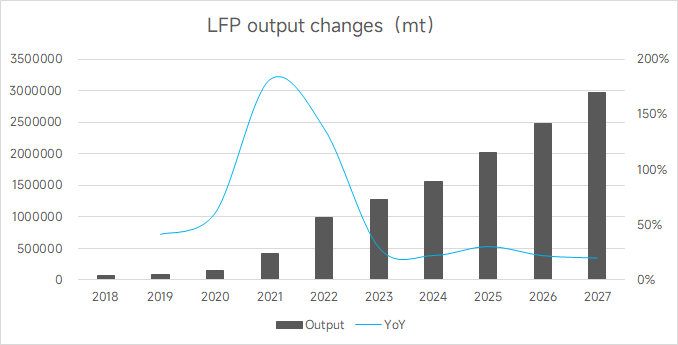
The LFP industry's expansion has slowed after rapid growth from mid-2021 to 2023. Post-2022 NEV subsidy cuts, despite the continued opportunity for capacity expansion, LFP operating rates hovered near 50%, sometimes dropping below 30%.
Since Q4 2022, the LFP industry's capacity-output gap has grown due to new firms increasing capacity, causing low operating rates. With excess capacity and slower demand growth, LFP firms are cutting prices to maintain market share, and cell manufacturers are using low prices to regulate new market entrants.
Falling LFP prices have turned profits into losses. With slower LFP demand, future production growth is expected to be lower.
Overcapacity and slower demand growth, amidst persistent capital gains, keep leading LFP firms dominant in negotiations, yet as industry growth slows, profits shrink.
Given these factors, the industry is at a new juncture focusing on cost reduction and efficiency improvement.
The process of cost reduction
Cost cutting and efficiency gains are the future trends for the competitive LFP industry.
In the LFP sector, two giants have boosted cost-efficiency by squeezing upstream suppliers' profits.
1. Lithium carbonate: Top firms have targeted lithium carbonate, a key LFP input, securing supplies and market leverage through investments, acquisitions, mining, and bulk buying, squeezing margins and stressing miners' profits.
2. Other Raw Materials: Big companies undermine suppliers' prices through tenders or direct talks, boosting their margins. New energy entrants with capital get orders for lower prices, shaving another profit layer. This suppresses LFP prices, pressuring costs of iron phosphate, phosphorus, and carbon sources.
3. Land and Labor: Cost reduction boils down to land and labor. Efforts focus on mineral-rich, low-energy-cost areas and companies with cheap labor and high automation.
The risks of cost reduction
The two leading firms spearhead cost-cutting in the LFP market, triggering a price-lowering race and a 'survival of the fittest' among suppliers, leading to a shift from a crowded to an orderly market.
The two giants lower raw material costs due to their large demand, strict yet punctual payments, and their supplier system's endorsement of quality.
Cost cutting may destabilize supply chains, introducing risks despite gradual change.
Cost cutting could redirect capital, prompting a reevaluation of the LFP industry, with investment favoring monopolistic and competitive firms over regular newcomers.
Where does cost reduction lead? Who benefits after cuts—society or select customers? A question worth deep thought.
![Giá Magie Tăng Ba Phiên Liên Tiếp! Phía Chi Phí Vẫn "Nóng Bỏng" Trong Khi Phía Cầu Khó Tiếp Nhận [Bình Luận SMM]](https://imgqn.smm.cn/usercenter/EutUV20251217171724.jpeg)