Silicon prices have bottomed out, uncertainty remains for near-term prices

Đã xuất bản: Jul 15, 2020 14:21
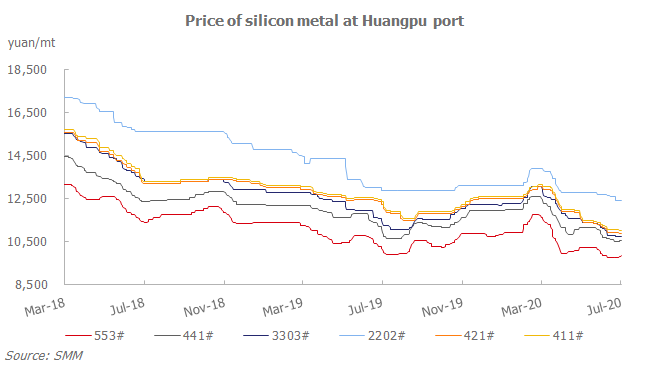
Silicon prices returned to a downward trend in June after stabilising in May, as supply increased with ramped-up production in Yunnan and Sichuan, while demand in the domestic and overseas markets failed to post same growth. Trades were thin amid pessimistic sentiment.

SHANGHAI, Jul 15 (SMM) – Silicon prices returned to a downward trend in June after stabilising in May, as supply increased with ramped-up production in Yunnan and Sichuan, while demand in the domestic and overseas markets failed to post same growth. Trades were thin amid pessimistic sentiment. 

 
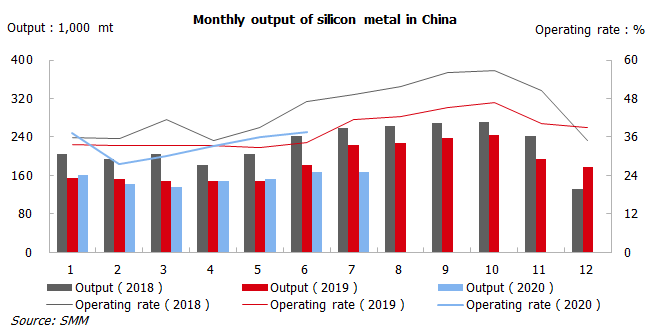
By mid-June, prices of some low-grade specifications declined to the lowest levels in three years, below the costs of some production capacity, and this led to increased suspension at producers. But the capacity additions in south-west China will continue to contribute to output growth. This, coupled with the resumption of work in north China, will likely see the national operating rates of silicon mills in August reaching peak level of the year. 


Resumption of the export market will be the major driver for consumption during the June-September period. Downstream producers in major export destinations of Asia, such as Japan, South Korea and Thailand started to make enquiries and restock after they restarted operation. This improved China’s export trades in June, as compared with May, and new orders will be mostly delivered in July-August. 


However, the resumption of downstream production in Europe and the Middle East remained at a slow pace, as some major producers have cancelled purchase tenders for Q3 or the second half of the year. The shipments for Q2 orders have been delayed to H2 2020. 


SMM expects China’s monthly average exports of silicon in June-September at 50,000 mt, still lower from a year ago, and the loss in exports in H1 may not be offsetted in H2 2020. 


Operations at Chinese silicon mills edge higher in July. On the downstream front, operations at aluminium alloy and polysilicon producers are slightly weaker than June while higher production of organosilicon monomer and a rise in exports result in overall higher demand. 


Purchases have increased after silicon prices rebounded from the bottom levels in June, but restocking demand was limited as most of the procurement was for the fulfilment of backlogged orders. Some buyers raised the quantity for each purchase while lowered the purchase frequency. 


SMM expects silicon prices to remain stable in July. Zero price spread between high and low-grade silicon products at the start of the month will be unable to sustain, as supply resumption from major mills in Xinjiang in late-July will weigh on prices of low-grade silicon. Average prices of chemical-grade 421# silicon will slightly recover in August, and the price spread between different specifications will return to normal levels.


Tuyên bố về Nguồn Dữ liệu: Ngoại trừ thông tin công khai, tất cả dữ liệu khác được SMM xử lý dựa trên thông tin công khai, giao tiếp thị trường và dựa trên mô hình cơ sở dữ liệu nội bộ của SMM. Chúng chỉ mang tính chất tham khảo và không cấu thành khuyến nghị ra quyết định.

Để biết thêm thông tin hoặc có thắc mắc gì, vui lòng liên hệ: lemonzhao@smm.cn
Để biết thêm thông tin về cách truy cập báo cáo nghiên cứu, vui lòng liên hệ:service.en@smm.cn
Tin Liên Quan
[SMM Analysis] Lợi nhuận tăng, nhưng độ co giãn nguồn cung hạn chế: Đánh giá mỏ molypden châu Mỹ nửa đầu năm 2026
23 giờ trước
[SMM Analysis] Lợi nhuận tăng, nhưng độ co giãn nguồn cung hạn chế: Đánh giá mỏ molypden châu Mỹ nửa đầu năm 2026
Đọc thêm
[SMM Analysis] Lợi nhuận tăng, nhưng độ co giãn nguồn cung hạn chế: Đánh giá mỏ molypden châu Mỹ nửa đầu năm 2026
[SMM Analysis] Lợi nhuận tăng, nhưng độ co giãn nguồn cung hạn chế: Đánh giá mỏ molypden châu Mỹ nửa đầu năm 2026
Trong nửa đầu năm 2026, sự phân hóa nguồn cung molypden tại châu Mỹ ngày càng sâu sắc. Dù lợi nhuận khai thác tăng, tổng sản lượng vẫn không phục hồi. Nửa cuối năm có thể chứng kiến sự phục hồi tại một số mỏ lớn, nhưng độ co giãn nguồn cung vẫn bị hạn chế. Những hoạt động nào đang kìm hãm nguồn cung, và tăng trưởng gia tăng sẽ xuất hiện ở đâu? Dữ liệu của SMM cho thấy thị trường đang bước vào giai đoạn mới với "biên lợi nhuận cao hơn, sản lượng phân hóa và mức tăng tập trung."...
23 giờ trước
[SMM Điểm tin Crom Tuần] Lưu lượng quặng crom phục hồi khi tồn kho cảng Trung Quốc tăng, Zimbabwe nhắm tới công suất ferocrom
11 Sep 2026 20:21
[SMM Điểm tin Crom Tuần] Lưu lượng quặng crom phục hồi khi tồn kho cảng Trung Quốc tăng, Zimbabwe nhắm tới công suất ferocrom
Đọc thêm
[SMM Điểm tin Crom Tuần] Lưu lượng quặng crom phục hồi khi tồn kho cảng Trung Quốc tăng, Zimbabwe nhắm tới công suất ferocrom
[SMM Điểm tin Crom Tuần] Lưu lượng quặng crom phục hồi khi tồn kho cảng Trung Quốc tăng, Zimbabwe nhắm tới công suất ferocrom
Ngày 11 tháng 9 năm 2026.
11 Sep 2026 20:21
[SMM Tin nhanh Crom] Quá trình chuyển đổi khai thác hầm lò tại mỏ chủ lực Crom-PGM của Tharisa vẫn đúng tiến độ
11 Sep 2026 20:12
[SMM Tin nhanh Crom] Quá trình chuyển đổi khai thác hầm lò tại mỏ chủ lực Crom-PGM của Tharisa vẫn đúng tiến độ
Đọc thêm
[SMM Tin nhanh Crom] Quá trình chuyển đổi khai thác hầm lò tại mỏ chủ lực Crom-PGM của Tharisa vẫn đúng tiến độ
[SMM Tin nhanh Crom] Quá trình chuyển đổi khai thác hầm lò tại mỏ chủ lực Crom-PGM của Tharisa vẫn đúng tiến độ
Tharisa xác nhận quá trình chuyển đổi sang khai thác hầm lò tại mỏ Tharisa chủ lực, nằm ở nhánh tây nam của Phức hệ Bushveld, Nam Phi, vẫn đúng tiến độ và trong ngân sách, diễn ra song song với hoạt động thu xếp tài chính xây dựng Dự án Karo Platinum tại Zimbabwe. Quá trình phát triển cụm mỏ hầm lò Apollo, khởi công vào tháng 3 năm 2026, đang tiến tới sản lượng quặng nguyên khai đầu tiên trong quý hiện tại, với mục tiêu sản lượng ổn định 255.000 tấn mỗi tháng vào quý 3 năm 2029. Cụm mỏ Orion dự kiến sẽ tiếp nối, với mục tiêu có quặng đầu tiên trong năm tài chính 2031 và đạt sản lượng ổn định vào quý 3 năm 2033. Tharisa cho biết hai cụm mỏ hầm lò này dự kiến sẽ kéo dài hoạt động khai thác tại mỏ Tharisa, nơi đồng sản xuất tinh quặng crôm cùng với kim loại nhóm bạch kim từ cùng một thân quặng, thêm hơn 60 năm sau khi mỏ lộ thiên hiện tại cạn kiệt. Dự án hầm lò được tài trợ toàn bộ thông qua các khoản vay phát triển từ Absa và Standard Bank cùng một hạn mức tín dụng quay vòng dựa trên tài sản từ Nedbank, nguồn vốn này tách biệt với khoản trái phiếu Bắc Âu trị giá 300 triệu USD huy động trong tuần này cho Karo. Công ty không công bố chi tiết tỷ trọng quặng nguyên khai tương lai của Apollo hay Orion là vật liệu chứa crôm so với vật liệu chứa kim loại nhóm bạch kim, khiến tác động cụ thể của quá trình chuyển đổi hầm lò đối với sản lượng tinh quặng crôm của Tharisa vẫn cần được làm rõ khi hai cụm mỏ tăng tốc tiến tới trạng thái ổn định.
11 Sep 2026 20:12
Silicon prices have bottomed out, uncertainty remains for near-term prices - Shanghai Metals Market (SMM)